Ed Nisley's Blog: Shop notes, electronics, firmware, machinery, 3D printing, laser cuttery, and curiosities. Contents: 100% human thinking, 0% AI slop.
We extracted the Praying Mantisoothecae while clearcutting the decorative grasses bracketing the front door. As far as I can tell, they’re still charged up and ready for use.
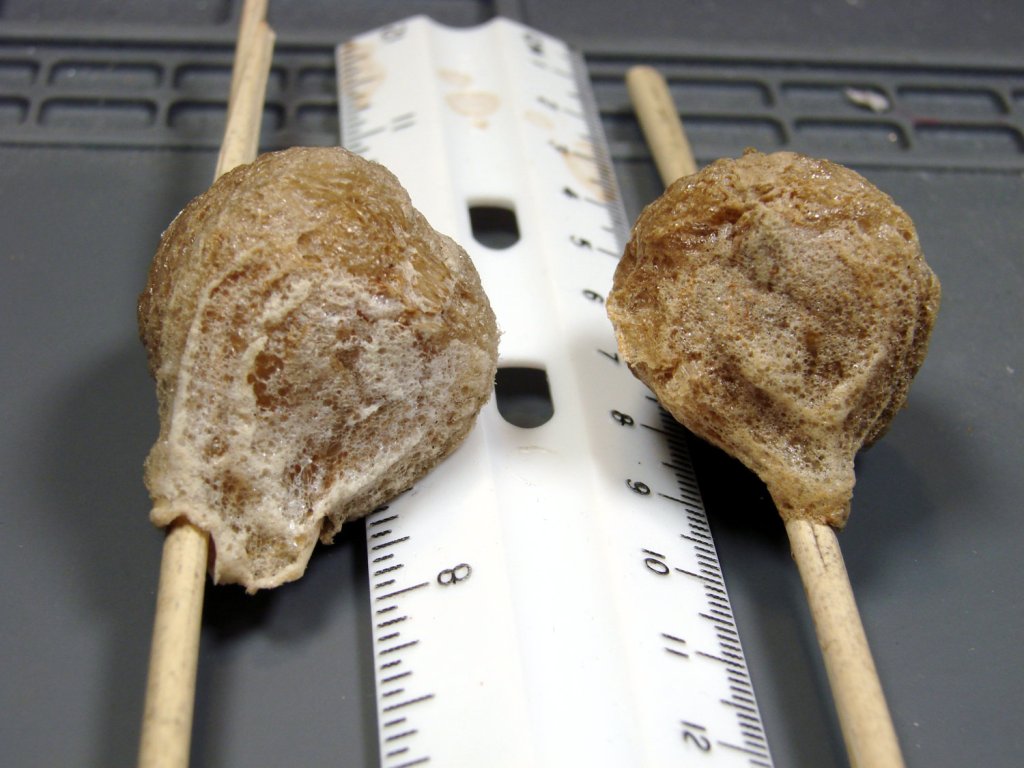
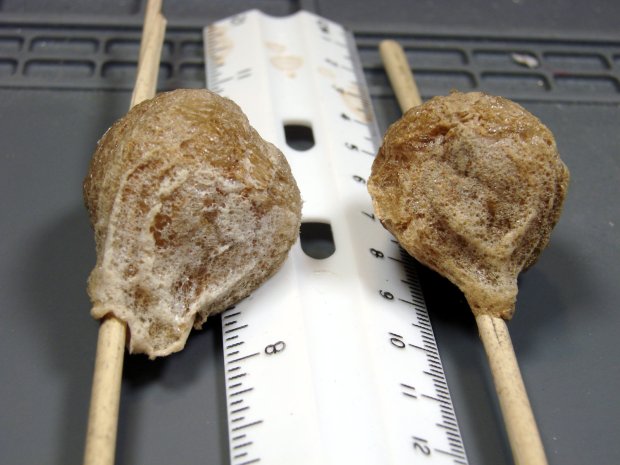
The masses resemble rigid foam wrapped around grass stems:
Praying Mantis ootheca – stem side
It’s a mechanical joint, not an adhesive bond, and the dried stems slide freely through the openings:
Praying Mantis ootheca – bottom
From one side:
Praying Mantis ootheca – right
And the other:
Praying Mantis ootheca – left
They’re now tied to stems of the bushes along the front of the house, which (I hope) will resemble what the little ones expect to find when they emerge, whenever they do.
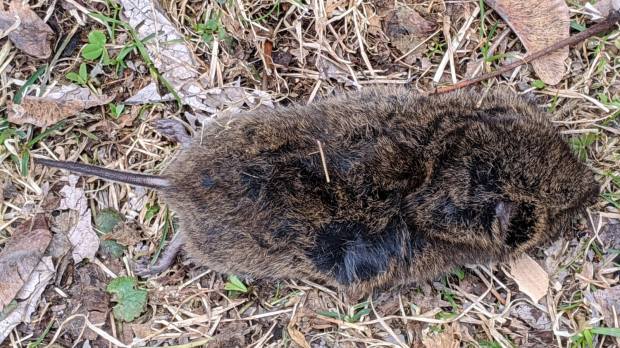
One of the moles aerating the ground around here ran out of steam beside the garden:
Mole – dorsal
It has wonderfully soft velvety fur!
Flipping it over:
Mole – ventral
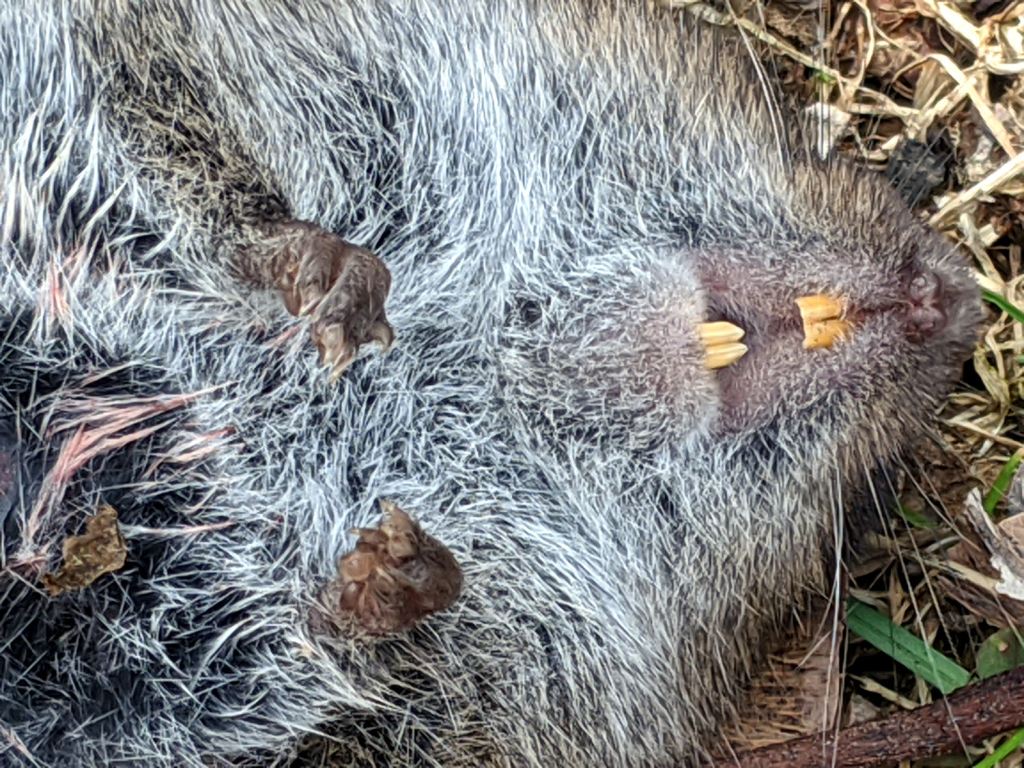
A closeup of its digging paws and gnawing teeth:
Mole – ventral paws – teeth
Those choppers seem overqualified for a diet of earthworms, but I suppose they know what they’re doing.
We left it in as-found condition, ready for recycling …
[Update: The consensus seems to be it’s a vole or shrew, not a mole. It’d be the biggest vole I’ve ever seen and “large shrew” seems oxymoronic, but the teeth are diagnostic. ]
It being the season for hacking down decorative grasses, our ancient Craftsman Hedge Trimmer woke up dead, a decade after I fixed its switch and predicted it’d be good for another decade.
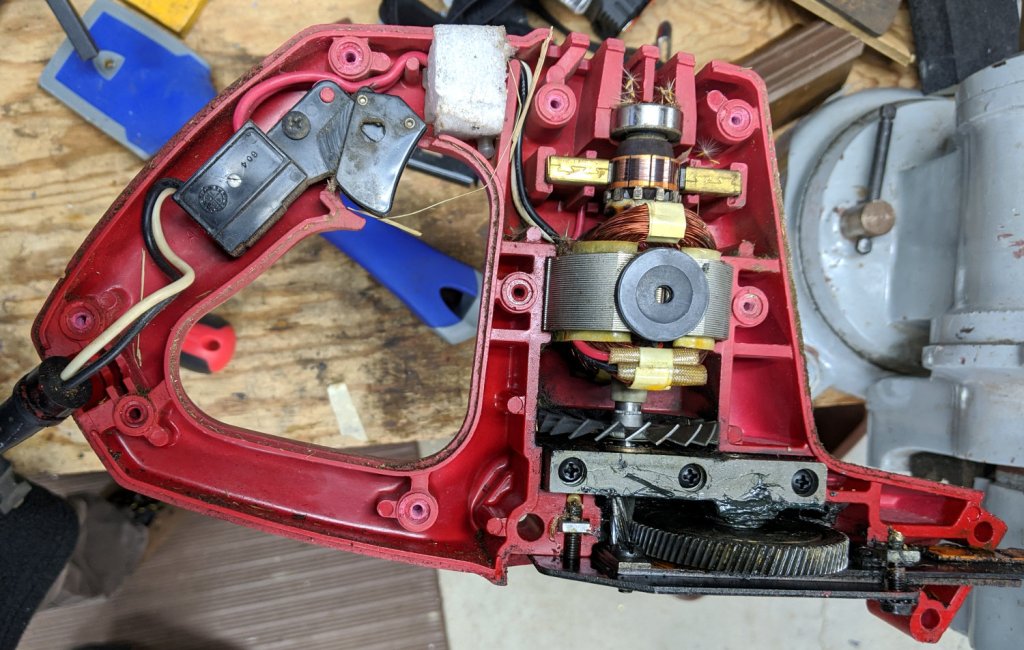
After verifying the failure isn’t in the wall outlet or the extension cord, haul it to the Basement Laboratory Repair Wing, clamp the blade in the bench vise, remove a myriad screws, and pop the top:
Craftsman Hedge Trimmer – innards exposed
I should have removed the screw in the extreme lower right corner and loosened the similar screw at the rear of the bottom plate; they’re two of the three machine screws engaging nuts embedded in the shell. Everything is greasy enough to let the nuts slide right out of the plastic and no harm was done, but that need not be so.
After poking around a bit and finding nothing obvious, I checked the resistance across the plug: open-circuit with the switch OFF and nearly shorted with the switch ON.
Huh.
Put the case back together with just enough screws to prevent heartache & confusion, unclamp the blade, plug into the bench outlet, discover it works fine again, reinstall the rest of the screws, and continue the mission:
Beaver Lodge – DCRT N of Golds Gym – 2016 CIR image
We went back the next day and stopped at the culvert. Their dam spans the entire near side of the pond, upstream of the ditch (just above my hand) leading to the culvert:
Beaver Lodge and Dam – DCRT N of Golds Gym – 2020-02-25
The helmet camera pictures look west from the rail trail, with the lodge in the northernmost open area. The wide-angle camera lens exaggerates the distance, but the lodge is only about 35 feet from the fence.
A stand of birch trees near the lodge now looks like a combination buffet and construction yard. When beaversdiscoverferrocement, their structures will become much more obvious.
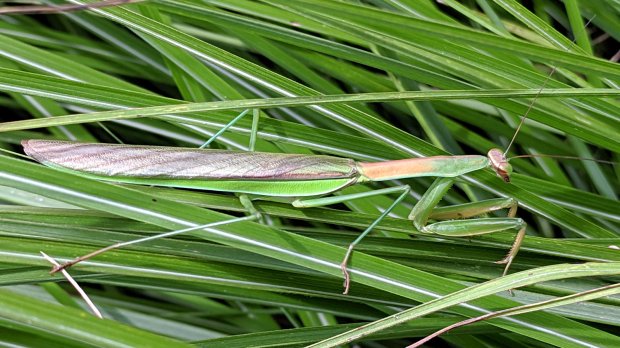
Several of this year’s praying mantises set up shop in the decorative grasses bracketing the front door:
Praying Mantis – brown wing covers – in grass
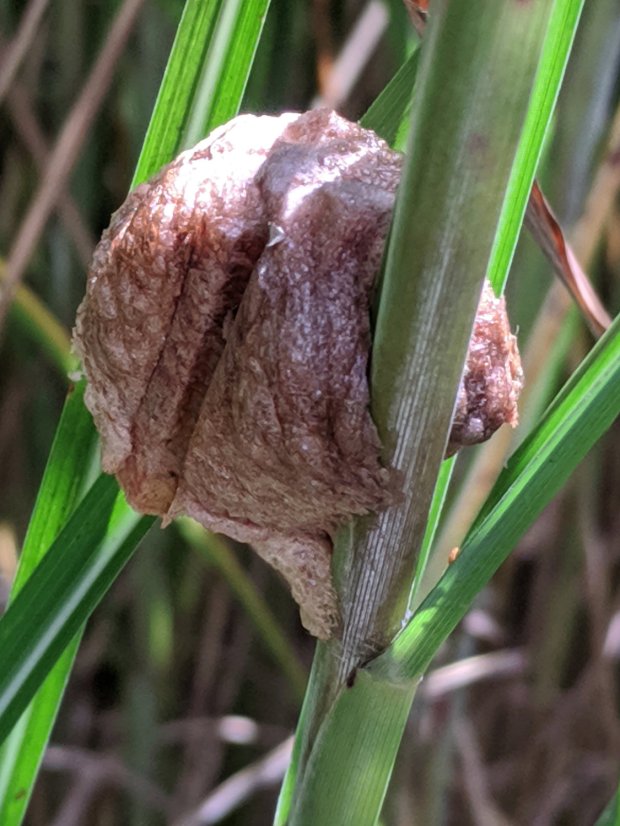
We found their egg masses, formally called ootheca, attached to the stems in mid-October:
Praying Mantis egg mass A
They feel like rigid urethane foam and seem eminently protective:
Praying Mantis egg mass B
We’ll cut around the masses when it’s time to clear out the dead grass next spring. I was tempted to bring one inside, but dealing with a gazillion tiny mantises in a few months would be daunting.
Fortunately, Brown Marmorated Stink Bugs haven’t been as catastrophic as predicted when they arrived a few years ago, perhaps because native critters have learned to deal with them:













 The Smell of Molten Projects in the Morning