Ed Nisley's Blog: Shop notes, electronics, firmware, machinery, 3D printing, laser cuttery, and curiosities. Contents: 100% human thinking, 0% AI slop.
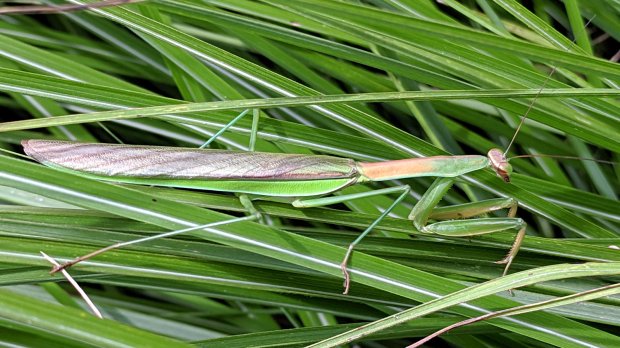
Several of this year’s praying mantises set up shop in the decorative grasses bracketing the front door:
Praying Mantis – brown wing covers – in grass
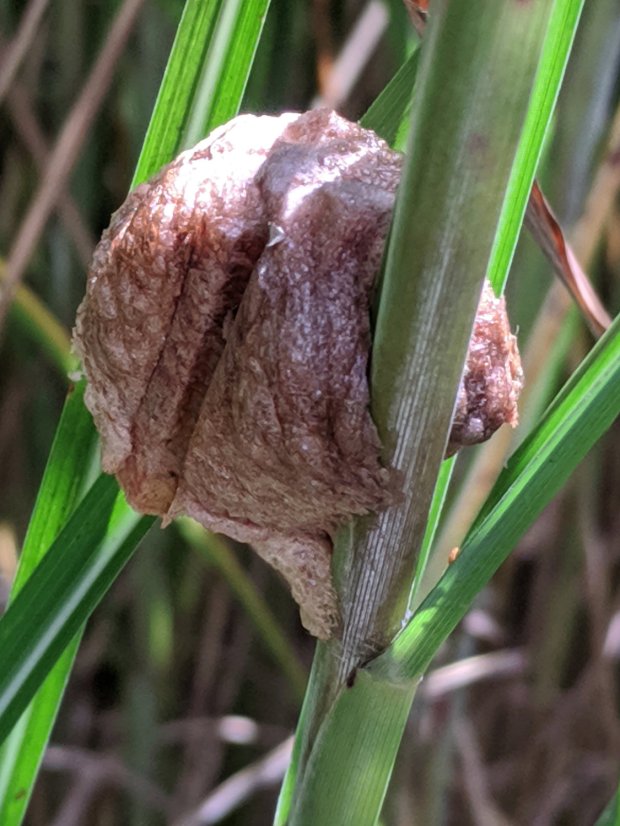
We found their egg masses, formally called ootheca, attached to the stems in mid-October:
Praying Mantis egg mass A
They feel like rigid urethane foam and seem eminently protective:
Praying Mantis egg mass B
We’ll cut around the masses when it’s time to clear out the dead grass next spring. I was tempted to bring one inside, but dealing with a gazillion tiny mantises in a few months would be daunting.
Fortunately, Brown Marmorated Stink Bugs haven’t been as catastrophic as predicted when they arrived a few years ago, perhaps because native critters have learned to deal with them:
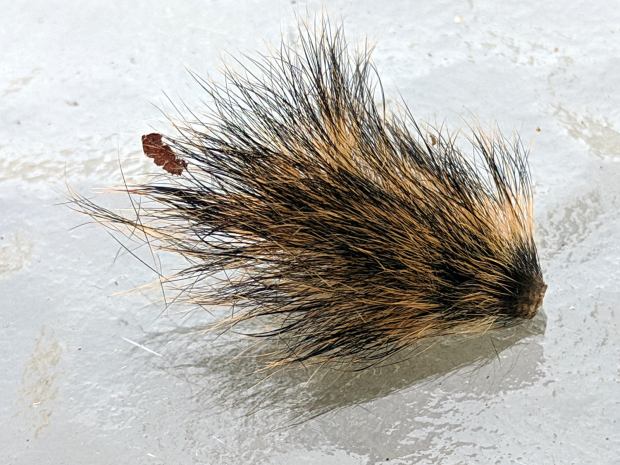
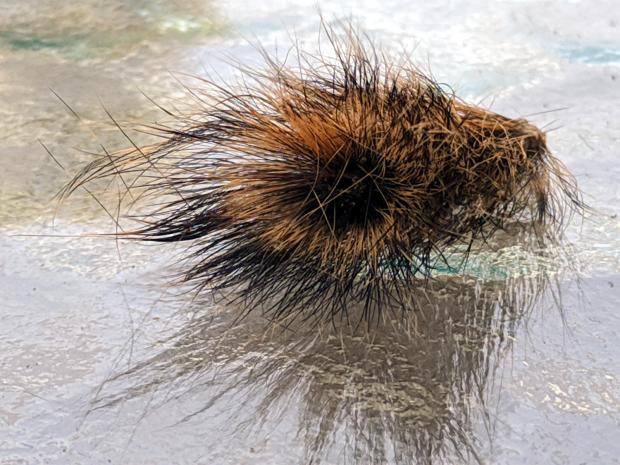
Voles apparently live only a few months, so this one may have run out of gas while crossing the driveway:
Vole – dead on driveway
Or it just caught a heart attack?
It definitely wasn’t playing possum; nobody can lie still with ants up their nose.
It had vanished when we returned from our afternoon ride, so somebody further up the food chain also noticed it. As my buddy dBm puts it, “In Nature, nothing goes to waste.”
The Butterfly Bush outside the living room continues to attract flying insects, but, with the arrival of this year’s bumper crop of Praying Mantises, it has become something of a killing field.
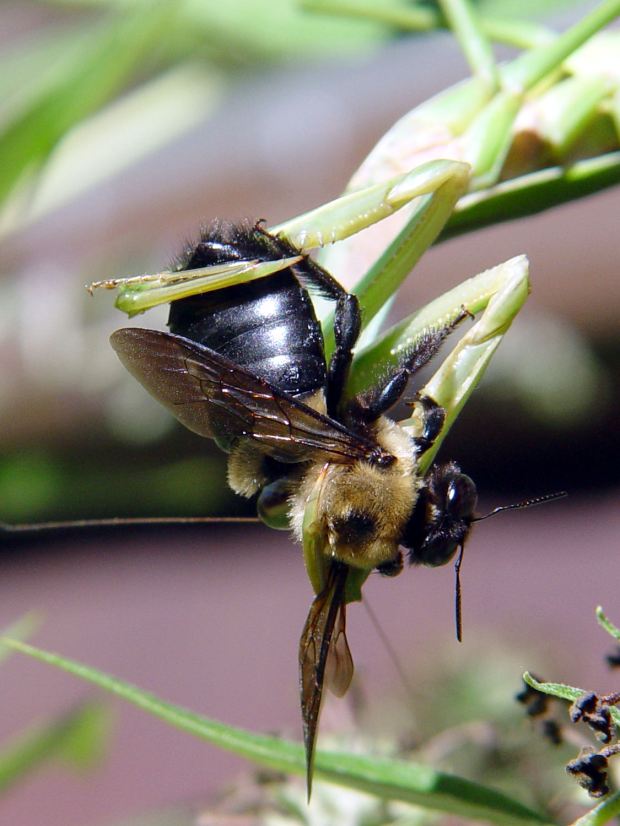
If I hadn’t seen this, I wouldn’t have believed it:
Mantis vs Bumblebee – grapple
Perhaps grabbing the bumblebee at the tip of the abdomen neutralizes the sting, but I only saw the flash of motion, not the actual capture.
The mantis changed her (?) grip several times while removing various accessories:
Mantis vs Bumblebee – disassembly
Although a bee’s leg may not seem edible, she chewed through them like Pocky.
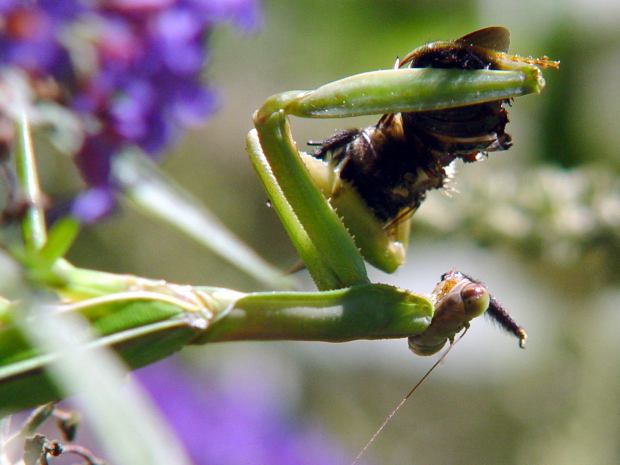
Minus most of the bits and pieces, serious eating commenced:
Mantis vs Bumblebee – lunch
Having watched several insects go through this process, the mantis proceeds from the head downward, eventually squeezing the abdomen like a tube of toothpaste.
A mantis can eat a bumblebee in about twenty minutes, from capture to discarding the empty husk. After a few minutes of body maintenance, ranging from leg cleaning to eye scraping, she begins waiting for the next meal to arrive …
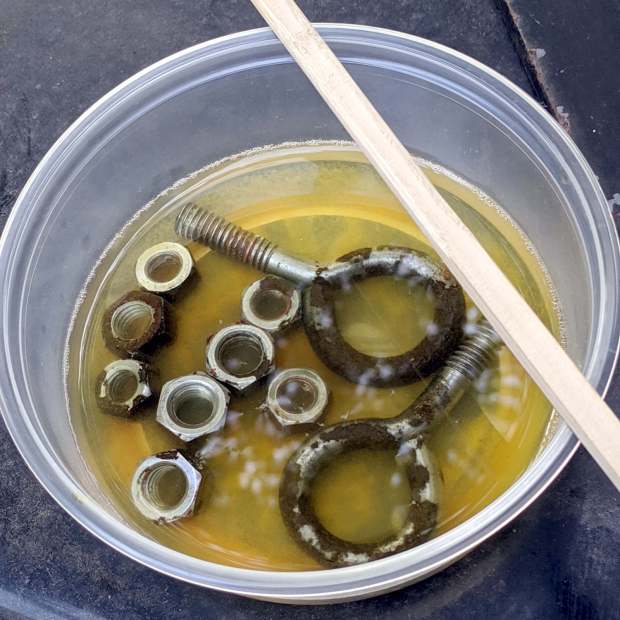
The dark areas are iron oxide being converted to loose iron sulfide, which is what Evapo-Rust does for a living.
One could, of course, simply buy new eye screws & nuts, but we’re deep into historical preservation around here.
An hour of soaking and a few minutes of wire-wheeling got everything down to bare metal, ready for some rattle-can primer and black paint action:
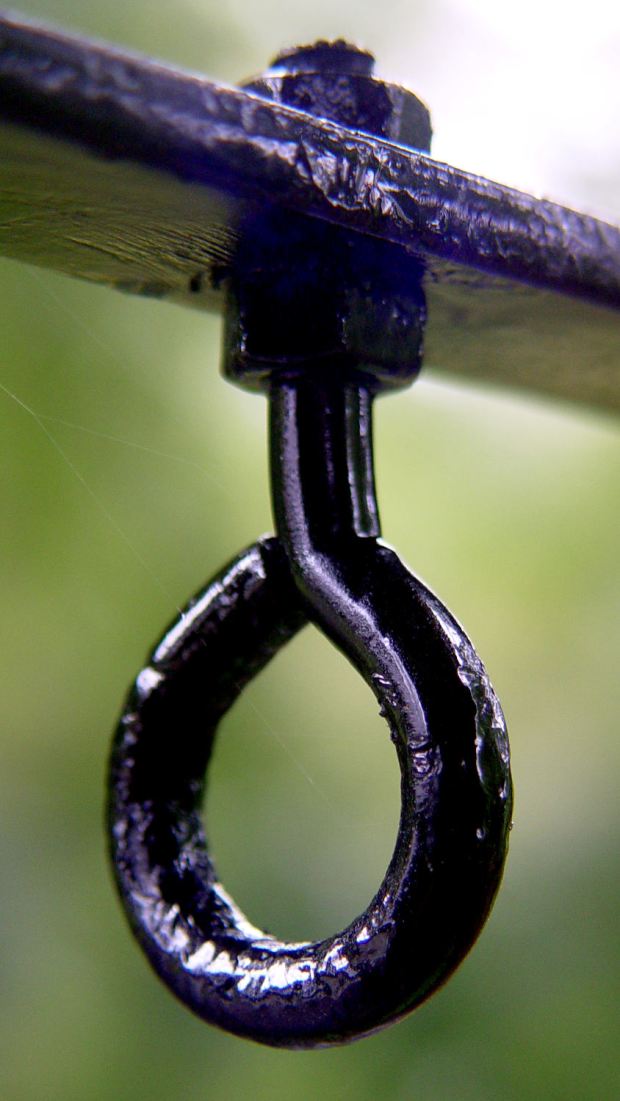
Suet Feeder Bracket Hardware – installed
It’s a version of what Eks calls a “used car finish”: high shine over deep pits.
Discussion of why one should not paint threaded parts will be unavailing; in this case, paint serves as permanent threadlock. I re-spritzed the eyescrews & nuts after getting everything aligned, so as to produce a lovely two-coat over-all finish.
Two Funnel Weaver spiders spun their webs across diagonal corners of the garden tool rack and appear to be peacefully sharing the bounty attracted by nearby lights.
The one on the left vanishes instantly into its funnel, deep inside the corner post, nearly every time we step onto the patio:
Funnel Weaver spider – tool rack left
The other spider worked around a stick emerging from its refuge:
Funnel Weaver spider – tool rack right
But it’s doing all right:
Funnel Weaver spider – tool rack right – detail
Their less adventurous compadres build webs on the plaintains festooning what might be called our lawn, making me feel awful while mowing in these months. I hope the mower’s vibrations drive them deep into the grass before it roars overhead, but I’ll never know.