The Bondhus Lifetime Guarantee works, as a replacement wrench just arrived:
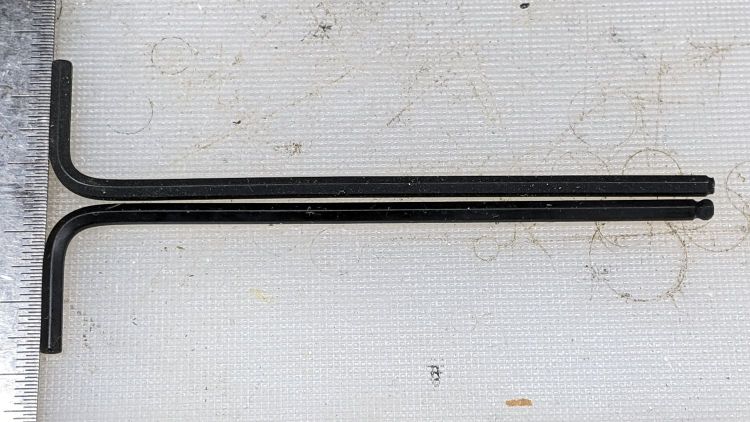
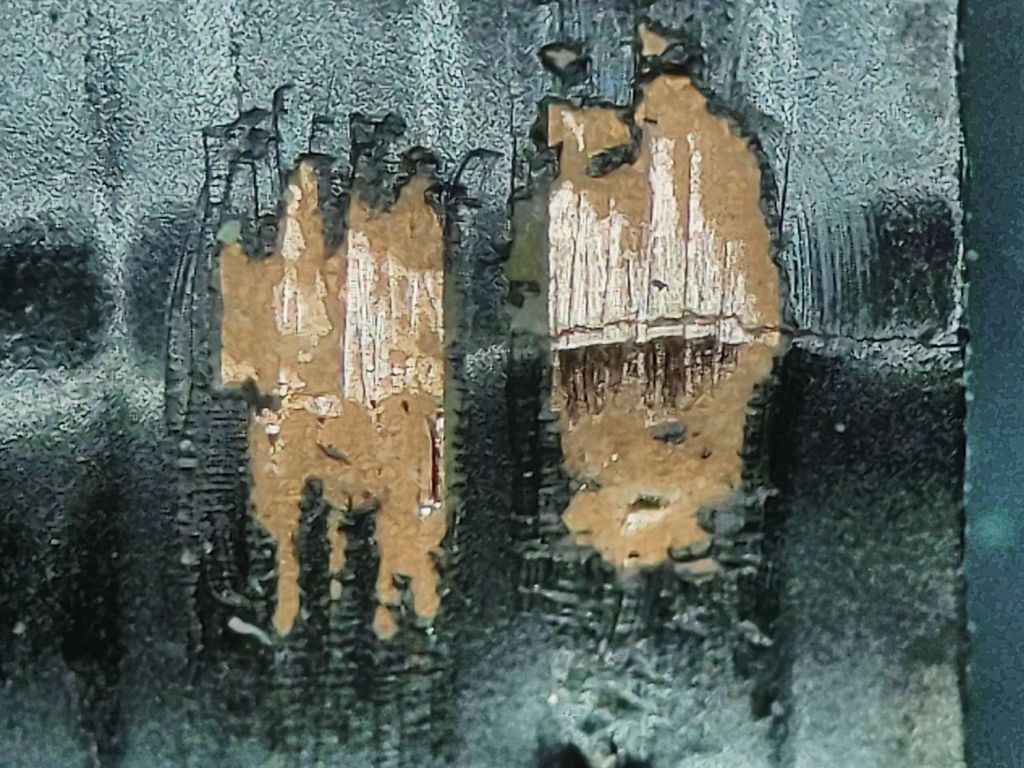
A close look at the aligned tips suggests the defective wrench blank was mis-chucked in the machine cutting the ball end:

All’s well that ends well: thank you, Bondhus!
The Smell of Molten Projects in the Morning
Ed Nisley's Blog: Shop notes, electronics, firmware, machinery, 3D printing, laser cuttery, and curiosities. Contents: 100% human thinking, 0% AI slop.
If it used to work, it can work again

The Bondhus Lifetime Guarantee works, as a replacement wrench just arrived:
A close look at the aligned tips suggests the defective wrench blank was mis-chucked in the machine cutting the ball end:
All’s well that ends well: thank you, Bondhus!
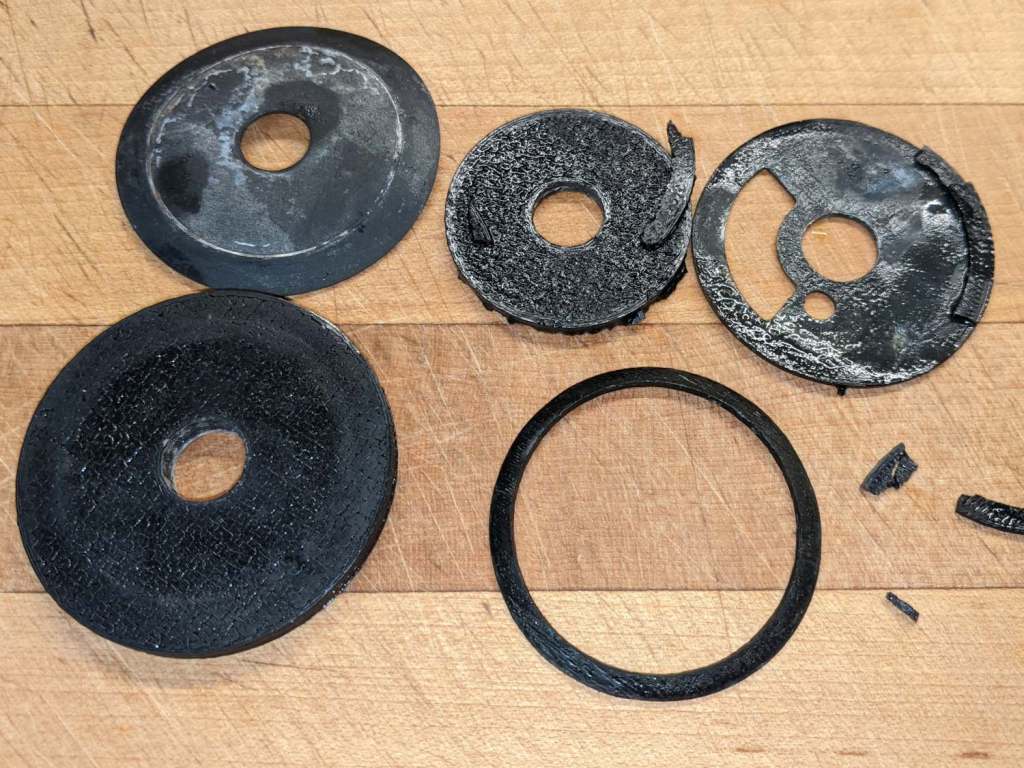
The lesser kitchen faucet began dribbling and required replacement, as there are no user serviceable parts within. One of the 3D printed adapters I built during the previous iteration had disintegrated:

The new faucet came with a somewhat different baseplate and I managed to conjure a firm, sealed mount from the various parts without further construction.
The nicely curved brass snout is the third in my collection. Surely they’ll come in handy for something!
While I was in a plumbing state of mind, I again replaced the spout O-rings in the never-sufficiently-to-be-damned American Standard Elite (hah!) faucet, as it was also dribbling.
This time, I used oxalic acid to remove the assorted scale and crud inside the spout. It seemed to be more effective than the usual white vinegar, although nothing seems to preserve the O-rings.

We rolled up to a pair of walkers who had just watched a long-dead tree fall across the Dutchess Rail Trail ahead of them:

Which is why I now carry a fold-out pruning saw in my tool kit:

The mowing crew we encountered half a mile ahead had a chainsaw and cleared the remainder.
Stay alert out there!
Although I don’t have a picture, there was a freshly dead bat lying underneath the main trunk. I think it rode the tree down, only to get slapped hard against the gravel beside the trail. I’m sure bats power up faster than I do, but not quite fast enough.

Around the beginning of the year, I updated my collection of somewhat worn hex wrenches with a set of metric and inch ball-end hex wrenches from Bondhus sold by and shipped from Amazon:
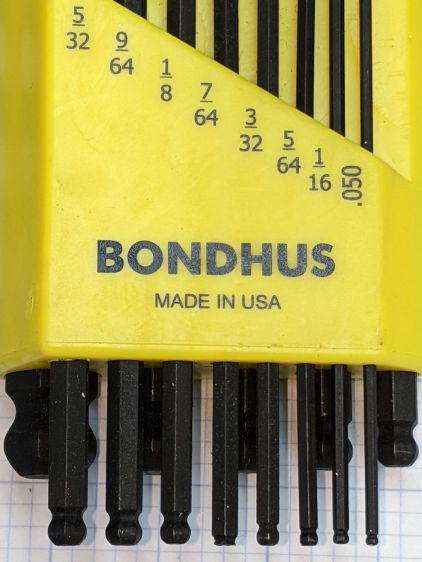
When I applied the 7/64 wrench to a setscrew, the missing ball came as a surprise.
Even though the inch wrench set doesn’t get a lot of use, it’s possible I broke the ball off during a previous adventure, but a look at the end shows the black oxide coating covering the end:

Yeah, it was born that way.
I wonder if and how their lifetime guarantee works.
[Update: It does!]
Protip: as of this writing, the Amazon listing has two other “sizes” showing exactly the same set at significantly higher prices from two randomly named sellers:
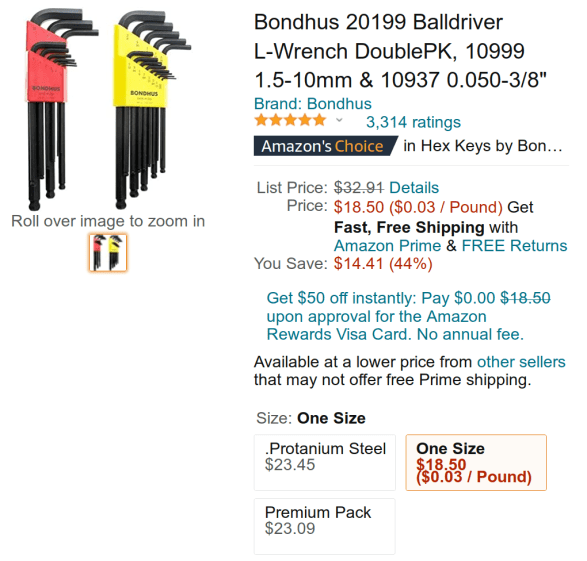
It is safe to assume Amazon no longer has its customers’ best interests in mind.
Four years ago I got a folding Bluetooth keyboard for my then-newish Pixel phone:

A few days ago, the 2 W S X Win keys stopped working, suggesting a problem with the matrix scan of that column.
The trim cover over the fold on the back of the keyboard disengages from the hinge with gentle prying at the obvious places, exposing a flex cable pressed against a disturbingly right-angled edge:
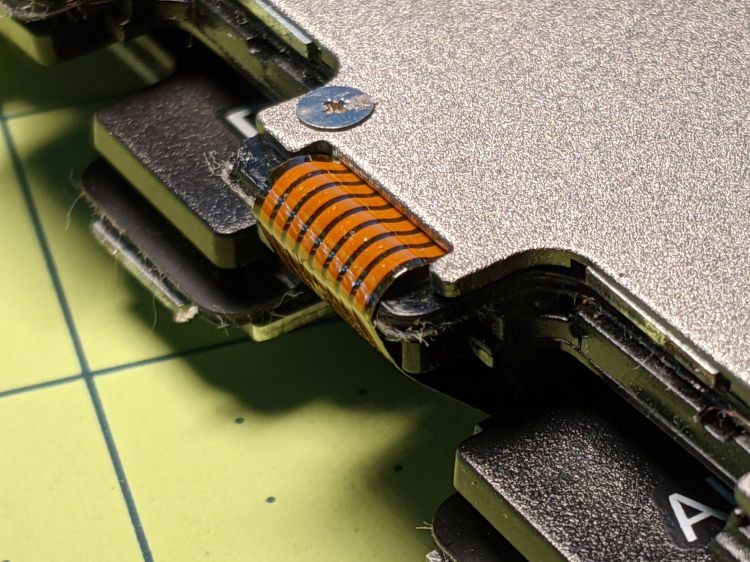
Unfolding the keyboard makes the acute bend against the case obvious, even though it’s hidden under the cable:

Some tedious poking around with a continuity meter revealed not only a broken trace, but a crack in the flex cable:

Protip: when you have nothing to lose, poke a pin through the flex cable into the trace to localize the break. The point leaves little holes, but so what?
I scraped off the black coating and the insulation over the traces with an Xacto knife under the microscope, which definitely reveals my need for a tiny Waldo manipulator.
Coating the exposed copper with solder and bridging the crack with one strand of the finest wire in my collection produced a truly horrific scene:

The glop on the left is flux applied before soldering. The rugged terrain on the right is the exceedingly gummy adhesive holding the cable to the keyboard, which turned out to be surprisingly heat-sensitive.
Fairly obviously, those patches will not survive much more flexing, so wrap the cable with Kapton tape and apply a stiffening layer of thick plastic tape:

Apply more reinforcing tape and button it up again:

I stuck the flex cable down with the repaired joint about a millimeter under that sharp edge, with double-sided sticky tape underneath to help immobilize the bruised area.
While I had the covers off, I also reinforced the same section of the cable on the other side of the keyboard, in the hopes of preventing a crack.
I have little faith in the long-term survival of this repair. Similar keyboards routinely emerge from the quantum froth of randomly named Amazon sellers, most of which have negative reviews reporting the failure of entire key columns; there’s no indication of any design improvement.
The alert reader will have noted the cable has eight traces, enough for a 3×5 matrix of 15 keys, but the folding wing has 16 keys: the second row has four keys. I have no idea how they made that work, other than perhaps resistive coding for some of the keys.

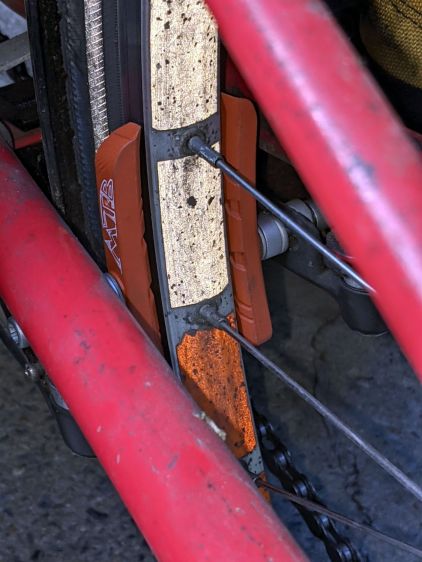
A horrible grinding sound from behind me suggested it was time to replace the Tour Easy’s rear brake pads:

Yeah, about half of the “Wear Line” text remains visible; the actual line is long gone to dust.
The retaining pin in the lower pad is twisted forward:

The pad wore enough to let it scrape on the rim, which certainly can’t be good for it.
The new Kool-Stop KS-MTTSA pads tout their leading wedge’s suitability for scraping mud off the rims, which isn’t a problem with my use case:
The odometer reports 20873 miles since the last battery replacement fumble.
The need to gnaw a V groove into the side of two 60 mm aluminum bars led to this Sherline CNC mill setup:
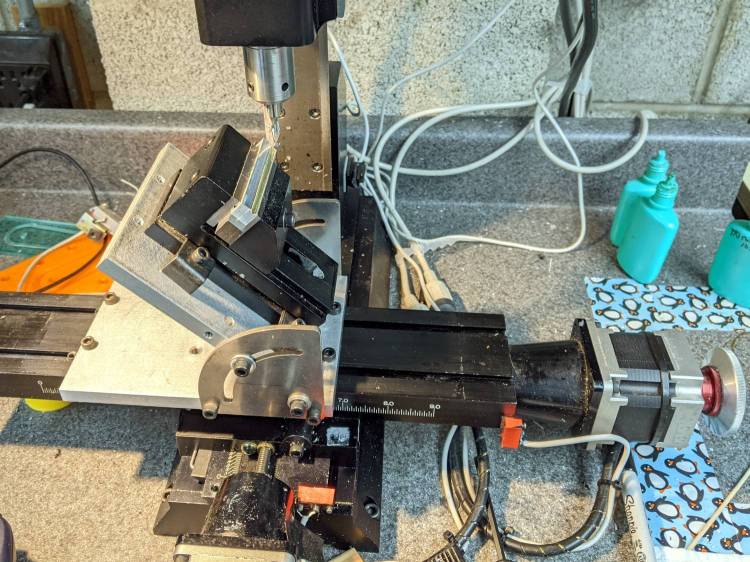
Milling the near end of the bars put the angle plate’s rear lock screw within a millimeter of the column; the vise fits in exactly one spot on the angle plate and that’s where the jaws must be.
While controlling the mill with the Joggy Thing and some manual command entry, because it’s easier than real CNC programming, I overshot the near end and rammed the column with enough enthusiasm to dislodge the Y-axis leadscrew nut. An interlude of utter confusion ended with the backlash preload nut firmly jammed against the leadscrew coupler on the other end of travel:
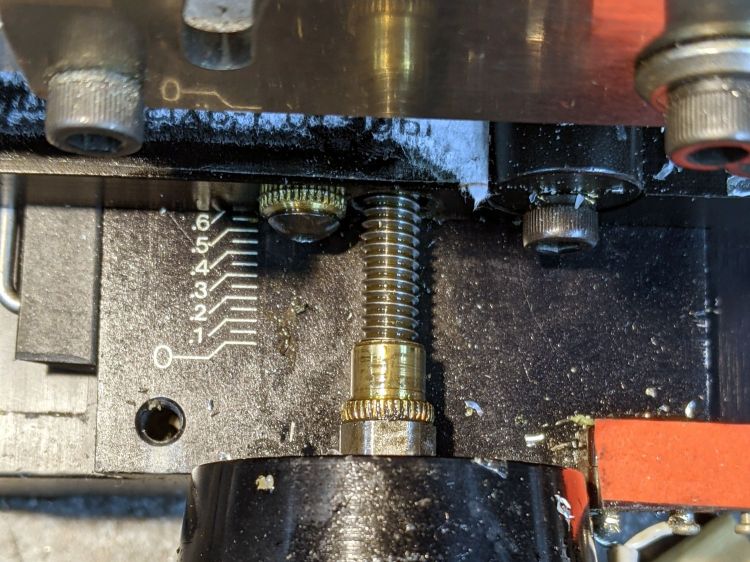
The paper shreds show where the bellows formerly stuck on the Y axis stage.
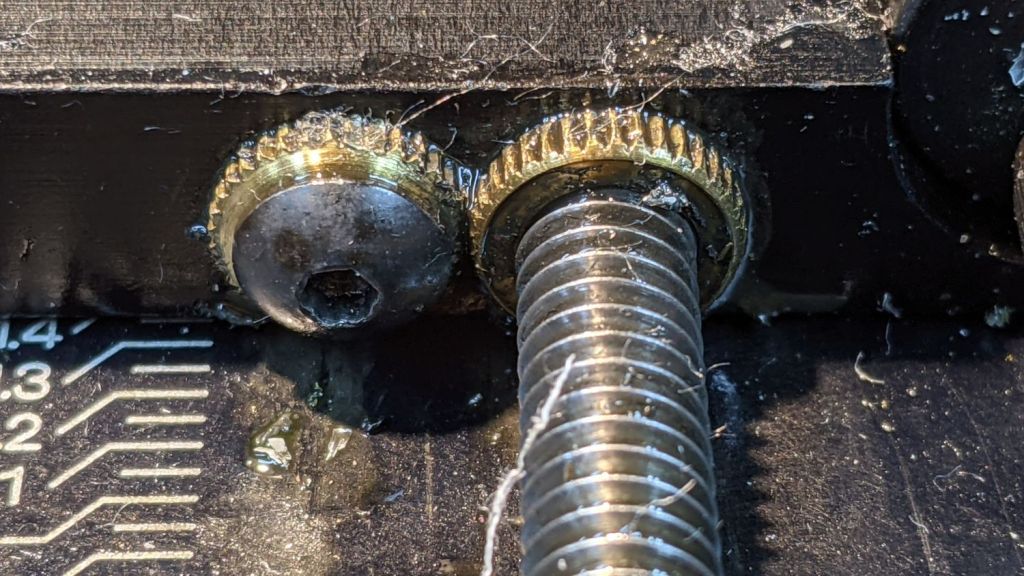
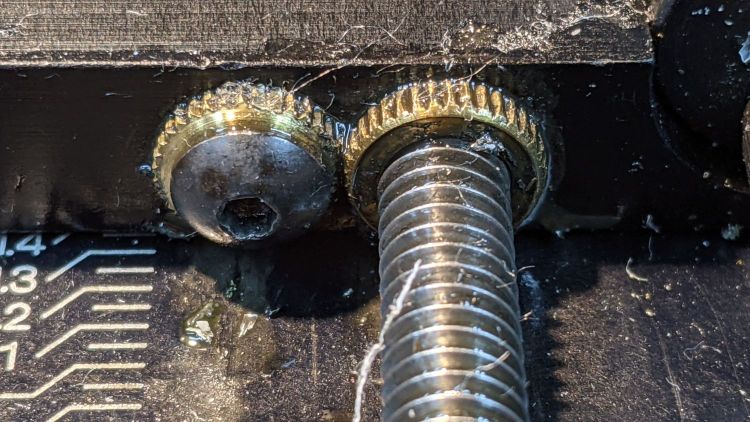
The backlash nut chewed off a few star lock gear teeth on its way out, as seen here just above where they mesh:
It’s been quite a few years since I took the thing apart to replace the nuts, so I used the opportunity to lube the otherwise inacessible X axis leadscrew inside its table upside down on the bench.
The setscrew locking the Y axis leadscrew nut in place heaves into view with the X axis table off:
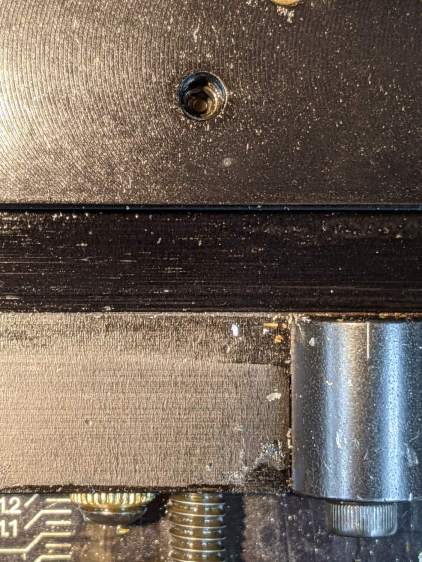
I thought about jamming it in place with a second 10-32 setscrew, but the ones on hand were just an itsy too long and collided with the X-axis table:
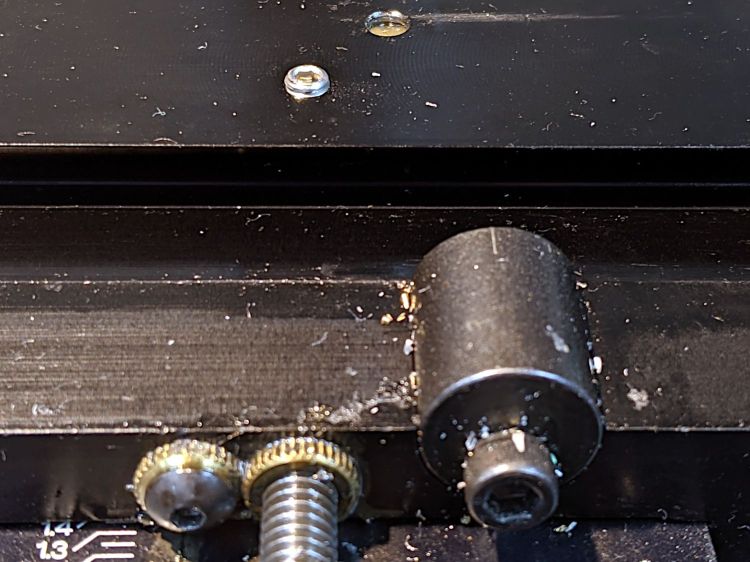
The thought of having the additional setscrew work loose, grind into the underside of the table, and require major surgery for recovery persuaded me to drop it back in the drawer.
With everything in place, I adjusted the backlash (on both axes) down to a few mils:
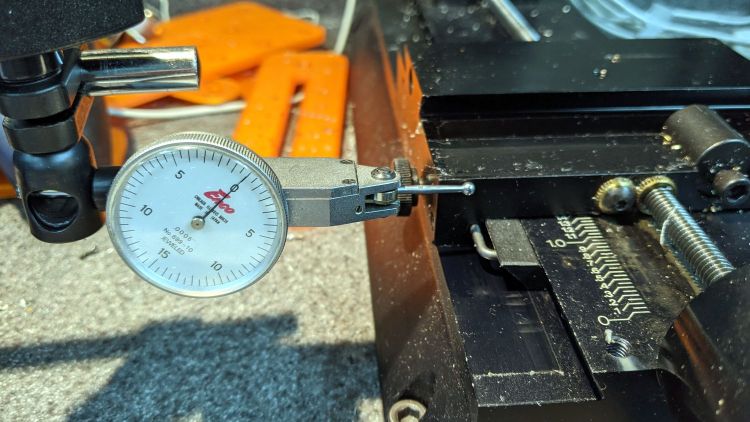
Tweaking the X axis preload nut under the table is not my idea of a good time, but it’s been quite a while since I had to do that.
Folding the new paper bellows and installing them took about as long as repairing the mill.
Milling the second V groove worked fine; all is right with the Sherline again.

