The Smell of Molten Projects in the Morning

Ed Nisley's Blog: Shop notes, electronics, firmware, machinery, 3D printing, laser cuttery, and curiosities. Contents: 100% human thinking, 0% AI slop.

Tag: Repairs

If it used to work, it can work again

  • Tour Easy Broken Spoke

    Tour Easy Broken Spoke

    A rear spoke snapped on Mary’s Tour Easy while we were at the far end of a ride. Unlike most broken spokes, the flanged end that I couldn’t maneuver the stub out of the hub and deploy the FiberFix, so we rode home slowly while avoiding as much rough pavement as feasible.

    Once in the shop, pulling the sprocket and extracting the stub posed no problem:

    Tour Easy broken spoke
    Tour Easy broken spoke

    Install the new spoke, crank to 23 on the Park Spoke Tension Meter to match the rest of the wheel, check the truing, and it’s all good.

    At some point in the last two decades of riding, it seem the chain fell off the high side and gouged the spokes around the hub:

    Tour Easy broken spoke - damage
    Tour Easy broken spoke – damage

    If another spoke snaps in the near future, I’ll replace the lot of them, but until then, well, there’s riding to be done …

  • Onion Maggot Fly Sticky Trap Repair

    Onion Maggot Fly Sticky Trap Repair

    One of the sticky traps absorbed a mighty blow during the season and its ski-pole mount snapped off. Rather then rebuild the whole thing, I decided to just epoxy the pieces together and stick a reinforcing plate on the bottom.

    I added a pair of screw holes to the OpenSCAD model and produced a projection of the bottom layer:

    if (Layout == "Projection") {
        projection(cut=true) {
            Attachment();
            Cap();
        }
    }
    

    Which looked like this:

    Sticky Sheet Cage - projection
    Sticky Sheet Cage – projection

    Cutting that shape from an adhesive sheet looks the same:

    Onion Maggot Fly Trap - adhesive sheet
    Onion Maggot Fly Trap – adhesive sheet

    The somewhat raggedy large hole seems to come from OpenSCAD’s somewhat low-res SVG outline conversion.

    Fill the broken part with epoxy:

    Onion Maggot Fly Trap - epoxy ready
    Onion Maggot Fly Trap – epoxy ready

    Clamp it together on a plate to keep the bottom aligned:

    Onion Maggot Fly Trap - clamping
    Onion Maggot Fly Trap – clamping

    Cut an acrylic baseplate:

    Onion Maggot Fly Trap - acrylic cut
    Onion Maggot Fly Trap – acrylic cut

    Apply adhesive sheet to acrylic, stick it on the bottom of the cage, add a pair of stainless steel screws, and declare victory:

    Onion Maggot Fly Trap - bottom view
    Onion Maggot Fly Trap – bottom view

    We’ll see how long that lasts out in the garden next year …

  • Zenni Optical Glasses: Metalbending

    Zenni Optical Glasses: Metalbending

    The new batch of glasses I just received makes me take back any nice things I previously implied about Zenni Optical’s nose pad alignment:

    Zenni eyeglass pads - as received
    Zenni eyeglass pads – as received

    Zenni does have a guide to reshaping the frames, but it does not include aligning the pads parallel to your nose, which definitely goes better with wire-bending pliers in hand.

    They should look more like this when you’re done:

    Zenni eyeglass pads - aligned
    Zenni eyeglass pads – aligned

    I suppose this is a consequence of being able to get two eyeglasses + two sunglasses in three different frame styles and two different prescriptions, each with progressive lenses and antireflective coating, for about $350 delivered halfway around the planet.

    Makes owning a set of metal-forming pliers look downright economical.

    A few years ago, Mary paid more than that for a single pair of badly fitted glasses from a local outlet. Those days are over.

  • DMM Probe: QC Fail

    DMM Probe: QC Fail

    Clearing off the Electronics Bench unearthed the probes for my fancy Siglent SDM-3045 bench meter, which had been producing erratic readings. I isolated the problem to the red probe, which had an irregularly variable resistance ranging upward from a few ohms.

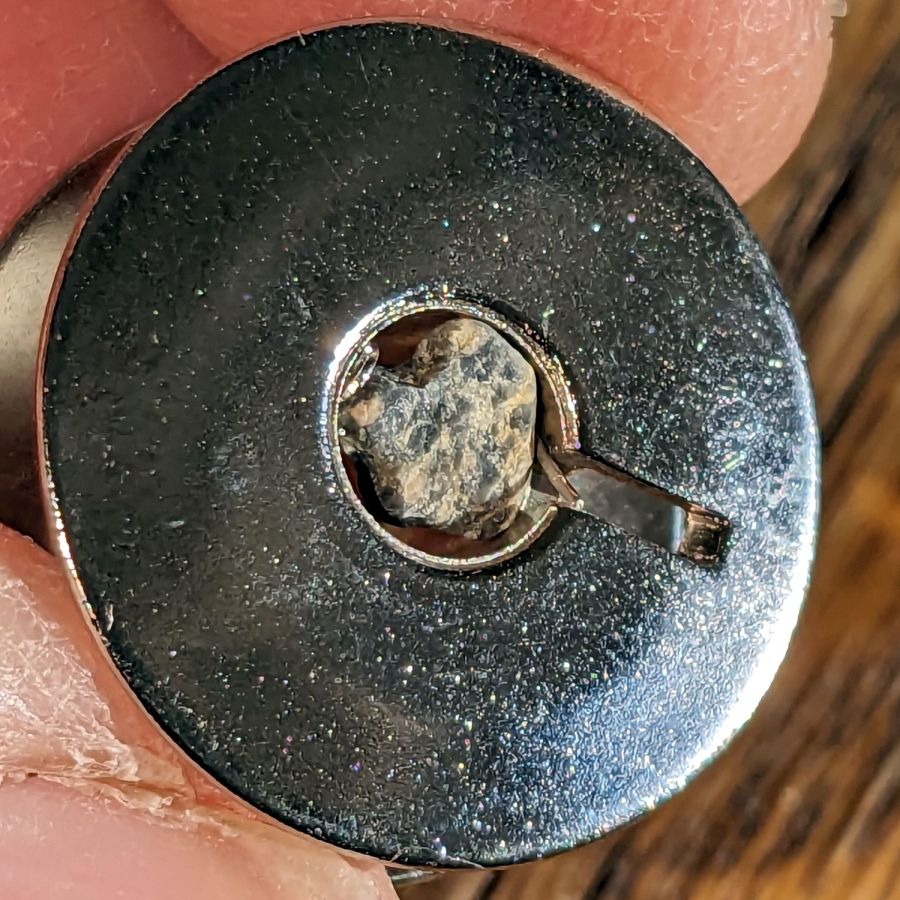
    The probe being a non-repairable thing, I used the lathe to cut it apart and eventually found the problem:

    Failed Siglent DMM probe
    Failed Siglent DMM probe

    The probe tip on the right originally had no solder on it at all (*), with the curved part of the soldered wire fragment resting around it. The plastic pieces originally molded around the tip and wire applied enough force to hold them together, but the wire fragment fell out as I dismantled the probe.

    Apparently the assembler didn’t get enough heat on the wire-to-tip joint to melt the solder on the probe tip, but the plastic shell got it past whatever QC might have happened between assembly and the shipping department.

    A few years back, I refurbished all my failing alligator clips (using the Siglent meter and its test probes!) and no longer believe increasing my spend for such things will increase their quality. I’d love to be proven wrong, but the evidence is definitely stacking up the other way.

    (*) I tried soldering the pin just to see if it was solderable: yes, it was.

  • Worm Bin Valve Transplant

    Worm Bin Valve Transplant

    For reasons not relevant here, I have a spare water heater drain valve with a thread matching the drain valve for the Can-o-Worms bin:

    Can-o-worms drain valve vs. water heater valve
    Can-o-worms drain valve vs. water heater valve

    It lacks the flange required to seal the O-ring against the outside of the bin, but I can fix that:

    Can-o-worms - sleeved valve
    Can-o-worms – sleeved valve

    It’s a chunk of PVC pipe faced to the proper length, bored to fit the valve body, then gooped in place with acrylic caulk.

    Snug the nut inside the bin and it’s all good:

    Can-o-worms - new valve installed
    Can-o-worms – new valve installed

    The original valve depended on having a smooth plug turning inside the outer shell, but years of grit scarred the interface enough to produce a slow drip. It also had the annoying mis-feature of aiming the opening inward, between the bin legs, where a jug didn’t quite fit.

    The water heater valve depends on compressing a smaller O-ring against a seat inside the body, which may tend to clog with crud. We added a mesh filter to hold back the worst of the gunk, so this is in the nature of an experiment using free hardware.

  • Mini-Lathe Carriage Stop Rebuild

    Mini-Lathe Carriage Stop Rebuild

    I finally managed to whack the mini-lathe’s carriage stop handle with the chuck, prompting a quick repair:

    Carriage Stop - handle epoxy clamping
    Carriage Stop – handle epoxy clamping

    I probably should have epoxied a rod into the recess under the handle, seated in a drilled hole into the hub, but let’s see how long this quick-n-dirty version lasts.

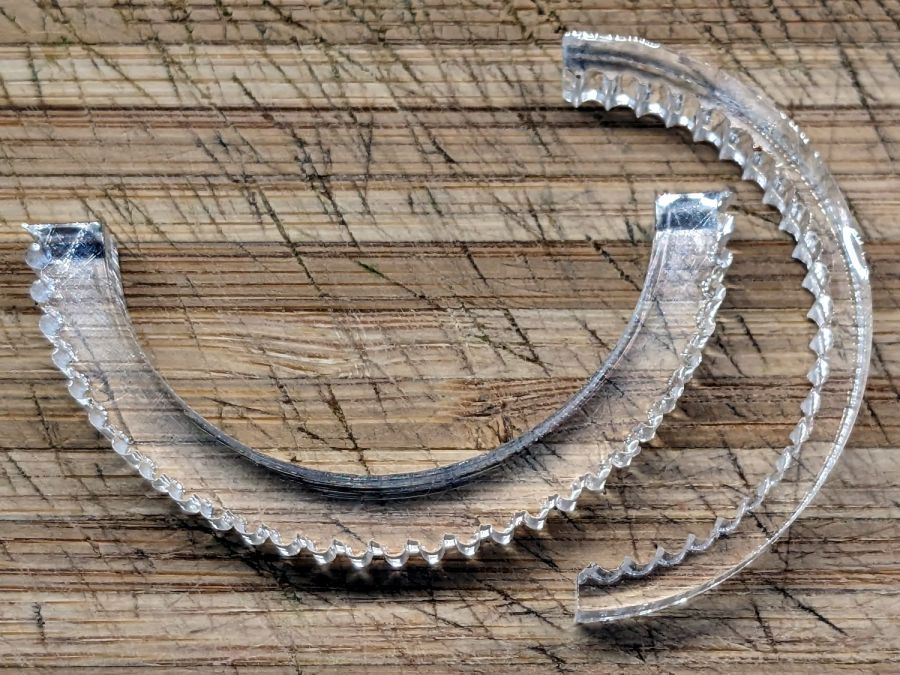
    While I had the hood up epoxy was curing, I lasered a block of edge-lit acrylic to replace the credit card shims:

    Carriage Stop - spacer
    Carriage Stop – spacer

    Which turned out to be one itsy too thick. Rather than sand / machine it down, the step over on the left grew a little brass shim:

    Carriage Stop - spacer and shim
    Carriage Stop – spacer and shim

    Both pieces depend on snippets of adhesive sheet to hold them in place, which seems reasonable because they’re always in compression. That also eliminates the hole and pin I originally thought would be necessary; living in the future is just grand.

    Thing looks like it grew there:

    Carriage Stop - installed
    Carriage Stop – installed

    The orange stripe on the handle is laser-safe PSA vinyl.

    That was easy …

  • SJCAM M50 Condensation: Redux

    SJCAM M50 Condensation: Redux

    The SJCAM M50 camera gasket seems unable to cope with The New Normal weather conditions around here:

    SJCAM M50 - screen condensation
    SJCAM M50 – screen condensation

    I think this was probably another case of diurnal pumping, given the exceedingly hot days and cool nights in late July.

    Plenty of water condensed on the bottom of the battery compartment cover:

    SJCAM M50 - battery lid condensation
    SJCAM M50 – battery lid condensation

    And inside the compartment around the AA cells:

    SJCAM M50 - battery compartment condensation
    SJCAM M50 – battery compartment condensation

    Unlike the previous leak, the camera lens wasn’t involved, so I did not disassemble the case. I let the opened camera (without batteries) dry out in the hot hot sun for the rest of the day and it seemed fine by evening.

    Keeping it out of full sunlight during the day definitely limits the locations I can use.