Ed Nisley's Blog: Shop notes, electronics, firmware, machinery, 3D printing, laser cuttery, and curiosities. Contents: 100% human thinking, 0% AI slop.
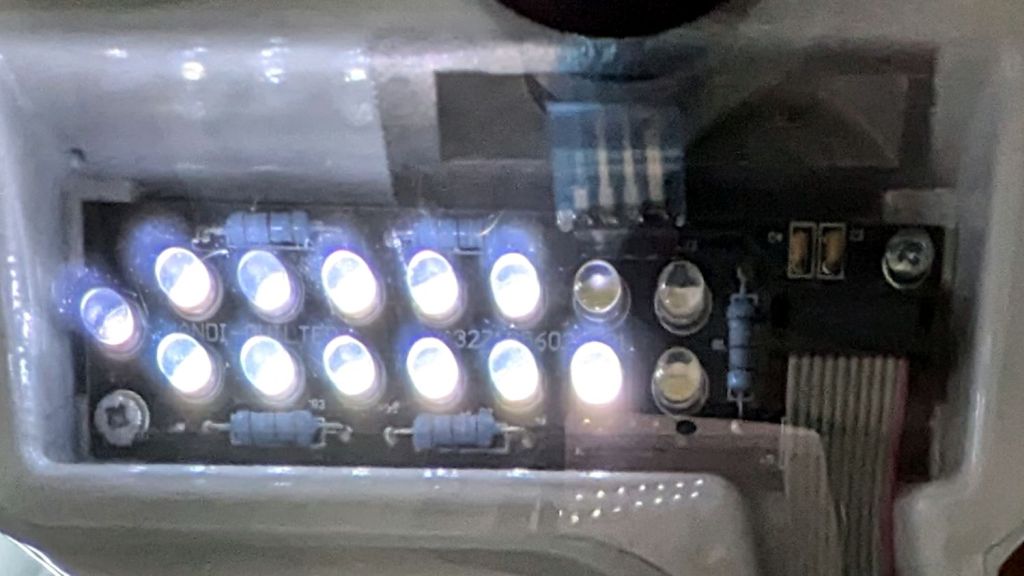
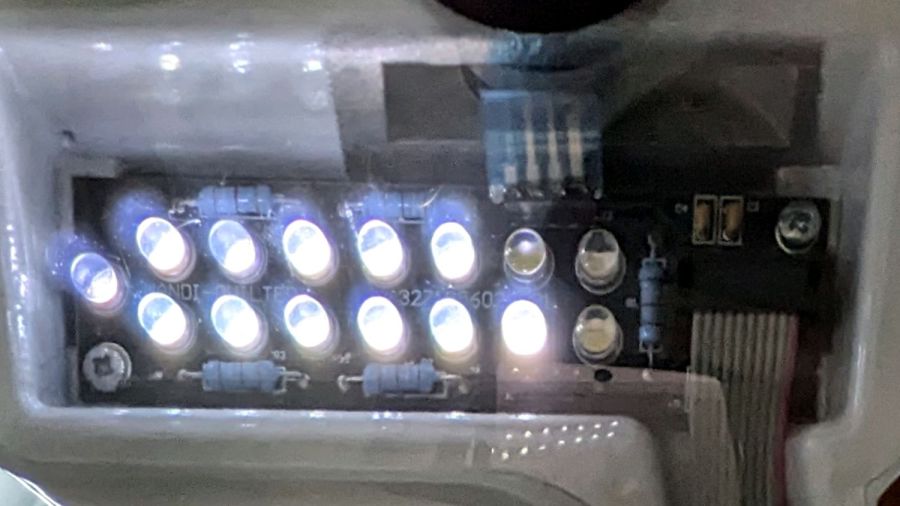
One string of three white LEDs in the left handlebar of Mary’s Handi-Quilter HQ Sixteen died over the past two decades:
HQ Sixteen – left LED deaders
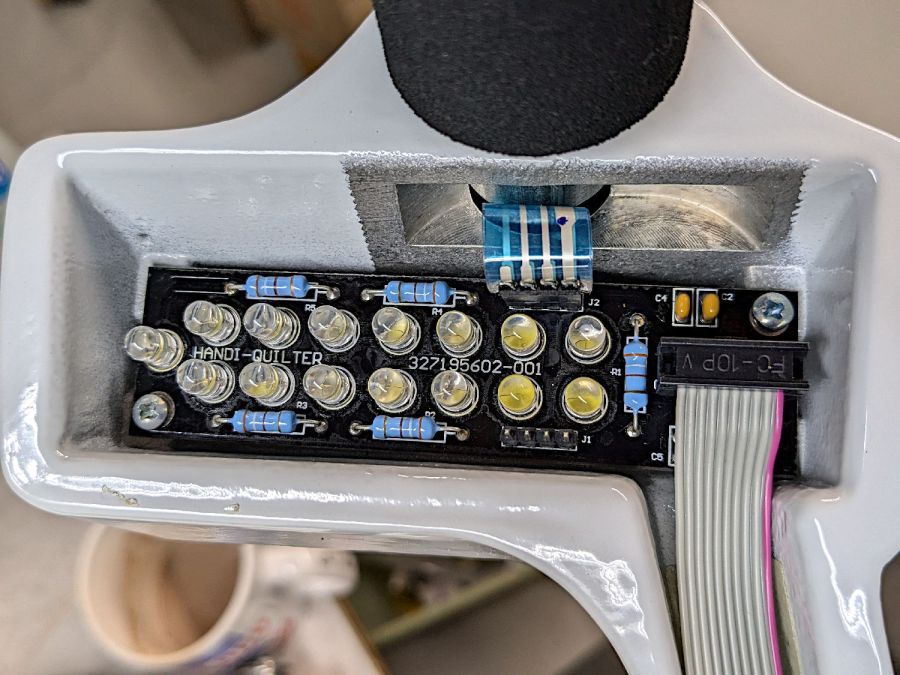
A view minus the glare:
HQ Sixteen – left LED PCB
I replaced all 15 LEDs with new-old-stock white LEDs from my stash, while neglecting to pay close attention to the silkscreened orientation marks.
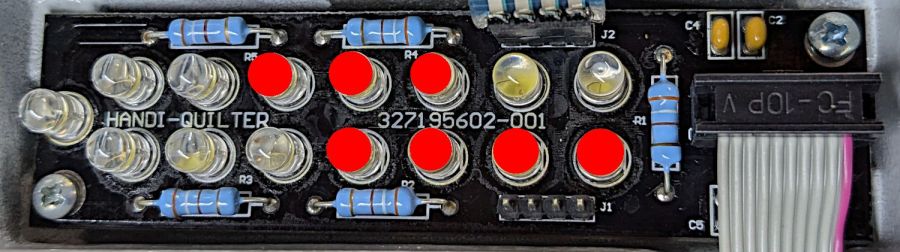
I used up a lot of solder wick while re-extracting seven of the LEDs :
HQ Sixteen – left LED PCB – orientation
The LED in the front-right corner is in the string with the two LEDs just above it, while pointing in the opposite direction. This definitely violates the Principle of Least Surprise.
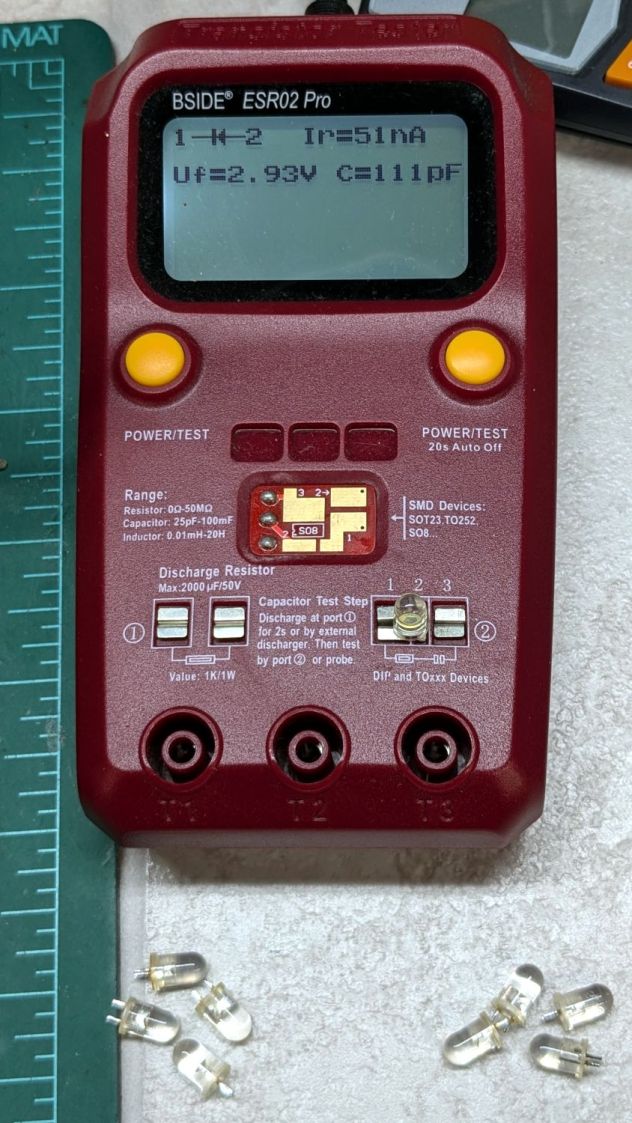
Being of sound mind, I tested all the replacement LEDs before installing them:
HQ Sixteen – LED testing
Which tedious process weeded out a couple of deaders, one with its case on backwards, and a handful of completely different white LEDs evidently from a different manufacturing batch. Buying low-budget LEDs directly from a sketchy source halfway around the planet does have its downsides.
Being that type of guy, I also tested the removed LEDs. Weirdly, one of the strings had two dead LEDs, which suggests one failed short and the increased current took another LED down with it.
Two of the three strings in the central PCB had died and were replaced without incident: they all pointed in the same direction and I can deal with consistency.
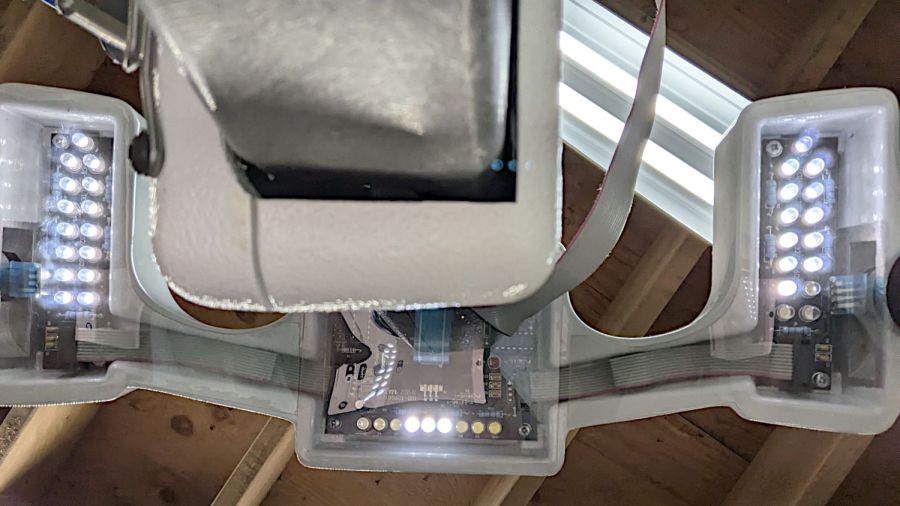
Judging from the dates codes on the ICs inside, Mary’s HandiQuilter Sixteen long-arm machine is about two decades old and many of the white LEDs in the front handlebars have gone dark:
HQ Sixteen – dead handlebar LEDs
The vertiginous view looks upward into the handlebar at the top of the machine (more on this later). The PCBs run strings of three series LEDs from a 16 VDC supply with a 390 Ω ballast resistor (oddly enough, on the ground end of the string), so one failed LED takes down all three.
I decided to replace all the LEDs, on the principle they’re surely dimmer than they used to beand to take advantage of a decade or so of improvement in white LEDs (yes, I have old stock).
After discovering that the HandiQuilter engineers violated the Principle of Least Surprise by orienting adjacent LED strings in opposite directions, I found one of the strings still didn’t light up.
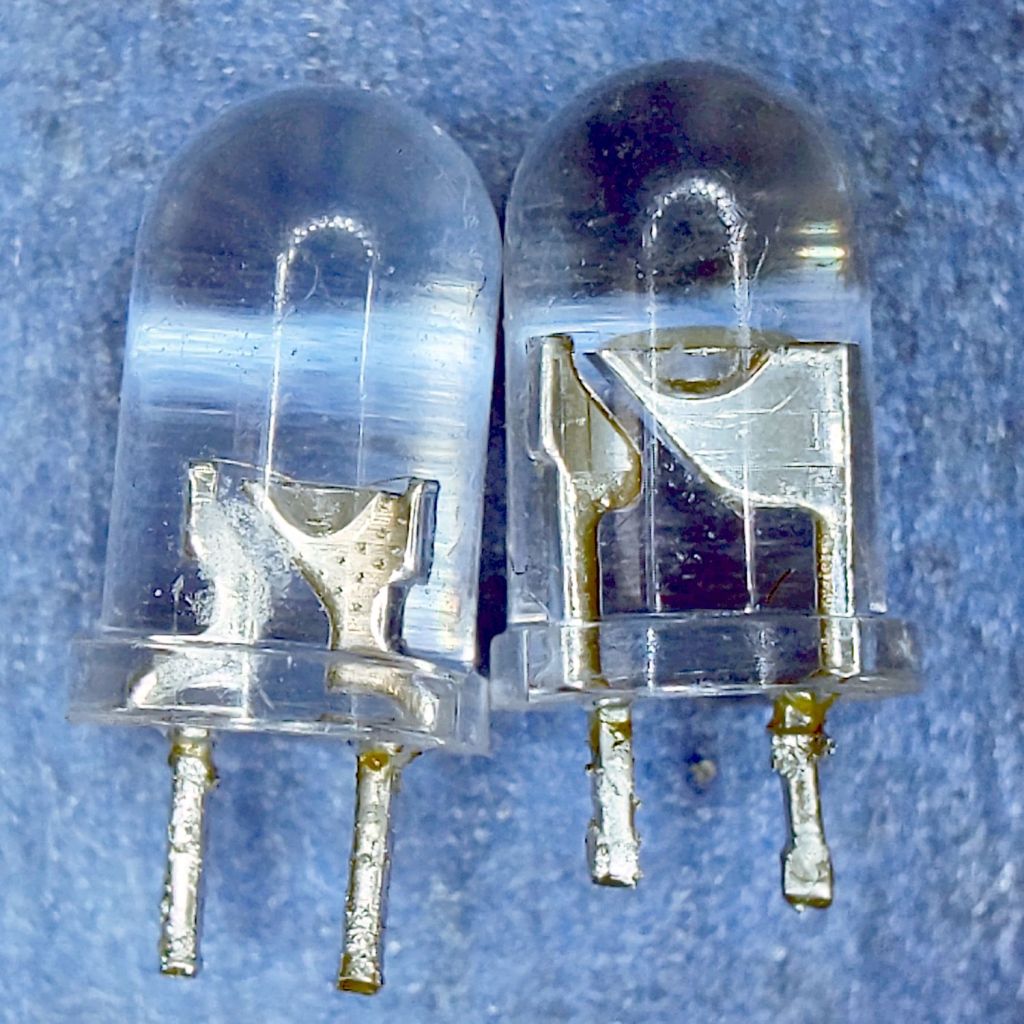
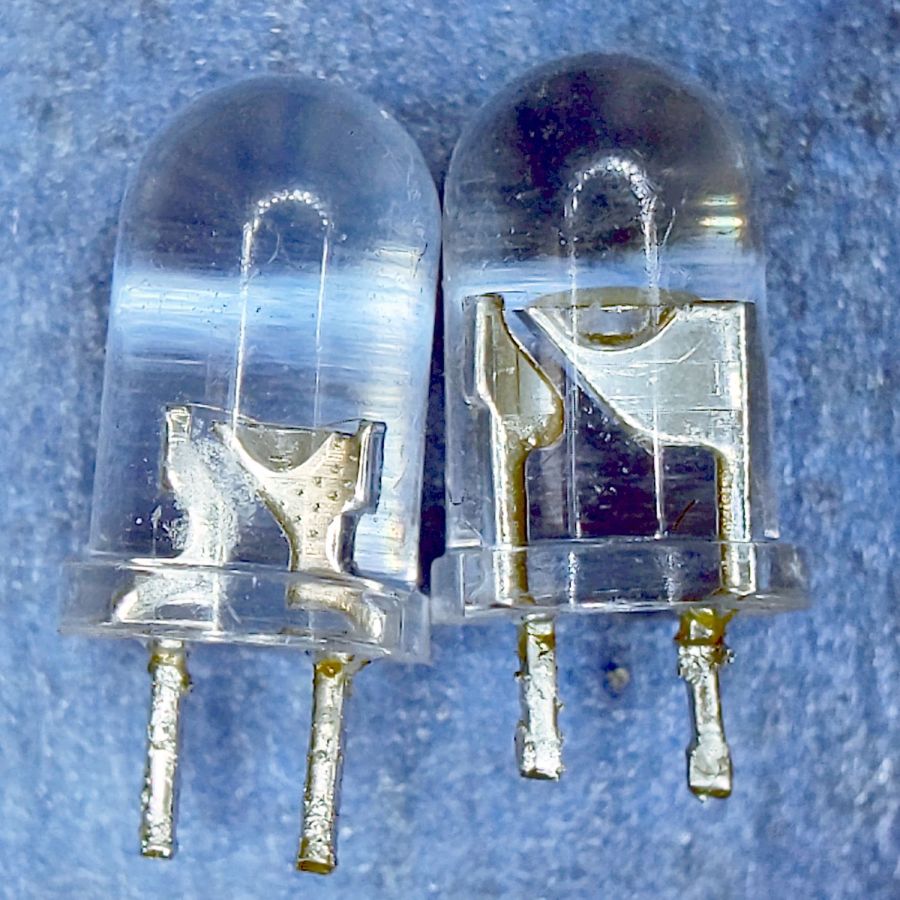
Pop quiz: which one of these LEDs caused the problem?
5 mm LEDs – swapped polarity
To the best of my knowledge, all 5 mm round LED packages mark the cathode lead with a flat edge. It’s easy to remember, as the cathode side of the schematic symbol has a bar: straight bar = straight edge.
Inside, the LED chip’s cathode lead is bonded to the reflective cup, with the anode lead wire-bonded to the top.
Took me a while to see what was wrong, too.
For whatever it’s worth, the backward LED works fine.
Although essentially all kitchens feature a microwave over the stove, essentially all women have difficulty reaching it. As a result, our kitchen has two microwaves: the built-in Samsung over the stove and our trusty Sears Kenmore on the counter.
We’ve had it for a while:
Sears Microwave – data plate
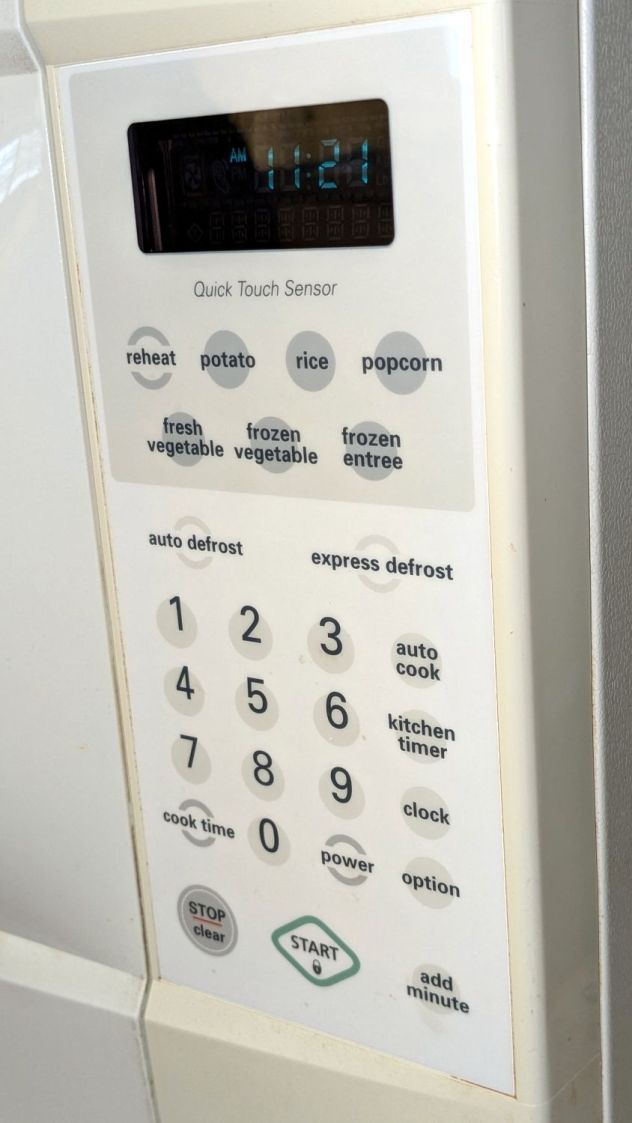
Apart from the turntable rollers, it’s been utterly reliable for the last two decades, until the Start button stopped working:
Sears Microwave – control panel
The membrane switch panel seems to be in good shape, with no cracks in the plastic surface. Only the Start button failed, which suggested the switch contact pad had failed and ruled out broken matrix traces on the flexible circuitry.
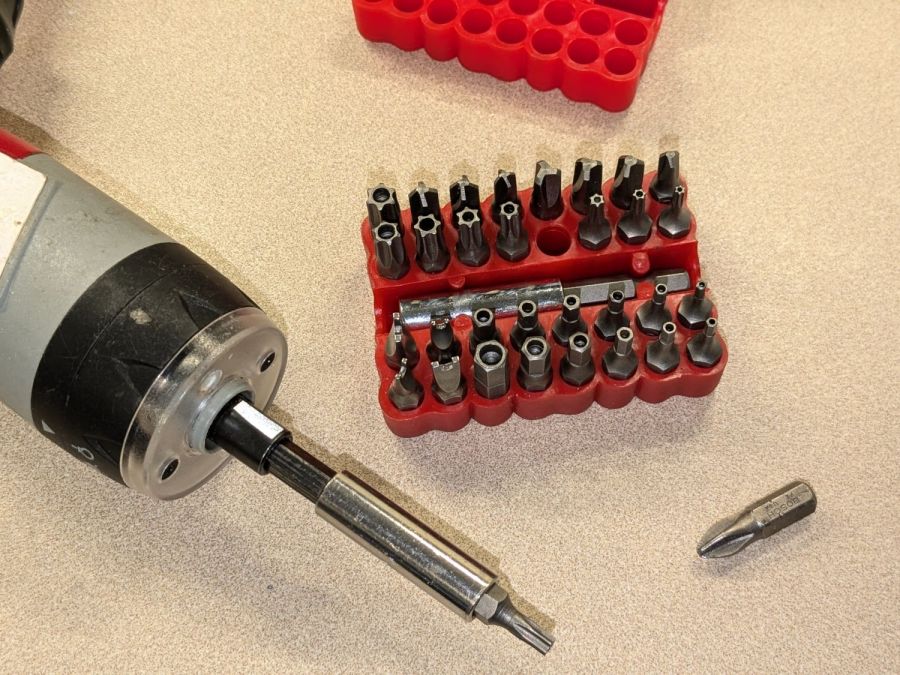
Back in the day, they kept casual tinkerers out of the dangerous interior:
Sears Microwave – Torx security screw
That would not be me:
Sears Microwave – security bit set
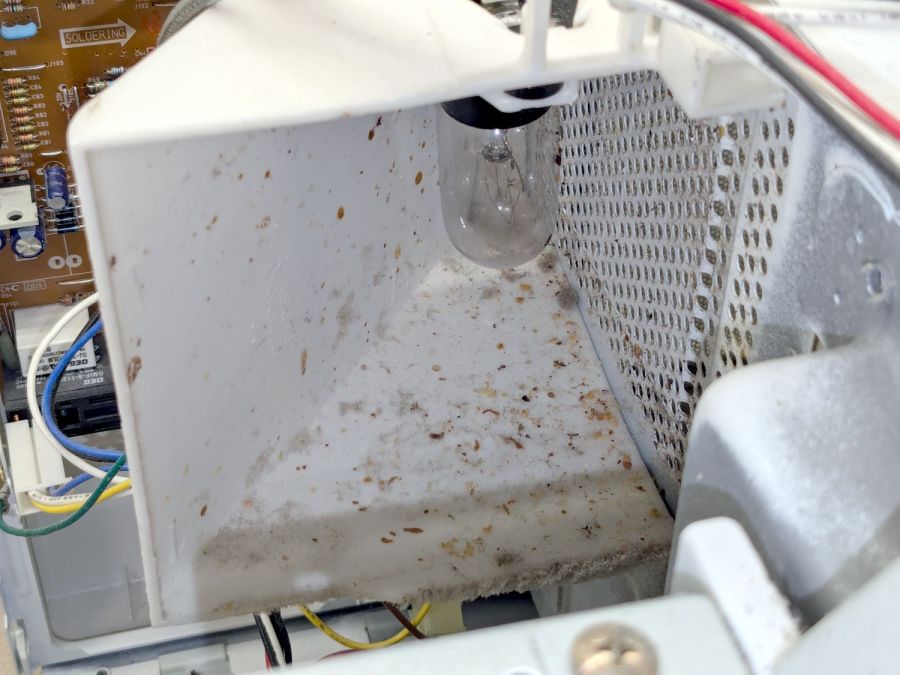
Over the course of two decades, an occasional food explosion produces a surprising amount of debris:
Sears Microwave – exhaust vent spatter
Go ahead, I dare you, show us your microwave exhaust vent.
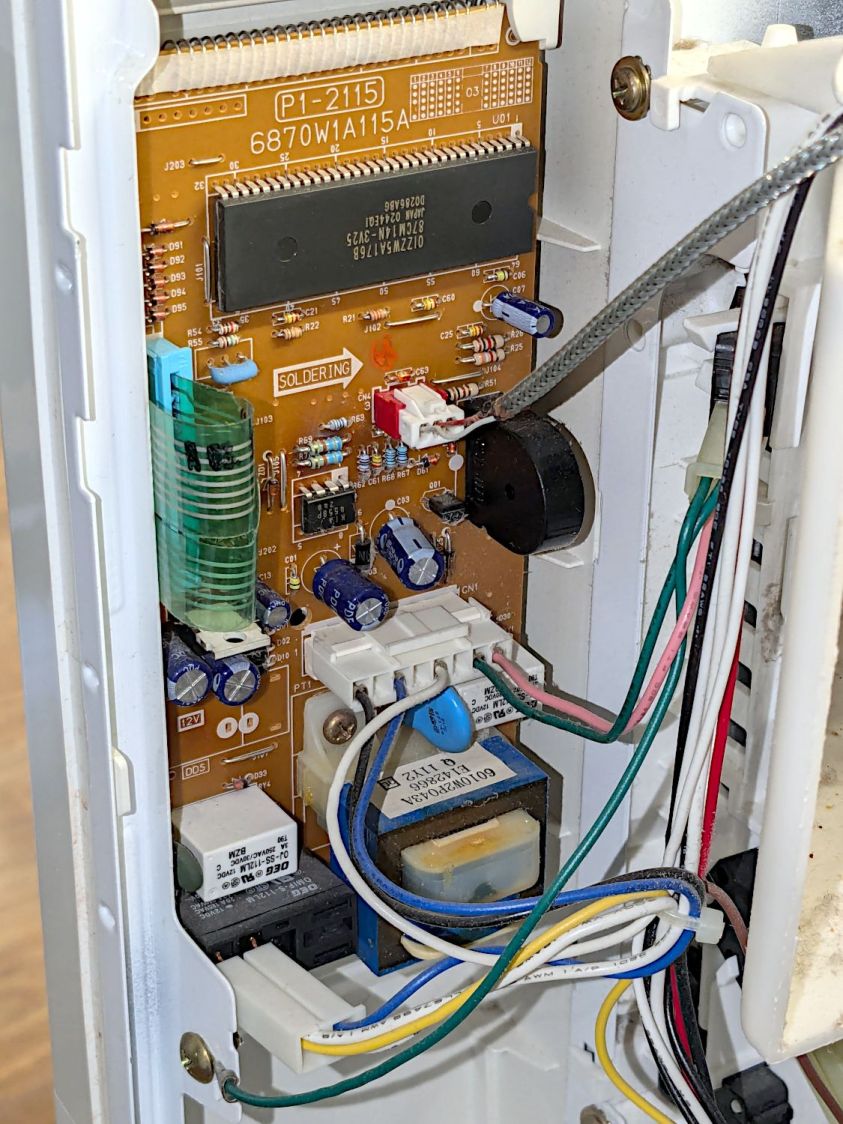
The control panel circuit board & wiring looks like this:
Sears Microwave – control board – in place
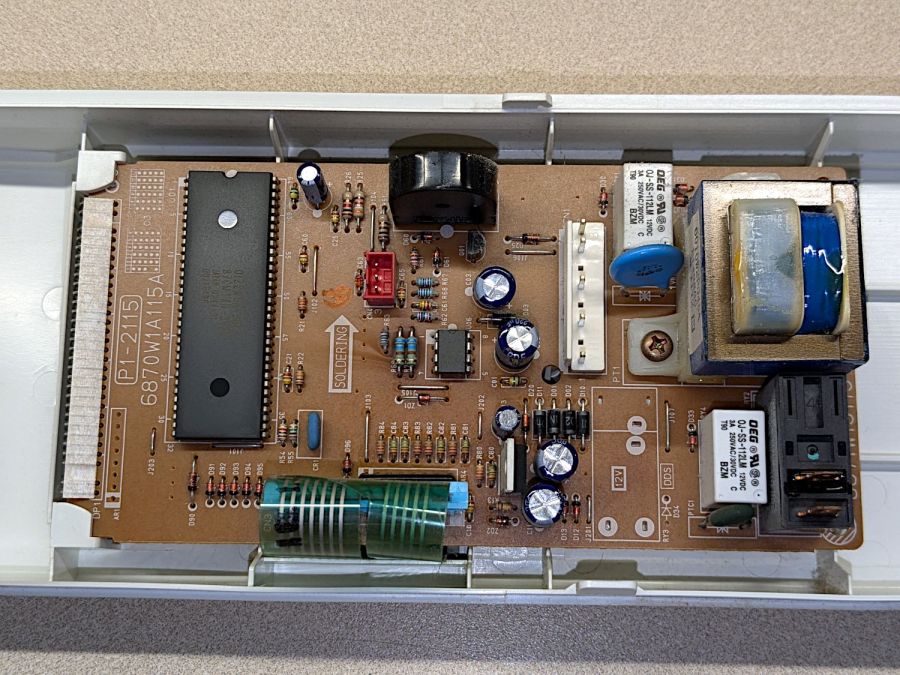
Unplugging all the connectors proceeds as you’d expect, whereupon a single screw (out of sight to the top) releases the control assembly and pulling the whole thing upward gets it out of the cabinet:
Sears Microwave – control board
The capacitors show no signs of The Plague, but those resistors near the optoisolator (?) in the middle have a suspicious thermal plume.
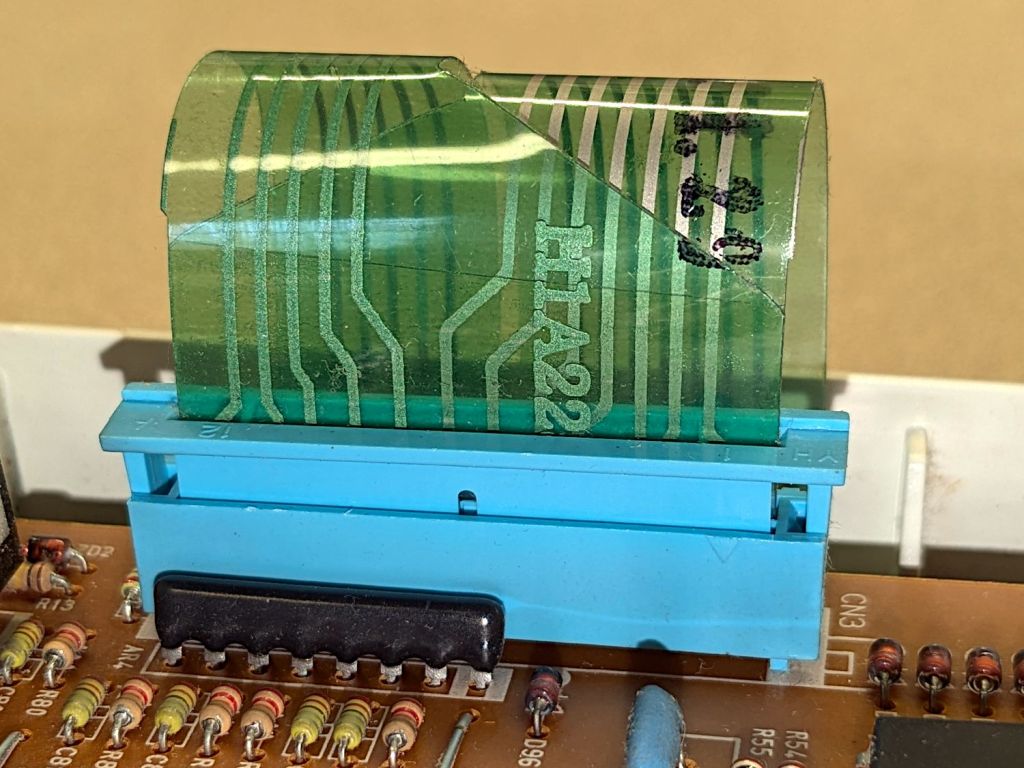
The ribbon cable from the control surface goes into a connector with the usual locking collar:
Sears Microwave – control panel cable connector
The cable also has cutouts latching into tabs molded into the collar:
Sears Microwave – control panel ribbon cable – locking tabs
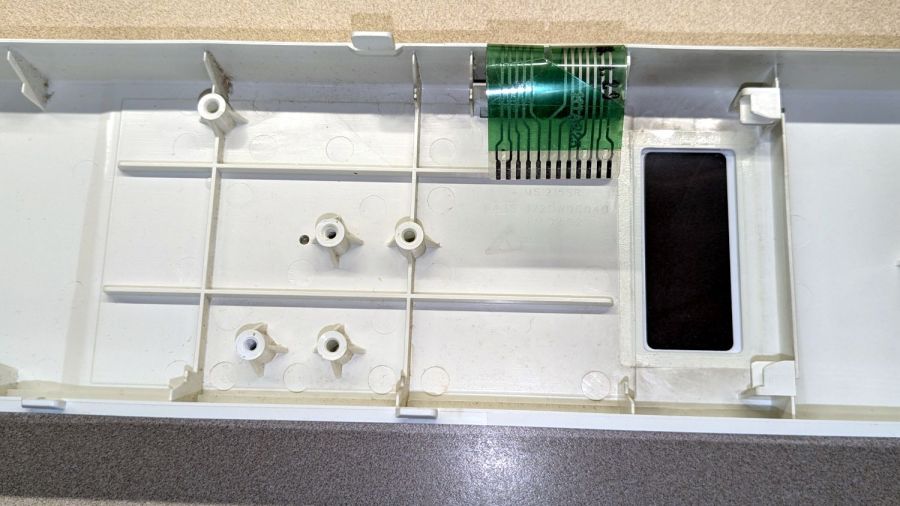
Removing two screws at the transformer releases the PCB:
Sears Microwave – control panel interior
Which promptly slammed the whole repair mission to a dead stop: with the entire membrane switch assembly glued to the front of the plastic shell, there is no way to get to the Start switch. Trying to peel the membrane off will most certainly destroy it.
Because all the other functions still worked, including the Add Minute button, we figured we can eke out a few more years before something else fails or the lack of one button gets intolerably annoying.
I reassembled everything in reverse order, plugged it in, and, while setting the clock, discovered the Start button once again worked perfectly.
It’s a classic laying-on of hands repair: take something apart, replace nothing, reassemble, and it works!
If the Start button is not part of the overall switch matrix, with a separate conductor through the ribbon cable, un- and re- plugging would be enough to restore a flaky contact. We’ll never know the rest of the story, although with this post as a reminder, maybe I can remember to tear the matrix apart when we scrap it out.
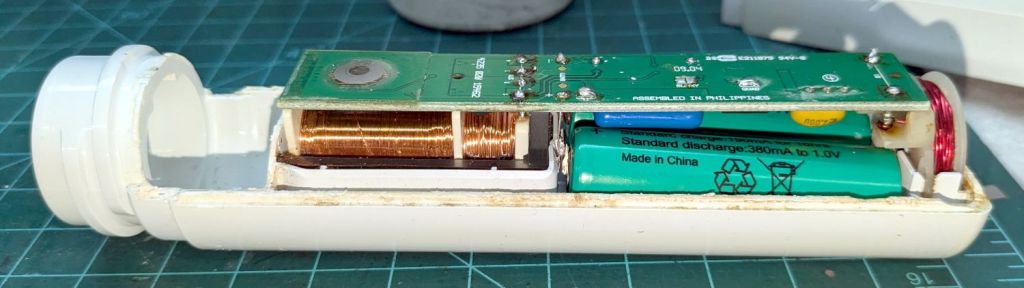
Although replacing the Sonicare E5000 battery six years ago was supposed to be the last time I’d do that, the poor thing died leaving most of a year’s supply of brush heads in the drawer.
Half a quartet of NiMH AA cells should keep it happy while using up that stash:
Sonicare Toothbrush – NiMH AA cells installed
The AA cells sit at a jaunty angle due to re-re-using the original contact tabs soldered into the PCB.
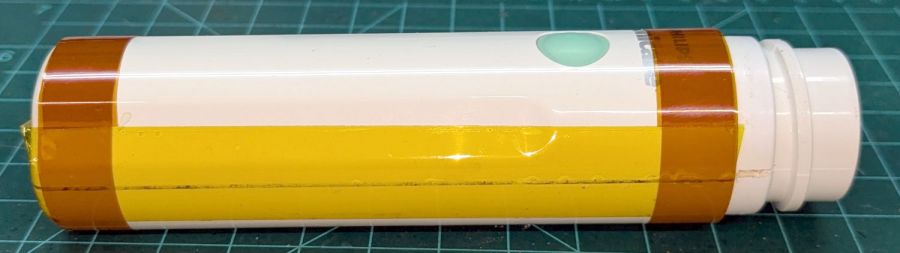
I’m getting pretty good at taping the case closed:
Sonicare Toothbrush – Kapton tape
Although I have no pictures to prove it, the other half of the AA cell quartet restored youthful vigor to the Norelco T770 beard trimmer. Having interior pictures made finding and popping its case latches so much easier.
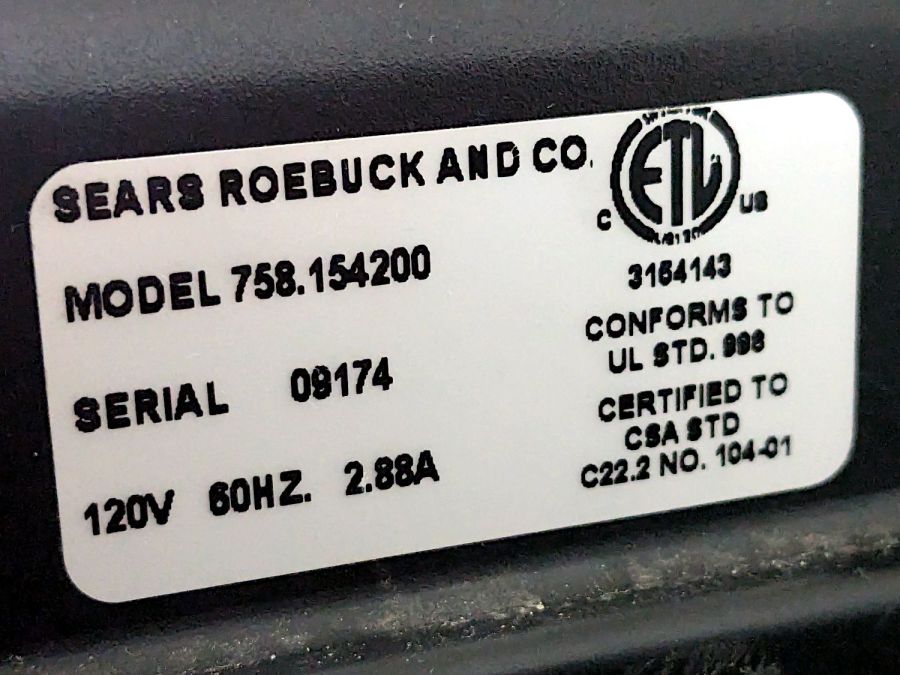
Although the Sears humidifier (Model 758.154200 if you’re keeping score) that Came With The House™ works fine with its lid hinges broken, Mary heard an odd hissing sound somewhere inside. The sound continued with the thing unplugged and, after a protracted struggle in the kitchen sink, we tracked the sound to a crack in one of the dimples joining the front and back faces of the right-side water bottle:
Sears Humidifier bottle – overview
The vertical shaded bars come from the camera’s electronic shutter vs. unfiltered 60 Hz AC powering the shop LED lights.
The bottles are polyethylene that sneers at any normal sealant, but I have a few square inches of tape intended for repairs exposed to weather. I didn’t get the snippet aligned just as I wanted, but its gooey adhesive definitely covered the crack:
Sears Humidifier bottle – patched
The bottles normally operate with a slight vacuum, thus the air hissing through the crack, so the tape need not withstand any continuous pressure and the adhesive layer should flow into the crack if it goes anywhere at all.
Protip: the gooey adhesive bonds instantly and irrevocably to whatever it touches, so do a trial fit before you peel off the backing tape.
If the “Serial” is a date code, it’s been around for while:
The humidifier that Came With The House™ had a lid with two broken plastic hinges that I figured I could never replace, but while cleaning out the fuzz for the upcoming season I found one missing piece stuck inside the lid. Given a hint, I glued it back in place:
Humidifier Hinge – outlined
There’s a strip of duct tape around the outside holding the fragment in place while the adhesive cured.
A manual curve fit to the image in Inkscape produced the red outline, which gets saved as a plain SVG and fed into OpenSCAD to create a solid model:
Humidifier Hinge – solid model
The cylinder doesn’t exactly fit the end of the hinge, but it’s close enough. The straightforward OpenSCAD code making that happen:
The pin has a hole for a M2 screw, but contemplation of the broken pieces suggested the pin wasn’t the weakest link, which later experience confirmed.
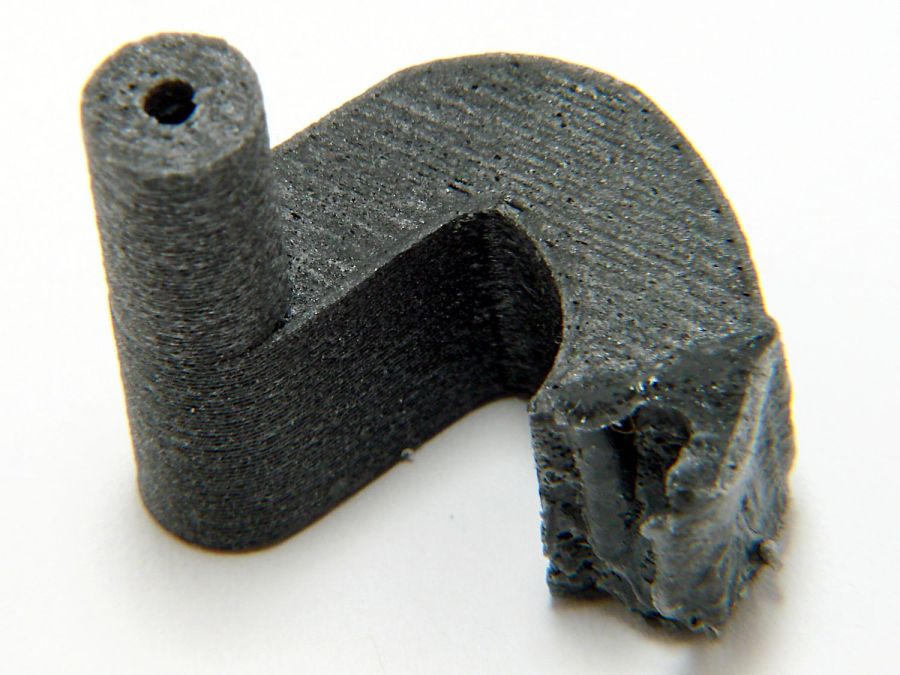
Figuring I’d need only one hinge, I made a spare for fitting:
Humidifier hinge – on platform
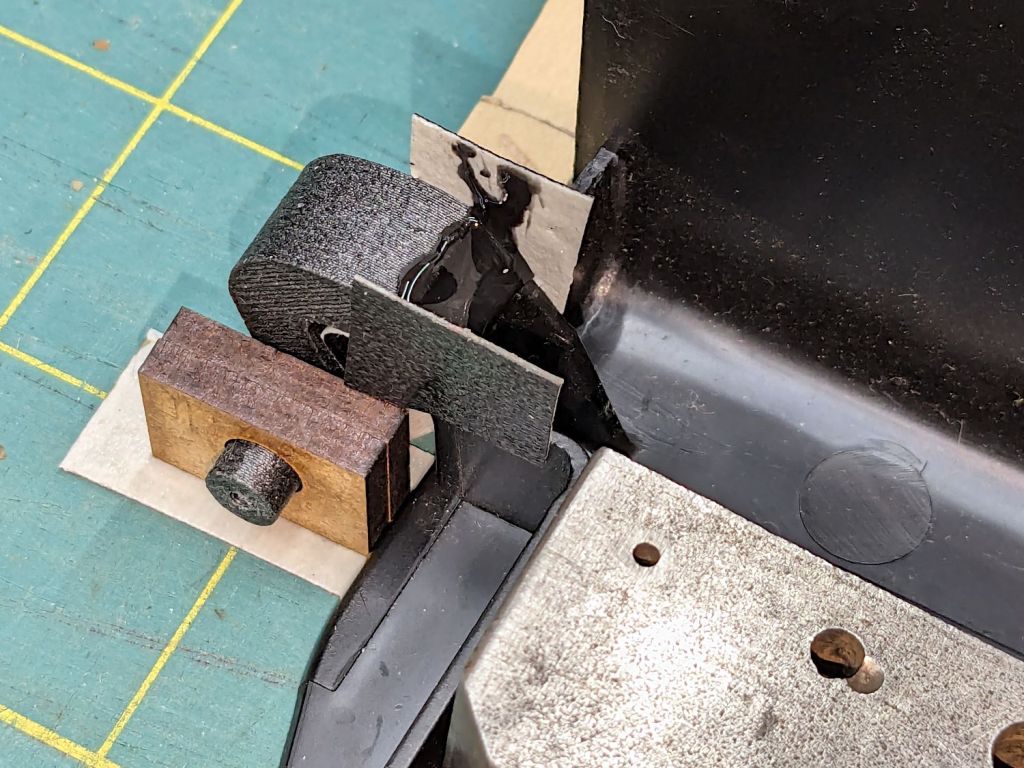
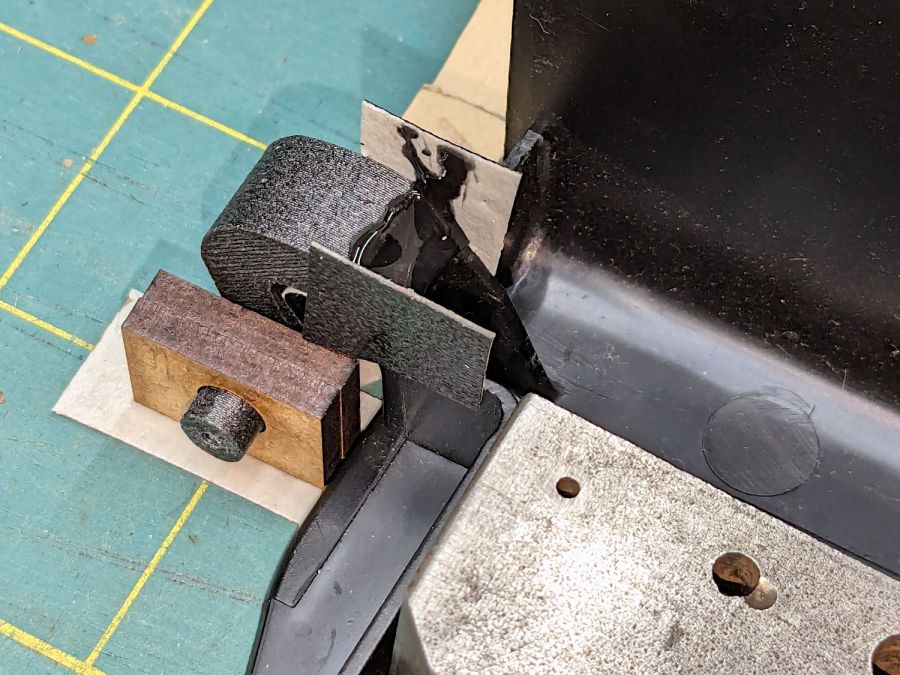
The unmodified part fit just about perfectly, whereupon a completely ad-hoc fixture involving a pair of laser-cut MDF slabs, a craft stick epoxy mixer, and more duct tape held it in place while the adhesive cured:
Humidifier hinge – fixturing
The hinge pin turned out to be half a millimeter too long, which is easily fixed, and it worked fine:
Humidifier hinge – installed
That’s more duct tape wrapped around the perimeter to hold the pieces in place, should it break again.
Which, I regret to report, occurred on the way up the stairs from the Basement Shop™ when the lid slipped from my grasp, fell away from the rest of the humidifer’s top panel, and jammed open:
Humidifier hinge – break
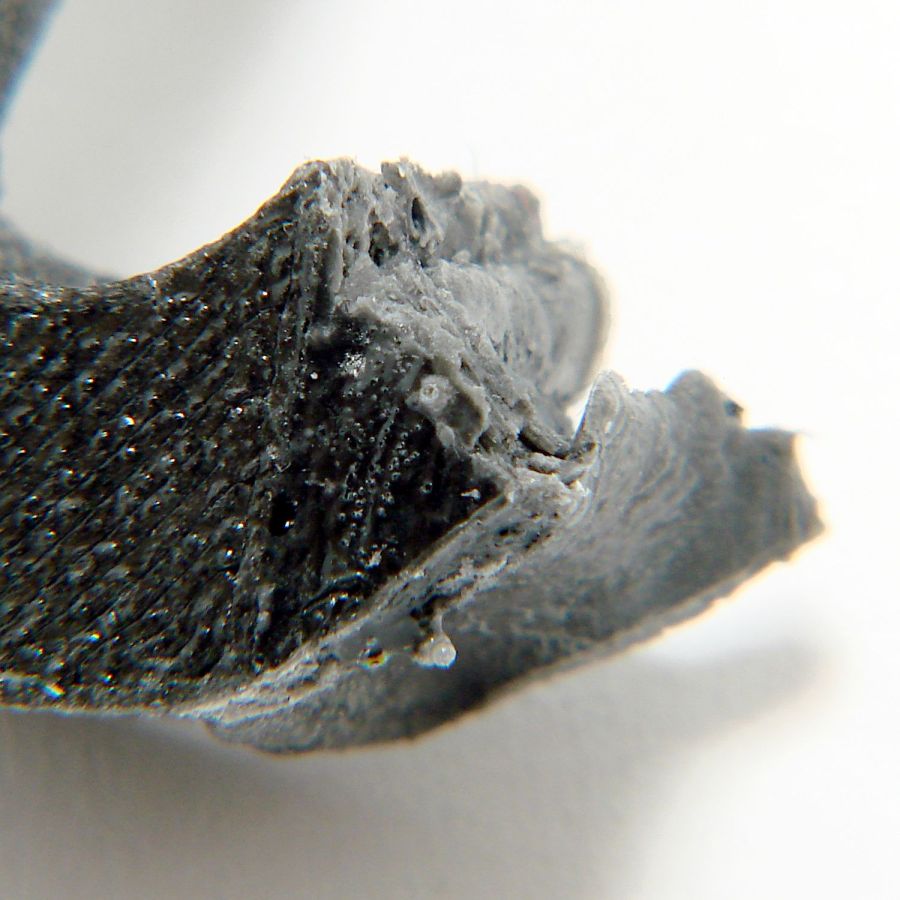
The PETG-CF part held together, the adhesive remained bonded to both pieces, but the original plastic fractured just below the joint. A closer look from the other side shows the break:
Humidifier hinge – break detail
The other hinge broke about where it did before.
So the humidifier remains in service with the lid in status quo ante and a small bag inside holding the fragments for the next return to the shop.
The previous owners replaced the deck two years ago, but the contractor installed more than half the planks with the grain cupped upward. The job was so bad the contractor replaced the most egregiously warped planks (over by the door and out of sight on the right) under warranty, but left all the other mis-oriented planks in place, presumably because they weren’t that bad yet.
The bare wood must age for a while before staining, so the shelf of painting supplies held a year-old gallon can as a reminder, with about two inches of stain / preservative in the bottom. I applied it to the “new” planks with pleasing results that absolutely do not match the rest of the weathered wood. With nothing to lose and plenty to gain, I applied the rest of the potion to the worst of the upside-down planks, producing the egregiously bad result you see above.
Given how the stain weathered to oblivion over the course of the last year, I expect all those planks will become roughly the same shade of ugly by next summer, when I might possibly be motivated to slather another gallon over the deck.