Ed Nisley's Blog: Shop notes, electronics, firmware, machinery, 3D printing, laser cuttery, and curiosities. Contents: 100% human thinking, 0% AI slop.
The burner in our oven failed in December 2006, probably because the charred remains of an insect produced a hotspot:
Burned Oven Tube Overview
That replacement burner came with its own igniter that failed after 8.5 years, with symptoms of slow oven ignition and the occasional smell of propane.
In normal operation, the igniter element glows yellow-hot for a minute or so before the valve opens, gas flows over the igniter, there’s a muffled whoomf, and the oven begins heating. The igniter remains powered as long as the oven is on, emitting a baleful yellow glare through the slots in the oven’s lower cover.
It consists of a ceramic base holding a stout resistance heater that apparently suffers from increasing resistance as it ages, reducing the current to the point where it won’t activate the gas valve.
I didn’t know that, either, but Google sees all, knows all, and tells most.
The gas valve label says it requires 3.3 to 3.6 A from the heater to turn on the gas:
Kenmore range oven gas valve – data plate
But the old heater was good for barely 2.6 A (there’s a bit of parallax in this view):
Kenmore range oven gas valve – weak igniter current
Igniters range from $18 to upwards of $60 on Amazon, so I picked the cheapest one, waited two days, installed it, and measured 3.5 A at First Light, down to a bit over 3.0 A at running temperature. That’s on the low side of the valve’s spec, but it seems happier with an extra half amp.
We’ll see how long this igniter lasts; maybe next time I’ll double my spend…
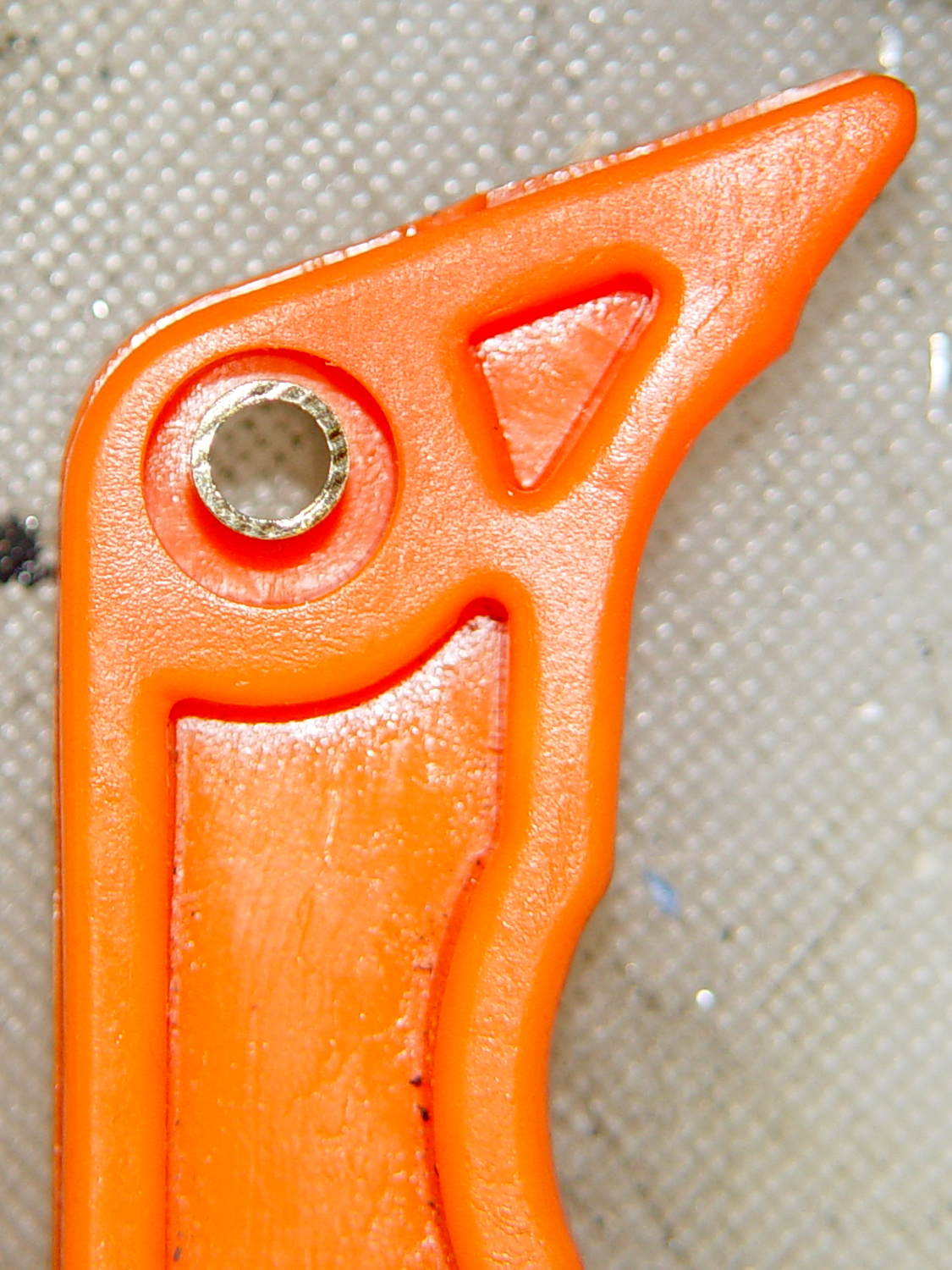
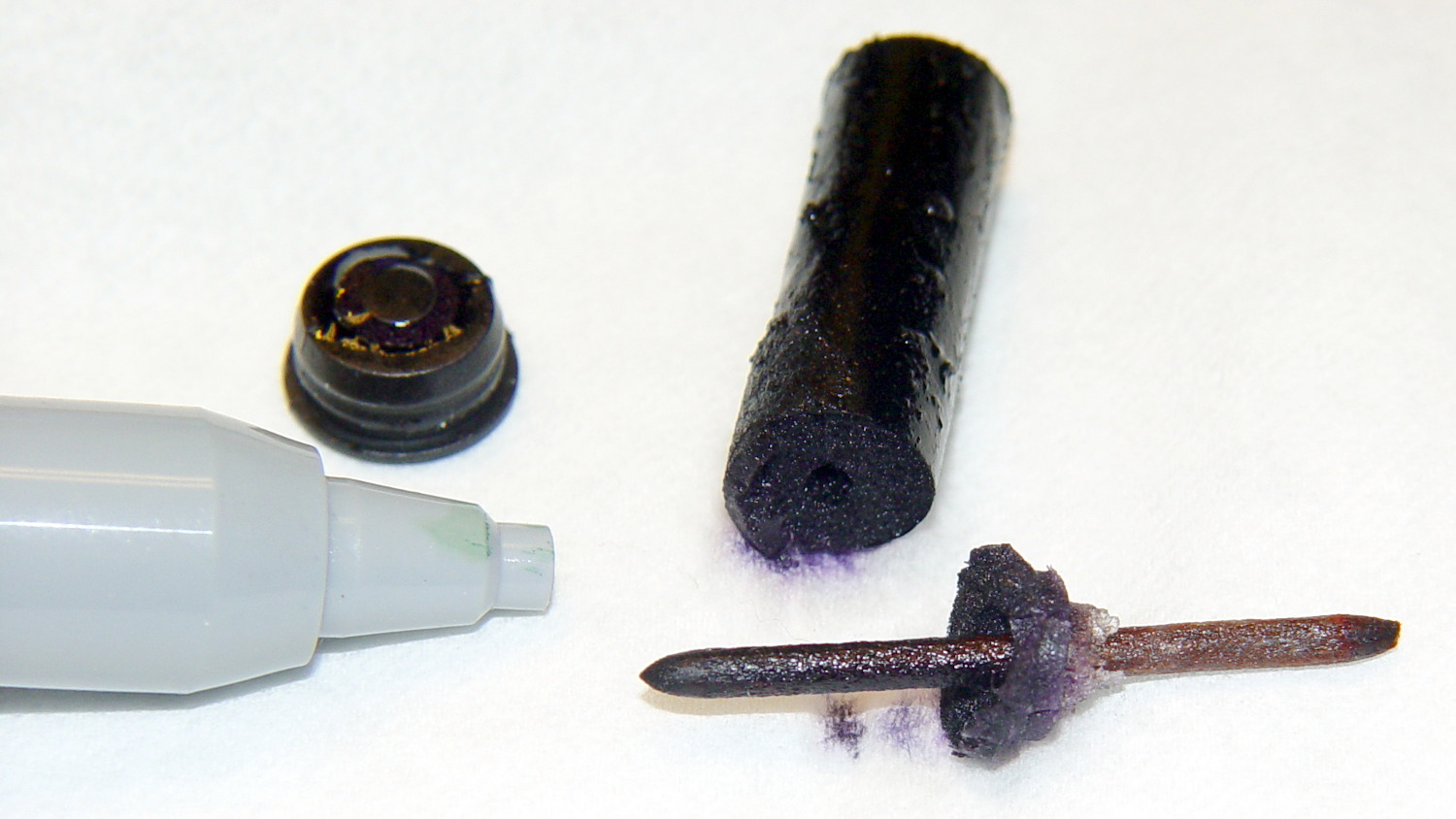
It turns out that the ceramic-tip plotter pens don’t come apart at the top of the flange as I expected. Instead, there’s a snug-fitting plug with a tapered top and an invisible joint at the end of the body tube:
HP7475A Plotter – ceramic pen – disassembled
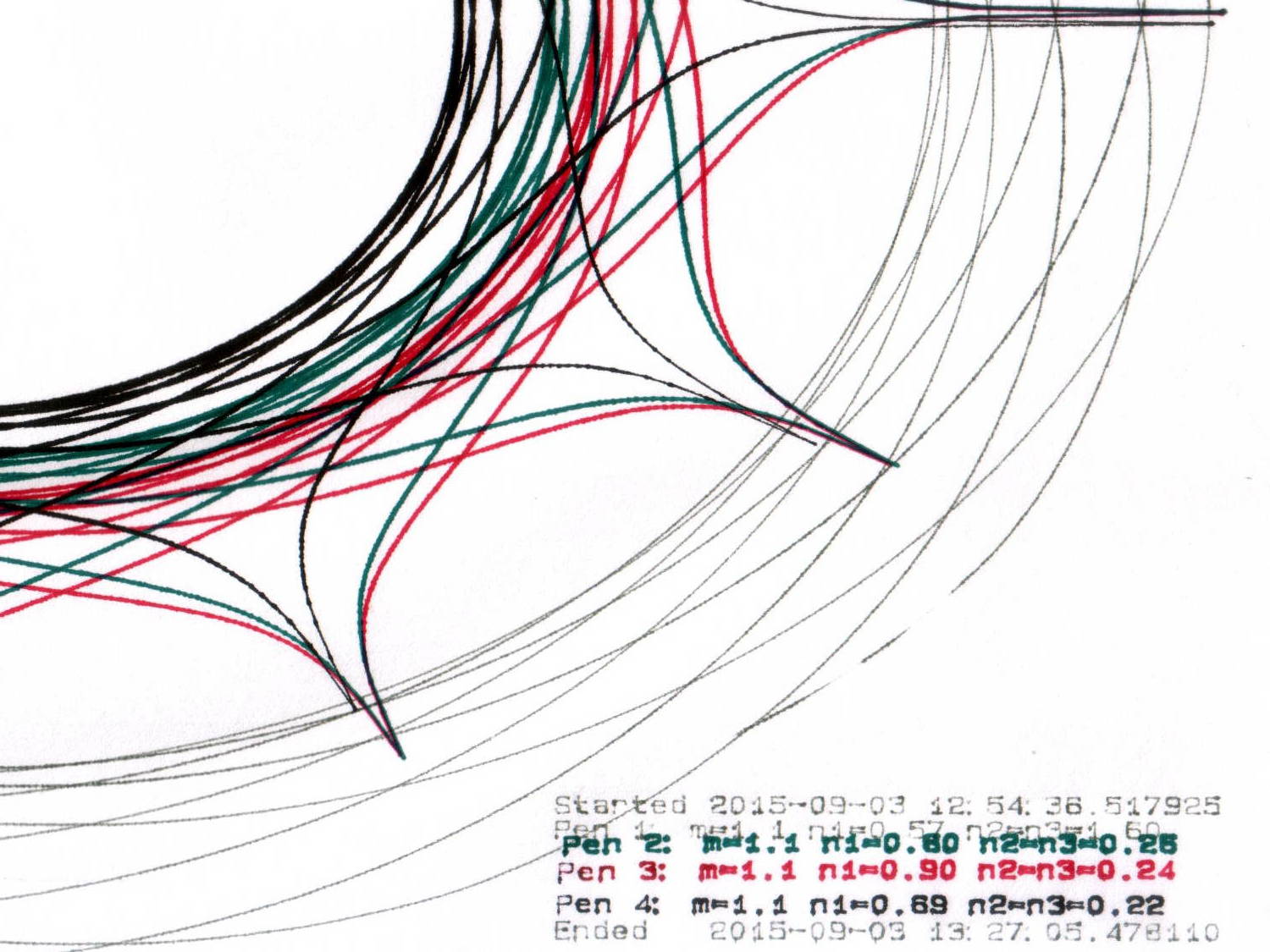
Refilling a pair of defunct black ceramic pens didn’t bring them back to life: an ample supply of fresh black ink never made it from the fluff to the nib. Soaking the nibs + fiber shafts in 10% ethanol for a day created an unappetizing black vodka shot that did nothing to get the ink where it needed to be.
The right time to refill those pens would have been, oh, probably a decade or two ago…
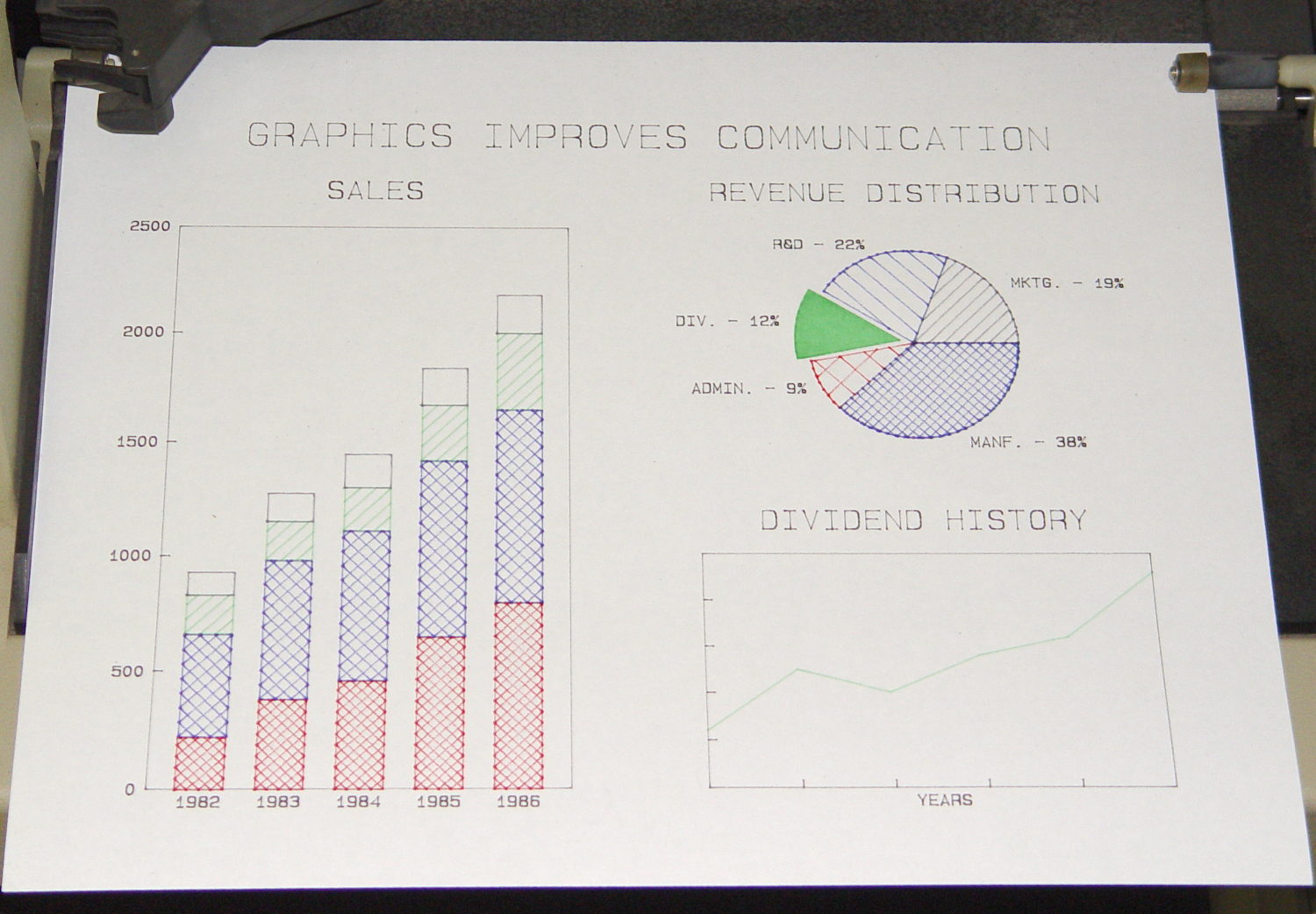
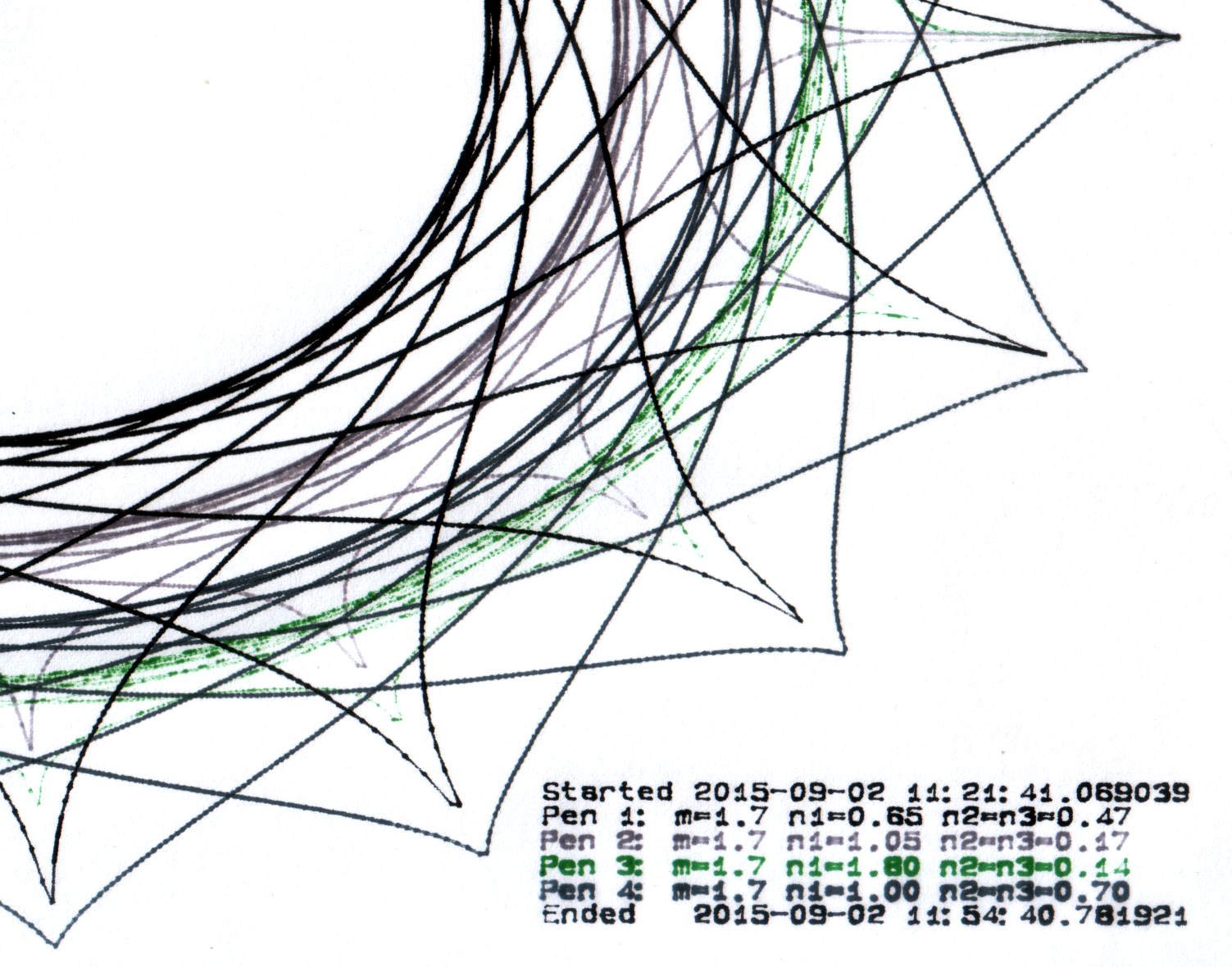
The blotches on the legend in the lower left corner show that a refilled plotter pen can accumulate a droplet of ink around its nib, which should come as no surprise. I wiped off the excess immediately after refilling each pen, let the assortment sit for a few hours to (presumably) let the new ink reach the nib, and wiped them off before inserting them in the plotter’s pen carousel. All I can say is that I used up a bunch of paper towels in the process…
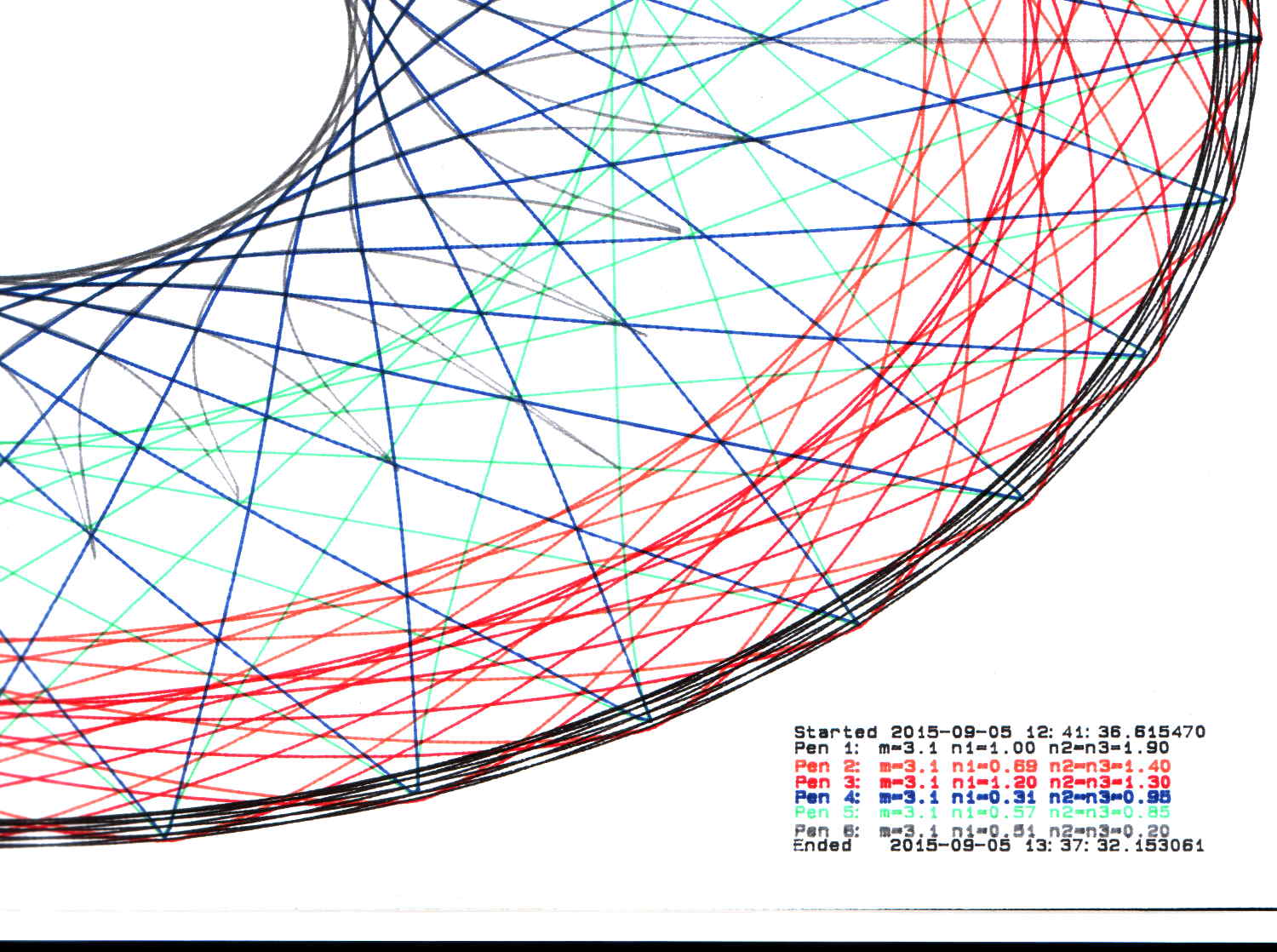
A closer look at the plot shows Pretty Good If You Ask Me results:
CMYK Refilled Pens – plot detail
The two blue-ish pens have less flow than the others, resulting in dotted lines that should be continuous. As nearly as I can tell, that’s a function of how much OEM ink has solidified in the fiber nib and, most likely, the fiber rod that draws ink from the sponge reservoir inside the body.
And, of course, the colors produced by adding CMY printer ink to the surviving OEM ink aren’t found in any catalog. I’m also blithely ignoring the difference between the inks inside plotter pens intended for paper and those for overhead transparencies; at this late date, that’s defined to Not Matter.
Spring Road, the only route between Vassar Road and the Galleria / South Hills malls, had fallen into poor repair over the last few years, to the point where we rode to the end of Vassar Rd, crossed all seven lanes of Rt 9, low-geared up the southern access road to South Hills, then traversed the two-lane ring road. We had high hopes for the recently completed reconstruction project that closed Spring Rd for several weeks.
Although the paving is much better and the reconstruction removed a blind curve over a hill, the “rideable” shoulder now spans every single drain grate along both sides of the road. You encounter the first pair at speed in the turn from southbound Vassar Rd onto Spring Rd:
Spring Rd 2015-07-30 – Westbound at Vassar
Don’t cross either grate at full speed or you’ll flip over the high side into traffic.
A gallery of some of the other fine grates on offer along Spring Road:
Spring Rd 2015-07-30 – WB – grate 1
Spring Rd 2015-07-30 – WB – grate 2
Spring Rd 2015-07-30 – WB – grate 3
Spring Rd 2015-07-30 – EB – grate 1
They’re not nearly as smooth-and-level-at-grade as you might expect from the pictures; some are recessed two inches into the pavement. I rode over some that looked passable and they’re definitely not the sort of obstacle you want to cross without thinking. Forsooth: steel bars and bike tires do not a stable encounter have.
I’m also certain, based on past experience, that motorists won’t understand why we’re (still) riding in the lane, rather than using the new, most-wonderful shoulder.
Like, for example, when Mary elected to jounce over a grate and I rode the fog line along the abrupt slope down to the concrete box:
Spring Rd 2015-08-01 – EB – grate front view
The rear view shows why bicycle-friendly design matters:
Spring Rd 2015-08-01 – EB – grate rear view
FWIW, I generally ride slightly to Mary’s left, because I figure that way they’ll almost certainly miss her.
Oh, well. The new Spring Road is about as good as road design and paving gets around here…
This marks the end of my infatuation with tire liners:
Schwalbe 20 inch tube – tire liner damage
There seems to be no way to eliminate tube erosion at the end of the liner. I’ve tried tapering the thickness, taping the joint, and so forth and so on.
Fortunately, the tire went flat in the garage and I did a quick swap before our morning ride.
Searching for tire liner will reveal the rest of the stories, both good and bad.
My Sony HDR-AS30V is an action camera, but requires an external case / frame to mount it on anything. Here’s the camera inside its AKA-SF1 Skeleton Frame atop my helmet:
Sony HDR-AS30V camera on bike helmet – inverted
Four 1 mm tall ramps on the inside of the black base (the part just above the yellow sled) snap into 2.6 mm square sockets in the skeleton frame surrounding the camera. For an unknown reason(s) that surely involves applying forces I don’t remember, an opposing pair of those ramps broke off, leaving the other pair to loosely hold one end of the camera in place.
In this picture, the left ramps (one visible) are missing, leaving a square-ish gray scar that’s nearly indistinguishable from the reflection on the intact ramp on the right:
Sony HDR-AS30V Skeleton Mount – broken latch ramps
Surprisingly, the round head of a brass 0-80 machine screw fits neatly inside the square socket on the frame; they’re a bit more than 1 mm deep. The approach ramps visible below the sockets guide the latches on the base:
Sony HDR-AS30V Skeleton Mount – frame sockets
So I figured I could just shave off the remaining two latch ramps, drill four holes at the proper spots, and replace the plastic ramps with metal screws.
I clamped the skeleton frame to the Sherline’s tooling plate, aligned it parallel to the X axis, put the laser spot dead center in the square socket, then snapped the base onto the frame. The laser spot shows where the drill will hit:
Sony HDR-AS30V Skeleton Mount – laser hole alignment
A carbide drill did the honors:
Sony HDR-AS30V Skeleton Mount – 0-80 hole drilling
That’s a #55 = 0.0520 hole for 50% thread, rather than the proper 3/64 = 0.0469 hole for 75% thread, because that’s the closest short carbide drill I had; an ordinary steel twist drill, even in the screw-machine length I use on the Sherline, would probably scamper away. The hole isn’t quite on the sloped bottom edge of the base, but it’s pretty close.
The first hole didn’t emerge quite in the center of its ramp scar:
Sony HDR-AS30V Skeleton Mount – hole position – interior
Which made sense after I thought about it: the ramp tapers to nothing in the direction of the offset, so the hole actually was in the middle of the matching socket.
Threading the holes required nothing more than finger-spinning an 0-80 tap:
Sony HDR-AS30V Skeleton Mount – tapping 0-80
The feeble thread engagement didn’t matter, because those mysterious tabs-with-slots (possibly for tie-down strings?) just above the holes were a perfect fit for 0-80 brass nuts:
Sony HDR-AS30V Skeleton Mount – reassembled
The screw heads extend into the sockets, hold the frame solidly in the base, and make it impossible to pull out. Although the frame still slides / snaps into the base, that seems like it will wear out the sockets in fairly short order, so I’ll unlatch the frame (with the yellow slide latch on top), open it up, ease it into position, and then latch it in place. That was the only way to remove it from the original latches, so it’s not a big deal.
I should add a drop of epoxy to each of those nuts and perhaps fill the screw slots with epoxy to keep them from abrading the plastic inside the sockets. Maybe a dab of epoxy on the heads, followed by latching the frame in place, would form four square pegs to exactly fill the sockets.
This was a straightforward repair that should not have been necessary…