Ed Nisley's Blog: Shop notes, electronics, firmware, machinery, 3D printing, laser cuttery, and curiosities. Contents: 100% human thinking, 0% AI slop.
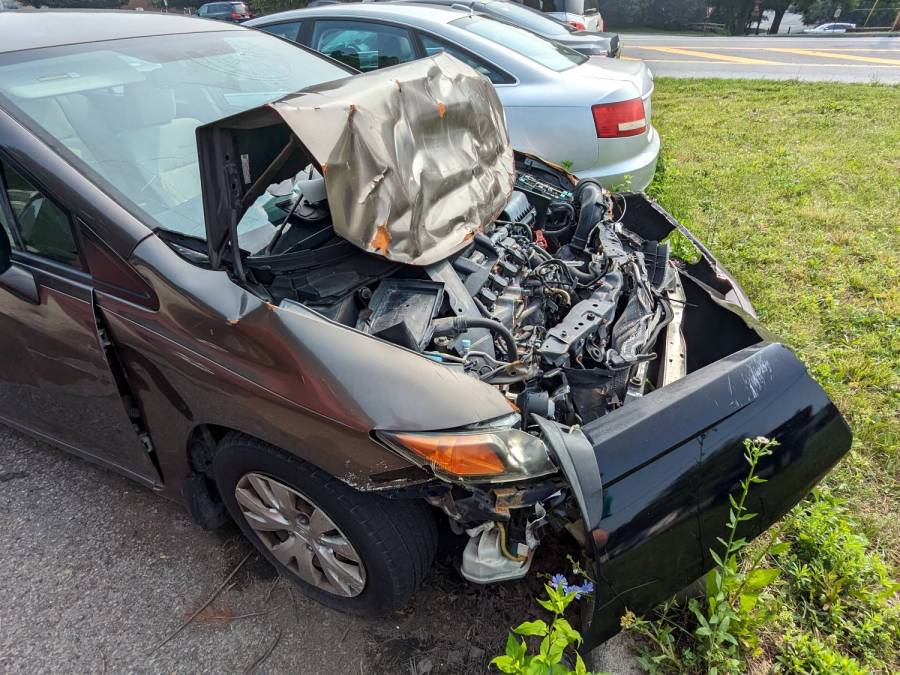
The black plate on the front may be a door panel from the other contestant, because it obviously does not match the vehicle. Perhaps the wrecker crew strapped it on to hold the debris in place?
The front end submarined under the obstacle and stopped just before the passenger compartment reached the excitement.
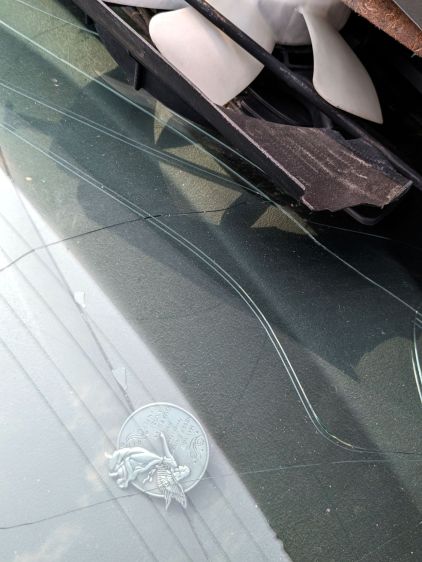
A view of the windshield and top of the dashboard:
Guardian Angel at Work – dashboard
The fan may have been tucked in there by the wrecker crew, along with assorted chunks of plastic and metal.
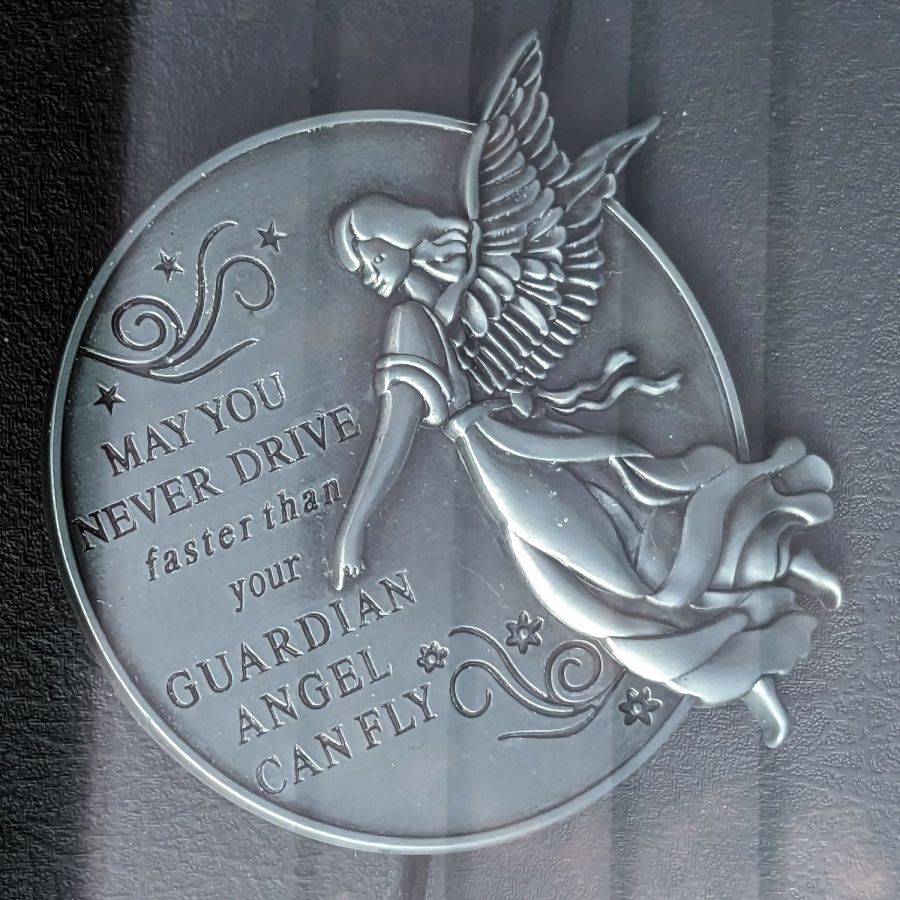
A closer look at the medallion resting on the dash, rotated for your viewing convenience:
Guardian Angel at Work – medallion
The steering wheel airbag had deployed, so perhaps the driver emerged relatively undamaged, but, as always, guardian angels seem unconcerned with property damage.
The last three years have pretty conclusively shown the various gods do not care about individuals and, in fact, their presumed acts closely resemble epidemiology in action.
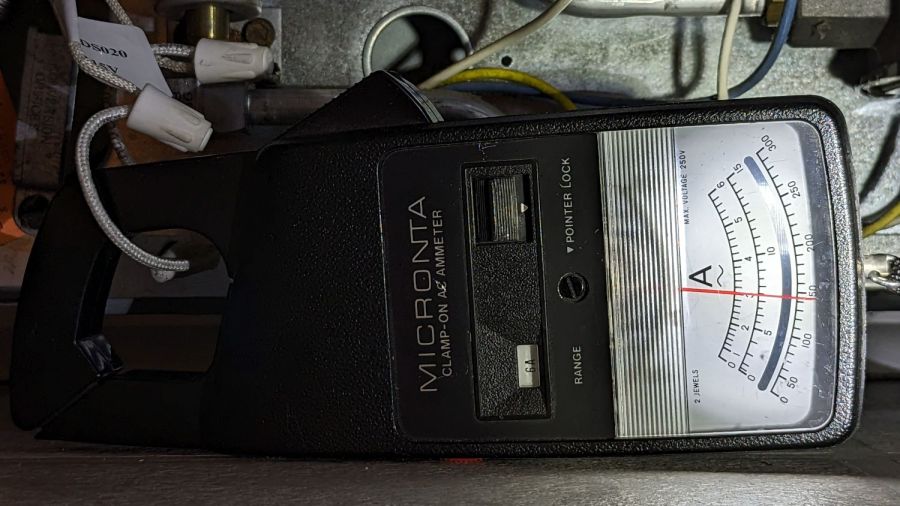
So the oven igniter I installed in January failed to ignite the oven when its current draw fell far enough below the valve’s 3.3 A minimum:
Oven Igniter – 2.3 A current
Of course, the seller no longer offers that particular igniter.
I described the problem:
The igniter just failed. The oven gas valve requires 3.3 to 3.6 amps to open, but this igniter now draws only 2.3 amps, as shown by the clamp-on current meter.
Because of the low current, the valve does not open and the oven does not heat.
The igniter should last more than five months! How do I go about getting a replacement or a refund? Thanks …
Which generated pretty much the reply you’d expect:
We are very sorry, because your product is 5 months from the date of purchase, we cannot offer you a refund. Please purchase another replacement.
Which made me a bit salty:
” the best quality for greater power connection, higher load and longer service life “
” We stand by our products, and our customers are our focus as a business. If you have any quality problem, please contact Funmit customer service team in time, and we will try our best to solve your problems “
So five months is “longer service life” with “the best quality”.
Bonus: now I understand what “try our best” means, too.
But to no avail:
Have a nice day! We are glad to serve you. We are very sorry that you are not satisfied with our products. Amazon.com Return Policy:Amazon.com Voluntary 30-Day Return Guarantee: You can return many items you have purchased within 30 days following delivery of the item to you. Our Voluntary 30-Day Return Guarantee does not affect your legal right of withdrawal in any way. However, the product has passed the return and exchange period, so it cannot provide you with a warranty. If you have other questions, please contact us in time, we will serve you wholeheartedly. Thank you. Sincere wishes, –By Funmit
So I bought a slightly more expensive igniter from a different randomly named seller that draws a slightly under-spec but entirely typical 3 A:
Oven Igniter – 3.0 A initial current
This one, however, allegedly comes with a one year warranty:
Quality you can Trust – All Snap Products are made with premium materials and are tested so they last Buy with Confidence – Snap Supply Parts always come with a 1 Year Warranty
Which surely requires the seller remaining in business until then.
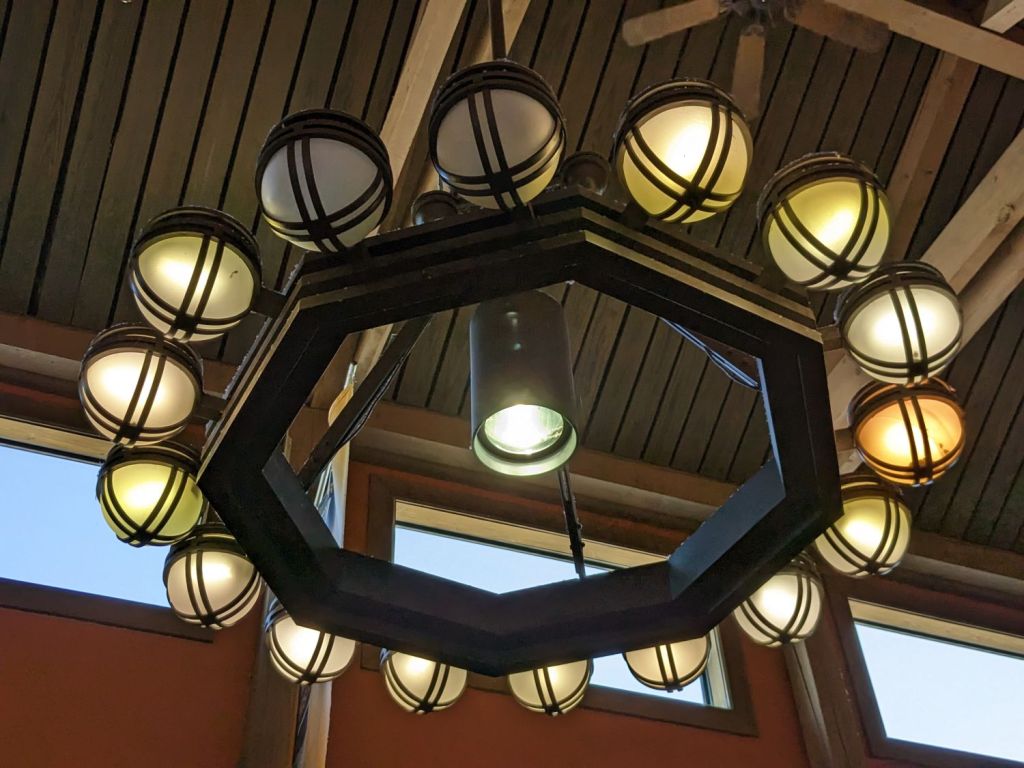
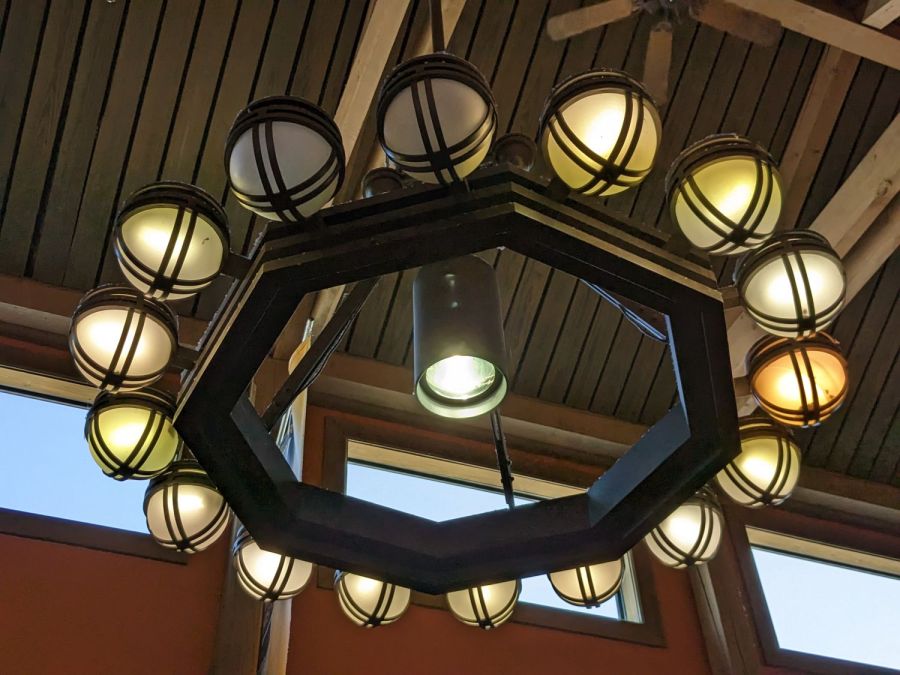
Spotted in a soon-to-be-rebuilt rest area on I-87 north of Kingston NY, a chandelier stuffed with old-school CFL bulbs of various vintages:
NYS I-87 Rest Area – CFL chandelier
The yellowish dome on the far right might still house an incandescent bulb, but I can’t tell from here.
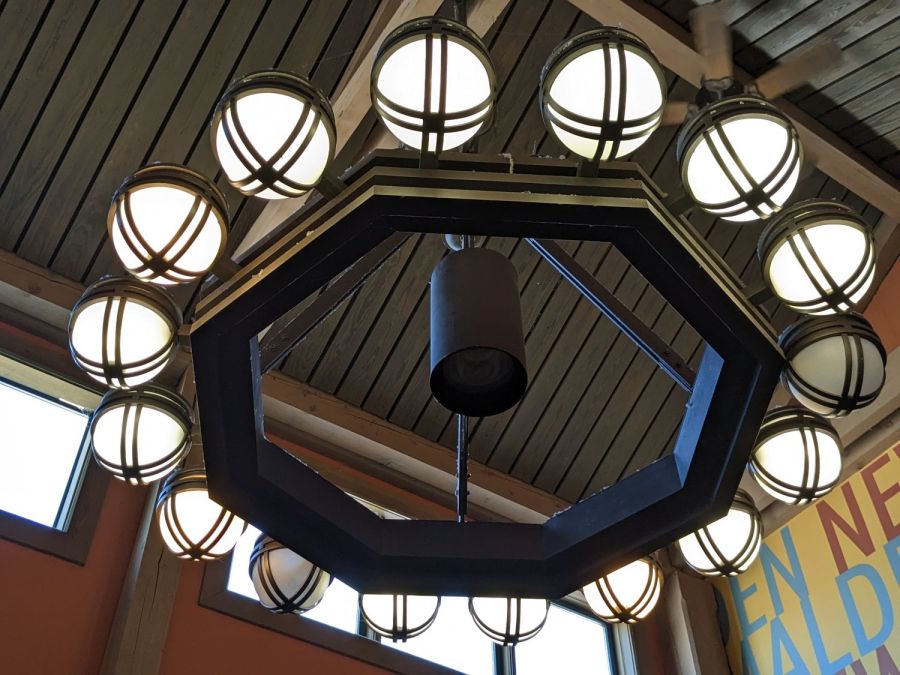
Judging from the high color temperature and even illumination, the chandelier next to it has 16 newish LED bulbs:
NYS I-87 Rest Area – LED chandelier
What’s of interest: both chandeliers have two dead bulbs and, perhaps, the center floodlight of the LED fixture had died, too. We don’t know how long they’ve been in place, other than that the LEDs are certainly more recent, but a 6% failure rate is nothing to brag about.
From what I’ve seen, the reliability of both CFL and LED bulbs is greatly overstated and certainly do not justify preemptive replacement of a working bulb of any vintage.
Some drivers give us absurd amounts of clearance, which is what we thought the driver of the white Jeep was doing:
New Jeep Reckless Driving – Jeep passing
Some drivers give us very little clearance, either deliberately or though negligence, which is what I thought the driver of the silver Subaru was doing:
New Jeep Reckless Driving – Subaru close pass
Reviewing the videos revealed a different story that could have ended very badly for everyone involved.
Moving back in time, we crossed the bridge over the Wappingers creek, which has two southbound lanes. The left lane is dedicated to left turns onto Red Oaks Mill Road and the right lane is for through traffic southbound on Rt 376:
New Jeep Reckless Driving – Red Oaks Mill bridge
I had noticed oncoming drivers in the northbound lane were moving far over to the fog line, but (unseen by me) they were definitely swerving off the road:
New Jeep Reckless Driving – swerve 1
It seems the Jeep driver crossed the bridge in the left lane and continued straight through, passing the solid line of vehicles in the right lane behind us. You can see the top of the Jeep’s windshield peeking out behind the Subaru, with minimal clearance to the black car swerving out of the way:
New Jeep Reckless Driving – swerve 1 clearance
There’s not much shoulder on that side of the road, but the driver of the white Honda is using it all:
New Jeep Reckless Driving – swerve 2
With all the oncoming traffic out of the way, the Jeep driver now accelerates in the wrong lane:
New Jeep Reckless Driving – passing 1
And passes the Subaru just behind us:
New Jeep Reckless Driving – passing 2
The license plate looks like JAE-7751, early in the “J” plate series, so that’s a shiny new Jeep.
Being passed at close range in an obviously no-passing zone caused the Subaru driver to flinch in our direction:
New Jeep Reckless Driving – Subaru clearance
Unsurprisingly, the Jeep driver ran the red light at the top of the hill, presumably to avoid being stopped directly in front of us.
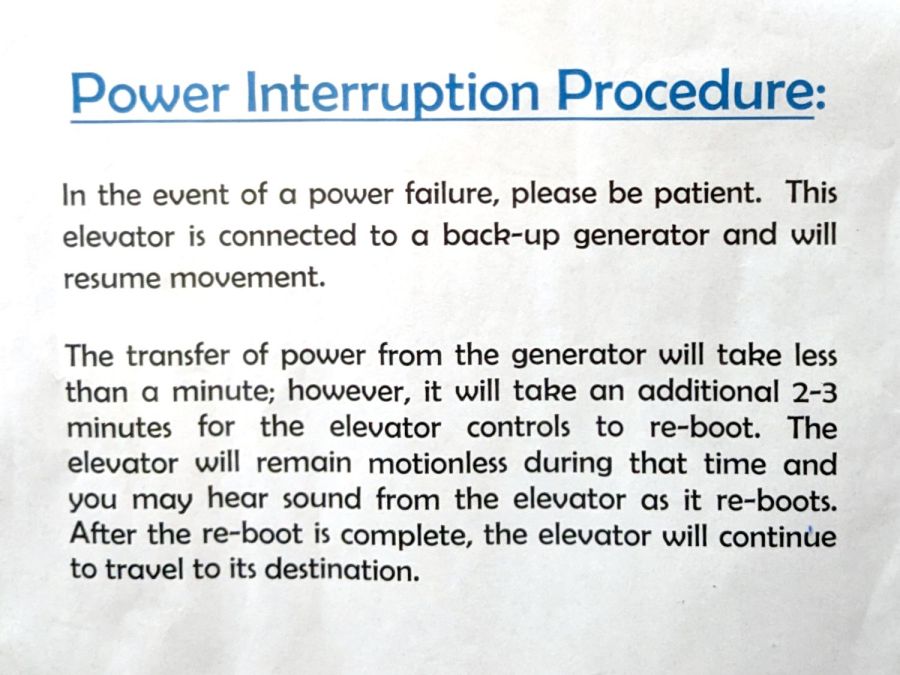
I read these reassuring instructions in the elevator of a different building:
Elevator power failure instructions
I’d be mildly unsurprised to discover the elevator controls also handle the interior lighting, invariably putting me in the dark while the thing reboots. At least the paper would remain readable, because phones can become flashlights under duress.
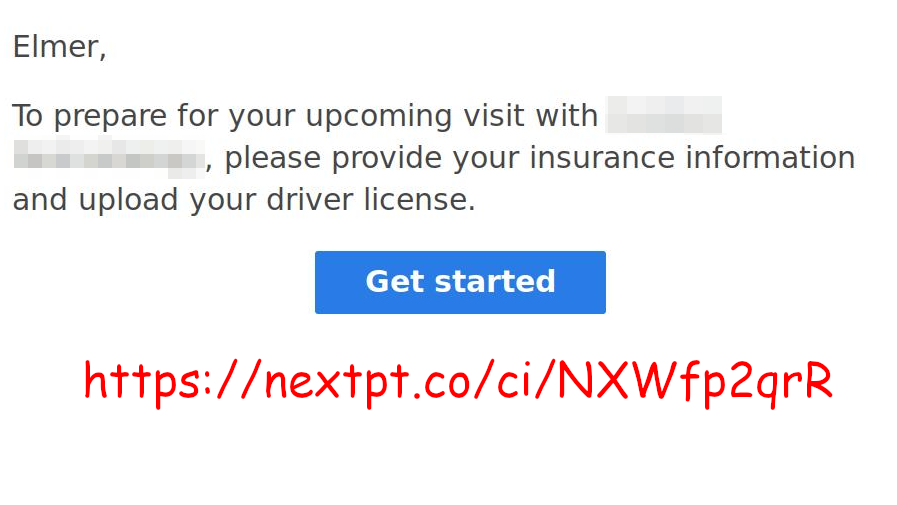
You know how we’re constantly reminded not to click on links in emails from “people we don’t know” and never provide personal information?
I’m certain this email came from a physician I’m about to see, but, with a concealed URL like that, somehow I just can’t bring myself to Get started like this:
Provide Drivers License
Remember, I’m in the US and *.co links are typically “foreign”, so they are going out of their way to look sketchy. I replaced several characters in the URL to make it invalid, but it closely resembles the original.
Of course, everything is outsourced these days, so the physician and her staff have nothing to do with the scheduling and patient information group, so they will have no idea what’s going on or be able to do anything about it.













 The Smell of Molten Projects in the Morning