The Smell of Molten Projects in the Morning

Ed Nisley's Blog: Shop notes, electronics, firmware, machinery, 3D printing, laser cuttery, and curiosities. Contents: 100% human thinking, 0% AI slop.

Category: Software

General-purpose computers doing something specific

  • CNC-3018XL: Improved X-Axis Home Switch Mount

    CNC-3018XL: Improved X-Axis Home Switch Mount

    A few months of inactivity left the CNC-3018XL table parked in its homed position where the gentle-but-inexorable pressure of the switch lever displaced the foam holding the plastic actuator tab on the X-axis bearing enough that it would no longer operate reliably:

    3018 CNC - Y axis endstop
    3018 CNC – Y axis endstop

    Putting foam tape in a highly leveraged position produces the same poor results as in finance.

    The fix requires reorienting the switch so a solid block on the bearing can push directly on the actuator lever:

    CNC-3018 X Home Switch - bottom view
    CNC-3018 X Home Switch – bottom view

    The block must curve around the bearing to give the tape enough surface area for a good grip:

    CNC-3018 X Home Switch - oblique view
    CNC-3018 X Home Switch – oblique view

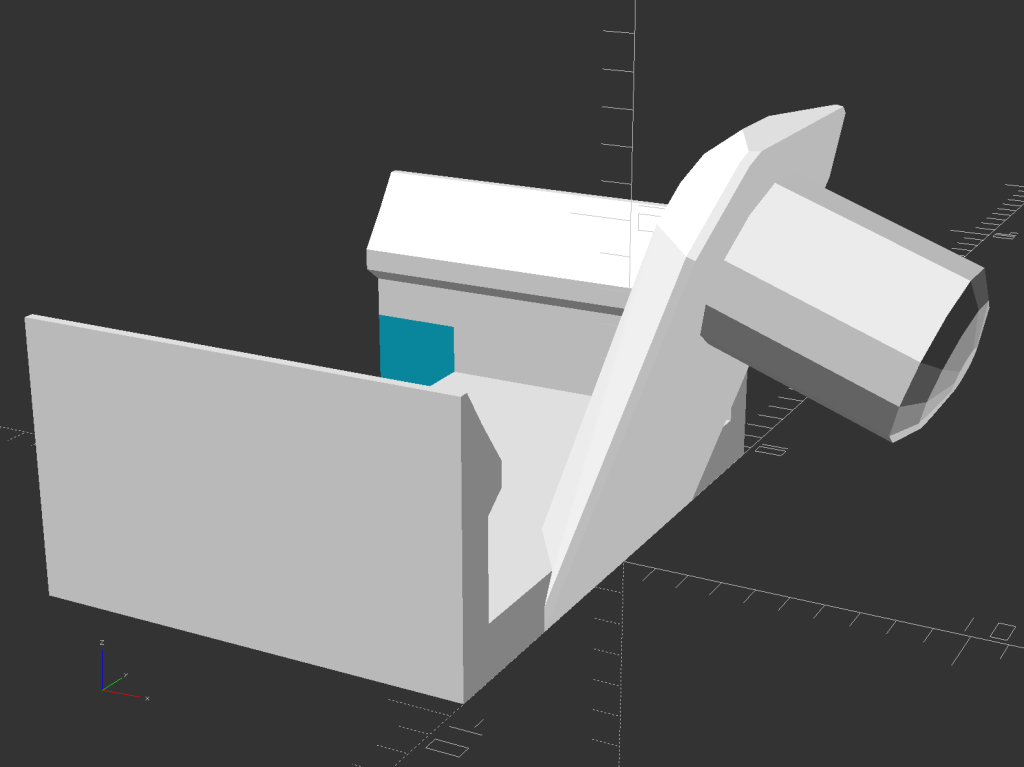
    The solid model for the new X-axis mount looks about like you’d expect:

    CNC-3018 X Home Switch Mount - solid model
    CNC-3018 X Home Switch Mount – solid model

    I increased the home switch pulloff to 2 mm, although it’s not clear that will make any difference in the current orientation.

    The OpenSCAD source code as a GitHub Gist:

    // 3018-Pro Mount for Makerbot Endstop PCB
    // Ed Nisley KE4ZNU – 2019-07 (using OEM machine axes)
    // 2022-02-02 rotate X block (after renaming axes to match new layout)
    /* [Build Options] */
    Layout = "Show"; // [Build, Show]
    /* [Hidden] */
    ThreadThick = 0.25; // [0.20, 0.25]
    ThreadWidth = 0.40; // [0.40]
    function IntegerMultiple(Size,Unit) = Unit * ceil(Size / Unit);
    Protrusion = 0.01; // [0.01, 0.1]
    HoleWindage = 0.2;
    ID = 0;
    OD = 1;
    LENGTH = 2;
    //- Shapes
    // Basic PCB with hole for switch pins
    // origin at switch actuator corner, as seen looking at component side
    SwitchClear = [15.0,5.0,2.0]; // clearance around switch pins
    SwitchOffset = [12.5,9.0,0.0]; // center of switch pins from actuator corner
    PCB = [26.0,16.4,2*SwitchClear.z]; // switch PCB beyond connector, pin height
    //XBlock = [PCB.x + 10.0,PCB.y,20.0];
    XBlock = [PCB.x,PCB.y,10.0];
    XBearing = [10.0,26.5,28.5];
    XPin = [10.0,20.0,10.0];
    module XMount() {
    if (false) // side-push switch tended to slip
    difference() {
    translate([-10.0,0,0])
    cube(XBlock,center=false);
    translate([0,-Protrusion,10.0])
    cube(XBlock + [0,2*Protrusion,0],center=false);
    translate(SwitchOffset + [0,0,10.0 – SwitchClear.z/2])
    cube(SwitchClear + [0,0,Protrusion],center=true);
    }
    else {
    difference() {
    cube(XBlock,center=false);
    translate(SwitchOffset + [0,0,XBlock.z – SwitchClear.z/2])
    cube(SwitchClear + [0,0,Protrusion],center=true);
    }
    translate([1.25*XBlock.x,0,0])
    difference() {
    cube(XPin + [0,0,XBearing[OD]/4],center=false);
    translate([-Protrusion,XPin.y/2,XPin.z + XBearing[OD]/2])
    rotate([0,90,0])
    cylinder(d=XBearing[OD],h=XPin.x + 2*Protrusion,center=false);
    translate([-Protrusion,-XPin.y/2,XPin.z])
    cube(XPin + [2*Protrusion,0,0],center=false);
    }
    }
    }
    YBlock = [PCB.x,PCB.y,5.0];
    module YMount() {
    difference() {
    cube(YBlock,center=false);
    translate(SwitchOffset + [0,0,YBlock.z – SwitchClear.z/2])
    cube(SwitchClear + [0,0,Protrusion],center=true);
    }
    }
    ZBlock = [PCB.x,PCB.y,6.0];
    ZPin = [20.0,10.0,5.5];
    module ZMount() {
    difference() {
    cube(ZBlock,center=false);
    translate(SwitchOffset + [0,0,ZBlock.z – SwitchClear.z/2])
    cube(SwitchClear + [0,0,Protrusion],center=true);
    }
    translate([1.25*ZBlock.x,0,0])
    difference() {
    cube(ZPin,center=false);
    translate([ZPin.x/2,-Protrusion,4.0])
    cube(ZPin + [0,2*Protrusion,0],center=false);
    }
    }
    //- Build things
    if (Layout == "Show") {
    translate([0,XBlock.y,0])
    YMount();
    translate([0,-XBlock.y/2])
    XMount();
    translate([0,-(ZBlock.y + XBlock.y)])
    ZMount();
    }

  • XFCE: Remote Desktop via X11vnc Through an SSH Tunnel

    For the first time in a loooong time I (had to) set up remote desktop sharing, starting from an existing SSH login through a single-port pinhole in an immutable router firewall.

    The remote PC runs Xubuntu 20.4 LTS and I verified it already had x11vnc installed. If that’s not the case, make it so.

    In order to share / control the desktop of a different user (hereinafter known as kay), I must SSH into that PC as kay. My SSH session uses public key authentication and kay has no need for outbound SSH, so just use my PC’s public key in kay‘s authorized_keys file. On the remote PC, where I am signed in as me:

    cd ~
    sudo mkdir /home/kay/.ssh        # kay does not have a public key
    sudo cp .ssh/authorized_keys /home/kay/.ssh     # so just copy mine
    sudo chown -R kay:kay /home/kay/.ssh     # transfer ownership
    sudo chmod go-rwx /home/kay/.ssh     # set proper permissions
    

    From my local PC, I can now SSH into the remote PC as kay and start x11vnc through the SSH tunnel:

    ssh -v kay@remote.address -L 5900:localhost:5900 "x11vnc -display :0 -noxdamage -ncache 10 -ncache_cr -nopw"
    

    Still on my PC, aim a VNC client at the local end of the tunnel:

    novnc localhost:5900
    

    Using novnc presents the remote desktop as a web page in a browser, although you may prefer something more traditional.

    Somewhat to my surprise, It Just Worked™.

  • Bafang Battery Charge Port: Battery Reset Tool

    Bafang Battery Charge Port: Battery Reset Tool

    A lithium battery management system can (and should!) disable the battery output to prevent damage from overcurrent or undervoltage, after which it must be reset. The inadvertent charge port short may have damaged the BMS PCB, but did not shut down the battery’s motor output, which means the BMS will not should not require resetting. However, because all this will happen remotely, it pays to be prepared.

    A description of how to reset the BMS in a similar battery involves poking bare hot wires into the battery terminals, which IMO is akin to Tickling The Dragon’s Tail. The alert reader will note that the “Shark” battery shown on that page has its terminal polarity exactly opposite of the “Ultra Slim Shark” battery on our bikes. Given the energies involved, eliminating any possible errors makes plenty of sense.

    The battery connector looks like this:

    Bafang battery - Ultra-Slim Shark connector
    Bafang battery – Ultra-Slim Shark connector

    For this battery, the positive terminal is on the right, as shown by the molded legend and verified by measurement.

    A doodle with various dimensions, most of which are pretty close:

    Bafang battery - connector dimension doodle
    Bafang battery – connector dimension doodle

    Further doodling produced a BMS reset adapter keyed to fit the battery connector in only one way:

    Bafang battery - adapter doodle
    Bafang battery – adapter doodle

    Which turned into the rectangular lump at the top of the tool kit, along with the various shell drills and suchlike discussed earlier:

    Bafang battery tools
    Bafang battery tools

    Looking into the solid model from the battery connector shows the notches and projections that prevent it from making incorrect contact:

    Battery Reset Adapter - show front
    Battery Reset Adapter – show front

    The pin dimensions on the right, along with a mysterious doodle that must have meant something at the time :

    Bafang battery - adapter pin doodle
    Bafang battery – adapter pin doodle

    The pins emerged from 3/16 inch brass rod, with pockets for the soldered wires:

    Bafang battery - reset tool - pins
    Bafang battery – reset tool – pins

    The wires go into a coaxial breakout connector that’s hot-melt glued into the recess. The coaxial connectors are rated for 12 V and intended for CCTV cameras, LED strings, and suchlike, but I think they’re good for momentary use at 48 V with minimal current.

    I printed the block with the battery connector end on top for the best dimensional accuracy and the other end of the pin holes held in place by a single layer of filament bridging the rectangular opening:

    Bafang battery - reset tool - hole support layer
    Bafang battery – reset tool – hole support layer

    I made a hollow punch to cut the bridge filaments:

    Bafang battery - reset tool - pin hole punch
    Bafang battery – reset tool – pin hole punch

    The holes extend along the rectangular cutout for the coaxial connector, so pressing the punch against the notch lines it up neatly with the hole:

    Bafang battery - reset tool - hole punching
    Bafang battery – reset tool – hole punching

    Whereupon a sharp rap with a hammer clears the hole:

    Bafang battery - reset tool - hole cleared
    Bafang battery – reset tool – hole cleared

    A dollop of urethane adhesive followed the pins into their holes to lock them in place. I plugged the block and pins into the battery to align the pins as the adhesive cured, with the wire ends carefully taped apart.

    After curing: unplug the adapter, screw wires into coaxial connector, slobber hot melt glue into the recess, squish into place, align, dribble more glue into all the gaps and over the screw terminals, then declare victory.

    It may never be needed, but that’s fine with me.

    [Update: A few more doodles with better dimensions and fewer malfeatures appeared from the back of the bench.]

    Bafang battery - adapter better doodle
    Bafang battery – adapter better doodle
    Bafang battery - adapter dimension doodle
    Bafang battery – adapter dimension doodle
    Bafang battery - connector key doodle
    Bafang battery – connector key doodle

    The OpenSCAD source code as a GitHub Gist:

    // Adapter to reset Bafang battery management system
    // Ed Nisley KE4ZNU Dec 2021
    Layout = "Block"; // [Show, Build, Pins, Block, CoaxAdapter, Key]
    Gap = 4.0;
    /* [Hidden] */
    ThreadThick = 0.25;
    ThreadWidth = 0.40;
    HoleWindage = 0.2;
    Protrusion = 0.1; // make holes end cleanly
    inch = 25.4;
    function IntegerMultiple(Size,Unit) = Unit * ceil(Size / Unit);
    module PolyCyl(Dia,Height,ForceSides=0) { // based on nophead's polyholes
    Sides = (ForceSides != 0) ? ForceSides : (ceil(Dia) + 2);
    FixDia = Dia / cos(180/Sides);
    cylinder(d=(FixDia + HoleWindage),h=Height,$fn=Sides);
    }
    ID = 0;
    OD = 1;
    LENGTH = 2;
    //———————-
    // Dimensions
    WallThick = 3.0;
    PinSize = [3.5,4.75,9.0 + WallThick]; // LENGTH = exposed + wall
    PinFerrule = [3.5,4.75,10.0]; // larger section for soldering
    PinOC = 18.0;
    PinOffset = [-9.0,0,9.0];
    Keybase = 4.0; // key bottom plate thickness
    KeyBlockSize = [15.0,50.0,15.0];
    CoaxSize = [35.0,15.0,11.0];
    CoaxGlue = [0,2*2,1];
    // without key X section
    BlockSize = [CoaxSize.x + WallThick + PinFerrule[LENGTH],KeyBlockSize.y,KeyBlockSize.z + WallThick];
    echo(BlockSize=BlockSize);
    //———————-
    // Battery connection pin
    // Used to carve out space for real brass pin
    // Long enough to slide ferrule through block
    module Pins() {
    for (j=[-1,1])
    translate(PinOffset + [0,j*PinOC/2,0])
    rotate([0,90,0])
    rotate(180/6) {
    PolyCyl(PinSize[ID],BlockSize.x,6);
    translate([0,0,PinSize[LENGTH]])
    PolyCyl(PinSize[OD],BlockSize.x,6);
    }
    }
    //———————-
    // Coaxial socket adapter nest
    // X=0 at left end of block, Z=0 at bottom
    // includes glue, extends rightward to ensure clearance
    module CoaxAdapter() {
    translate([0,0,CoaxSize.z])
    cube(CoaxSize + CoaxGlue + [CoaxSize.x,0,CoaxSize.z],center=true);
    }
    //———————-
    // Block without key
    // X=0 at connector face, Z=0 at bottom of block
    module BareBlock() {
    difference() {
    translate([BlockSize.x/2,0,BlockSize.z/2])
    cube(BlockSize,center=true);
    Pins();
    translate([BlockSize.x,0,Keybase])
    CoaxAdapter();
    }
    translate([BlockSize.x – CoaxSize.x,0,BlockSize.z/2]) // bridging layer
    cube([ThreadThick,BlockSize.y,BlockSize.z],center=true);
    }
    //———————-
    // Complete block
    module Block() {
    BareBlock();
    BatteryKey();
    }
    //———————-
    // Battery connector key shape
    // Chock full of magic sizes
    // Polygons start at upper left corner
    module BatteryKey() {
    // base outline
    kb = [[-15,KeyBlockSize.y/2],[0,KeyBlockSize.y/2],[0,-KeyBlockSize.y/2],[-15,-KeyBlockSize.y/2]];
    // flange cutout
    kf = [[kb[0].x,20],[-3,20],[-3,15],[-8,15],[-8,-15],[-3,-15],[-3,-20],[kb[0].x,-20]];
    // sidewalls
    kw = [[-15,KeyBlockSize.y/2],[0,KeyBlockSize.y/2],[0,20],kf[0]];
    linear_extrude(height=Keybase)
    difference() {
    polygon(kb);
    polygon(kf);
    }
    linear_extrude(height=KeyBlockSize.z)
    polygon(kw);
    mirror([0,1,0])
    linear_extrude(height=KeyBlockSize.z)
    polygon(kw);
    translate([0,0,KeyBlockSize.z])
    linear_extrude(height=BlockSize.z – KeyBlockSize.z)
    polygon(kb);
    }
    //———————-
    // Build it
    if (Layout == "Block") {
    BareBlock();
    }
    if (Layout == "Pins") {
    Pins();
    }
    if (Layout == "Key") {
    BatteryKey();
    }
    if (Layout == "CoaxAdapter") {
    CoaxAdapter();
    }
    if (Layout == "Show") {
    Block();
    color("Brown",0.3)
    Pins();
    }
    if (Layout == "Build") {
    rotate([0,90,0])
    translate([-BlockSize.x,0,0])
    Block();
    }

  • The Machine Stops

    As foretold by E. M. Forster in 1909, we have two exhibits of the machine grinding to a halt.

    Amazon sent one of their prescription savings cards, followed a few days later by a note:

    We recently mailed you a physical copy of your Amazon Prime Rx savings card, and are writing to inform you that the BIN listed on your Prime Rx card printed incorrectly. The correct BIN is 019363.

    So I wrote the corrected number on my card, not that I will ever use it:

    Amazon RX - BIN error
    Amazon RX – BIN error

    Although the BIN (whatever that stands for) is a numeric value, it’s not treated as a number by whoever reads it. I’d lay money down that the source code’s formatting string changed from %6d to %06d or the equivalent in whatever fancy language they use nowadays.

    The Social Security Administration sent me an email telling me to check a corrected version of a statement they sent a few months ago. Unfortunately, attempting to do so while writing this post produces a heads-up notice:

    We apologize for any inconvenience accessing my Social Security. We are aware of some technical difficulties and are working on them at this time. We appreciate your patience as we work to solve the problems as quickly as possible.

    Attempting to sign on seems to proceed normally, until this technical difficulty popped up:

    We’re Sorry…
    There has been an unexpected system error.

    Your login session has been terminated. For security reasons, please close all of your internet browser windows.

    The first statement put my nearest Social Security office 130 miles away in Wilkes Barre, PA. The corrected statement put it back where it belongs, in the hot urban core of Poughkeepsie.

    Perhaps an off-by one error in the database lookup?

    As far as I can tell, the world now depends on software nobody can understand or control.

  • Alpha Geek Clock: Radome Update

    Alpha Geek Clock: Radome Update

    There being nothing like a new problem to take one’s mind off all one’s old problems:

    C-Max CMMR-60 WWVB receiver - D cell display holder
    C-Max CMMR-60 WWVB receiver – D cell display holder

    It’s a variation on the camera battery and AA alkaline holders for various blinky LEDs:

    Astable Multivibrator - D cell WWVB
    Astable Multivibrator – D cell WWVB

    The little flag holding the C-Max CMMR-60 receiver PCB gets glued to the copper upright to keep it from swiveling in the breeze.

    The conical caps on the ferrite bar antenna are glued to the uprights and the antenna, in the expectation this is a one-off build-only project.

    Rather than buy specialized D-cell contacts, I used 18650 lithium cell contacts and conjured the bridge by soldering two together:

    D cell bridge contact from 18650 contacts
    D cell bridge contact from 18650 contacts

    It sits on the windowsill, blinks quietly in the dark, and flickers invisibly during the daytime.

    Those D cells came from the same batch that powered the previous version for the last five years, so they probably won’t last that long, even with a Nov 2024 date code.

    C-Max is apparently out of the WWVB biz, but you can get a similar Canaduino AM WWVB receiver.

    The far more complex EverSet ES100-MOD WWVB receiver requires a microcontroller with an I²C interface and very careful power management.

    The OpenSCAD source code as a GitHub Gist:

    // Astable Multivibrator
    // Holder for Alkaline cells
    // Ed Nisley KE4ZNU August 2020
    // 2020-09 add LED radome
    // 2020-11 add radome trim
    // 2021-11 D cells and WWVB receiver
    /* [Layout options] */
    Layout = "Build"; // [Build,Show,Lid,Spider,AntCap,RecFlag]
    CellName = "AA"; // [AA, D]
    Struts = -1; // [0:None, -1:Dual, 1:Quad]
    WWVB = true;
    /* [Hidden] */
    NumCells = 2; // [2]
    // Extrusion parameters
    /* [Hidden] */
    ThreadThick = 0.25;
    ThreadWidth = 0.40;
    HoleWindage = 0.2;
    function IntegerMultiple(Size,Unit) = Unit * ceil(Size / Unit);
    function IntegerLessMultiple(Size,Unit) = Unit * floor(Size / Unit);
    Protrusion = 0.1; // make holes end cleanly
    inch = 25.4;
    //- Basic dimensions
    WallThick = IntegerMultiple(3.0,ThreadWidth);
    CornerRadius = WallThick/2;
    FloorThick = IntegerMultiple(3.0,ThreadThick);
    TopThick = IntegerMultiple(2.0,ThreadThick);
    WireOD = 1.5; // battery & LED wiring
    WireOC = 8.0; // hole spacing in lid
    Gap = 5.0;
    // Cylindrical cell sizes
    // https://en.wikipedia.org/wiki/List_of_battery_sizes#Cylindrical_batteries
    CELL_NAME = 0;
    CELL_OD = 1;
    CELL_OAL = 2;
    // FIXME search() needs special-casing to properly find AAA and AAAA
    // Which is why CellName is limited to AA
    CellData = [
    ["AAAA",8.3,42.5],
    ["AAA",10.5,44.5],
    ["AA",14.5,50.5],
    ["C",26.2,50],
    ["D",34.2,61.5],
    ["A23",10.3,28.5],
    ["CR123A",17.0,34.5],
    ["18650",18.8,65.2], // bare 18650 with button end
    ["18650Prot",19.0,70.0], // protected 18650 = 19670 plus a bit
    ];
    CellIndex = search([CellName],CellData,1,0)[0];
    echo(str("Cell index: ",CellIndex," = ",CellData[CellIndex][CELL_NAME]));
    //- Contact dimensions
    CONTACT_NAME = 0;
    CONTACT_WIDE = 1;
    CONTACT_HIGH = 2;
    CONTACT_THICK = 3; // plate thickness
    CONTACT_TIP = 4; // tip to rear face
    CONTACT_TAB = 5; // solder tab width
    ContactData = [
    ["AA+",12.2,12.2,0.3,1.7,3.5], // pos bump
    ["AA-",12.2,12.2,0.3,5.0,3.5], // half-compressed neg spring
    ["AA+-",28.2,12.2,0.3,5.0,0], // pos-neg bridge
    ["D+",18.5,16.0,0.3,2.8,5.5],
    ["D-",18.5,16.0,0.3,6.0,5.5],
    ["D+-",50.0,19.0,0.3,7.0,0], // solder +/- tabs together
    ["Li+",18.5,16.0,0.3,2.8,5.5],
    ["Li-",18.5,16.0,0.3,6.0,5.5],
    ];
    function ConDat(name,dim) = ContactData[search([name],ContactData,1,0)[0]][dim];
    ContactRecess = 2*ConDat(str(CellName,"+"),CONTACT_THICK);
    ContactOC = CellData[CellIndex][CELL_OD];
    WireBay = 6.0; // room for wiring to contacts
    //- Wire struts
    StrutDia = 1.6; // AWG 14 = 1.6 mm
    StrutSides = 3*4;
    ID = 0;
    OD = 1;
    LENGTH = 2;
    StrutBase = [StrutDia,StrutDia + 2*5*ThreadWidth, // ID = wire, OD = buildable
    FloorThick + CellData[CellIndex][CELL_OD]]; // LENGTH = base is flush with cell top
    //- Holder dimensions
    BatterySize = [CellData[CellIndex][CELL_OAL] + // cell
    ConDat(str(CellName,"+"),CONTACT_TIP) + // pos contact
    ConDat(str(CellName,"-"),CONTACT_TIP) – // neg contact
    2*ContactRecess, // sink into wall
    NumCells*CellData[CellIndex][CELL_OD],
    CellData[CellIndex][CELL_OD]
    ];
    echo(str("Battery space: ",BatterySize));
    CaseSize = [3*WallThick + // end walls + wiring partition
    BatterySize.x + // cell
    WireBay, // wiring bay
    2*WallThick + BatterySize.y,
    FloorThick + BatterySize.z
    ];
    echo(str("CaseSize: ",CaseSize));
    BatteryOffset = (CaseSize.x – (2*WallThick +
    CellData[CellIndex][CELL_OAL] +
    ConDat(str(CellName,"-"),CONTACT_TIP))
    ) /2 ;
    ThumbRadius = 0.75 * CaseSize.z;
    StrutOC = [IntegerLessMultiple(CaseSize.x – 2*CornerRadius -2*StrutBase[OD],5.0),
    IntegerMultiple(CaseSize.y + StrutBase[OD],5.0)];
    StrutAngle = atan(StrutOC.y/StrutOC.x);
    echo(str("Strut OC: ",StrutOC));
    LidSize = [2*WallThick + WireBay + ConDat(str(CellName,"+"),CONTACT_THICK), CaseSize.y, FloorThick/2];
    LidScrew = [2.0,3.8,7.0]; // M2 pan head screw (LENGTH = threaded)
    LidScrewOC = CaseSize.y/2 – CornerRadius – LidScrew[OD]; // allow space around screw head
    //- Piranha LEDs
    PiranhaBody = [8.0,8.0,8.0]; // Z = heatsink fins + plastic body + lens
    PiranhaPin = 0.0; // trimmed pin length beyond heatsink
    PiranhaPinsOC = [5.0,5.0]; // pin XY distance
    PiranhaRecess = PiranhaBody.z + PiranhaPin/2; // minimum LED recess depth
    BallOD = 40.0; // radome sphere
    BallSides = 4*3*4; // nice smoothness
    PillarOD = norm([PiranhaBody.x,PiranhaBody.y]) + 2*WallThick;
    BallChordM = BallOD/2 – sqrt(pow(BallOD/2,2) – (pow(PillarOD,2))/4);
    echo(str("Ball chord depth: ",BallChordM));
    RadomePillar = [norm([PiranhaBody.x,PiranhaBody.y]), // ID = LED diagonal
    PillarOD,
    FloorThick + PiranhaRecess + BallChordM]; // height to top of ball chord
    echo(str("Pillar: ",RadomePillar));
    RadomeBar = [StrutBase[OD]*cos(180/StrutSides),StrutOC.y,StrutBase[OD]/2];
    Tape = [RadomePillar[ID],16.0,1.0]; // sticky tape disk, OD to match hole punch
    //- WWVB receiver hardware
    Antenna = [10.0 + 0.5,14.0,60.0 + 2.0]; // ferrite antenna bar with clearance
    AntCapSize = [Antenna[ID] + 1.0,Antenna[OD],5.0]; // LENGTH=insertion
    RecPCB = [24.0,16.0,5.0];
    //———————-
    // Useful routines
    module PolyCyl(Dia,Height,ForceSides=0) { // based on nophead's polyholes
    Sides = (ForceSides != 0) ? ForceSides : (ceil(Dia) + 2);
    FixDia = Dia / cos(180/Sides);
    cylinder(r=(FixDia + HoleWindage)/2,h=Height,$fn=Sides);
    }
    // Spider for single LED atop struts, with the ball
    module DualSpider() {
    difference() {
    union() {
    for (j=[-1,1]) {
    for (k=[-1,1])
    translate([0,j*StrutOC.y/2,k*RadomeBar.z])
    rotate(180/StrutSides)
    sphere(d=StrutBase[OD]/cos(180/StrutSides),$fn=StrutSides);
    translate([0,j*StrutOC.y/2,0])
    rotate(180/StrutSides)
    cylinder(d=StrutBase[OD],h=2*RadomeBar.z,center=true,$fn=StrutSides);
    }
    cube(RadomeBar,center=true); // connecting bar
    cylinder(d=RadomePillar[OD],h=RadomePillar[LENGTH],$fn=BallSides);
    translate([0,0,-RadomeBar.z/2])
    cylinder(d1=0.9*RadomePillar[OD],d2=RadomePillar[OD],h=RadomeBar.z/2,$fn=BallSides);
    }
    for (j=[-1,1]) // strut wires
    translate([0,j*StrutOC.y/2,-3*StrutBase[OD]/2])
    rotate(180/StrutSides)
    PolyCyl(StrutBase[ID],2*StrutBase[OD],StrutSides);
    for (k=[-1,1]) // LED wiring through bar
    translate([0,k*(StrutOC.x/2 – 2*RadomeBar.x),-RadomeBar.z])
    rotate(180/6)
    PolyCyl(StrutBase[ID],2*RadomeBar.z,6);
    translate([0,0,BallOD/2 + RadomePillar[LENGTH] – BallChordM]) // ball inset
    sphere(d=BallOD);
    translate([0,0,BallOD/2 + RadomePillar[LENGTH] – BallChordM – Tape[LENGTH]/2]) // tape inset
    intersection() {
    sphere(d=BallOD);
    cylinder(d=Tape[OD],h=2*BallOD,center=true);
    }
    translate([0,0,RadomePillar.z – PiranhaRecess + RadomePillar.z/2]) // LED inset
    cube(PiranhaBody + [HoleWindage,HoleWindage,RadomePillar.z],center=true); // XY clearance
    translate([0,0,StrutBase[OD]/4 + WireOD/2 + 0*Protrusion]) // wire channels
    cube([WireOD,RadomePillar[OD] + 2*WallThick,WireOD],center=true);
    }
    }
    //– WWVB antenna support cap
    module AntennaBar() {
    rotate([90,0,0])
    union() {
    cylinder(d=Antenna[ID],h=Antenna[LENGTH],$fn=BallSides,center=true);
    cylinder(d=2*Antenna[OD],h=Antenna[LENGTH] – 2*AntCapSize[LENGTH],$fn=BallSides,center=true);
    }
    }
    module AntennaCap() {
    rotate([90,0,0])
    intersection() {
    translate([0,-Antenna[LENGTH]/2 + AntCapSize[LENGTH],0])
    difference() {
    hull() {
    rotate([90,0,0])
    cylinder(d=AntCapSize[OD],h=Antenna[LENGTH],$fn=BallSides,center=true);
    for (j=[-1,1])
    translate([0,j*StrutOC.y/2,0])
    rotate(180/StrutSides)
    cylinder(d=StrutBase[OD],h=1*StrutBase[OD],$fn=StrutSides,center=true);
    }
    for (j=[-1,1])
    translate([0,j*StrutOC.y/2,-Antenna[OD]/2])
    rotate(180/StrutSides)
    PolyCyl(StrutBase[ID],Antenna[OD],StrutSides);
    AntennaBar();
    }
    rotate([-90,0,0])
    cylinder(d=Antenna[OD],h=Antenna[LENGTH],center=false);
    }
    }
    //– WWVB PCB support flag
    module RecFlag() {
    difference() {
    hull() {
    rotate(180/StrutSides)
    cylinder(d=StrutBase[OD],h=RecPCB.x,$fn=StrutSides);
    translate([0,RecPCB.y,0])
    rotate(180/StrutSides)
    cylinder(d=StrutBase[OD],h=RecPCB.x,$fn=StrutSides);
    }
    translate([0,0,-Protrusion])
    rotate(180/StrutSides)
    PolyCyl(StrutBase[ID],2*RecPCB.x,StrutSides);
    translate([0,StrutBase[OD]/2,-Protrusion])
    cube([StrutBase[OD],RecPCB.y,2*RecPCB.x],center=false);
    }
    }
    //– Overall case with origin at battery center
    module Case() {
    union() {
    difference() {
    union() {
    hull()
    for (i=[-1,1], j=[-1,1])
    translate([i*(CaseSize.x/2 – CornerRadius),
    j*(CaseSize.y/2 – CornerRadius),
    0])
    cylinder(r=CornerRadius/cos(180/8),h=CaseSize.z,$fn=8); // cos() fixes undersize spheres!
    if (Struts)
    for (i = (Struts == 1) ? [-1,1] : -1) { // strut bases
    hull()
    for (j=[-1,1])
    translate([i*StrutOC.x/2,j*StrutOC.y/2,0])
    rotate(180/StrutSides)
    cylinder(d=StrutBase[OD],h=StrutBase[LENGTH],$fn=StrutSides);
    translate([i*StrutOC.x/2,0,StrutBase[LENGTH]/2])
    cube([2*StrutBase[OD],StrutOC.y,StrutBase[LENGTH]],center=true); // blocks for fairing
    for (j=[-1,1]) // hemisphere caps
    translate([i*StrutOC.x/2,
    j*StrutOC.y/2,
    StrutBase[LENGTH]])
    rotate(180/StrutSides)
    sphere(d=StrutBase[OD]/cos(180/StrutSides),$fn=StrutSides);
    }
    }
    translate([BatteryOffset,0,BatterySize.z/2 + FloorThick]) // cells
    cube(BatterySize + [0,0,Protrusion],center=true);
    translate([BatterySize.x/2 + BatteryOffset + ContactRecess/2 – Protrusion/2, // contacts
    0,
    BatterySize.z/2 + FloorThick])
    cube([ContactRecess + Protrusion,
    ConDat(str(CellName,"+-"),CONTACT_WIDE),
    ConDat(str(CellName,"+-"),CONTACT_HIGH)
    ],center=true);
    translate([-(BatterySize.x/2 – BatteryOffset + ContactRecess/2 – Protrusion/2),
    ContactOC/2,
    BatterySize.z/2 + FloorThick])
    cube([ContactRecess + Protrusion,
    ConDat(str(CellName,"+"),CONTACT_WIDE),
    ConDat(str(CellName,"+"),CONTACT_HIGH)
    ],center=true);
    translate([-(BatterySize.x/2 – BatteryOffset + ContactRecess/2 – Protrusion/2),
    -ContactOC/2,
    BatterySize.z/2 + FloorThick])
    cube([ContactRecess + Protrusion,
    ConDat(str(CellName,"-"),CONTACT_WIDE),
    ConDat(str(CellName,"-"),CONTACT_HIGH)
    ],center=true);
    translate([-CaseSize.x/2 + WireBay/2 + WallThick, // wire bay with screw bosses
    0,
    BatterySize.z/2 + FloorThick + Protrusion/2])
    cube([WireBay,
    2*LidScrewOC – LidScrew[ID] – 2*4*ThreadWidth,
    BatterySize.z + Protrusion
    ],center=true);
    for (j=[-1,1]) // screw holes
    translate([-CaseSize.x/2 + WireBay/2 + WallThick,
    j*LidScrewOC,
    CaseSize.z – LidScrew[LENGTH] + Protrusion])
    PolyCyl(LidScrew[ID],LidScrew[LENGTH],6);
    for (j=[-1,1])
    translate([-(BatterySize.x/2 – BatteryOffset + WallThick/2), // contact tabs
    j*ContactOC/2,
    BatterySize.z + FloorThick – Protrusion])
    cube([2*WallThick,
    ConDat(str(CellName,"+"),CONTACT_TAB),
    (BatterySize.z – ConDat(str(CellName,"+"),CONTACT_HIGH))
    ],center=true);
    if (false)
    translate([0,0,CaseSize.z]) // finger cutout
    rotate([90,00,0])
    cylinder(r=ThumbRadius,h=2*CaseSize.y,center=true,$fn=22);
    if (Struts)
    for (i2 = (Struts == 1) ? [-1,1] : -1) { // strut wire holes and fairing
    for (j=[-1,1])
    translate([i2*StrutOC.x/2,j*StrutOC.y/2,FloorThick])
    rotate(180/StrutSides)
    PolyCyl(StrutBase[ID],2*StrutBase[LENGTH],StrutSides);
    for (i=[-1,1], j=[-1,1]) // fairing cutaways
    translate([i*StrutBase[OD] + (i2*StrutOC.x/2),
    j*StrutOC.y/2,
    -Protrusion])
    rotate(180/StrutSides)
    PolyCyl(StrutBase[OD],StrutBase[LENGTH] + 2*Protrusion,StrutSides);
    }
    translate([0,0,ThreadThick – Protrusion]) // recess around name
    cube([51.0,15,2*ThreadThick],center=true);
    }
    linear_extrude(height=2*ThreadThick + Protrusion,convexity=10) {
    translate([0,-3.5,0])
    mirror([0,1,0])
    text(text="softsolder",size=6,spacing=1.20,font="Arial:style:Bold",halign="center",valign="center");
    translate([0,3.5,0])
    mirror([0,1,0])
    text(text=".com",size=6,spacing=1.20,font="Arial:style:Bold",halign="center",valign="center");
    }
    }
    }
    module Lid() {
    difference() {
    hull()
    for (i=[-1,1], j=[-1,1], k=[-1,1])
    translate([i*(LidSize.x/2 – CornerRadius),
    j*(LidSize.y/2 – CornerRadius),
    k*(LidSize.z – CornerRadius)]) // double thickness for flat bottom
    sphere(r=CornerRadius/cos(180/8),$fn=8);
    translate([0,0,-LidSize.z]) // remove bottom
    cube([(LidSize.x + 2*Protrusion),(LidSize.y + 2*Protrusion),2*LidSize.z],center=true);
    for (j=[-1,1]) // wire holes
    translate([0,j*WireOC/2,-Protrusion])
    PolyCyl(WireOD,2*LidSize.z,6);
    for (j=[-1,1])
    translate([0,j*LidScrewOC,-Protrusion])
    PolyCyl(LidScrew[ID],2*LidSize.z,6);
    }
    }
    //——————-
    // Show & build stuff
    if (Layout == "Case")
    Case();
    if (Layout == "Lid")
    Lid();
    if (Layout == "AntCap")
    AntennaCap();
    if (Layout == "RecFlag")
    RecFlag();
    if (Layout == "Spider")
    if (Struts == -1)
    DualSpider();
    else
    cube(10,center=true);
    if (Layout == "Build") {
    rotate(90)
    Case();
    translate([0,-(CaseSize.x/2 + LidSize.x/2 + Gap),0])
    rotate(90)
    Lid();
    if (Struts == -1) {
    difference() {
    union() {
    translate([CaseSize.x/2 + RadomePillar[OD],0,0])
    DualSpider();
    translate([-(CaseSize.x/2 + RadomePillar[OD]),0,0])
    rotate([180,0,0])
    DualSpider();
    }
    translate([0,0,-2*CaseSize.z])
    rotate(90)
    cube(4*CaseSize,center=true);
    }
    }
    if (WWVB) {
    for (i=[-1,1])
    translate([i*(Antenna[LENGTH]/2 – AntCapSize[LENGTH]),CaseSize.x/2 + Antenna[OD],0])
    AntennaCap();
    translate([0,CaseSize.x/2 + Antenna[OD],0])
    RecFlag();
    }
    }
    if (Layout == "Show") {
    Case();
    for (j=[-1,1])
    color("Brown",0.3)
    translate([-StrutOC.x/2,j*StrutOC.y/2,Protrusion])
    cylinder(d=StrutDia[ID],h=3*CaseSize.z,$fn=StrutSides);
    translate([-(CaseSize.x/2 – LidSize.x/2),0,(CaseSize.z + Gap)])
    Lid();
    if (Struts == -1)
    translate([-StrutOC.x/2,0,3*CaseSize.z])
    DualSpider();
    if (WWVB) {
    for (j=[-1,1])
    translate([-StrutOC.x/2,,j*(Antenna[LENGTH]/2 – AntCapSize[LENGTH]),1.5*CaseSize.z])
    rotate([-j*90,0,0])
    AntennaCap();
    translate([-StrutOC.x/2,,-(StrutOC.y/2),2*CaseSize.z])
    RecFlag();
    }
    }

  • Dirt Devil Vacuum Tool Adapters

    Dirt Devil Vacuum Tool Adapters

    Being the domain expert for adapters between a new vacuum cleaner and old tools, this made sense (even though it’s not our vacuum):

    Dirt Devil Nozzle Bushing - solid model
    Dirt Devil Nozzle Bushing – solid model

    The notch snaps into a Dirt Devil Power Stick vacuum cleaner and the tapered end fits a variety of old tools for other vacuum cleaners:

    Dirt Devil Nozzle Bushing top view - solid model
    Dirt Devil Nozzle Bushing top view – solid model

    Having some experience breaking thin-walled adapters, these have reinforcement from a PVC tube:

    Dirt Devil adapter - parts
    Dirt Devil adapter – parts

    A smear of epoxy around the interior holds the tube in place:

    Dirt Devil adapters - assembled
    Dirt Devil adapters – assembled

    Building the critical dimensions with a 3D printed part simplified the project, because I could (and did!) tweak the OpenSCAD code to match the tapers to the tools. Turning four of those tubes from a chunk of PVC conduit, however, makes a story for another day.

    The OpenSCAD source code as a GitHub Gist:

    // Dirt Devil nozzle adapter
    // Ed Nisley KE4ZNU 2021-10
    // Tool taper shift
    Finesse = -0.1; // [-0.5:0.1:0.5]
    // PVC pipe liner
    PipeOD = 28.5;
    /* [Hidden] */
    //- Extrusion parameters
    ThreadThick = 0.25;
    ThreadWidth = 0.40;
    HoleWindage = 0.2;
    function IntegerMultiple(Size,Unit) = Unit * ceil(Size / Unit);
    Protrusion = 0.1; // make holes end cleanly
    //———————-
    // Dimensions
    TAPER_MIN = 0;
    TAPER_MAX = 1;
    TAPER_LENGTH = 2;
    Socket = [36.0,37.0,40.0];
    LockringDia = 33.5;
    LockringWidth = 4.5;
    LockringOffset = 2.5;
    Tool = [Finesse,Finesse,0] + [30.0,31.1,30.0];
    AdapterOAL = Socket[TAPER_LENGTH] + Tool[TAPER_LENGTH];
    NumSides = 36;
    $fn = NumSides;
    //———————-
    // Useful routines
    module PolyCyl(Dia,Height,ForceSides=0) { // based on nophead's polyholes
    Sides = (ForceSides != 0) ? ForceSides : (ceil(Dia) + 2);
    FixDia = Dia / cos(180/Sides);
    cylinder(r=(FixDia + HoleWindage)/2,h=Height,$fn=Sides);
    }
    //——————-
    // Define it!
    module Adapter() {
    difference() {
    union() {
    difference() {
    cylinder(d1=Socket[TAPER_MIN],d2=Socket[TAPER_MAX],h=Socket[TAPER_LENGTH]);
    translate([0,0,LockringOffset])
    cylinder(d=2*Socket[TAPER_MAX],h=LockringWidth);
    }
    cylinder(d=LockringDia,h=Socket[TAPER_LENGTH]);
    translate([0,0,LockringOffset + 0.75*LockringWidth])
    cylinder(d1=LockringDia,d2=Socket[TAPER_MIN],h=0.25*LockringWidth);
    translate([0,0,Socket[TAPER_LENGTH]])
    cylinder(d1=Tool[TAPER_MAX],d2=Tool[TAPER_MIN],h=Tool[TAPER_LENGTH]);
    }
    translate([0,0,-Protrusion])
    PolyCyl(PipeOD,AdapterOAL + 2*Protrusion,NumSides);
    }
    }
    //———————-
    // Build it!
    Adapter();

    The taper in the code almost certainly won’t fit whatever tool you have: measure thrice, print twice, and maybe fit once …

  • Tour Easy Rear Running Light: Circuit Support Plate

    Tour Easy Rear Running Light: Circuit Support Plate

    Building the circuit support plate for the amber front running light was entirely too fiddly:

    1 W LED Running Light - baseplate dry assembly
    1 W LED Running Light – baseplate dry assembly

    This was definitely easier:

    Running Light Circuit Plate - solid model
    Running Light Circuit Plate – solid model

    Two pins fit in the small holes to align it with the LED heatsink, with an M3 stud and brass insert holding it in place:

    Tour Easy Rear Running Light - circuit plate attachment
    Tour Easy Rear Running Light – circuit plate attachment

    The rectangular hole around the insert let me glop urethane adhesive over it to lock it into the plate, with more goop on the screw and pins to unify heatsink and plate.

    The LED wires now emerge from the heatsink on the same side of the plate, simplifying the connections to the MP1584 regulator and current-sense resistor:

    Tour Easy Rear Running Light - regulator wiring
    Tour Easy Rear Running Light – regulator wiring

    The paralleled 5.1 Ω and 3.3 Ω resistors form a 2.0 Ω resistor setting the LED current to 400 mA = 1 W at 2.6 V forward drop. They’re 1 W resistors dissipating a total of 320 mW and get barely warm.

    The resistors and wires are stuck in place with clear adhesive, so things shouldn’t rattle around too much.

    The OpenSCAD source code as a GitHub Gist:

    // Circuit plate for Tour Easy running lights
    // Ed Nisley – KE4ZNU – 2021-09
    /* [Hidden] */
    ThreadThick = 0.25;
    ThreadWidth = 0.40;
    HoleWindage = 0.2;
    Protrusion = 0.1; // make holes end cleanly
    function IntegerMultiple(Size,Unit) = Unit * ceil(Size / Unit);
    ID = 0;
    OD = 1;
    LENGTH = 2;
    inch = 25.4;
    //———————-
    // Dimensions
    // Light case along X axis
    LightID = 23.0;
    WallThick = 2.0;
    Screw = [3.0,6.8,4.0]; // M3 OD=washer, length=nut + washers
    Insert = [3.0,4.2,8.0]; // splined brass insert, minus splines
    InsertOffset = 10.0; // insert from heatsink end
    PinOD = 1.6; // alignment pins
    PinOC = 14.0;
    PinDepth = 5.0;
    Plate = [50.0,LightID,Insert[OD] + 4*ThreadThick]; // overall plate size
    WirePort = [10.0,3.0,2*Plate.z];
    NumSides = 2*3*4;
    //———————-
    // Useful routines
    module PolyCyl(Dia,Height,ForceSides=0) { // based on nophead's polyholes
    Sides = (ForceSides != 0) ? ForceSides : (ceil(Dia) + 2);
    FixDia = Dia / cos(180/Sides);
    cylinder(r=(FixDia + HoleWindage)/2,
    h=Height,
    $fn=Sides);
    }
    // Circuit plate
    module Plate() {
    difference() {
    intersection() {
    cube(Plate,center=true);
    rotate([0,90,0])
    cylinder(d=LightID,h=2*Plate.x,$fn=NumSides,center=true);
    }
    rotate([0,90,0]) rotate(180/6)
    translate([0,0,-Plate.x])
    PolyCyl(Screw[ID],2*Plate.x,6);
    rotate([0,90,0]) rotate(180/6)
    translate([0,0,-Plate.x/2 – Protrusion])
    PolyCyl(Insert[OD],Insert[LENGTH] + InsertOffset + Protrusion,6);
    translate([-Plate.x/2 + InsertOffset + Insert[LENGTH]/2,0,Plate.z/2])
    cube([Insert[LENGTH],Insert[OD],Plate.z],center=true);
    for (j=[-1,1])
    translate([-Plate.x/2,j*PinOC/2,0])
    rotate([0,90,0]) rotate(180/6)
    translate([0,0,-PinDepth])
    PolyCyl(PinOD,2*PinDepth,6);
    for (j=[-1,1])
    translate([0,j*(Plate.y/2 – WirePort.y/2),0])
    cube(WirePort,center=true);
    }
    }
    //- Build it
    Plate();