The Smell of Molten Projects in the Morning

Ed Nisley's Blog: Shop notes, electronics, firmware, machinery, 3D printing, laser cuttery, and curiosities. Contents: 100% human thinking, 0% AI slop.

Category: Science

If you measure something often enough, it becomes science

  • MakerGear M2: Platform Z-axis Switch Repeatability

    Having run off four quick prints with identical settings, I measured the thickness of the skirt threads around each object:

    Skirt Thread Consistency
    Skirt Thread Consistency

    They’re all slightly thicker than the nominal 0.25 mm layer thickness, but centered within ±0.02 mm of the average 0.27 mm. Tweaking the G92 offset in the startup G-Code by 0.02 would fix that.

    The 0.29 mm skirt surrounded the first object, which had a truly cold start: 14 °C ambient in the Basement Laboratory. After that, they’re pretty much identical.

    Some informal measurements over a few days suggests the actual repeatability might be  ±0.05 mm, which is Good Enough for layers around 0.20 to 0.25 mm.

    The larger skirt suggests that the platform has a slight tilt, but the caliper resolution is only 0.01 mm.

    When I realigned everything after installing the V4 hot end, the last set of thinwall boxes looked like this:

    Thinwall Calibration Cubes - 5 copies
    Thinwall Calibration Cubes – 5 copies

    Their heights were:

    4.96 5.01
    4.98
    4.91 4.92

    Not enough to worry about, in any event, sez I…

  • Monthly Science: Ground and Air Temperatures

    Looks like Spring really is on the way:

    Ground and Air Temperatures - 2015-03-31
    Ground and Air Temperatures – 2015-03-31

    The blue trace shows the groundwater temperature at the inlet pipe. The minimum values should be pretty close to the actual ground temperature about four feet down, which seems roughly constant at 37 °F for March.

    The black trace comes from a datalogger tucked in the dirt under the concrete patio, so it feels some air temperature variations, too.

    The red trace comes from the datalogger dangling in the well pit in the back yard, directly under one of the vent holes, so it’s recording the air temperature in a below-grade chamber.

    The green trace shows the attic air temperature, which is strongly influenced by sun on the (white) asphalt shingle roof. That said, the air temperature gets a lot lower than any of the below-grade loggers; it’s fair to say they’re recording something fairly close to the actual ground temperature.

  • Backyard Turkey Flock

    The turkey flock that normally lives along the Wappingers Creek valley, downslope from the back yard, has emerged for the ritual spring foraging:

    Turkey flock - 0
    Turkey flock – 0

    And posturing:

    Turkey flock - 1
    Turkey flock – 1

    And just moseying around:

    Turkey flock - 2
    Turkey flock – 2

    You can match the trees and identify some duplicated birds, but the flock seems stable around a dozen. They used to deploy skirmish lines upwards of two dozen bird and we’ve recently counted 19; we think foxes have been encouraging better control of wandering chicks.

    Turkeys are good folks…

  • Backyard Deer Herd

    One deer might be cute:

    Deer Herd - outlier
    Deer Herd – outlier

    But the rest of the herd makes up for it:

    Deer Herd - main
    Deer Herd – main

    You’ll note the complete lack of understory vegetation; the only remaining plants can withstand continuous deer browsing. Deer have clipped all of the evergreens five feet off the ground, even through they don’t normally eat evergreens…

    In fact, there’s no new tree growth in the Hudson Valley, because tree seedlings don’t stand a chance.

  • Monthly Image: Too Much Snow Again

    Thirteen months ago, that round table had self-enclosed:

    Snow on patio - 2014-02-14
    Snow on patio – 2014-02-14

    We don’t have a good picture of the square table, but it had that same crater open to the central hole.

    Other pictures show the topmost 14+ inches from that storm consisted of lovely, fluffy snow that cleared well, although I’d have settled for a bit less.

    It’s winter in the Northeast US. Snow happens on a regular basis. I enjoy the shapes, not the shoveling…

  • Hobo Datalogger vs. Hacked AA Alkaline Battery

    The AA battery pack grafted onto the back of the Hobo datalogger recording groundwater temperature showed a 50% level during its most recent dump, so I swapped in a pair of new AA cells.

    The pack hack dates back to 2009-09 and the Duracell Ultra cells have a “best used by” date of March 2013. Call it 5.5 years of service and, figuring an average current of 10 μA, that’s a total of 480 mA·h.

    The datasheet shows many graphs at much higher currents, but a capacity of 3500 mA·h to 0.80 V at 5 mA seems pretty close. Given that they produce 2.87 V with no load, they’re still in decent shape.

    However, the logger’s opinion of their voltage is what counts. To estimate that number, I checked the reports from the attic: the death planet for lithium cells.

    Starting with an old Energizer failing after a few hours in December:

    Attic - Insulated Box - Early battery failure
    Attic – Insulated Box – Early battery failure

    Two new Maxell CR2032 lithium cells also had trouble, with the first reporting a low voltage in January:

    Attic - Insulated Box - Maxell battery failure
    Attic – Insulated Box – Maxell battery failure

    The second in February:

    Attic - Insulated Box - Maxell battery low - 2015-02-25
    Attic – Insulated Box – Maxell battery low – 2015-02-25

    I think the Maxell cells failed from low temperature, but dead cell is dead.

    That happens just above 2.85 V, so the attic datalogger now carries an AA alkaline battery pack.


  • Monthly Science: Snowcover vs. Well Pit Temperature

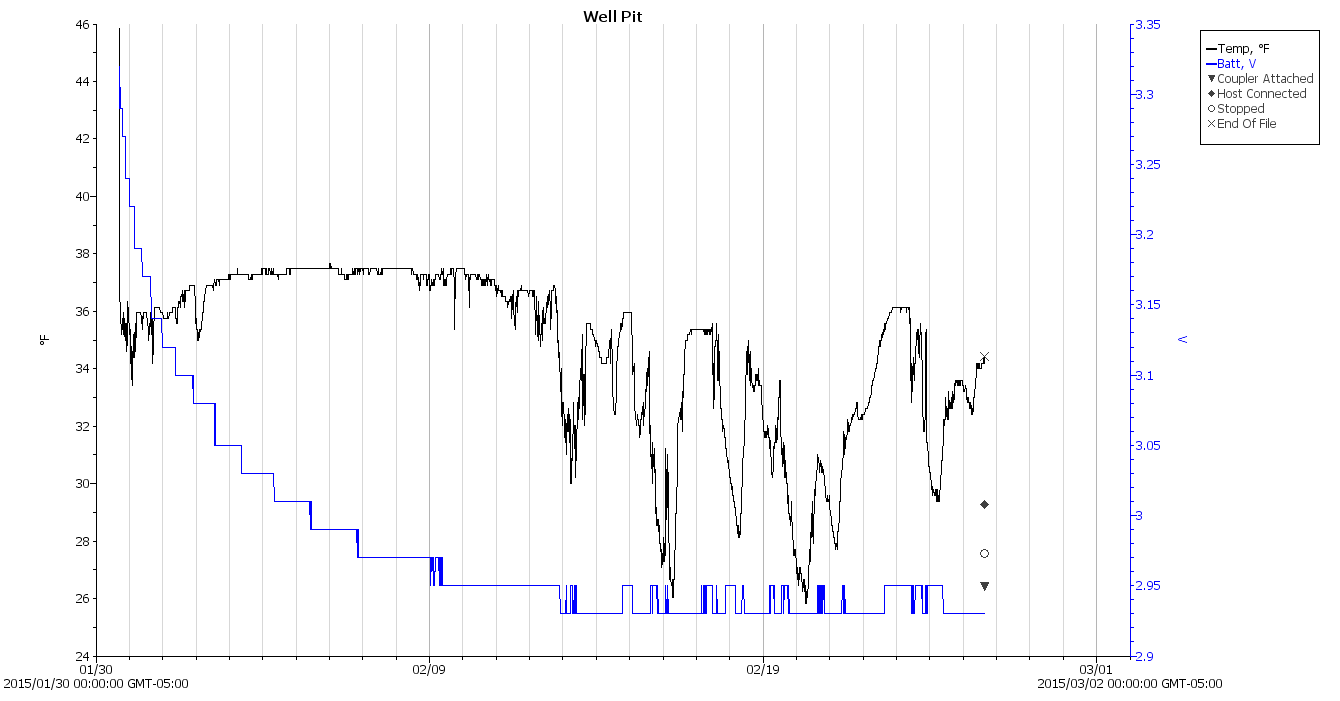
    The well pit definitely got cold during those nights when the air temperature dropped well below zero:

    Well Pit - 2015-02-25
    Well Pit – 2015-02-25

    Match that against the attic air temperature:

    Attic - Insulated Box - Maxell battery low - 2015-02-25
    Attic – Insulated Box – Maxell battery low – 2015-02-25

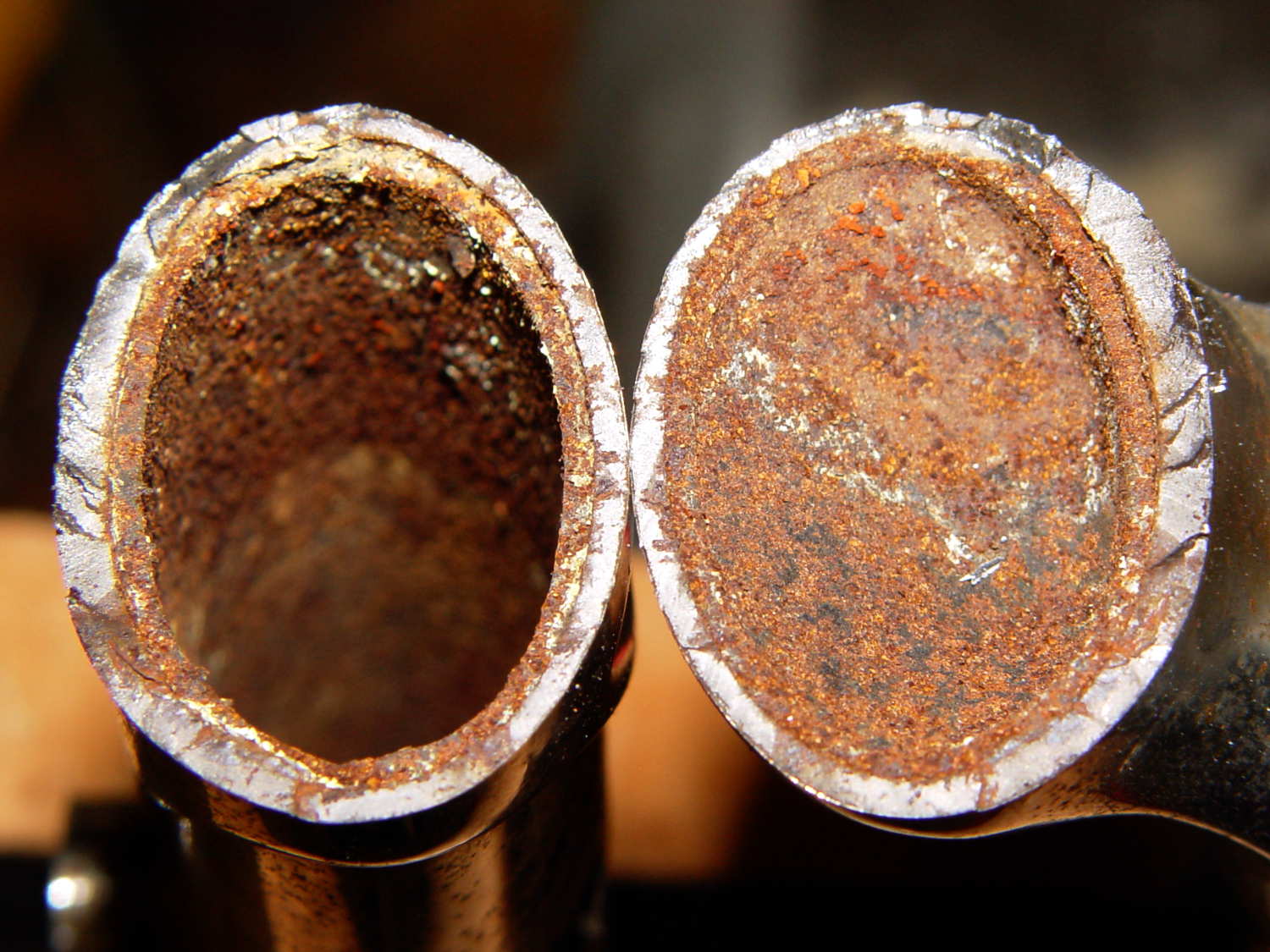
    The well pit has two vent holes made from old-school fluted steel downspout pipe embedded vertically in a half-foot concrete slab. They’re maybe five feet apart and the southwest hole seems to be the air inlet:

    Well Pit - SW vent
    Well Pit – SW vent

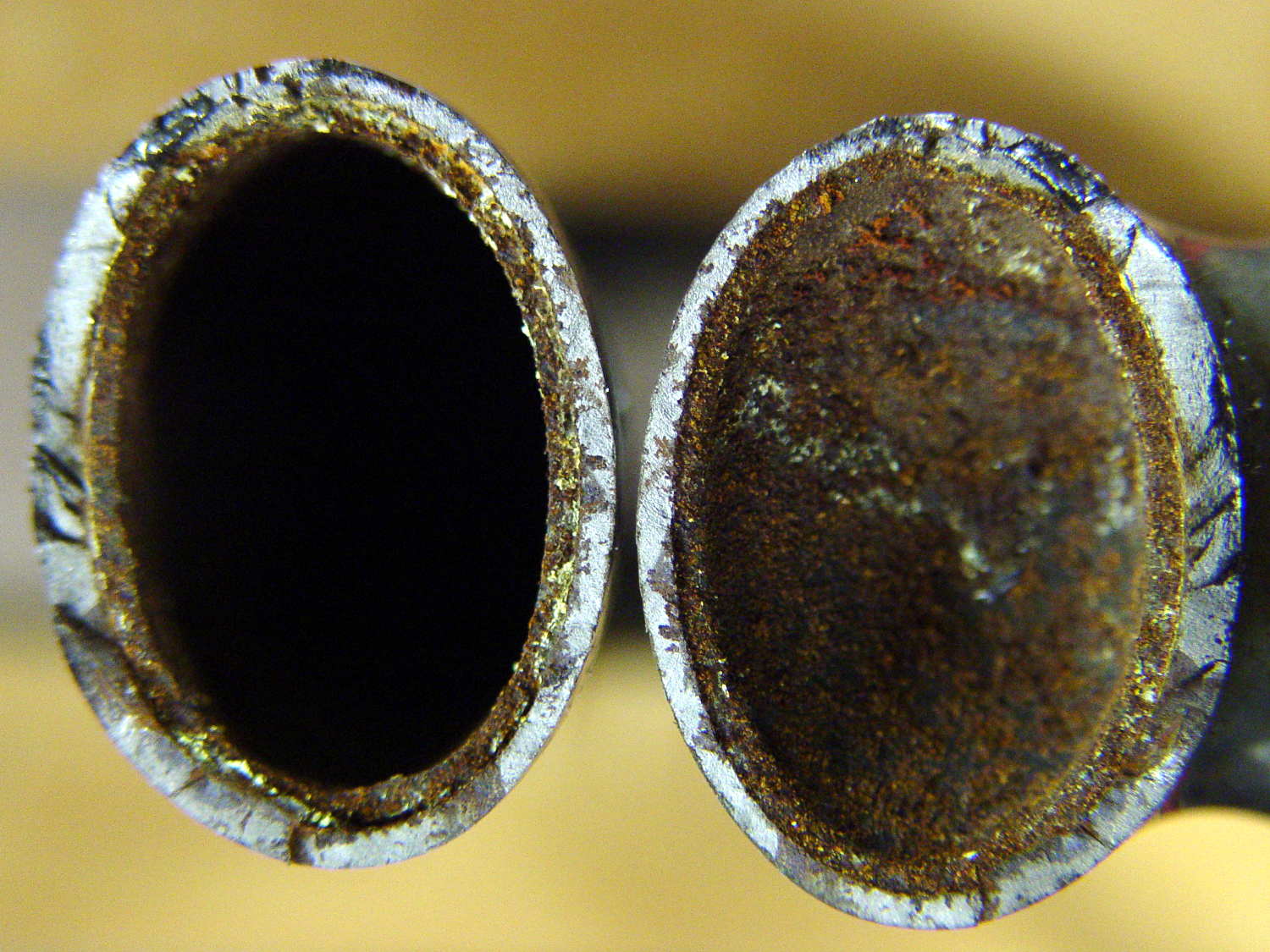
    The northeast hole must be the outlet for all that ground-warmed air:

    Well Pit - NE vent
    Well Pit – NE vent

    The logger hangs from the string entering from the center left, with a ring hung over an abandoned hose bib rising straight out of the concrete.

    Surely it’s been that cold before without freezing the pipes, so I won’t worry too much…