Ed Nisley's Blog: Shop notes, electronics, firmware, machinery, 3D printing, laser cuttery, and curiosities. Contents: 100% human thinking, 0% AI slop.
According to its description, the Anker USB 3.0 card reader can handle both a MicroSD and a standard SD card at once:
Simultaneously read and write on two cards to save yourself the effort of constant unplugging and re-plugging.
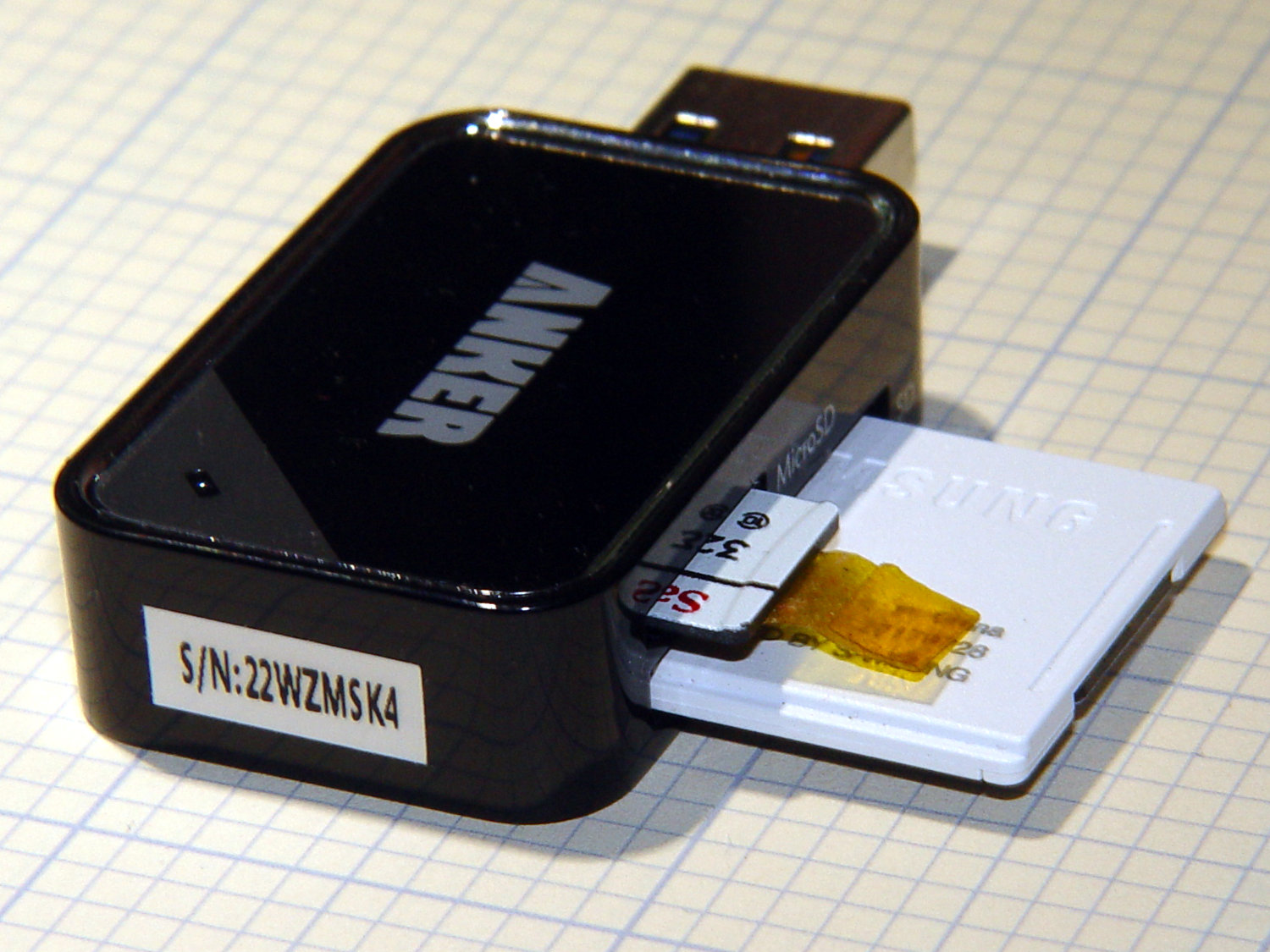
Which looks like this:
Anker USB Reader – dual card
After you get used to inserting the SD card downside-up, it fits perfectly. The Kapton tape on the MicroSD card eases extraction from the still finger-dent-less M20 camera mount on the back of my Tour Easy ‘bent.
Plugged into a USB 3.0 port, my file extractor script chugs along at 25.9 MB/s, taking about 18 minutes to transfer 28 GB of video data.
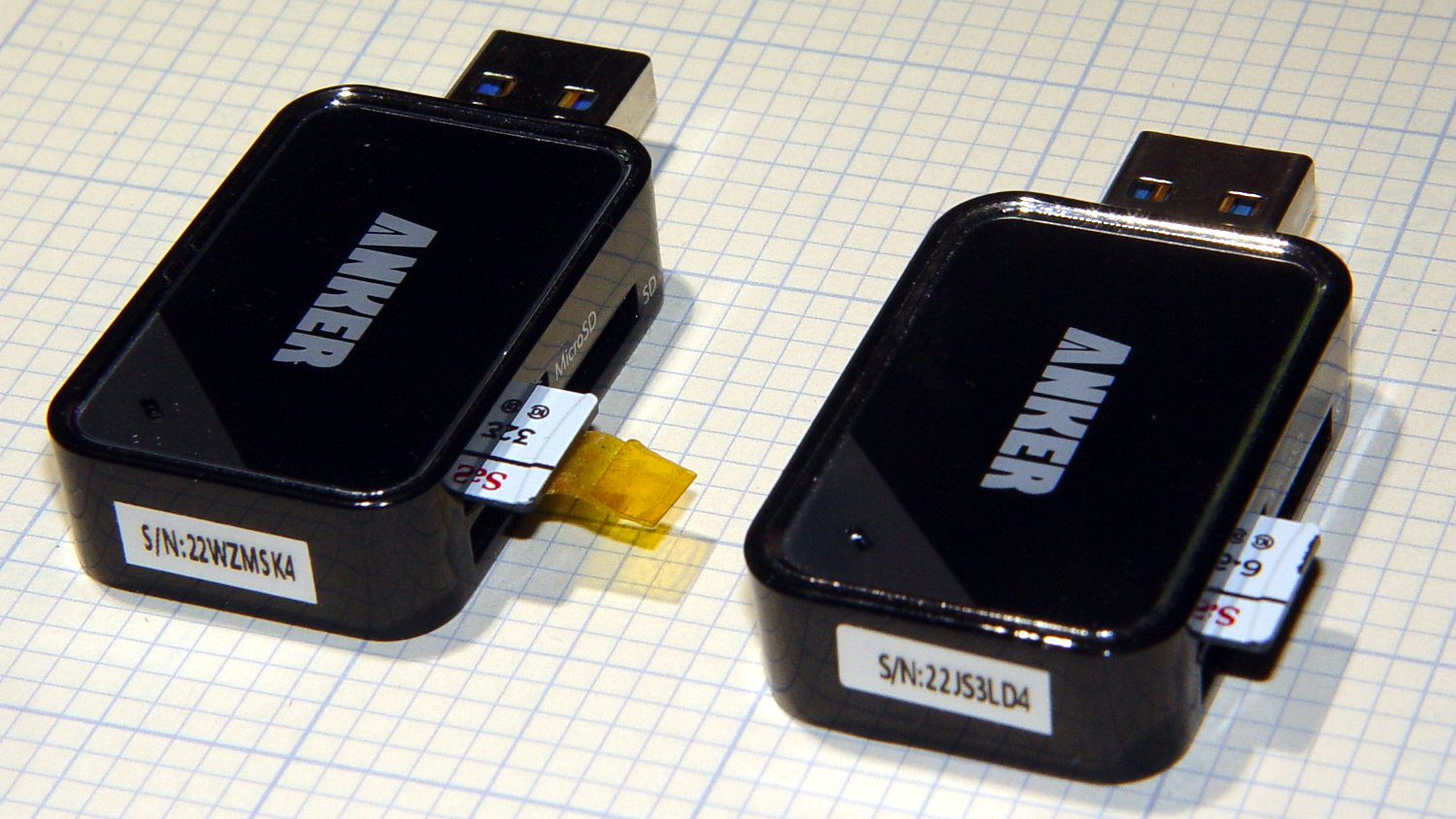
Splurging another eleven bucks for a second reader produces this setup:
Anker USB Reader – single card
After plugging both readers into adjacent USB 3.0 ports, the script transfers files at 46.6 MB/s and copies 28 GB in 10 minutes.
So, yes, the reader can handle two cards at once, but at half the speed.
Not life-changing, but it shows why I like measurements so much …
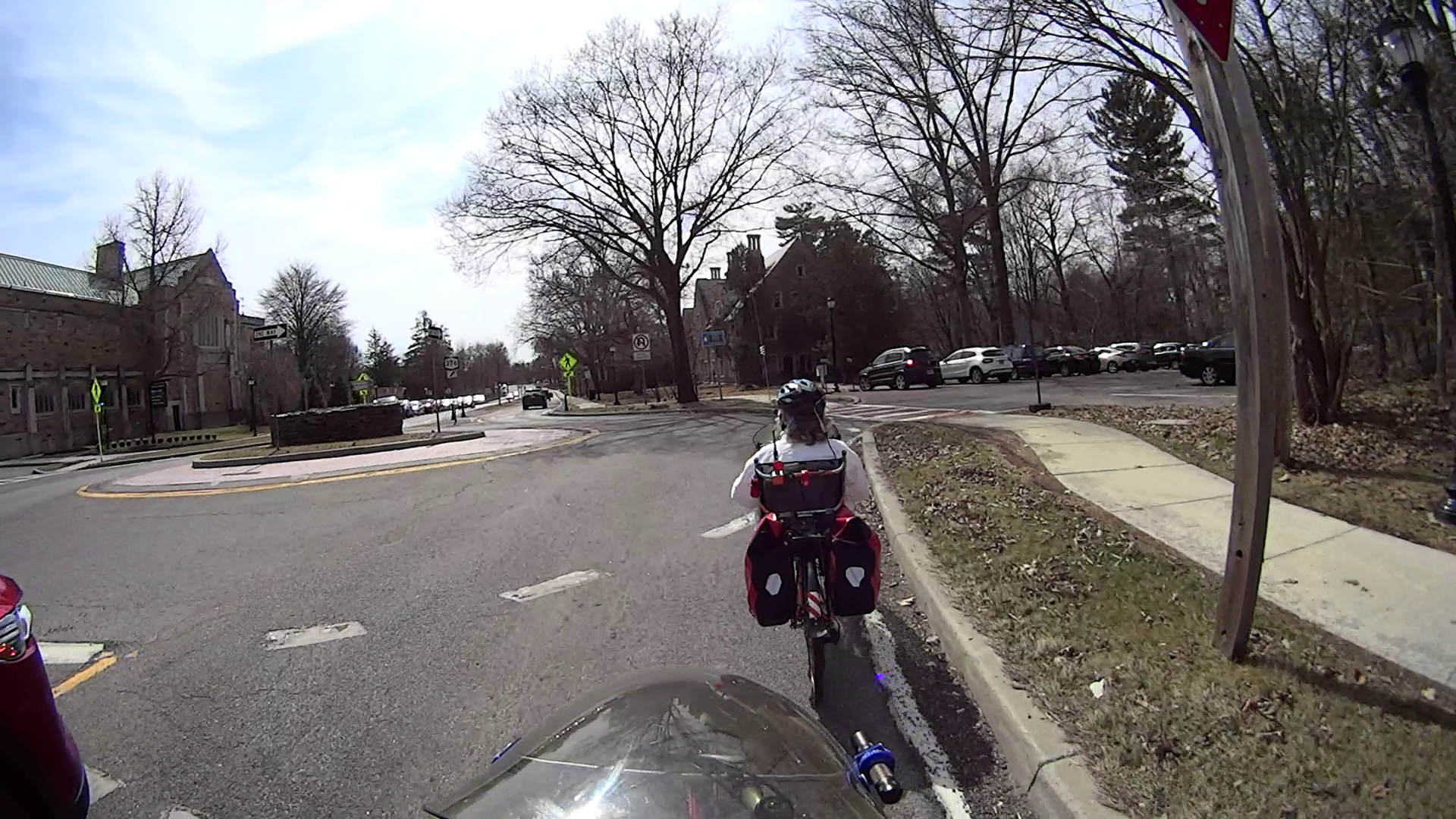
This time, I neglected to give my “We’re taking the lane!” signal, whereupon the driver behind us assumed we would all fit into the roundabout / traffic circle at Vassar’s Main Gate:
Raymond Ave – passing into Main Gate roundabout – rear camera – 2019-03-28
Raymond Avenue’s original “standards compliant” design has undergone some revision during the last few years:
Raymond Ave – passing into Main Gate roundabout – helmet 1 – 2019-03-28
The brace of black bollards centered on the median at the “pedestrian refuge” now replace the original quartet of illuminated, albeit non-reflective black, bollards, after errant drivers successively destroyed them.
There’s apparently no standard governing the placement or depth of drain grates along the right edge of the lane, nor the amount of gravel and trash allowed to accumulate to the right of the fog line:
Raymond Ave – passing into Main Gate roundabout – helmet 2 – 2019-03-28
Mary is just barely clearing the grate, I’m moving leftward to ensure I’m the first one to get hit. Fortunately, common sense broke out:
Raymond Ave – passing into Main Gate roundabout – helmet 3 – 2019-03-28
We got through the traffic circle without further contention and continued on our way.
Getting squeezed into a traffic circle happens often enough to show whatever NYS DOT uses as a “design standard” doesn’t include pedestrian or bicyclist safety as measurable quantities.
As we all know, anything you don’t measure doesn’t happen.
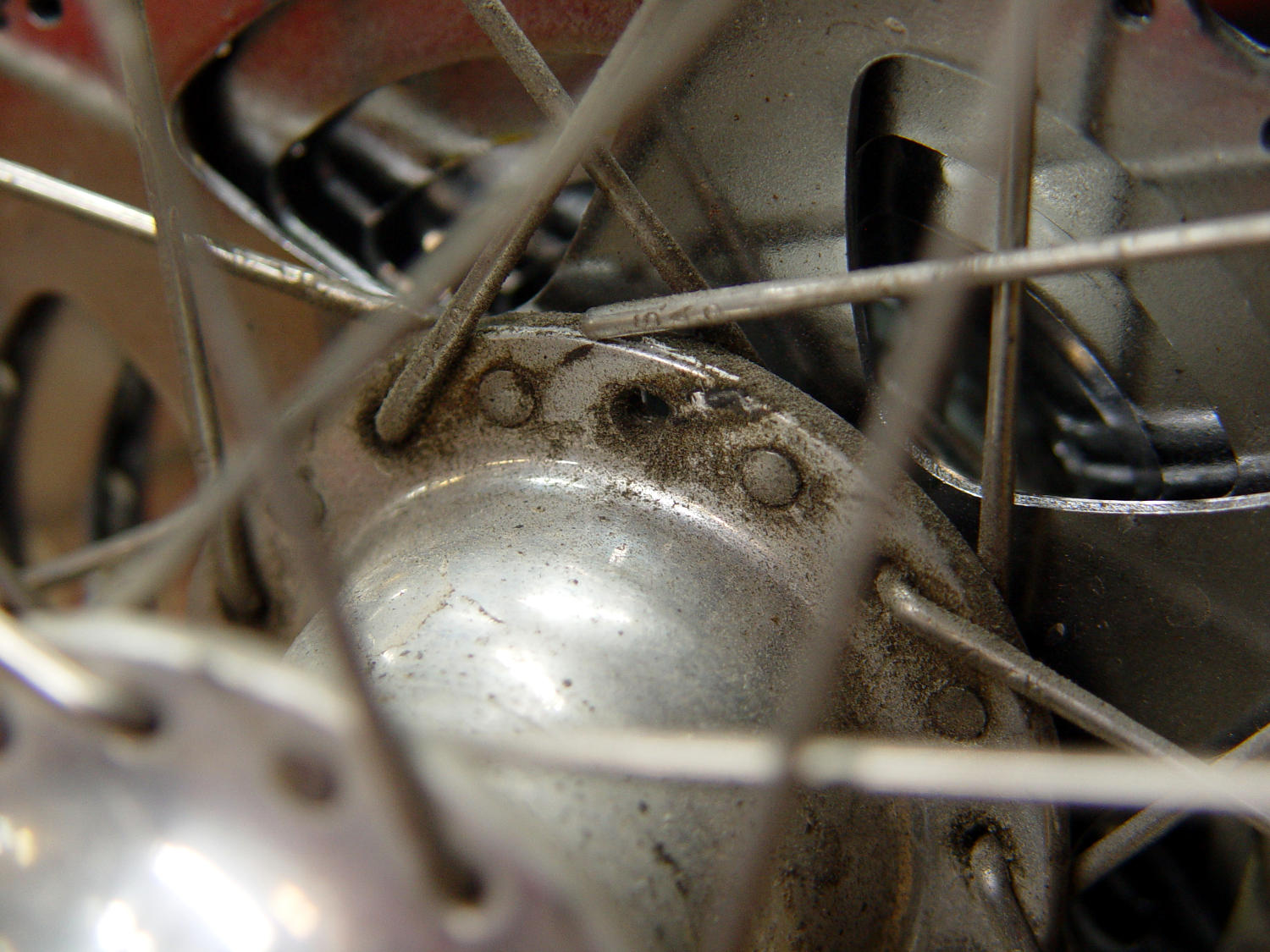
I’d noticed some brake drag on our last few rides, but forgot to check until I saw the rim wobble while extracting images from the rear camera.
It’s a lot easier to fix in the Basement Shop than on the road. After nigh onto a decade since replacing the last broken spoke, perhaps this is a harbinger of doom to come.
Memo to Self: spoke tension is now 20-ish on the drive side, 15-ish on the left.
We’d been eating a “healthy” high-carb / low-fat diet, which produced the more-or-less expected 1 lb/yr weight gain over the course of three decades. Given that we eat about 106 Cal/yr, being off by a mere 0.3% seemed fixable, but we were always hungry while trying to cut out calories.
In April 2016, we decided our tummies had come between us, so we switched to a mostly ketogenic diet (clicky for more dots):
Weight Chart 2016 – Ed
Having a Master Gardener in the family complicates dietary choices along the ketogenic axis, but Mary raised more green-and-leafy veggies, less squash-and-corn, and we keto-ized our meals reasonably well. Moderation in all things works fine for us, so losing 25 pounds at about 1 lb/week wasn’t particularly stressful.
Continuing through 2017, you can see how regular bike riding season affects winter bloat:
Weight Chart 2017 – Ed
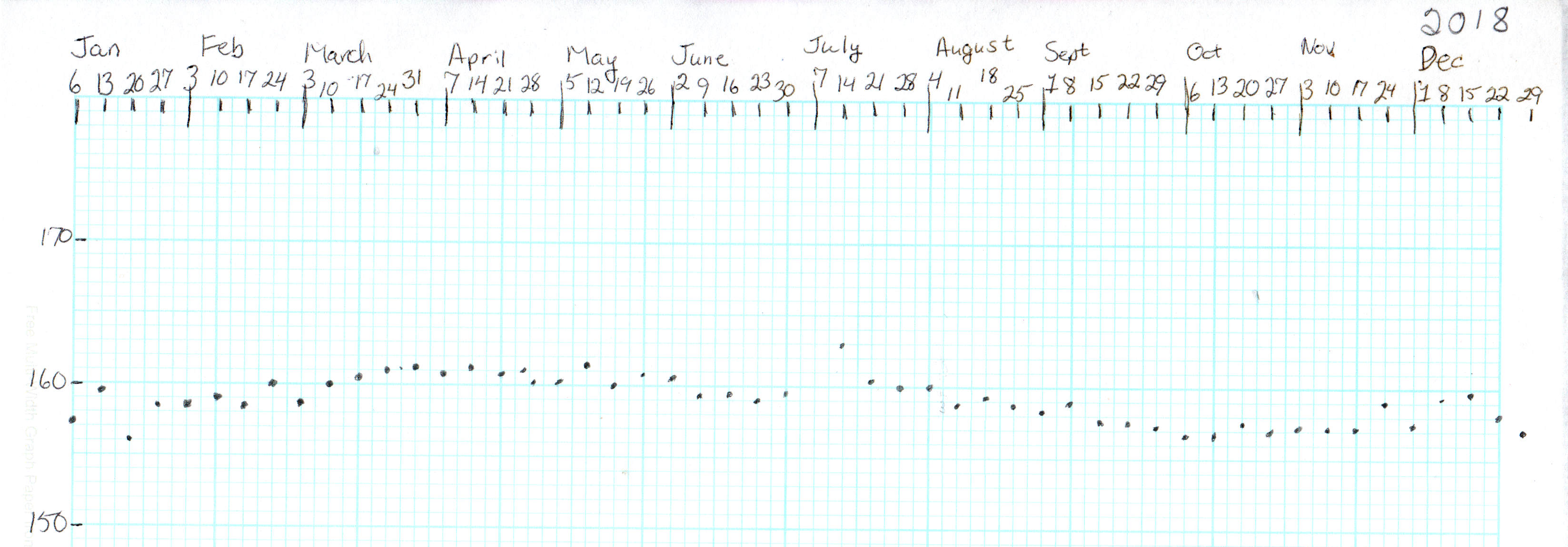
Our cycling vacation in July 2018 produced a blip, but the rest of the riding season worked as expected:
Weight Chart 2018 – Ed
It’s straightforward to crash-diet two dozen pounds, but maintaining a more-or-less stable weight for the next two years suggests we’ve gotten the annual calorie count about right. FWIW, my bloodwork numbers sit in the Just Fine range, apart from the somewhat elevated cholesterol level typical of a keto-ized diet.
Starting in late 2018, however, a stressful situation of a non-bloggable nature (at least for a blog such as this) produced an unusually high number of road trips, motel stays, and generally poor dietary choices:
Weight Chart 2019-03 – Ed
The situation now being over, our lives / exercise / diet will return to what passes for normal around here and my goal is to lose another 10% of my current body weight, ending at 150 pounds, by the end of the year. In round numbers, that requires losing half a pound = 1700 Cal/week, 250 Cal/day. Not power-noshing an ounce or two of nuts a day should do the trick.
If it makes you feel more science-y, you can use the NIH Body Weight Planner, but it produces about the same answer: knock off 300 Cal to lose weight, 250 Cal to maintain it, at essentially the same exercise level as before.
We’ve been recording our weights as dots on graph paper every Saturday evening for the last four decades, so I know for a fact I averaged 148 pounds when I wore a younger man’s clothes. I’ll re-post the 2019 chart, adding four dots every month, during the rest of the year.
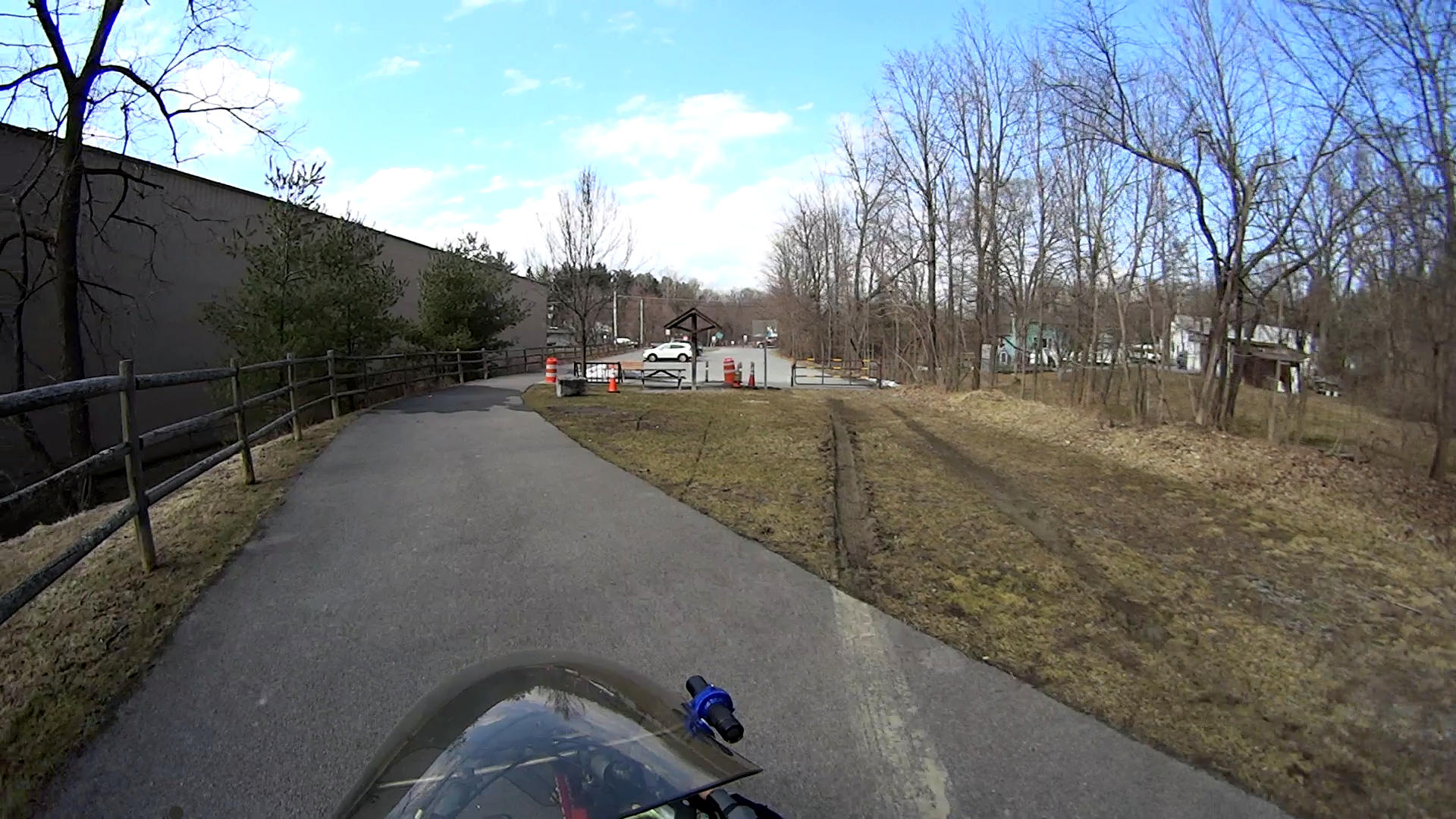
The last time we rode past the Diddel Rd trailhead, there were zero locks on the (unchained) vehicle gate; evidently somebody forgot to relock the gate on the way out.









 The Smell of Molten Projects in the Morning