The Smell of Molten Projects in the Morning

Ed Nisley's Blog: Shop notes, electronics, firmware, machinery, 3D printing, laser cuttery, and curiosities. Contents: 100% human thinking, 0% AI slop.

Category: Recumbent Bicycling

Cruisin’ the streets

  • Running Light Waveforms: A Closer Look

    Running Light Waveforms: A Closer Look

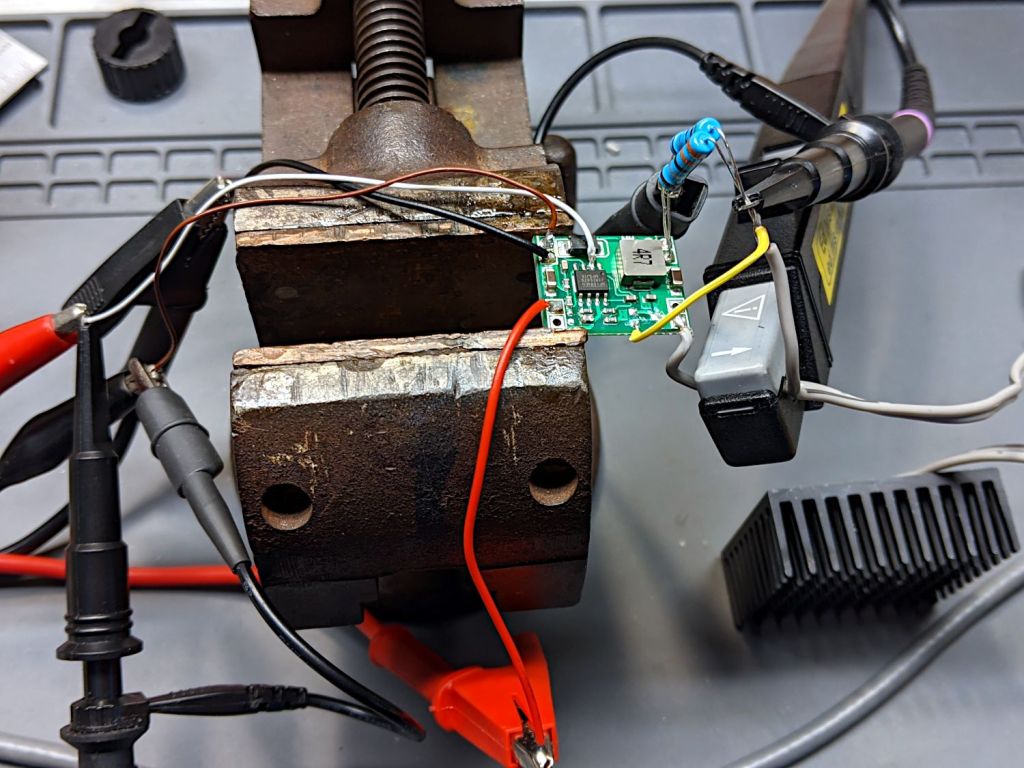
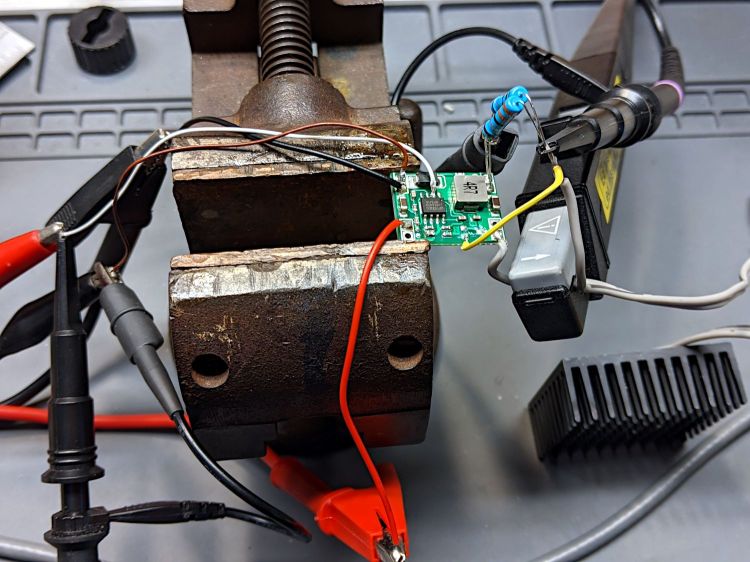
    A test setup on the bench allows a bit more room for probes:

    1 W Amber LED - MP1584 pulse setup
    1 W Amber LED – MP1584 pulse setup

    Some heatsink tape holds the LED to the far side of that oversize heatsink.

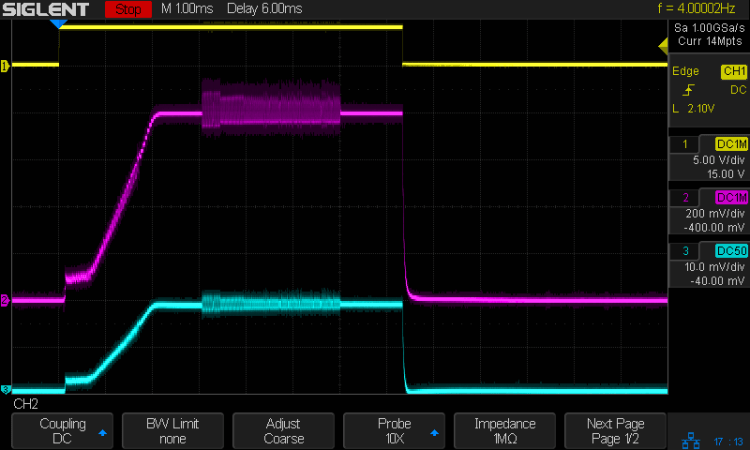
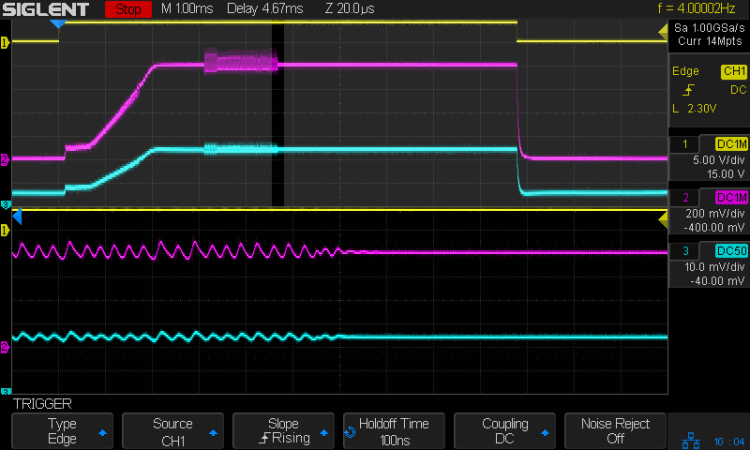
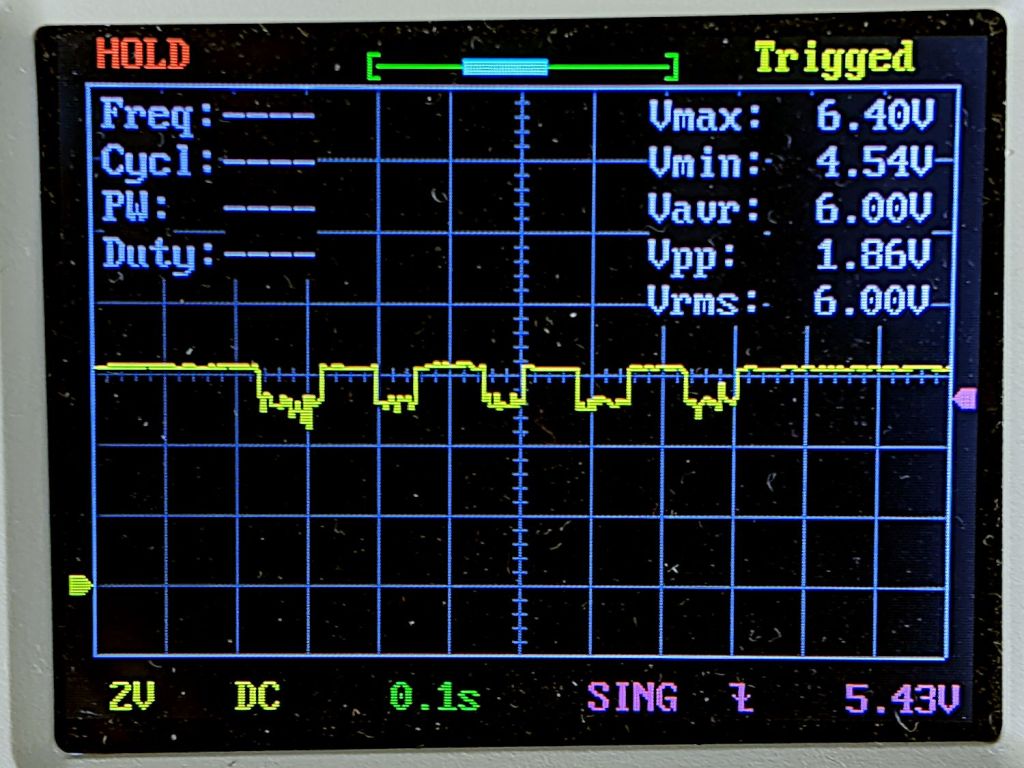
    The input signal (top trace) arrives from a function generator set to blip the MP1584 regulator’s Enable input at 4 Hz with a 7 ms pulse:

    Amber 1 w LED - pulse 200 mA-div
    Amber 1 w LED – pulse 200 mA-div

    The purple trace is the voltage across the 2 Ω sense resistor. The MP1584 datasheet says the regulator soft-starts for (typically) 1.5 ms, during which the output ramps upward at 600 mV/ms to 800 mV , whereupon the actual regulation commences. The amber LED forward drop adds 2.5 V to the sense voltage, so the regulator produces 3.3 V from the 6.3 V bench supply input.

    The cyan trace is the output current through the LED and sense resistor, also ramping up to 800 mV/2 Ω = 400 mA to drive the LED at 1 W.

    The furry section shows when the regulator is actively regulating, with the output voltage rising and falling over a small range to maintain the average current (via the sense voltage). Successive Enable pulses may have longer, shorter, or completely missing fur, with no predictable pattern. Increasing the duty cycle doesn’t affect the results, with the fur sometimes extending for the entire pulse and sometimes being completely missing.

    I think the regulator can settle in one of two metastable states. The best case has a constant voltage producing a constant LED current, with the sense voltage remaining within whatever deadband keeps the error amplifier happy. When something knocks the sense voltage out of the deadband, the error amp starts the usual regulation cycle, which will stop when the minimum or maximum voltage of a cycle remains within the deadband:

    Amber 1 w LED - pulse - detail - 200 mA-div
    Amber 1 w LED – pulse – detail – 200 mA-div

    The ripple shows the regulator running at three cycles per 20 µs division = 150 kHz, far lower then the MP1584 datasheet’s maximum 1.5 MHz and the typical 500 kHz in the test circuits. Perhaps a low frequency lets the designers use a cheap PCB and not worry about pesky EMI issues.

    In any event, during this pulse the ripple amplitude gradually decreased as the output voltage settled at the point where the error voltage variation stayed within the deadband. The typical amp gain is only 200 V/V, so it’s definitely less fussy than something build around an op amp.

    For whatever it’s worth, a 7 ms flash from a 1 W amber LED at 4 Hz is way attention-getting in a dim Basement Laboratory. You wouldn’t need an Arduino to produce that signal, even though I like the Morse capability.

  • Another Snapper

    Another Snapper

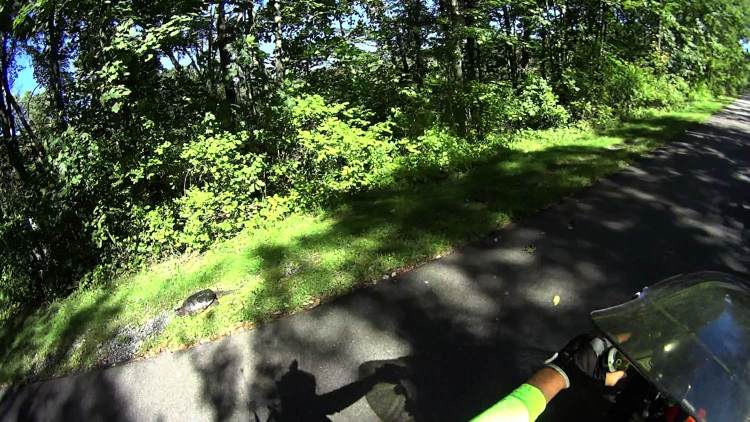
    An approaching cyclist warned to watch out for the snapping turtle:

    Snapping Turtle - DCRT near Page Park - front - 2021-09-24
    Snapping Turtle – DCRT near Page Park – front – 2021-09-24

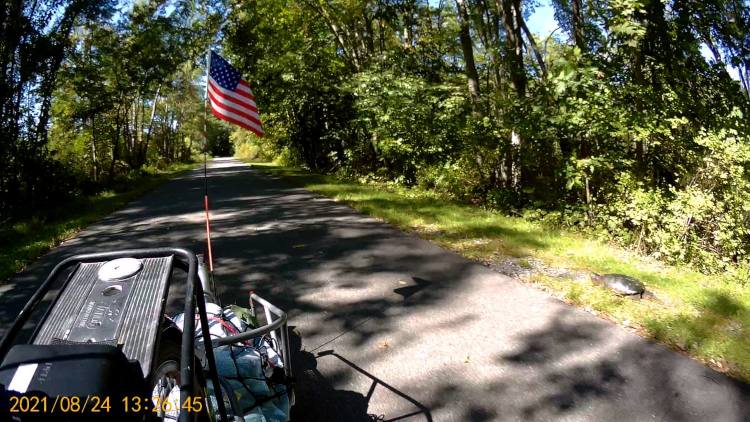
    This one claims the pond near Page Industrial Park along the Dutchess Rail Trail:

    Snapping Turtle - DCRT near Page Park - rear - 2021-09-24
    Snapping Turtle – DCRT near Page Park – rear – 2021-09-24

    We’ll not dispute any snapper’s territory!

    I’m hauling PYO apples from Prospect Hill Orchards in the hills on the west side of the Hudson; it was a lovely fall day for a 25 mile ride!

  • BatMax NP-BX1 Status

    BatMax NP-BX1 Status

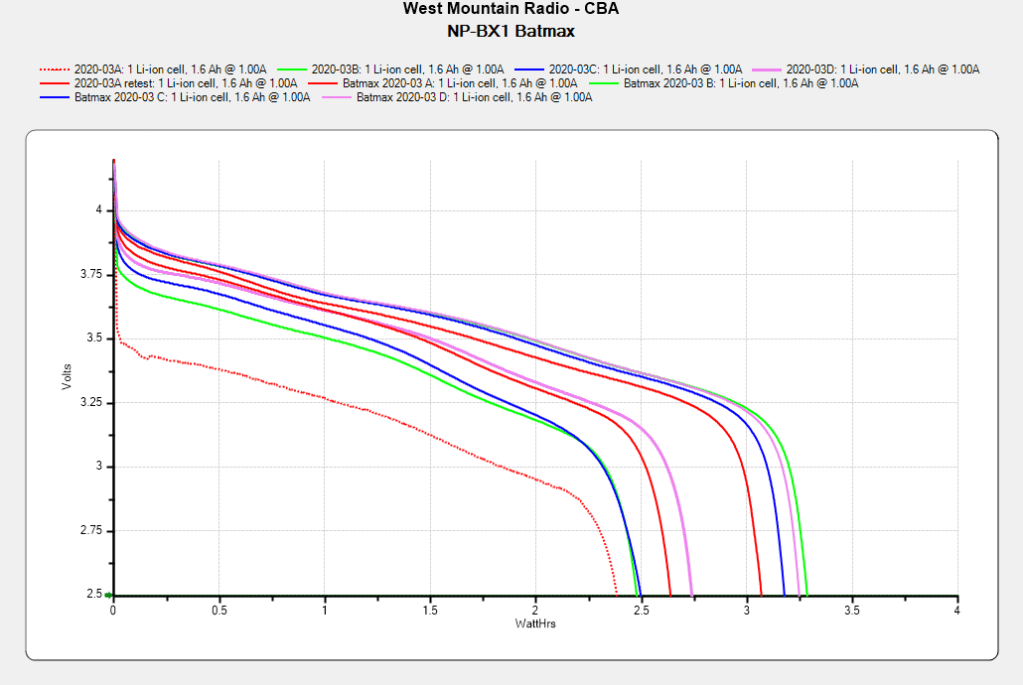
    The Sony HDR-AX30V helmet camera puts far more demands on its battery than the Planet Bike Superflash:

    Batmax NP-BX1 - 2021-09 vs 2020-03
    Batmax NP-BX1 – 2021-09 vs 2020-03

    The four traces on the right show the BatMax NP-BX1 lithium batteries (cells, really) originally stored about 3 W·h when they arrived in March 2020. The four solid traces to their left show the capacity dropped to a little over 2 W·h after two riding seasons. Batteries B and C started out above average and are now below, for whatever that means.

    The red dotted trace shows the effect of not using the NP-BX1 test holder for that length of time; those homebrew contact pins apparently needed some exercise.

  • Panasonic Eneloop AAA NiMH: Four Years of Blinking

    Panasonic Eneloop AAA NiMH: Four Years of Blinking

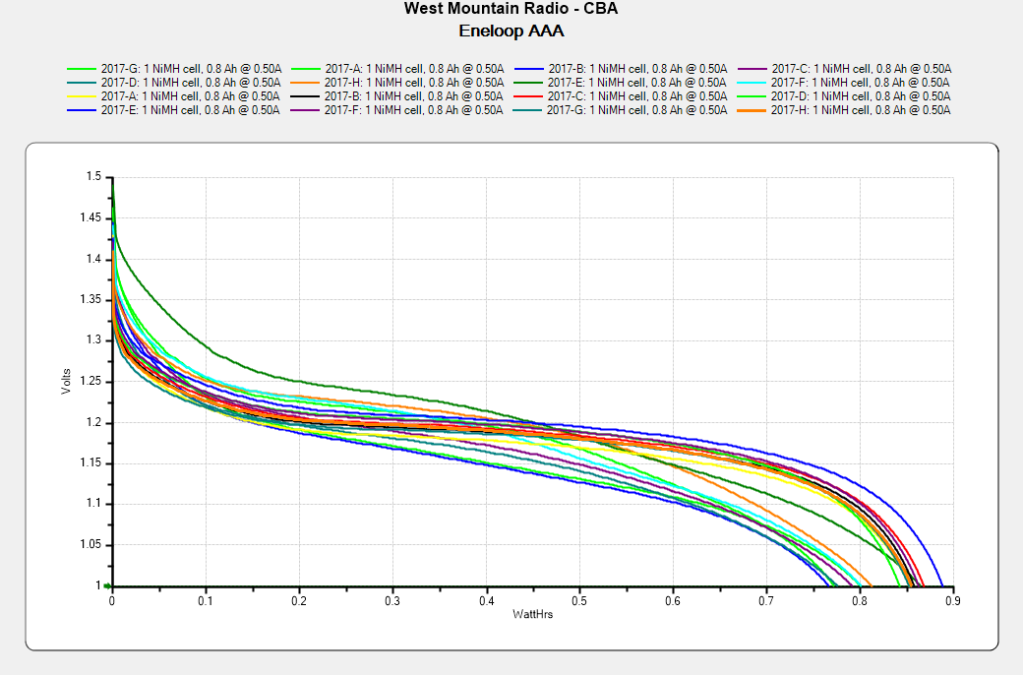
    Having replaced the Planet Bike Superflash on Mary’s Tour Easy with a 1 W red LED, testing the eight Panasonic Eneloop AAA cells that have been powering it (and the one on my bike) for the last four years seemed useful:

    Panasonic Eneloop AAA - 2021-09 vs 2017-04
    Panasonic Eneloop AAA – 2021-09 vs 2017-04

    The sheaf of curves over on the right came from the first full charge, with the untidy collection below them show the current state after a full charge. This is at an unreasonably high 500 mA discharge.

    The overall capacity has dropped by 10%, which isn’t all that bad, but the 10% voltage reduction toward the end of the curves is a Bad Thing for an LED flasher intended to run from 1.5 V alkaline cells. In practice, I recharge the batteries once a week while they are still going strong, but the difference between alkalines and NiMH cells is obvious even at full charge.

    Now I can run four pairs through the aging Superflash on my bike …

  • Tour Easy Rear Running Light: First Light!

    Tour Easy Rear Running Light: First Light!

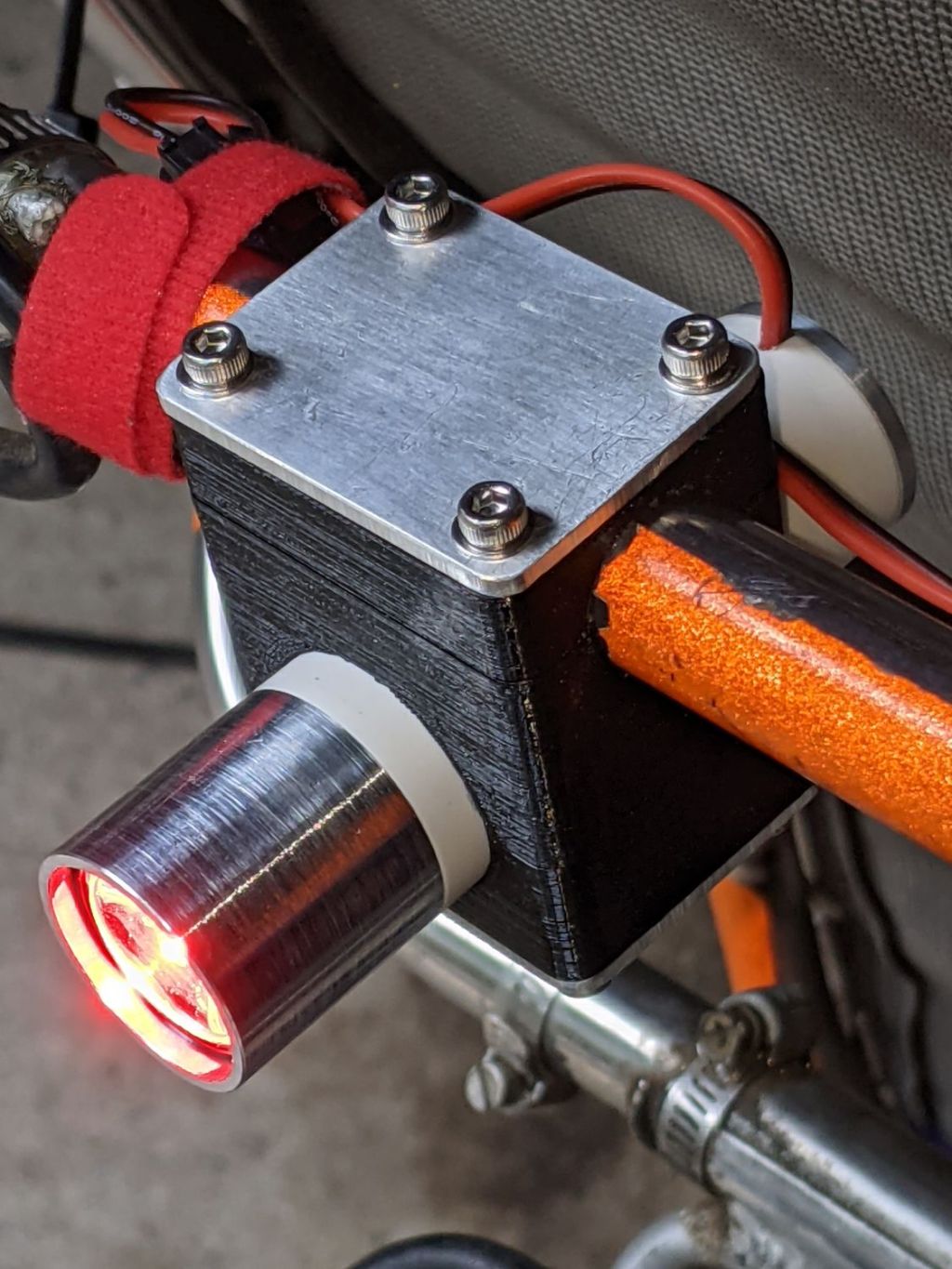
    The rear running light definitely has an industrial look:

    Tour Easy Rear Running Light - installed
    Tour Easy Rear Running Light – installed

    The front of the light has plenty of clearance from the seat mesh:

    Tour Easy Rear Running Light - installed side view
    Tour Easy Rear Running Light – installed side view

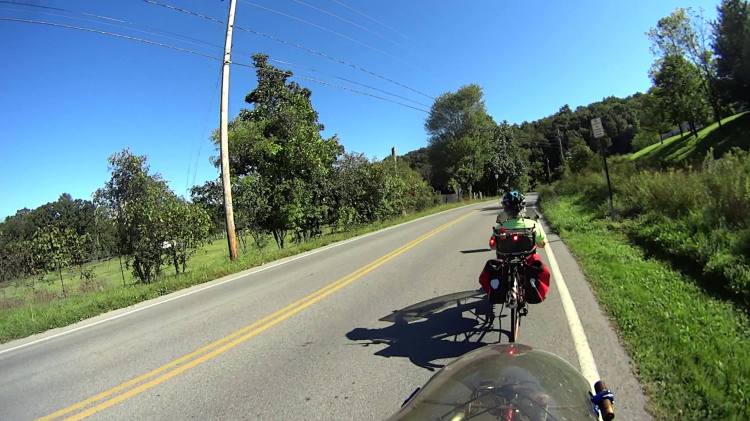
    Out on the road, the 1 W LED appears about as bright as automotive running lights:

    Tour Easy Rear Running Light - tunnel
    Tour Easy Rear Running Light – tunnel

    The blink pattern makes it perfectly visible in sunlight, although I’d prefer somewhat larger optics:

    Tour Easy Rear Running Light - sunlight
    Tour Easy Rear Running Light – sunlight

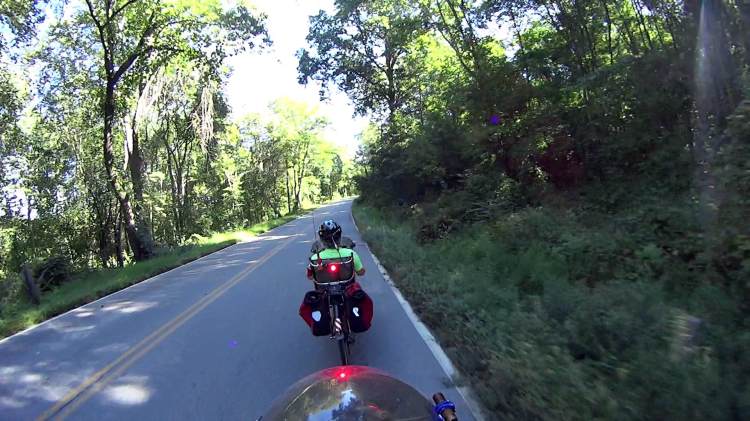
    In shaded conditions, it’s downright conspicuous:

    Tour Easy Rear Running Light - shade
    Tour Easy Rear Running Light – shade

    At any reasonable distance, the 10° beam covers much of the road behind the bike:

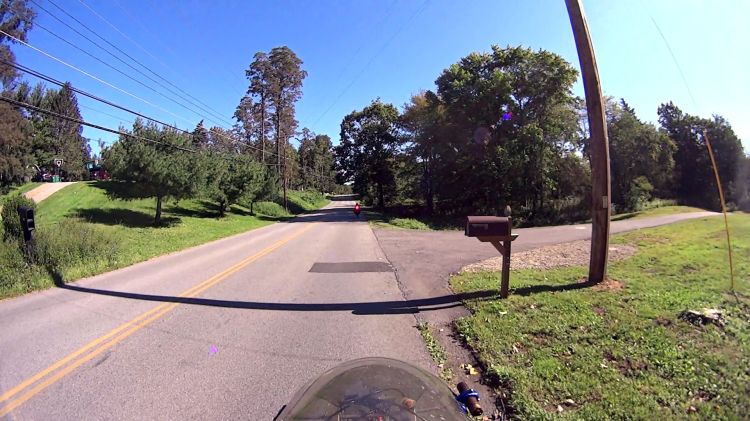
    Tour Easy Rear Running Light - distant
    Tour Easy Rear Running Light – distant

    You may not know what the occulting red light represents, but something ahead is worthy of your attention.

    The Arduino source code producing the two dits:

    // Tour Easy Running Light
    // Ed Nisley - KE4ZNU
    // September 2021
    
    #include <morse.h>
    
    #define PIN_OUTPUT  13
    
    // second param: true = active low output
    LEDMorseSender Morser(PIN_OUTPUT,true,(float)10.0);
    
    void setup()
    {
        Morser.setup();
    
        Morser.setMessage(String("qst de ke4znu "));
        Morser.sendBlocking();
    
    //    Morser.setWPM((float)3.0);
        Morser.setSpeed(75);
        Morser.setMessage(String("i   "));
    }
    
    void loop()
    {
        if (!Morser.continueSending())
            Morser.startSending();
    
    }
    

    Looks good to me, anyhow.

  • Beaver Lodge II

    Beaver Lodge II

    The beaver family living in their pond along the Dutchess Rail Trail near Titusville Rd is doing so well they’ve erected a second lodge:

    Second Beaver Lodge - near Titusville Rd - 2021-09-23
    Second Beaver Lodge – near Titusville Rd – 2021-09-23

    It’s 500 feet (-ish) upstream from the first lodge and seems somewhat smaller, so perhaps it’s for the kids.

  • Why LED Lamps Fail

    Why LED Lamps Fail

    Spotted over a fast food emporium’s parking lot:

    Disemboweled parking lot light
    Disemboweled parking lot light

    It’s hard to be sure, but I think there’s a paper wasp nest around the bundle of wires just above the transformer / ballast / whatever. Perhaps the repair tech departed with the job unfinished?

    As with traffic signals, flashlights, and automotive lighting, the LEDs surely work long after the driver circuitry has given up.