Ed Nisley's Blog: Shop notes, electronics, firmware, machinery, 3D printing, laser cuttery, and curiosities. Contents: 100% human thinking, 0% AI slop.
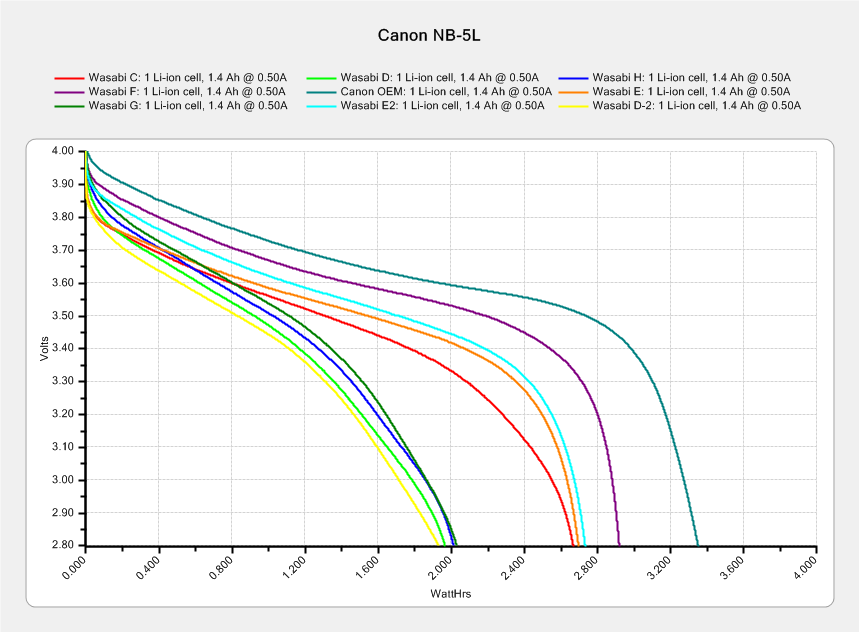
My pocket camera has begun kvetching about a low battery rather more often than before, which suggests the batteries I’ve been using since 2014 have gone beyond their best-used-by date.
This came as no surprise:
Canon NB-5L – 2017-08-05
I re-ran a couple of the batteries to make sure they hadn’t faded away from disuse, which didn’t materially change the results. The lightly used Canon OEM battery continues to lead the, ah, pack.
The camera’s lens capsule accumulated a fair bit of dust from many years in my pocket, which lowers its overall contrast and wrecks the high f/ images produced with the microscope adapter.
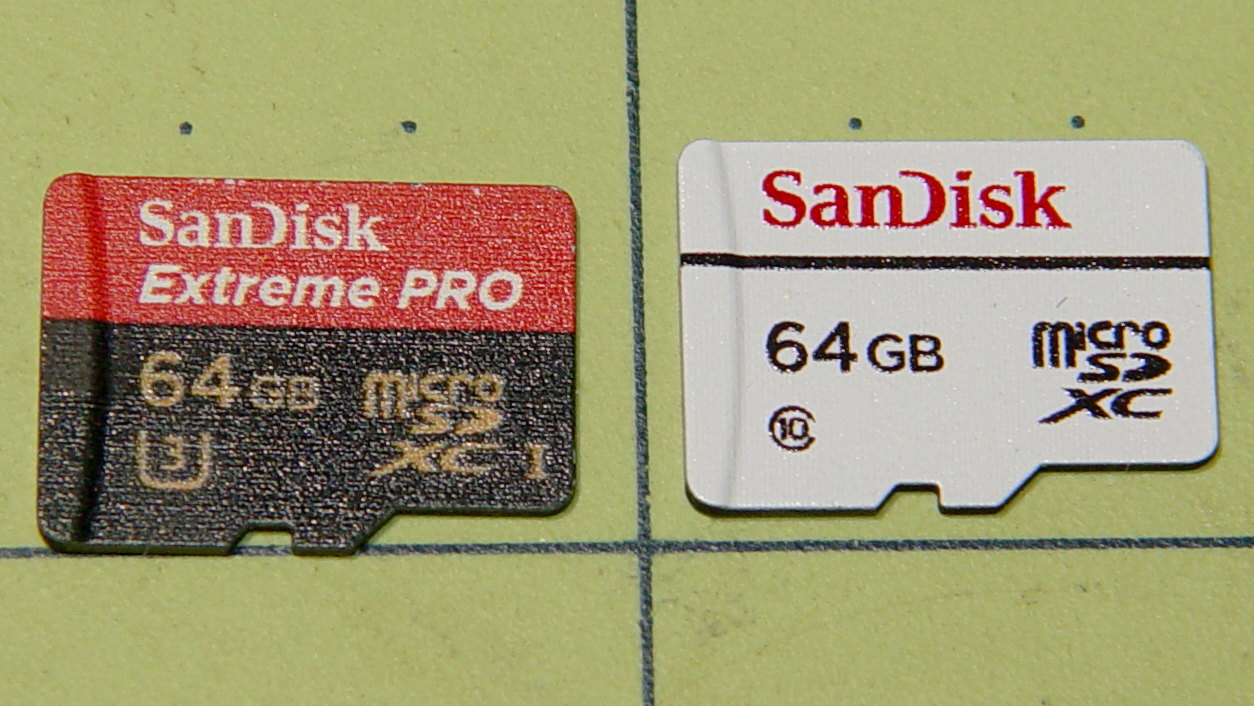
The Sandisk Extreme Pro 64 GB MicroSDXC (whew) card in the Sony HDR-AS30V had been working fine, but recently the camera crashed in mid-ride after spitting out an unreadable video file. I reformatting the card, which seemed to restore its good humor, and preemptively dropped $36 on a fancy Sandisk High Endurance Video Monitoring Card from a Nominally Reputable Amazon seller:
Sandisk – 64 GB MicroSDXC cards
The package & card production values seem high enough to make me think it’s genuine, despite the white-label thing SanDisk has goin’ on; it matches their website pix closely enough.
Popping it into a USB 3.0 adapter, plugging that into the new-to-me Dell Optiplex 9010’s front-panel USB 3.0 port, and unleashing f3probe produced encouraging results:
sudo f3probe -t /dev/sde
[sudo] password for ed:
F3 probe 6.0
Copyright (C) 2010 Digirati Internet LTDA.
This is free software; see the source for copying conditions.

WARNING: Probing normally takes from a few seconds to 15 minutes, but
         it can take longer. Please be patient.

Probe finished, recovering blocks... Done

Good news: The device `/dev/sde' is the real thing

Device geometry:
	         *Usable* size: 59.48 GB (124735488 blocks)
	        Announced size: 59.48 GB (124735488 blocks)
	                Module: 64.00 GB (2^36 Bytes)
	Approximate cache size: 0.00 Byte (0 blocks), need-reset=no
	   Physical block size: 512.00 Byte (2^9 Bytes)

Probe time: 4'26"
 Operation: total time / count = avg time
      Read: 2'42" / 4197135 = 38us
     Write: 1'41" / 4192321 = 24us
     Reset: 1.00s / 1 = 1.00s
Just for completeness, I unleashed f3write to fill it with pseudorandom data:
So it reads lickety-split, but writes much more slowly. Fortunately, the HDR-AS30 camera pops out a 4 GB file every 22.75 minute = 2.9 MB/s, so the card has a smidge of headroom while writing.
The specs claim “up to 10,000 hours” of Full HD recording. If so, I’m looking at a card good for “up to 40 years“ of riding at 1 hour/ride and 250 ride/year. For 36 bucks, how can ya go wrong?
I’ll take it for a few rides to see what happens …
The packaging includes a link to a Windows / Mac data recovery program, plus the serial number required to activate the download. I’ll continue to eke out a miserable existence with ordinary Linux disk / file maintenance tools, as I’m no longer enthused about “free” programs requiring secret handshakes for activation on a single computer with an OS I no longer use, particularly a program that auto-pumpkinates after a year:
Please fill in the data accurately as this information will be needed to reactivate the software if you ever need to move the software to a different computer.
We watched a female Monarch Butterfly lay eggs on the stand of milkweed behind the house. She also found a lone plant in the vegetable garden that’s now standing in a vase on the kitchen table where we can keep an eye on the proceedings.
So far, so good:
Monarch Butterfly Egg on Milkweed Leaf – 2017-07-29
So my trustySony DSC-H5 camera emitted a horrible crunching sound from inside its lens assembly, spat out several error codes which boiled down to “throw me out”, stopped retracting its lens, and developed a nasty rattle. If I thought dropping $2k on a fancy mirrorless DSLR would improve my photography, I’d do it, but instead I picked up a $60 used DSC-H5 from eBay and continued the mission.
Of course, the new-to-me H5 suffers from the half-press switch failure common to that entire line of Sony cameras; my DSC-H1 repair notes still come in handy for many folks.
I’d preemptively repaired the shutter button + switch in my now-defunct H5, so I dismantled it, extracted the control assembly + shutter button, bulldozed the debris aside, dismantled the new(er) H5, transplanted the parts, reassembled it, and declared victory.
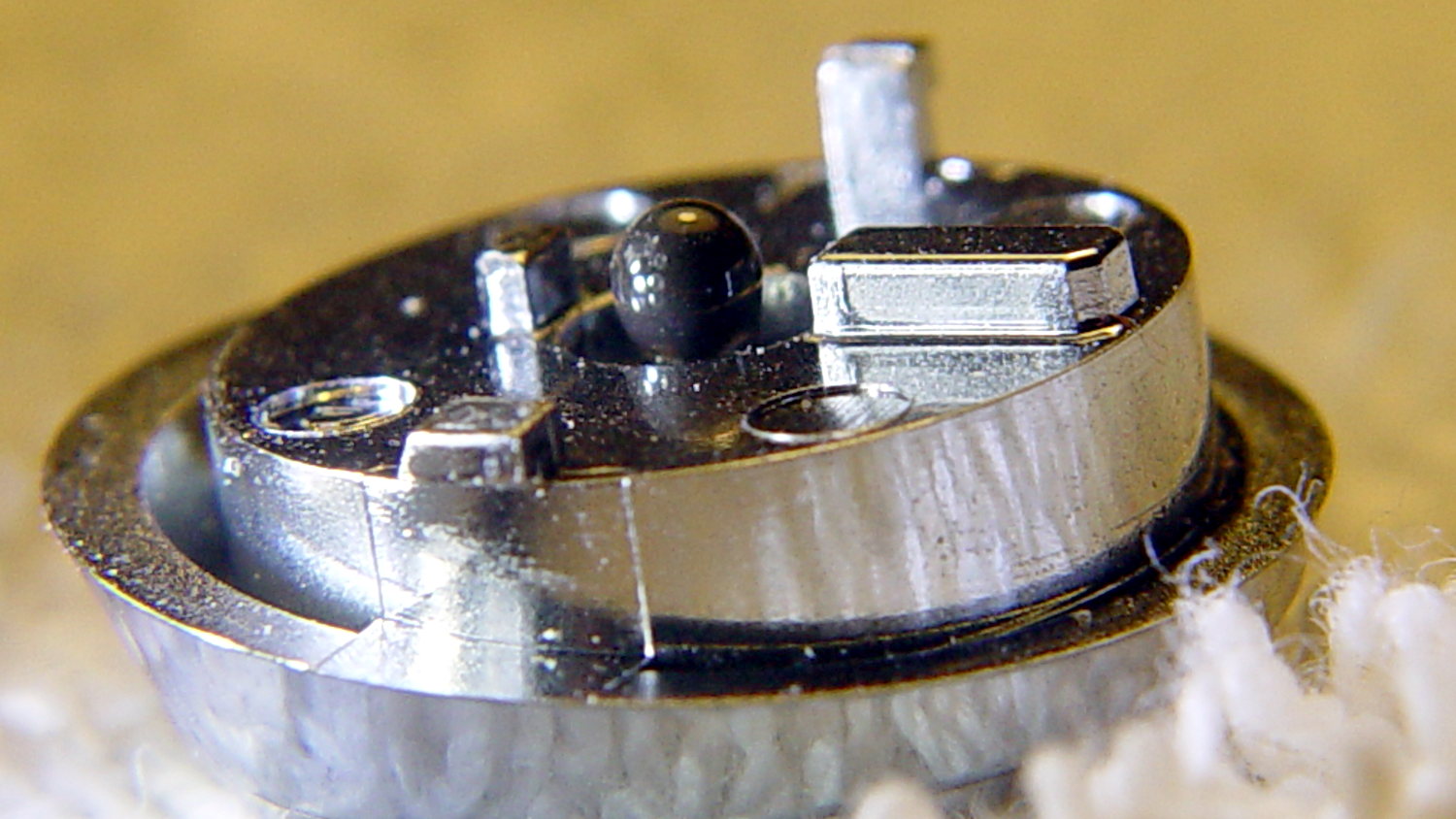
Which left me with a pile of parts that could become an H5, if I could fix the lens assembly, which seemed unlikely. While pondering the futility of human existence, I applied a low-effort repair to the defunct shutter button by scuffing the nicely chromed and absurdly tapered tip of the OEM shutter button’s shaft, then applying a dot of JB Kwik epoxy:
DSC-H5 Shutter Button – epoxy dot
The nice sphere came from hanging downward, with the button sitting atop a short brass tube on the workbench.
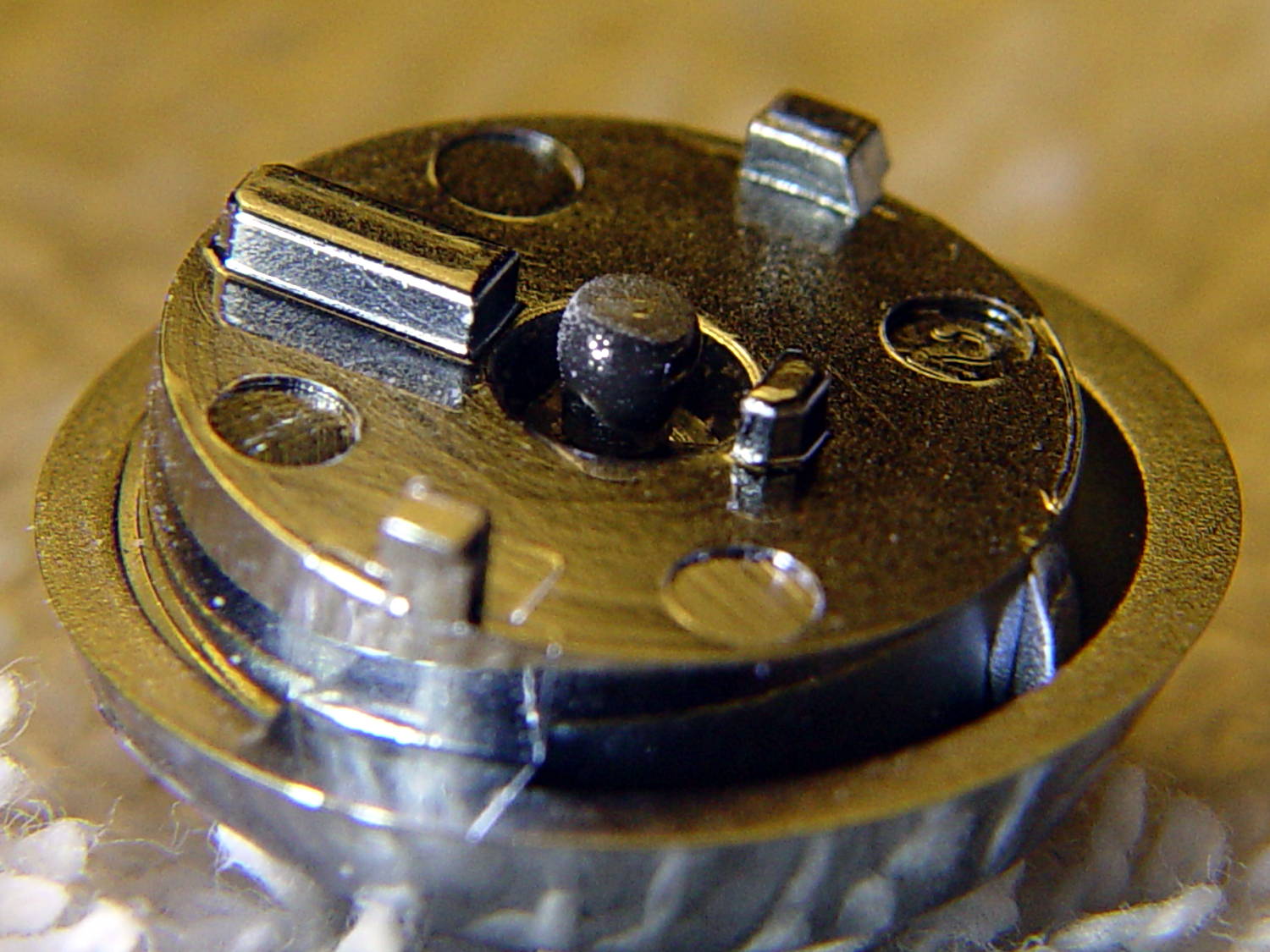
Filing the dot’s end flat produced a blunt plunger much larger than the OEM tip:
DSC-H5 Shutter Button – filed epoxy dot
You can just see the edge of the OEM tip inside the grayish end, which puts the filed flat at the original pin’s length.
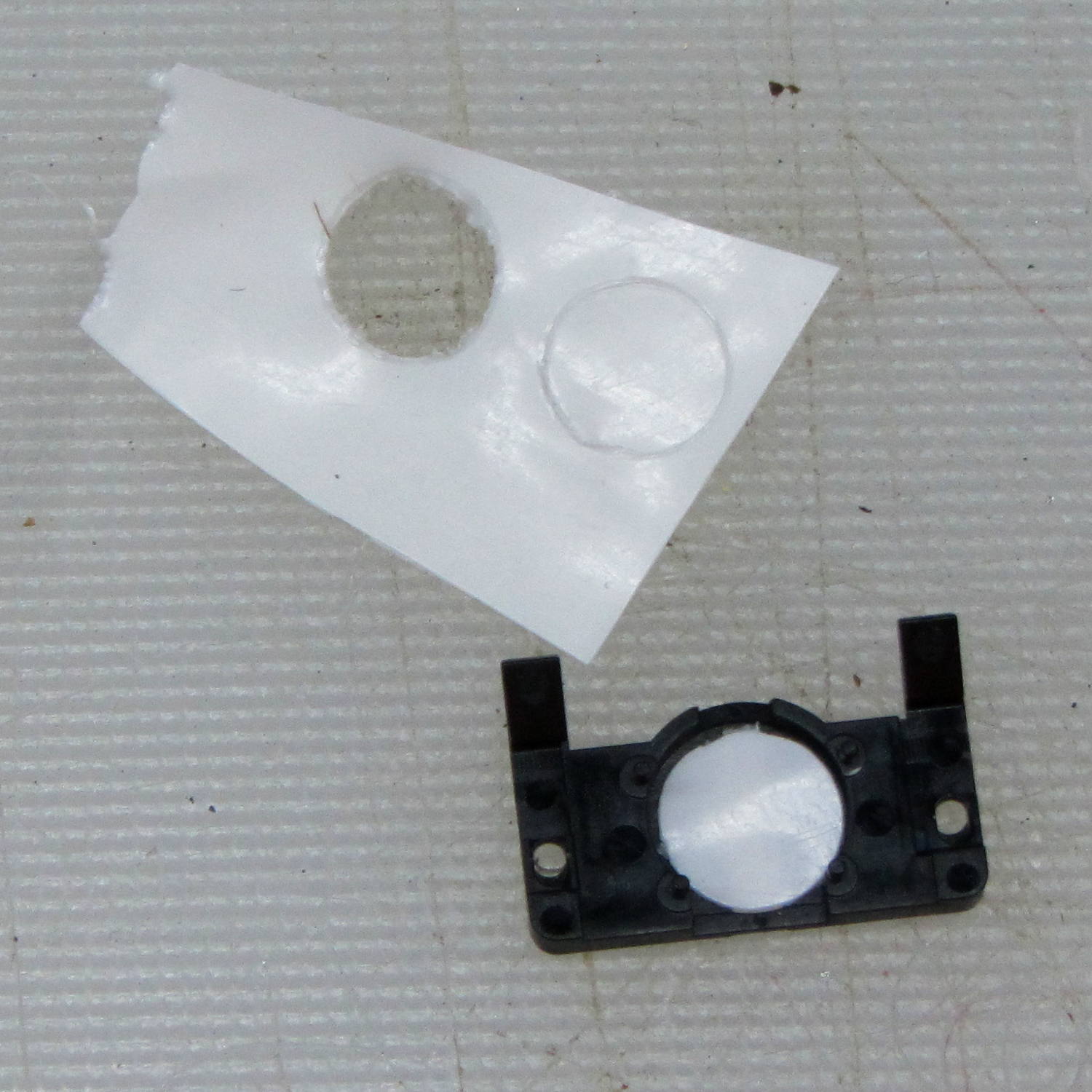
I punched a new plastic disk to replace the indented one:
DSC-H5 – shutter switch cover
Based on past experience, the new plunger tip will work fine, although, unlike the brass screw repair, the OEM plastic pin can still break and launch the spring-loaded shutter button cap into a nearby bush. Given that I may never actually use the repaired button, I’ll take the risk.
Finding out if the new tip will work may take a while:
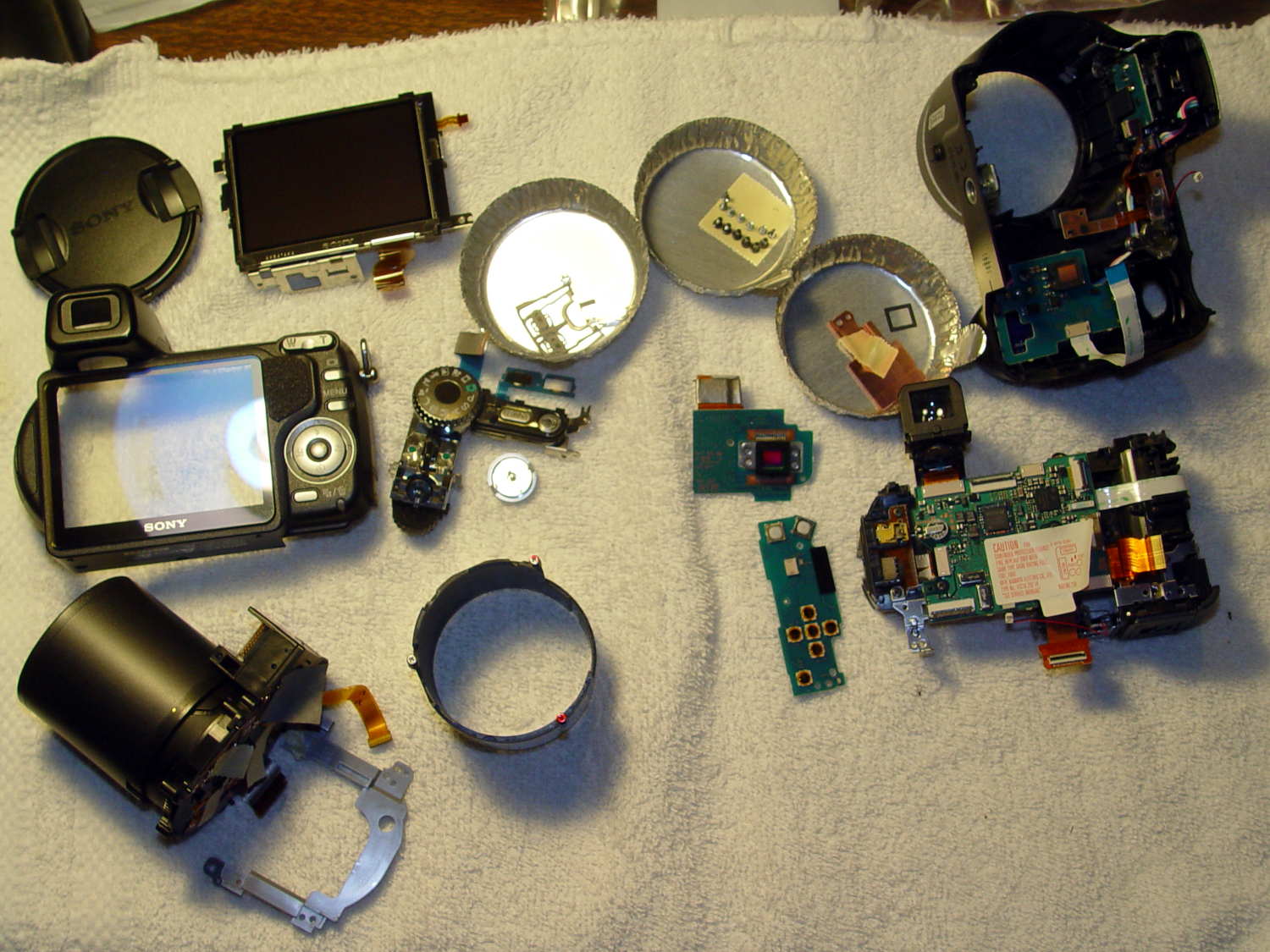
DSC-H5 – disassembled
I did a bit more disassembly than strictly necessary to replace the shutter button, but not by much; you’d be crazy to pay me to fix your camera, fer shure.
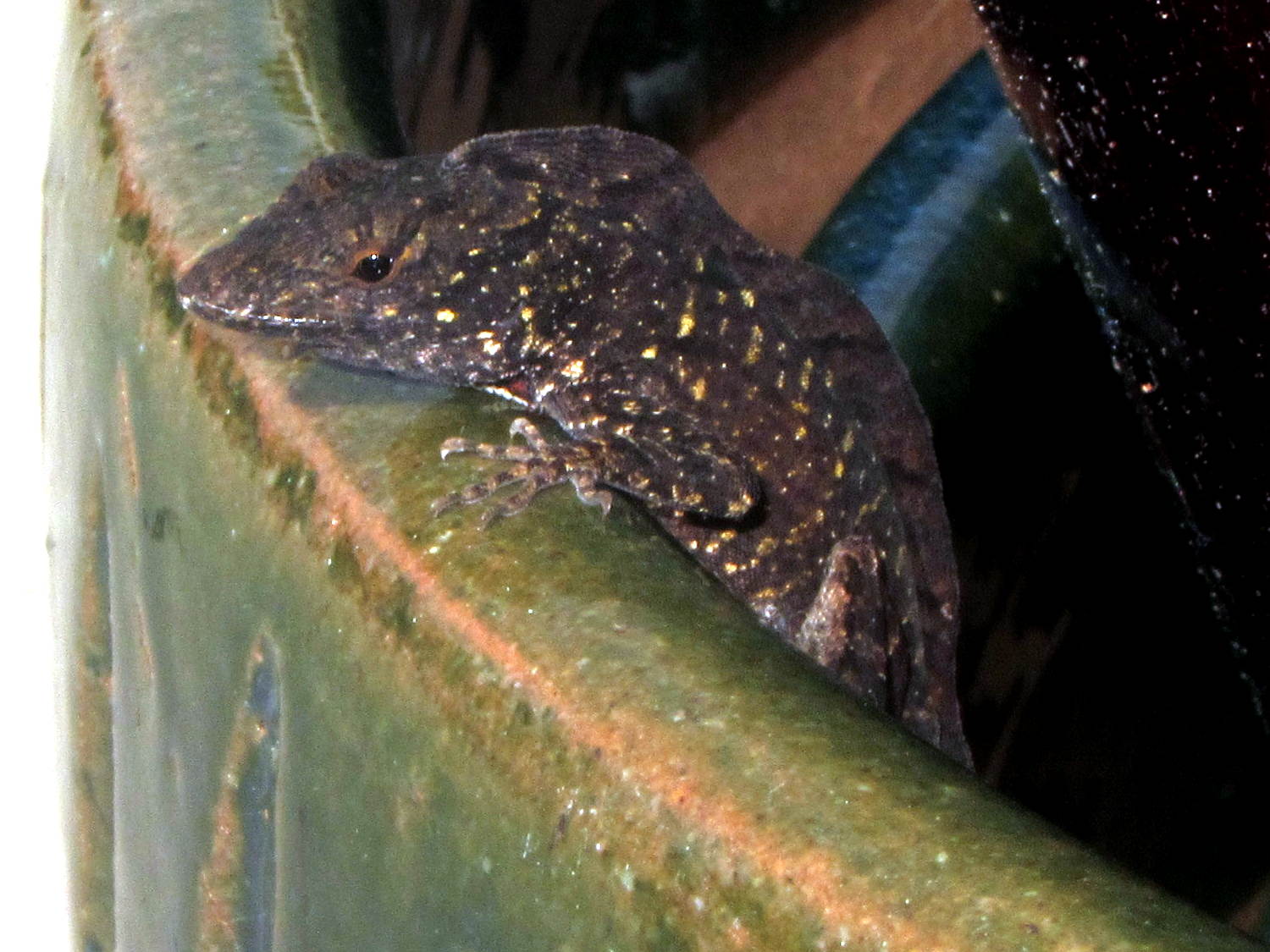
We found this critter keeping a watchful eye on the construction at Adams Fairacre Farms during our most recent grocery trip:
Mystery frilled lizard – detail
I think it’s an undocumented alien that entered the US stowed away in a tropical plant, because it was affixed to the array of ceramic pots outside their (open) greenhouse windows:
Mystery frilled lizard
To the best of my admittedly limited herpetological knowledge, none of our native lizards / geckos / whatever have such a distinctive dorsal frill / fin / ridge. I have no idea how to look the critter up, though.
We left it to seek its own destiny. Unless it’s a mated female (hard to tell with lizards), it’ll have a lonely life.
Perhaps it practices rishratha, which is entirely possible.
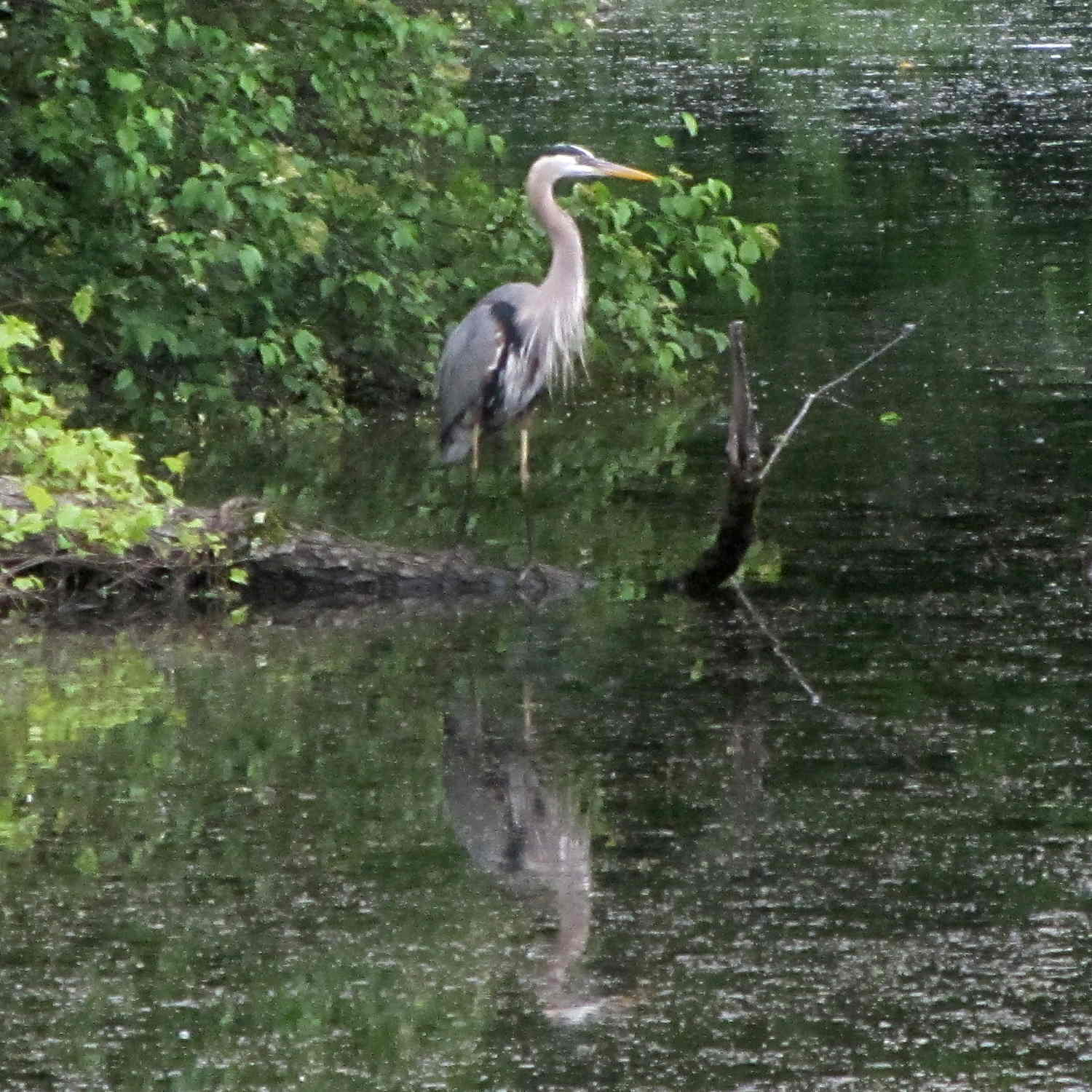
This Great Blue Heron caught a bright orange goldfish in the Vassar Farm Pond just before I rode past, spotted the scene, and fumbled my camera out of the underseat bag.
The heron hurked the fish down, with the abrupt right-angle bend in its neck marking the fish’s current location:
Great Blue Heron – swallowing
A bit of wiggling & jiggling put the meal in the right place and the bird relaxed:
Great Blue Heron – ruminating
A postprandial flight around the pond apparently settled the fish:
Great Blue Heron – takeoff
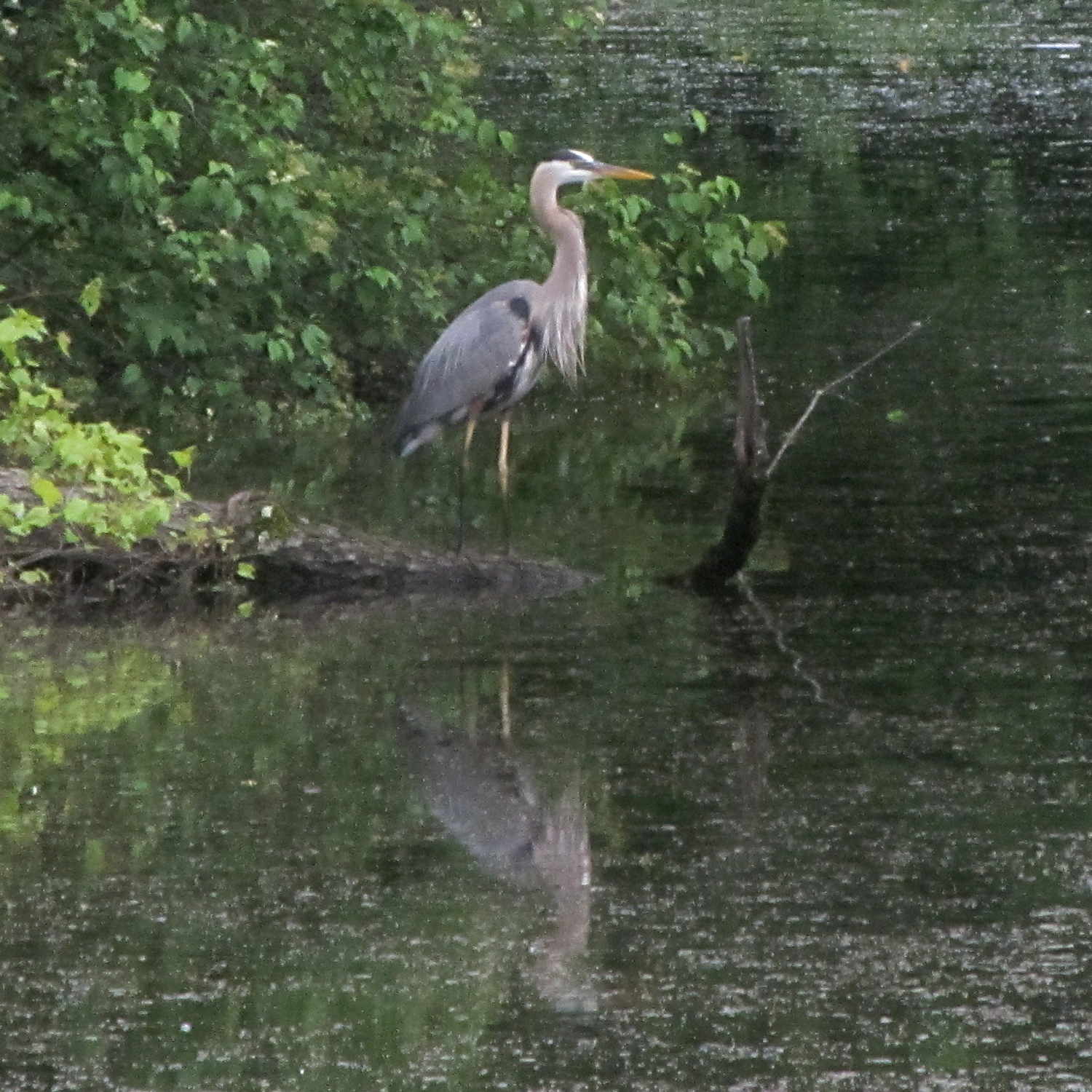
It landed on a snag a few dozen feet from where it started, then proceeded to look regal:
Great Blue Heron – idling
Those things really do look like pterodactyls in flight!





 The Smell of Molten Projects in the Morning