The Smell of Molten Projects in the Morning

Ed Nisley's Blog: Shop notes, electronics, firmware, machinery, 3D printing, laser cuttery, and curiosities. Contents: 100% human thinking, 0% AI slop.

Category: Photography & Images

Taking & making images.

  • Turtles!

    Spotted in Lake Walton on an out-and-back ride to the Hopewell Junction Depot end of the rail trail:

    Turtles - Lake Walton - 2019-03-14
    Turtles – Lake Walton – 2019-03-14

    Mary counted & guesstimated fifty turtles in the backwater.

    They’re the snuggliest turtles I’ve ever seen:

    Turtles snuggling - Lake Walton - 2019-03-14
    Turtles snuggling – Lake Walton – 2019-03-14

    Taken with the Pixel XL at maximum zoom, hence the gritty overpixelization.

  • Monthly Image: Cutting Board Shadows

    Seen after topping bowls of chili late on a wintry day:

    Cutting board - grazing sunlight
    Cutting board – grazing sunlight

    Late afternoon sunlight streams across the living room and through the kitchen doorway to sidelight cheddar cheese crumbs on the far side of the kitchen.

    There’s also one magic wintry night when the full moon aligns with the front doorway to light the entire hallway floor for a few Stonehenge moments. It’s always a delightful surprise, even though I’m sure it’s predictable.

  • Sapcicle Season

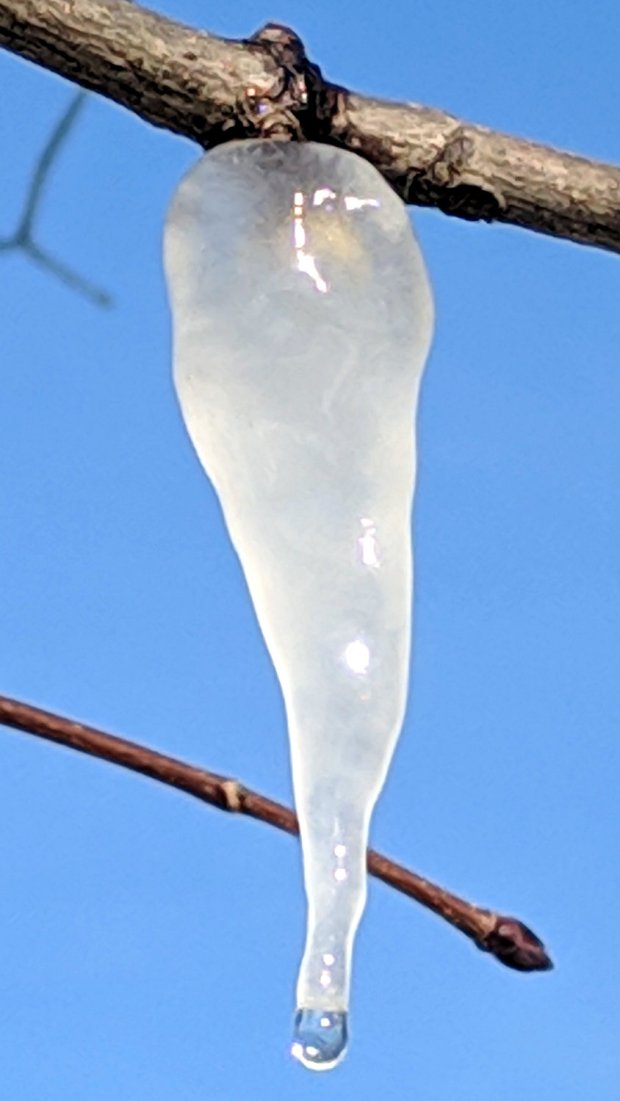
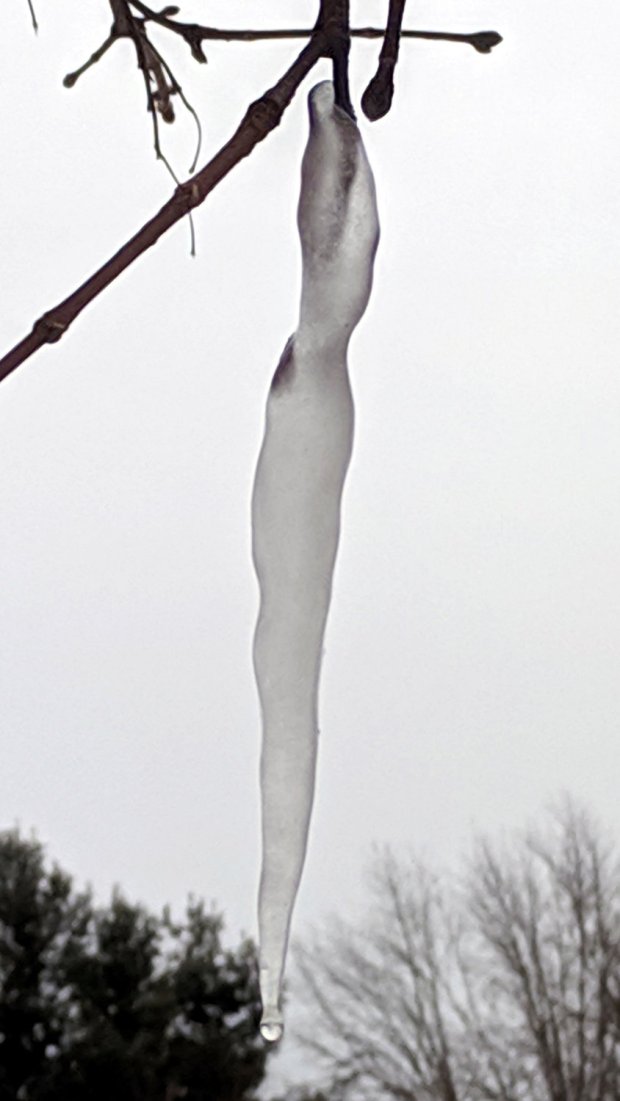
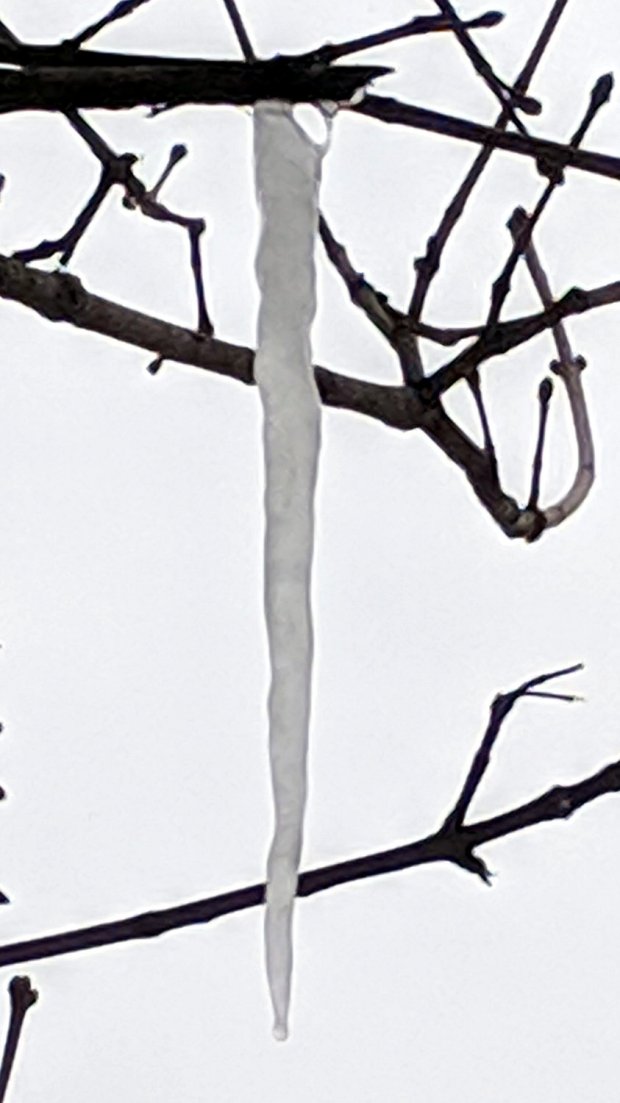
    Once again, maple sap rises from the ground and falls from damaged branches:

    And, sometimes, a tiny sweet treat during our walks …

  • Sony NP-FS11 Battery Rebuild: 2019

    Three years on, it’s time to rebuild some NP-FS11 lithium battery packs for the ancient Sony F505V camera, starting with packs I’ve rebuilt several times before and the last four cells from 2016.

    The final test shows the 2011-F pack may power an LED blinky, but not much else:

    NP-FS11 - 2011-F 2016-GH - 2019-02-19
    NP-FS11 – 2011-F 2016-GH – 2019-02-19

    Although the total capacity is still about 1.3 A·h for the two best batteries, the camera says the weakest two are dead after a few photos.

    For reference while resoldering, the joints at the negative terminals:

    NP-FS11 battery rebuld - negative terminals
    NP-FS11 battery rebuld – negative terminals

    And the protection PCB on the positive end:

    NP-FS11 battery rebuld - positive terminals
    NP-FS11 battery rebuld – positive terminals

    Unsolder the strap in the middle and the B+ positive connection on the right side to remove the cells.

    If cameras used bare cells, rather than glued-shut “proprietary” packs with super-secret unique ID ROMs, they’d be easier to keep running. My Sony DSC-H5 has other problems, but NiMH AA cells are easy to find.

  • Monthly Science: Lithium Cells vs. Low Discharge Current

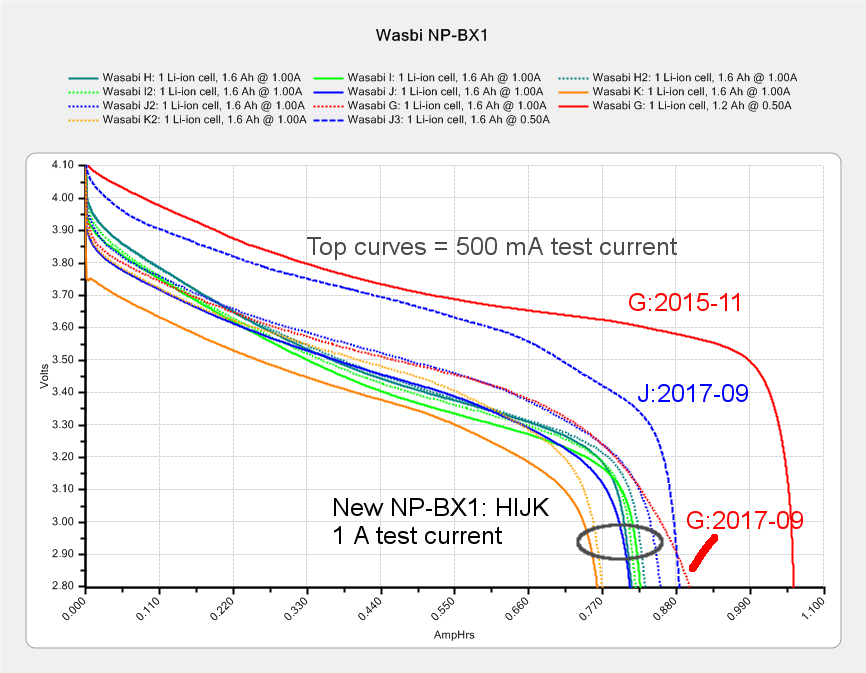
    The amount of energy you can extract from a battery depends strongly on the discharge current, which is why the advertised capacity always exceeds the real-world capacity. Testing the NP-BX1 batteries for my Sony HDR-AS30V at about an amp produces a reasonable estimate of their run time in the camera:

    Sony NP-BX1 - Wasabi GHIJK - 2017-09-01 - annotated
    Sony NP-BX1 – Wasabi GHIJK – 2017-09-01 – annotated

    Even though defunct cells lack enough capacity to keep the camera alive during a typical bike ride, they should power a microcontroller or astable multivibrator for quite a while.

    My CBA II has a 100 mA minimum test current, which is far higher than the 15-ish mA drawn by the Arduino Pro Mini / Nano and SK6812 LEDs in a vacuum tube light, so these tests should provide a lower bound on the expected run time:

    Defunct NP-BX1 for Blinkies and Glowies - AmpHr - 2019-01
    Defunct NP-BX1 for Blinkies and Glowies – AmpHr – 2019-01

    The two dotted lines show a “good” battery (Wasabi 2017 K) tested at 100 mA has a 1 A·h capacity similar to the “defunct” batteries. Testing at 1 A drops the capacity by a factor of two and eliminates the relatively constant voltage part of its discharge curve.

    Handwaving: a 15 mA load on a battery with 1 A·hr capacity should run for 66 hours, ignoring nuances like the Arduino’s minimum voltage requirement and LED minimum forward voltages.

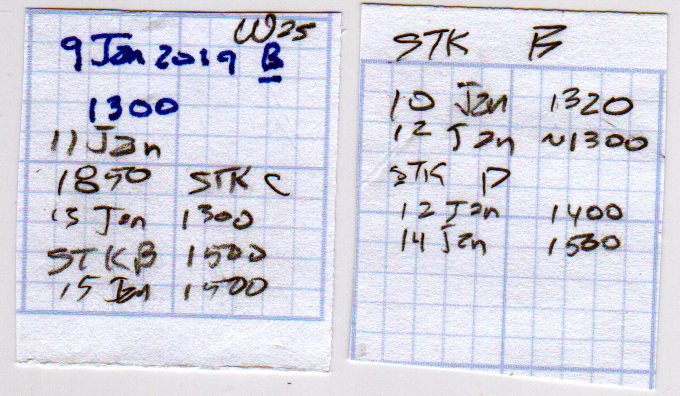
    A few days of informal (“Oh, it stopped a while ago”) testing showed 50 hour run times, with little difference in the results for batteries with 800 mA·h and 1300 mA·h capacity:

    Arduino Pro Mini - NP-BX1 cell - SK6812 - blue phase
    Arduino Pro Mini – NP-BX1 cell – SK6812 – blue phase

    The red power LED remains on long after the SK6812 LEDs dim out and the Arduino stops running. The blue and green LEDs fade before the red LED.

    The run time test data:

    Arduino Pro Mini - NP-BX1 run times - single SK6812 - 2019-01
    Arduino Pro Mini – NP-BX1 run times – single SK6812 – 2019-01

    The 100 mA graph plotted against watt·hours has a similar shape:

    Defunct NP-BX1 for Blinkies and Glowies - 2019-01
    Defunct NP-BX1 for Blinkies and Glowies – 2019-01

    You’d use those results for a constant power load similar to a camera or, basically, any electronics with a boost supply.

  • Ice Jewelry

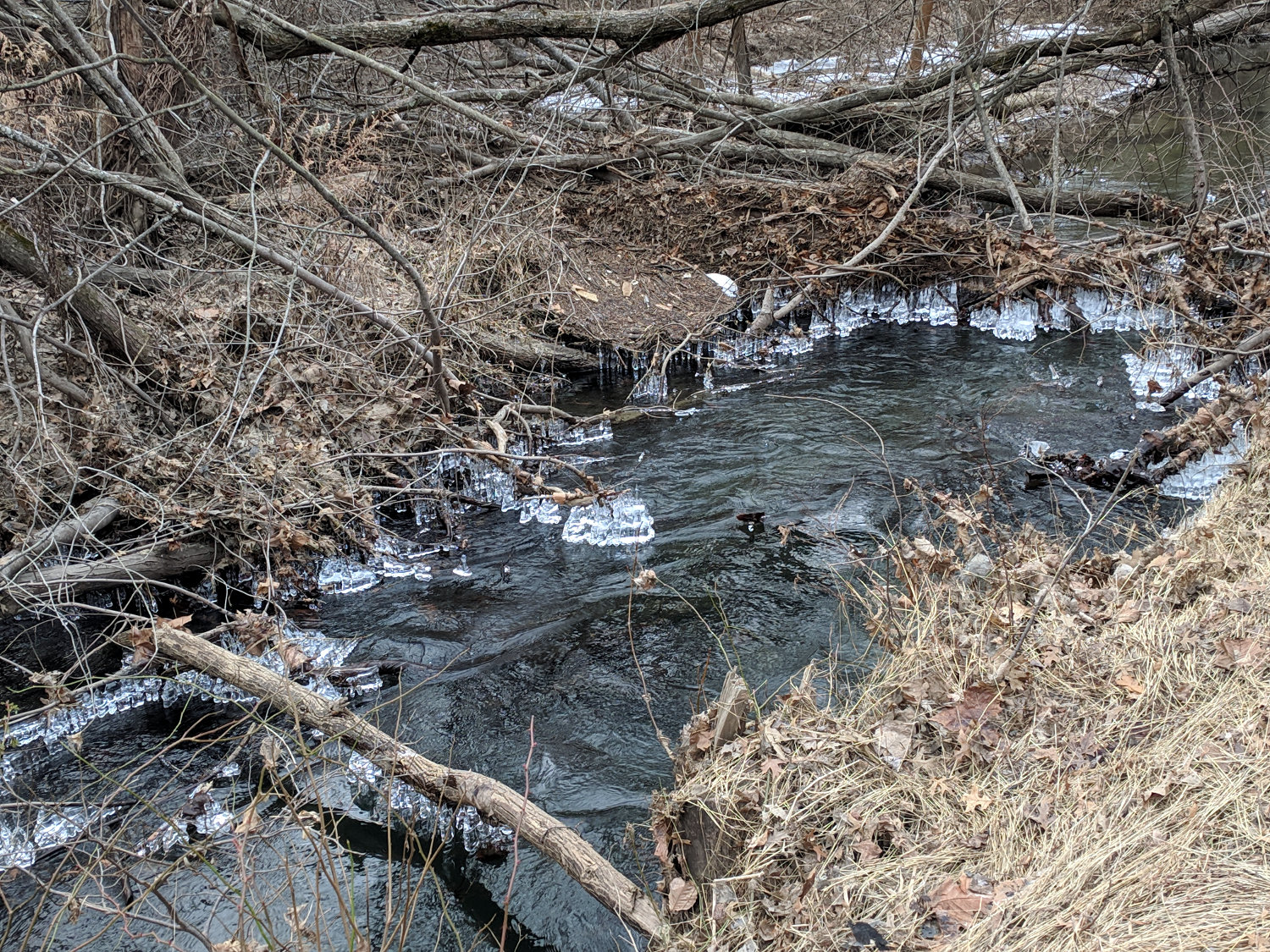
    We spotted this assortment of jewelry gleaming along Clove Creek:

    Ice jewelry - overview
    Ice jewelry – overview

    A closer look at a necklace:

    Ice jewelry - detail 1
    Ice jewelry – detail 1

    And the brooch:

    Ice jewelry - detail 2
    Ice jewelry – detail 2

    The water level has been dropping for several days as the air temperature went from tolerably cold to well below freezing.

    It’s better in person; I couldn’t get close enough to avoid using the Pixel’s digital zoom, so the images have more gritty texture than you’d expect.

  • Sony HDR-AS30V Helmet Camera: MicroSD Card Spacer

    Sony tried, they really tried, to make their proprietary Memory Stick flash memory cards catch on, but the slot in their HDR-AS30V Action / Helmet camera accepts both Memory Stick Micro and MicroSD cards. The two cards have slightly different sizes, the AS30V’s dual-purpose slot allows MicroSD cards to sit misaligned with the contacts, and the camera frequently kvetches about having no card.

    The only solution seemed to be starting the camera while watching the display to ensure the card worked, but it would sometimes joggle out of position during a ride.

    I cut out a tiny polypropylene rectangle(-ish) spacer to fill the Memory Stick side of the slot, sized to fit between the spring fingers holding the MicroSD card against its contacts:

    Sony HDR-AS30V Camera - MicroSD card and spacer
    Sony HDR-AS30V Camera – MicroSD card and spacer

    Not the best cutting job I’ve ever done, but it was an iterative process and that’s where I stopped. If this works and I have need for another / better spacer, I promise to do better.

    The spacer’s somewhat mottled appearance comes from tapeless sticky (an adhesive layer on a peel-off backing: inverse tape!) applied to the top side, which will affix it to the slot. I’d rather glue the spacer to the MicroSD card, but then the card wouldn’t fit in the USB 3.0 adapter I use to transfer the files.

    The chips along the left edge of silkscreen come from my fingernail, because pressing exactly there seems to be the best way to force the damn thing into the proper alignment.

    So the slot + spacer looks like this:

    Sony HDR-AS30V Camera - dual-card slot with spacer
    Sony HDR-AS30V Camera – dual-card slot with spacer

    The MicroSD card fits in the far side of the slot, facing toward you with contacts downward, thusly:

    Sony HDR-AS30V Camera - MicroSD card with spacer
    Sony HDR-AS30V Camera – MicroSD card with spacer

    And then It Just Works™, at least on the very few rides we’ve gotten in during December and early January.

    Incidentally, the blue and exceedingly thin latch finger holding the battery in place will snap, should you drop the camera on its non-lens end from any height. Conversely, should you drop it on the lens end, you can kiss the optics goodbye. Your choice.