Ed Nisley's Blog: Shop notes, electronics, firmware, machinery, 3D printing, laser cuttery, and curiosities. Contents: 100% human thinking, 0% AI slop.
Anybody capable of fogging a mirror knows how this scam works:
TCU 100 – Giveaway teaser
The copious fine print says you can only see the actual fine print by traveling to Arizona:
TCU 100 – Giveaway fine print
I’m nowhere near hungry enough to like the odds, even for a $100 Walmart gift card.
An Auto-V.I.N Gauge (their choice of punctuation) must improve the response rate:
TCU 100 – Auto-VIN Gauge – activated
Is it any surprise the numbers match?
TCU 100 – scratch-off number
No. No, it’s not.
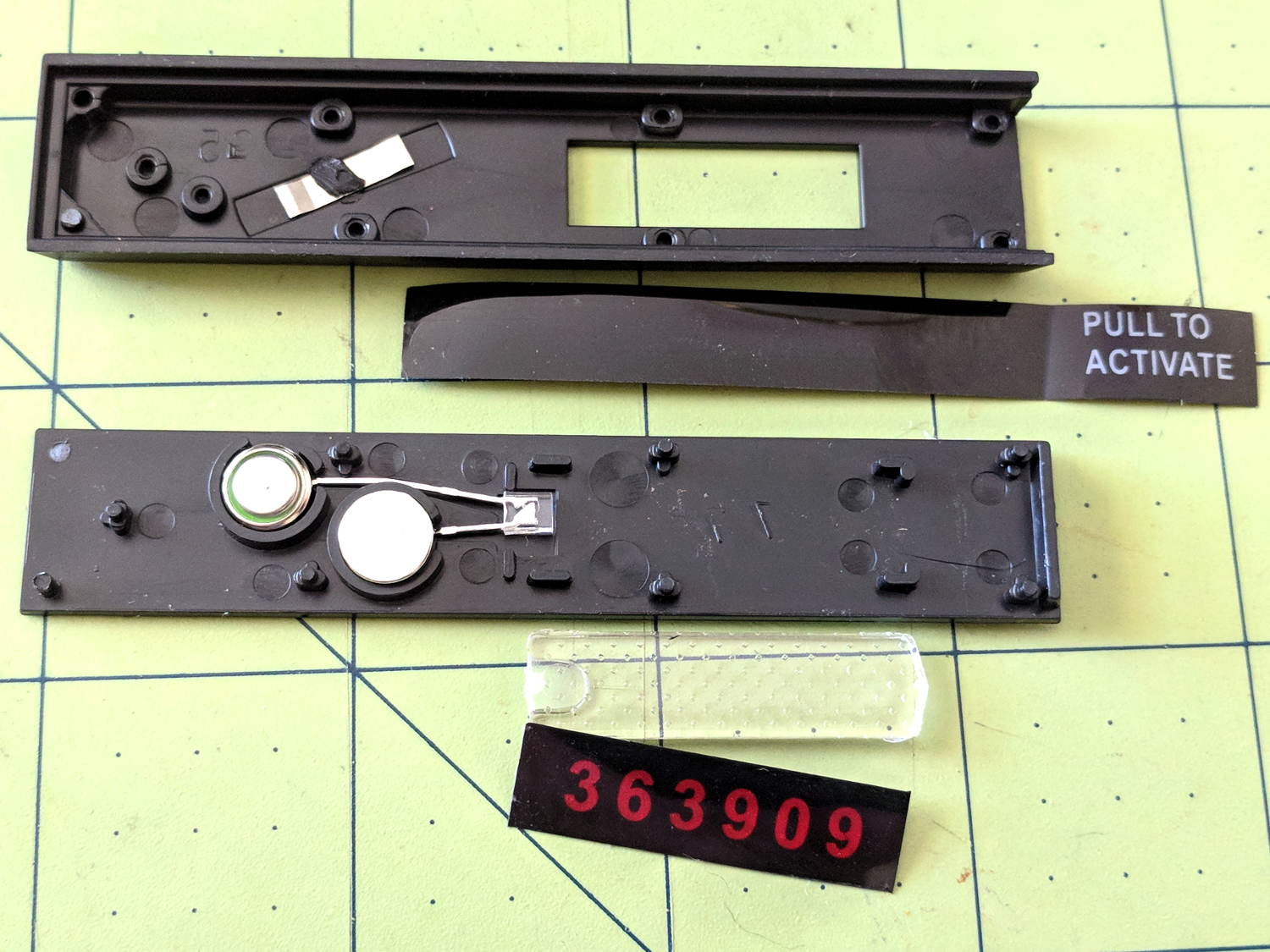
The “Gauge” actually contains parts, although fewer than IMO they want you to believe:
TCU 100 – Auto-VIN Gauge – components
It’ll serve to produce measurable current & voltage for an upcoming Squidwrench Electronics Workshop and, because it need not survive the experience, we will take considerable liberties with it.
Although I knew the Sienna showed signs of a leaky head gasket, the exhaust system needed some attention, and a sporty used car recently put it in the shade, this still came as a surprise:
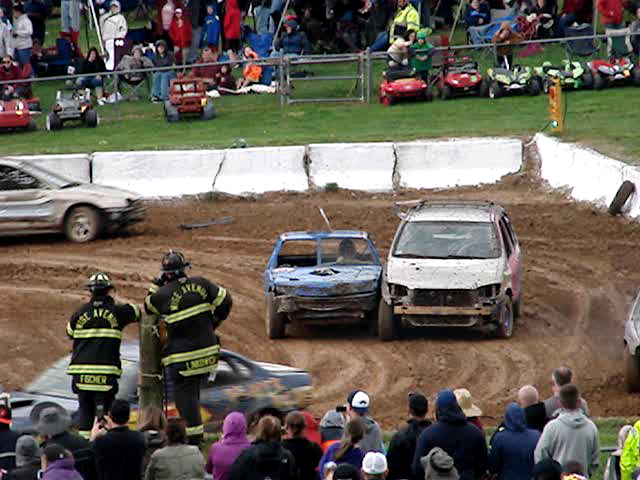
I’m trying to get a crew … together and live the demolition derby dream
By the time I arrived, the dashboard trim had vanished and the air bags were safely out:
I managed to pry the glass off using a Gasket Scraper and considerable muttering.
With all the exterior trim, lights, and mirrors gone, the Sienna was in fine race trim:
Sienna – Demo derby race trim
But, being no longer street-legal, it required trailering. For the record, not all huge pickup trucks have bulky guys with pot bellies behind the wheel:
The red dial scale has the Guide Numbers (aperture × feet) and the lower black dial scale gives the lens apertures. The manual doesn’t mention the black figures above the red Guide Numbers; they’re metric Guide Number (aperture × meters), which would have been obvious back in the day.
The tidy shell slides off when you release a latch in the back:
Zeiss Ikon Ikoblitz 4 – front – stowed
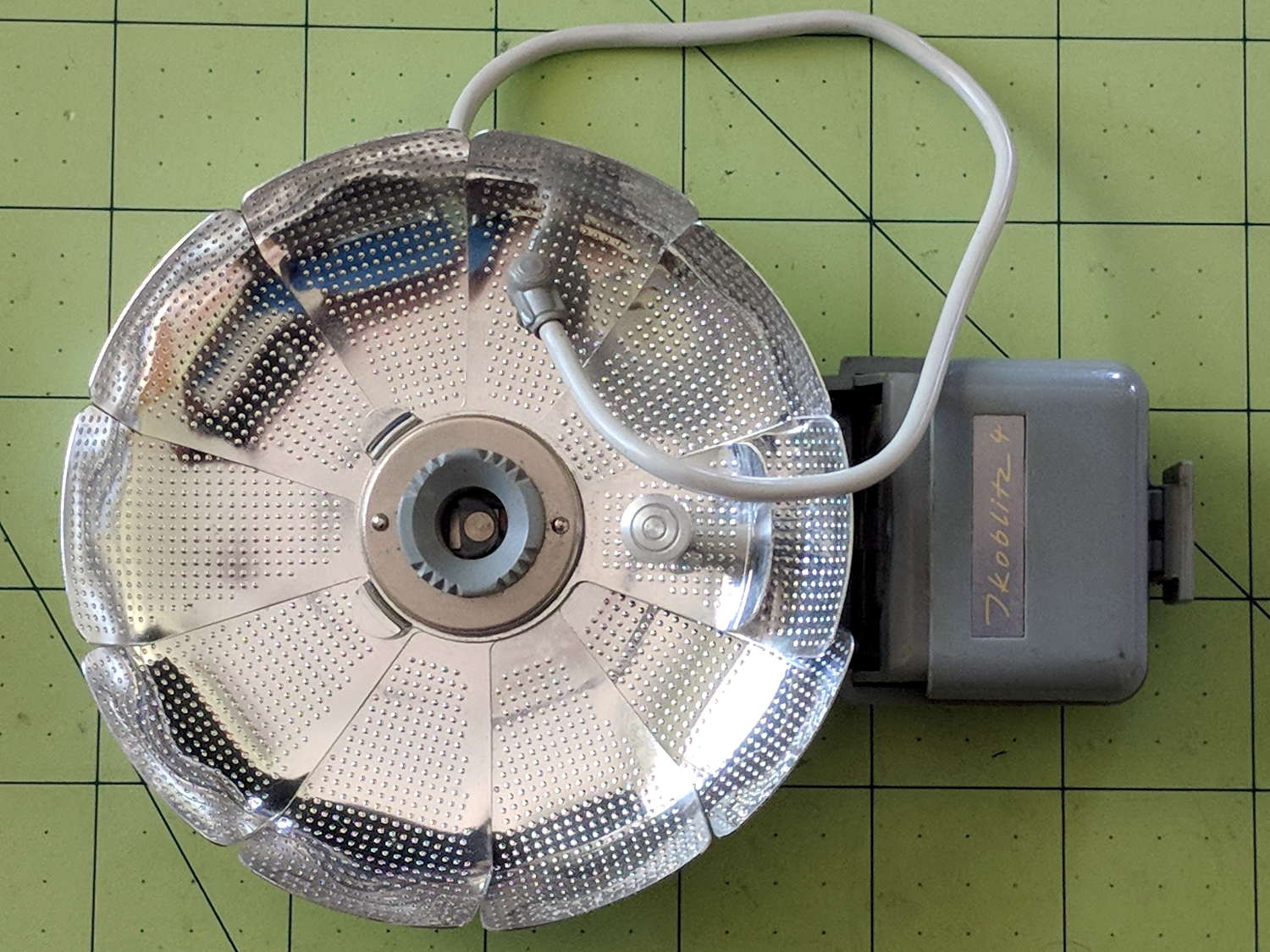
Then the reflector unfurls:
Zeiss Ikon Ikoblitz 4 – front unfurled
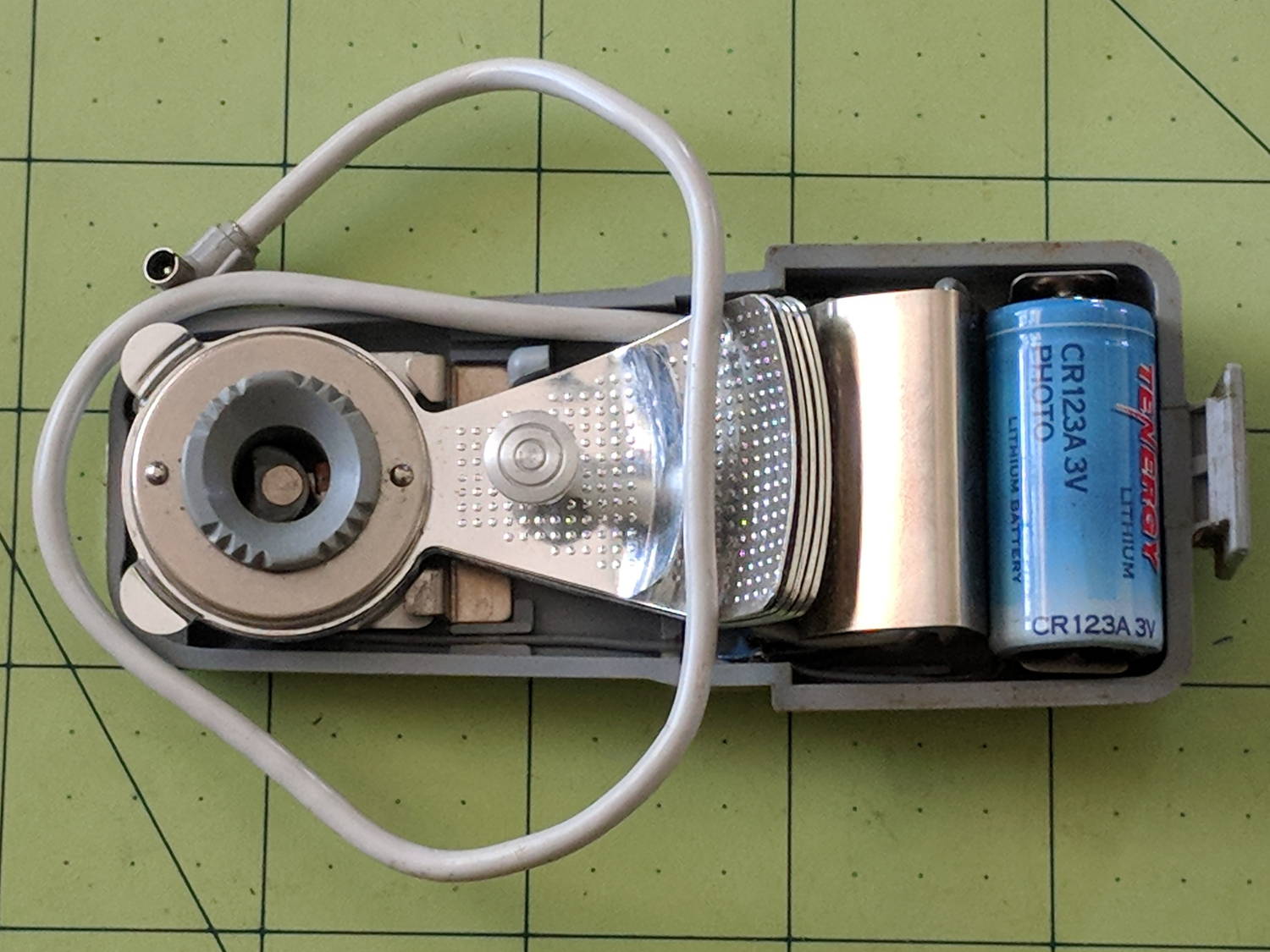
Mirabile dictu, the previous owner removed the 15 V “hearing aid” battery (Eveready 504, 60 mA·h in the 504A alkaline version) before storing the flash, leaving the contacts in pristine condition:
Zeiss Ikon Ikoblitz 4 – CR123A test fit
A 3 V CR123A primary lithium cell snaps perfectly into the battery holder, which I define as a Good Omen: a dab of circuitry could turn this into self-powered and highly attractive Art. This would be one of the very few applications well-suited for the coldest blue-white LEDs.
One could adapt an A23 12 V alkaline battery (33 mA·h) to the holder, at the cost of half the capacity.
The silver shield just to the left of the battery conceals a 250 μF (!) nonpolarized capacitor.
One could build a bayonet-base (GE #5 / Press 25) adapter or poke a doodad with a 9 mm cylindrical base into the M2 bulb adapter (unrelated to my M2 printer):
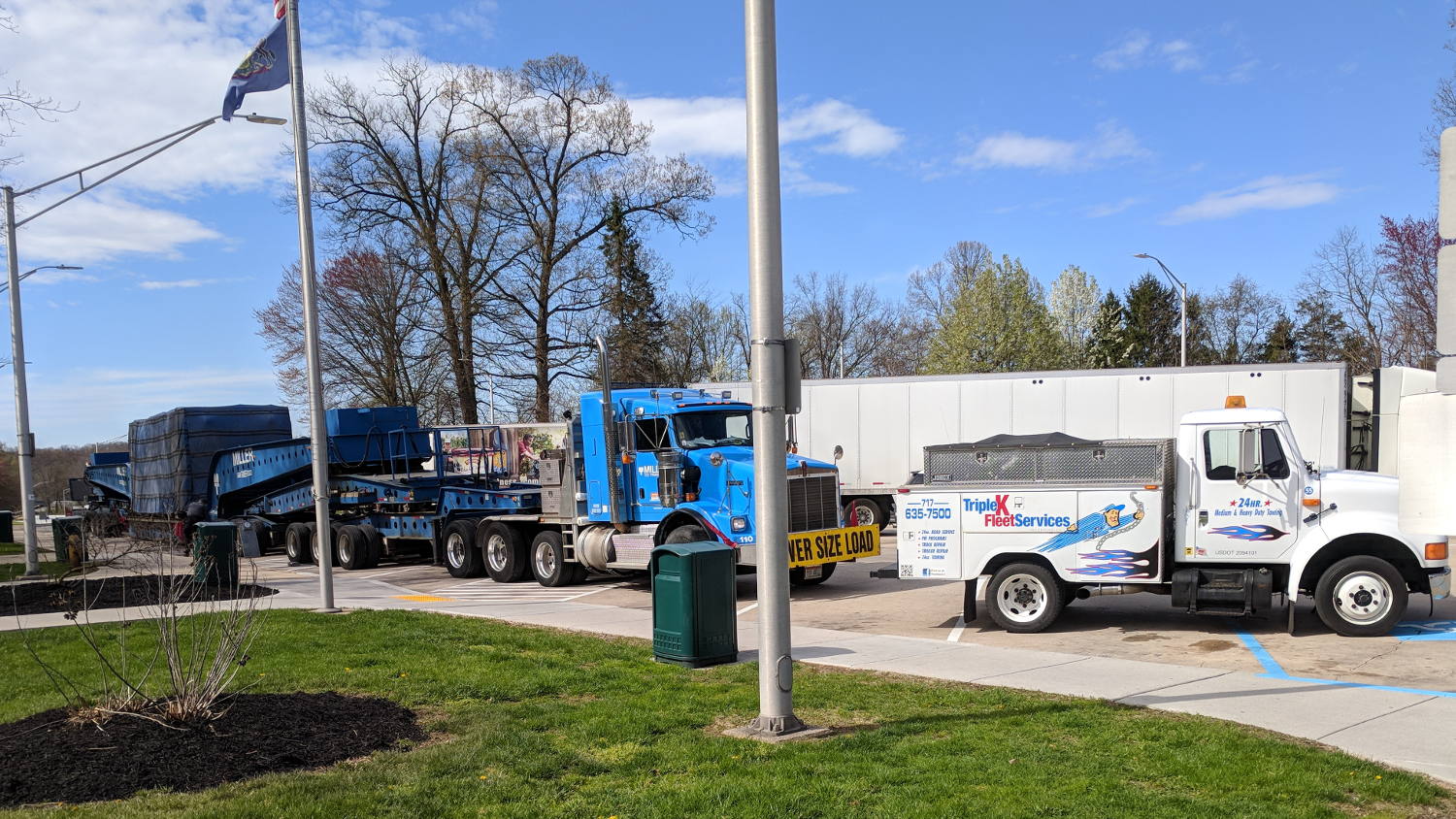
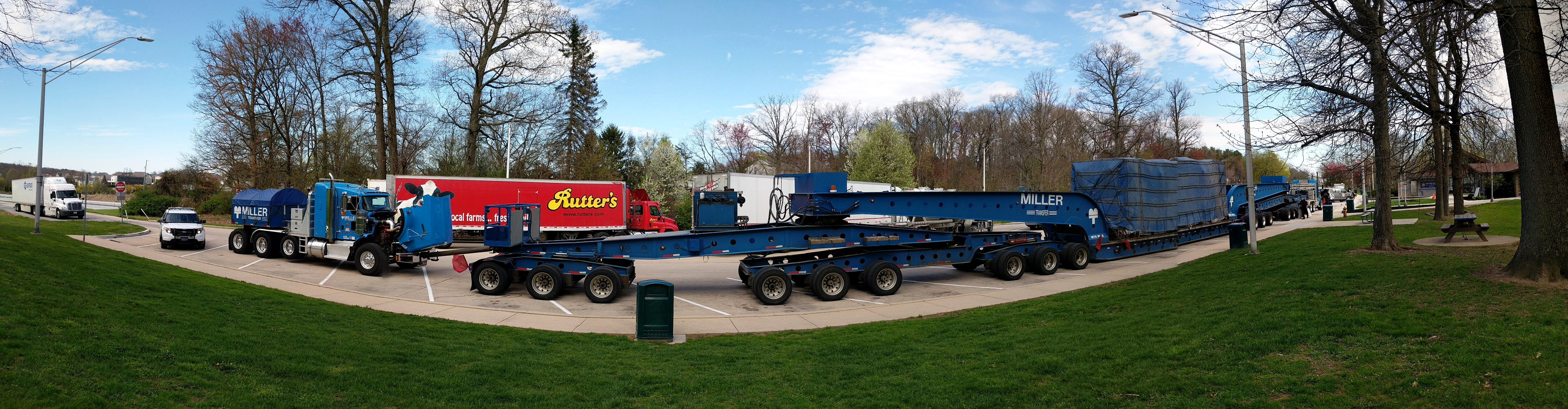
A recent road trip presented this spectacle in the first Pennsylvania rest step on northbound I-83 (clicky for many more dots, then scroll to see it all):
Another truck on the rear pushes uphill and provides lateral control downhill:
Heavy Hauling – panorama rear
The weight block on the rear truck provides more traction, because friction depends on normal force.
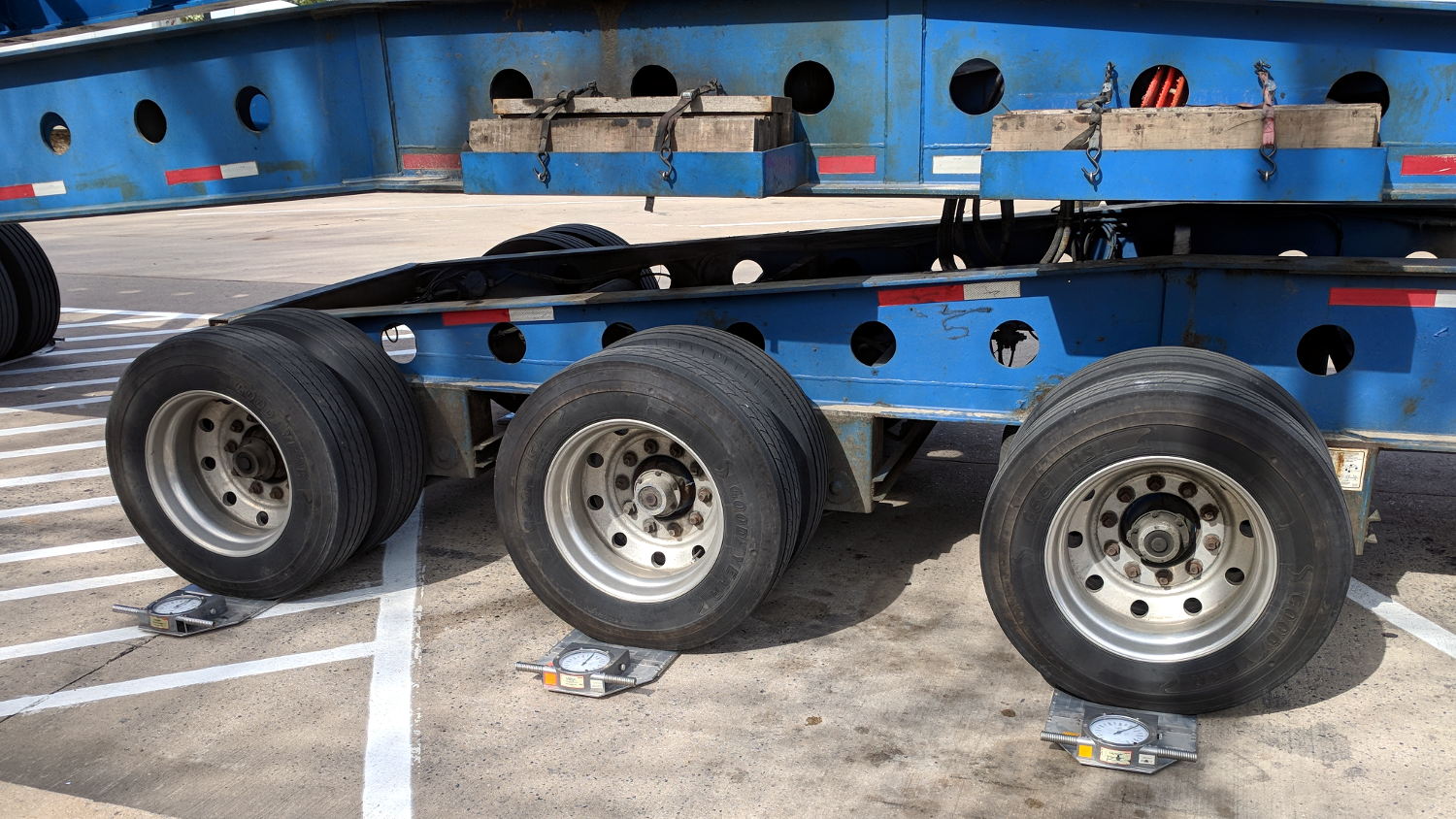
The PA transportation folks were verifying the overall weight and per-axle distribution by weighing three axles at a time:
Heavy Hauling – weight check
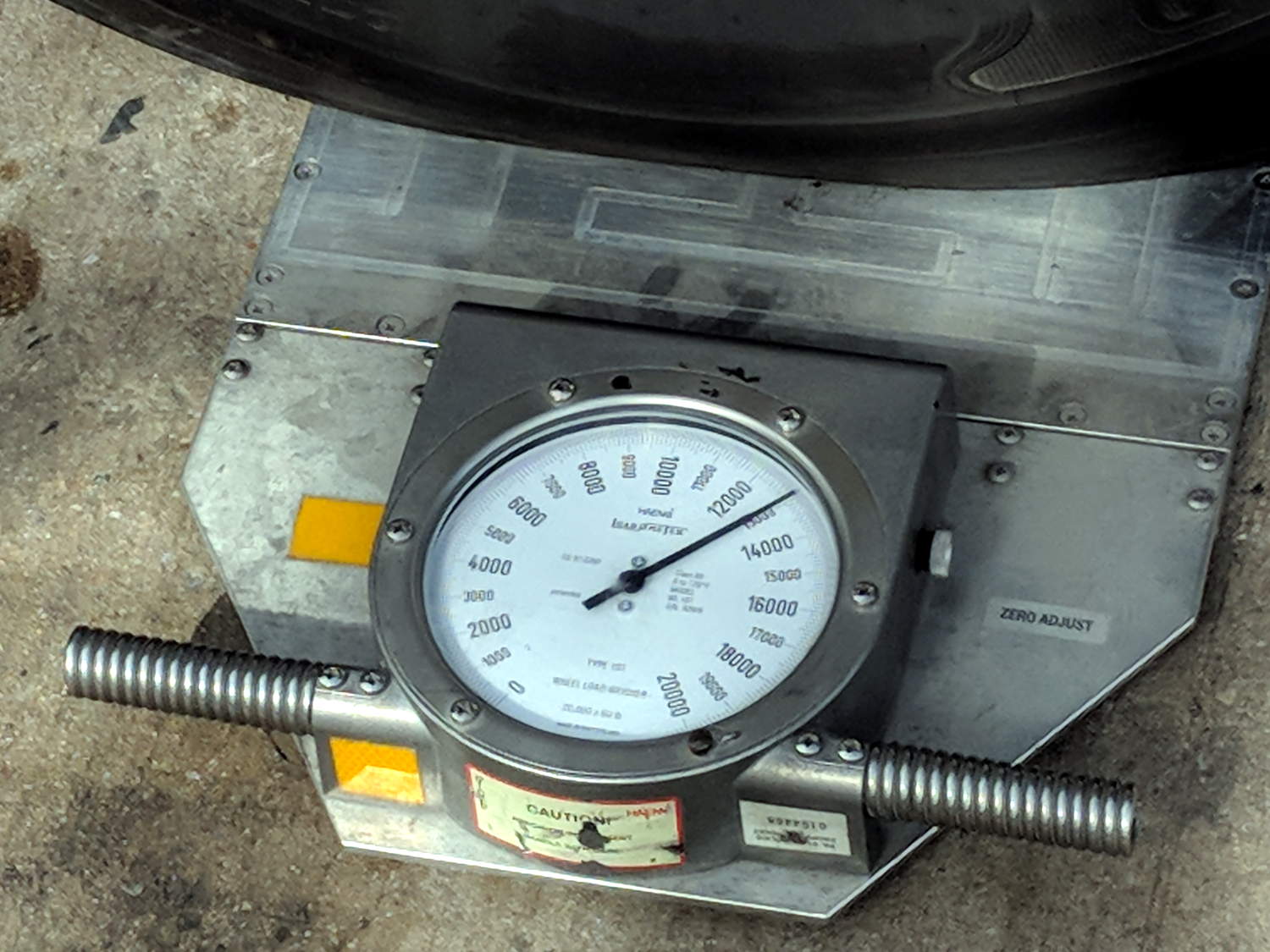
Each scale has a 20 k pound range:
Heavy Hauling – weight check – detail
The ones I saw reported 10-14 k pounds, so figure 24 k pounds per axle, then multiply by 19 to get 456 k pounds overall.
The driver of the lead escort vehicle said the tarp covers a machined steel assembly weighing around 200 k pounds, with a total “vehicle” weight a bit under 500 k pounds. This is the second of four similar loads going from the Port of Baltimore to somewhere in Ohio where they’re assembling a huge press. It seems American manufacturing is still a thing.
They’ll be driving for four or five days from Port o’ Baltimore to Ohio, following a route described in excruciating detail on four pages of notes, plus another 16 pages of permits for the series of bridges rated to carry however many axles will be on them simultaneously.














 The Smell of Molten Projects in the Morning