The Smell of Molten Projects in the Morning

Ed Nisley's Blog: Shop notes, electronics, firmware, machinery, 3D printing, laser cuttery, and curiosities. Contents: 100% human thinking, 0% AI slop.

Category: Oddities

Who’d’a thunk it?

  • Garden Mole: End of Life

    Garden Mole: End of Life

    One of the moles aerating the ground around here ran out of steam beside the garden:

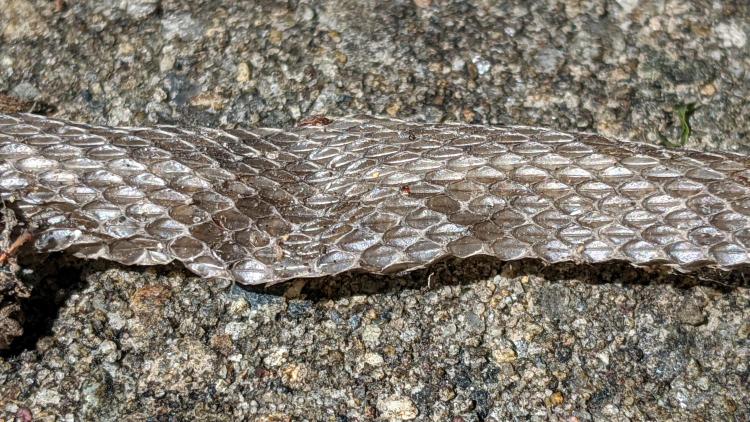
    Mole - dorsal
    Mole – dorsal

    It has wonderfully soft velvety fur!

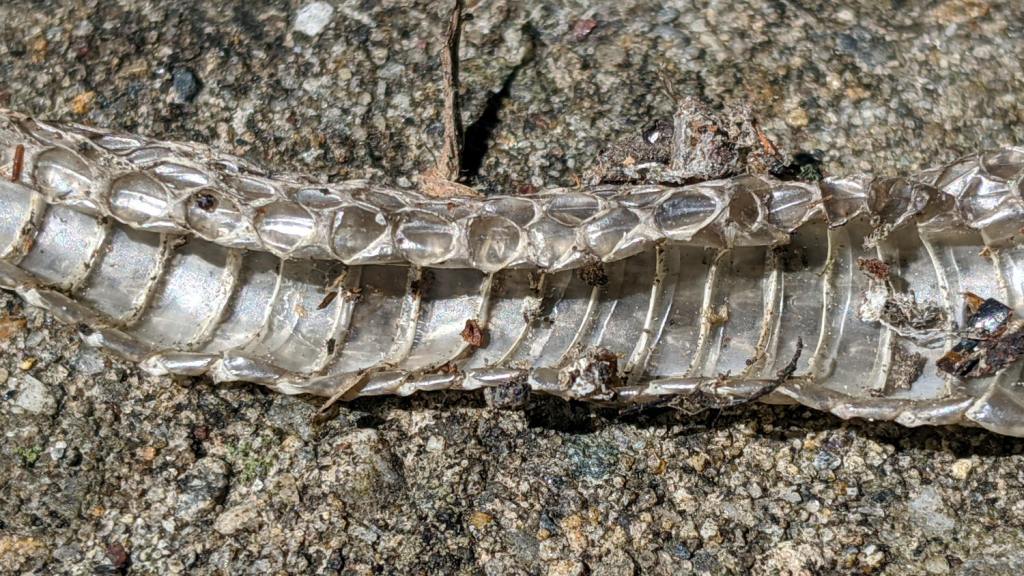
    Flipping it over:

    Mole - ventral
    Mole – ventral

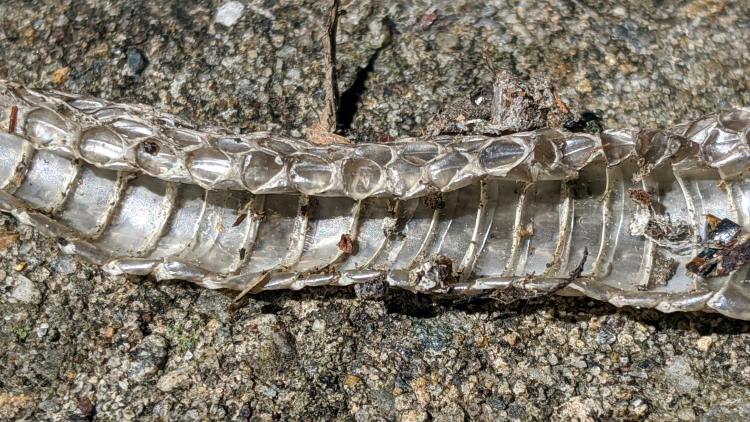
    A closeup of its digging paws and gnawing teeth:

    Mole - ventral paws - teeth
    Mole – ventral paws – teeth

    Those choppers seem overqualified for a diet of earthworms, but I suppose they know what they’re doing.

    We left it in as-found condition, ready for recycling …

    [Update: The consensus seems to be it’s a vole or shrew, not a mole. It’d be the biggest vole I’ve ever seen and “large shrew” seems oxymoronic, but the teeth are diagnostic. ]

  • CVS BP3MV1 Blood Pressure Monitor: Laying on of Hands Fix

    Our CVS blood pressure meter (a relabeled Microlife unit) ran its pump for a few seconds this morning, gave up, and spat out Err 3, which translates into “Inflation of the cuff takes too long”. Not surprising, as the motor wasn’t running.

    The AA alkaline cell quartet has plenty of mojo and no corrosion, but the motor doesn’t even turn over. The display is fine and the pressure release valve clicks, so it’s not completely dead.

    This unit is sufficiently old to have the compelling advantage of transferring data through a USB (mini-B) connection, rather than a Bluetooth link through some sketchy Internet cloudy Android app, so it’s worth at least a look inside. Four screws and some internal snaps along the sides hold the case together; it’s a surprisingly easy teardown.

    The business side of the PCB looks good:

    CVS Blood Pressure Monitor - PCB
    CVS Blood Pressure Monitor – PCB

    The various wires and solder joints for the “high current” parts look OK, although the wires likely don’t go all the way through the PCB:

    CVS Blood Pressure Monitor - PCB detail
    CVS Blood Pressure Monitor – PCB detail

    Q4 and Q5 look like they switch the compressor pump motor and pressure-release valve. D3 and D4 should tamp down the inductive energy, but they look like they’re in series with the outputs. Yes, the Valve wires are both black.

    The motor has a foam vibration isolation wrap, which is a nice touch. Although you can’t see them well, all its wires & solder joints look like they’re in good shape:

    CVS Blood Pressure Monitor - pump
    CVS Blood Pressure Monitor – pump

    The hose sticking out toward you plugs into the black right-angle fitting in the lower right corner of the picture. It’d help to have smaller fingers than mine, but I managed to get the hose off and on the fitting with only minor muttering.

    Seeing nothing obviously wrong, I installed the same batteries, poked the switch to start a measurement, and the motor ran fine. Of course, the measurement failed because the cuff & pressure sensor weren’t connected.

    Connect the hose, plug in the cuff & wrap it around my arm, poke the button, and everything works fine.

    Reassemble everything and it still works fine.

    I still think there’s a bad wire or solder joint in there somewhere, so this delightful “repair” can’t possibly last very long …

  • Dutchess Rail Trail: Beaver Lodge & Dam

    Dutchess Rail Trail: Beaver Lodge & Dam

    A beaver family built their lodge next to the Dutchess Rail Trail:

    Beaver Lodge - DCRT N of Golds Gym - 2020-02-23
    Beaver Lodge – DCRT N of Golds Gym – 2020-02-23

    It’s just to the right of the fence post, on the far side of the pond.

    Dutchess County’s aerial survey in 2016 showed a dry-ish area west of the rail trail, with a culvert to the north:

    Beaver Lodge - DCRT N of Golds Gym - 2016 CIR image
    Beaver Lodge – DCRT N of Golds Gym – 2016 CIR image

    We went back the next day and stopped at the culvert. Their dam spans the entire near side of the pond, upstream of the ditch (just above my hand) leading to the culvert:

    Beaver Lodge and Dam - DCRT N of Golds Gym - 2020-02-25
    Beaver Lodge and Dam – DCRT N of Golds Gym – 2020-02-25

    The helmet camera pictures look west from the rail trail, with the lodge in the northernmost open area. The wide-angle camera lens exaggerates the distance, but the lodge is only about 35 feet from the fence.

    A stand of birch trees near the lodge now looks like a combination buffet and construction yard. When beavers discover ferrocement, their structures will become much more obvious.

    Go, beavers, go!

  • The Return of High-Reliability / High-Availability Trash Cans

    The Return of High-Reliability / High-Availability Trash Cans

    Five years ago, robotic trash cans were a thing on Vassar’s campus, including this duo in front of Vassar’s library:

    Vassar Library - Trash and recycling containers
    Vassar Library – Trash and recycling containers

    That was then, this is now:

    Vassar Library trash cans
    Vassar Library trash cans

    I infer the robotics did not work out as anticipated.

  • Frozen Fire Hydrant, One Year On

    Frozen Fire Hydrant, One Year On

    It seems reporting a frozen hydrant to the local fire company didn’t produce any meaningful action:

    Frozen hydrant - Sheldon at Rt 376
    Frozen hydrant – Sheldon at Rt 376

    We didn’t have any fires in the neighborhood where it might have been a problem, but I’ll try the water department this year …

    Oddly, the water department repainted most of the fire hydrants along most of the roads last year. This one apparently didn’t qualify, for whatever reason, despite being only slightly off Rt 376 on Sheldon:

    Frozen hydrant - Sheldon at Rt 376 - Google Streetview
    Frozen hydrant – Sheldon at Rt 376 – Google Streetview

    When it’s not frozen, it’s not obvious …

  • High-Impact Driving

    We spotted this near our usual parking spot during a recent grocery trip:

    Adams crash - stone wall
    Adams crash – stone wall

    The bush was pretty well uprooted, suggesting the vehicle stopped atop the bush after demolishing the wall.

    Wondering how it got there, I looked across the parking lot:

    Adams crash - reverse view
    Adams crash – reverse view

    Yes, that’s a dead lamp post. The impact dislodged its concrete base by about four inches:

    Adams crash - lamp pole detail
    Adams crash – lamp pole detail

    The greenery came from another eviscerated bush:

    Adams crash - bush debris
    Adams crash – bush debris

    I expected to see tire gouges in the grass, but … nope.

    The bush got a haircut, although the right half seems undamaged:

    Adams crash - bush detail
    Adams crash – bush detail

    The boulder won its disagreement with the vehicle, although there’s surprisingly little shattered plastic and other debris along the trail:

    Adams crash - boulder detail
    Adams crash – boulder detail

    The impact dislodged the boulder, which came to rest about four feet from its origin:

    Adams crash - overview
    Adams crash – overview

    The damage lies along a straight line from the middle of the Adams entrance intersection to the wall impact:

    Adams crash - trajectory
    Adams crash – trajectory

    There are no obvious skid marks, undercarriage scrapes, or gouges in the grass anywhere along the trajectory, suggesting the vehicle remained mostly airborne and ballistic during the whole event, and even the three (!) curbs involved have no marks.

    The nice lady at the Adams Customer Service counter didn’t know what happened and, as usual, the Poughkeepsie Journal (newspaper) has nothing to say.

    I did not check for a high-clearance pickup truck with tall tires and severe front-end damage in the body shop across the street, although one seems a likely suspect. Whatever the vehicle may have been, it was definitely traveling at the usual (tautological) “high rate of speed” …

  • CAMtool V3.3 vs. The Fat Fingers of Death

    As is my custom, the day before showtime I talked my way through a final full-up dress rehearsal, with the HP 7475A plotter and the CNC 3018XL running their demo plots. As if to justify my attention to detail, the 3018 refused to home, with its X axis motor grinding in a manner suggesting something had gone terribly wrong with its driver.

    OK, I can fix that™.

    Turn off the power, verify the leadscrew turns smoothly by hand, check all the connections & connectors, then pull the DRV8825 PCB to see if anything looks obviously wrong. It didn’t, so I carefully re-plugged the driver and moved the whole affair to the Electronics Workbench for further study.

    I turned on the scope and Tek current probes, then turned on the 3018 power supplies, whereupon a great cloud of Magic Smoke emerged from the CAMtool board and filled the Basement Laboratory with the acrid smell of Electrical Death.

    It seems I carefully and meticulously re-plugged the DRV8825 PCB into its socket exactly one pin too high, which, among other Bad Things, connects the +24 V motor power supply to the driver GND pin.

    Obviously, this did not end well:

    CAMtool V3.3 - blown stepper fuse
    CAMtool V3.3 – blown stepper fuse

    The fuse, put under considerable stress, vented smoke & debris in all directions across the board; note the jets above the white motor connector. Surprisingly, the 1 kΩ resistor just below it is in fine shape, as is the rather blackened electrolytic cap.

    The fuse measures the same 150-ish mΩ as the fuses in the other two axes, but I doubt it’s actually a fuse any more.

    Astonishingly, the Arduino clone on the board worked fine, so I could extract the GRBL configuration.

    Memo to Self: Never plug things in with your head upside down!