Found another disconnected body part around Red Oaks Mill:
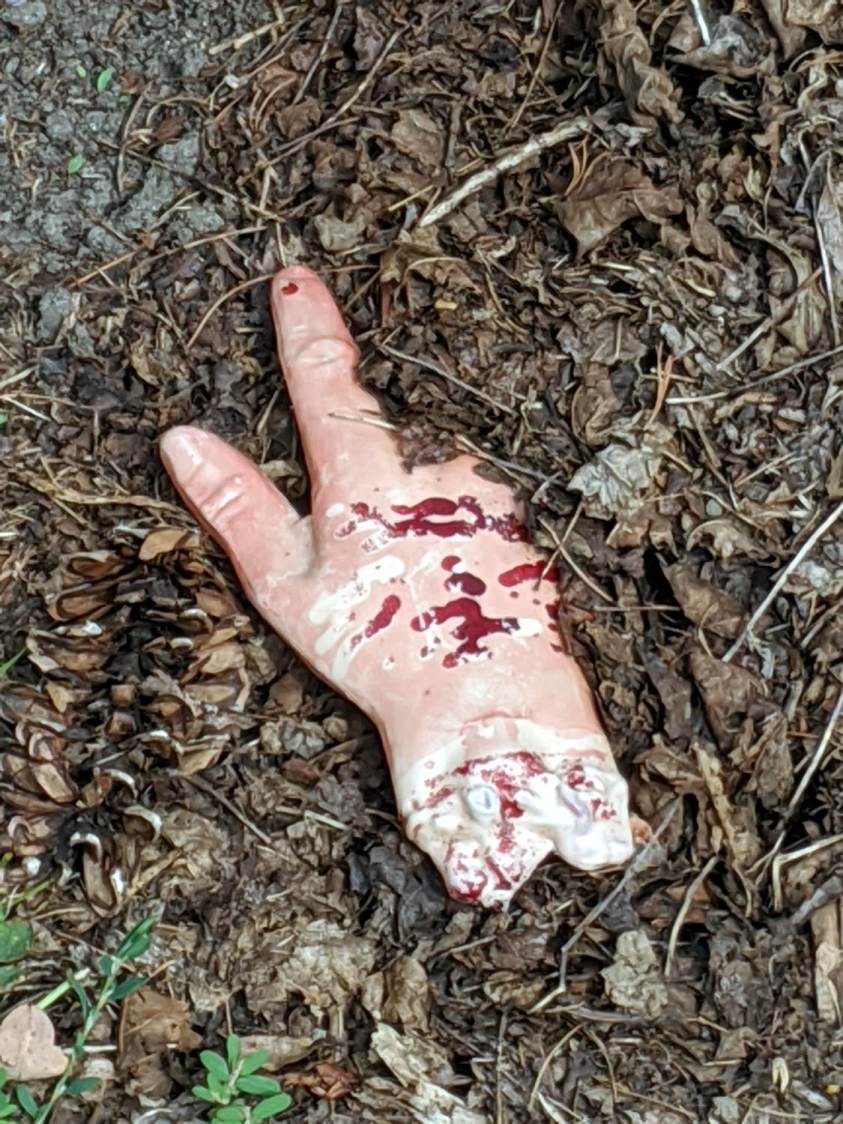
I think it’s a zombie costume glove, but I’m just not going to get closer.
Spotted on a walk. This is what happens when I leave the Basement Laboratory!
The Smell of Molten Projects in the Morning
Ed Nisley's Blog: Shop notes, electronics, firmware, machinery, 3D printing, laser cuttery, and curiosities. Contents: 100% human thinking, 0% AI slop.
Who’d’a thunk it?

Found another disconnected body part around Red Oaks Mill:
I think it’s a zombie costume glove, but I’m just not going to get closer.
Spotted on a walk. This is what happens when I leave the Basement Laboratory!

These Praying Mantis nymphs may have emerged from the ootheca I rescued from the grass trimming operation earlier this year:

The closest one was about 60 mm long, with plenty of growing ahead in the next few months:
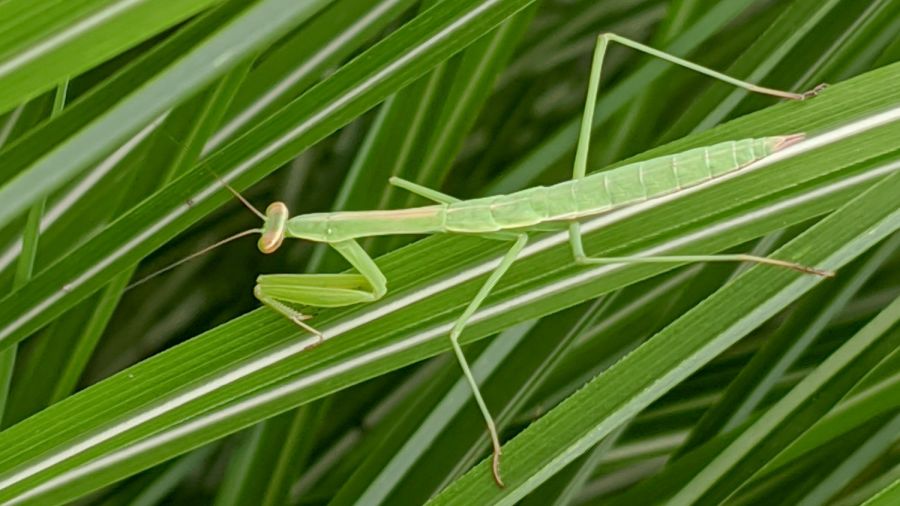
A few days later, I spotted a smaller one, maybe 40 mm from eyes to cerci, hiding much deeper in the decorative grass clump. Given their overall ferocity, it was likely hiding from its larger sibs.
They have also been stilting their way across the window glass and screens in search of better hunting grounds. My affixing their oothecae to another bush may have disoriented them at first, but they definitely know where their next meal comes from!
Perhaps as a bonus, a Katydid appeared inside the garage, stuck to the side of a trash can that Came With The House™ long ago:
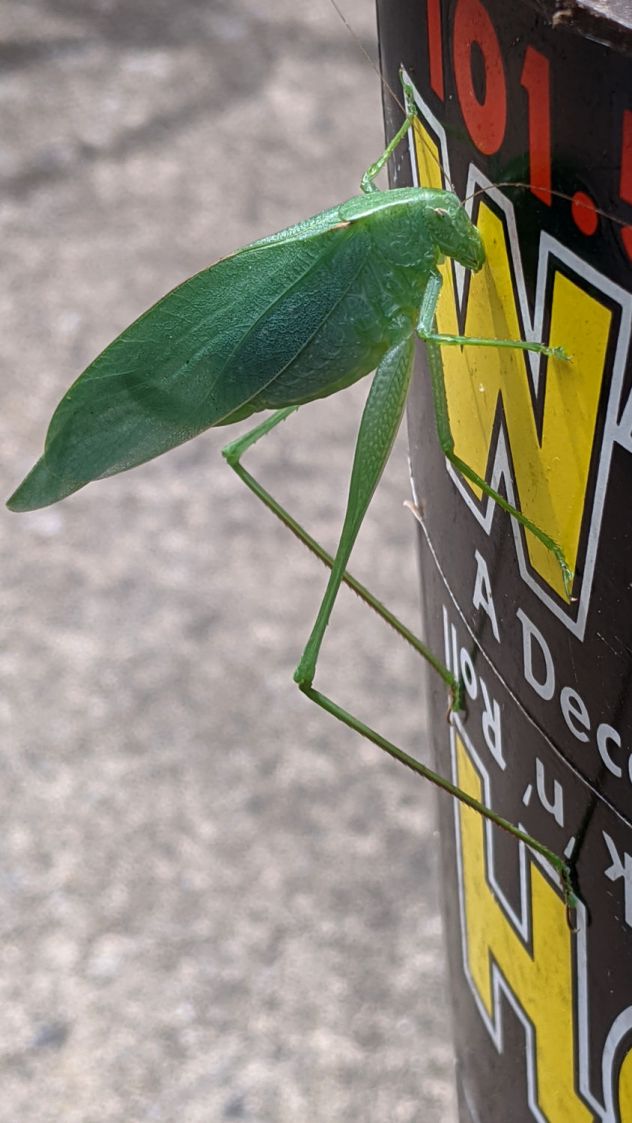
I deported it outside, in hopes of increasing the world’s net happiness.
The stickers covering the can say “WPDH: A Decade of Rock ‘n’ Roll”, suggesting they date back to 1986, ten years after (Wikipedia tells me) WPDH switched from country to rock. Neither genre did much for me, so I never noticed.

Perhaps this is a relative of the tiny turtle I teleported two years ago in the same section of the Dutchess Rail Trail:

Such fancy patterns!
I’m pretty sure box turtles don’t grow fast enough for this to be the same one …

A view of the middle of the Very Large Array of the National Radio Astronomy Observatory:

A view of our back yard, one foggy morning:

Coincidence? Ha!
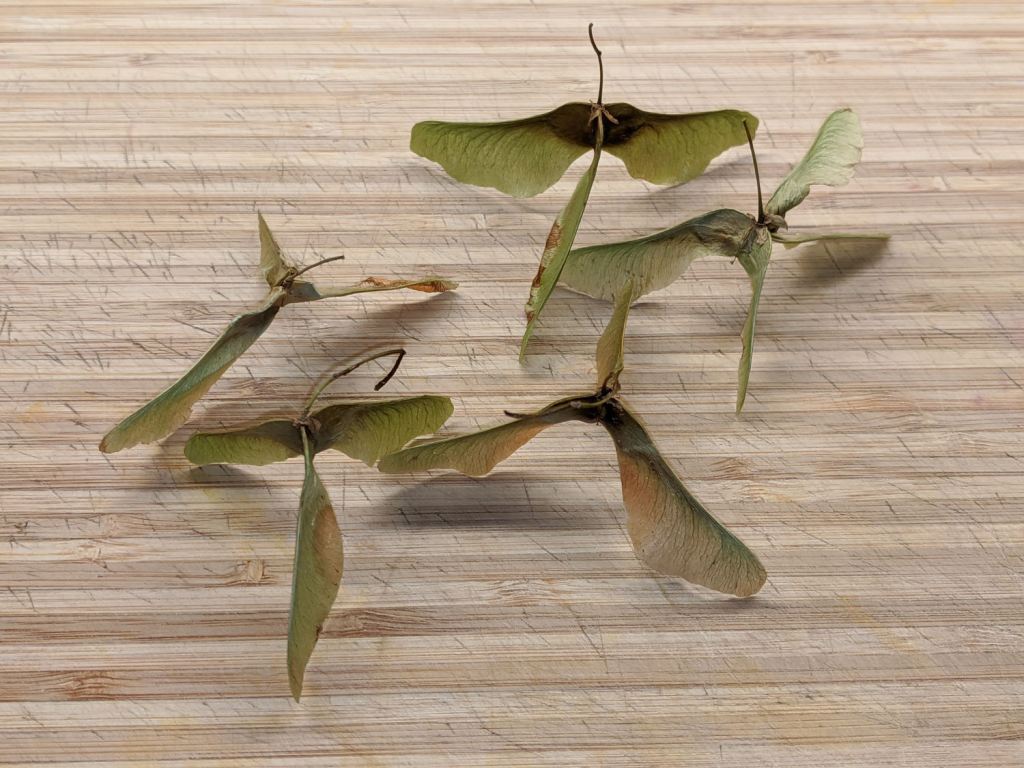
Today I Learned that maple seed spinners are properly called samaras:
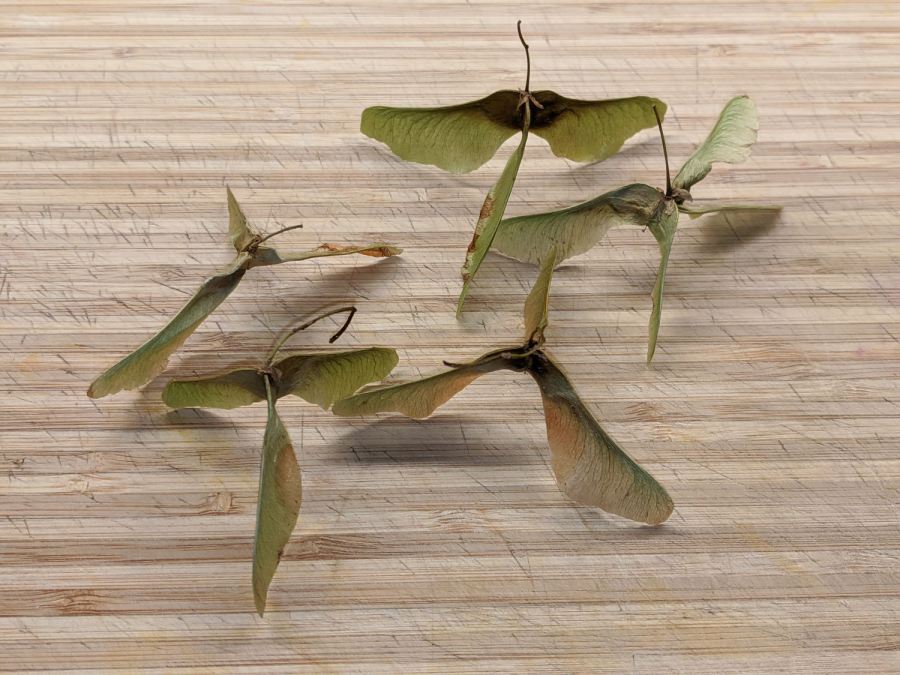
The Norway Maple near the road produced a bumper crop of triples this year, along with the first quad spinner samara I’ve ever seen.
Looks like the odds are ever in my favor …
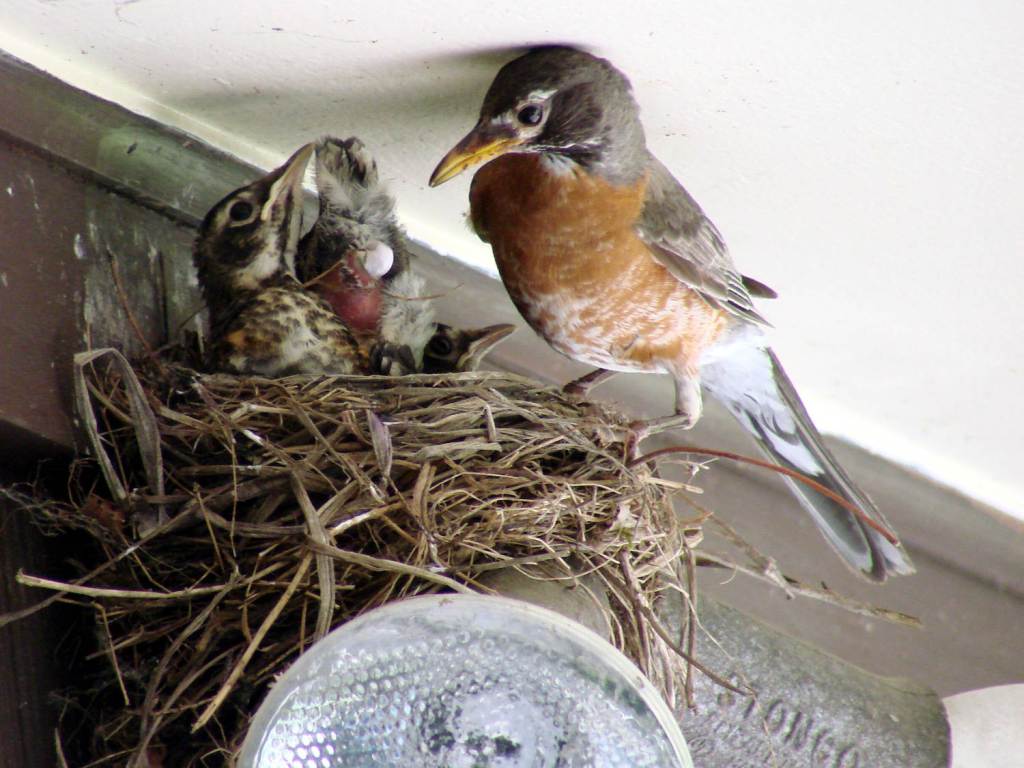
The robin nestlings fledged fourteen days after we spotted the first eggshell on the driveway below the nest. The first one may have flown away the previous evening, leaving three increasingly restless siblings behind:

They’re recognizably robins now, covered in young-bird speckle camouflage.
Feeding continued apace:
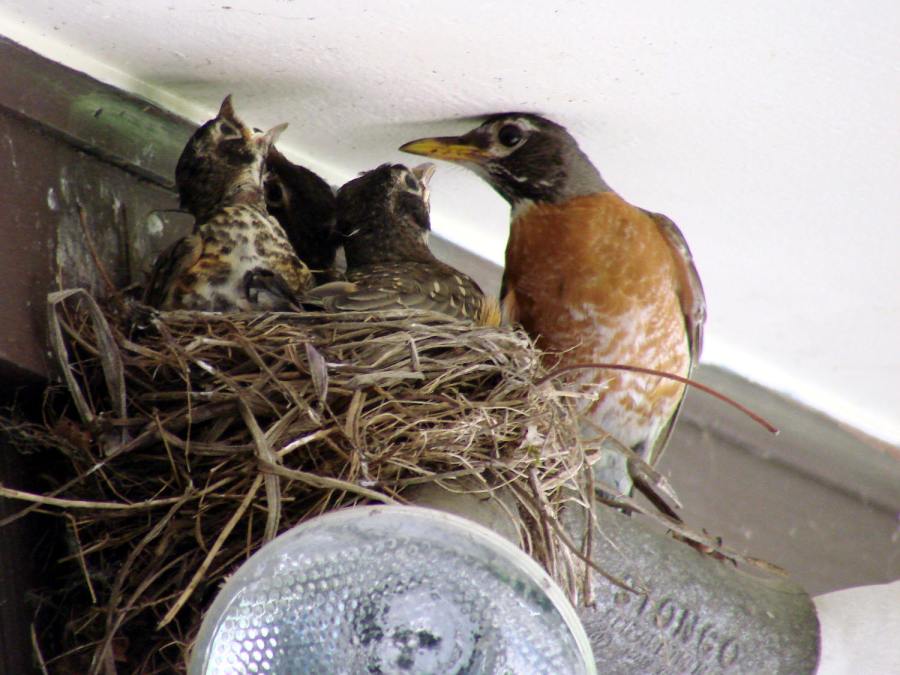
After feeding, robin nestlings produce fecal sacs, which the parents either eat or carry away:
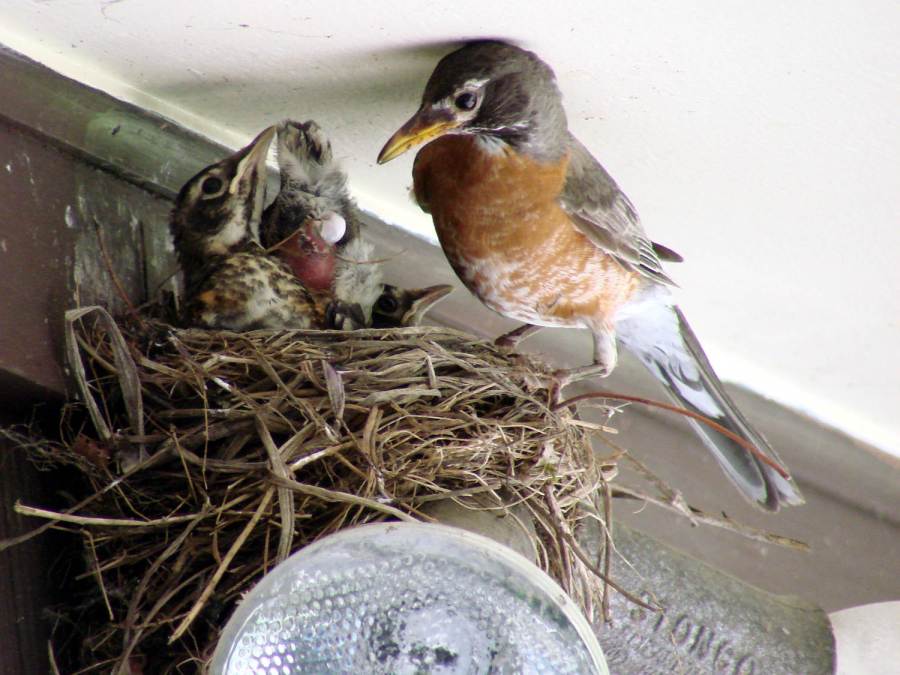
Robins aren’t big on facial expressions, but, speaking from personal experience, anything to do with diapers isn’t the high point of a parent’s day.
And then there were none:
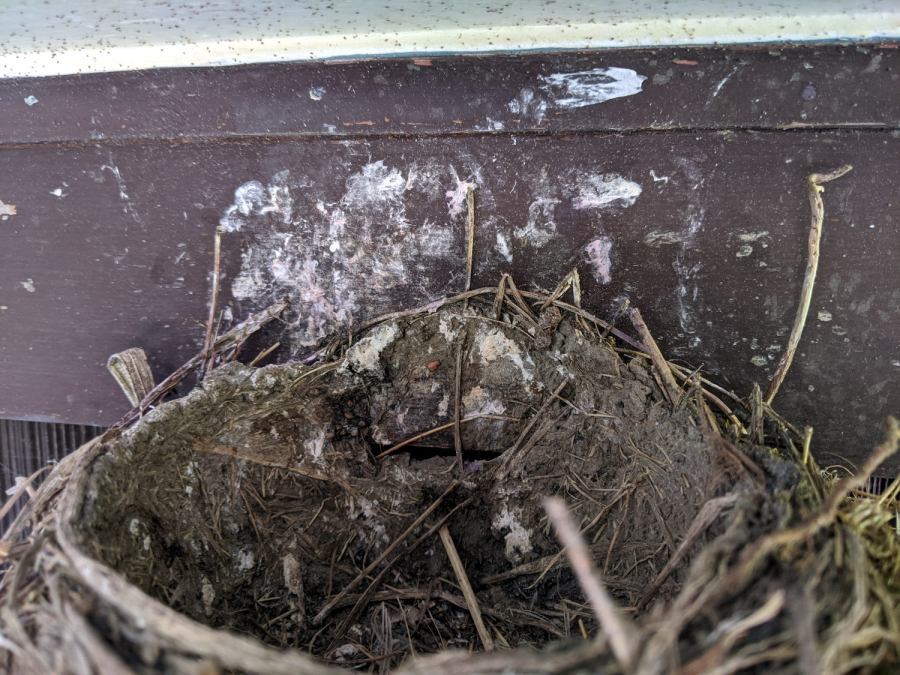
The gazillion black dots on the soffit are pinpoint-sized insects / mites / ticks infesting the nest and, presumably, the birds. The earlier pictures don’t show them, so perhaps these missed the last bird off the nest and are now regretting their life choices.
Go, birds, … gone!
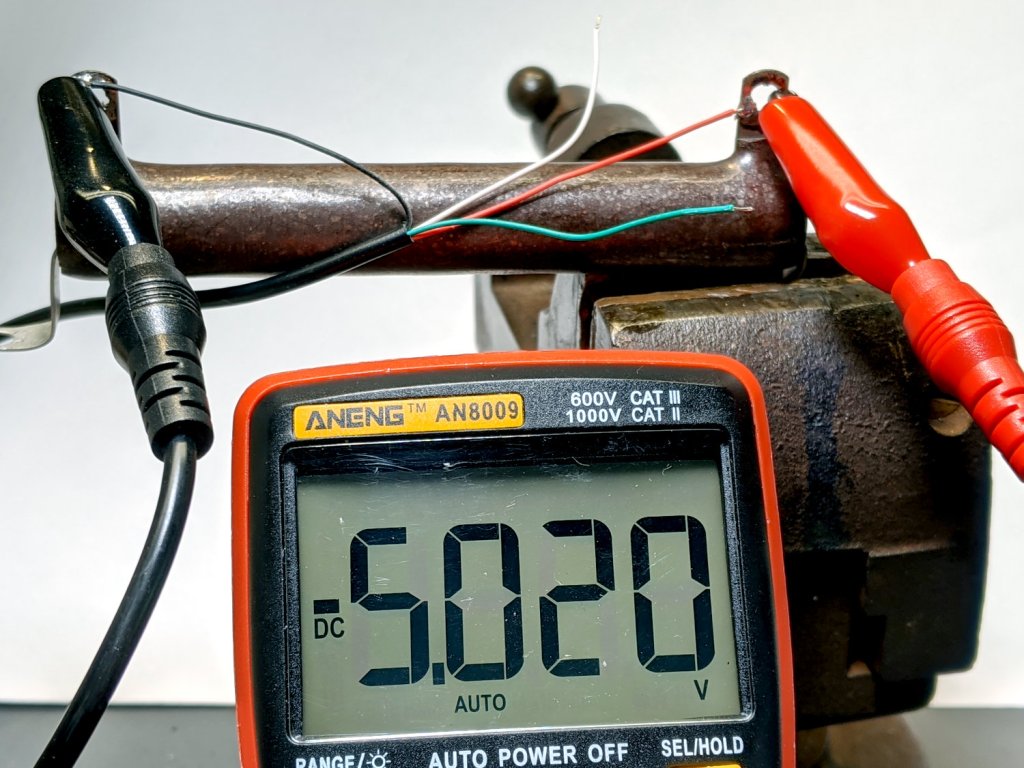
Despite knowing the wire colors inside USB cables need not follow any particular convention, this still came as a surprise:
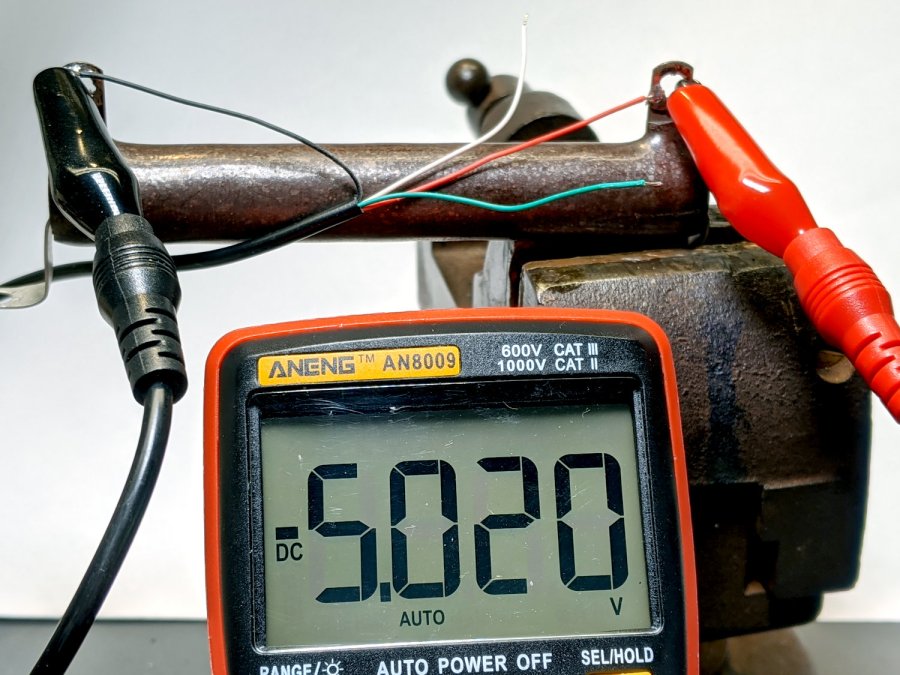
Yes, that’s a negative indicator on the meter: it reads -5.020 V.
No, I didn’t swap the test probe banana plugs on the other end.
A bit of continuity testing shows the green and white data wires are also reversed, so whoever assembled the cable simply soldered the proper wire color sequence backwards onto both connectors. As long as you don’t cut the cable to reuse the connectors, it’s all good.
Memo to Self: Stop trusting, always verify!
 The Smell of Molten Projects in the Morning