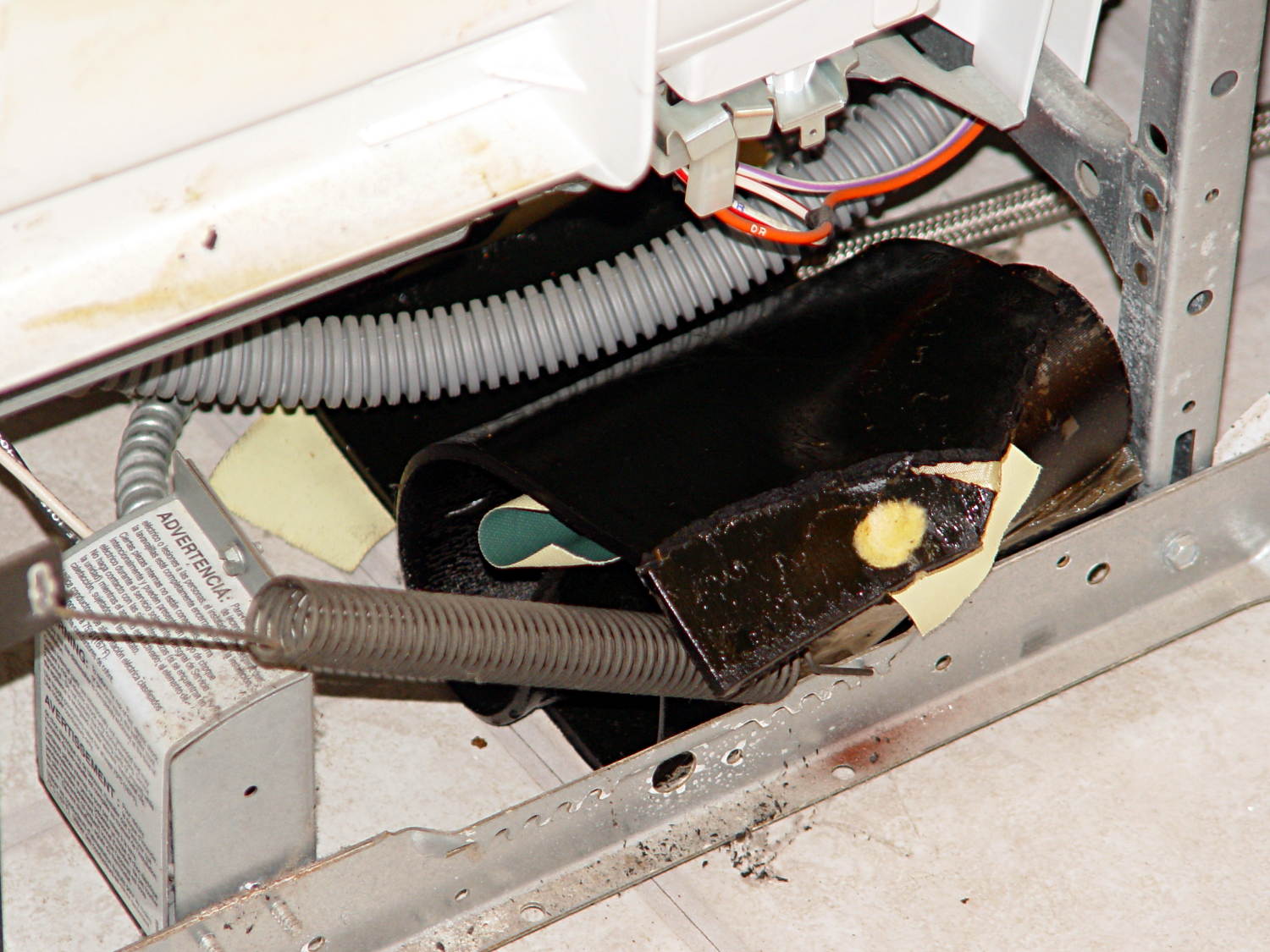
Our Larval Engineer has a bug report that blows away anything I’ve ever seen:
Check out her post for the rest of the story…
Forgot to mention this when she first told me about it; the discussion of LED and CFL lifetime brings it to mind.
The Smell of Molten Projects in the Morning
Ed Nisley's Blog: Shop notes, electronics, firmware, machinery, 3D printing, laser cuttery, and curiosities. Contents: 100% human thinking, 0% AI slop.
Who’d’a thunk it?
Our Larval Engineer has a bug report that blows away anything I’ve ever seen:
Check out her post for the rest of the story…
Forgot to mention this when she first told me about it; the discussion of LED and CFL lifetime brings it to mind.
No, not that red PLA, just PLA plastic:

A detailed look at the dart carrier and trigger:

As you can tell from the stock Makergear HBP, I printed it a while ago. It’s the full-length version of that classic, not the shortened Barbie Pistol for the Thing-O-Matic which has been fending off zombies for the last three years (unsuccessfully, from what I hear).
The finished product is a bit ungainly:

That’s not the proper Nerf dart for the thing, but it’s scavenged from tag sale debris and some day I’ll pick up a pack of the skinny ones.
All the pivot points and the sear spring are 3 mm black ABS filament, mostly for contrast. They’re glued in with dabs of Oatey clear PVC cement, the kind with tetrahydrofuran in addition to the usual hellish mix of acetone and MEK.
I bring it along to my show-n-tells, just so I can say I downloaded and printed a gun long before Defense Distributed made it trendy. Haven’t gotten into any trouble yet, but I’m sure some Zero Tolerance regime will bust my ass one of these days.
It was a big hit with the adolescent males at a Squidwrench event, for some reason. [grin]
Back in the early 1950s, Anderson’s state-of-the-art awning windows had screens on the inside: you must open the screen to open or close the window. This surely seemed like a good idea at the time, but in practice we don’t open the screen very much, very often, during peak insect season, as insects tend to collect on the outer surface.
We’ve learned to live with the smaller bugs, but this critter gave me pause one evening:

It’s a Hunting Spider (or, more exactly, a Wolf Spider), perched on the outside of the screen, inside the (opened) window. The (hard inch) screen grid is about 70×55 mils, so those legs span about 2-1/8 inch, call it 55 mm.
We’re big fans of spiders, but this portends a bit more intimacy than I’m comfortable with. I blew through the screen to tickle its tummy until it moved outside the window frame, then opened the screen and closed the window without pause.
Wake up with one of those on your pillow and tell me how it works for you.
I donated the last of Mad Phil’s stuff to a local nonprofit’s tag sale, where it helped bulk up the bottom line a bit. While I unpacked the van, a grasshopper stopped by to supervise:

I’m sure Dad worked from a model while he did this drawing:

You couldn’t imagine something like that if you’d never seen one…
The green background in the top picture is a sine-curve drafting template. Remember drafting templates?
The improved platform for the M2 runs at 30 V, but the RAMBo board specs limit the max HBP voltage to 24 V, presumably because the 15 A ATO fuse won’t clear a high-voltage, high amperage DC short. While setting up the SSR that drives the new platform, I looked up the specs for the PSMN7R0-60YS MOSFET controlling the bed heater and … it doesn’t have a logic level gate.
The rDS spec is an impressive 6.4 mΩ max, but that’s at VGS = 10 V. The 1 mA threshold voltage VGS(th) = 4 V max, which means there’s only 1 V of headroom to turn the transistor on enough to pass upwards of 10 A.
The typical ID vs. VGS curve (Fig 6) shows 20 A at maybe 4.2 V, but the typical RDSon curve (Fig 8) shows the resistance skyrocketing for VGS under maybe 4.8 V; sliding that curve a wee bit to the right would cause a Very Bad Thing to take place.
A 20 mΩ resistance dissipates 4.5 W at 15 A, which seems rather aggressive for the small PCB copper-pour heatsink on the RAMBo board. It’s a somewhat more bearable 2 W at 10 A, but I think that’s still too high. Of course, the typical dissipation will should be much lower…
A good engineering rule of thumb is to ignore the datasheet’s “Typical” column and design using the “Minimum” or “Maximum” columns, as appropriate. When you depend on typical specs, getting “the same part” from a different supplier can provide a real education in supply-chain management.
I suspect tolerance stacking works well enough that nearly all the MOSFETs on nearly all the RAMBo boards run cool enough to survive, but I’d rather see logic-level MOSFETs in Arduino circuits where the maximum gate voltage won’t ever get above 5 V.
We biked to Saugerties for the Hudson Valley Garlic Festival and spotted this monster looming in the morning mist during the ride home:

The end view shows it’s not an optical illusion:

Some Google Maps fiddling reveals the plant, with the excavator atop the first car on the siding, down in the lower-left corner of the image:

A zoomed view, rotated a quarter-turn CCW so it’s not quite so vertiginous:

My search-fu isn’t strong enough to uncover the plant’s name. They’ve obviously been doing something involving gravel and either asphalt or concrete for many years, so it’s not a prank…
Based on recent experience, this “Baby, Think It Over” rig works even better than a propane tank:

I was going to take a picture with it posed next to the gas pump, but the whole affair isn’t all that stable: it’s tough to look cool when your fancy faired Tour Easy ‘bent flops over like dead possum…