Ed Nisley's Blog: Shop notes, electronics, firmware, machinery, 3D printing, laser cuttery, and curiosities. Contents: 100% human thinking, 0% AI slop.
This is not the Monthly Image I had scheduled for today…
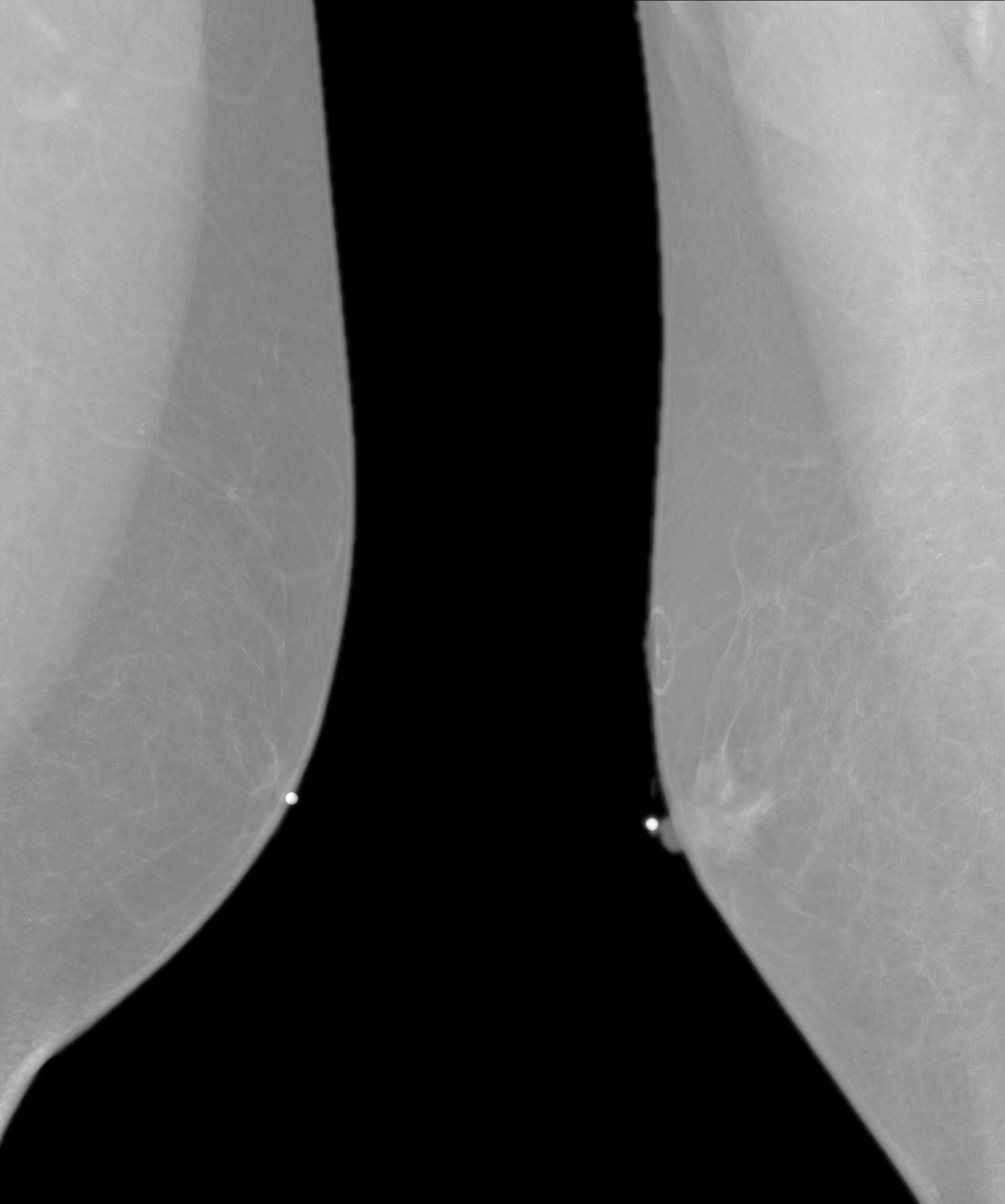
A few weeks ago I reported to my doctor that I had a pressure-sensitive lump in my right breast. This happened the very next day:
Left-right Mammogram
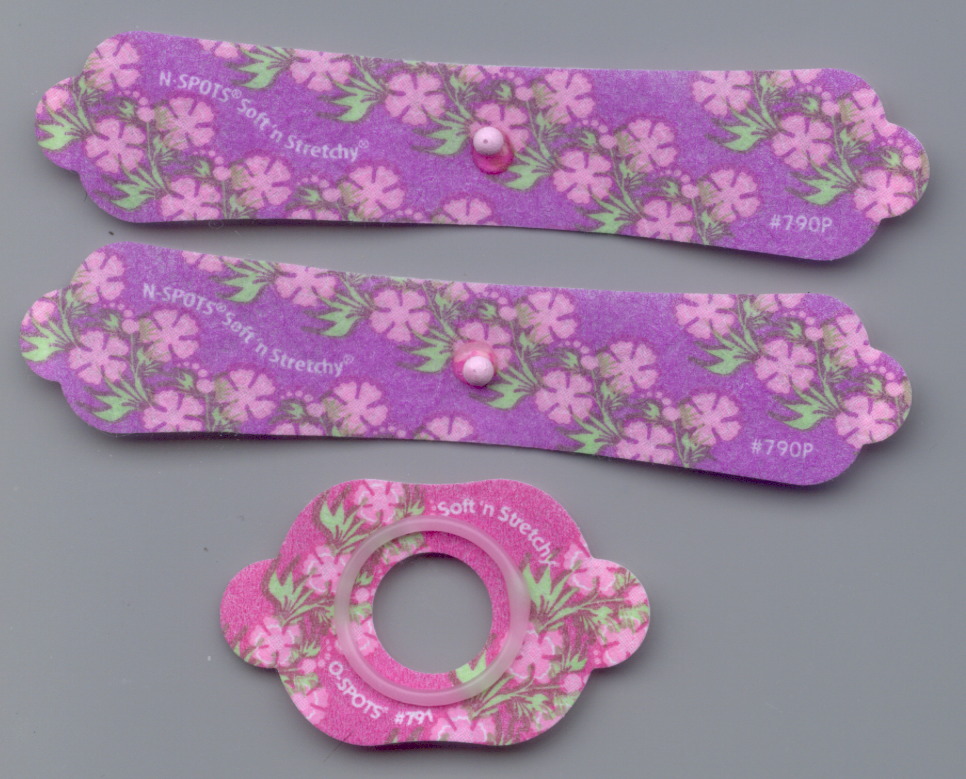
It’s a composite of two mammogram images, of my left and right breasts, respectively, with the small white dots marking the obvious targets and the ring above the right dot surrounding a mole. You will be unsurprised to know that the radio-opaque markers came on cheery flowered stickers:
Given such small numbers, what you see up there on the right is almost certainly an unusually tender and mostly unilateral case of gynecomastia, which was the diagnosis relayed from the radiologist after the imaging. Because things are different for guys, there’s an appointment with an oncologist (yes, she specializes in breast cancer) and, perhaps, some biopsy samples in my immediate future.
They triage the appointment schedule based on radiographic evidence. Fortunately, I’m not on the hot list.
Some browsing with the obvious keywords shows that side effects of the blood pressure dope I was taking last year probably triggered my symptoms, with calcium channel blockers and spironolactone the most directly implicated drugs. It turns out that my blood pressure seems OK without drugs (now that they moved the goal posts for my age bracket, anyway), but we devoted half a year to discovering that nothing produced much of a direct effect and the side effects were completely unacceptable.
Protip: it’s probably not worth reducing a male’s androgen levels just to see if his blood pressure goes down. [sigh]
Back to the usual tech stuff …
Returning home with a CD of digital images in hand, I found that, unlike those older X-ray images, feeding these DICOM images (all sporting informative names like IN000001) into the current version of Imagemagick‘s convert triggers a segfault. Rummaging in the repositories produced a dedicated conversion program:
medcon -f IN* -c png
… which grinds away on the DICOM files and spits out PNG image files with the same names prefixed with an ascending sequence number of the form m000-. A burst of Perl regex line noise removes the prefixes:
rename 's/m[\d]{3}-//' *png
Figuring that out neatly diverted my mind from the Main Topic for a while…
The oncologist says I have a classic, textbook case of gynecomastia; if her med students weren’t on break, she’d use me as an example.
About 10% of males taking spironolactone for blood pressure control develop gynecomastia, typically in only one breast. Absent any other signs, there’s no need for biopsy samples or surgical intervention. The symptoms generally resolve within a year after discontinuing spironolactone.
Should the symptoms persist and become objectionable, treatments include surgery or tamoxifen… but I’m not down with that.]
After getting two feet of snow over the course of a few days, the snowbank at the end of the driveway absorbed the mailbox:
End of Driveway Snowbank
I try to gnaw a path closer to the mailbox for the USPS delivery truck, but it was pretty much a losing battle against the DOT snowplows.
Later that day, we carved the top off the banks on both sides to improve the sightlines along the road. After a week, we were once again comfortable making a left turn…
For perspective, after the 2011 Snowtober event, the DOT crew parked the shredder in front of the same bushes you can see in the top picture:
The price for this specialized wrench used to extract oxygen sensors took a big jump some time after I added a link to it:
Northern Tool Sensor Socket – Absurd Lowest Price
Were it not for the very specific part number that’s certainly not available anywhere else, you could take advantage of their “Guaranteed Lowest Prices” to make a quick $494.
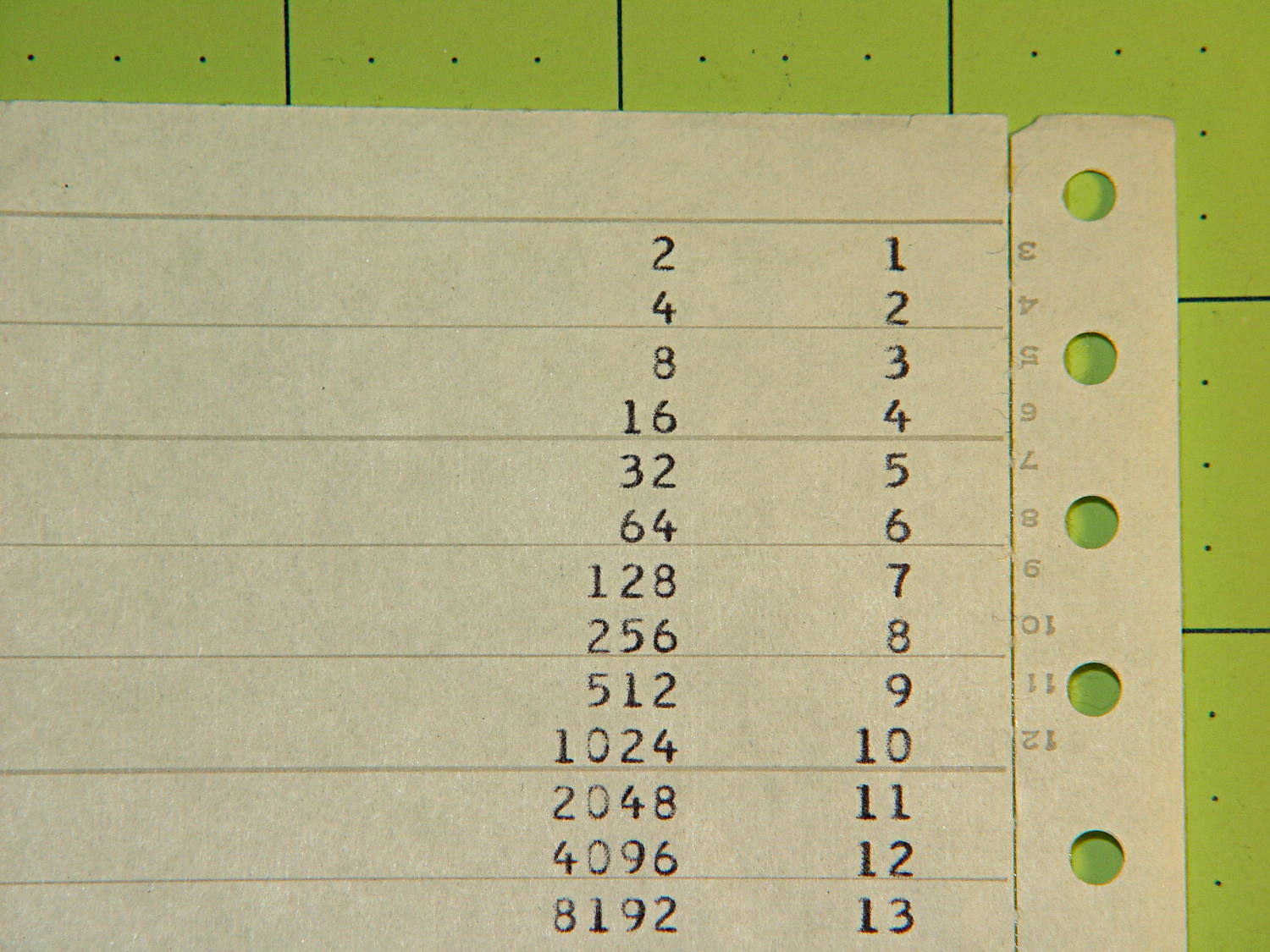
A few sheets of fanfold “computer paper” emerged while tossing stuff out. The first page suggests somebody was trying out some simple programming:
Powers of 2 Listing – top
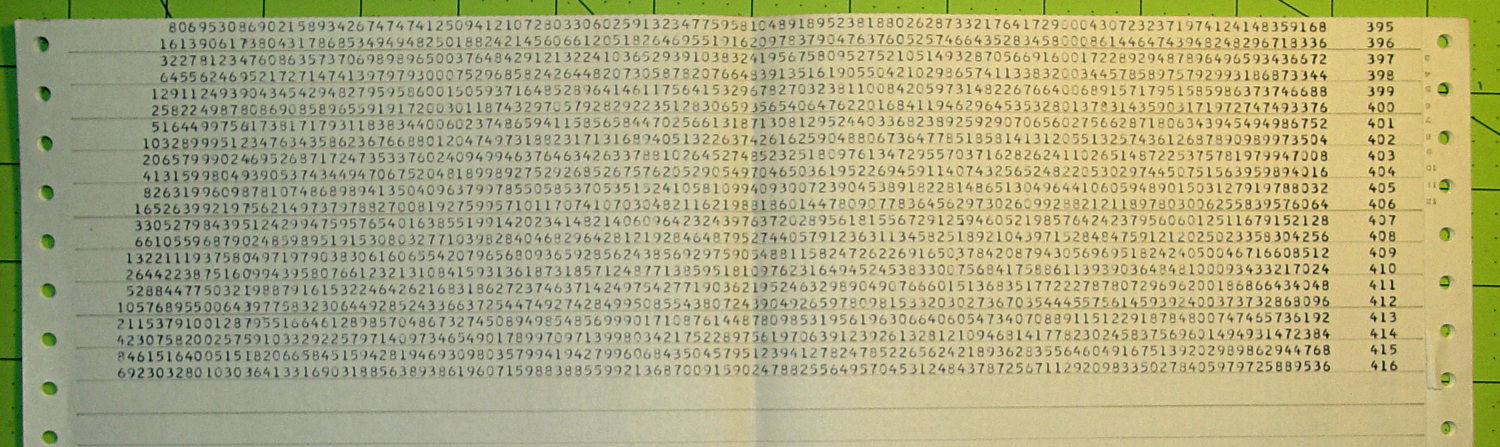
Seven pages later, you can tell an extended-precision library was hard at work:
Powers of 2 Listing – bottom
This being mainframe line printer paper, somebody must have donated it to my heap; I have no memory of ever doing (or needing to do) extended-precision math. That’s my story and I’m sticking with it.






 The Smell of Molten Projects in the Morning