Ed Nisley's Blog: Shop notes, electronics, firmware, machinery, 3D printing, laser cuttery, and curiosities. Contents: 100% human thinking, 0% AI slop.
Although compact fluorescent lamps have fallen out of favor, I’m burning through a box of the things donated by a friend who upgraded to LEDs and figured I could put them to good use. In general, complex electronic doodads (like CFL or even LED lamps) used in hostile situations (like an ordinary downlight fixture) seem to fail too quickly to justify the power savings; searching for “cfl fail” will produce some evidence from around here.
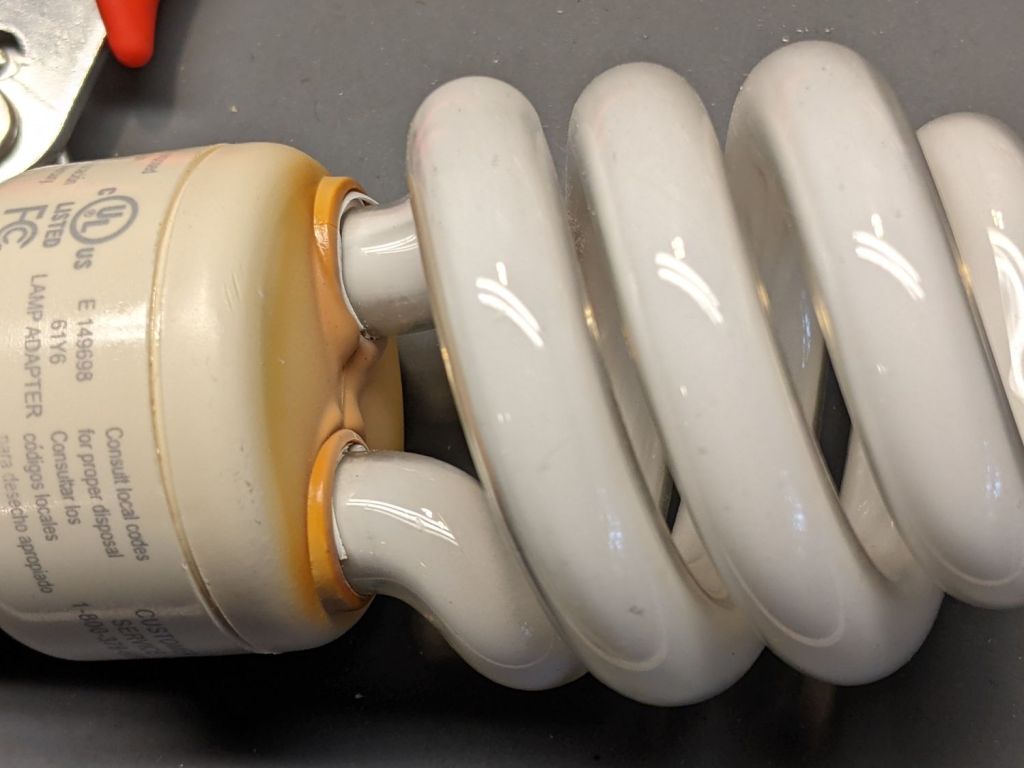
One of the downlights in the Basement Office just killed this specimen:
Dead CFL – detail
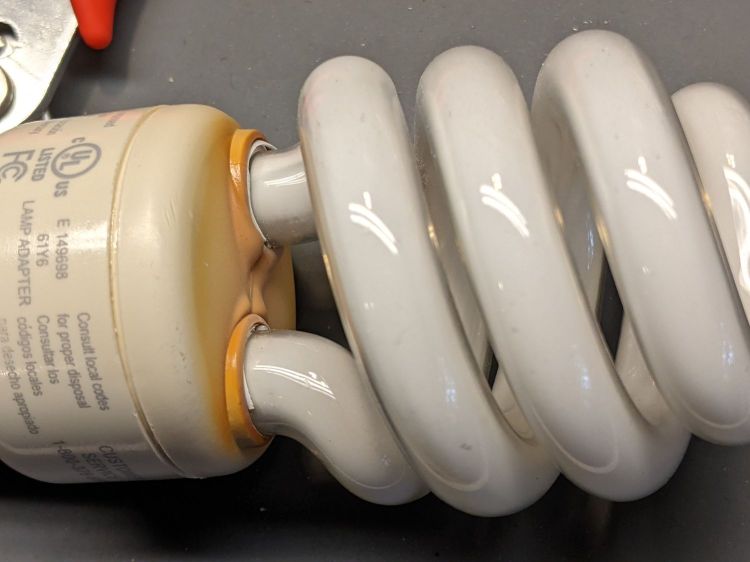
Much to my surprise, however, it survived for more than five years:
Dead CFL – over 5 years
The previous CFL bulb in that fixture lasted only two years, so their average lifetime is entirely too short.
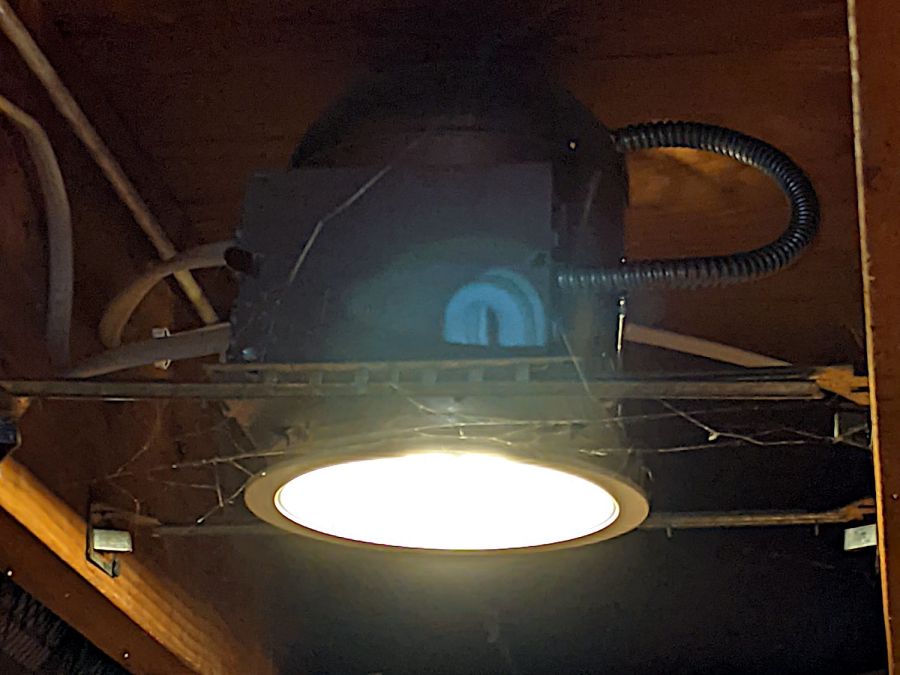
A taller bulb does a better job of lighting up that corner, although it started with enough power-on hours to suggest it won’t survive for another five years:
Dead CFL – replacement
The ghostly humps above the overexposed glare are the long CFL tubes reflected inside the Pixel’s camera optics.
I didn’t see much point in nailing a ceiling to too-low floor joists.
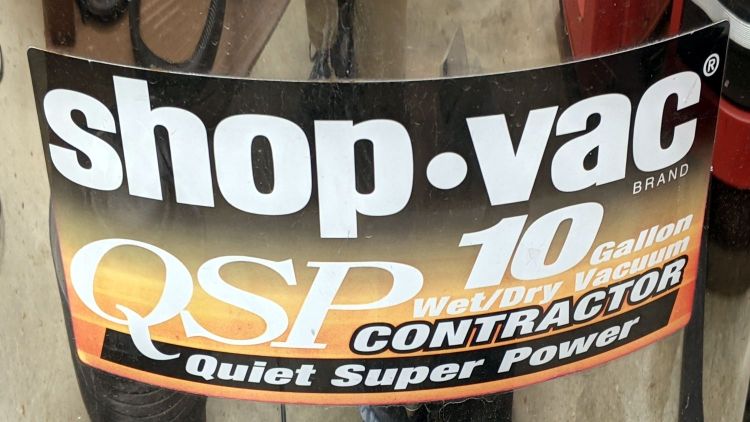
The Greatest Shopvac emitted an intense smell of electrical death while inhaling fuzzballs from the Basement Shop stairs, prompting me to tear it down. For the record, it’s a Genuine Shop·Vac QSP 10 (Quiet Super Power):
Shopvac QSP – label
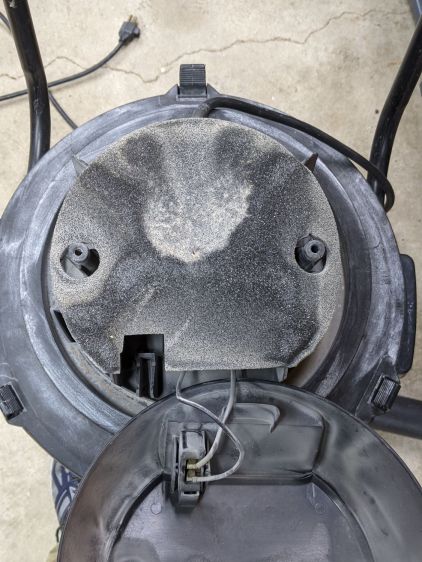
Removing the handle and upper plate reveals a slab of (presumably) sound-deadening foam over the motor cooling fan. As far as I can tell, the last job this vacuum had before the previous owner discarded it was inhaling drywall dust without a filter:
Shopvac QSP – upper sound baffle
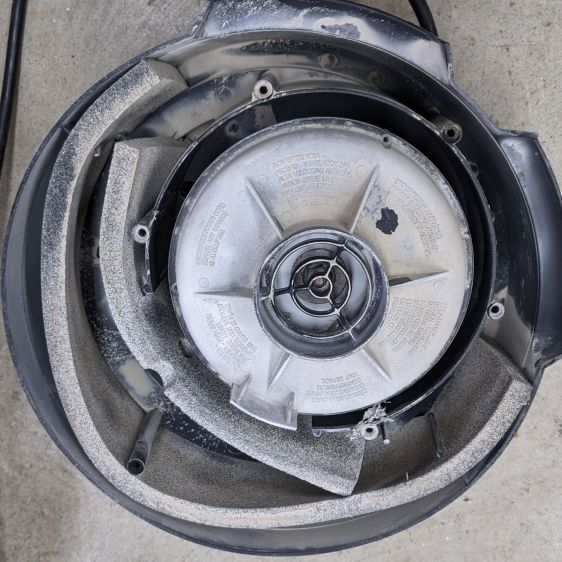
Flipping the motor assembly over and removing the bottom plate revealed a pair of equally solidified foam slabs baffling the main exhaust path:
Shopvac QSP – sound baffle foam
They eventually became Clean Enough™ after protracted rinsing, so maybe the thing now runs as quietly as the name would lead you to believe, if you believed in names.
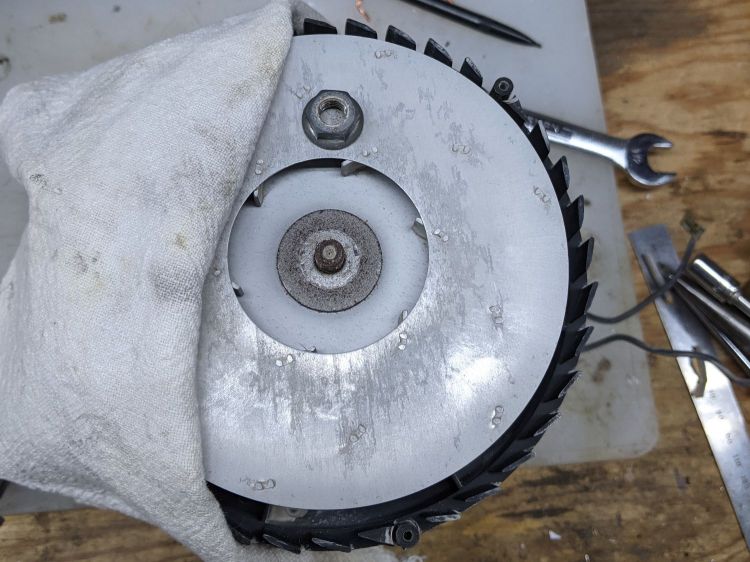
Disconnecting and extracting the motor revealed the razor-sharp impeller disk. A shop rag prevents lacerations while torquing off the nut holding it to the shaft:
Shopvac QSP – impeller nut
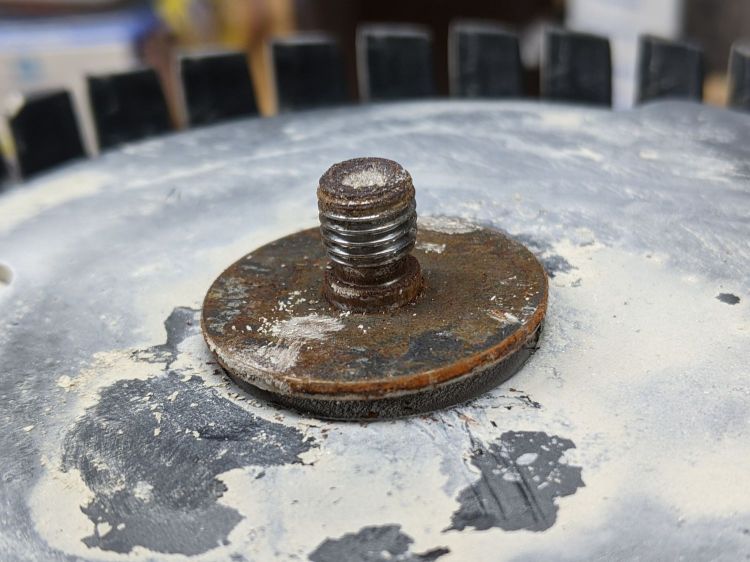
Rust on the washer below the impeller, along with the layer of caked white cement, suggested water accompanied the drywall dust:
Shopvac QSP – impeller washer
Gentle suasion from the Designated Prydriver eventually eased the washer off the shaft and freed the motor:
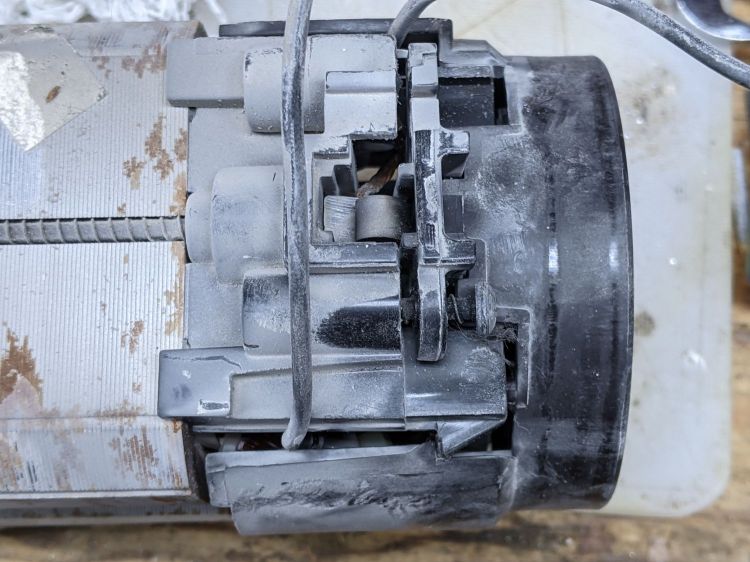
Shopvac QSP – motor brush layout
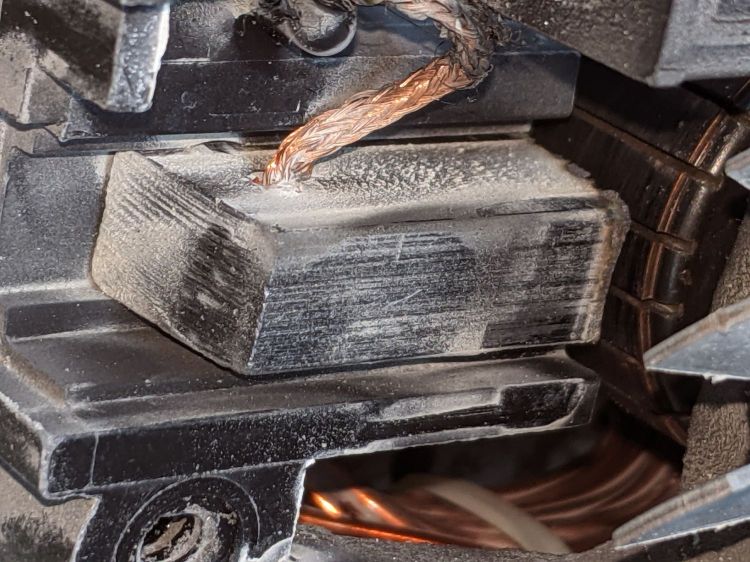
It’s an old-school series-wound brushed universal motor. The plastic plate in the middle of the picture has a helical spring pressing the carbon brush against the commutator:
Shopvac QSP – motor brush detail
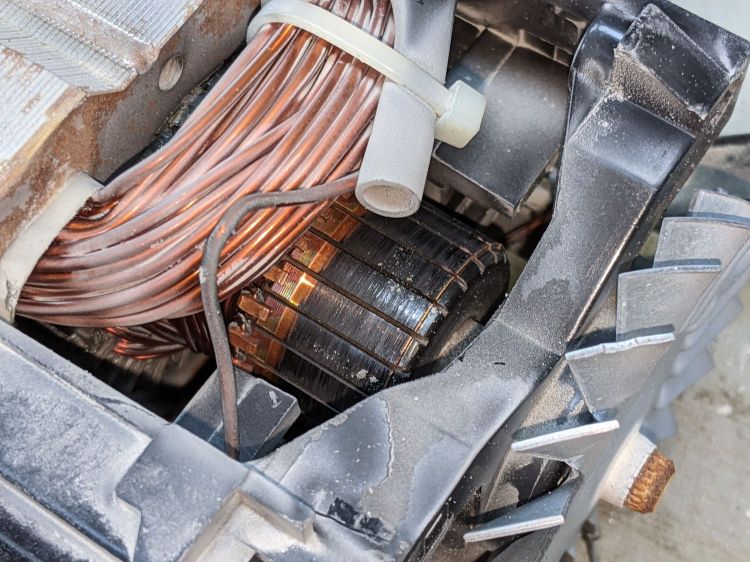
The rotor turned … reluctantly with the brushes in place and spun freely without them, suggesting the horrible smell of electrical death came from arcing across the gunk accumulated on the commutator:
Shopvac QSP – commutator as found
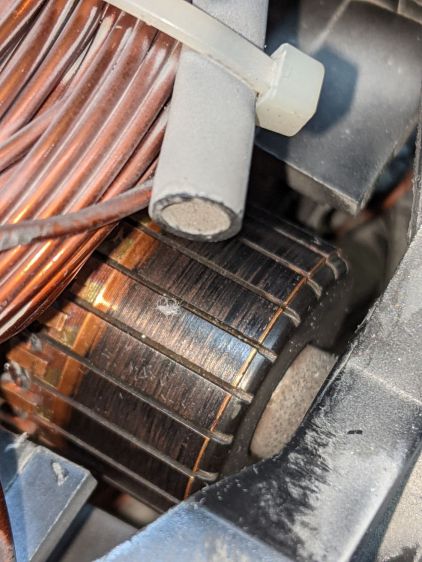
Many iterations of diligent scrubbing with denatured alcohol on cotton swabs and old t-shirt snippets got rid of the crud, although that commutator will never look all shiny-clean again:
Shopvac QSP – commutator cleaned
At least the brushes aren’t glued to it!
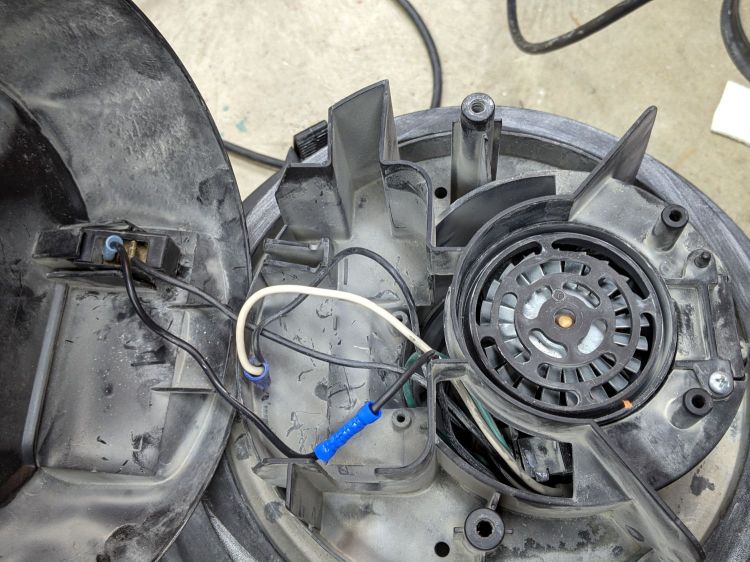
Reassembly is in reverse order, although I took the liberty of splicing a few inches of wire into the switch leads, because I’m not working under factory conditions with all the proper assembly fixtures:
Shopvac QSP – extended wires
The motor passed the smoke test and no longer smells like death, so it’s at least as good as it ever was.
It may run quieter with clean foam baffles, but I still turn off my power ears or don hearing protection when I fire up any shop vacuum.
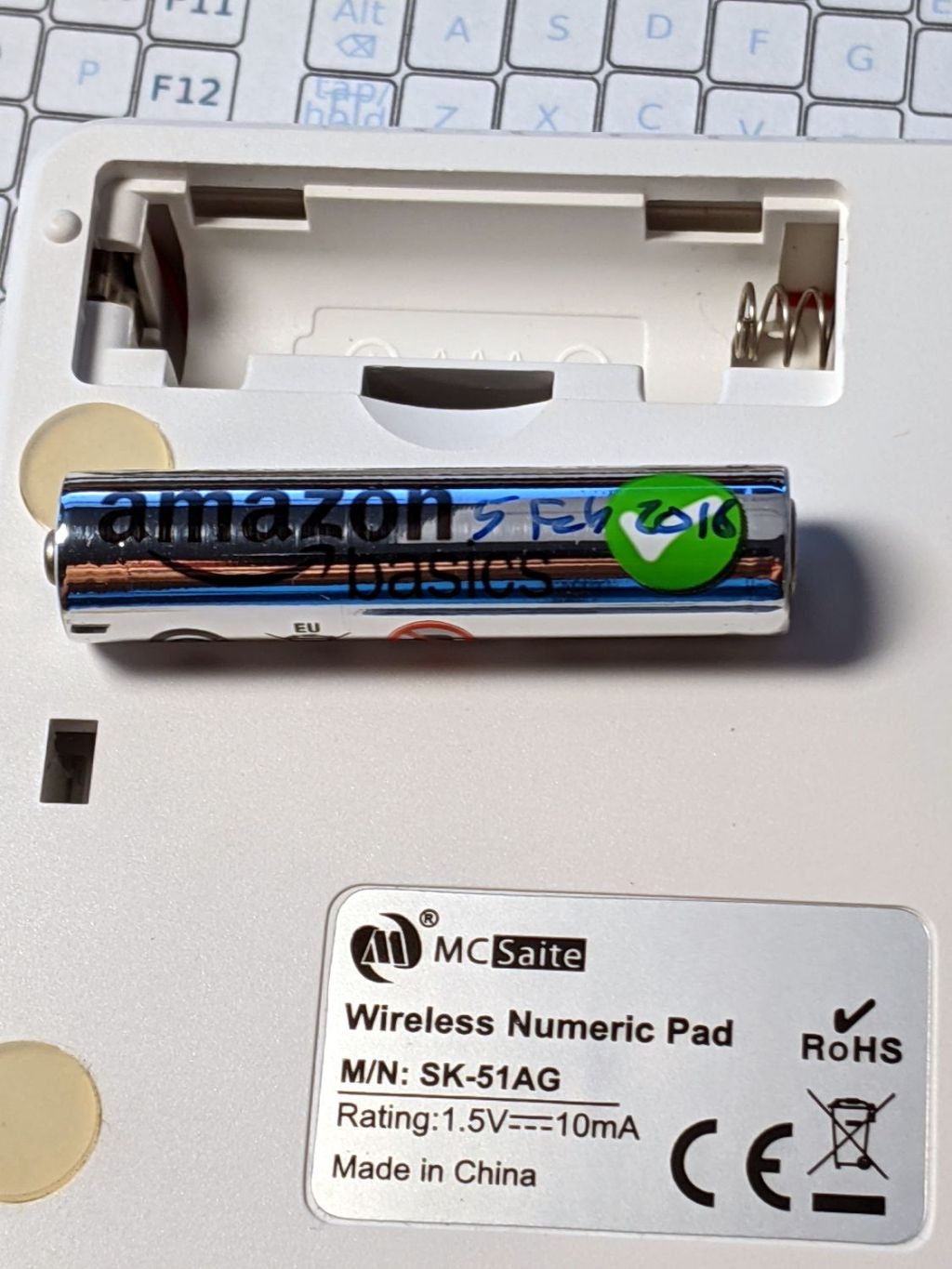
One of the streaming media players behaved funny, which always results in a numeric keypad battery replacement. This AmazonBasics AAA alkaline was down to about 0.5 V and long past its best-used-by date:
Suggestions that Amazon monitors their Marketplace sellers to figure out what’s profitable, then promote a Good Enough house brand product to kill off the competition, seem to describe the situation just about perfectly.
The blade on one of the Jonas vegetable peelers cracked, which suggests it’s the counterfeit version:
Jonas Peeler – cracked blade
I grooved the metal pin running through the handle:
Jonas Peeler – shaft grooving
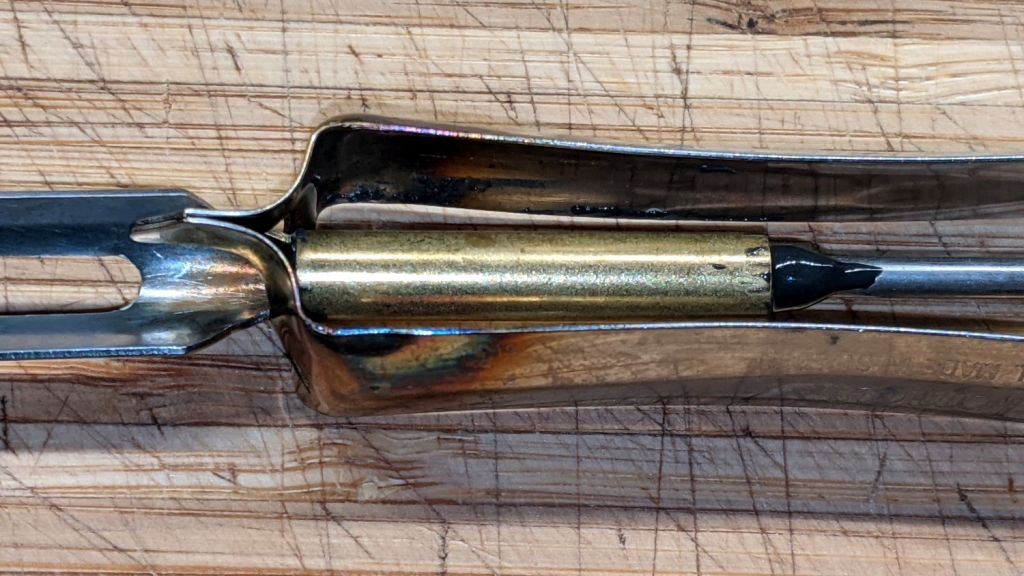
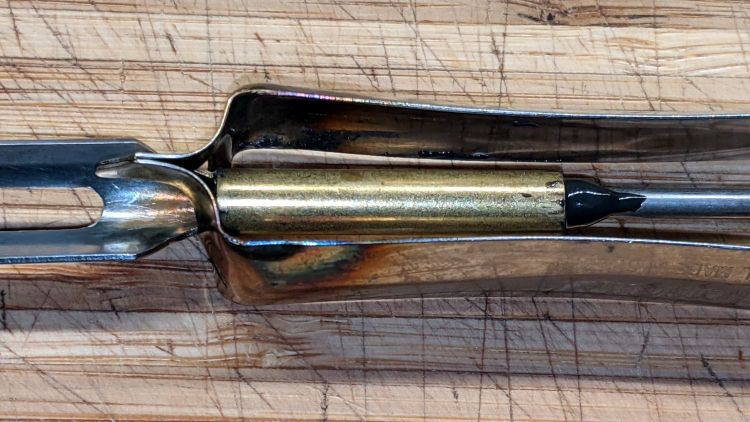
A brass tube from the Little Tray o’ Cutoffs and some epoxy should hold things together forevermore:
Jonas Peeler – epoxy
The rainbow colors come from an instantly aborted attempt to silver-solder the parts together. The fact that I even tried a stunt like that shows I’m definitely not the brightest bulb in the chandelier these days.
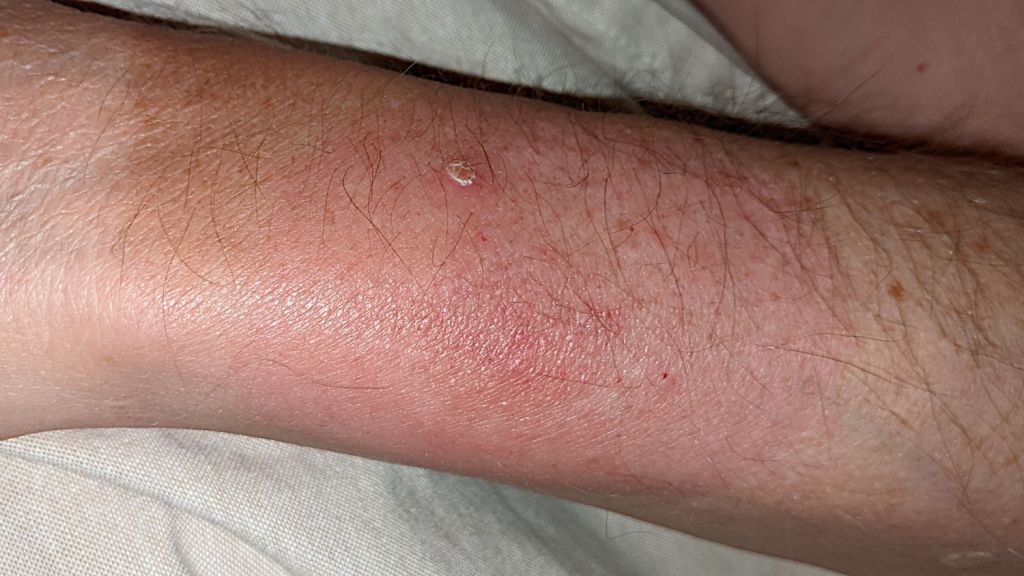
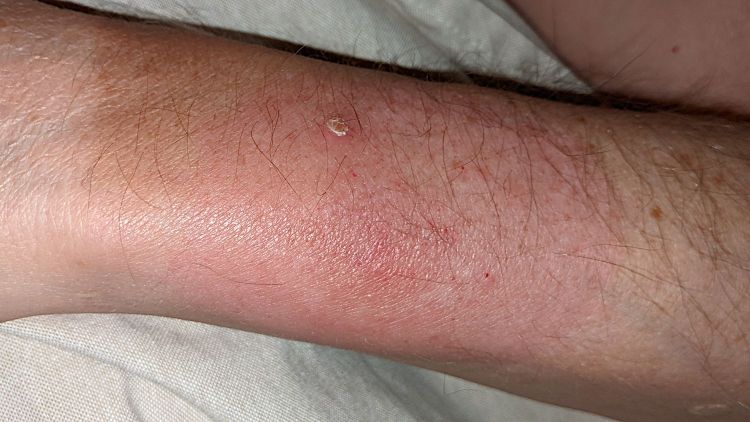
For reasons that made sense at the time, two weeks ago I ventured outside the house. A few days later, this appeared:
Lyme Disease – arm rash
The pallid skin over on the left comes from a bike glove. The central bump is one of those annoying sebaceous hyperplasias appearing after a Certain Age and not relevant here.
Having been around this particular block a few times, Mary recognized the diffuse red rash, sleeping 30 of 36 consecutive hours, and a day-long 103 °F fever as Lyme disease. I’m currently taking 100 mg of doxycycline twice a day and (after a week) feeling better, while sleeping a lot more than usual at random intervals during the day.
We’re both highly aware of Lyme disease: Mary routinely dresses in a complete overlayer of permethrin-sprayed clothing and I generally strip-and-shower immediately after any yard work in similarly sprayed, albeit less enclosing, attire. In this case, we think a tiny Deer Tick nymph affixed itself to the outboard side of my wrist, where I could neither see nor feel it, and (because I didn’t take a shower after being outside for only a few minutes) remained attached long enough to infect me.
Caught and treated early, Lyme disease generally does not progress into “post-treatment Lyme disease”, an ailment rife with what can charitably be described as serious woo, despite some evidence of actual disease.
Some of Mary’s Master Gardener cronies have endured co-infections of Babesia microti and we’ll be watching for those symptoms after doxycycline tamps down the obvious problem.
I’ll be puttering very carefully around heavy machinery and posting irregularly for a few weeks …
Memo to Self: the Basement Shop has a lot to recommend it!
Apparently the stink bug’s armor doesn’t count for much when the spider has the luxury of attacking through a weak spot in the underbelly after the critter stops struggling.
Stink bugs cause considerable damage to crops (notably apples) in the Hudson Valley, but they haven’t been the existential catastrophe we all expected when they first arrived.
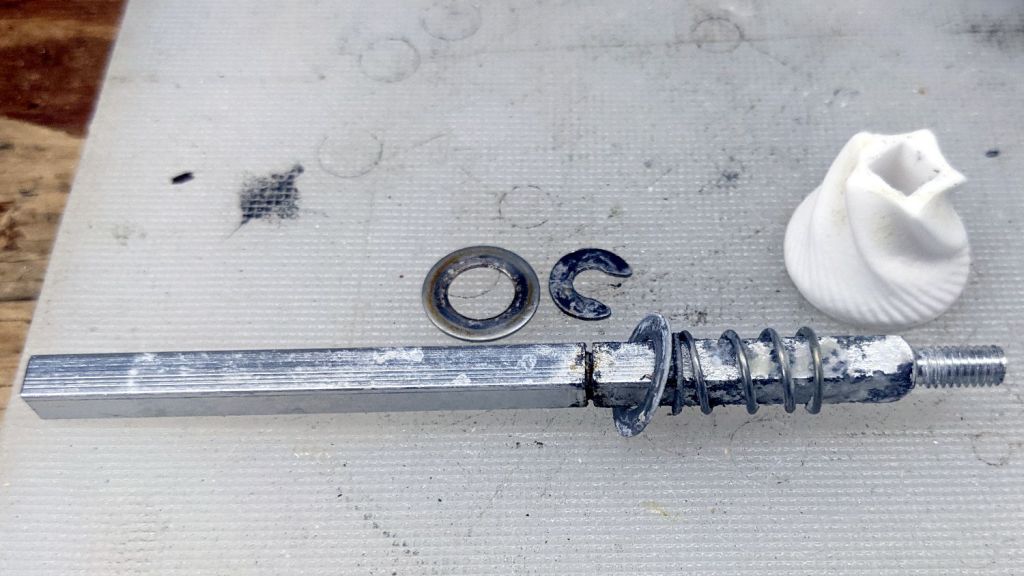
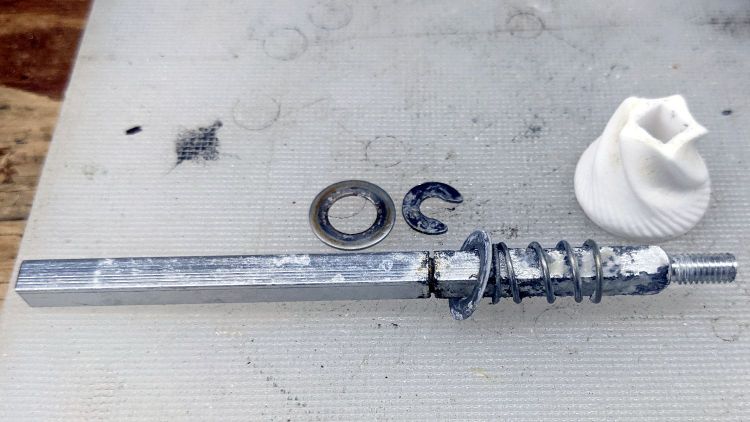
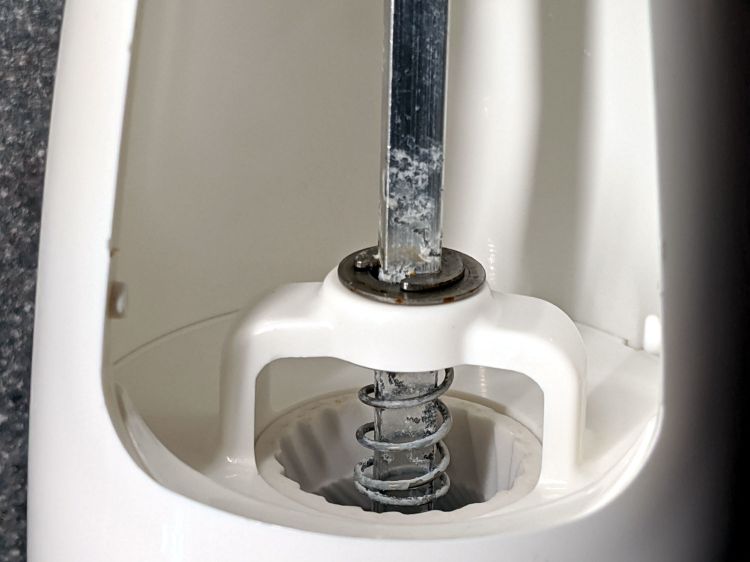
It turns out the somewhat corroded square shaft is aluminum, neither the cheap steel I expected nor the stainless steel it should be. Perhaps OXO cost-reduced the shaft, discovered aluminum is a poor choice in a saline environment, and changed the packaging to compensate?
Removing / installing the Jesus clip requires careful whacking with a hollow-tip punch against the shaft, with the whole affair laid flat on shop towels, the handle held down to prevent rotation, and the wrap-around body capturing the escaping clip.
Shaft corrosion as of Summer 2020:
OXO Salt Mill – corrosion
Soaking the body in hot water got rid of salt crusts and filled the shell with water. There being no way to completely dry the thing, I parked it in the sun for a day, refilled it, and was unsurprised when the (dried) salt turned into an assortment of moist crystals.






 The Smell of Molten Projects in the Morning