The Smell of Molten Projects in the Morning

Ed Nisley's Blog: Shop notes, electronics, firmware, machinery, 3D printing, laser cuttery, and curiosities. Contents: 100% human thinking, 0% AI slop.

Author: Ed

  • Slotted Elephants

    Slotted Elephants

    Continuing the theme of slot resizing for various materials:

    Elephants - 3.8 and 1.5 mm
    Elephants – 3.8 and 1.5 mm

    The DXF pattern imports directly into LightBurn and requires the usual joining / closing / optimization before all the slots resize in unison. Doing the resize changed the slots from the original 3.0 mm to the 3.9 mm required to convert a cardboard moving box into a pachyderm.

    The leg sections turned out to be a bit too thin for corrugated cardboard, so the corrugations came loose from the surface sheets, although the tail looked much more realistic. Stipulated: corrugated cardboard is the wrong material, but I really didn’t need a big MDF elephant looming over everything else.

    The smaller elephants, both in 1.5 mm thick materials, come from a global resize applied through the LightBurn Numeric Edit toolbar:

    LightBurn Numeric Edit - percent resize
    LightBurn Numeric Edit – percent resize

    The ratio makes the slots become the new size, with the entire rest of the design scaled around them. This works if you don’t much care about the overall size, but is rare in actual practice where you need a model “that big” with the slots fitting “that material”.

    But the pieces just slid together:

    Elephants - 1.5 mm detail
    Elephants – 1.5 mm detail

    I put dots of cyanoacrylate in the acrylic joints, although the vapors scarred the surface enough to remind me why that’s the wrong adhesive for the job when you care about surface quality. Dots of wood glue hold the chipboard elephant together, with a quick shot of clear rattlecan paint to knock down the smell of the charred edges; I’d say the color came out about right.

    All in all, they worked out rather well.

  • Samsung Range Grate Feet

    Samsung Range Grate Feet

    The Samsung range has ungainly cast-iron (or some such) grates that have long since worn out / lost their original Genuine Samsung rubber bumper feet. The grates had glued-on feet that looked very much like they belonged under something else, affixed with mystery adhesive that stuck firmly in some corners and let go in others:

    Samsung grate - old foot
    Samsung grate – old foot

    It seems Samsung no longer sells replacement feet, which may be an indication they don’t want customer complaints, so I got a bag of nominally compatible rubber feet from the usual source and broke out the cyanoacrylate glue:

    Samsung grate - new foot
    Samsung grate – new foot

    The red flecks are traces of a previous generation of adhesive, with the new cyanoacrylate peeking out around the base of the new foot.

    The grates have holes for the stems of the feet, so in principle they have plenty of resistance to being shoved around. In practice, tipping the grates up to clean underneath them dislodged the feet with depressing regularity. The grates are too heavy and too awkward to remove and plunk somewhere else, which suggests this sort of range is better suited to a kitchen that’s never used or, perhaps, comes equipped with a support staff.

    You’re supposed to use high-temperature adhesive and, in fact, the red flecks look remarkably like high-temp silicone gasket compound, but all the missing feet were along the back of the grates where the small & simmer burners live, so I figured cyanoacrylate was certainly worth a try.

    When & if they fall out, I’ll know when they went in.

  • Laser Test Paper Beam Alignment Targets

    Laser Test Paper Beam Alignment Targets

    Having failed at making flexible plant tags, I figured using laser test paper to make laser test targets might work:

    Test paper - target patterns - 2024-07-03
    Test paper – target patterns – 2024-07-03

    They descend from my original dot-mode laser beam targets:

    OMTech 60W laser - beam alignment - 2022-03-22
    OMTech 60W laser – beam alignment – 2022-03-22

    The dots just barely punch through the back side (open in a new tab & zoom for more dots):

    Test paper - target patterns back side- 2024-07-03
    Test paper – target patterns back side- 2024-07-03

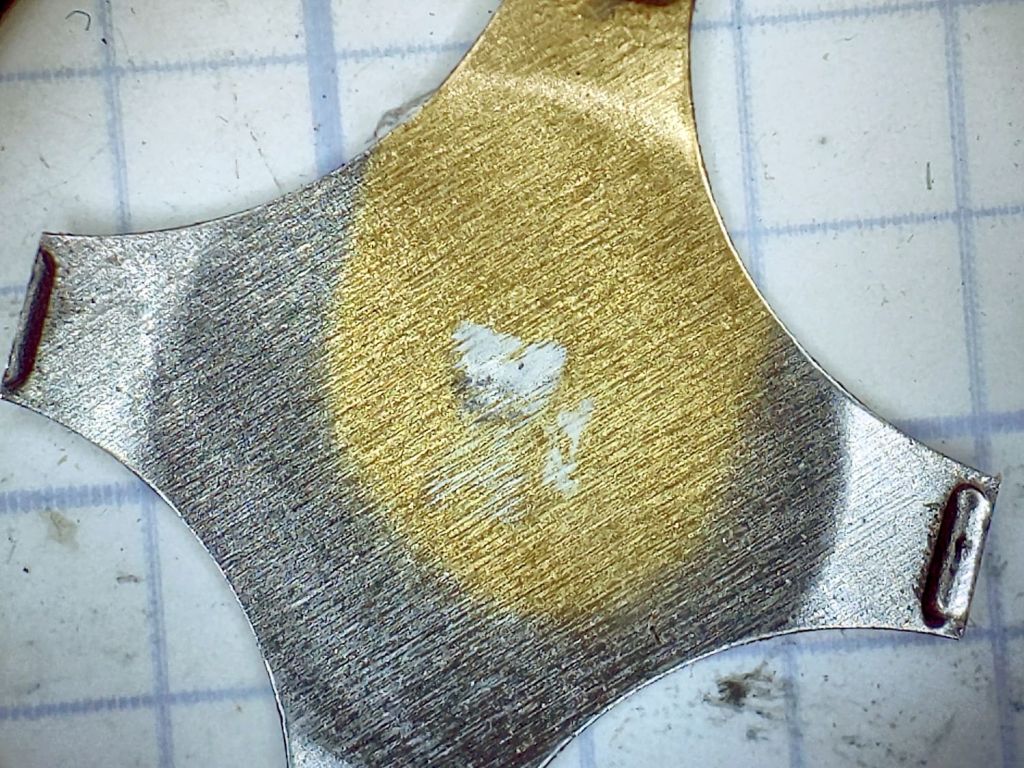
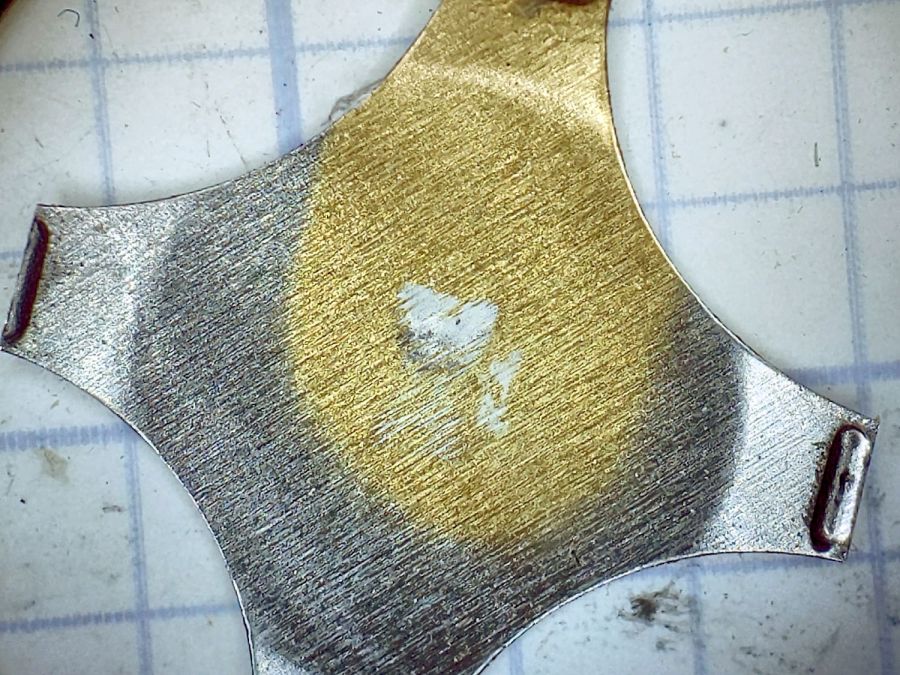
    The plastic coating chars and buckles with each pulse, but remains in place:

    Test paper - 2 shot - uncleaned - 2024-07-03
    Test paper – 2 shot – uncleaned – 2024-07-03

    Wiping the surface removes the loose coating / ash / debris to expose the underlying charred paper core:

    Test paper - 2 shot - wiped - 2024-07-03
    Test paper – 2 shot – wiped – 2024-07-03

    Those are two pulses marking the ends of each axis, so the machine remains well aligned after the fourth-quarter tweak.

    A single pulse shows the beam has a nice round shape with well-defined edges:

    Test paper - 1 shot - wiped - 2024-07-03
    Test paper – 1 shot – wiped – 2024-07-03

    In principle, the beam should be more intense toward the middle, but I suspect that’s beyond the paper’s ability to resolve the energy; the beam either burns through the coating or it doesn’t. In all those targets, the back surface of the paper remains undamaged.

    Manila paper targets seem to have better energy resolution and take much less time to produce:

    Beam Alignment - Mirror 2 detail - 2023-09-16
    Beam Alignment – Mirror 2 detail – 2023-09-16

    The black test paper will certainly come in handy for something, though.

  • Tide HE Laundry Detergent: Shrinkflation

    Tide HE Laundry Detergent: Shrinkflation

    The most recent Tide HE Laundry Detergent bottles seemed smaller than the one we were about to empty and, indeed, they were:

    Tide HE shrinkflation - bottle labels
    Tide HE shrinkflation – bottle labels

    Call it 9% smaller, based on the volume in liters. I suspect the price was also 9% higher, but that would require more digging in the file cabinet than seems justified.

    Note that both bottles claim “64 loads”, each with an asterisk (well, a lozenge ◊ symbol) explained on the label:

    Tide HE shrinkflation - new load bars
    Tide HE shrinkflation – new load bars

    That’s the new chart. The old chart was more explanatory:

    Tide HE shrinkflation - old load bars
    Tide HE shrinkflation – old load bars

    Note the “just below Bar 1 on cap” weasel wording. The term “meniscus” enters the chat, although laundry detergent doesn’t have much in the way of surface tension.

    One might reasonably assume the bars on the new cap have gotten shorter, so that the volume of detergent used for each load would be smaller.

    One would be wrong:

    Tide HE shrinkflation - cap capacity marks
    Tide HE shrinkflation – cap capacity marks

    The blue cap on the right is one we’ve been using for the last few years, because I put black tape at the level of the first bar to match our “Medium” loads. I cannot imagine how much dirt would require filling the cap to Bar 5.

    The clear cap on the left is the new cap. I filled the blue tap to the top of Bar 5 with water and poured it into the clear cap, where it comes about 3/4 of the way to the top of the new Bar 5. Evidently, the amount of detergent required to get grubby clothes clean has increased by 33%.

    The old cap holds just shy of 4 fluid ounces to the top of Bar 5:

    Tide HE shrinkflation - old cap bar 5 capacity
    Tide HE shrinkflation – old cap bar 5 capacity

    The new cap holds 5.5 fluid ounces to the top of its Bar 5:

    Tide HE shrinkflation - new cap bar 5 capacity
    Tide HE shrinkflation – new cap bar 5 capacity

    If you have really crusty clothing, you’re now using 36% more detergent per load.

    The obvious arithmetic shows the old bottle holds 23 “Bar 5” loads and the new bottle holds 15.

    To the limit of my measuring ability, both caps hold 1.3 fluid ounces to the top their respective Bar 1 levels. I cannot vouch for the “just below” level, but I suspect more accurate measurements would show the new caps have slightly lower volume at that level, juuust enough to make the “64 loads” weasel wording come out right.

    As with all too many such claims, they lie.

  • House Finch Nesting Attempts

    House Finch Nesting Attempts

    Earlier this year, a pair of House Finches chose the a pine cone wreath hanging outside our front door for their nest.

    One day a Starling attacked:

    • Starling Attack - IM_00052
    • Starling Attack - IM_00053
    • Starling Attack - IM_00054

    There’s a Youtube video of the action following those pictures:

    Ms. Finch suffered a peck to the head raising a few feathers into a small topknot, but seemed otherwise undamaged. The eggs survived unscathed and a month later they fledged a quartet of new finches:

    House Finch chicks - pre-fledging - 2024-05-18
    House Finch chicks – pre-fledging – 2024-05-18

    Yes, they’re surrounded by a ring of bird crap: finch chicks can aim and fire overboard, but they don’t have much range.

    The same finch pair abandoned their second nest after a Brown-headed Cowbird added an egg and punctured both Finch eggs:

    House Finch nest - Cowbird egg vs punctures
    House Finch nest – Cowbird egg vs punctures

    Their third attempt failed after four eggs when a Cowbird added a fifth:

    House Finch nest - Cowbird egg with 4 finch eggs
    House Finch nest – Cowbird egg with 4 finch eggs

    A few days after that picture, something tore that nest apart and destroyed all the eggs:

    House Finch nest - destruction with feathers
    House Finch nest – destruction with feathers

    The scattered feathers suggest a major battle with severe injuries.

    Three nesting attempts produced only four fledglings: a bad year for those two finches.

  • Daisies Dancing

    Daisies Dancing

    Morning KP provides considerable time to watch the goings-on in the back yard, including the wide variety of pollinators (formerly known as “bees”) in the stand of daisies just off the deck:

    Daisy thumbnail - 348
    Daisy thumbnail – 348

    I wondered if the flower heads tracked the sun or just sort of stood there, so I deployed the trail camera to take one picture every five minutes for a bit over 24 hours. Converting just under 500 images into a movie required this incantation:

    ffmpeg -framerate 4 -start_number 75 -i IM_%05d.jpg -s 1920x1080 Daisies.mp4
    

    The result of which now appears on Youtube:

    Daisies dancing

    The short answer: daisies don’t really track the sun, but they move more than I expected. The stalks carrying unopened flowers writhe all around, occasionally getting stuck on other stems and suddenly snapping free. I was particularly surprised at the number of bees going about their business just around midnight.

    For whatever it’s worth, I had to put the open camera in full sunlight on a table out on the deck to dry out the water left from a recent rainstorm. Whether the water comes from diurnal pumping or a leak through the rim gasket, I cannot say, but it can’t possibly be doing the PCB any good.

    I do not expect the video to go viral …

  • Door Knob Lock Orientation

    Door Knob Lock Orientation

    For the usual historic reasons, the exterior doors on our house all have different knobs with different lock orientations (and keys), so it’s difficult (for me, anyway) to verify they’re locked with just a glance. The correct solution of replacing all the knobs seems like a great deal of effort & expense for very little benefit.

    This is easier, albeit considerably less stylish:

    Doorknob 1
    Doorknob 1

    When the twisty thing aligns with the label, it’s locked:

    Doorknob 3
    Doorknob 3

    No matter what orientation it has:

    Doorknob 2
    Doorknob 2

    The scars in the paint show some of those doors have sported many knobs over the last half century or so.

    You’d think such a thing could be standardized, but nope.

    If we lived in a fancier house, I probably couldn’t get away with it.