Ed Nisley's Blog: Shop notes, electronics, firmware, machinery, 3D printing, laser cuttery, and curiosities. Contents: 100% human thinking, 0% AI slop.
The first of Ted Hansen’s articles (Home Shop Machinist 31.5 – Sept 2012) showed a very nice cap to keep swarf out of the compound’s leadscrew: neatly shaped brass shimstock, held in place with a pair of screws tapped into the compound base.
Being a big fan of adhesives and low-effort solutions, I applied stainless steel tape:
Ya gotta have a lathe, so I replaced the big South Bend lathe with a Little Machine Shop 5200 7×16 Mini-lathe, because it’s toward the better end of the mini-lathe spectrum and, as Eks put it, it’s not the worst lathe you could own. Having had some experience with the Sherline’s cramped work envelope, the extra two inches of bed seemed like a Very Good Idea.
Ted Hansen’s articles on “Additions and Modifications to a Mini-Lathe” began in the September 2012 Home Shop Machinist and continue to this day, which hints at what’s needed to bring one of these puppies up to contemporary community standards. Unfortunately, HSM doesn’t offer a book or DVD with all the articles in one place; you can buy all the back issues or map the borders of your ethics.
Although the LMS 5200 incorporates many of Hansen’s tweaks (which was a powerful motivation for buying that package; I really don’t need a major diversion right now), it has plenty of room for improvement. In one of his earlier articles, he observes that you may be reluctant to dismantle the lathe, particularly the headstock and apron, because you’re afraid of disturbing the factory alignment. He then says something like “Don’t worry, that won’t be a problem.”
He’s absolutely correct.
Before putting the lathe in service, take it completely apart, wiping off the excess oil as you go, and reassemble it while paying attention to the obvious details. There’s nothing really breakable inside and the thing will run much better after a simple laying-on-of-hands “repair”.
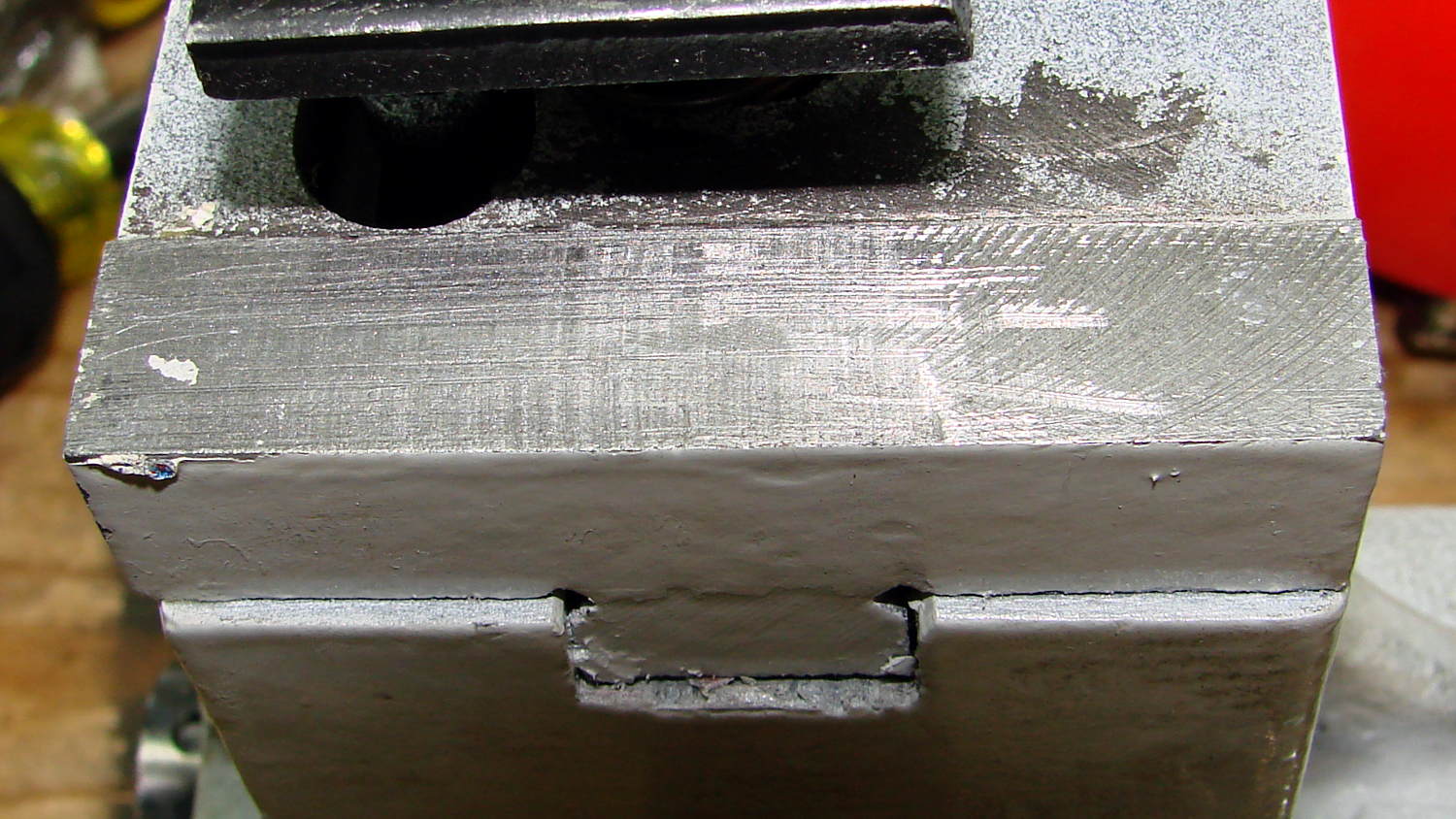
The condition of the ways was … disappointing, even though I wasn’t expecting much. As nearly as I can tell, final way alignment, done by precision grinding or hand-scraping for spendy tools, consisted of a few passes with a hand-held angle grinder.
The tailstock doesn’t really need a sliding fit, because it operates while clamped to the bed; the flat way is rugged:
LMS Mini-lathe – tailstock flat way
Its V-groove isn’t much better:
LMS Mini-lathe – tailstock V-groove
The compound ways are sliding joints, albeit with few points of contact:
The cross-slide ways seem to be slightly concave, with a single contact point on the far left end and a few more on the right:
LMS Mini-lathe – cross-slide way
The carriage flat leaves much to be desired:
LMS Mini-lathe – carriage flat way – detail
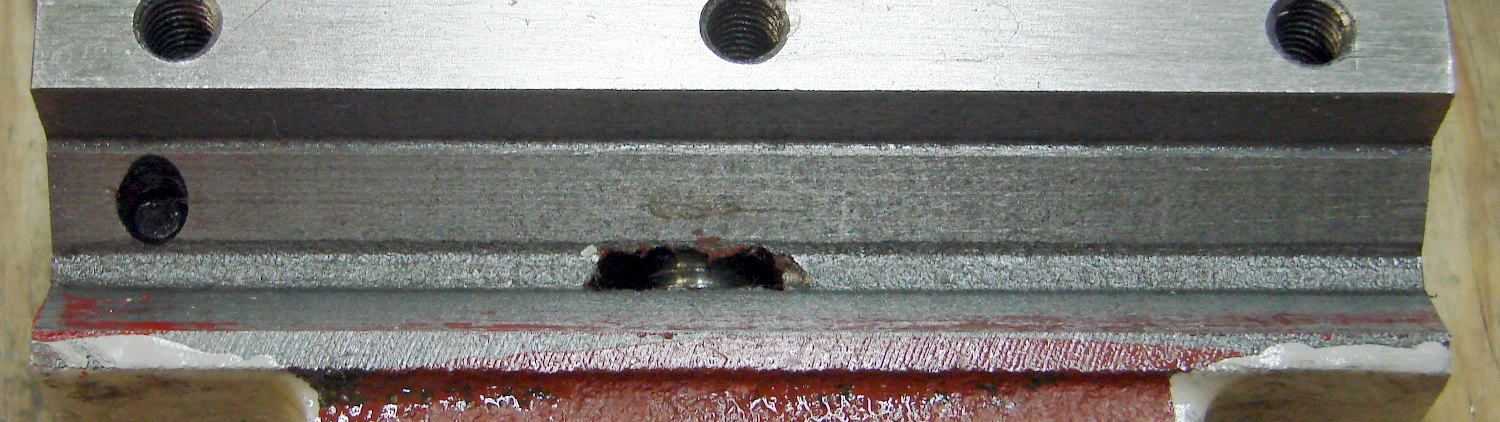
That red patch toward the left isn’t left-over scraping blue:
LMS Mini-lathe – carriage V way – detail
I have no intention of spending all the time required to hand-scrape those things, Moglice seems like overkill (and has an imposing minimum thickness), and Turcite requires reasonable surface finish (and adds considerable thickness, too).
I’m mildly temped to apply a thin layer of good ol’ JB Weld epoxy, just to fill in the valleys and improve the contact area, but not right now.
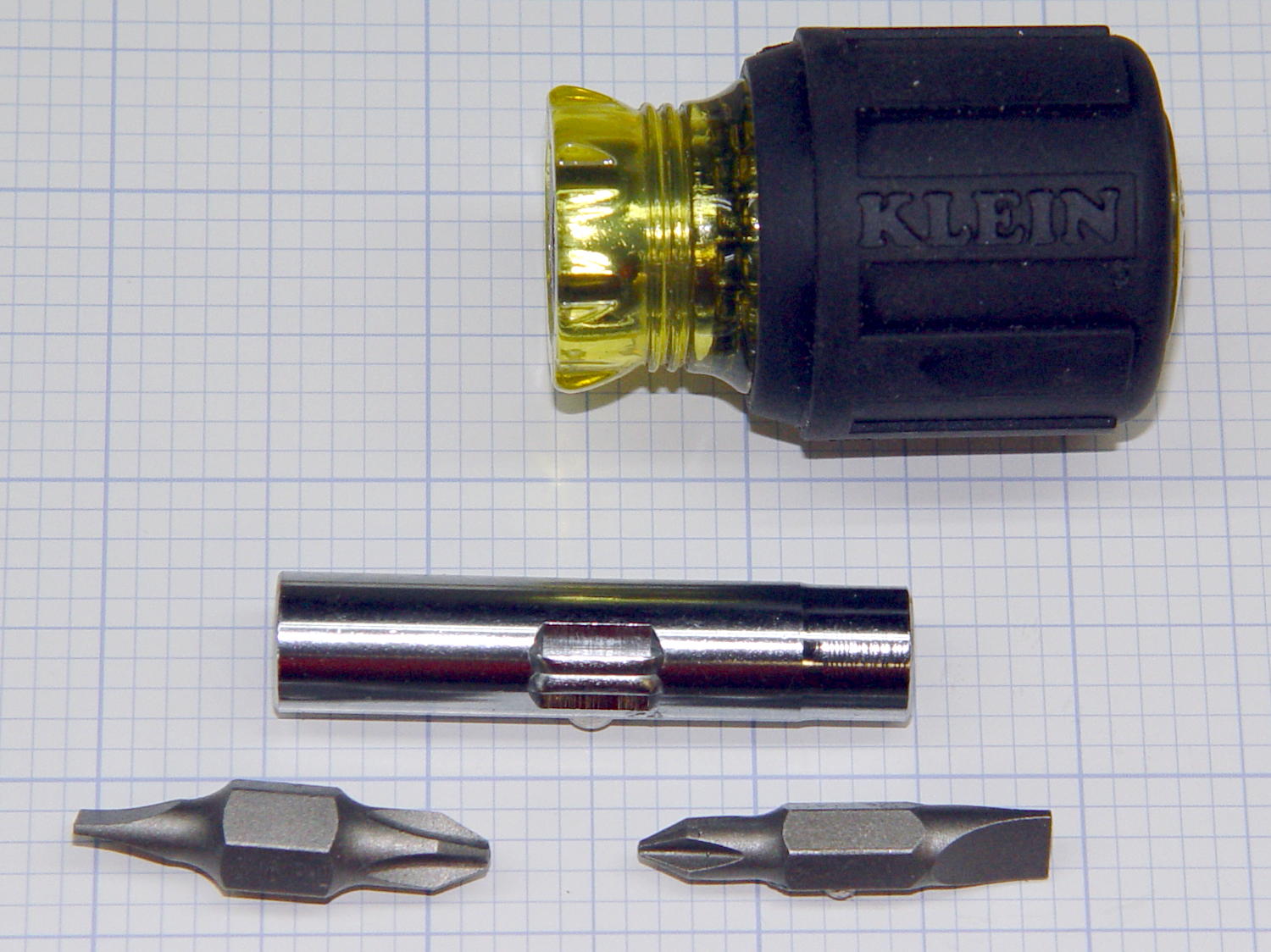
The steel shaft has a 1/4 inch hex socket on one end, a 5/16 hex socket on the other, the two hex bits handle the usual screws, and it’s smaller than it looks.
You must figure out what to do with the loose driver bit while using a socket.
No ratchet, but you won’t miss it.
Available from the usual online sources for about ten bucks; accept no substitutes…
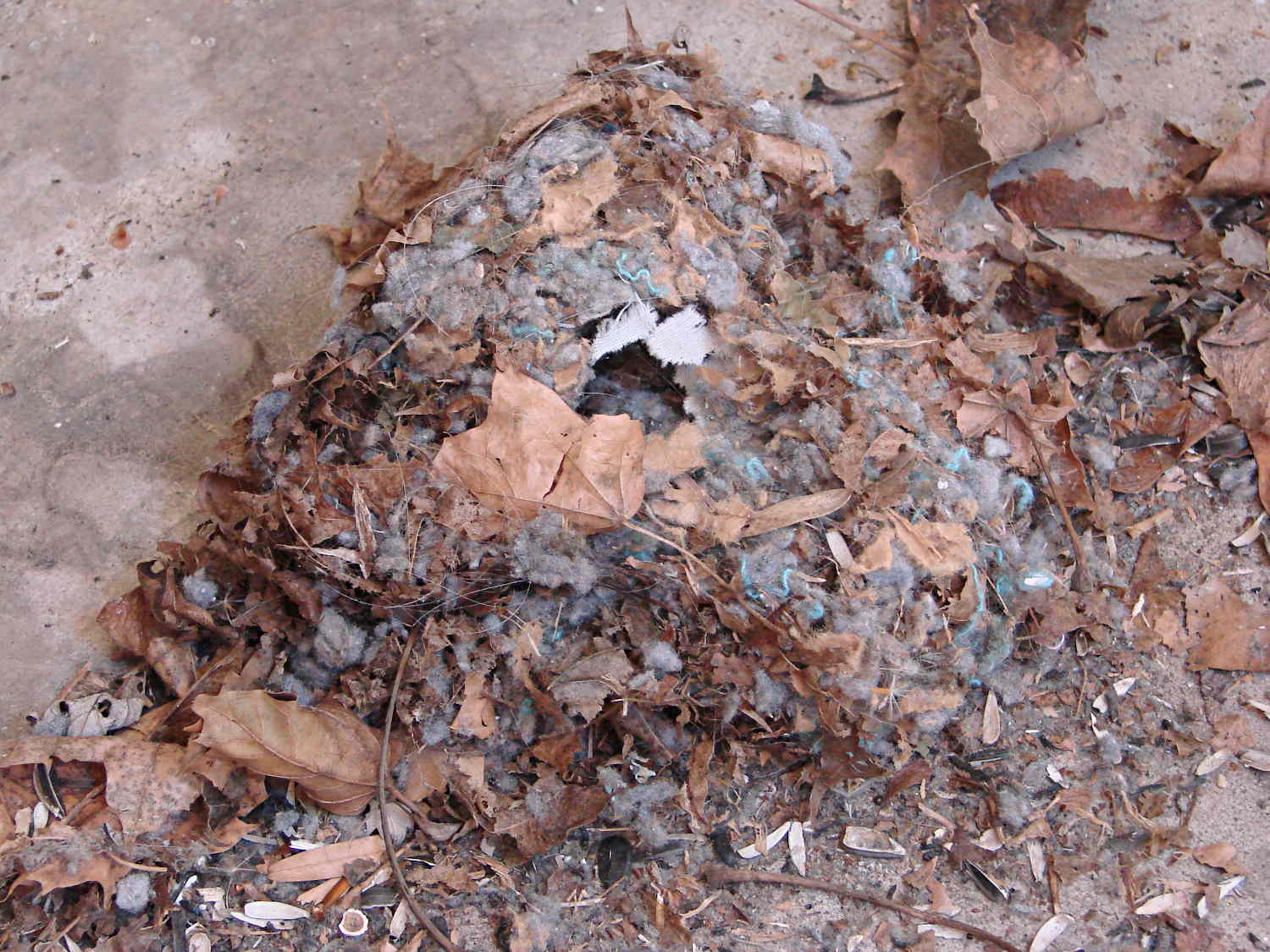
This year’s mouse survived the winter under the tool rack, perhaps due to living inside a well-insulated ball made from leaf fragments, dryer fuzz, and random stuff:
Insulated mouse nest – first look
The white fabric around the entrance is a nice touch and the blue threads certainly add a decorative flair. I eased the top surface back to show the interior, although the flash flattens the texture:
Insulated mouse nest – interior
With hawks hunting during the day and owls a-wing at night, the local rodent population has been taking a real beating; even the squirrels look worried.
Yeah, tanker boots and all; not the weirdest thing we saw during RIT’s graduation ceremonies.
This summer marks her fourth of four co-op semesters with Real Companies Doing Tech Stuff and her final classes end in December; RIT holds one ceremony in the spring and being offset by a semester apparently isn’t all that unusual. She (thinks she) has a job lined up after graduation and doesn’t need her doting father’s help.
But, hey, should you know someone with a way-cool opportunity (*) for a bright, fresh techie who’s increasingly able to build electronic & mechanical gadgets and make them work, drop me a note and I’ll put the two of you in touch. [grin]
(*) If that opportunity should involve 3D printed prosthetics with sensors and motors, she will crawl right out of your monitor…
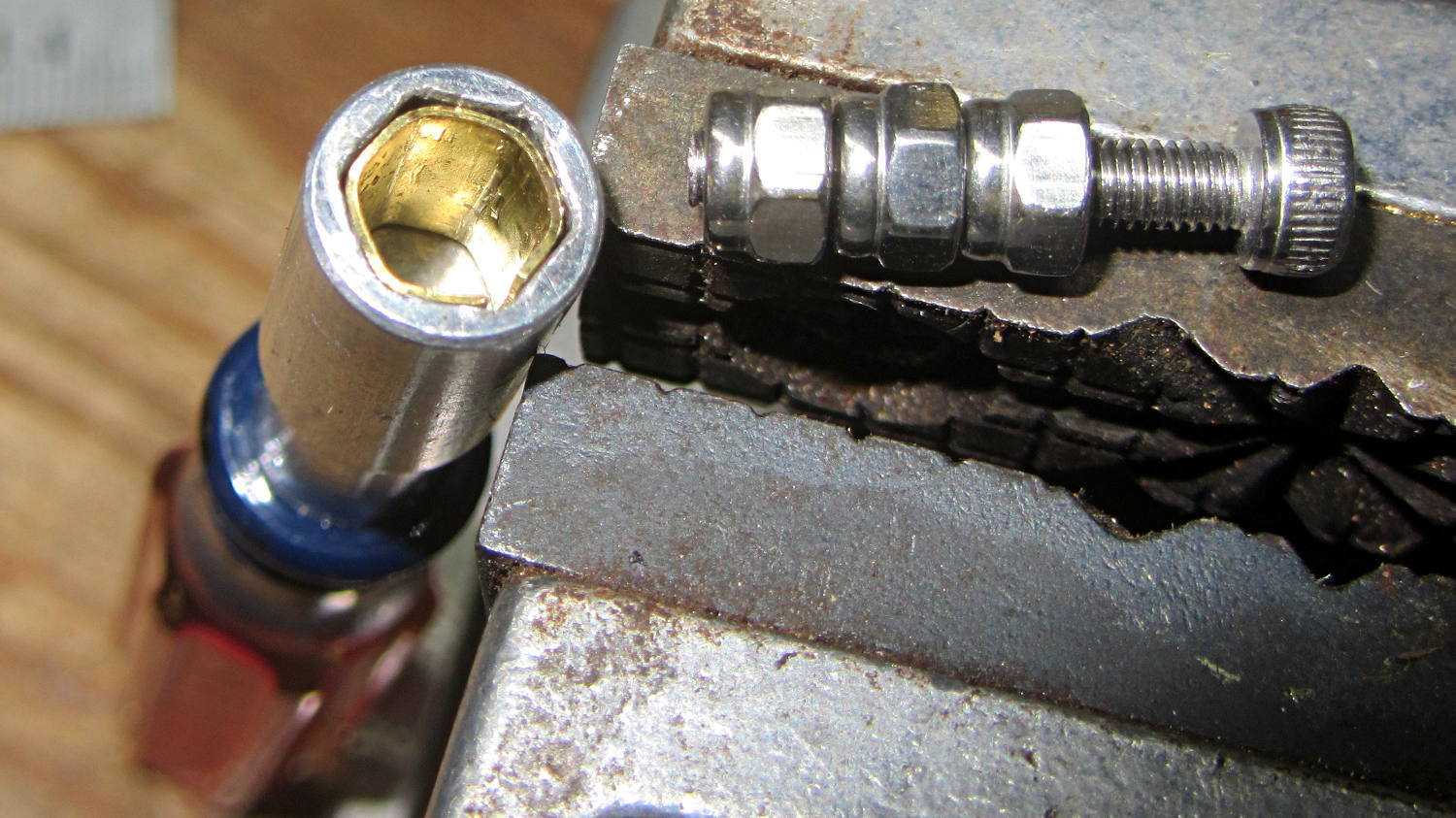
A tiny 1/4 inch hex driver handle appeared from the far reaches of a drawer, sporting a handle better suited for tweaking the 3 mm adjusting nuts on the bottom of the M2’s platform than applying actual torque to real fasteners. Rather than breaking a set of nut drivers, I made a simple brass shim to soak up the difference between the handle’s 6.5 mm ID hex and the 5.5 mm OD of the nuts:
Hex driver shim – installed
That’s 15 mil = 0.40 mm shimstock to leave enough clearance for my crude forming technique.
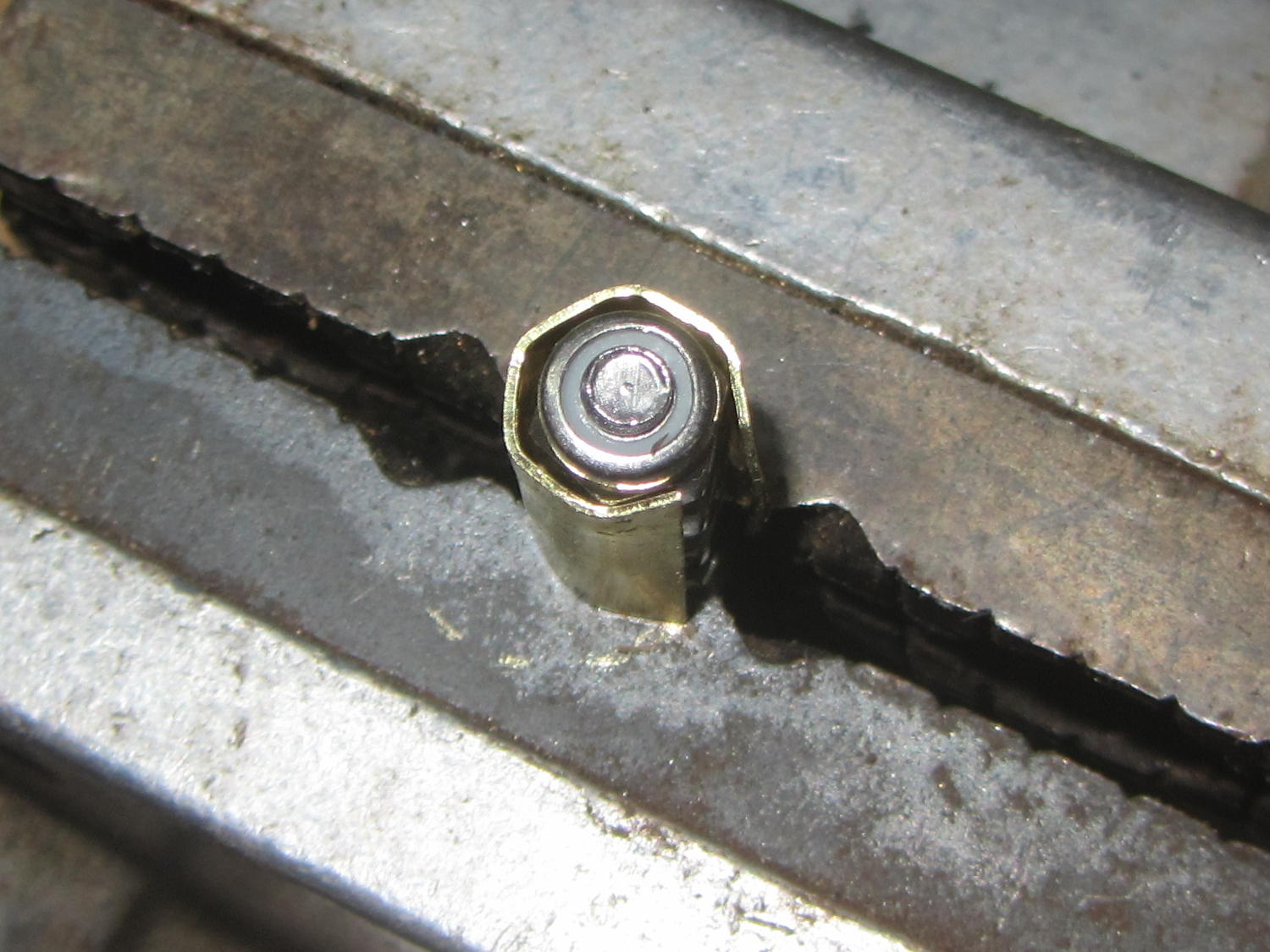
Which technique consisted of making a “mandrel” by lining up a trio of Nyloc nuts on a screw, snipping off a suitable shimstock rectangle, and squashing it into shape with parallel-jaw pliers:
Hex driver shim – forming
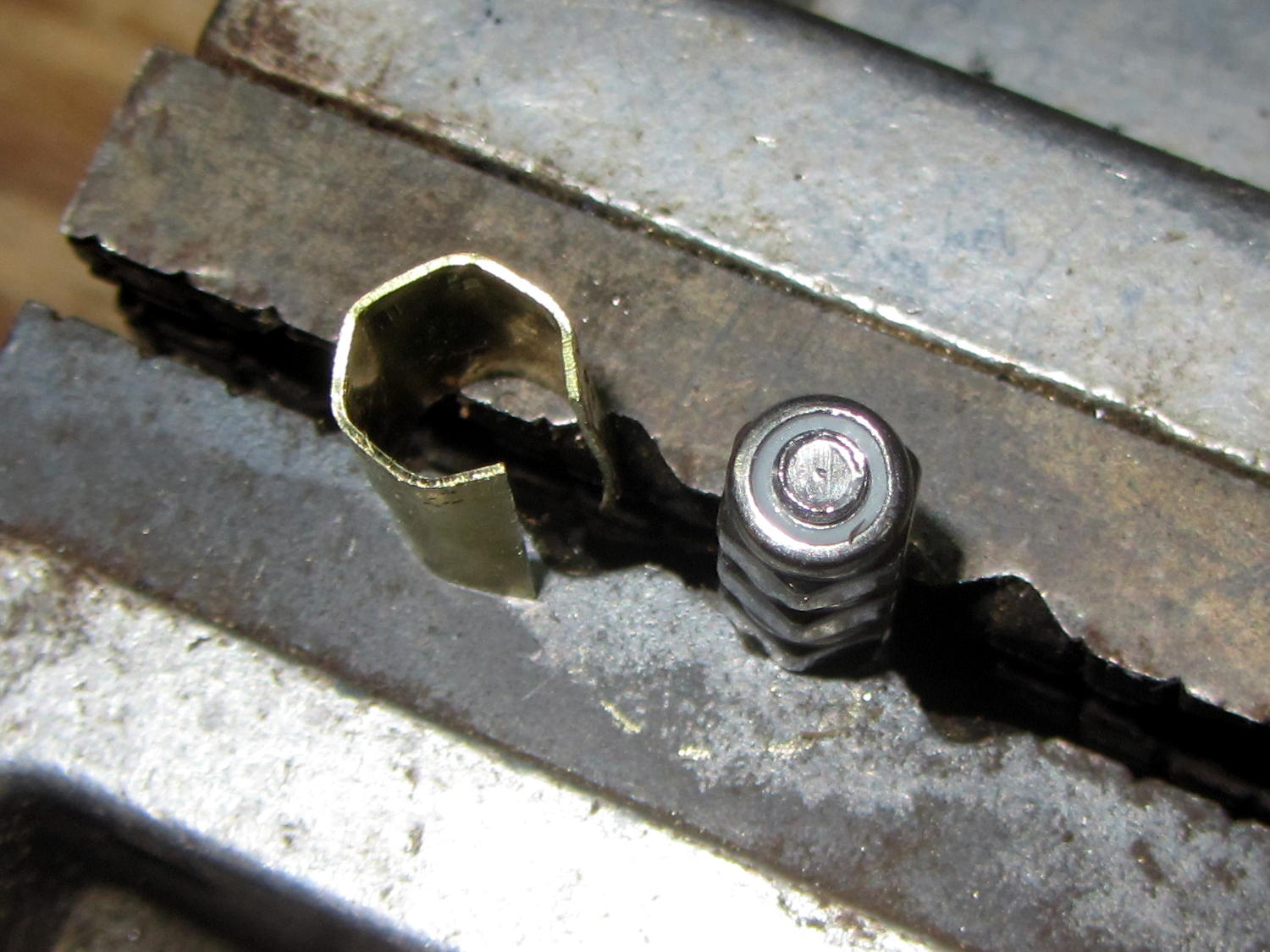
As you’d expect, the shimstock hex came out larger & uglier than the mandrel:
Hex driver shim – formed
But that doesn’t matter after it’s tucked inside the driver; it works perfectly.





 The Smell of Molten Projects in the Morning