The Smell of Molten Projects in the Morning

Ed Nisley's Blog: Shop notes, electronics, firmware, machinery, 3D printing, laser cuttery, and curiosities. Contents: 100% human thinking, 0% AI slop.

Author: Ed

  • MPCNC: Z Height Probe

    A little support pillar makes a printable holder for a small tactile pushbutton:
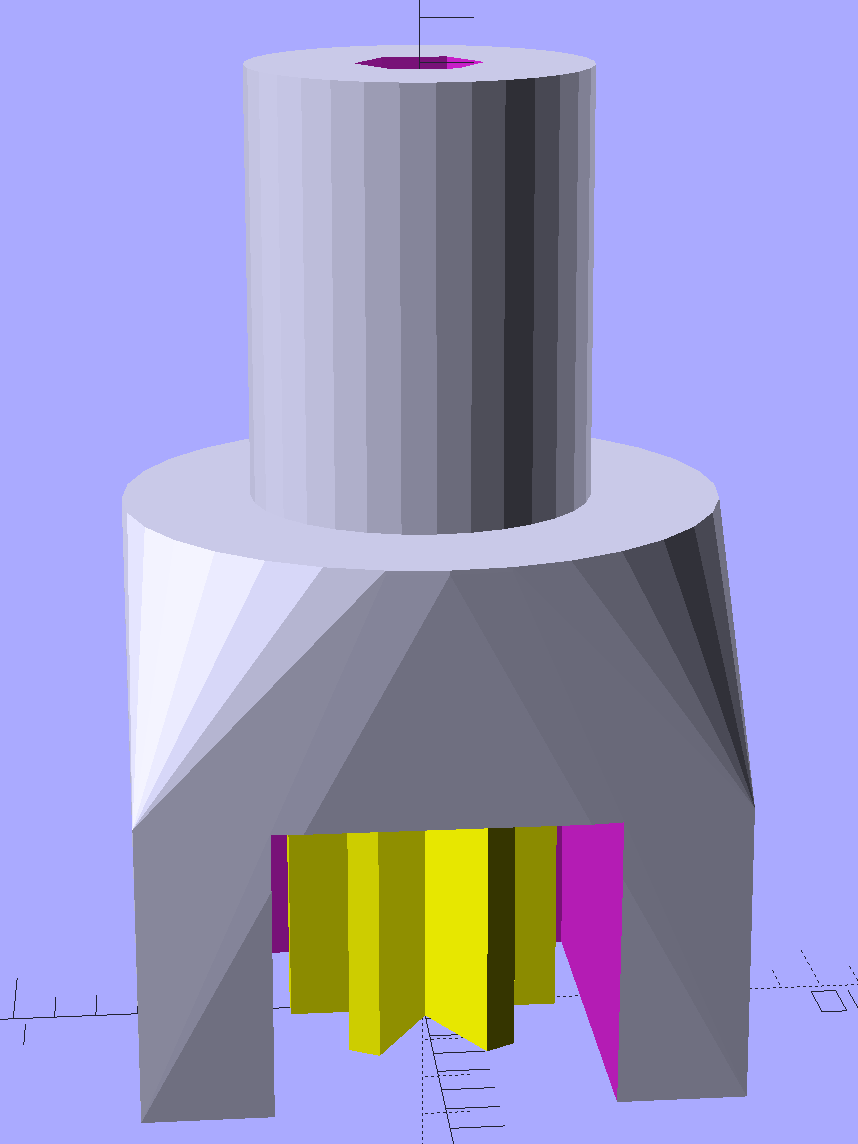
    Z Axis Height Probe - solid model
    Z Axis Height Probe – solid model

    A(n) 0-80 brass washer epoxied atop the butt end of a P100-B1 pogo pin keeps the pin from falling out and provides a flat button pusher:

    MPCNC - Simple Z probe - push plate
    MPCNC – Simple Z probe – push plate

    With the epoxy mostly cured, ease the pin off the tape, flip the whole affair over, shove the switch into position, realign vertically with point down, then let the epoxy finish curing with the washer held in place against the switch to ensure good alignment:

    MPCNC - Simple Z probe - epoxy curing
    MPCNC – Simple Z probe – epoxy curing

    The brass tube ID is a sloppy fit around the pogo pin, but it’s also many pin diameters long and the position error isn’t worth worrying about.

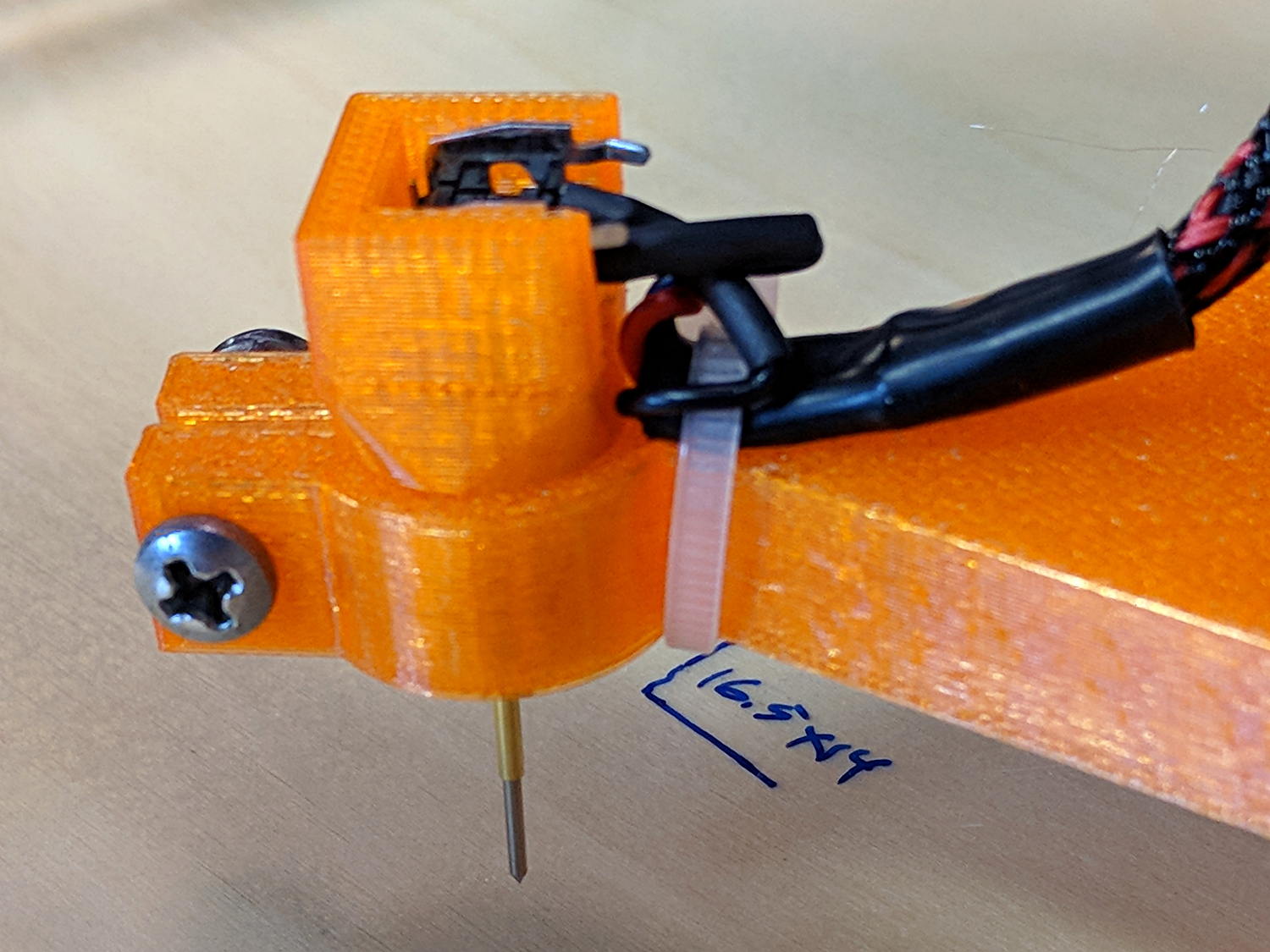
    Solder a cable, clamp it in the pen holder, attach to tool holder:
    MPCNC - Simple Z probe - installed
    MPCNC – Simple Z probe – installed

    The pogo pin provides half a dozen millimeters of compliance,  letting the initial probe speed be much higher than the tactile pushbutton’s overshoot could survive, after which a low-speed probe produces a consistent result.

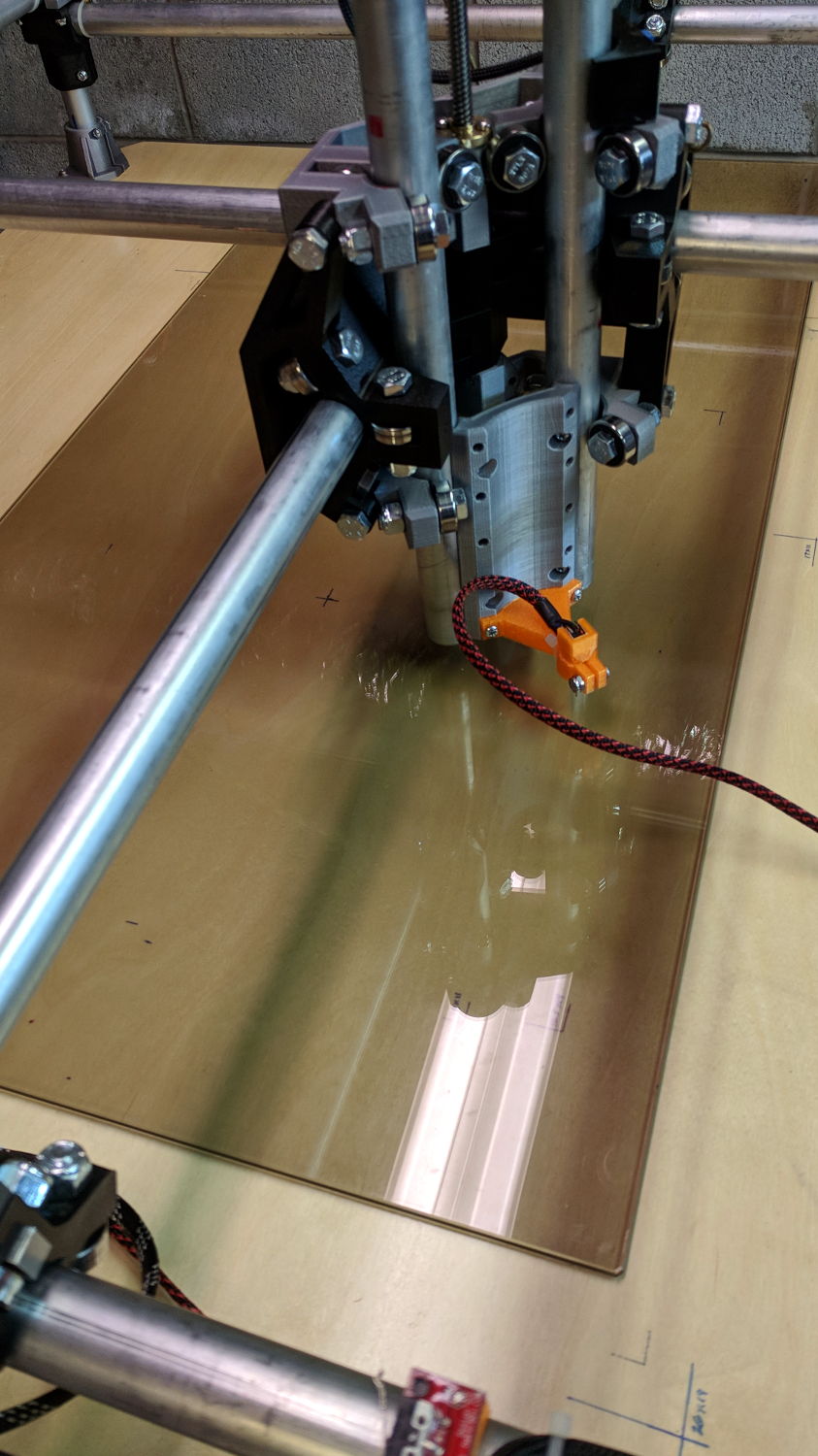
    Unleashing bCNC’s Autolevel probe cycle:
    MPCNC - Z-probing glass plate
    MPCNC – Z-probing glass plate

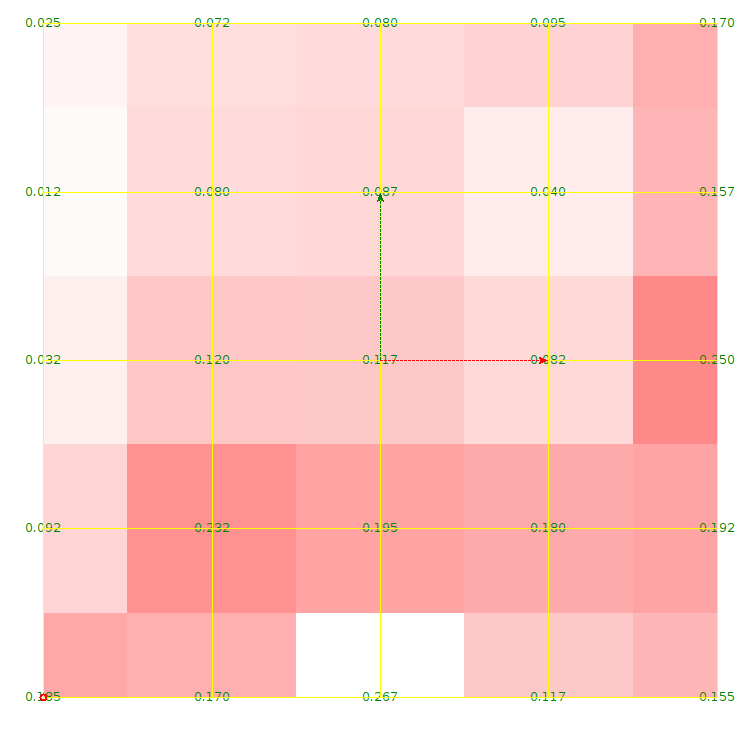
    Although the picture shows the MPCNC probing a glass plate, here’s the first height map taken from the bare workbench top with 100 mm grid spacing:
    ProbeArray-100-2018-01-04
    ProbeArray-100-2018-01-04

    The ridge along the right side comes from a visible irregularity in the wood grain, so the numbers actually represent a physical reality.

    Doing it with a 50 mm grid after re-probing the Z=0 level:

    ProbeArray-50-2018-01-04
    ProbeArray-50-2018-01-04

    Eyeballometrically, the second plot is 0.2 mm higher than the first, but this requires a bit more study.

    All in all, not bad for a first pass.


  • MPCNC: Pen Holder Crunch

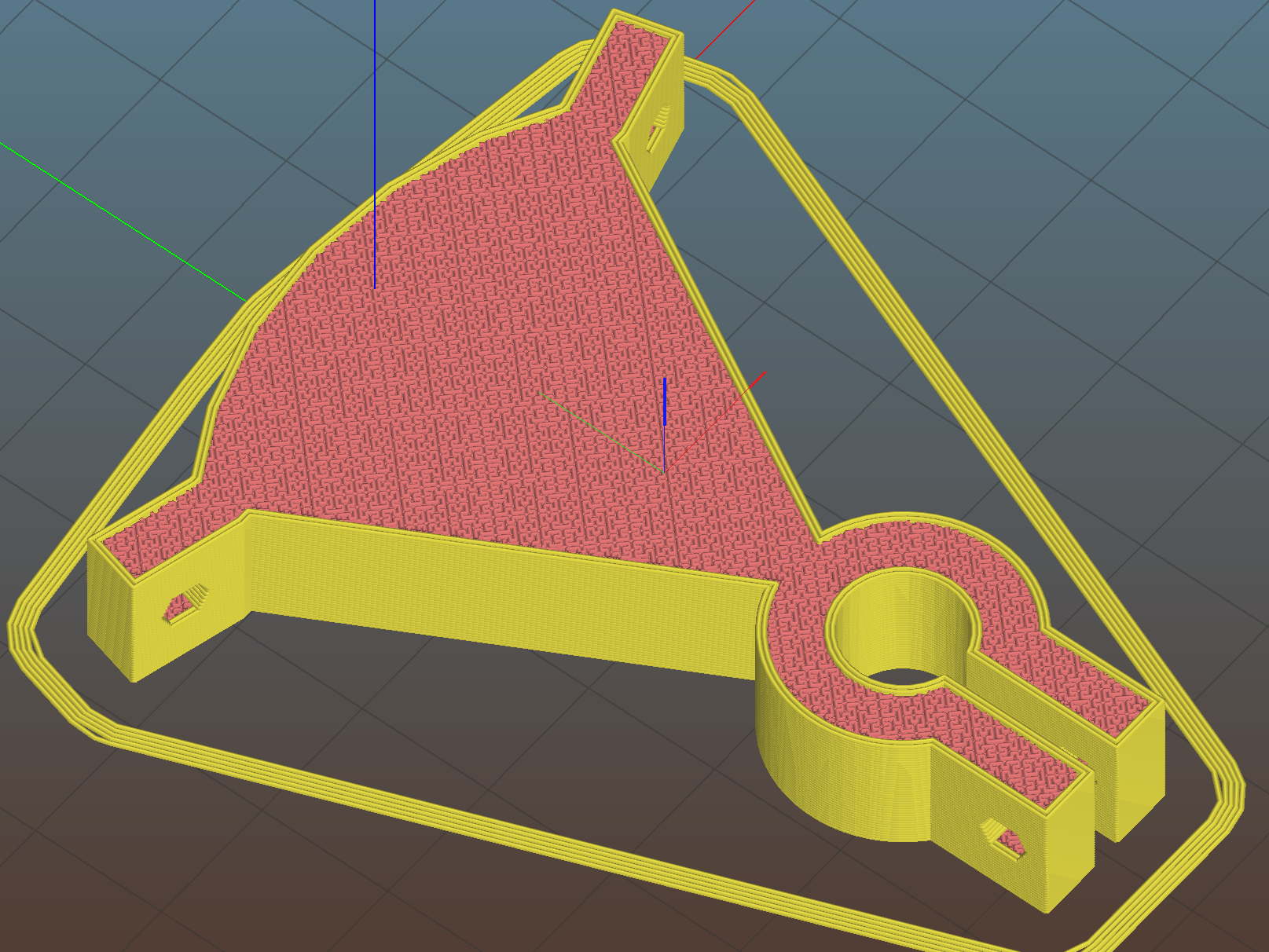
    A few tweaks to the Customizable MPCNC Mount for Round Tools produces a Sakura Micron pen holder:

    MPCNC - Sakura Pen Holder - Slic3r preview
    MPCNC – Sakura Pen Holder – Slic3r preview

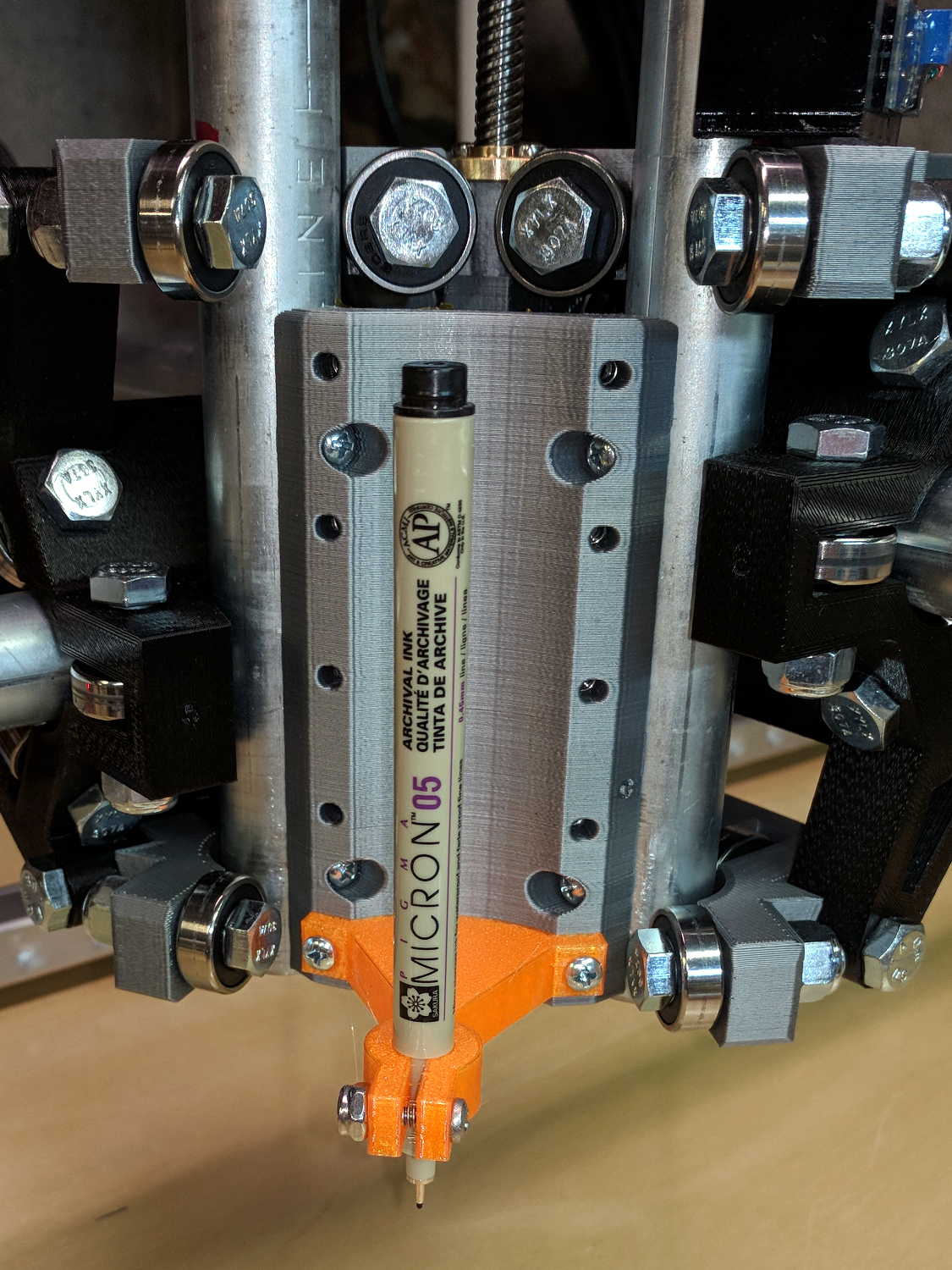
    The pen body seats atop the holder, with its narrower snout inside the clamp, giving positive control of the point position:

    MPCNC - Sakura in pen adapter
    MPCNC – Sakura in pen adapter

    Unfortunately, should one forget to zero the pen tip to the paper surface before starting a plot, Bad Things happen to good tips:

    MPCNC - Sakura pen - crushed tip
    MPCNC – Sakura pen – crushed tip

    The holder really needs at least a few millimeters of compliance, as a fiber-tip pen makes a fairly delicate tool not intended for applying much force at all to anything.

    But the holder might make a Z axis probe …

  • Eyebrow Lights

    A high energy collision / accident / mishap in front of Adams Fairacre Farms (a.k.a., the grocery store) demolished 20 feet of their dry laid stone wall along Rt 44, flattened several bushes, gouged trenches in the grass, and scattered plastic debris into the parking lot. The remains of a headlight eyebrow running light emerged from a snow pile:

    Eyebrow light - front
    Eyebrow light – front

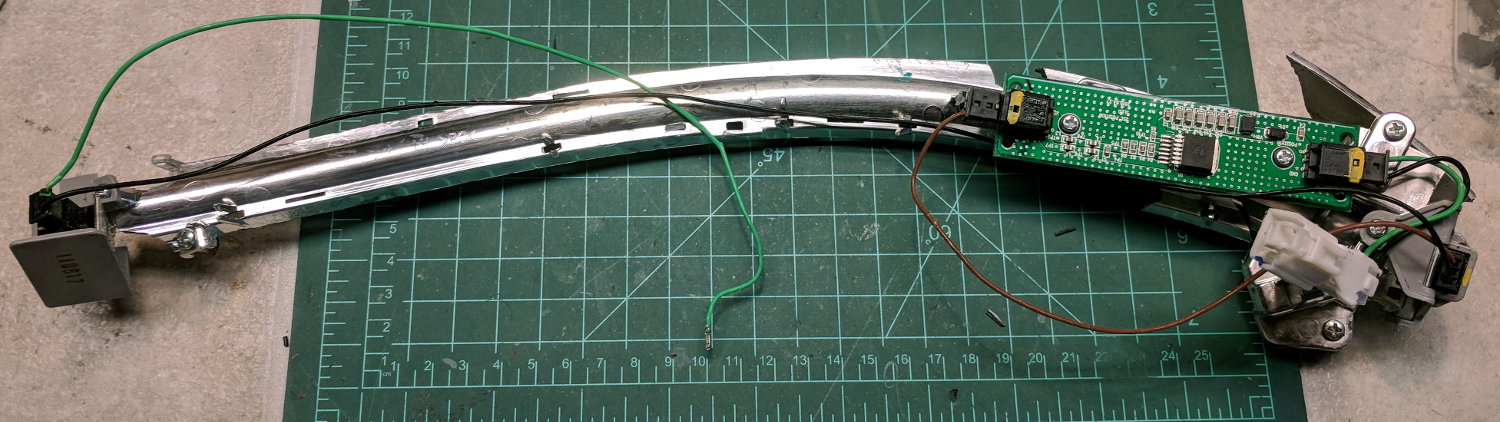
    From the back:

    Eyebrow light - back
    Eyebrow light – back

    Contrary to what I expected, it has one white LED at each end of the chromed reflecting channel, topped with a shaped plastic lens collecting the light:

    Eyebrow light - Lens mount
    Eyebrow light – Lens mount

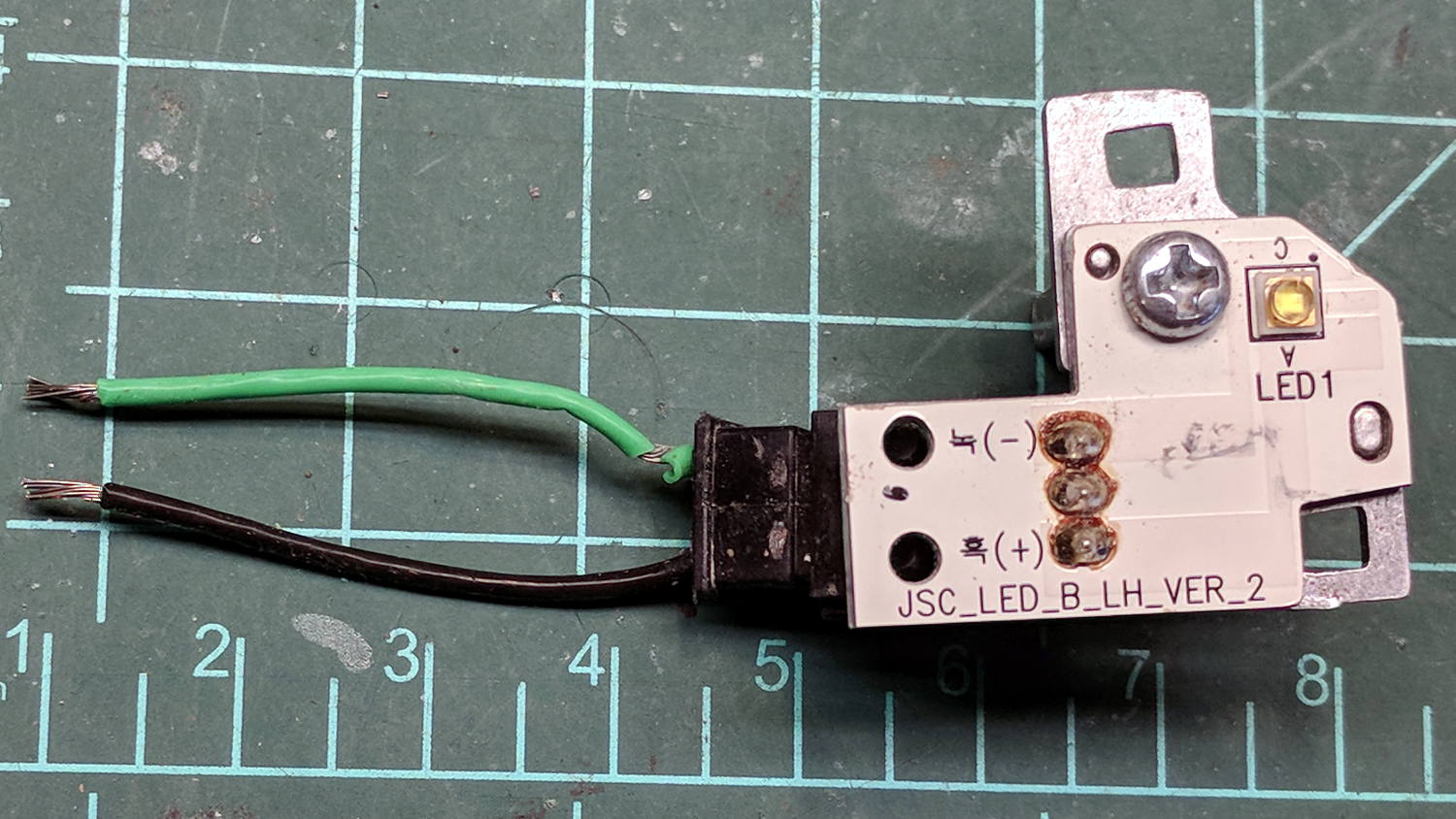
    The LED PCBs are in series, which produced a backwards wire color code on one end:

    Eyebrow light - LED PCB 1
    Eyebrow light – LED PCB 1

    The other end looked more reasonable:

    Eyebrow light - LED PCB 2
    Eyebrow light – LED PCB 2

    The white SMD LEDs draw 300+ mA at 3.6 V, so they’re obviously depending on external current limiting provided by the regulator PCB, sporting a TLE4242 linear current regulator and a handful of passives:

    Eyebrow light - Regulator PCB
    Eyebrow light – Regulator PCB

    AFAICT, they didn’t use the chip’s PWM control input or its LED failure status output.

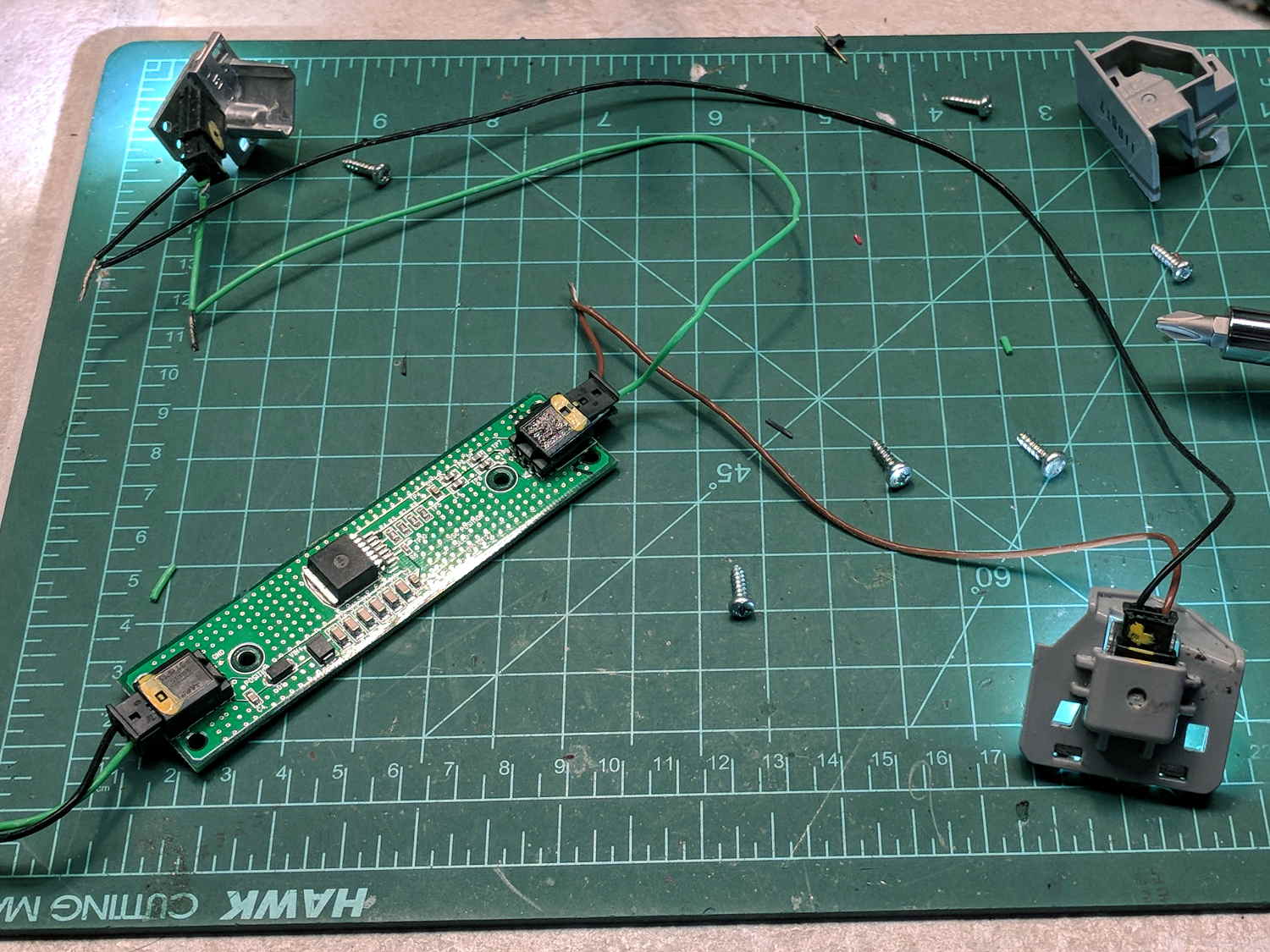
    Extracting the various PCBs from the wreckage and reconnecting the wires produced a satisfactory result:

    Eyebrow light - resurrection
    Eyebrow light – resurrection

    The regulator limits the LED current to 120 mA at any input from a bit over 7 V to well past 12 V, with each LED dropping 3.0 V.

    Dunno what I’ll use this junk for, but at least I know a bit more about eyebrow lights. The chip date codes suggest 2010 and 2012; perhaps linear regulators have become passe by now.

  • MPCNC: Sakura Micron Pens

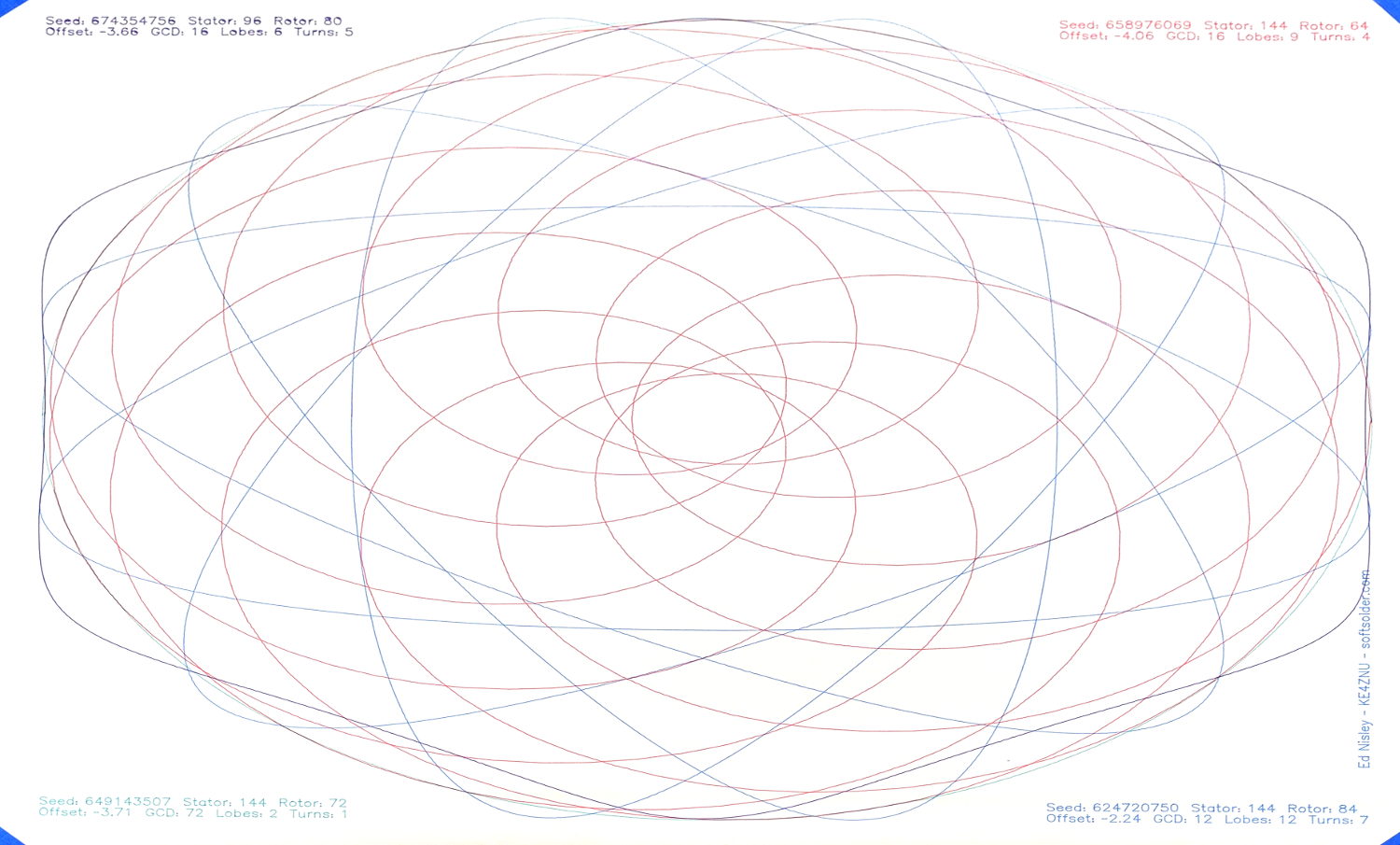
    After shimming the corner posts, a plot with Sakura Micron pens came out nicely:

    Spirograph pattern - Sakura Micron - Z-0.25
    Spirograph pattern – Sakura Micron – Z-0.25

    They’re all 01 size pens, with a nominal 0.25 mm line.

    Just for fun, a plot done with four sizes of black Sakura pens at Z=-1.0 before the Great Leveling:

    MPCNC - Sakura Micron black pen widths
    MPCNC – Sakura Micron black pen widths

    The 005 pen made a nearly rectangular single-pass tour around the perimeter of the plot, so you’ll see it passing through every legend.

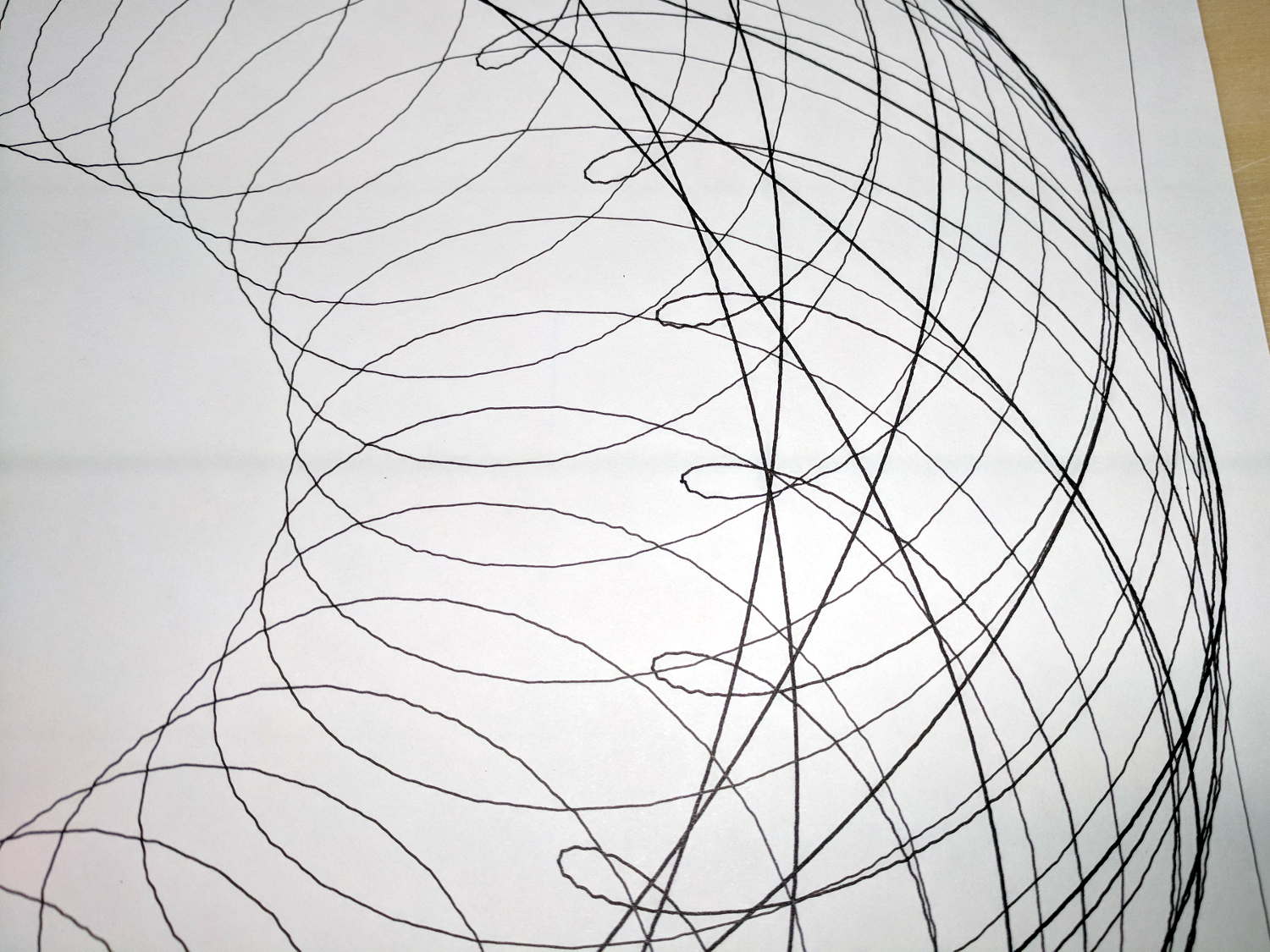
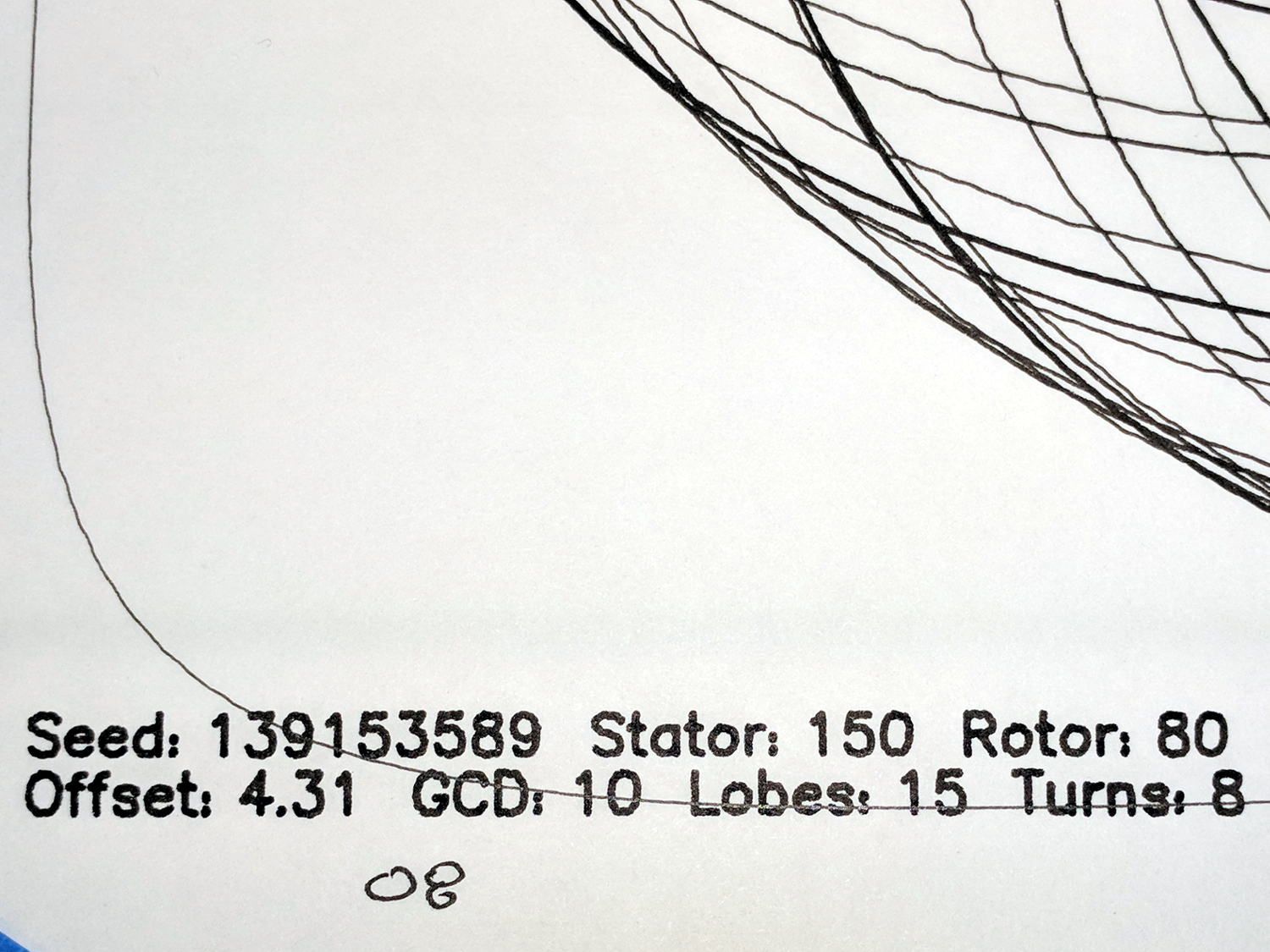
    The chunky-by-comparison 08 pen = 0.50 mm:

    MPCNC - Sakura Micron 08 Black - detail
    MPCNC – Sakura Micron 08 Black – detail

    The 05 pen = 0.45 mm looks much crisper:

    MPCNC - Sakura Micron 05 Black - detail
    MPCNC – Sakura Micron 05 Black – detail

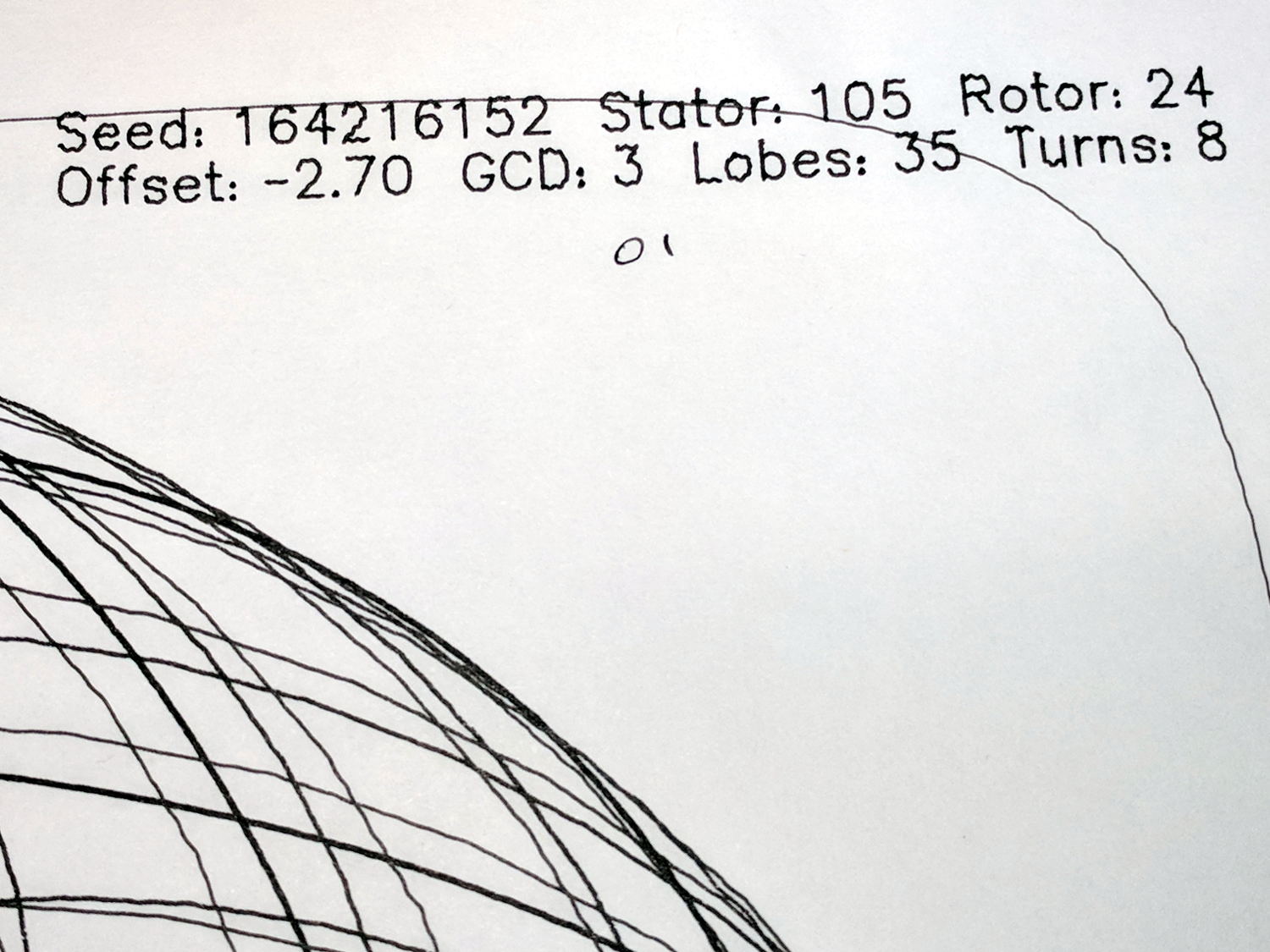
    The 01 pen = 0.25 mm:

    MPCNC - Sakura Micron 01 Black - detail
    MPCNC – Sakura Micron 01 Black – detail

    The almost-can’t-see-it 005 pen = 0.20 mm:

    MPCNC - Sakura Micron 005 Black - detail
    MPCNC – Sakura Micron 005 Black – detail

    If you were doing this for a living, you’d probably use 05 pens, because plotter pens are hard to find.

    Original HP plotter pens produced a 0.3 mm trace (with a hard to find un-worn tip) roughly equal to Sakura 03 pens, but I haven’t seen anything other than black at Amazon. There’s apparently a 003 pen with a 0.15 mm line; that’s just crazy talk.

    Jamming Sakura pens into a plotter pen adapter for the MPCNC makes little sense, so I should gimmick up a specialized holder with some thumbscrew action to keep them from crawling upward out of the holder.

  • Lathe-Turned Almond Butter

    Pure almond butter comes with the somewhat stilted admonition “Must stir product. Oil separation occurs naturally.” I’d just opened a new jar and was busily (and laboriously) stirring when I realized we have the technology:

    Lathe-turned Almond Butter
    Lathe-turned Almond Butter

    I installed the chuck’s outside jaws to grab the jar lid.

    About three hours at 50 rpm, the lathe’s slowest speed, did the trick. We now have the smoothest, creamiest, best-mixed almond butter ever.

    In a month or so, I’ll chuck up an unopened jar to see how well it works without any manual intervention.


  • Doing Biz On eBay

    I’ve always wondered what the Chinese-script company names on eBay meant, so I fed some into Google Translate (clicky for more dots):

    Chinese eBay Company Names
    Chinese eBay Company Names

    Huh.

    As the saying goes, ol’ Deng must be living “… modestly, if the kind of money he was getting out of me meant anything to him.”

  • MPCNC: Corner Post Shims

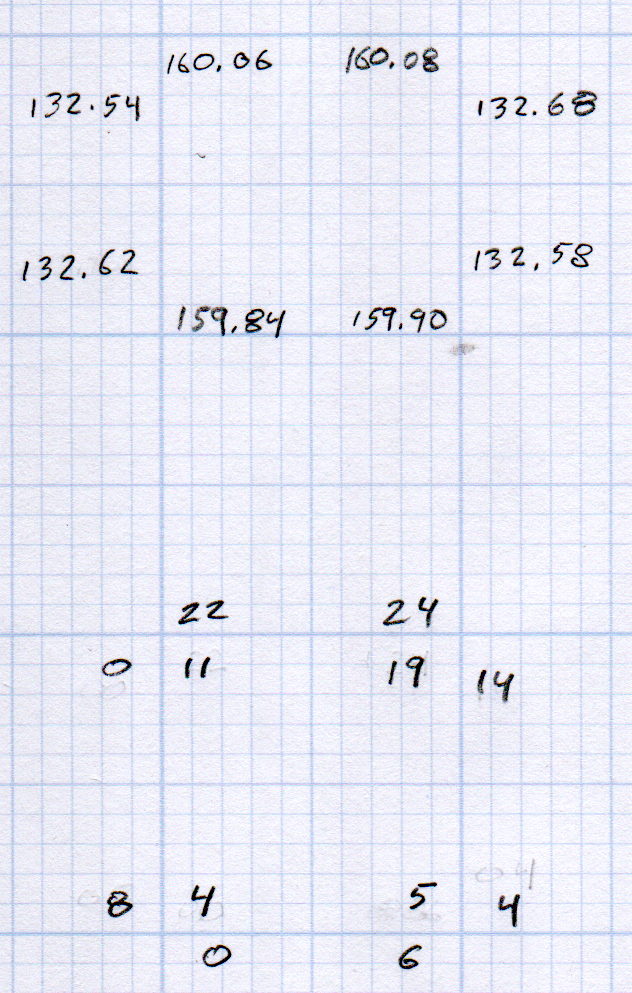
    The rail height measurements suggested three shims could level the MPCNC rails:

    MPCNC Rail Height - 2017-12-23
    MPCNC Rail Height – 2017-12-23

    The numbers inside the lower square give the additional height required to sorta-kinda level the result, keeping in mind we’re not dealing with a particularly stable mechanical setup.

    The figures in the lower right translate sensible metric values into mils. I plucked those sheets from my brass shimstock selection, taped them together into a 42 mil stack, and introduced them to Mr Bandsaw:

    Sawing MPCNC Corner Post Shims
    Sawing MPCNC Corner Post Shims

    The sacrificial sheet underneath the stack prevents bending. Using the saw (with a 24 tpi blade), rather than tin snips or scissors, produces a nice clean flat cut without any curling or bending.

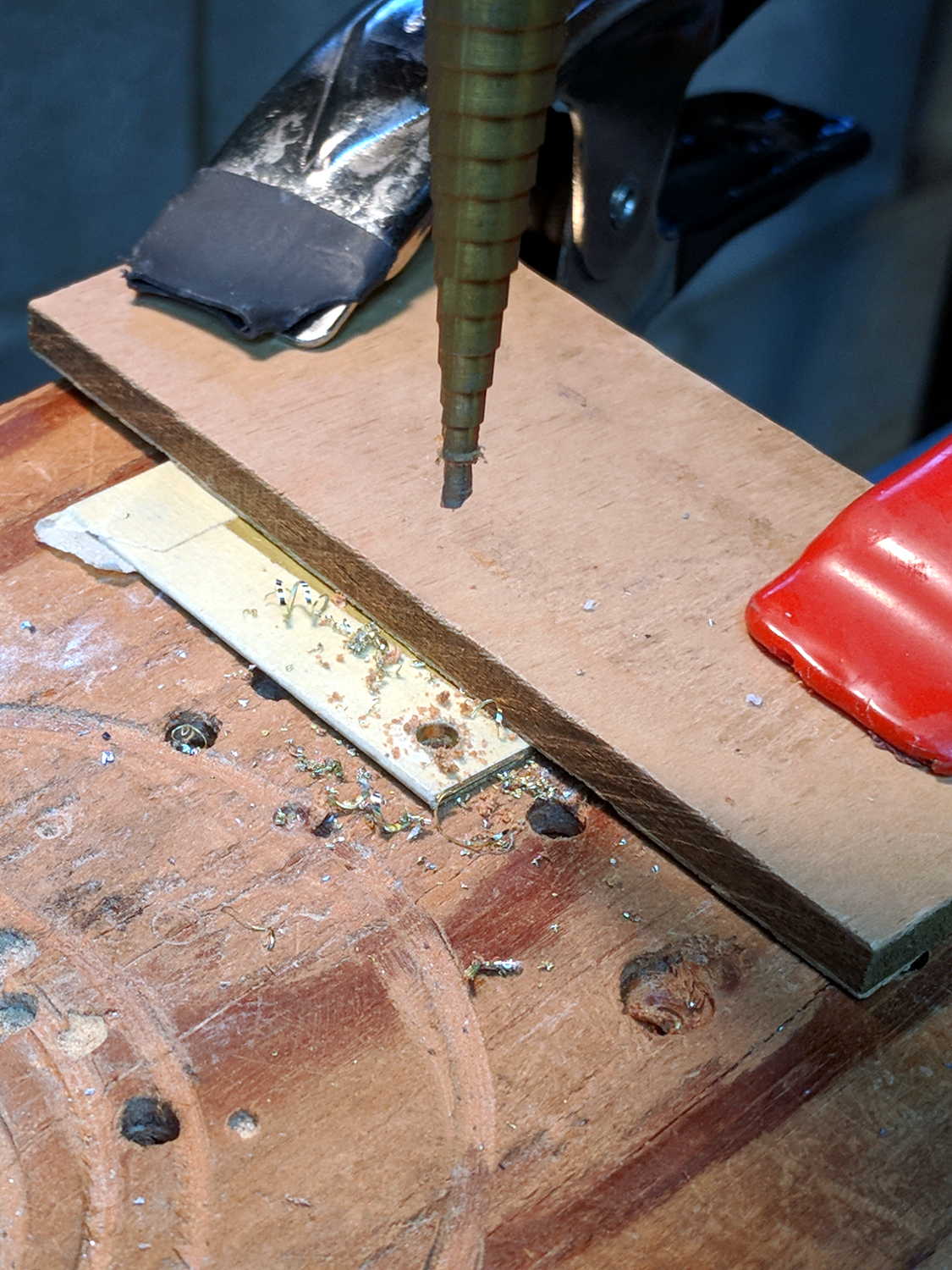
    A brief conversation with Mr Drill Press created screw clearance holes:

    Drilling MPCNC Corner Post Shims
    Drilling MPCNC Corner Post Shims

    N.B.: Brass is fiercely grabby, so don’t use an ordinary twist drill. Blunt ’em if you have a spare set of drills, but a step drill works for my simple needs, shallow holes, and infrequent drilling. In any event, don’t hand-hold the sheets, because they can turn into whirling knives without the formality of warning you first.

    I bandsawed the holes into slots, so I could slide the shims under the corner posts without completely removing the screws, in the hope the posts would stay more-or-less in the same place. Probably doesn’t make any difference:

    MPCNC Corner Post Shim
    MPCNC Corner Post Shim

    Looks like I overtightened the post clamp screw a bit, doesn’t it? So it goes with 3D printed parts.

    Another round of measurements with the shims in place:

    MPCNC Rail Height - 2017-12-25
    MPCNC Rail Height – 2017-12-25

    The numbers on the outside of the bottom set give the difference from the lowest rail in each direction, the inner numbers are the average of the two differences in each corner.

    All of which seems to indicate the pen height now varies by a smidge over 0.1 mm across the span of those 16.5×14 inch plots.

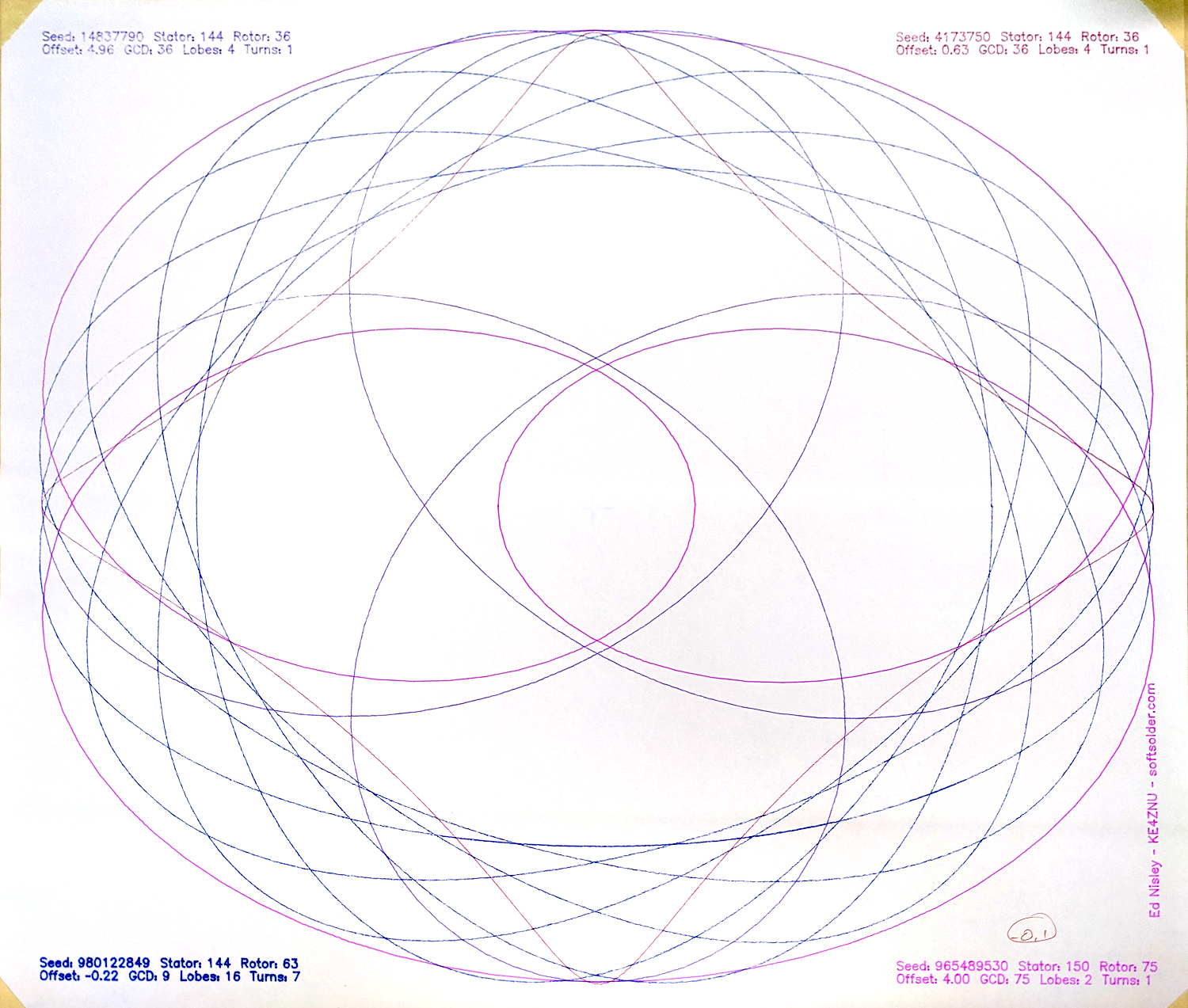
    A plot with all the legends and traces at Z=-0.25 came out OK:

    MPCNC - Leveled plot at Z -0.1
    MPCNC – Leveled plot at Z -0.1

    The legend in the upper left looked slightly faint:

    MPCNC - Leveled plot at Z -0.1 - legend detail
    MPCNC – Leveled plot at Z -0.1 – legend detail

    The upper right legend looks about the same, suggesting my average of differences probably isn’t meaningful.

    Lowering the pen to Z=-0.25 should darken the traces a bit and reduce the effect of any inconsistencies in the tool length probe switch.

    Not, of course, that this will make much difference in actual use; a router will probably shake the whole thing out of alignment in a matter of seconds.