Ed Nisley's Blog: Shop notes, electronics, firmware, machinery, 3D printing, laser cuttery, and curiosities. Contents: 100% human thinking, 0% AI slop.
Before measuring a wire resistance in the laser cutter, I checked the resistance of the two test leads on the Aneng AN8009 meter (“Check your zero!”) to show an unsteady reading around dozen ohms.
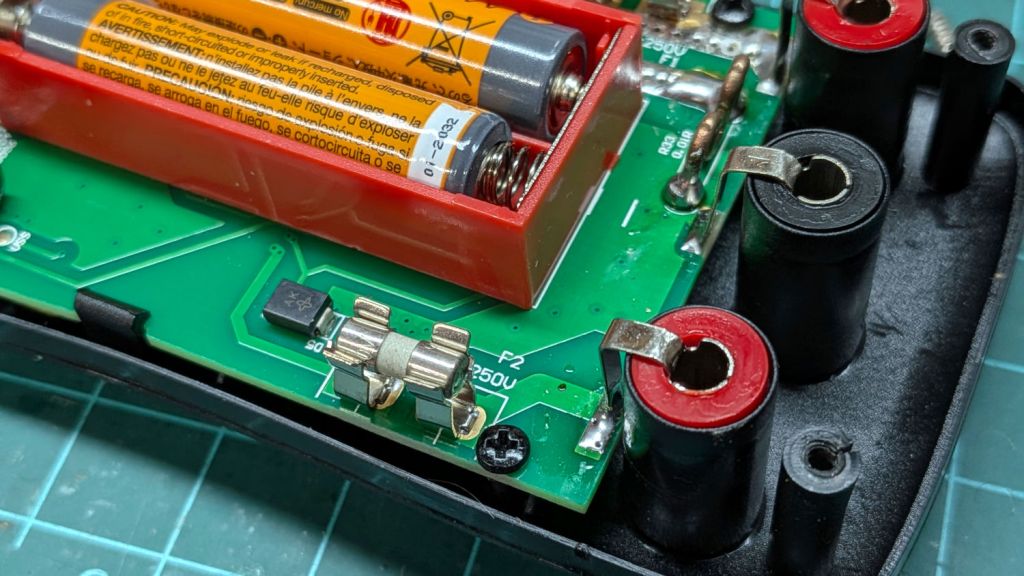
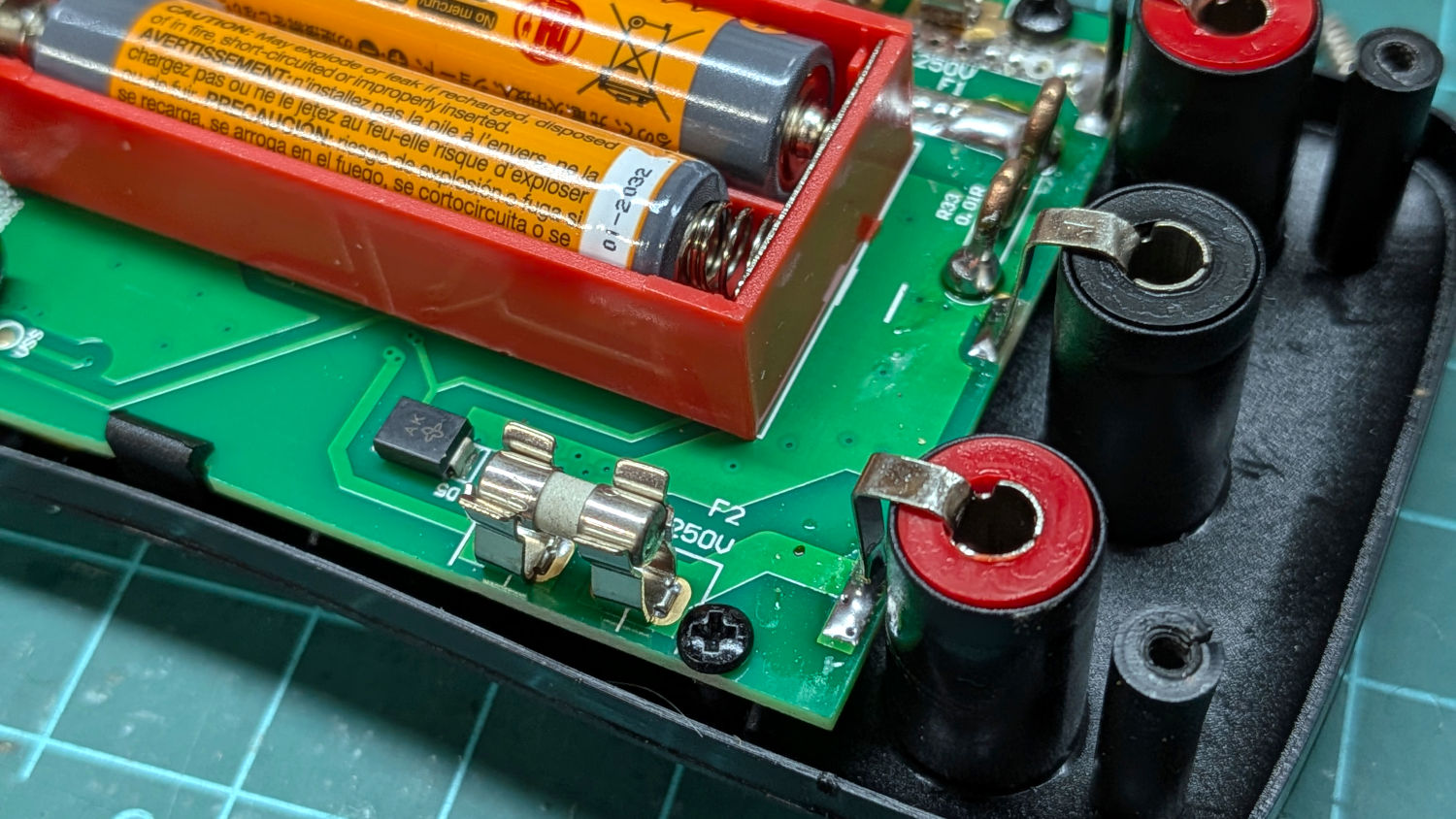
Poking around inside showed the internal fuse apparently making poor contact with its holder, as poking it changed the random values:
Aneng 8009 low-current fuse
Two tiny drops of Caig DeoxIT stabilized the reading around 1 Ω across several different combinations of test probes, so I declared victory. There is surely an offset calibration buried in the firmware, but it’s no longer a trimpot available to service technicians.
The ceramic fuse has an internal resistance of about an ohm, but swapping it for a replacement fuse with 0.2 Ω resistance didn’t materially change the results. It’s worth noting those glass fuses are slightly longer than they should be, surely due to their leads, and required slightly bending the fuseholder clips.
The original needle bar orientation for Mary’s Handiquilter HQ Sixteen put the needle clamp screw (a black-oxide socket head cap screw with the end flattened) about 45° from the rear of the needle bar:
HQ Sixteen – original needle foot orientation
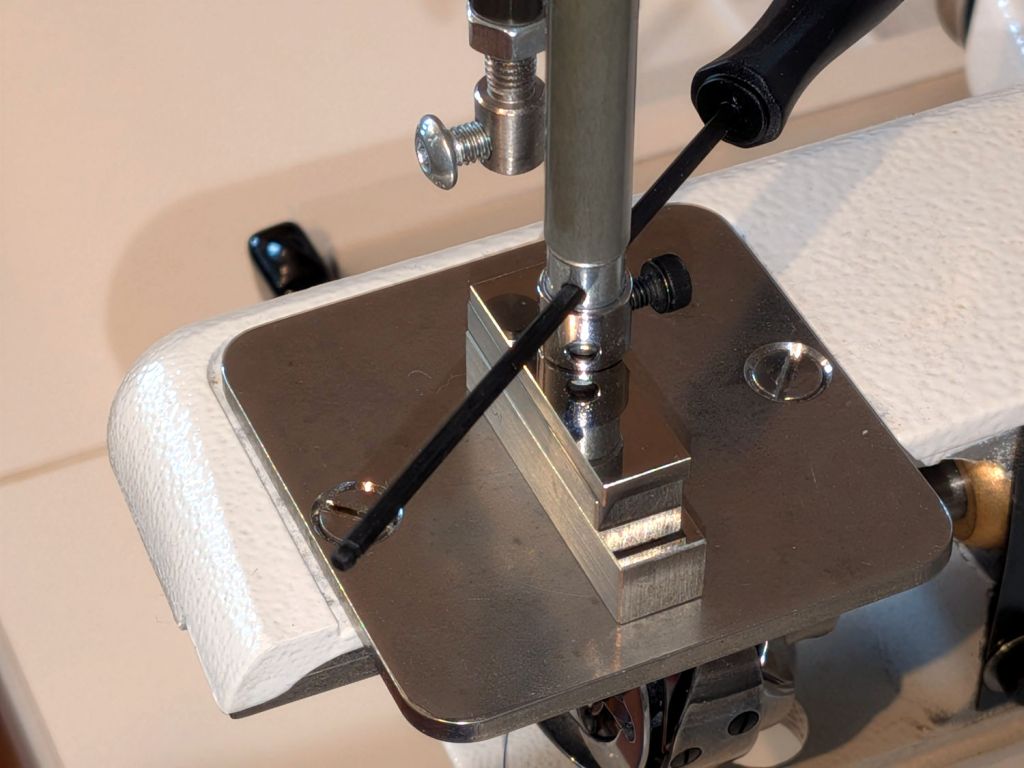
The hex driver passes through the sight hole letting you verify the needle is inserted all the way into the holder before tightening the screw.
It turns out needles fitting the HQ Sixteen come in two varieties, both with nominal 2.0 mm shanks. Mary’s stock has slightly different and entirely consistent diameters around their eyeballometric typical value:
Round shank = 1.94 mm (-0.00 / +0.02 mm)
Flatted shank = 2.04 mm (-0.02 / +0.04 mm)
The round shank needles fit easily into the needle holder, but most of the flatted needles simply would not go in. The difference felt like a burr somewhere inside the bore, rather than a uniformly too-small bore: a burr is easy to imagine around the threaded hole for the lock screw.
Orienting a round-shank needle is exceedingly fiddly, because the groove above the thread hole must be aligned exactly to the front of the needle bar to mesh properly with the bobbin mechanism, but snugging the screw invariably rotates the shank.
While you might think the locking screw would properly orient flatted-shank needles by tightening on the flat, you would be wrong. The flat is at the back of the machine when the groove and hole are properly oriented, which means the locking screw bears on the rounded part of the needle, right at the edge of the flat. Mary was generally unable to use even the few flatted needles that fit into the needle bar, because tightening the screw tended to grab the flat, rotate the needle, and lock it firmly in the wrong orientation.
It is worth nothing that all of the other machines around here have locking screws arranged exactly as you’d expect: tightening the screw onto the shaft flat correctly aligns the needle with zero fiddling.
Pictures of various HQ Sixteen machines found on the InterWebs show their needle bar and locking screw can be oriented anywhere from nearly in front to entirely in the back, suggesting:
Whoever aligns those machines doesn’t care about needle orientation
Everybody uses round-shank needles
Anybody using flatted-shank needles is an outlier
I suggested rotating the needle bar to put the screw in back and, if possible, remove the burr inside the bore. After considerable discussion, my plan was approved.
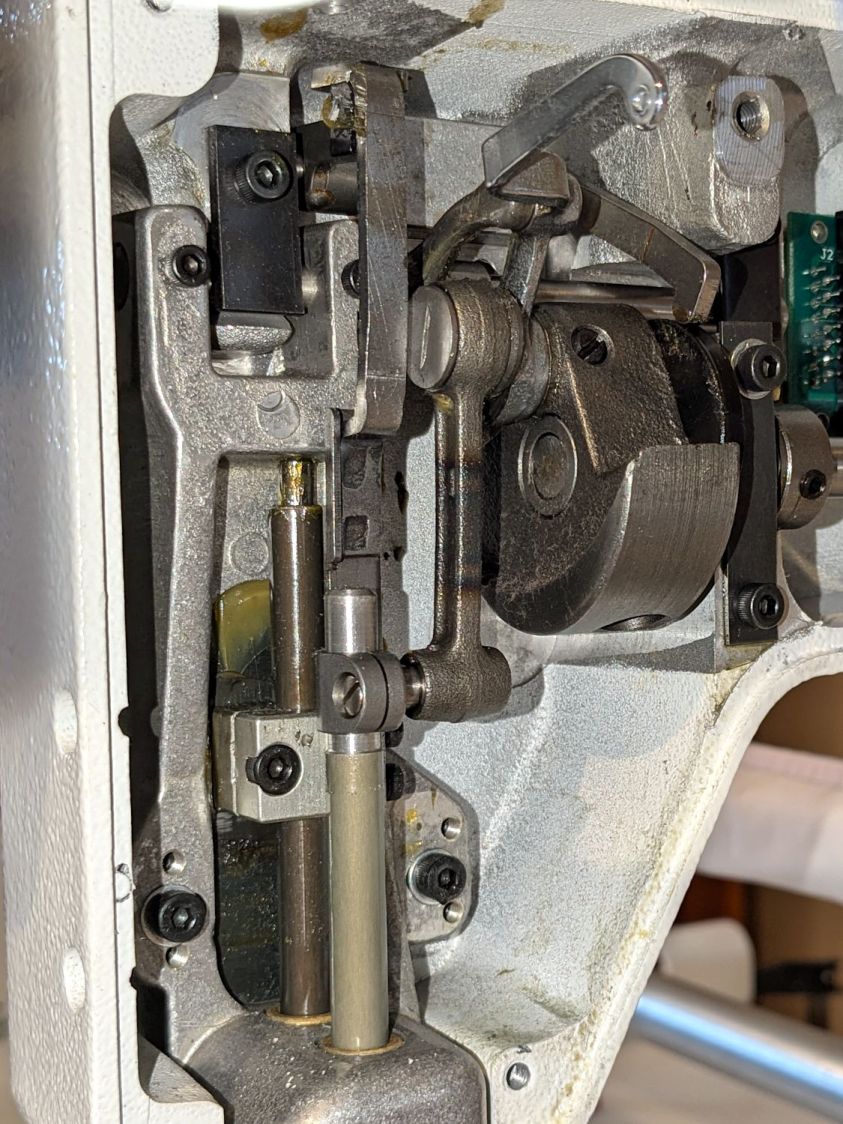
The needle bar slides vertically in a machined block, driven by a link attached to the machine’s main shaft:
HQ Sixteen Handi-feet conversion – foot rod clamp
The surface of the needle rod has a yellow / amber color from the slick coating that must not be disturbed, to the extent the maintenance instructions require a plastic-lined clamp for adjustments.
The vertical position of the needle rod in the clamp determines the “timing” of the needle with respect to the hook on the whirling bobbin case where the magic happens. Setting the timing requires a Special Service Tool that I do not have and likely never will, so the vertical position must not change while rotating the rod in the clamp.
So, we begin.
Removing the machine cover requires removing the Control Pod electronics box with all its cables to get access to the last screw, so this is a nontrivial operation.
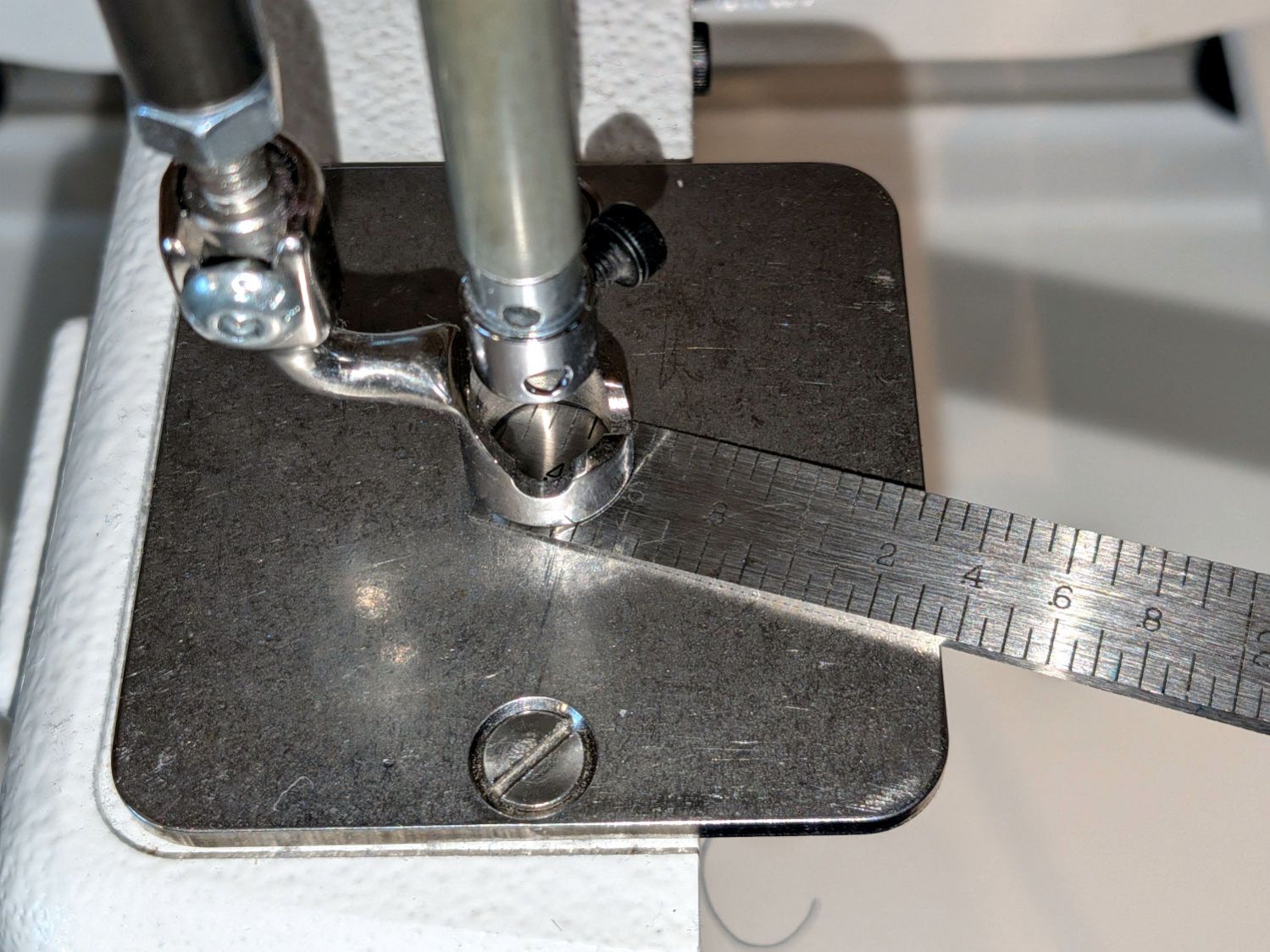
Position the shaft at Bottom Dead Center, then measure the distance from the ruler foot to the needle plate:
HQ Sixteen – Ruler foot clearance
The correct distance is 0.5 mm and the taper gauge shows it at 0.6 mm, but all I need here is putting it back at the same height after I remove the foot.
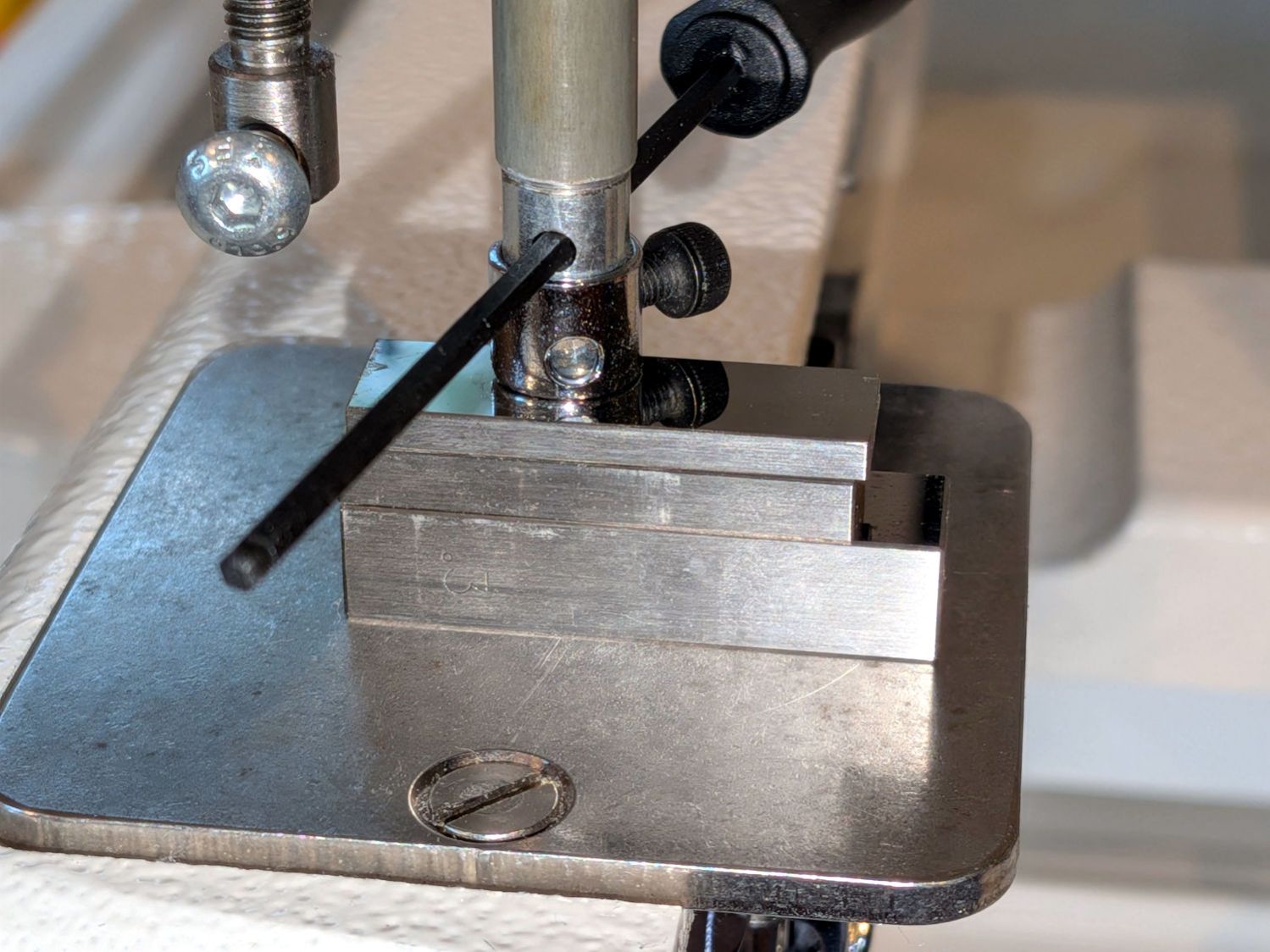
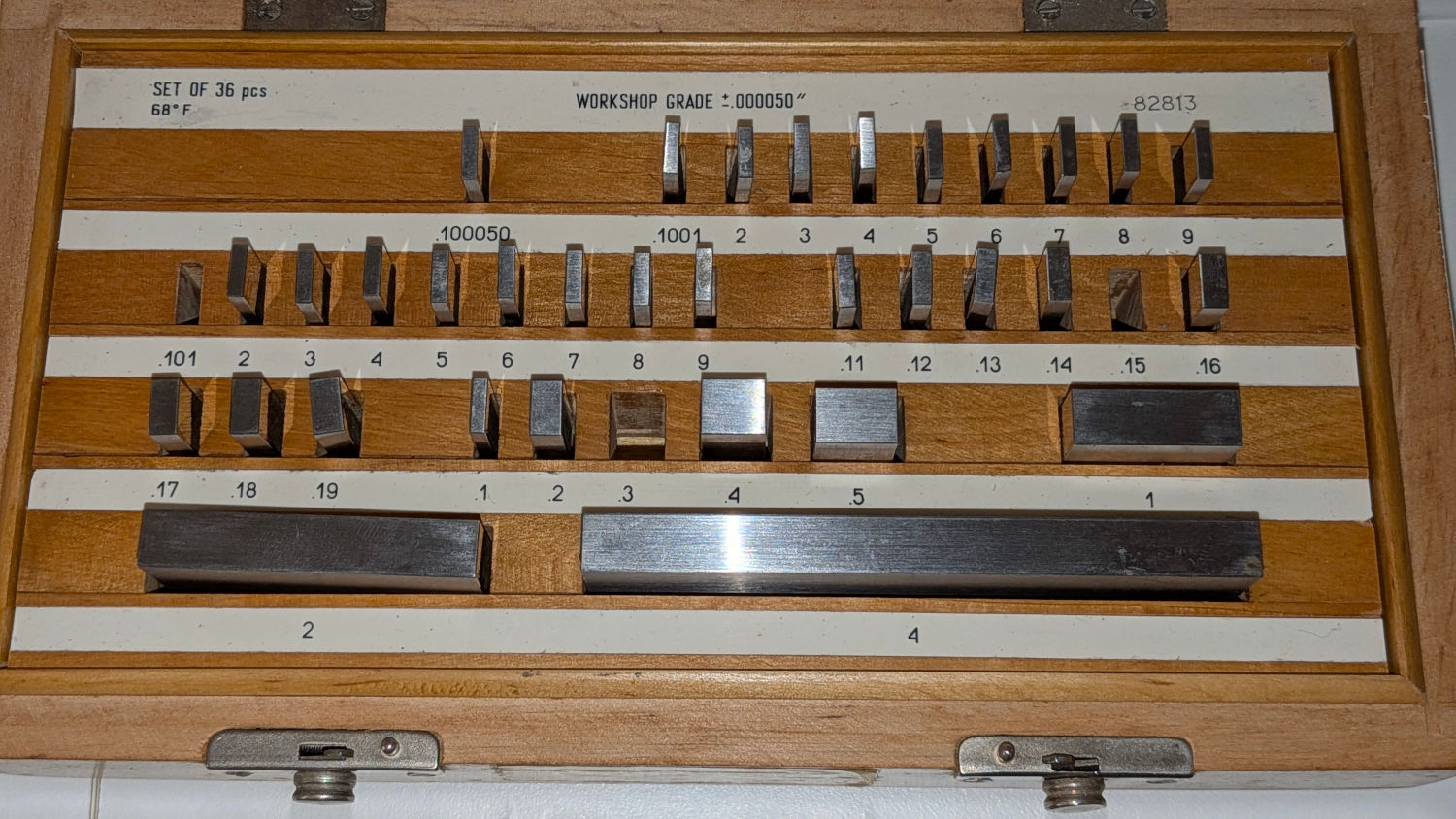
Position the shaft exactly at Top Dead Center (as shown in the second picture), then stack gage blocks under the needle bar as shown in the top picture. For reference, the gauge block set showing which blocks went into that stack:
HQ Sixteen – gage blocks used
Although I didn’t need the absolute measurement, it’s 0.551 inch = 0.300 + 0.150 + 0.101 inch = 13.995 mm. It’s less than 0.552 inch = 14.021; I decided fiddling with the fourth decimal place would be counterproductive.
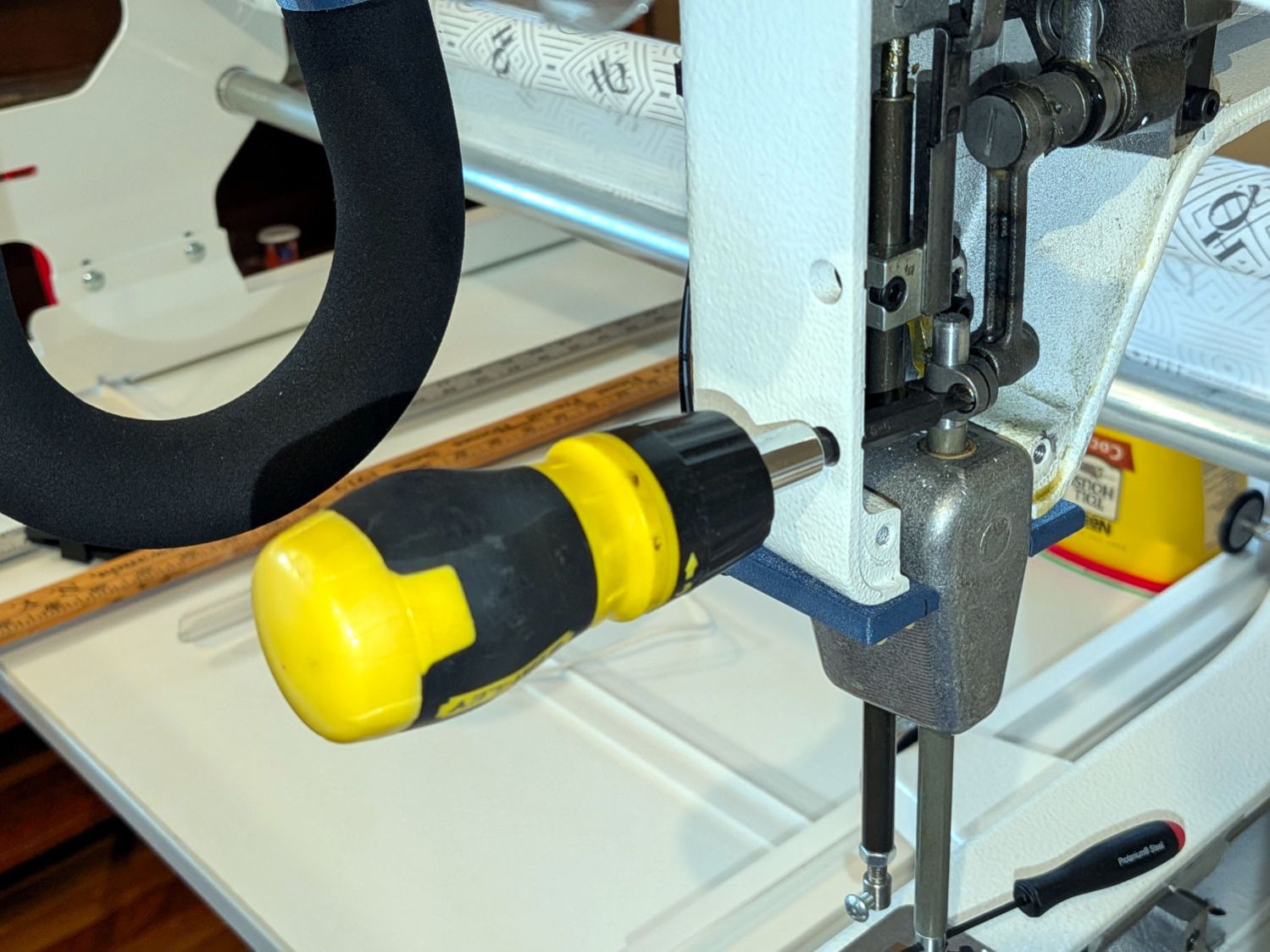
With the needle bar held at that height, stick a screwdriver through the hole intended for this purpose and loosen the clamp screw:
HQ Sixteen – needle bar clamp
Yes, the hole is slightly misaligned with the screw, presumably because aligning it properly would put the hole too close to the edge of the frame casting for comfortable drilling. You could make this adjustment without removing the cover, but I’m not that type of guy.
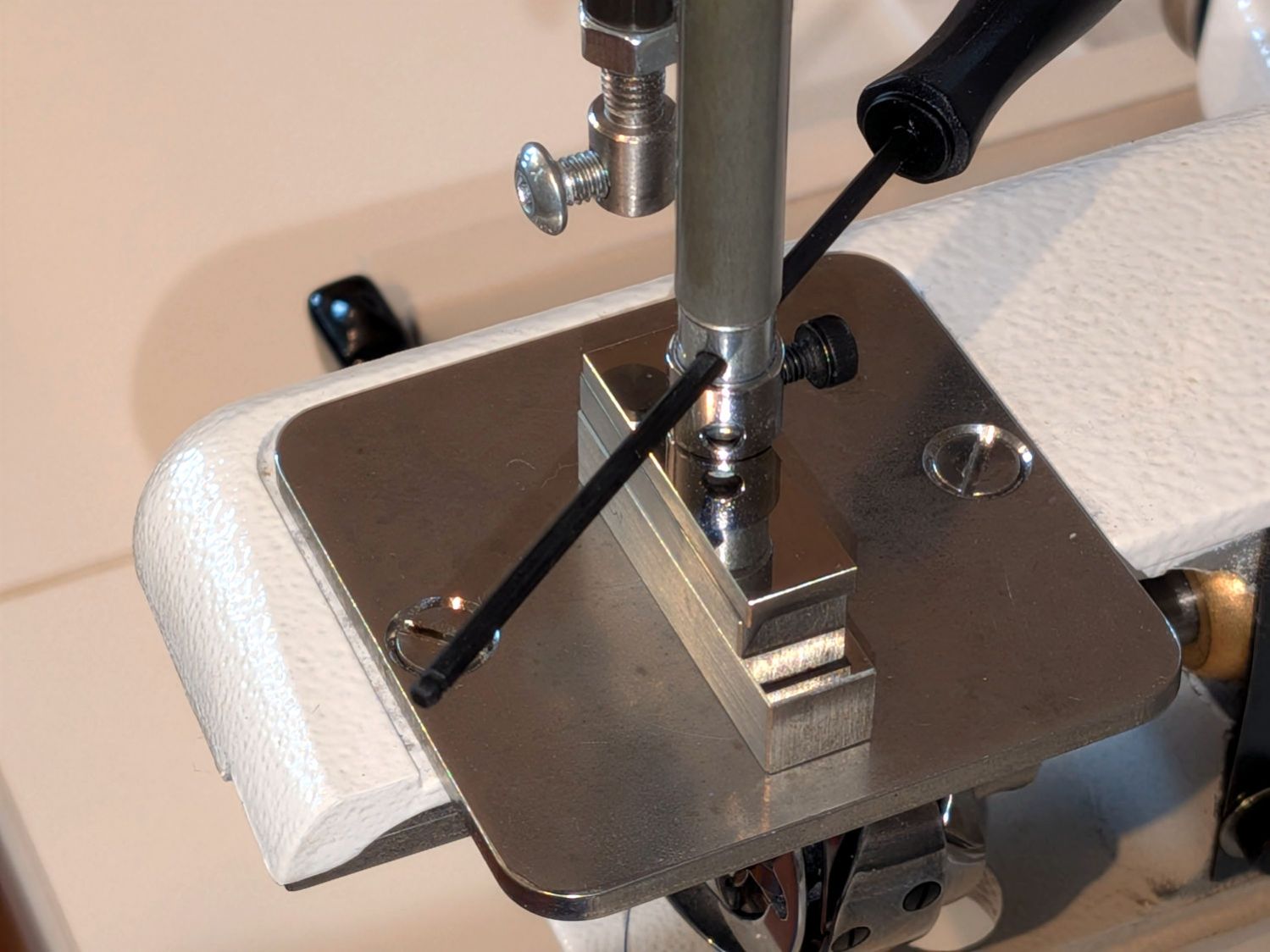
Rotate the needle bar to put the locking screw exactly at the back, verify the bottom of the bar rests on the gauge blocks, tighten the clamp screw, and verify the bottom of the bar rests on the gauge blocks:
HQ Sixteen – needle bar reoriented
Again, the hex driver shows the observation hole orientation.
Acceptance testing requires a practice quilt, but the machine lights up properly and moves smoothly with a needle in place, so it’s pretty close to being correct.
This was one of those jobs requiring about two hours of setup, twenty seconds of adjustment, and half an hour of put-away.
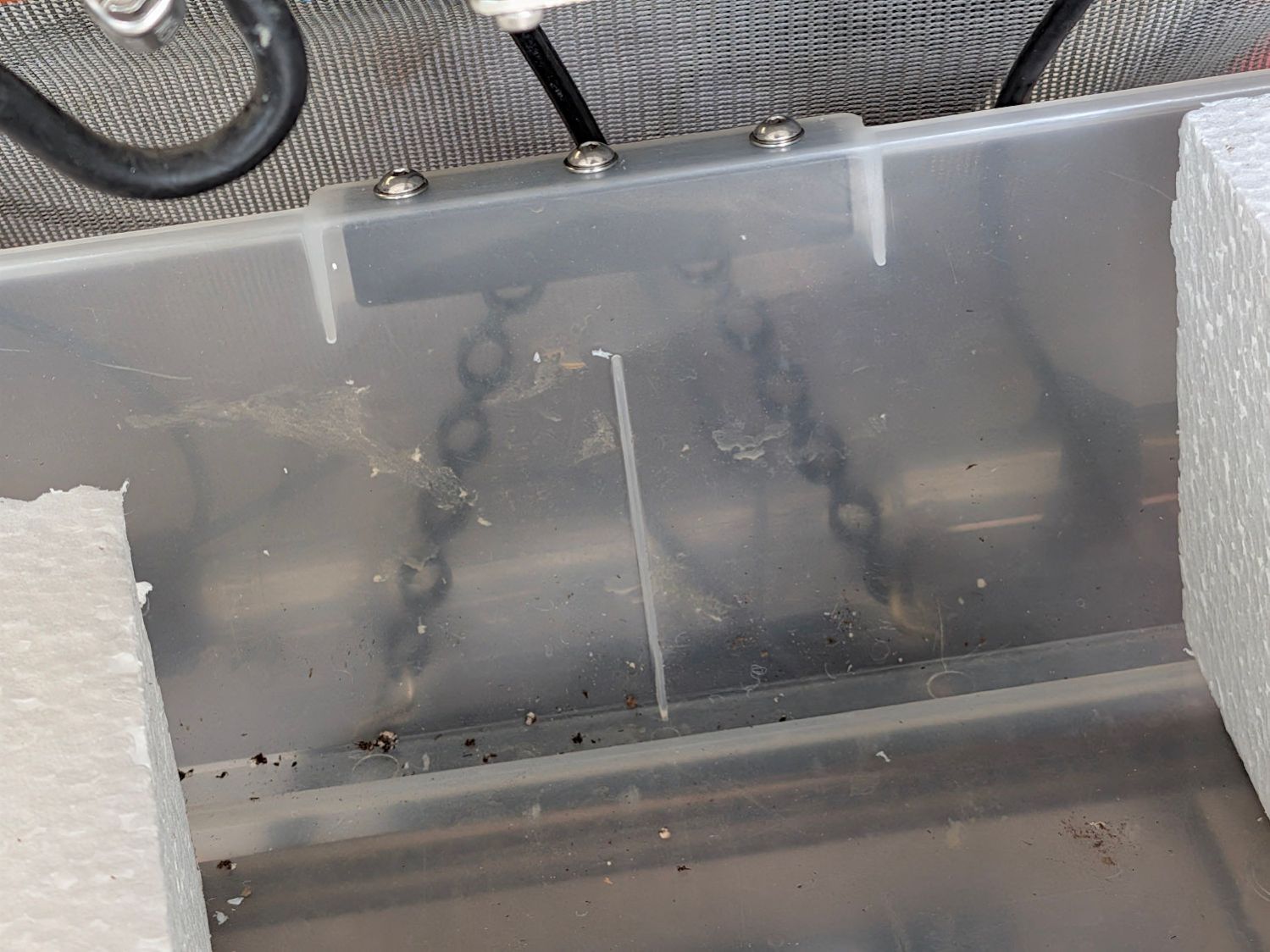
Except for having the bungee cord run across the middle of the tray where it blocks access for larger trays and tends to bend the taller leaves.
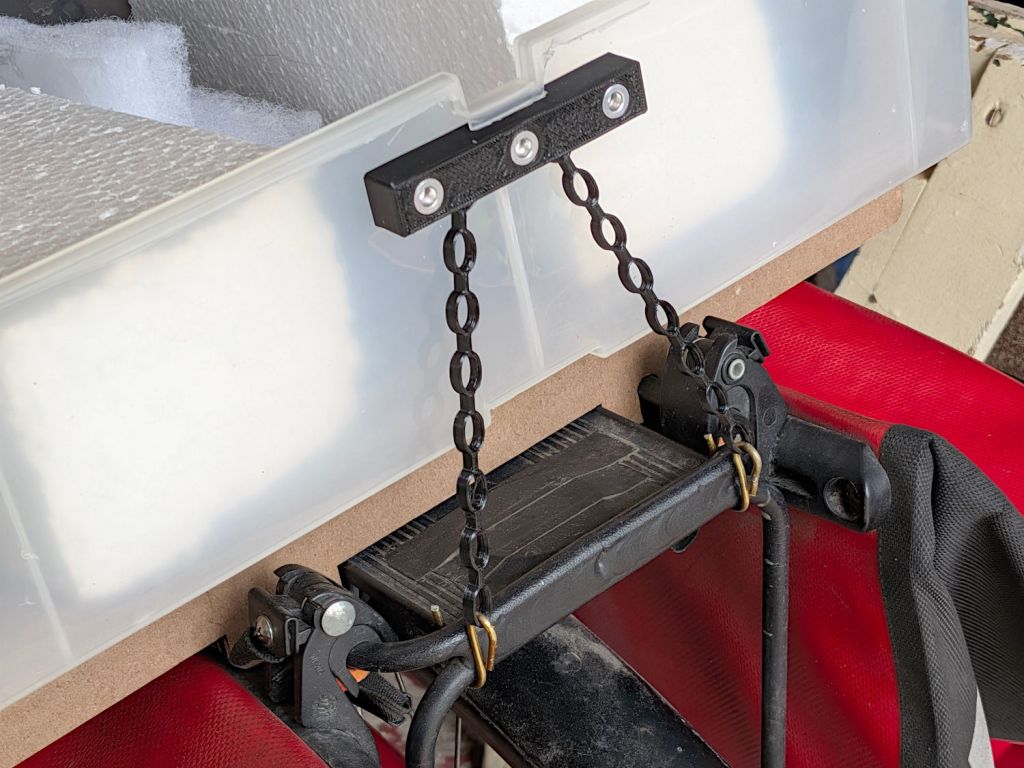
Well, I can fix that:
Bike Rack Tray Holder – straps – rear
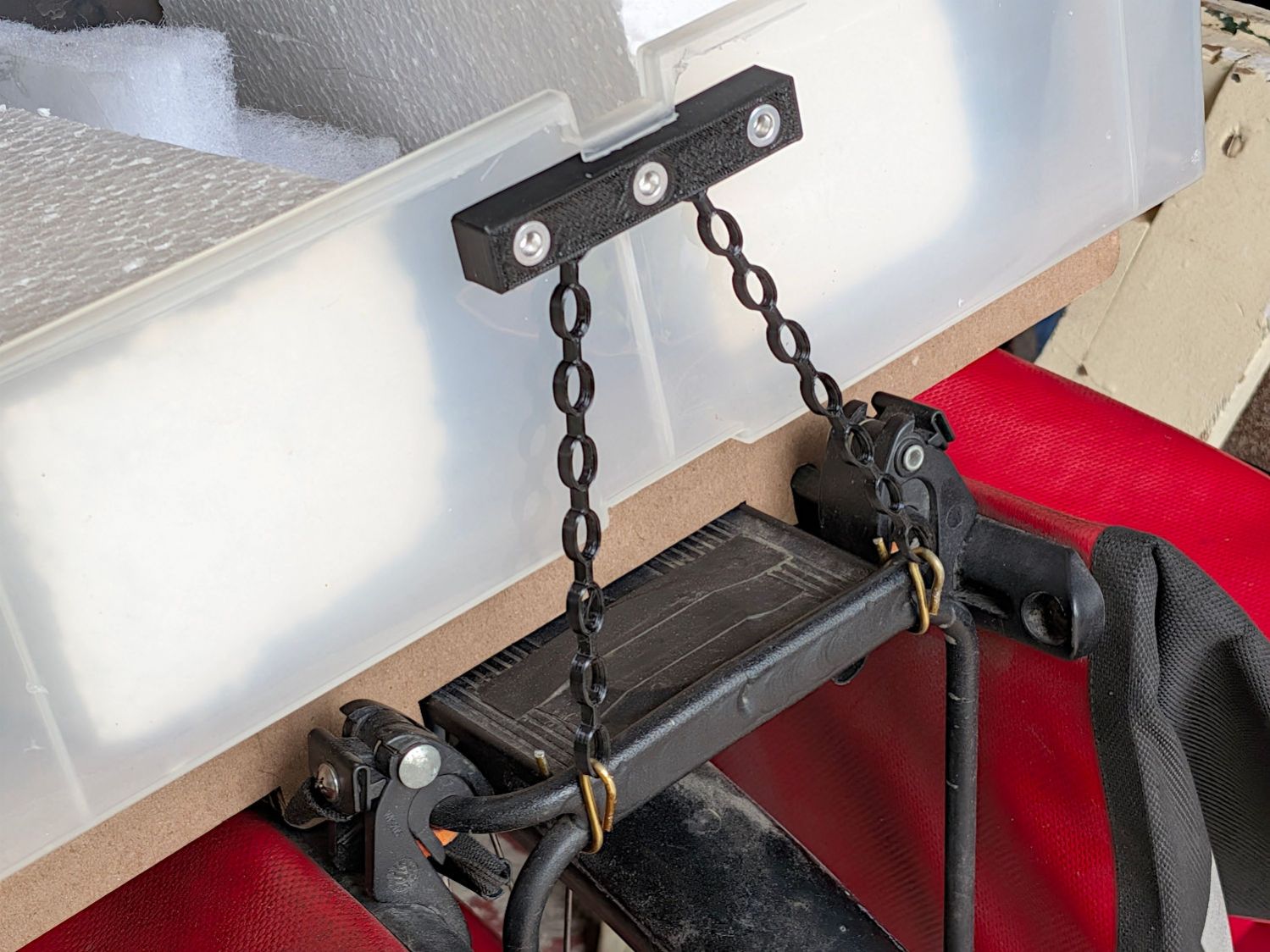
The front tiedown is similar:
Bike Rack Tray Holder – straps – front
They’re printed from TPU: rectangular blocks and chains, ending in wire hooks bashed from a coat hanger. The M4 button-head screws thread into (uncrushed) rivnuts, which seemed easier to manage than square nuts in this situation.
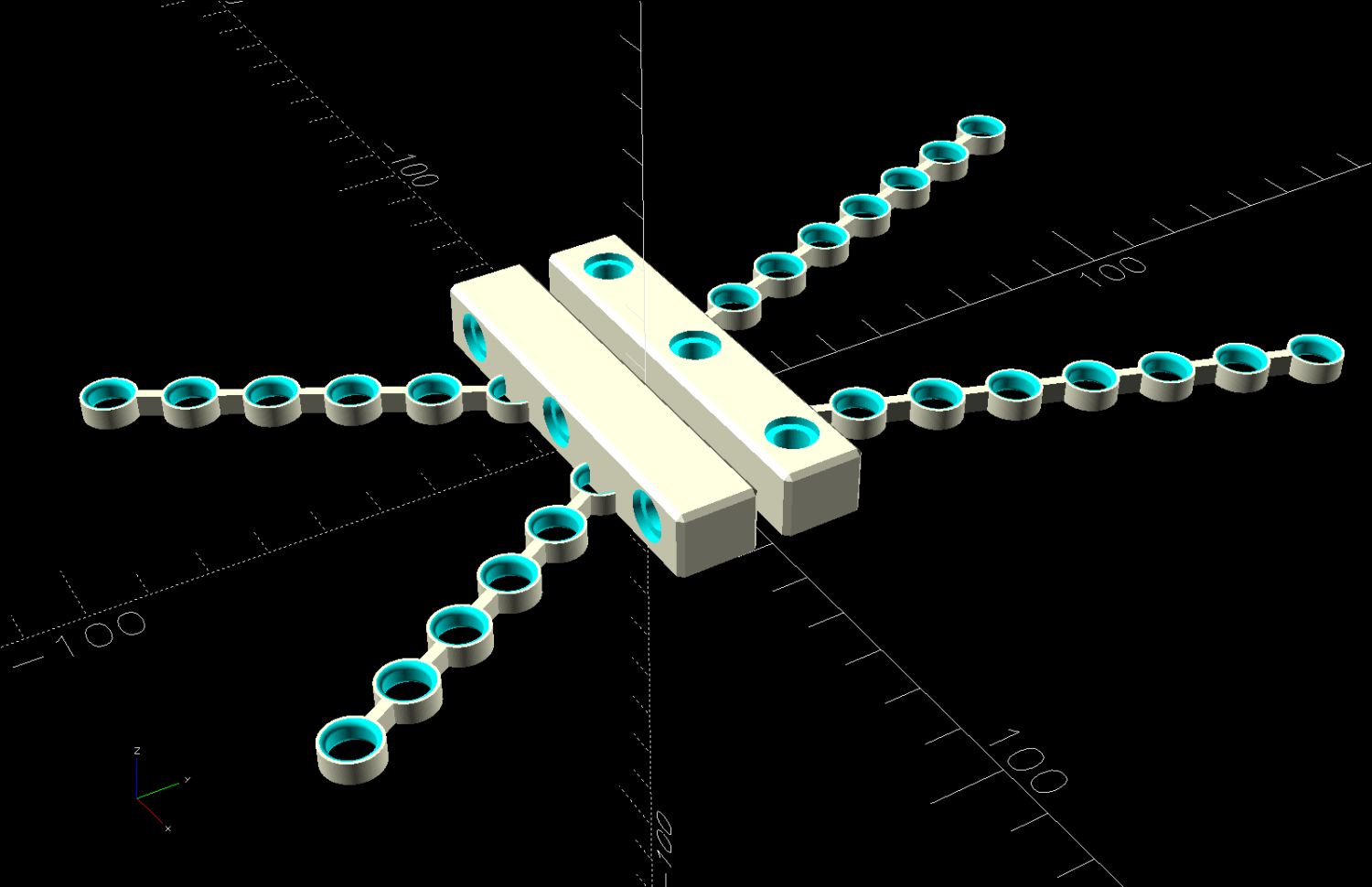
The chains are just thick circles, with half of the top links sunk into the blocks:
Stretchy Straps – build layout
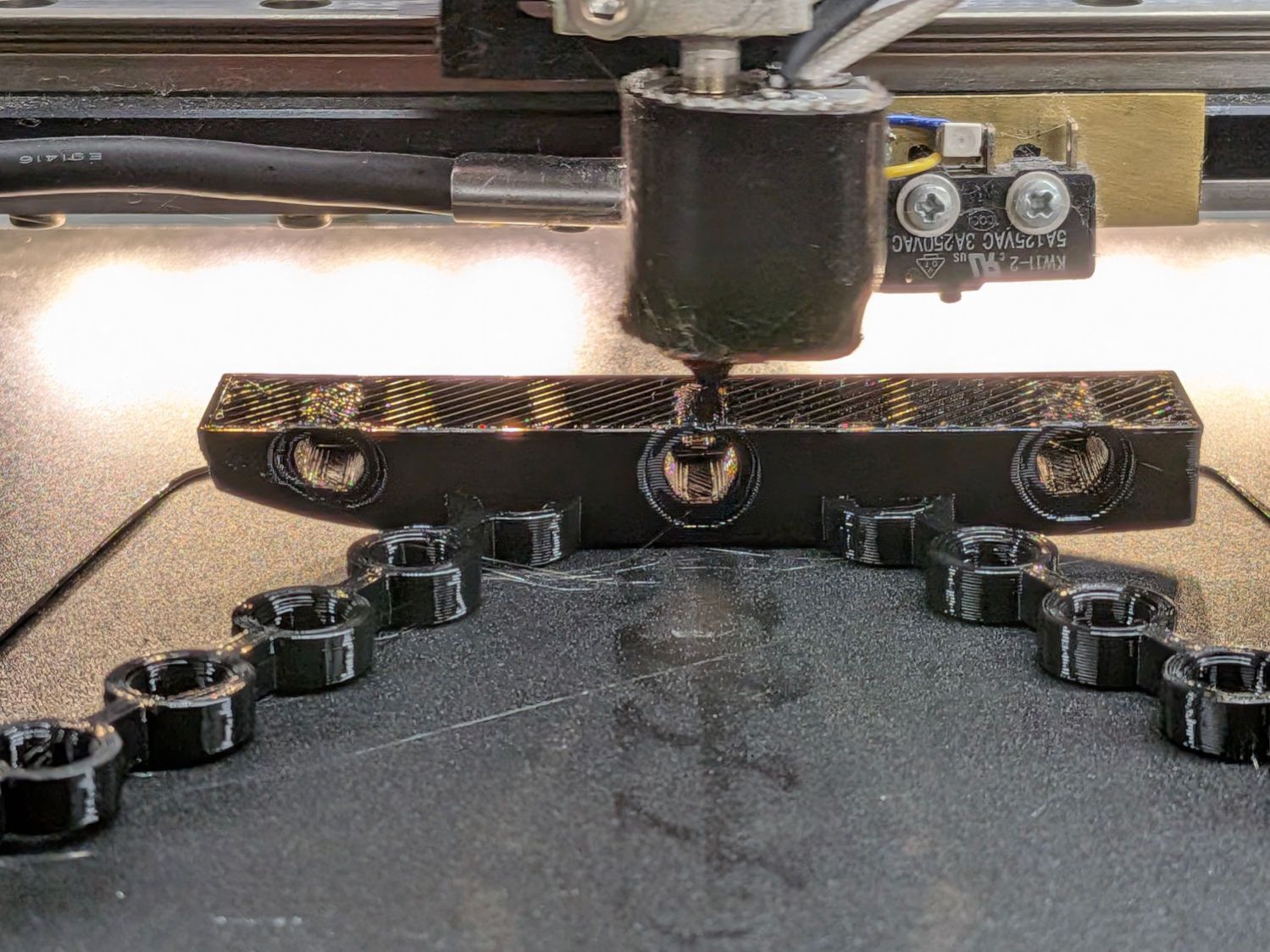
You’d (well, I’d) want to build them one at a time, because sometimes this happens:
Bike Rack Tray Holder – bad platform adhesion
Based on those measurements, I raised the extruder by 0.1 mm, but apparently did a poor job of cleaning / flattening the cold TPU on the nozzle and got it wrong. As a result, the first layer didn’t get squooshed properly onto the BuildTak, came unstuck, and produced art . The track down the middle of the photo shows traces of a previous, badly over-squooshed test chain.
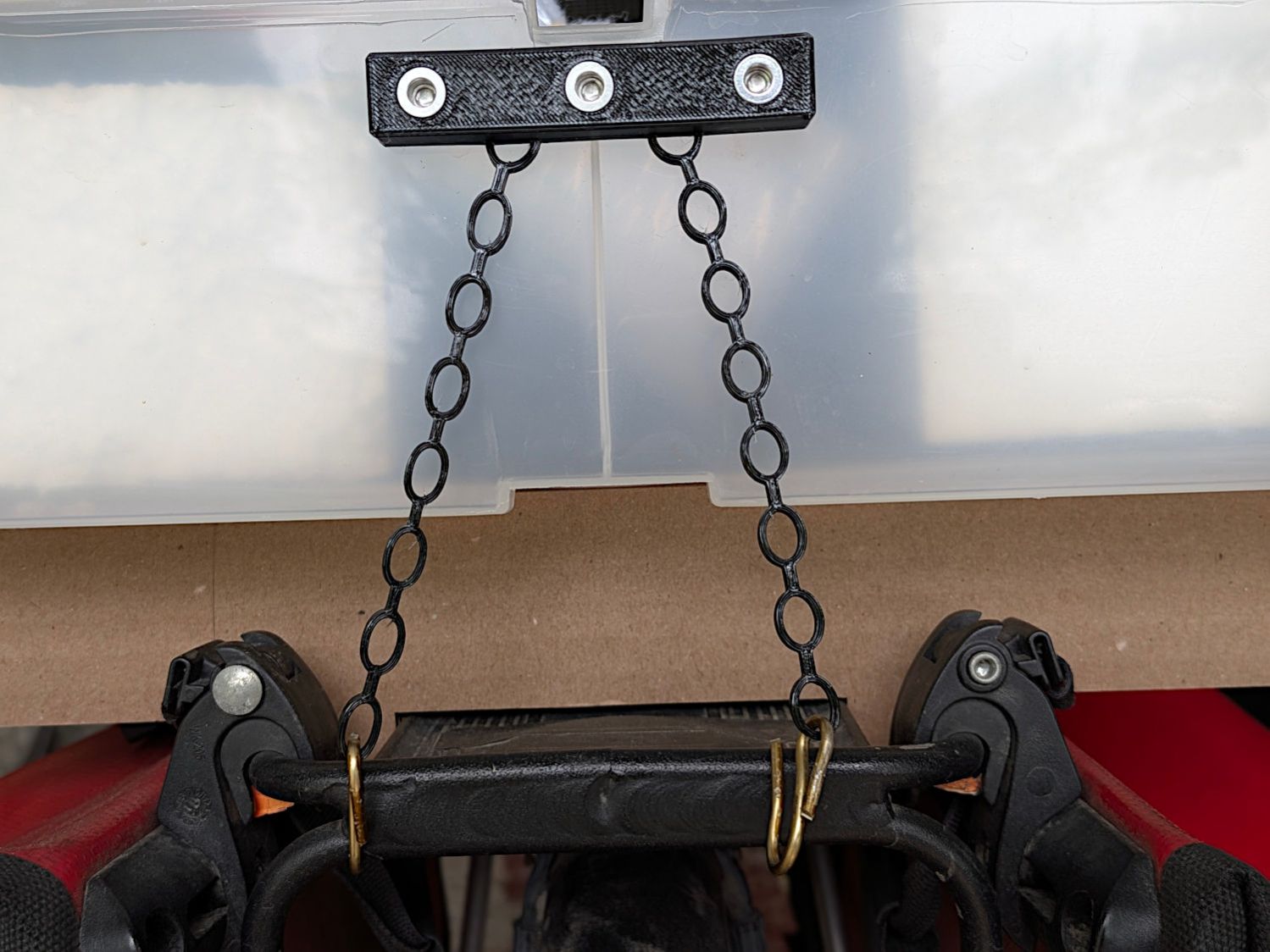
The stretched TPU relaxes enough to leave very little tension after a day, as shown by the unhooked right chain:
Bike Rack Tray Holder – straps – relaxing
However, that make the chains exactly the right length, so they require even more force to get the hooks off the rack. After relaxing for another day, the stretched chains return to roughly their original lengths, so it’s all good.
This file contains hidden or bidirectional Unicode text that may be interpreted or compiled differently than what appears below. To review, open the file in an editor that reveals hidden Unicode characters.
Learn more about bidirectional Unicode characters
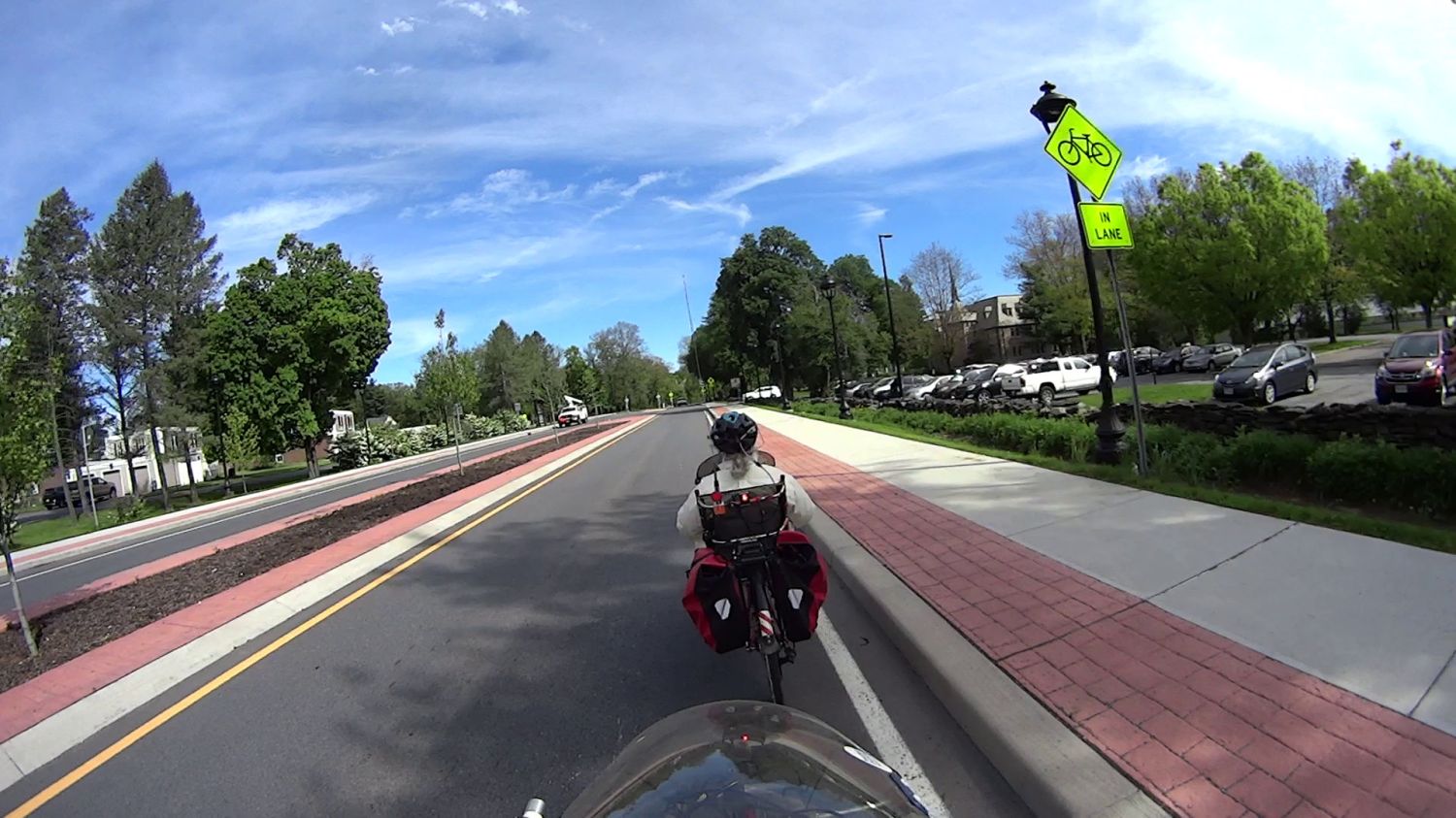
The sign makes it fairly clear what NYS DOT intended, even if they don’t dogfood their designs:
Raymond Avenue vs pickup – bikes in lane sign
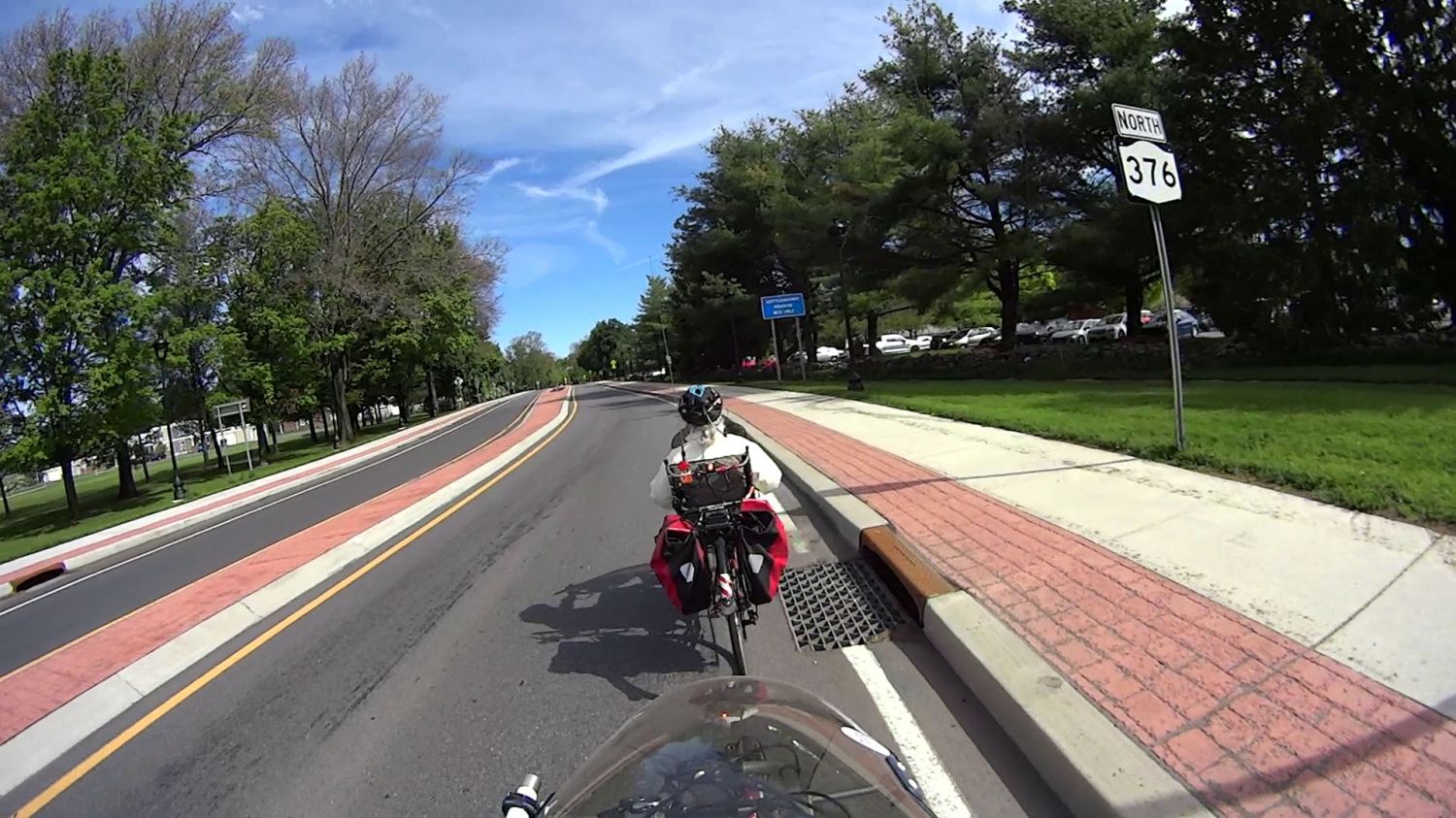
We ride to the left of the fog line for good reason:
Raymond Avenue vs pickup – drain grate
Those are nominally “bike safe” drain grates, but some of the joints between the catch box and the grate can snag a bike tire, so they’re best avoided. Bonus: not all the drain grates are bike safe, so making a mistake will be costly.
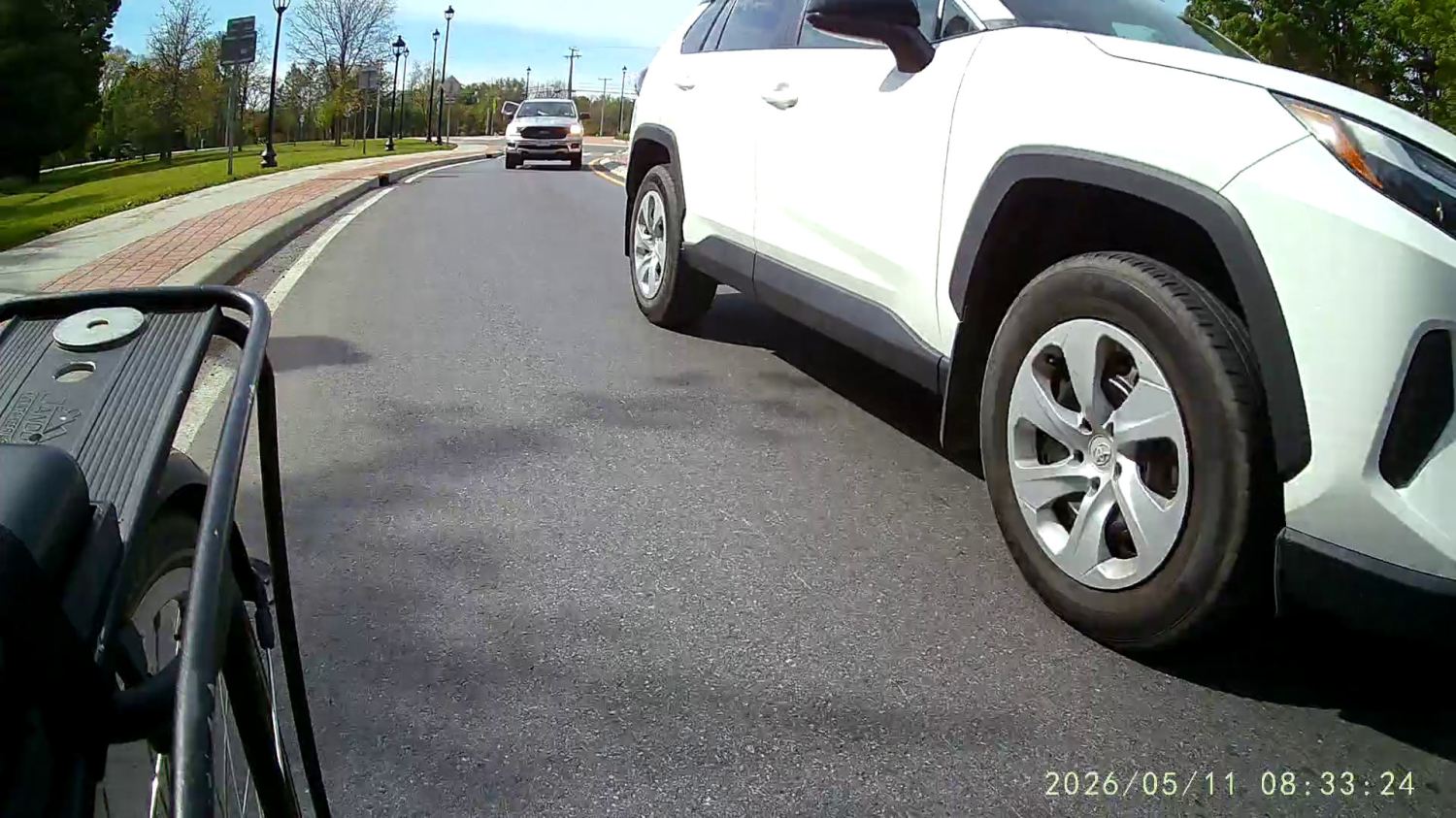
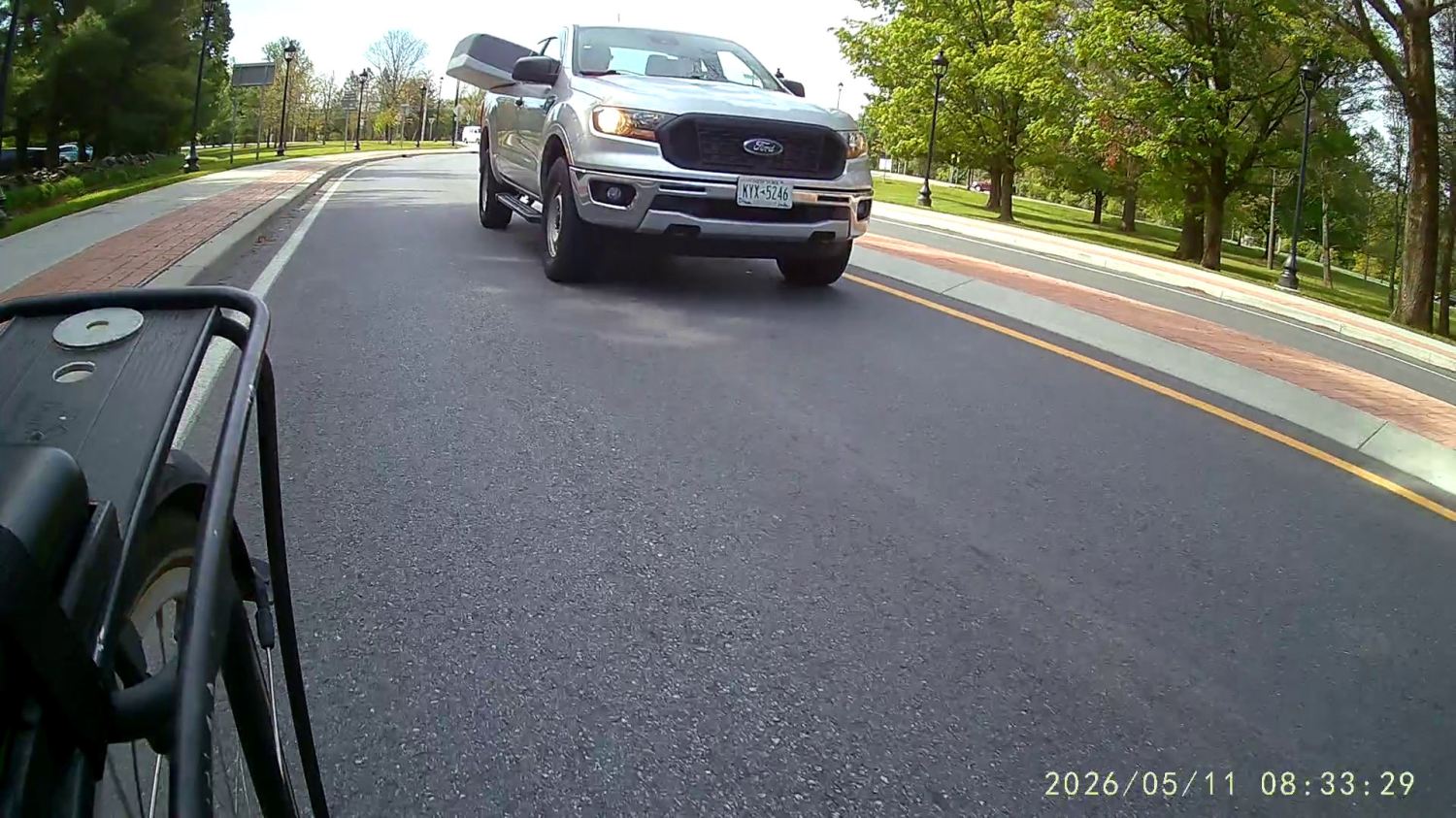
The lane has enough clearance for passing cars, presuming you don’t flinch at the wrong moment:
Raymond Avenue vs pickup – lane clearance
That same DOT engineer told me the correct way for cars to pass is to drive up on the sloped curb onto the median. Some drivers do that, but further down Raymond they would collide with various obstructions.
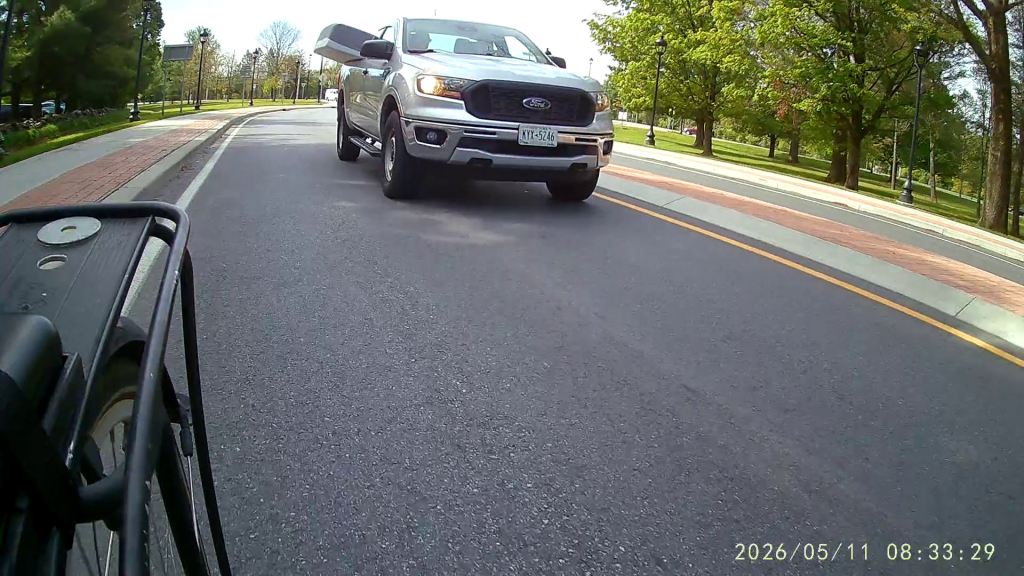
Not flinching is difficult to do when there’s a horn blaring immediately behind you:
Raymond Avenue vs pickup – overhanging load
I wonder if the mattress was on its way to the dump.
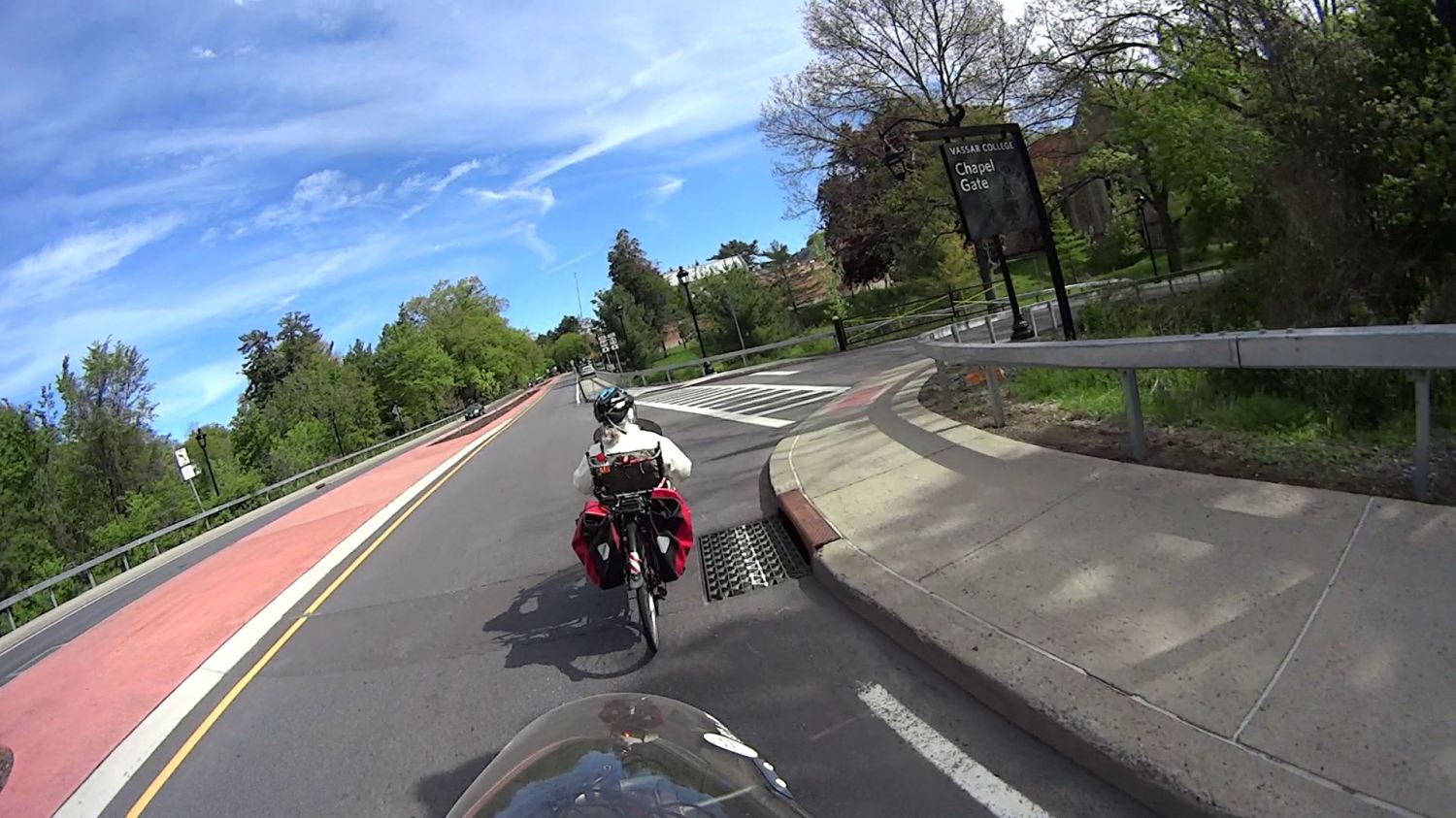
We’ve begun exiting at Chapel Gate and riding through campus:
Raymond Avenue vs pickup – Chapel Gate
Which is exactly what the DOT engineer who designed Raymond suggested we do. Why a state agency can recommend riding on private property to get off a nominally standards-compliant state road remains a puzzle, but, hey, I’m no longer a Registered Professional Engineer.
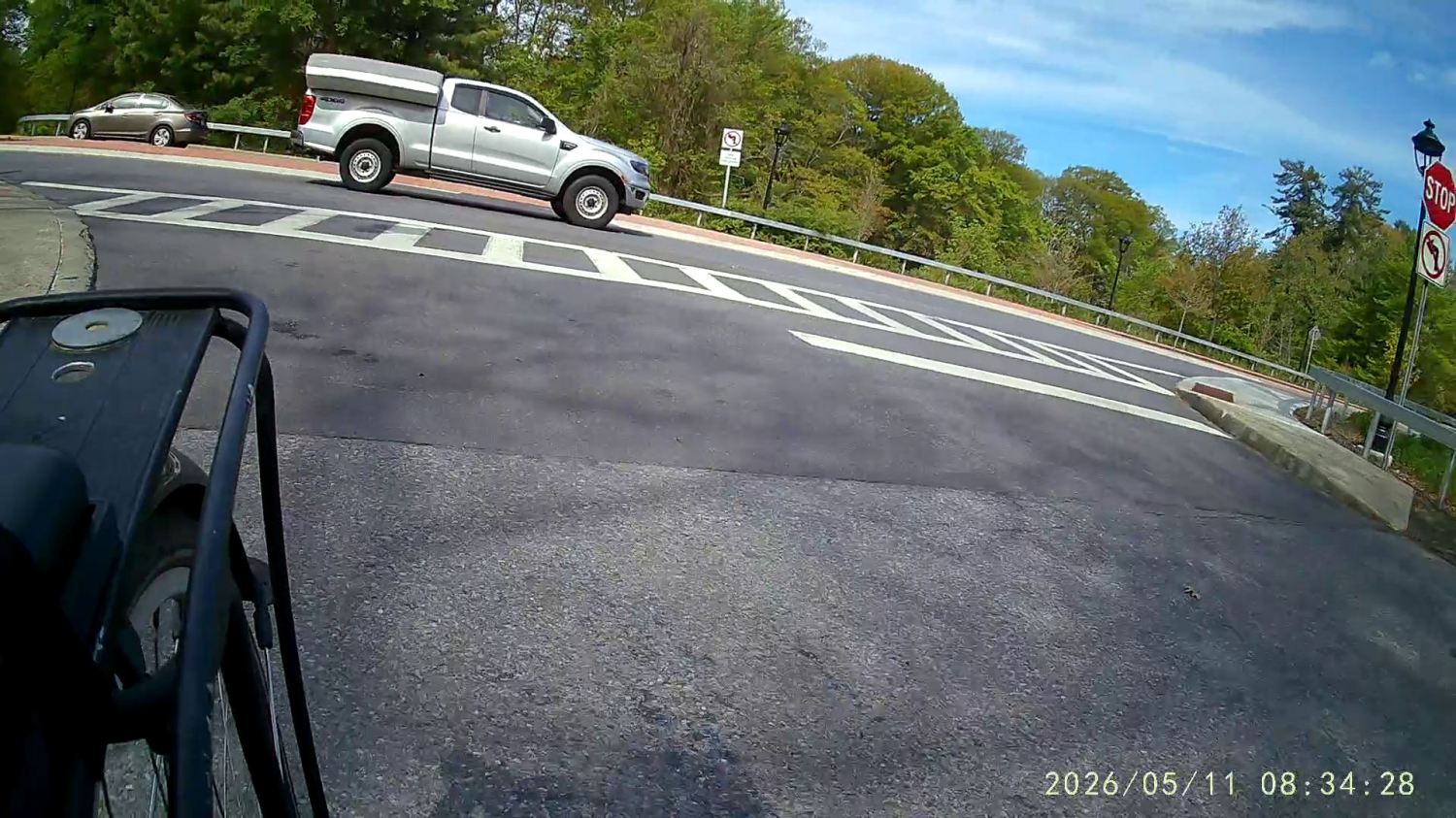
IMO, the man needs a bigger pickup:
Raymond Avenue vs pickup – not enough truck
Just another day riding on NYS DOT roads, where bicycling is always an uninterrupted delight.
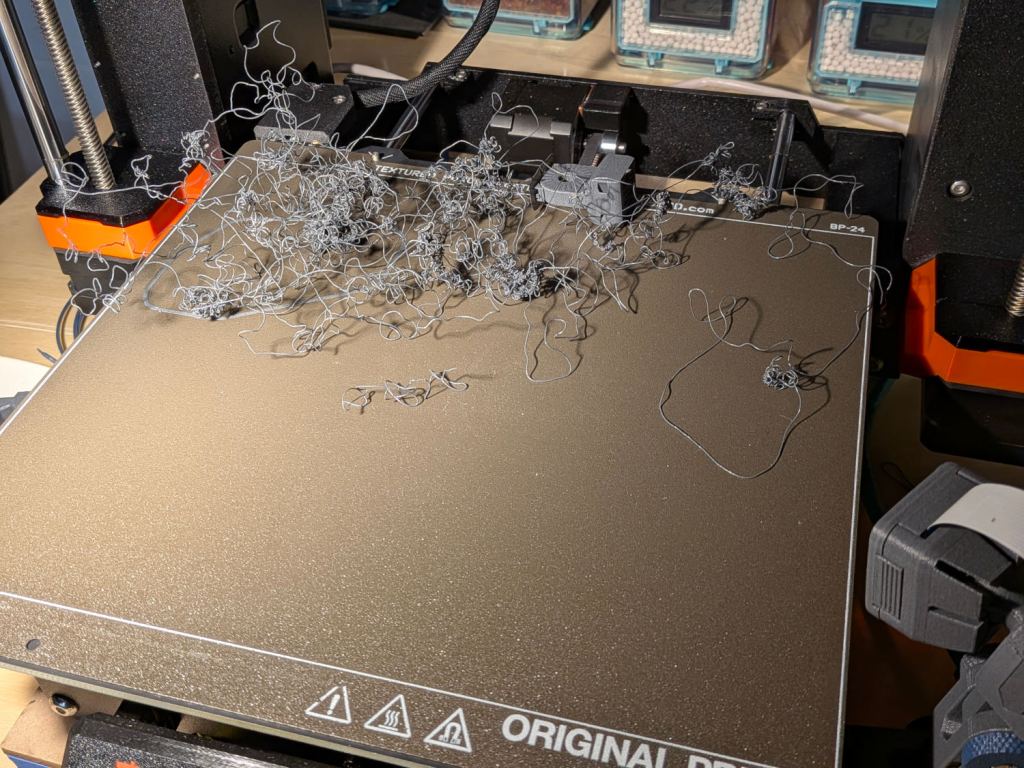
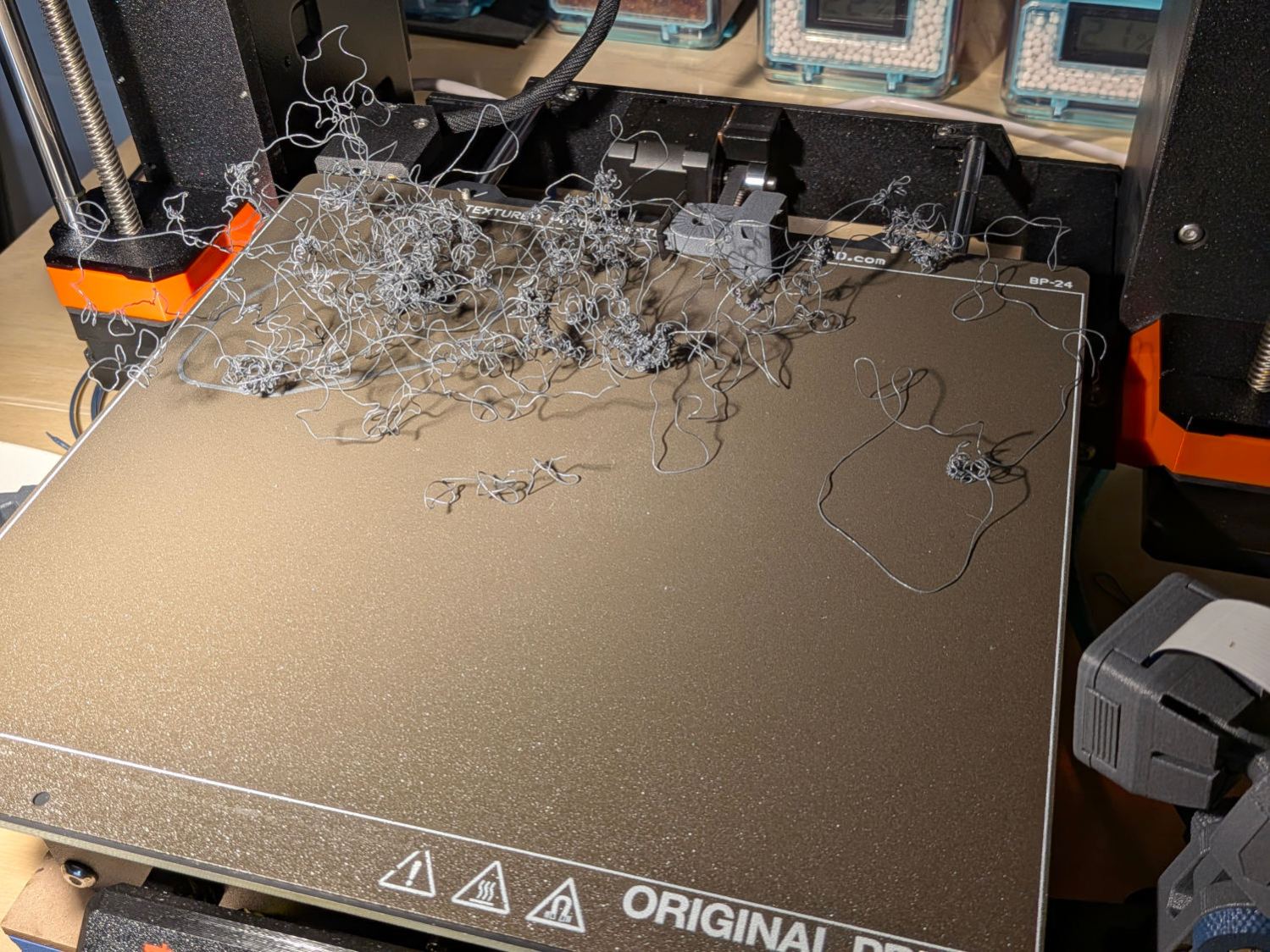
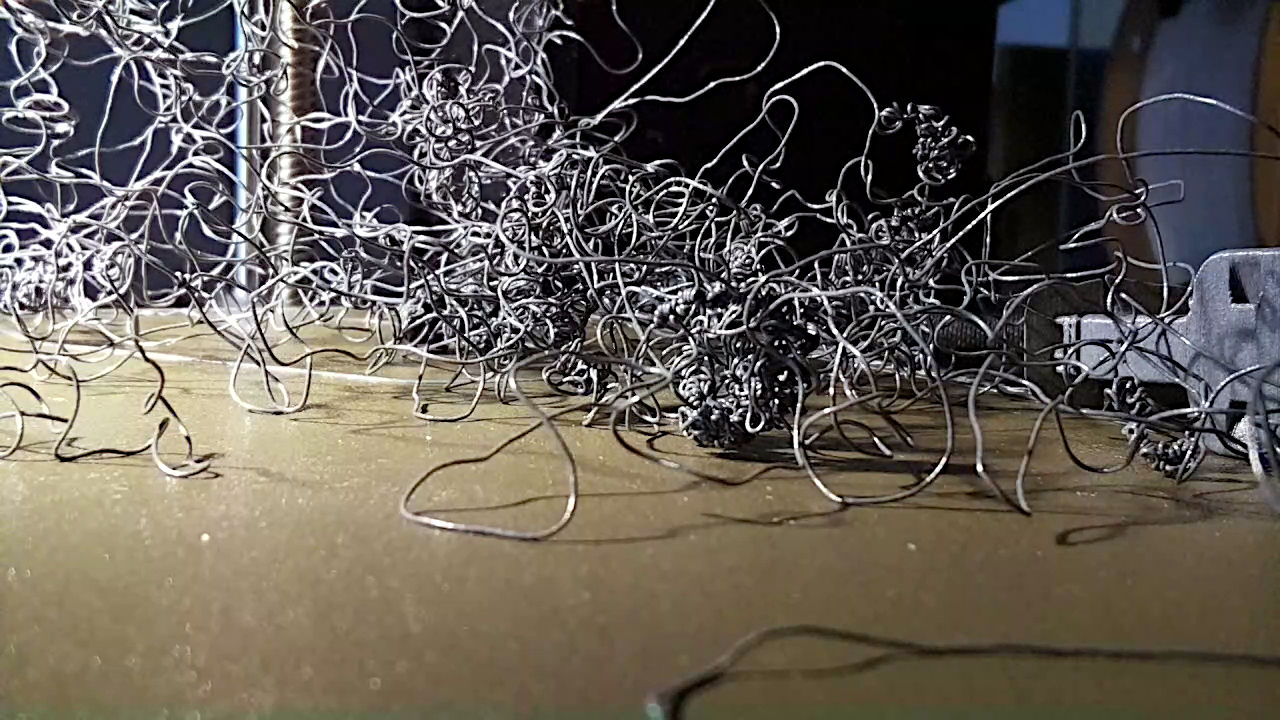
(The camera in the lower right doesn’t yet record videos, so you must imagine what I saw.) I forgot capturing this screenshot:
Prusa MK4 – Bird Nest – platform camera
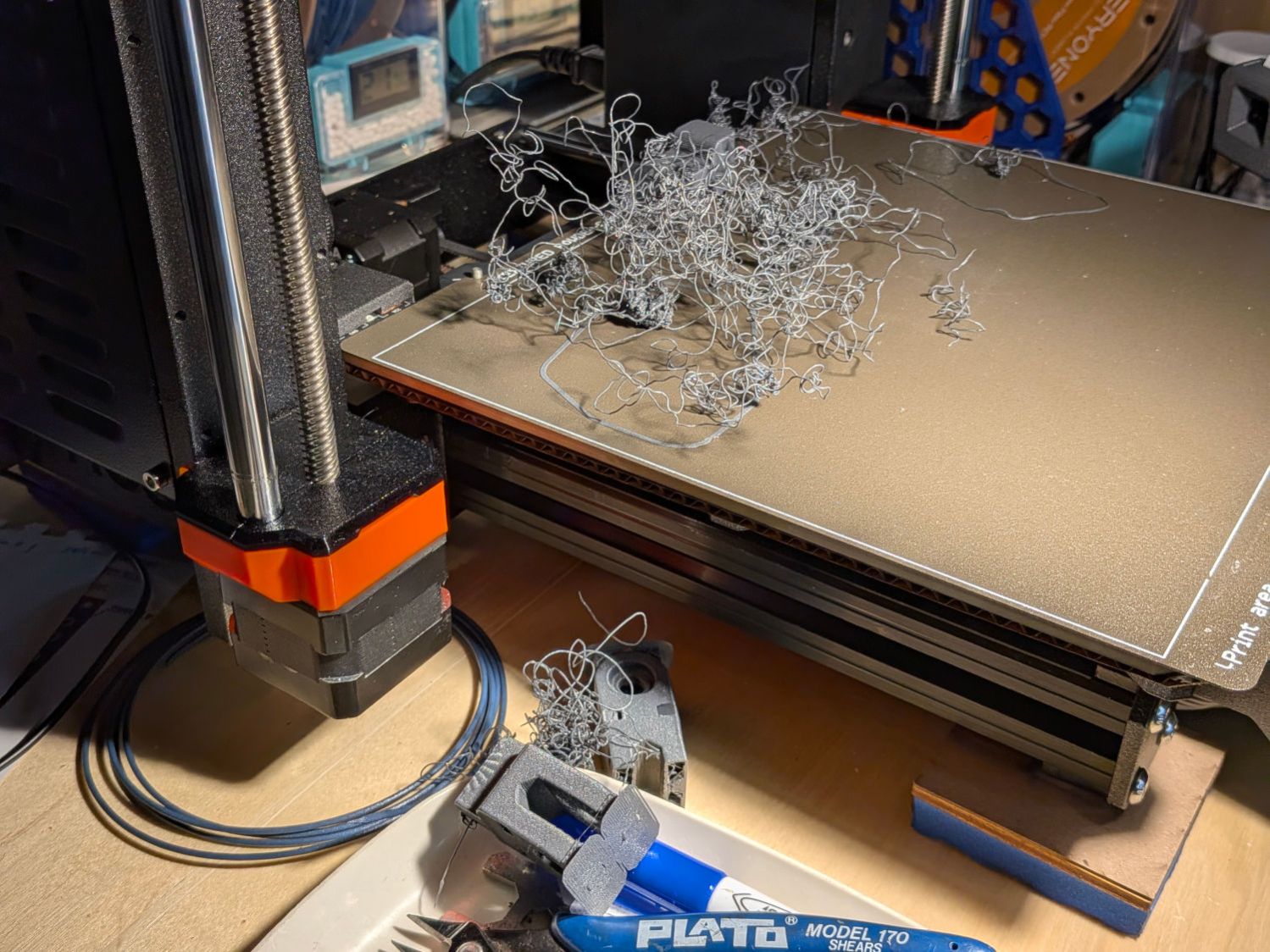
The nozzle was busily adding to the tangle, so I shut the printer off and trotted to the Basement Shop™ to find two more parts lying dead on the workbench:
Prusa MK4 – Bird Nest – B
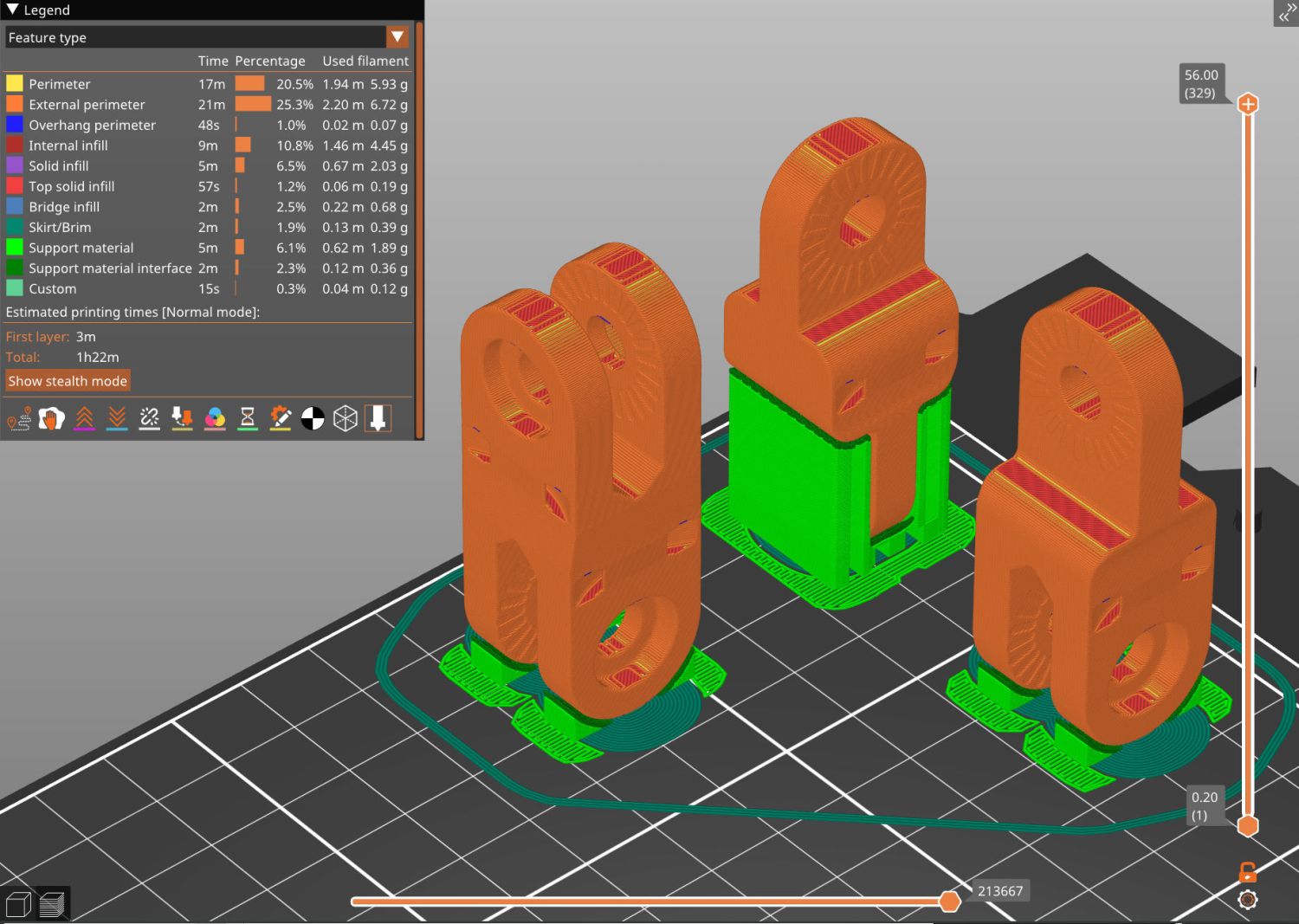
This was entirely my fault, as I’d ignored PrusaSlicer’s warning about inadequate adhesion for the camera mount link standing in the corner:
Prusa MK4 – Camera Mount Links – slicer preview
That’s the PrusaSlicer preview after adding a wider brim and painting more support structures on all three parts. Given larger footprints, the next attempt completed without drama, which is the normal outcome.
Moral of the story: Tall skinny parts need more surface area on the platform than you think, even with excellent adhesion.
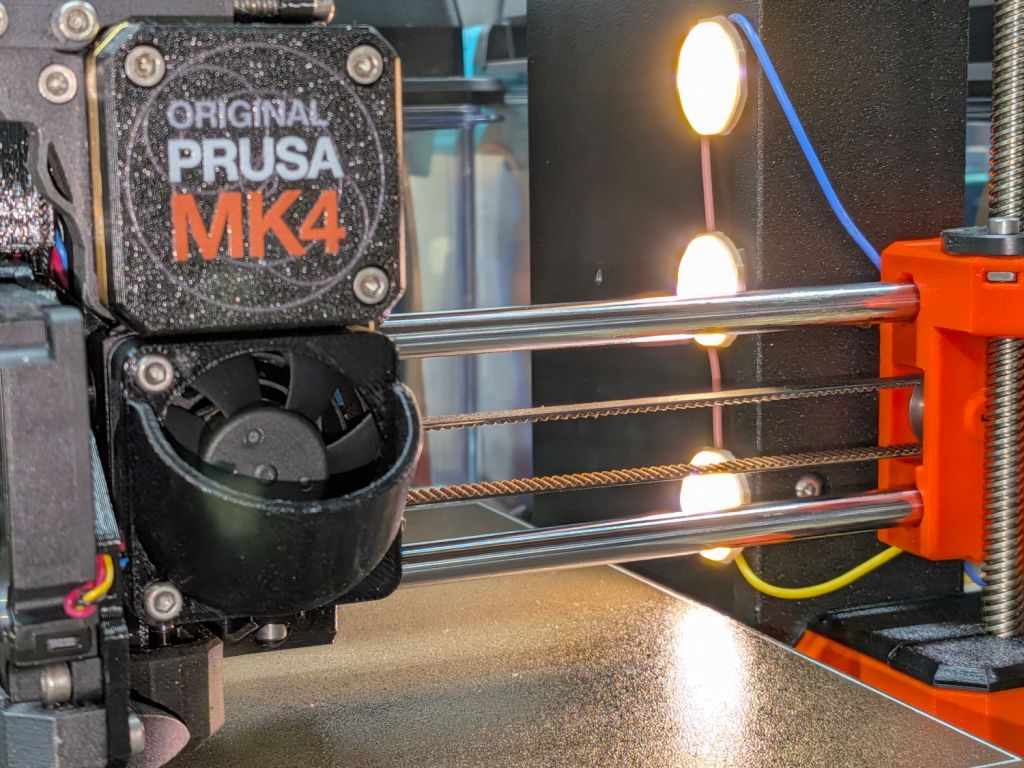
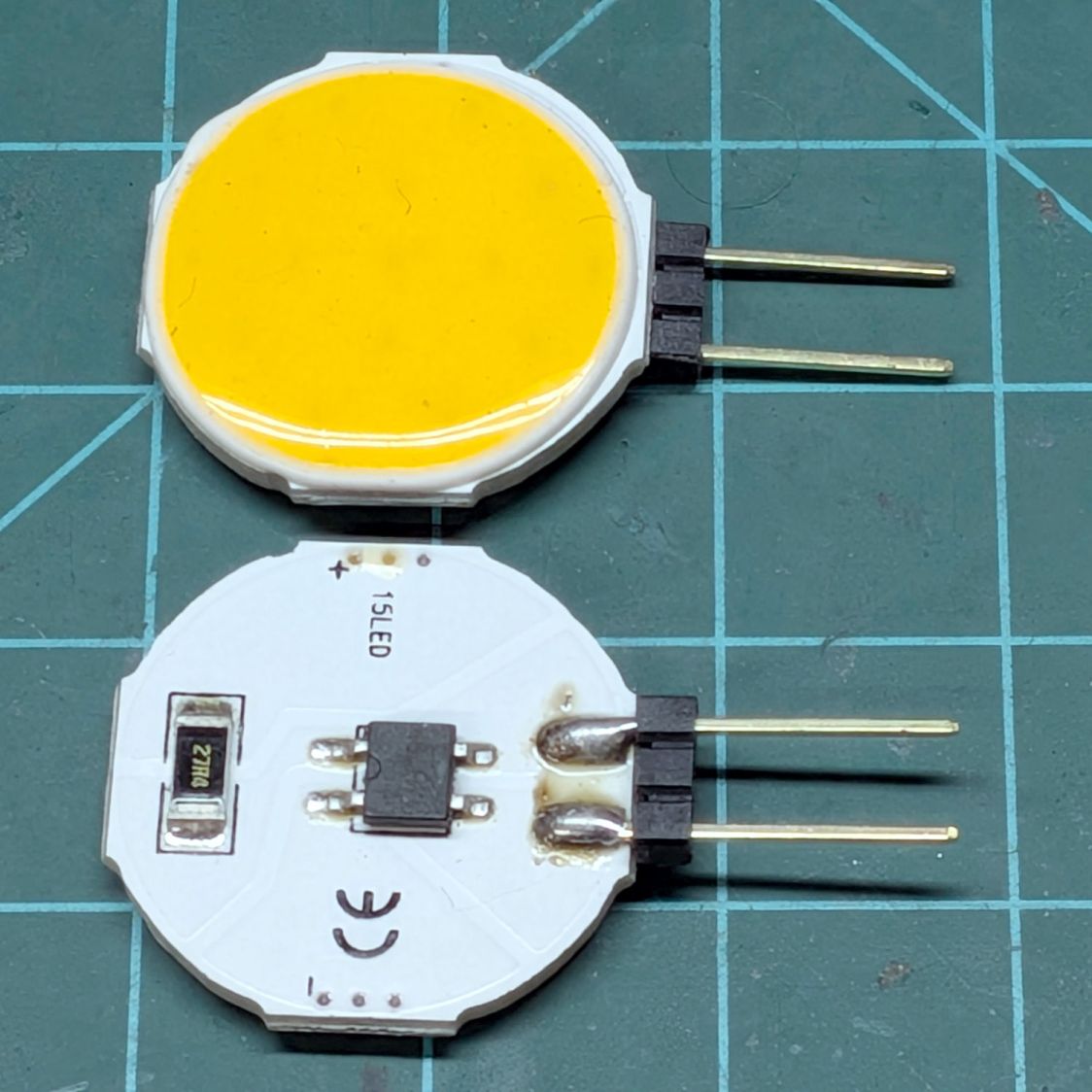
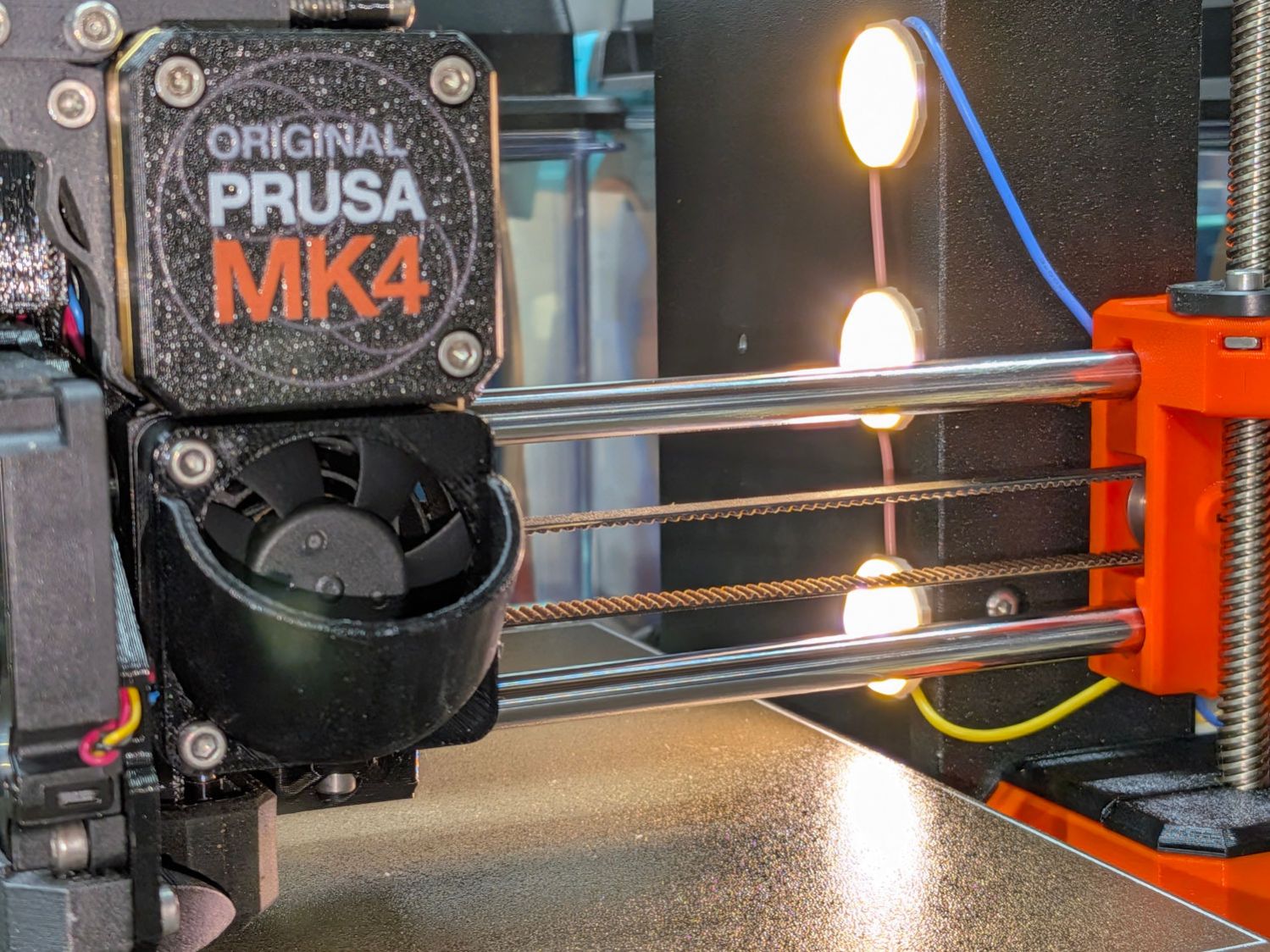
There’s also not much room for a lighting fixture on the printer where it must mount, so I modified a trio of nominally 12 V / 4 W COB LED panels:
Prusa MK4 – Extruder sidelight – COB LEDs
Their “4 W” rating seems aspirational, at best, as a 12 VDC supply pushes only 75 mA through the panel, so they tick along at 900 mW. If you expect cheap eBay / Amazon components to live up to their specs, dream on.
The modifications:
Unsolder the pins
Crunch off the surprisingly precise 27.4 Ω SMD resistor
Clean up the rubble
Wire the panels directly in series, ignoring their bridge rectifiers
The 15 LEDs on each panel are arranged in five parallel chains of three LEDs for a total forward drop of 8.3 V, so putting three panels in series works with the MK4’s 24 V power supply.
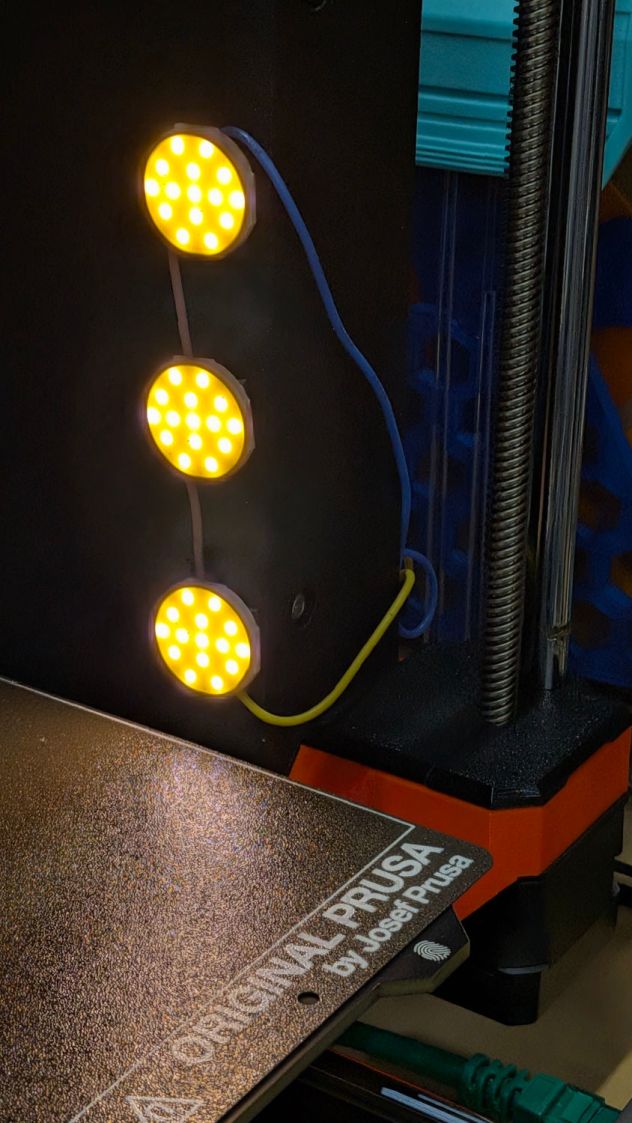
Stick them onto the MK4 power supply case with foam tape and wire them directly to the 24 V terminals:
Prusa MK4 – Extruder sidelight – installed
There’s very little clearance between the machine frame and the X Axis carriage on the threaded rod. Putting the LEDs in a 3D printed case and routing the wires lower on the column would be nice touches:
Prusa MK4 – Extruder sidelight – front view
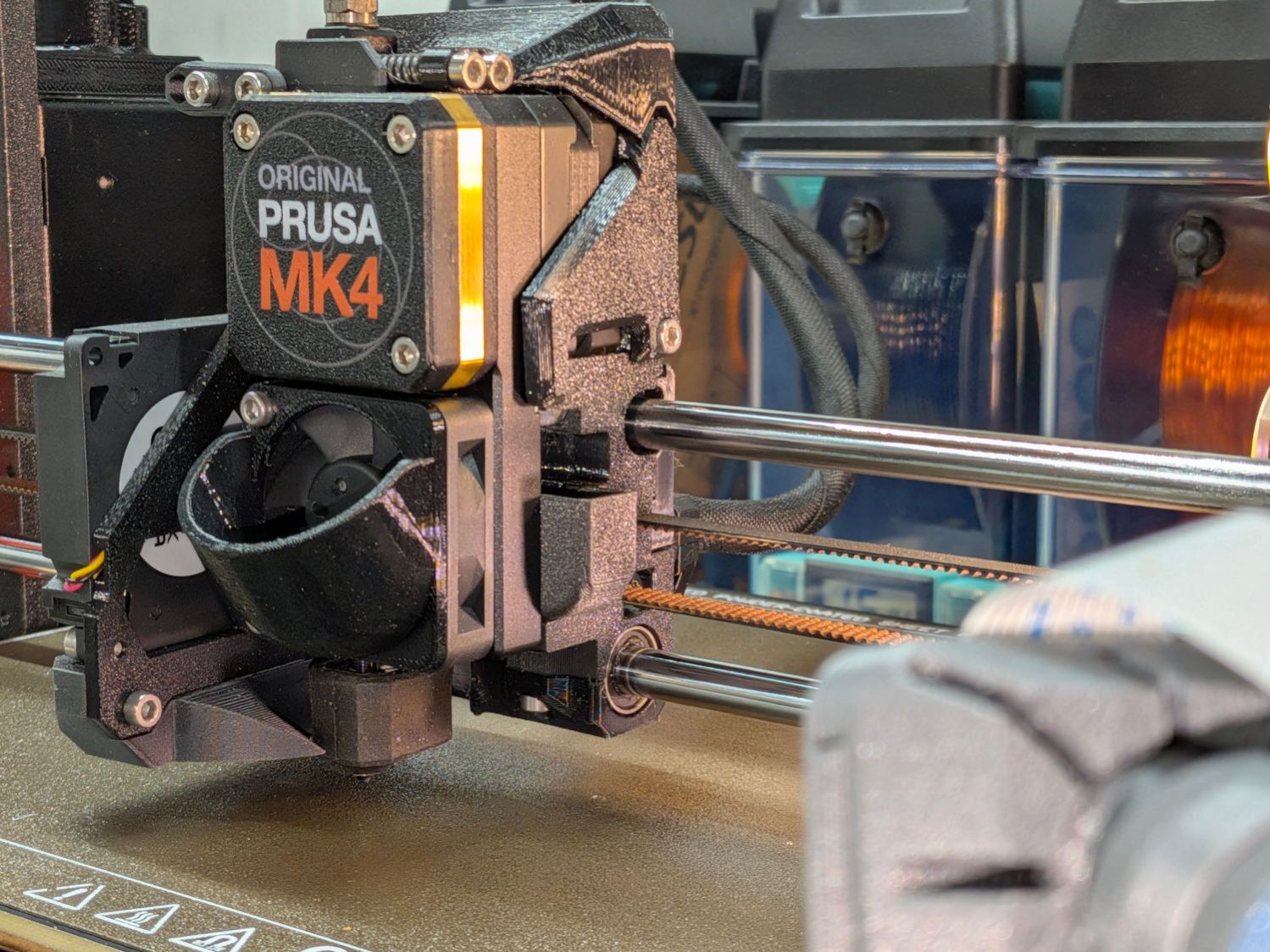
The panels start at 30 mA when cold and drop to 25 mA as they warm up in the 63 °F = 17 °C Basement Shop. Each panel dissipates 250 mW: bright enough for the task, dim enough to avoid overpowering the camera’s limited dynamic range, and definitely within whatever power rating they should have.
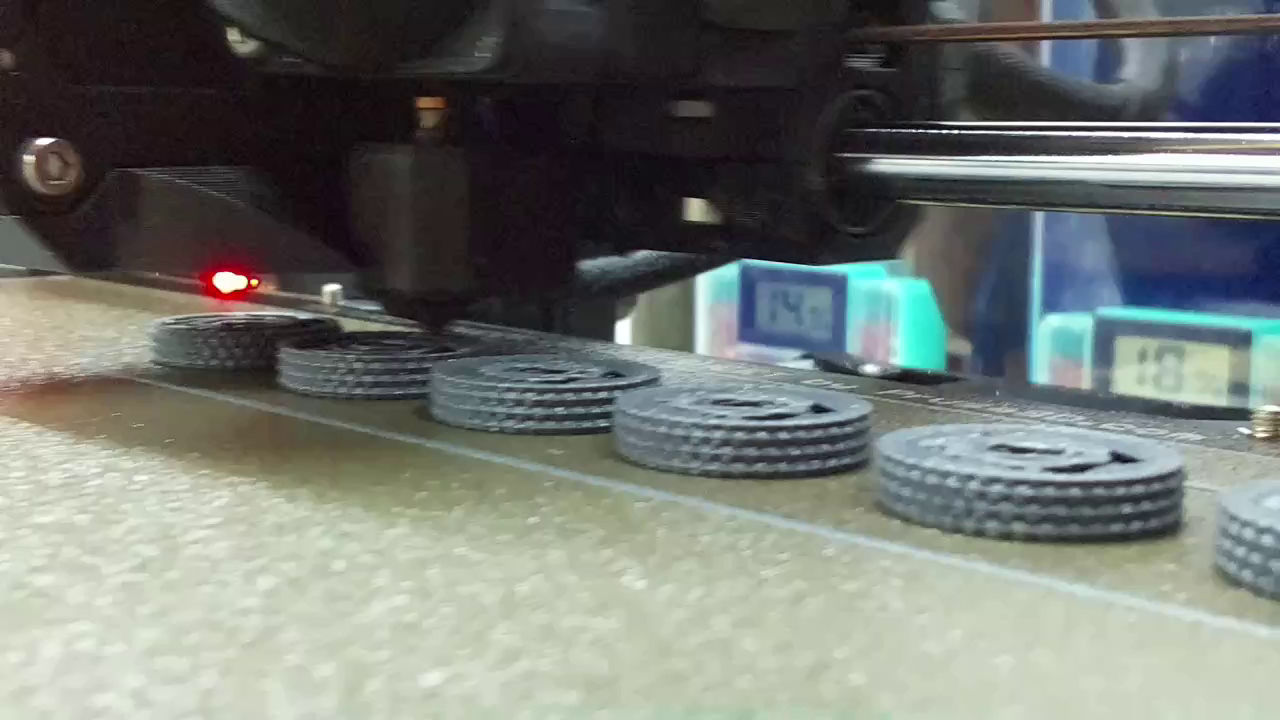
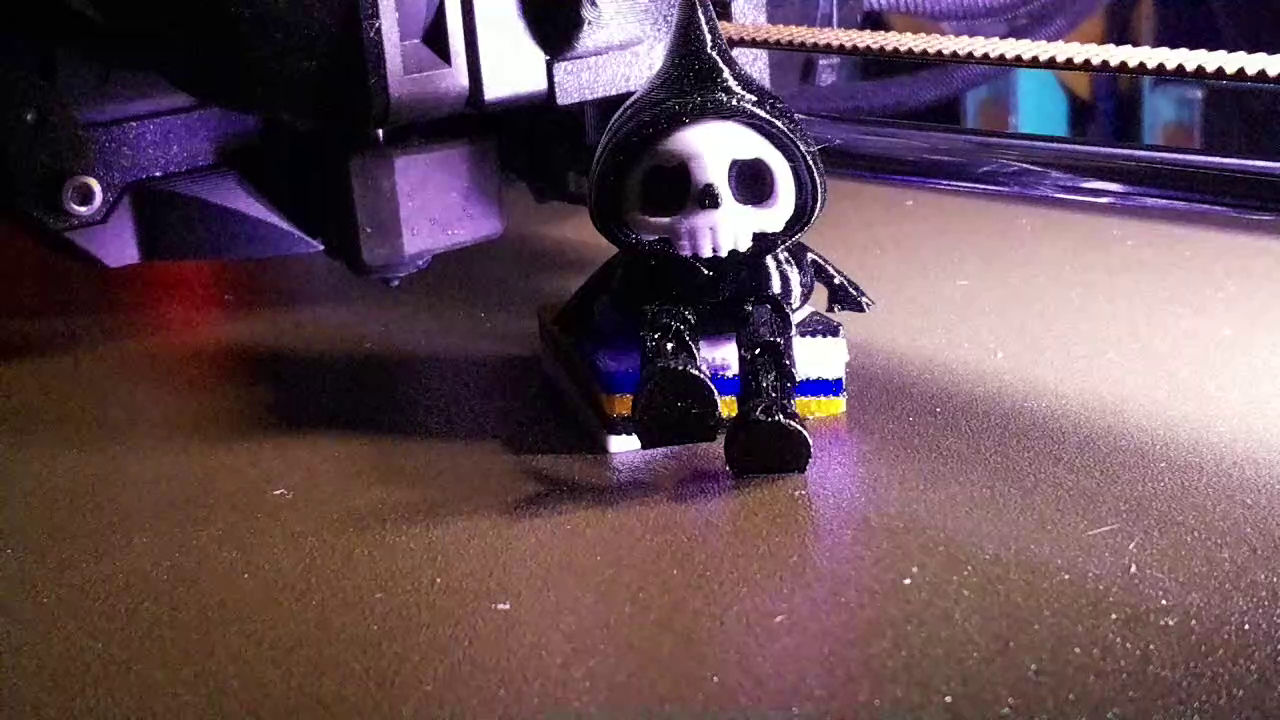
Looking over the camera’s shoulder in normal shop lighting suggests it’s about right:

 The Smell of Molten Projects in the Morning