The Smell of Molten Projects in the Morning

Ed Nisley's Blog: Shop notes, electronics, firmware, machinery, 3D printing, laser cuttery, and curiosities. Contents: 100% human thinking, 0% AI slop.

Author: Ed

  • OMTech 60W Laser: Repurposing the HV Power Supply Water Protect Input

    OMTech 60W Laser: Repurposing the HV Power Supply Water Protect Input

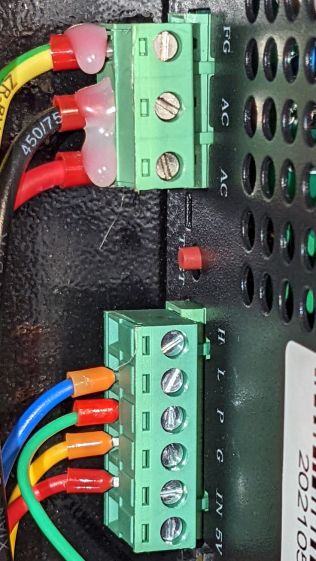
    For reference, the input terminals on the OMTech anonymous 60 W HV laser power supply:
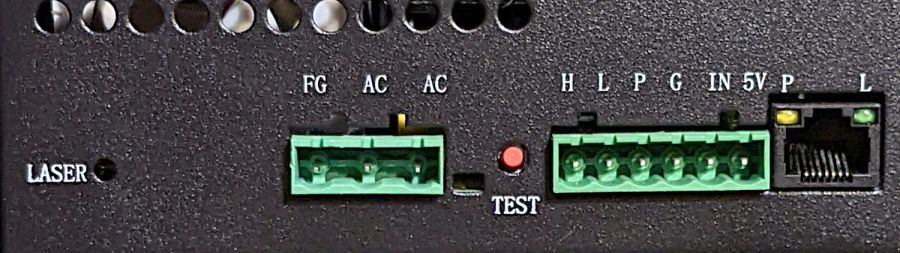
    OMTech 60W HV power supply - terminals
    OMTech 60W HV power supply – terminals

    AFAICT, that’s the default layout for all similar power supplies.

    The H and L pins are the High- and Low-active enable inputs that, when it’s working right, control the laser output. The KT332 controller (and, most likely, all RuiDa controllers) produce a low-active output, so you just wire the controller’s output to the L input and you’re done.

    That was the original failure that got me to this point: the power supply ignored its L input and turned the beam on at whatever power the PWM signal on the IN terminal called for. Having that happen was surprising, having it happen with the cabinet lid open was … disturbing.

    The P input is intended for the Water Protect signal from the flow sensor on the laser cooling plumbing. When the water is flowing, the IN terminal will be low and the power supply will pay attention to the L input.

    The power supply arrived with a jumper between the P input and the G ground / common terminal:

    OMTech 60W HV power supply - Water Protect jumper
    OMTech 60W HV power supply – Water Protect jumper

    The jumper holds the P input low = active, meaning the power supply thinks the water is always flowing.

    It turns out that the Water Protect signal goes only to the controller. When it’s inactive = no water flowing, the controller will refuse to fire the laser and also sound an alarm. Running the signal directly to the power supply would result in a puzzling failure-to-fire with no diagnostic from the controller.

    I removed that jumper and added a (green) wire from the Lid Interlock signal at the controller:
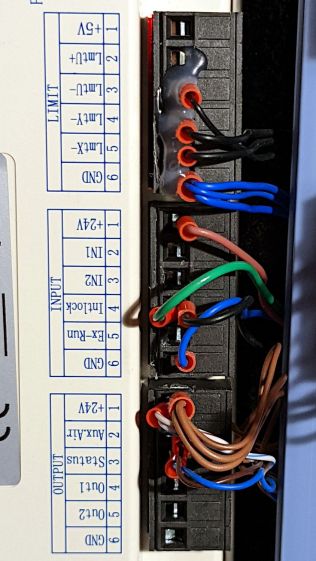
    OMTech KT332 controller - Lid Interlock input - added wire
    OMTech KT332 controller – Lid Interlock input – added wire

    To the power supply’s P input:

    OMTech 60W HV power supply - Water Protect as Lid Interlock
    OMTech 60W HV power supply – Water Protect as Lid Interlock

    In principle, if this power supply fails the same way as the previous one (with its L input always active), then at least it won’t fire with the lid up.

    Believing that may display a childish naivety, but at least the thing seems marginally safer than it was before.
  • Laser-Cut Coaster Kerf Compensation

    Laser-Cut Coaster Kerf Compensation

    Having written some parametric coaster generators, I did this for a Digital Machinist article:

    Chipboard Kerfs - as cut - composite
    Chipboard Kerfs – as cut – composite

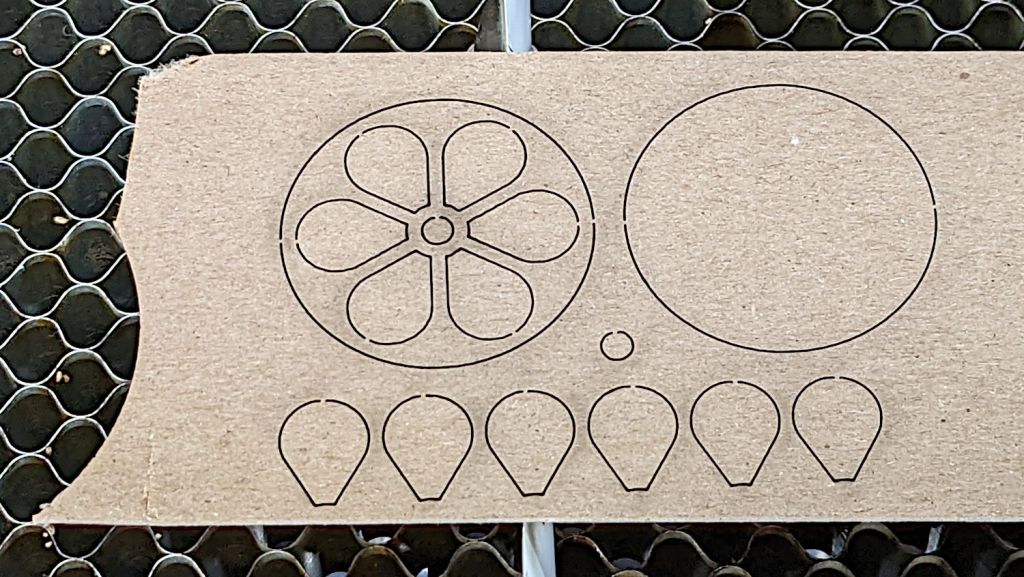
    That’s the top and bottom of a 40 mm diameter chipboard dollhouse coaster. I made it that small to emphasize the laser kerf: a scant 3 mm across the scorched path on the top and barely 1 mm wide through the bottom, with tabs holding the pieces in place.

    The SVG images include the overall frame, as seen above, and the separate pieces for kerf compensation:

    Miniature Coaster - on platform
    Miniature Coaster – on platform

    Embiggening the pieces by 0.15 mm all around produces a very snug fit:

    Chipboard Kerfs - compensated - composite
    Chipboard Kerfs – compensated – composite

    I must eventually try that trick with wood, but at least I managed to get the process down without wasting entire veneer sheets.

  • Discrete LM3909: Drain ‘Em Dry

    Discrete LM3909: Drain ‘Em Dry

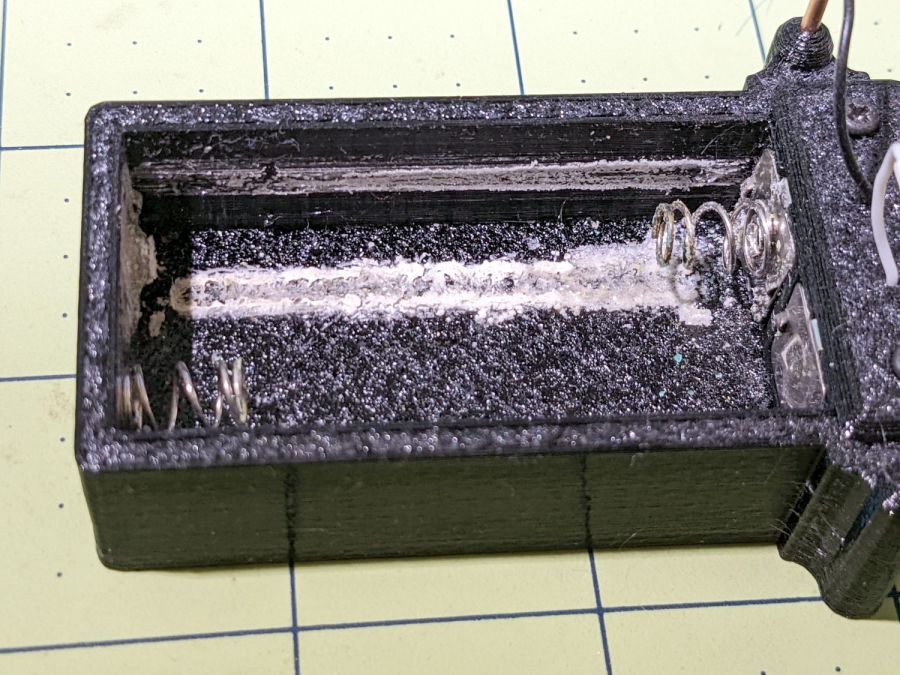
    Given that I put them into a gadget intended to use partially dead alkaline cells, the “05” date on the cells, and that it’s been blinking since last November, I cannot complain when this happens:

    Discrete LM3907 - leaky Duracells - as found
    Discrete LM3907 – leaky Duracells – as found

    I might just fill the battery holder with vinegar and let it fizz for a while:

    Discrete LM3907 - leaky Duracells - corrosion traces
    Discrete LM3907 – leaky Duracells – corrosion traces

    Even my simple discrete LM3909 circuit can blink a blue LED from a battery producing under 1 V, but those cells were flat dead. Gotta look over there more often, I suppose.

  • Chipboard Thickness

    Chipboard Thickness

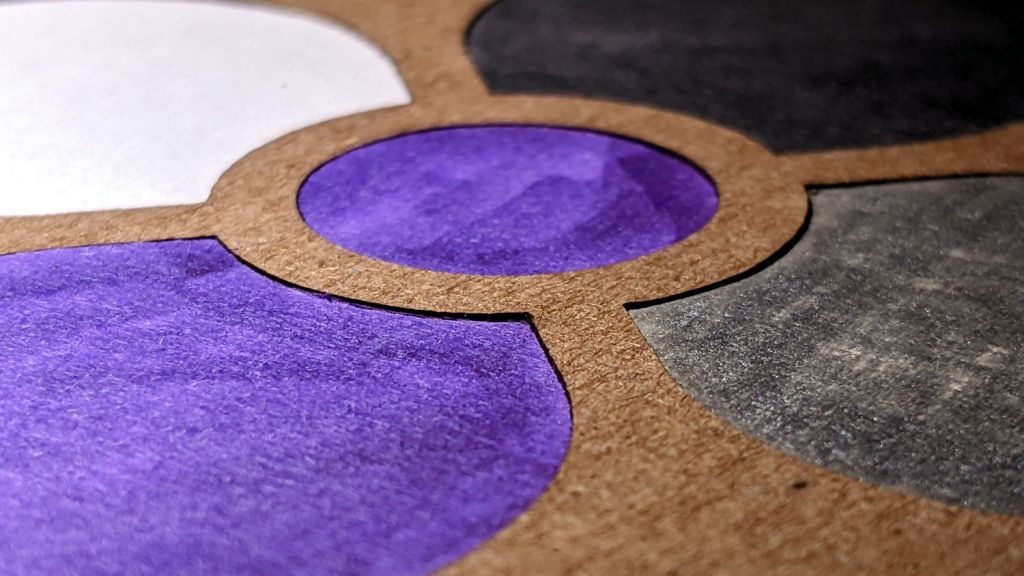
    Yes, there really is a difference between 35 mil and 57 mil chipboard:

    Chipboard coaster - 35 mil white vs 57 mil kraft
    Chipboard coaster – 35 mil white vs 57 mil kraft

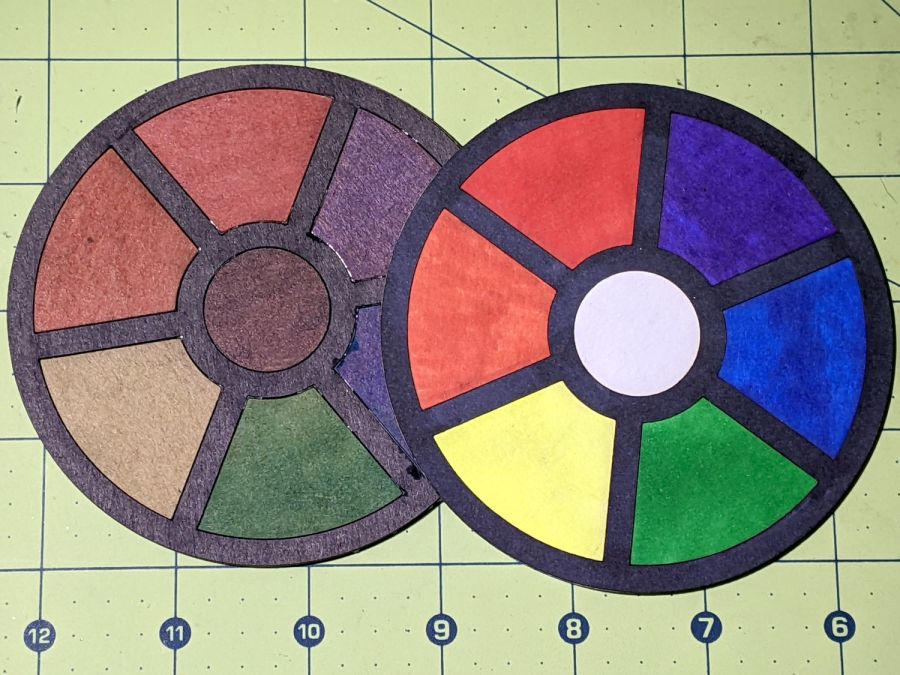
    The thinner leaves (0.92 mm) have one delicate white surface that presents much better color when scribbled with fat-tip colored markers. The thicker frame (1.45 mm) is ordinary kraft chipboard which seems much more durable and looks terrible when colored.

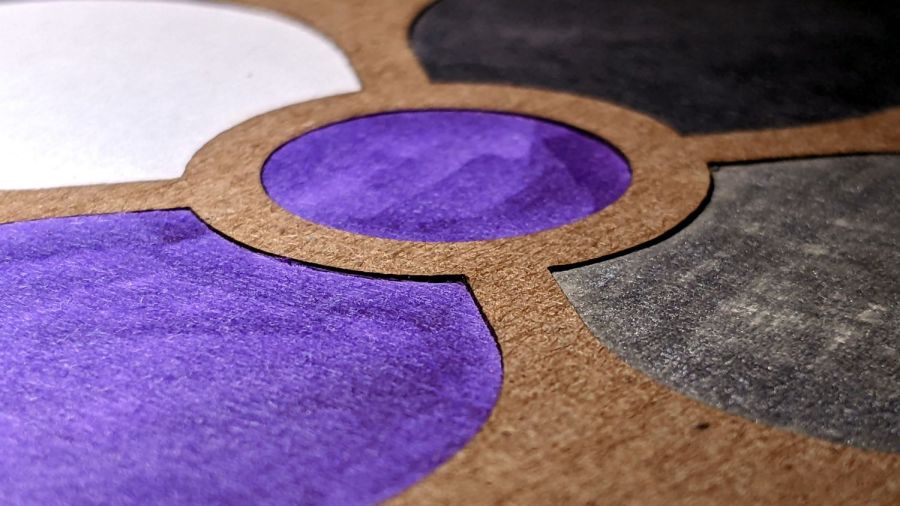
    The difference is obvious:

    Chipboard coaster - plain vs white
    Chipboard coaster – plain vs white

    Although it may be a case of gilding the dandelion, a durable kraft frame sets off the petal colors and, being slightly thicker, may also protect them from immediate destruction by sweaty drinks.

    We’re talking artsy coasters here, not cheap disposable junk. Right?

    Riiiight!

  • Smashed Glass Coaster #2: Mirror Base FTW

    Smashed Glass Coaster #2: Mirror Base FTW

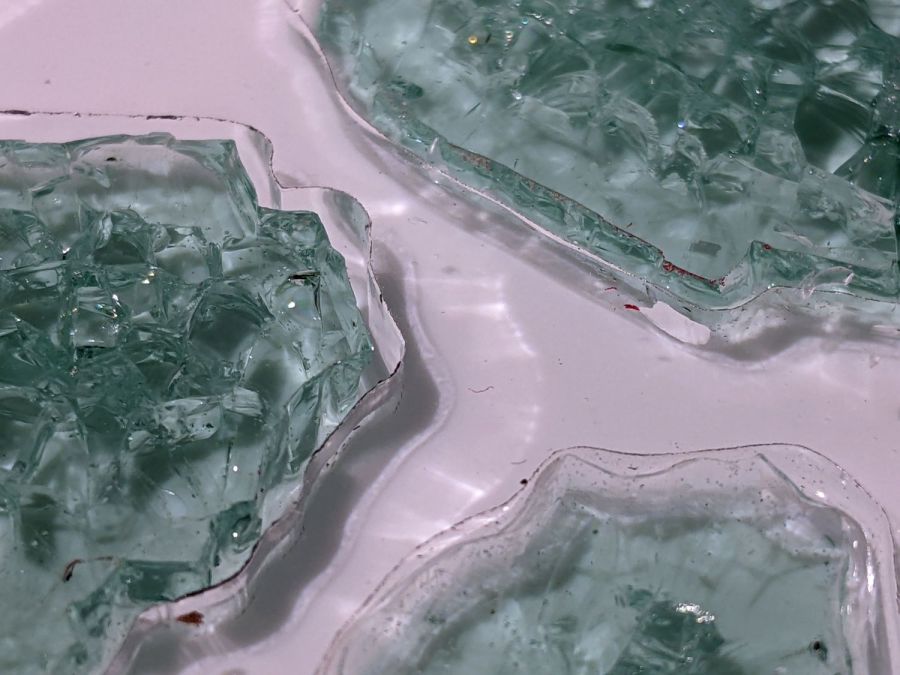
    Glass fragments bedded on clear epoxy atop a white base looked OK, albeit minus most of their glitter due to epoxy filling their cracks:

    Glass Coaster - fragment edge detail
    Glass Coaster – fragment edge detail

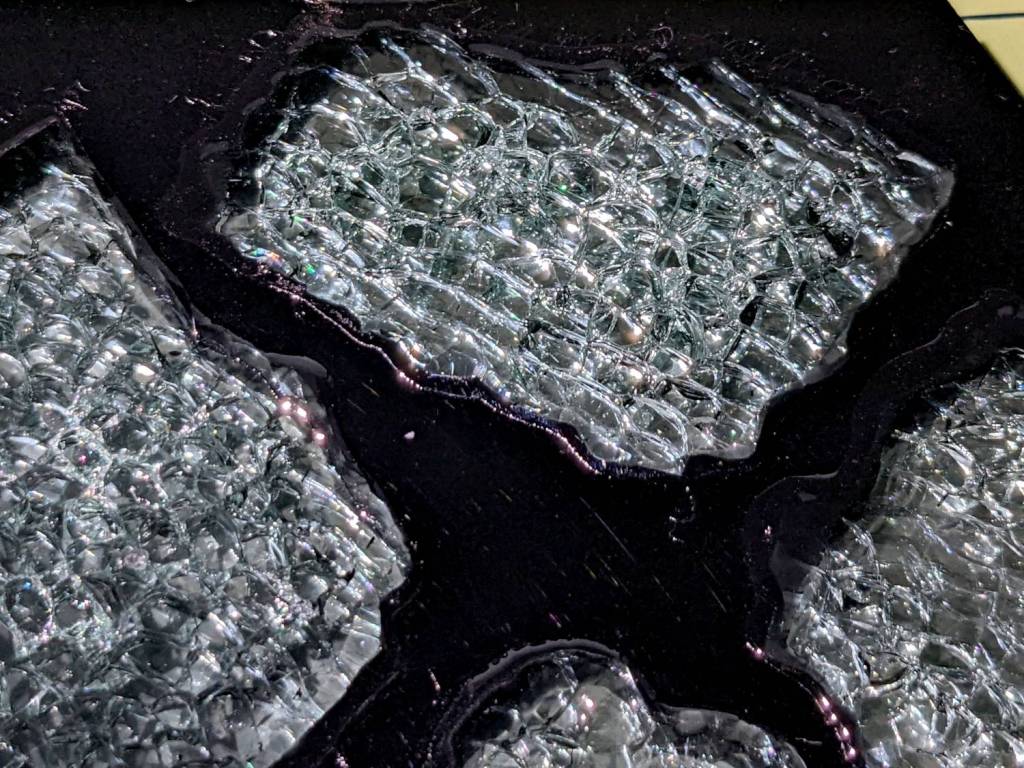
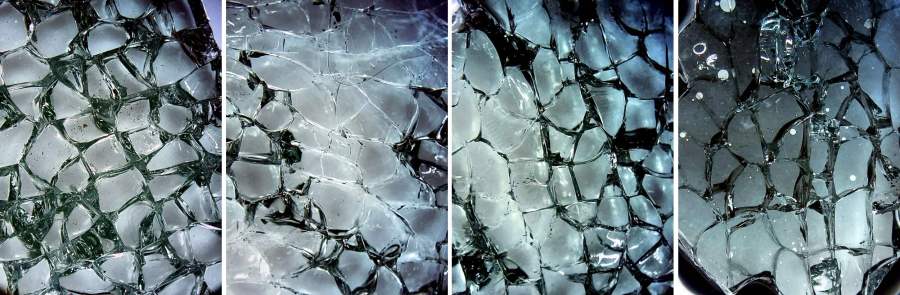
    Filling the cracks with black epoxy makes them stand out:

    Smashed Glass vs epoxy - magnified comparison
    Smashed Glass vs epoxy – magnified comparison

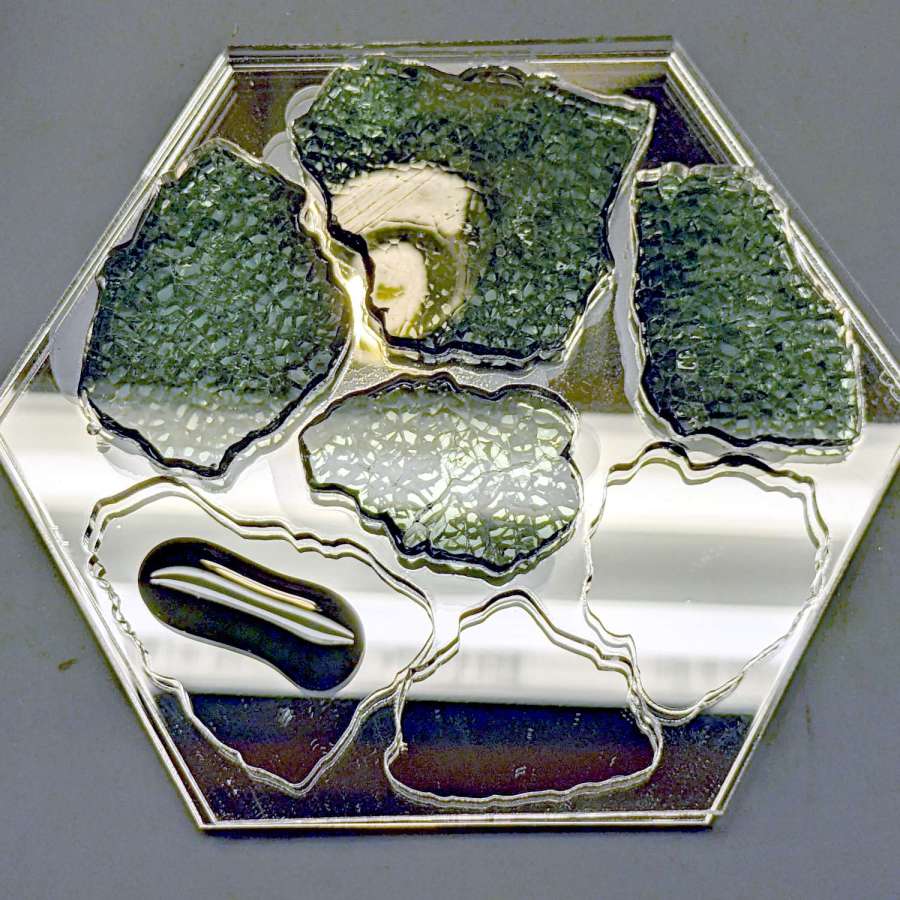
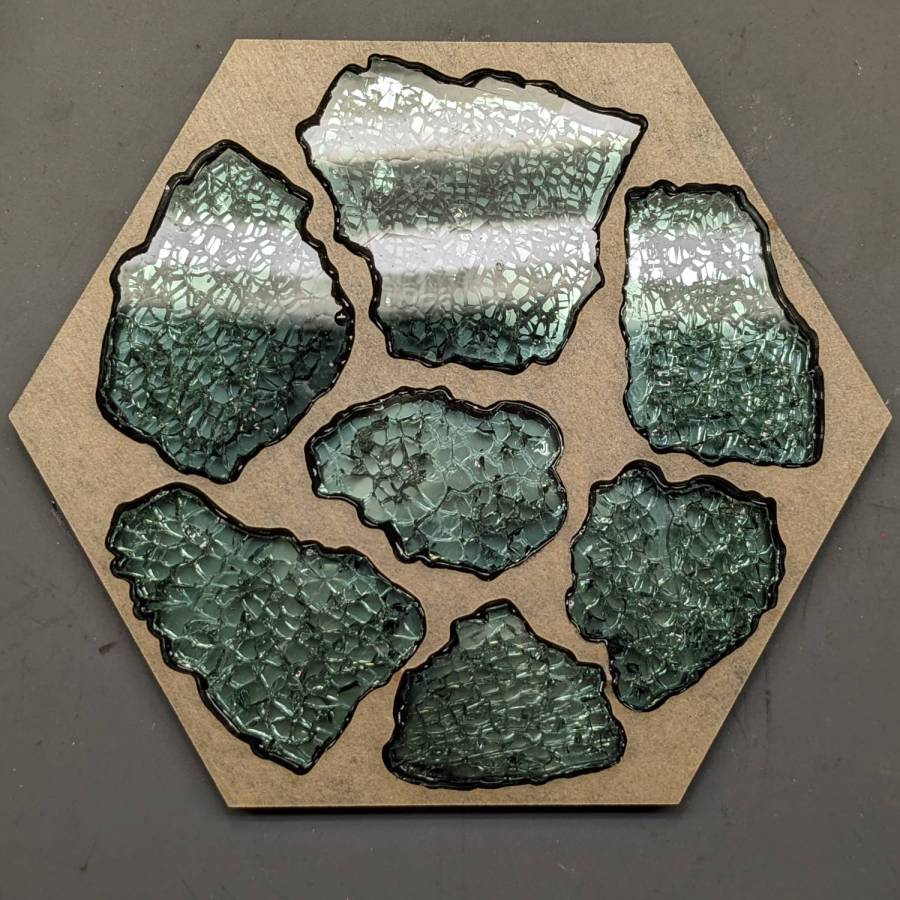
    So I assembled a coaster from shattered glass in a clear surround with black epoxy atop a mirror base:

    Smashed Glass Coaster 2 - mid-layer glass pour
    Smashed Glass Coaster 2 – mid-layer glass pour

    Each fragment sits on a blob of black epoxy that eventually oozed out to fill the gap between the mirror and the transparent layer. You can see the oozing start around the two fragments in the upper left.

    A top layer of black acrylic sits flush with the upper surface of the glass, seen here with the protective paper in place before pouring black epoxy into the gap around the perimeter of each fragment:

    Smashed Glass Coaster 2 - masked top
    Smashed Glass Coaster 2 – masked top

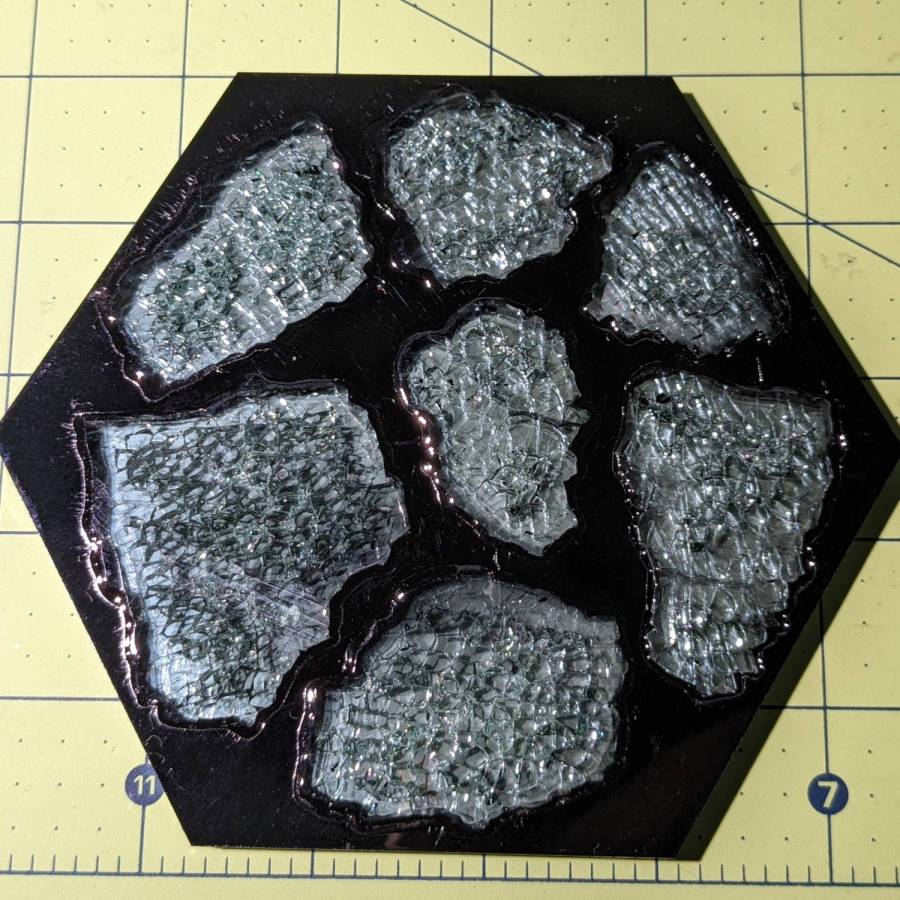
    Peeling the paper away exposes an almost perfect surface, with the epoxy forming a slight curve between the black acrylic and the glass:

    Smashed Glass Coaster 2 - overview
    Smashed Glass Coaster 2 – overview

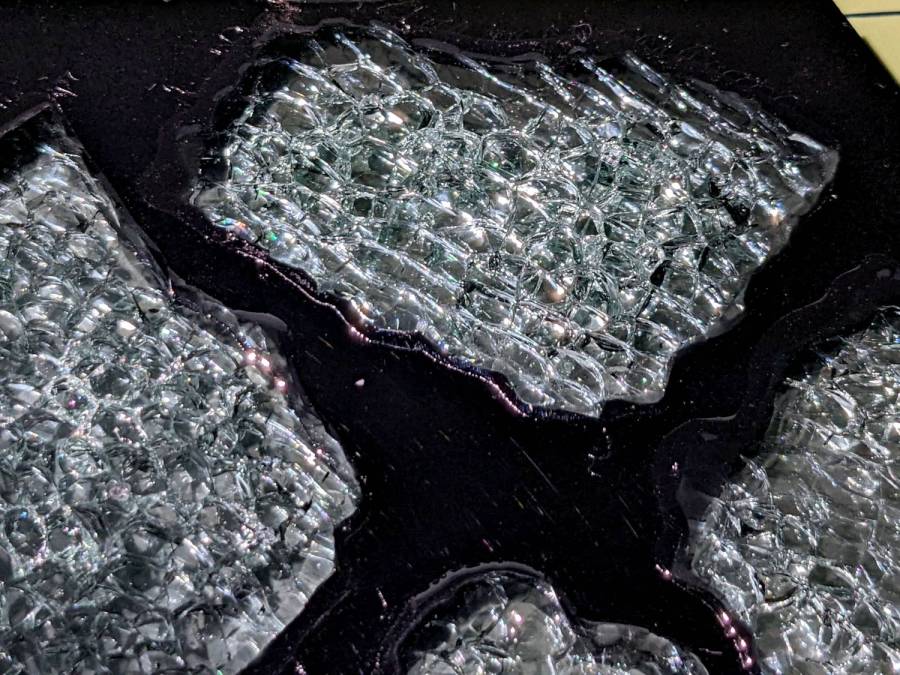
    The mirror doubles the number of glass cuboids and their glittery gaps:

    Smashed Glass Coaster 2 - fragment detail
    Smashed Glass Coaster 2 – fragment detail

    All in all, it turned out well, but the epoxy pouring and leveling is tedious.

    It might be possible to assemble a coaster upside-down, with the black layer stuck to something like Kapton tape and the fragments carefully aligned in their openings to make the entire top surface a plane. The tape should keep the epoxy from oozing out of the gaps, although a perfect seal may be impossible.

    Then fill the gaps with black epoxy, lay the clear middle layer in place, run a dollop of epoxy on each fragment, lay the mirror in place, and hope there’s enough epoxy to fill all the gaps and not enough to make a mess around the perimeter.

    With a bit of luck, that wouldn’t require so much hand finishing.

    The next coaster must have a perimeter shrinkwrapped around the fragments, if only to break the low-vertex-count polygon tradition.

  • High Impact Art: Smashed Glass Coaster Meniscus Removal

    High Impact Art: Smashed Glass Coaster Meniscus Removal

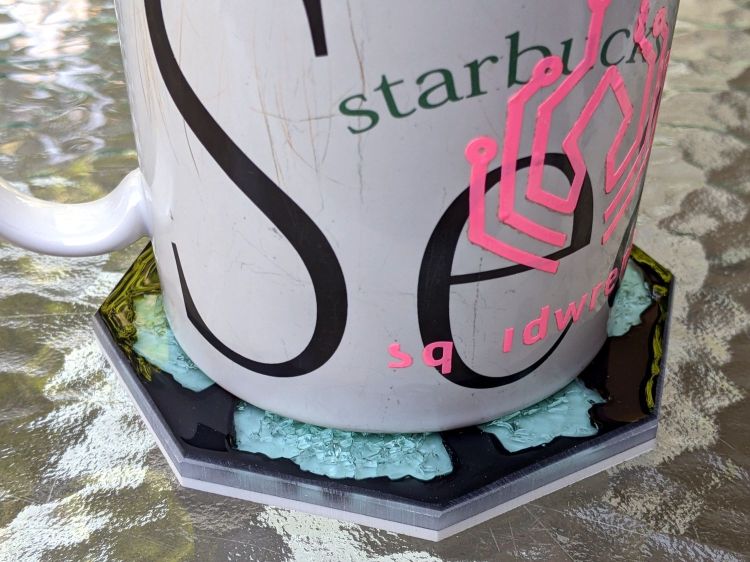
    After using the smashed glass coaster for a while, the beveled epoxy meniscus around the perimeter proved itself more annoying than expected:

    Glass Coaster - second test
    Glass Coaster – second test

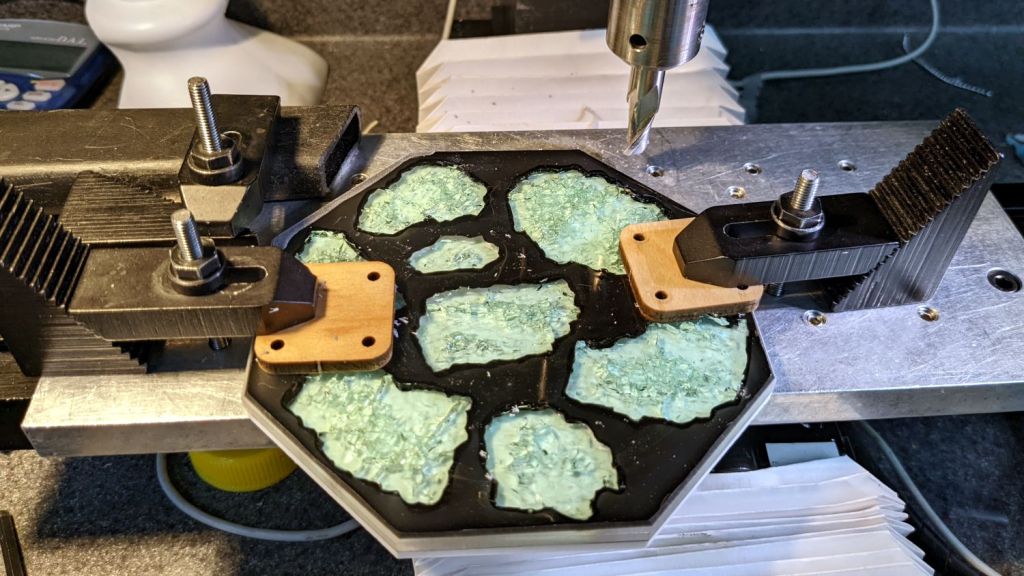
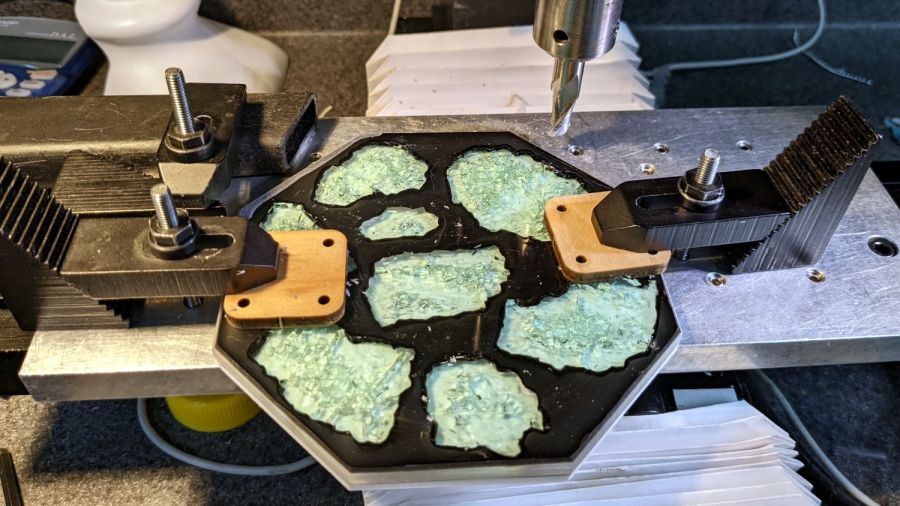
    So I clamped it to the Sherline’s tooling plate and milled off the rim:

    Smashed Glass Coaster - meniscus removal
    Smashed Glass Coaster – meniscus removal

    Given the Sherline’s cramped work envelope, all the action took place along the rearmost edge, requiring eight reclampings indexed parallel to the table with a step clamp.

    The cutter cleared off everything more than 0.3 mm above the surface of the glass chunks. I could probably have gone another 0.1 mm lower, but chopping the bit into the edge of a shattered glass fragment surely wouldn’t end well.

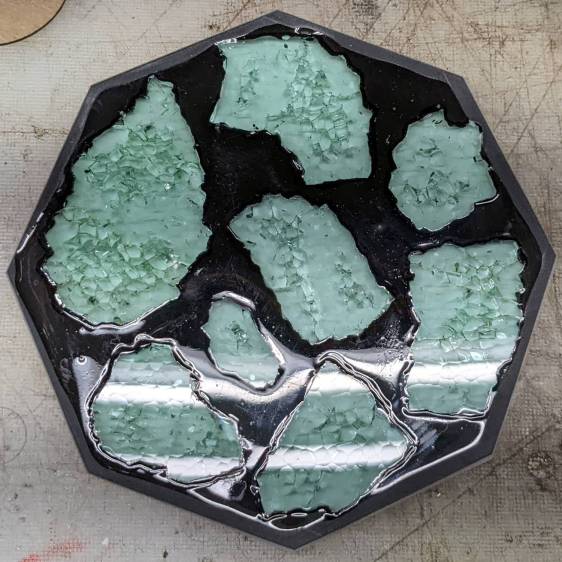
    Polishing the dark gray milled surface might improve it slightly, at the risk of scuffing whatever poured epoxy stands slightly proud of the glass:

    Smashed Glass Coaster - leveled edge
    Smashed Glass Coaster – leveled edge

    Perhaps if I define it to be a border, everybody will think it was intentional.

  • Rounded Petal Acrylic Coaster

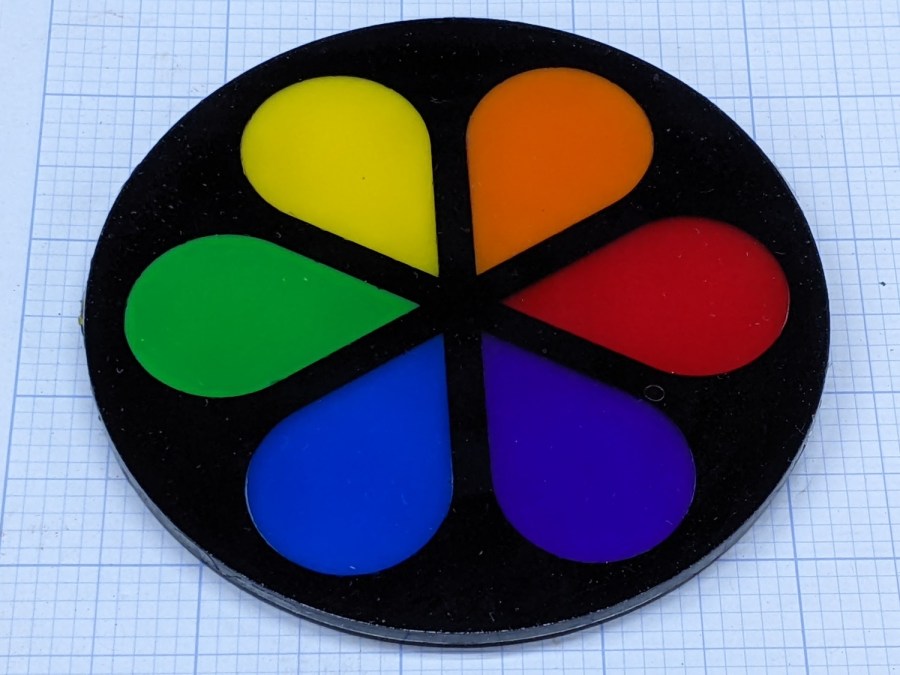
    Having gotten the rounded-petal pattern generator working, applying it to acrylic sheets seemed reasonable:

    Cut Acrylic Coaster - top cleaned
    Cut Acrylic Coaster – top cleaned

    The petals stand slightly proud of the black top frame, as the colored sheets were marginally thicker than the black sheet, but it looks OK in person. They’re all epoxied to a transparent base plate, so the bottom view is pretty much the same:

    Cut Acrylic Coaster - bottom
    Cut Acrylic Coaster – bottom

    Because the bottom is perfectly smooth, I think it looks better than the top, which shows irregularities around the petals where the epoxy didn’t quite fill the gaps. There is one small bubble you won’t notice if I don’t tell you about it.

    I laid a small bead of epoxy around the perimeter of the base, laid the black frame in place, ran a bead along the midline of each petal shape plus a drop in the round part, laid the petals in place, and hoped I didn’t use too much epoxy. It turned out all right, with only a few dribbles down the edge that wiped off easily enough.

    I peeled the protective plastic off the top while the epoxy was still tacky, which pulled far too many fine filaments across the surface:

    Cut Acrylic Coaster - frayed top
    Cut Acrylic Coaster – frayed top

    After the final cure, I managed to scrape most of them off with a thumbnail; I hope to never make that mistake again.

    As you might expect, acrylic plastic’s pure saturated colors wipe the floor with Sharpie-scribbled white chipboard:

    Chipboard coaster - rounded petals - front vs back cut
    Chipboard coaster – rounded petals – front vs back cut

    The black frame makes the whole thing overly dark, so the next attempt should use white or perhaps a transparent layer atop a mirror base.