Ed Nisley's Blog: Shop notes, electronics, firmware, machinery, 3D printing, laser cuttery, and curiosities. Contents: 100% human thinking, 0% AI slop.
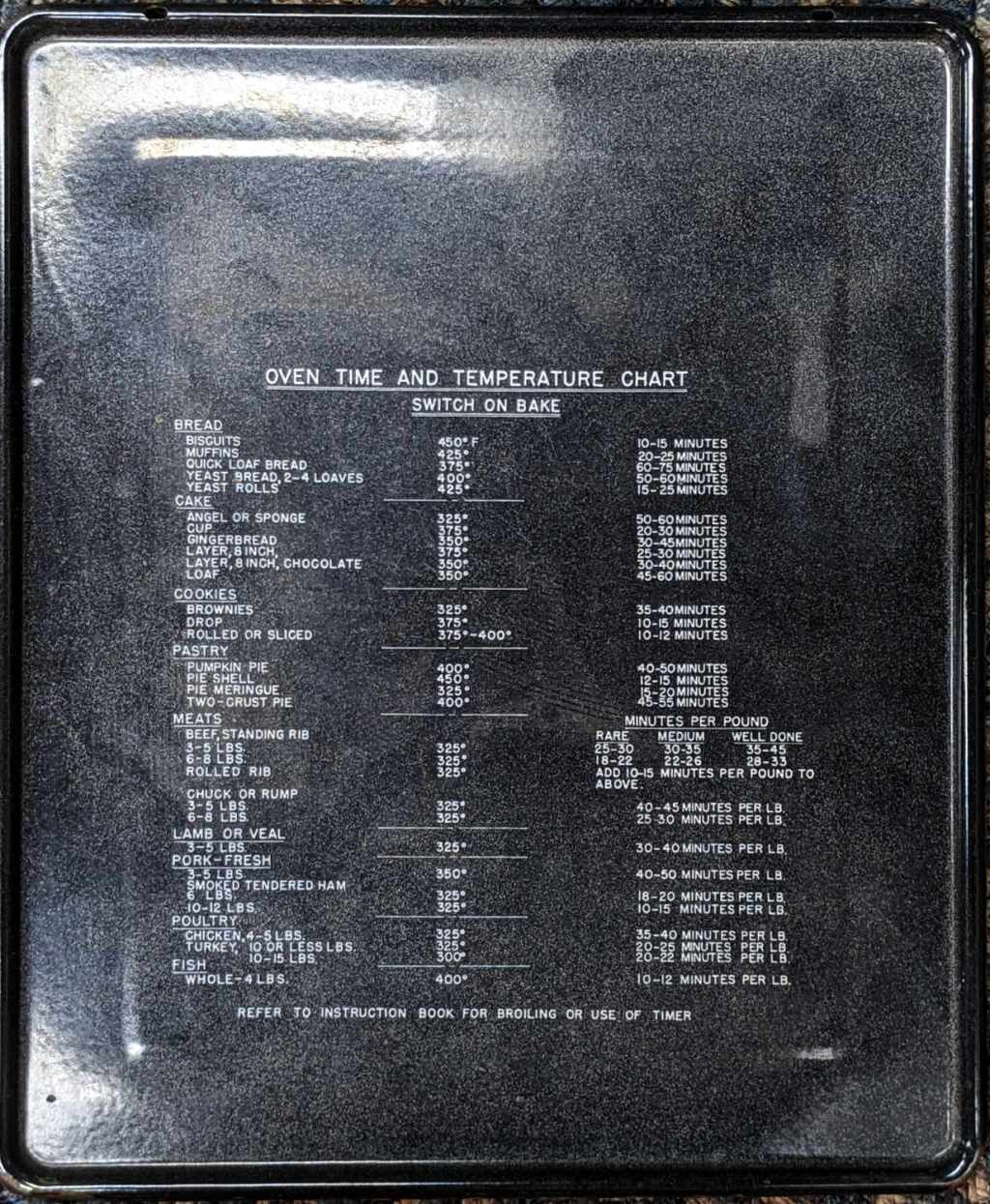
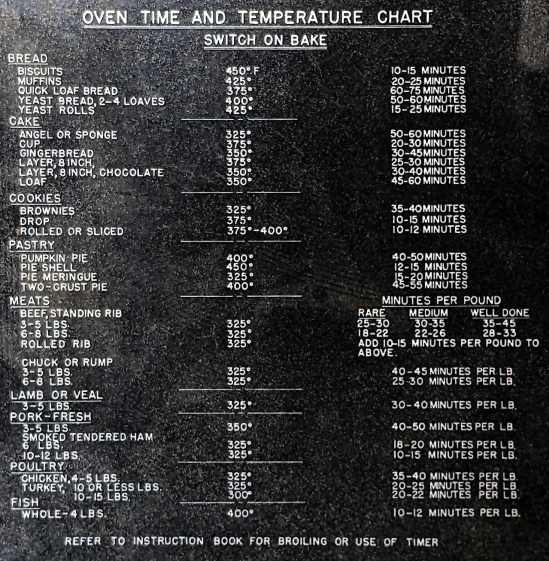
I can’t vouch for their accuracy, but finding recommended baking temperatures and times printed exactly where they will come in handy seems like a great idea.
It’s another example of the rule Eks taught me: When you must look up something, write it where you will need it the next time.
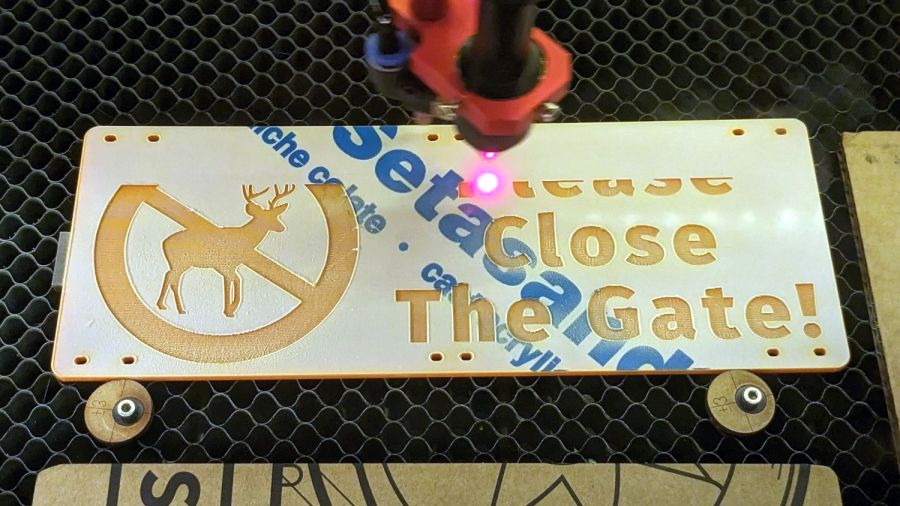
The MDF signs I made last year disintegrated pretty much on the expected schedule, so it’s time for something more durable:
Please Close The Gate – acrylic engraving
The idea is to engrave both sides of a 3 mm orange acrylic sheet, shoot it with rattlecan black paint, and declare victory. The second step awaits warmer weather, but at least I’m doing my part to prepare for the new gardening season.
Vaporizing that much acrylic produces a fair bit of debris:
Please Close The Gate – acrylic dust on laser head
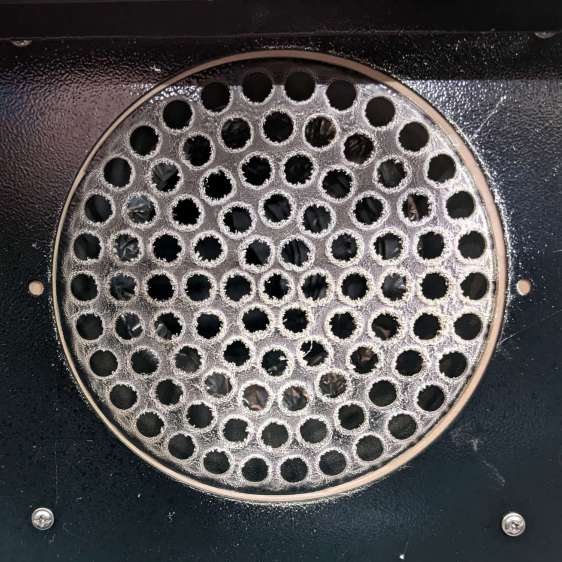
Some dust / vapor accumulates / condenses on the honeycomb platform beyond the orange sign, but most of it gets through to the baffle on the exhaust duct:
Please Close The Gate – acrylic dust on exhaust port
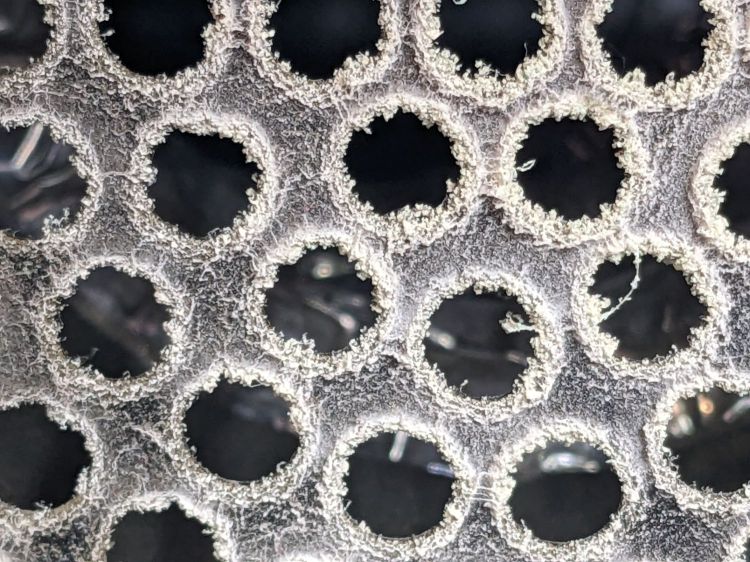
A closer look shows it really does grow out from the perimeter of each hole:
Please Close The Gate – acrylic dust on exhaust port – detail
Now, if that doesn’t trip your trypophobia, nothing will …
A few passes with the trusty Electrolux vacuum’s dust brush brought the visible surfaces back to normal.
By now, the duct fan blades have surely layered on a good coating, too, which shall remain undisturbed until I find a better reason to open the duct.
A LightBurn forum discussion about problems making Z-scale (1:220) bricks led me to trying a few ideas on the way to figuring out what was going wrong.
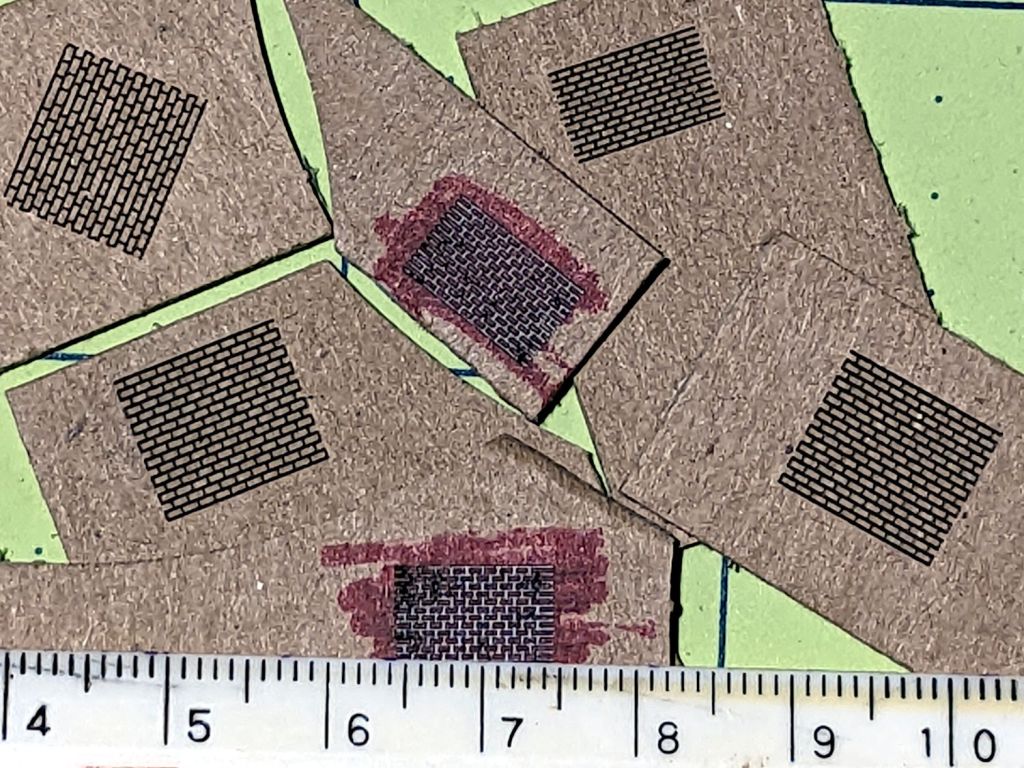
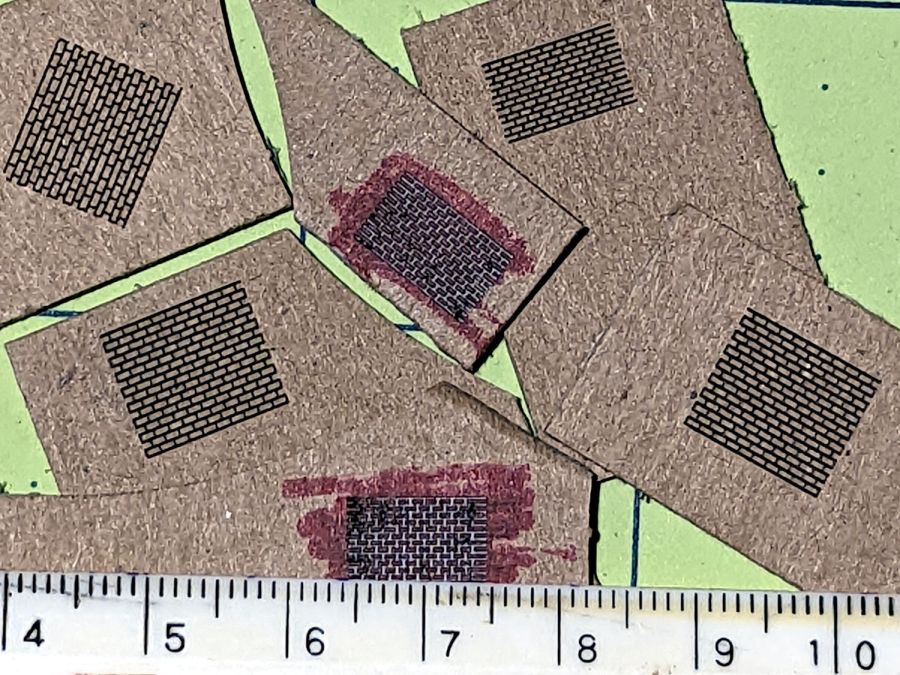
Each brick is about 1.0×0.5 mm, so an entire wall doesn’t cover much territory:
Z-scale bricks – assortment
Yes, those are millimeters along the scale.
The kerf on my 60 W CO₂ laser seems slightly wider than the “mortar” lines should be, so I made a layout with the vertical lines slightly inset from the horizontal ones:
Z Scale Brick Wall – LB layout
That let the kerf complete the lines without burning into the adjacent bricks:
Z Scale Brick Wall – laser lines
The cuts are obviously too wide (and deep!), but just for fun I colored the chipboard with red marker and rubbed a pinch of flour into the lines:
Z Scale Brick Wall – color and flour
Which looks chunky, but not terrible, for what it is. Maybe concrete blocks would look better?
The next attempt started with a raster bitmap scaled at 254 dpi = 10 pix/mm, so that single-pixel “mortar” lines between 10×5 pixel bricks would be 0.1 mm wide:
Raster Z-Scale Bricks
Scanning the image at 100 mm/s makes each pixel 1 ms “wide” and, because the power supply risetime is on the order of 1 ms, the laser won’t quite reach the 10% power level across the vertical lines:
Raster Z-Scale Bricks – LB layer settings
The raster lines come out lighter and (IMO) better looking:
Z Scale Brick Wall – raster lines
The horizontal lines are darker because the beam remains on at 10% across their full length, but the overall result seems much closer to the desired result.
The original poster will use a diode laser and, combining all the ideas we came up with, now has a path toward making good, albeit invisibly small, bricks.
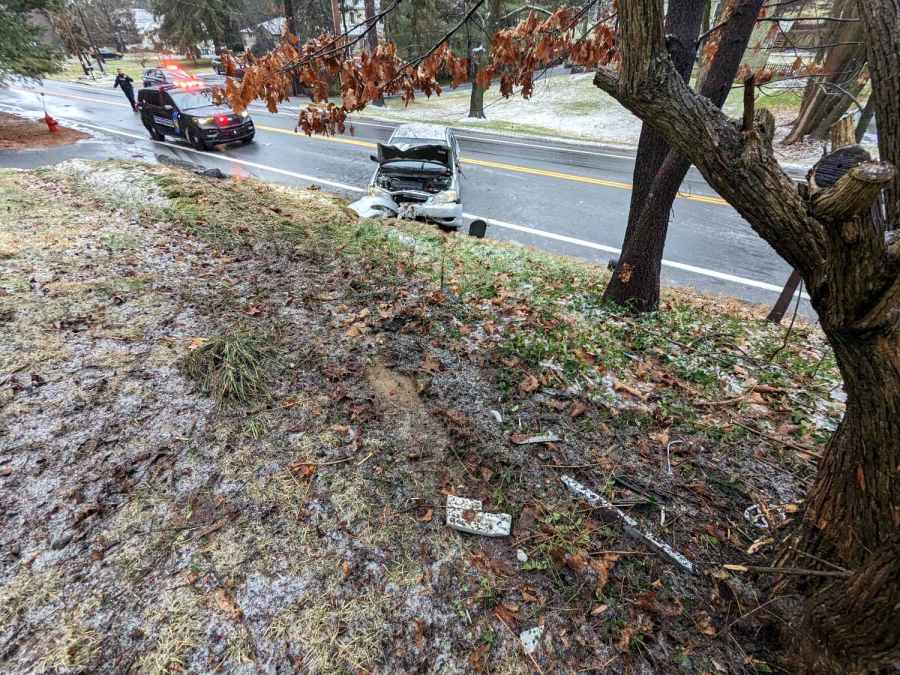
Rt 376 had accumulated some sleet overnight and freezing rain was still falling. The driver apparently lost control around the curve, missed the fire hydrant behind me, and went up the embankment sideways at a pretty good clip.
As far as I can make out, the left front door took out the mailbox post, which was the stump of a utility pole installed long before we bought the property:
Mailbox killer – snapped post
Admittedly, the post was rotten around its base, but remained a substantial chunk of wood. The black plastic curl is the air deflector formerly sealing the front of the car’s undercarriage.
Seen from the far end of the debris field, the car smashed dead center into the mighty honeysuckle bush, shed a variety of small parts, recoiled backwards, and tagged the tree as it rolled down the embankment:
Mailbox killer – yard view
The mailboxes sit on the shoulder to the right of the car.
No serious injuries to the driver or passengers, although they got an ambulance ride to the ER to make sure.
Those dents just ain’t gonna buff out:
Mailbox killer – flatbed
I did get three years out of the repaired mailbox hinges and perhaps I should preemptively transfer the hardware to the new mailbox.
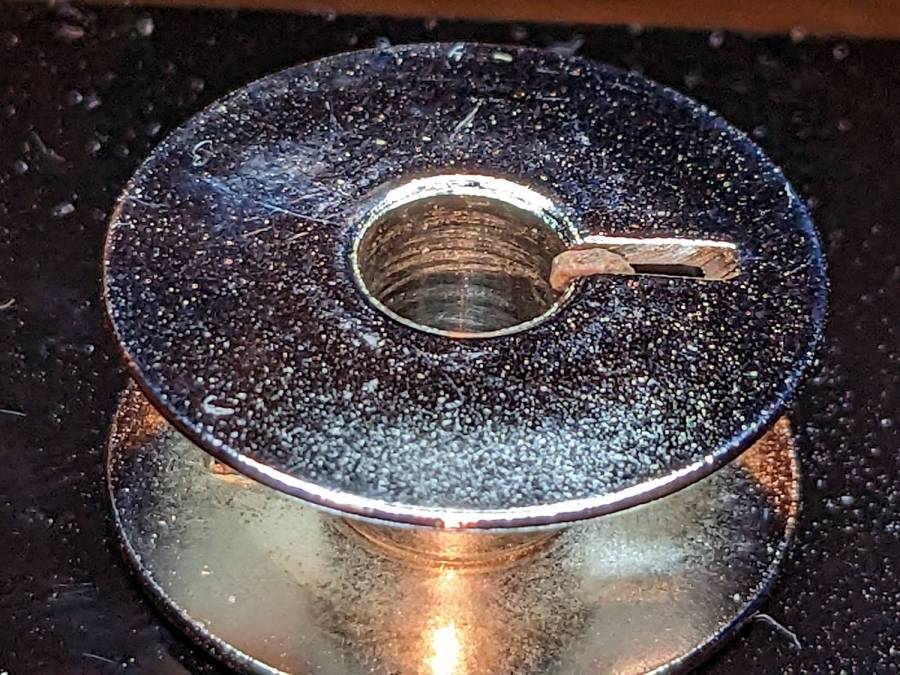
Mary handed me a bobbin with a trouble report: it fit into the bobbin holder either way, but would go into the sewing machine either poorly or not at all.
Based on past experience with this lot of bobbins (*), I expected to find a burr inside the steel hub left behind by the saw cut creating the drive dog slot, so this came as a surprise:
Bobbin Rock – overview
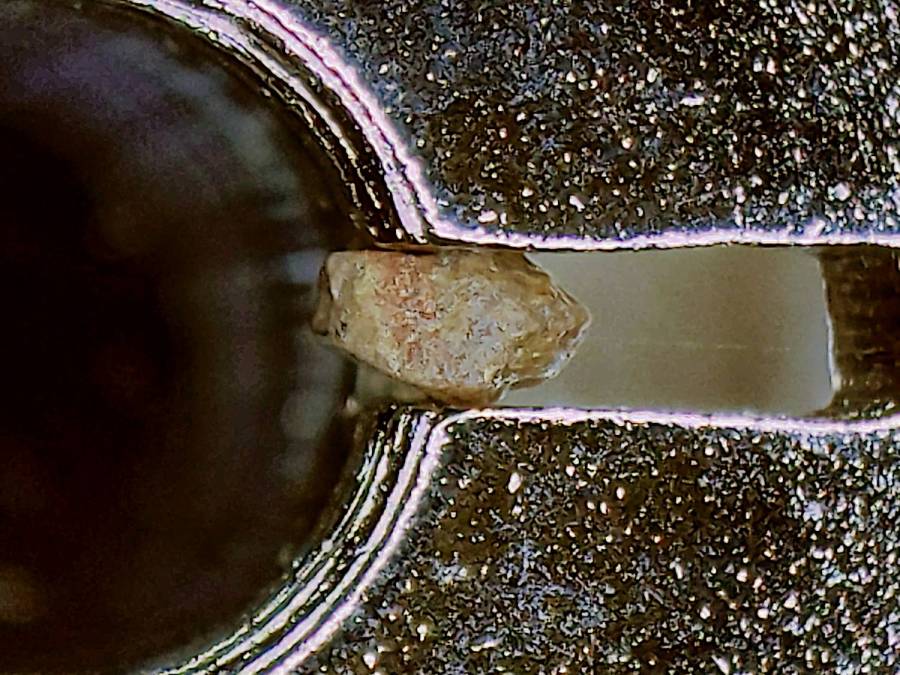
A closer look:
Bobbin Rock – detail
That pebble was jammed in place so firmly I needed a pin punch: a small screwdriver wasn’t enough.
It came new from the factory like that, which makes one wonder just exactly what the factory floor looks like.
More likely, the bobbins spend their last few hours in a vibratory polisher and that little rock just crept with all the walnut shell kibble.
Works fine now, so we’ll call it a win.
(*) I gave her a lot of 100 to ensure she never had to unload a bobbin to keep her new Juki well-fed.








 The Smell of Molten Projects in the Morning