Starting from an SVG file set up for 3 mm material, apply the usual optimizations & tweaks to get a usable LightBurn file, then go nuts:
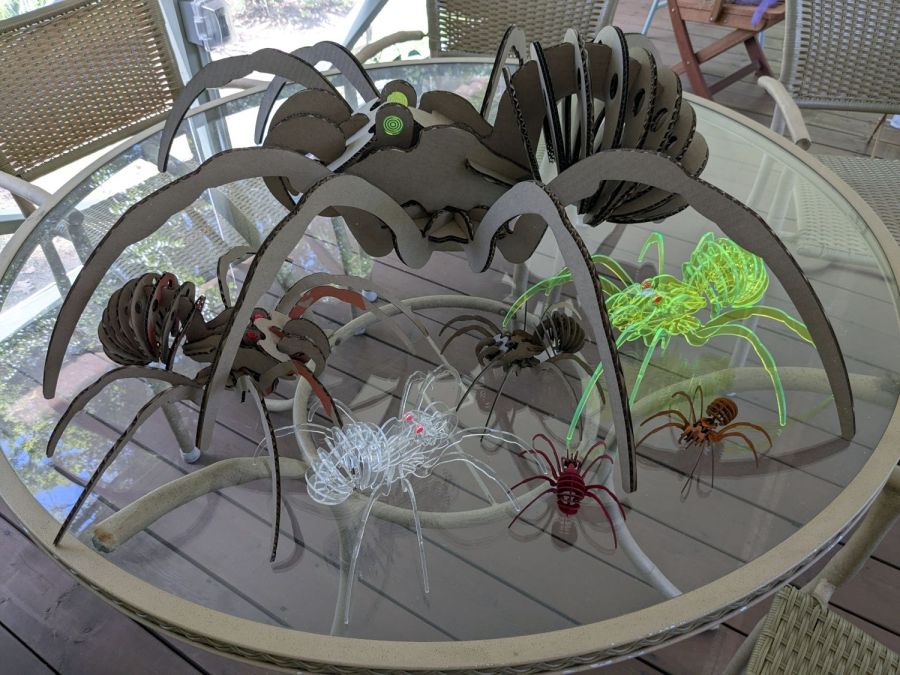
The big one is two cross-laid layers of corrugated cardboard using up the better part of three Home Depot Large moving boxes:

That little bitty grid is the 700×500 mm laser cutter platform, so I just slap a sheet of cardboard in place, update the workspace from the camera, select the next layout, drag it over the cardboard, and Fire The Laser.
The smaller cardboard spider over on the left is built with a single cardboard layer and succumbed to the square-cube law: the legs are entirely too bendy for the weight of the body. Although it’s not obvious from the pictures, both cardboard spiders have a keel plate I added under the body to support most of their weight.
The brightly colored little spiders got a coat of rattlecan paint without any underlying primer and definitely look like that happened:

The edge-lit fluorescent green spider is sized around 2.9 mm material, the clear spider uses 2.3 mm acrylic, and the chipboard one in the background is at 1.8 mm:

The eyes are fluorescent red or green acrylic with concentric circles engraved to catch the light. They’re more effective than I expected, although they won’t look like much after dark.
We now live in a neighborhood with youngsters and Halloween this year will be so much fun …
The WordPress AI image generator caught the general idea of “cardboard spiders”:
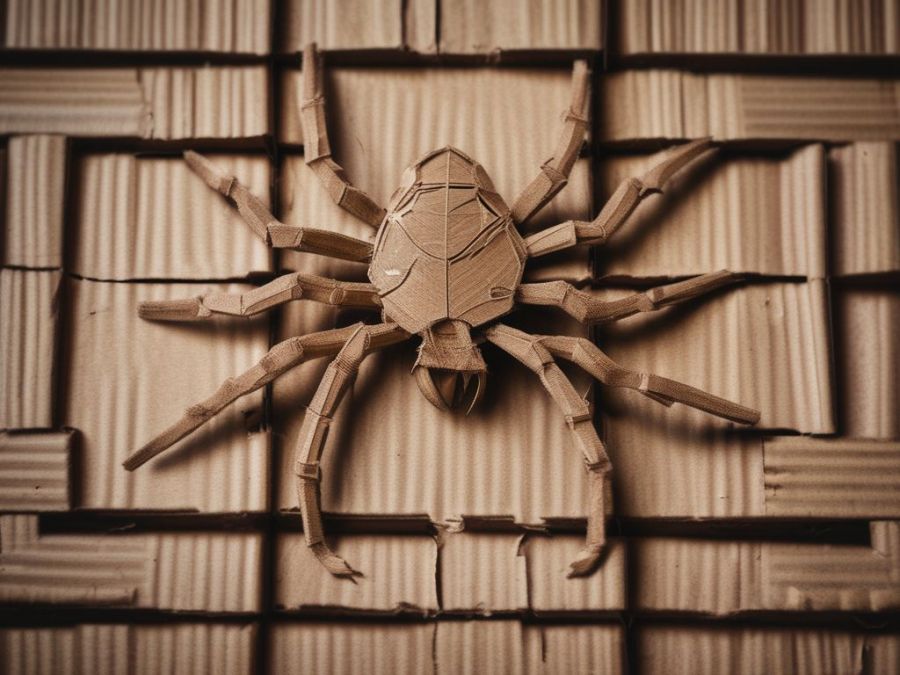
So. Many. Legs.
 The Smell of Molten Projects in the Morning
Comments
2 responses to “Slotted Spiders”
[…] This seemed like a good idea for dispensing small drops of acrylic solvent while gluing spiders together: […]
[…] It’s not all slotted animals all the time around here […]