Ed Nisley's Blog: Shop notes, electronics, firmware, machinery, 3D printing, laser cuttery, and curiosities. Contents: 100% human thinking, 0% AI slop.
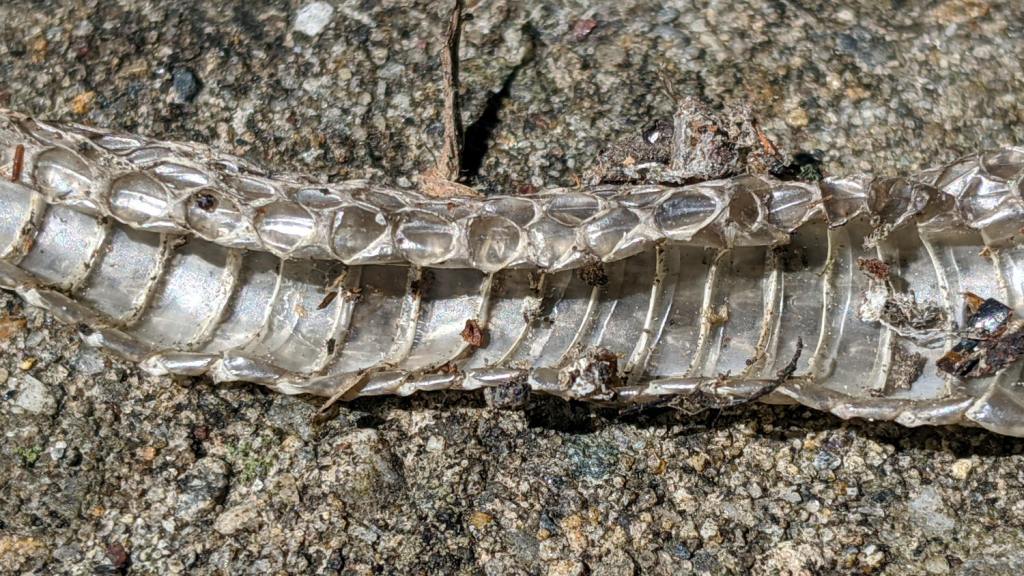
A shed snakeskin appeared when I opened the garage door:
Snakeskin – overview
The skin sits atop the retaining wall next to the door, on a stone(-like) background with poor contrast: even an empty snake has good camouflage!
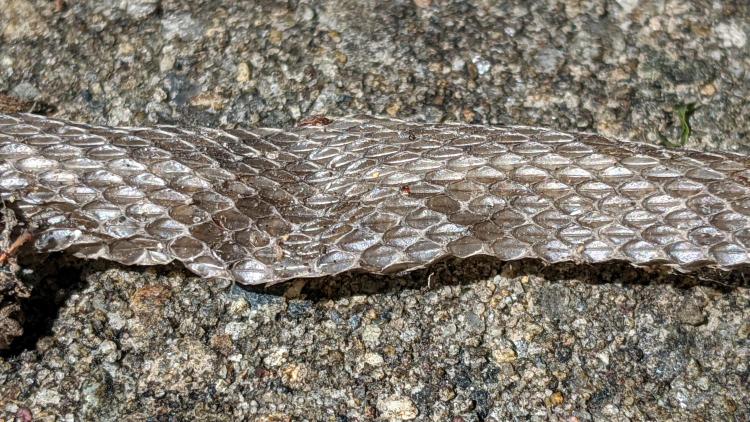
The exterior looks like genuine snakeskin:
Snakeskin – exterior
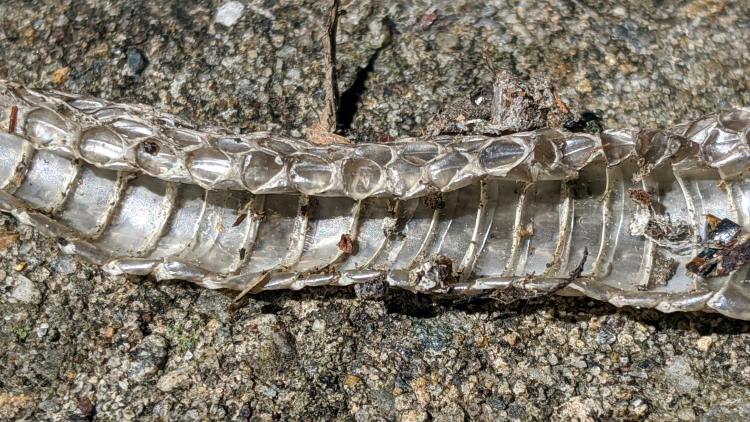
I didn’t know the interior has an entirely different pattern:
Snakeskin – interior
As far as I can tell, the snake was going about its business elsewhere in the yard.
To be fair, there’s some luck involved.
Update: After Mitch nudged me, I found the (somewhat the worse for wear) snakeskin again. The head end was split, much as I described, but the tail end was intact (the snake having pulled out like a finger from a glove) and what I though was the inside of the top was the outside of the bottom, just pushed inward to form a very thin double layer.
The open cells on the back side show the wasps don’t waste any effort on putting mud where it’s not needed:
Organ Pipe Wasp Nest – wall side
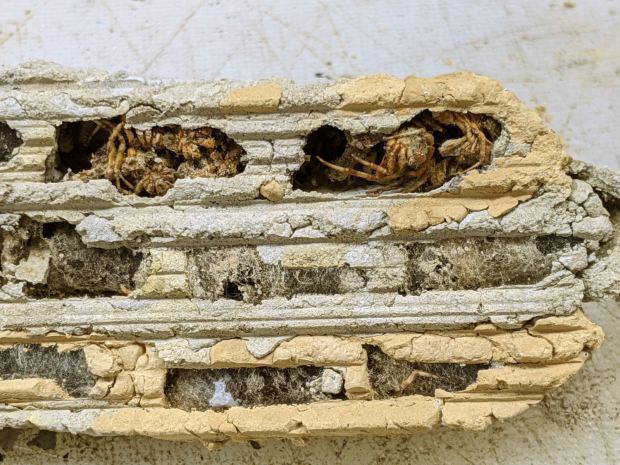
Cracking it in half shows the rugged walls between the cell columns:
Organ Pipe Wasp Nest – cross section
Several cells contained three or four (thoroughly dead!) spiders apiece, evidently the result of un-hatched eggs:
Organ Pipe Wasp Nest – failed egg – spiders
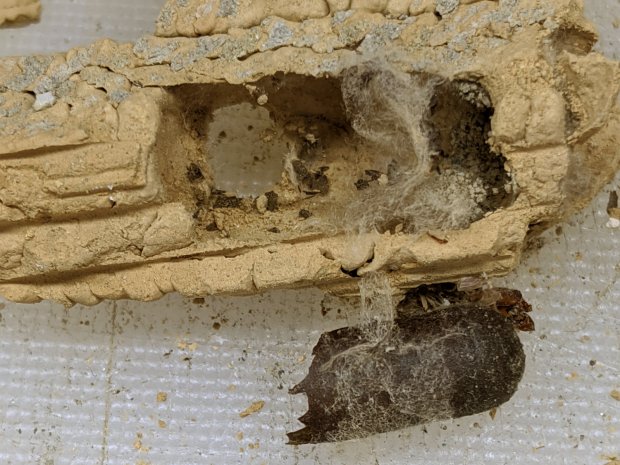
Each successful cell contained a brittle capsule wrapped in a thin cocoon, surrounded by fragments of what used to be spiders, with an exit hole chewed in the side:
Organ Pipe Wasp Nest – capsule detail
I regret not weighing the whole affair, as all that mud represents an astonishing amount of heavy hauling and careful work by one or two little wasps!
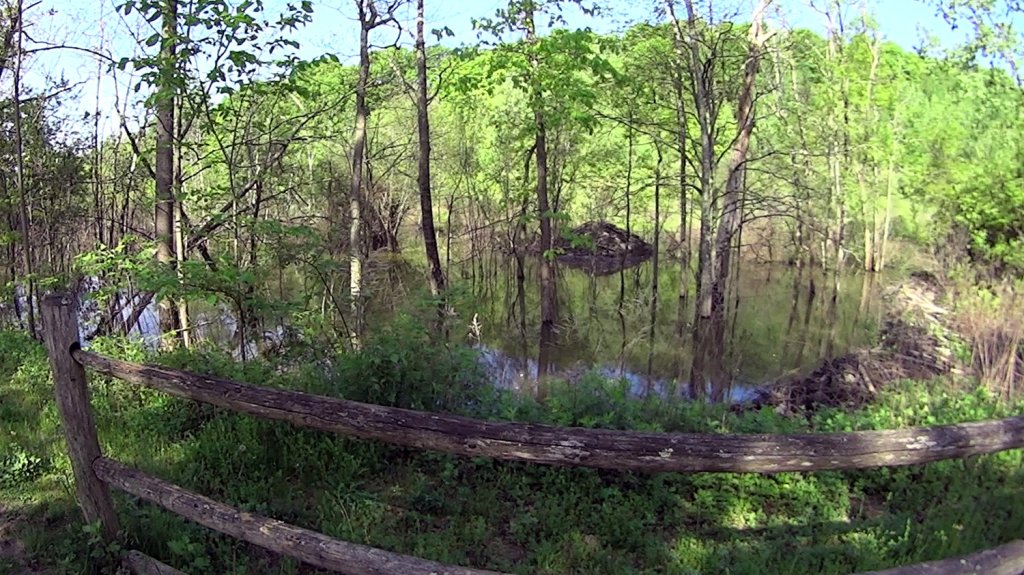
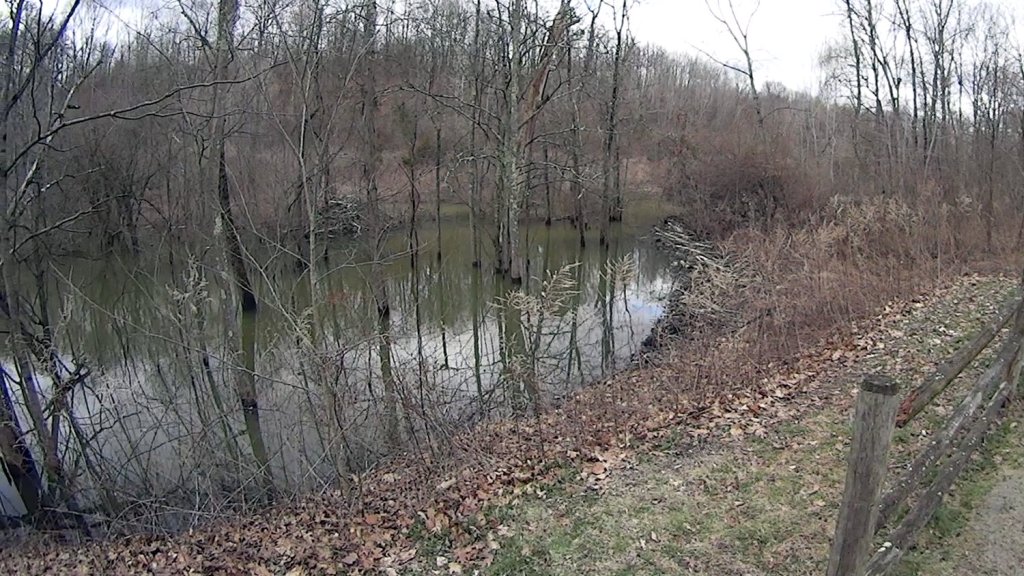
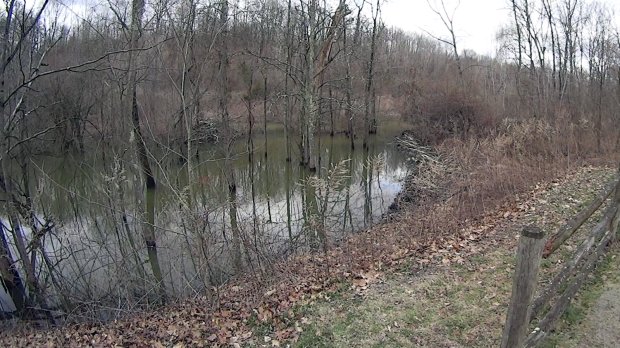
The furry engineers in charge of maintenance laid several layers of branches along the breast of their dam:
Beaver Lodge and Dam – raised dam – 2020-03-31
Their pond is maybe nine inches deeper than a few weeks ago. The rail trail has little danger of flooding, even as the water creeps closer, because the roadbed is higher than the far shoreline.








 The Smell of Molten Projects in the Morning