Ed Nisley's Blog: Shop notes, electronics, firmware, machinery, 3D printing, laser cuttery, and curiosities. Contents: 100% human thinking, 0% AI slop.
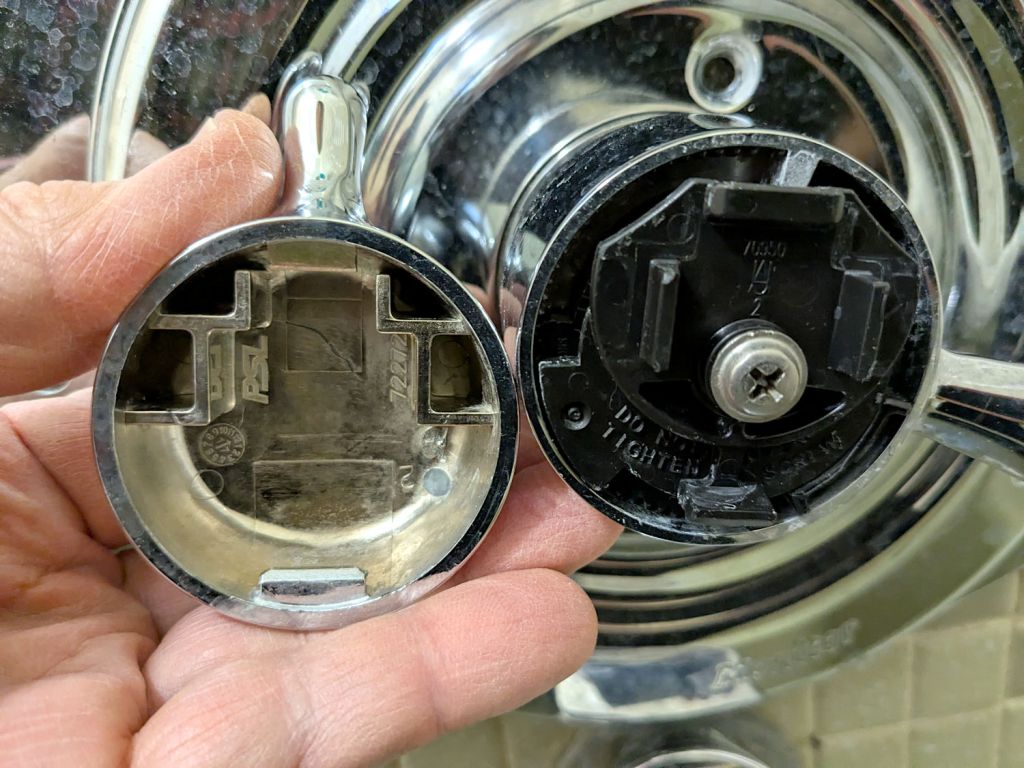
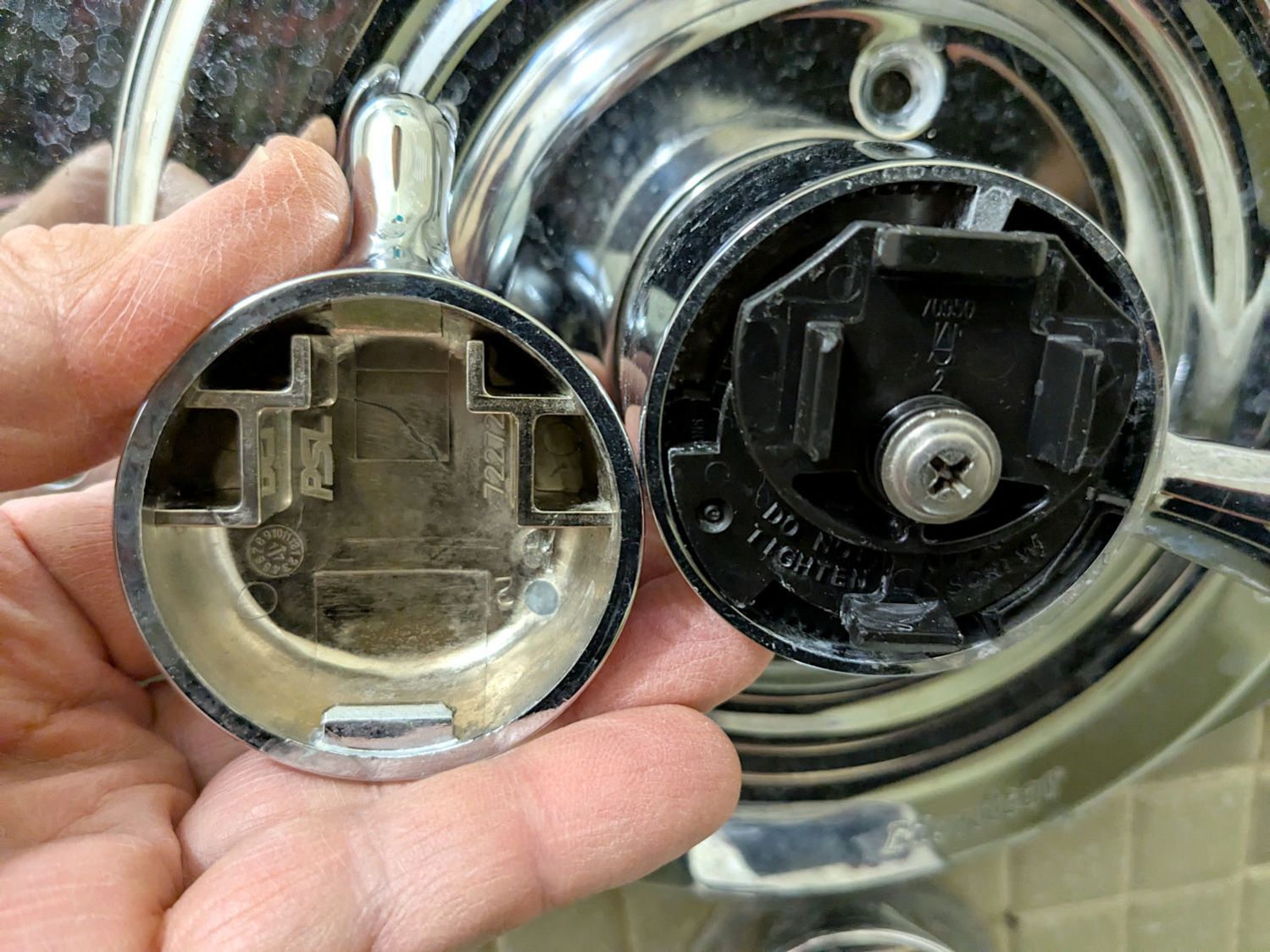
As a reminder for the next time in this rodeo, the latches holding the temperature adjustment knob on the Delta 17 Series dual-handle bath / shower faucet look like this:
Delta bath faucet cap latches
I am unable to apply enough force to the smooth edge of the knob opposite the handle to un-latch it, so I jammed a small prydriver into the gap and twisted enough to pop the latch, at the obvious risk of scarring the chrome plating.
A better approach would involve a plastic prydriver intended for consumer electronics case cracking.
For the record:
Unlike the other bath faucets, this one has shutoff valves inside the wall
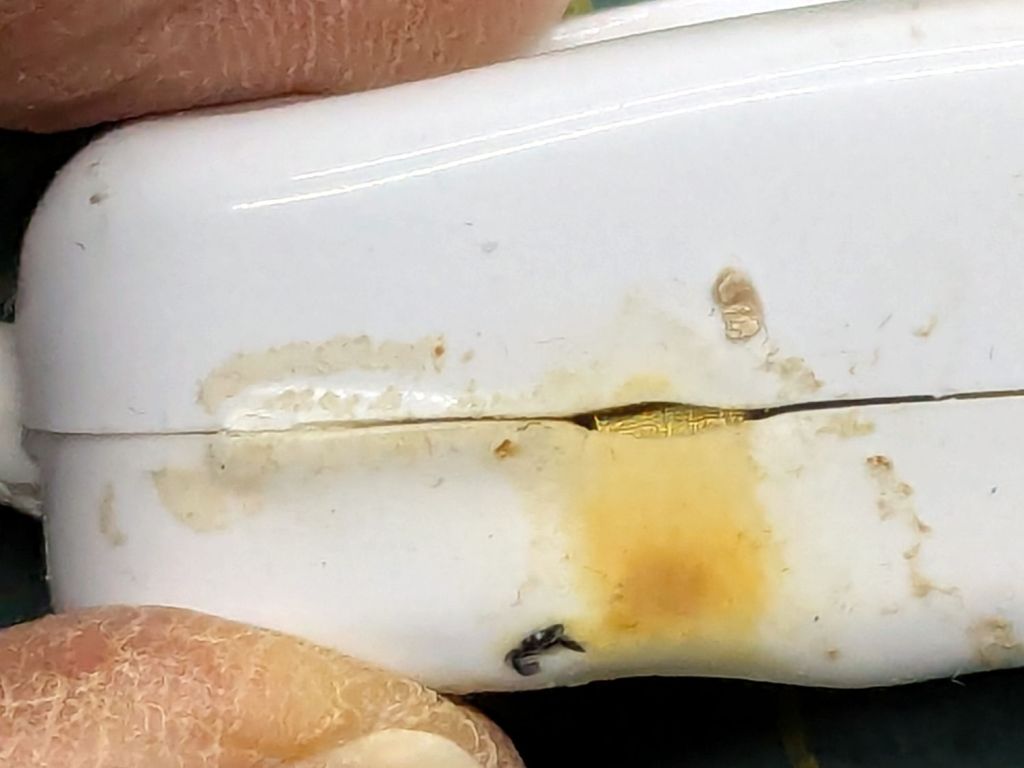
One of the inline switches I installed to replace the failed switches for the LED lights got unpleasantly warm enough to prompt an investigation:
Inline lamp switch – heat damage
Yeah, that is not a nominal outcome, particularly in light of the claimed “10 A 250 V” rating.
The overheated plastic pulled back enough to expose the terminal inside:
Inline lamp switch – visible terminal
There was a reason I’d wrapped those switches with known-good 3M electrical tape before deploying them.
That crimp connector took some heat and its screw looks even more unhappy:
Inline lamp switch – internal damage
It turned out the screw was an itsy too short to compress both the connector and the bent-metal conductor tab against the terminal block:
Inline lamp switch – misfit screw terminal
A 6 mm brass screw with a brass washer did a better job of compressing all parties into one conductive lump.
Although the switch now runs with the case at normal basement temperature, an allegedly UL listed replacement is on its way; it costs about five times more than that switch. If it behaves as it should, I’ll preemptively replace two other switches.
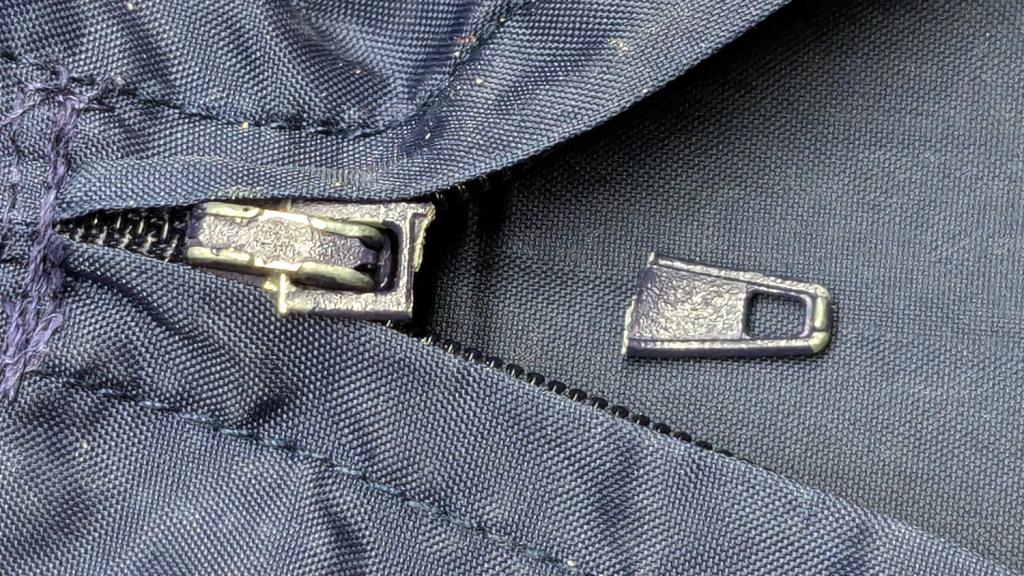
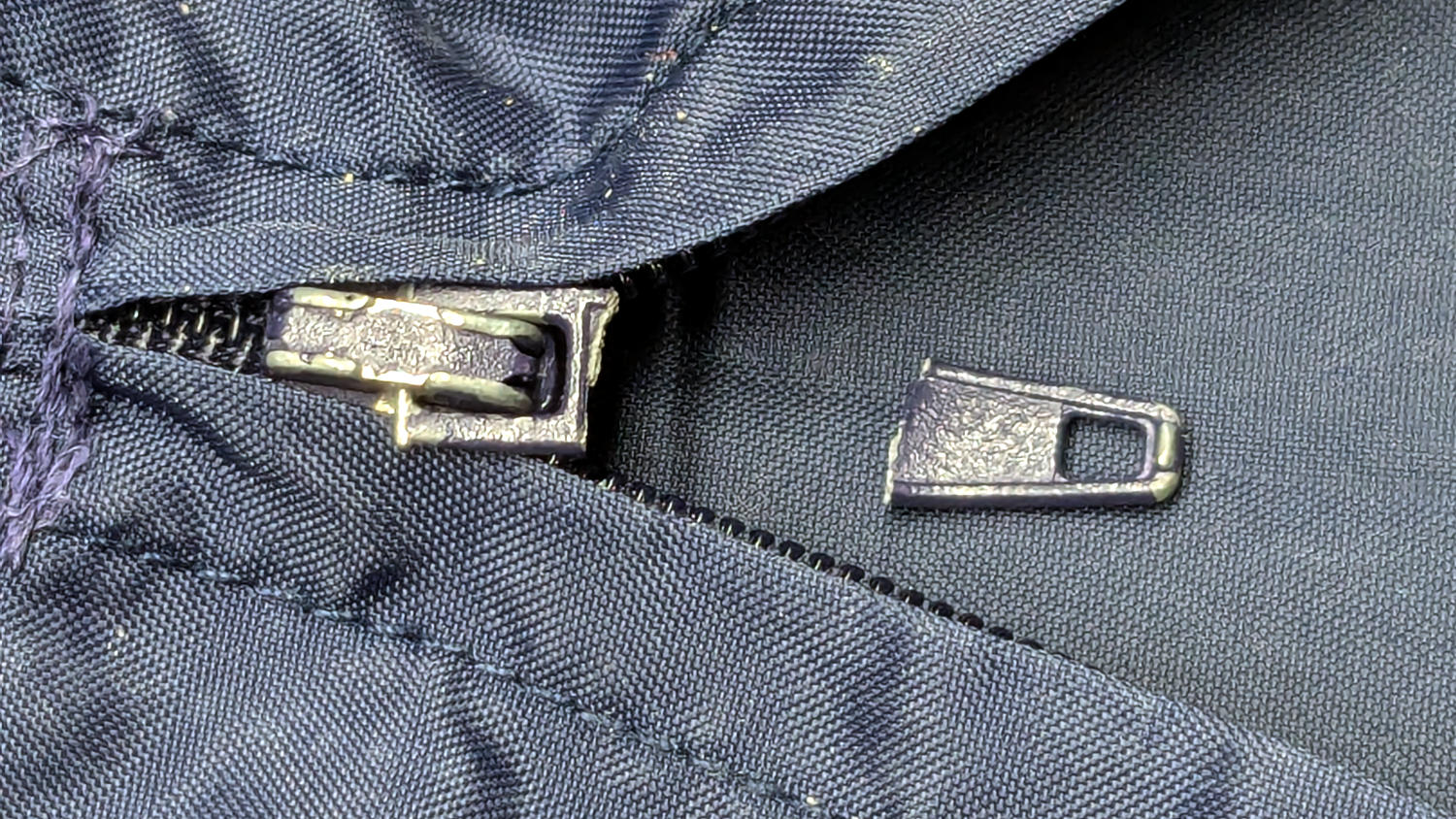
Unbelievably, the ankle zipper tab broke off in my hand:
Wind Pants Zipper Tab – broken
It’s one of those zippers where the tab releases a lock preventing the zipper from coming unzipped. Mary noped out of removing and replacing the entire zipper.
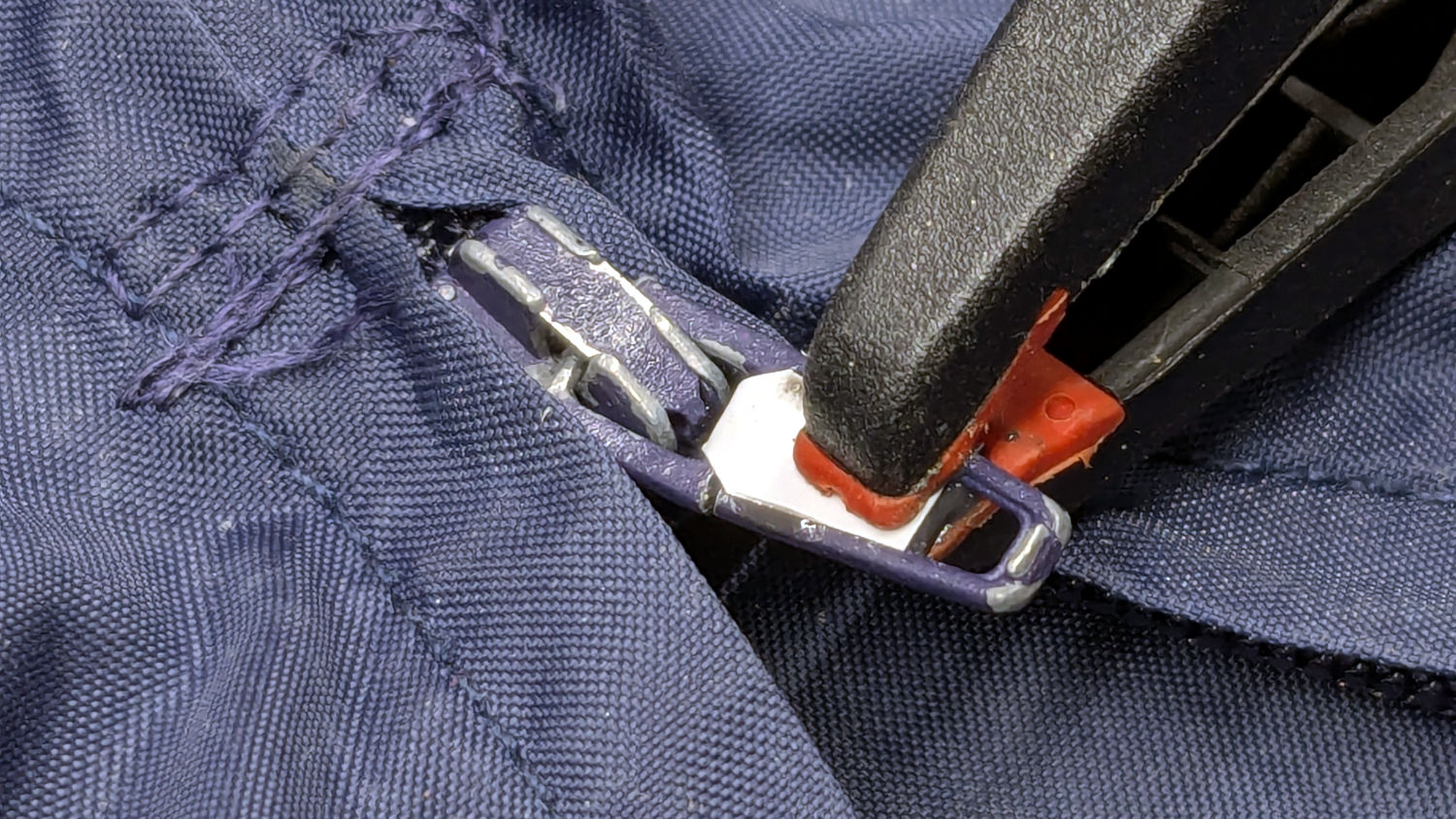
Trimming a snippet of aluminum miniblind from the Small Box o’ Flat Stuff and two dots of JB Kwikweld epoxy seemed appropriate:
Wind Pants Zipper Tab – clamping
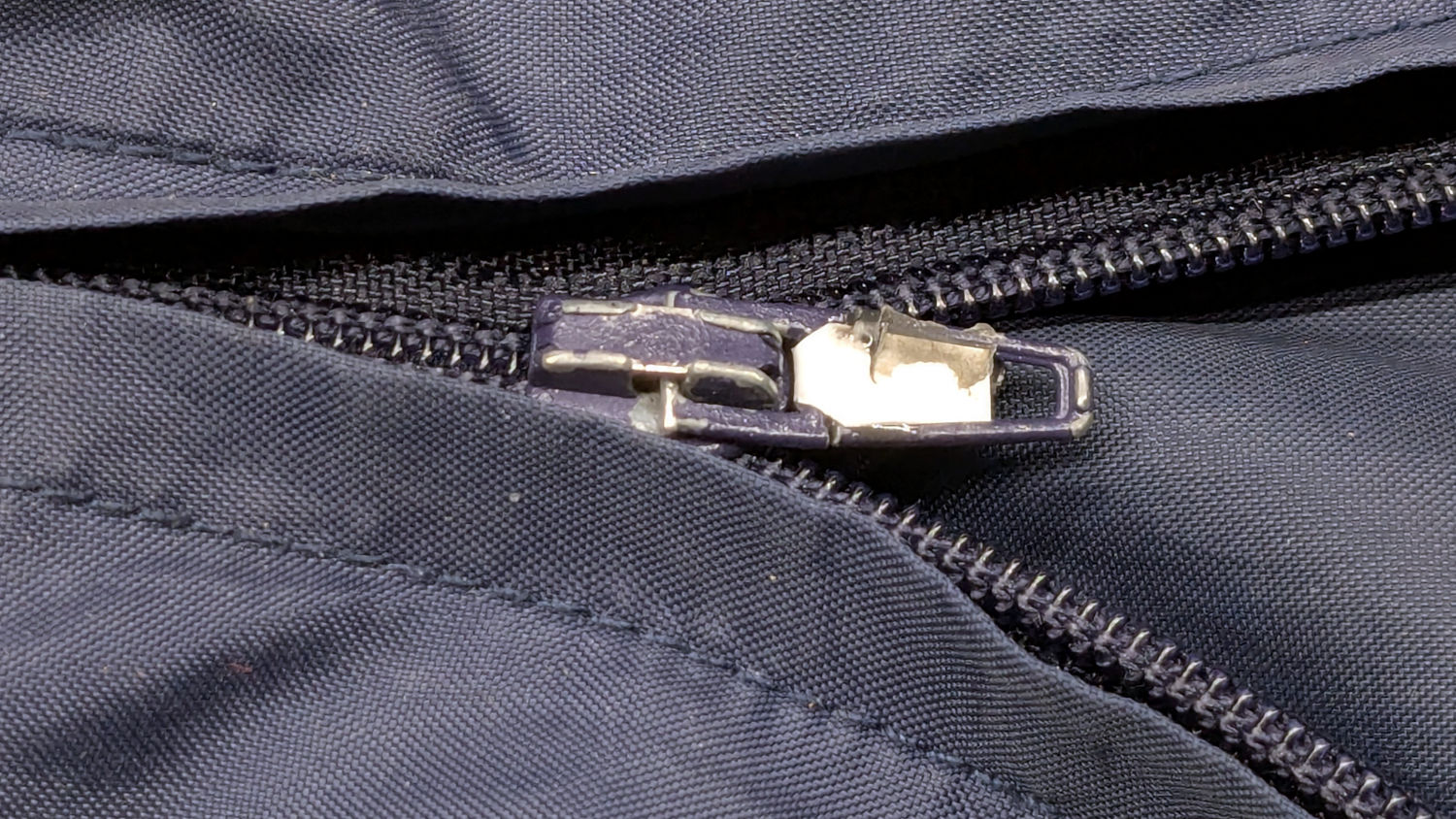
Ugly, but serviceable:
Wind Pants Zipper Tab – repaired
The stray epoxy scraped off under fingernail pressure over the next two days and the pants are ready for the next snowfall.
This happened while focusing the laser before cutting the cardboard fixture for the chuck rotary:
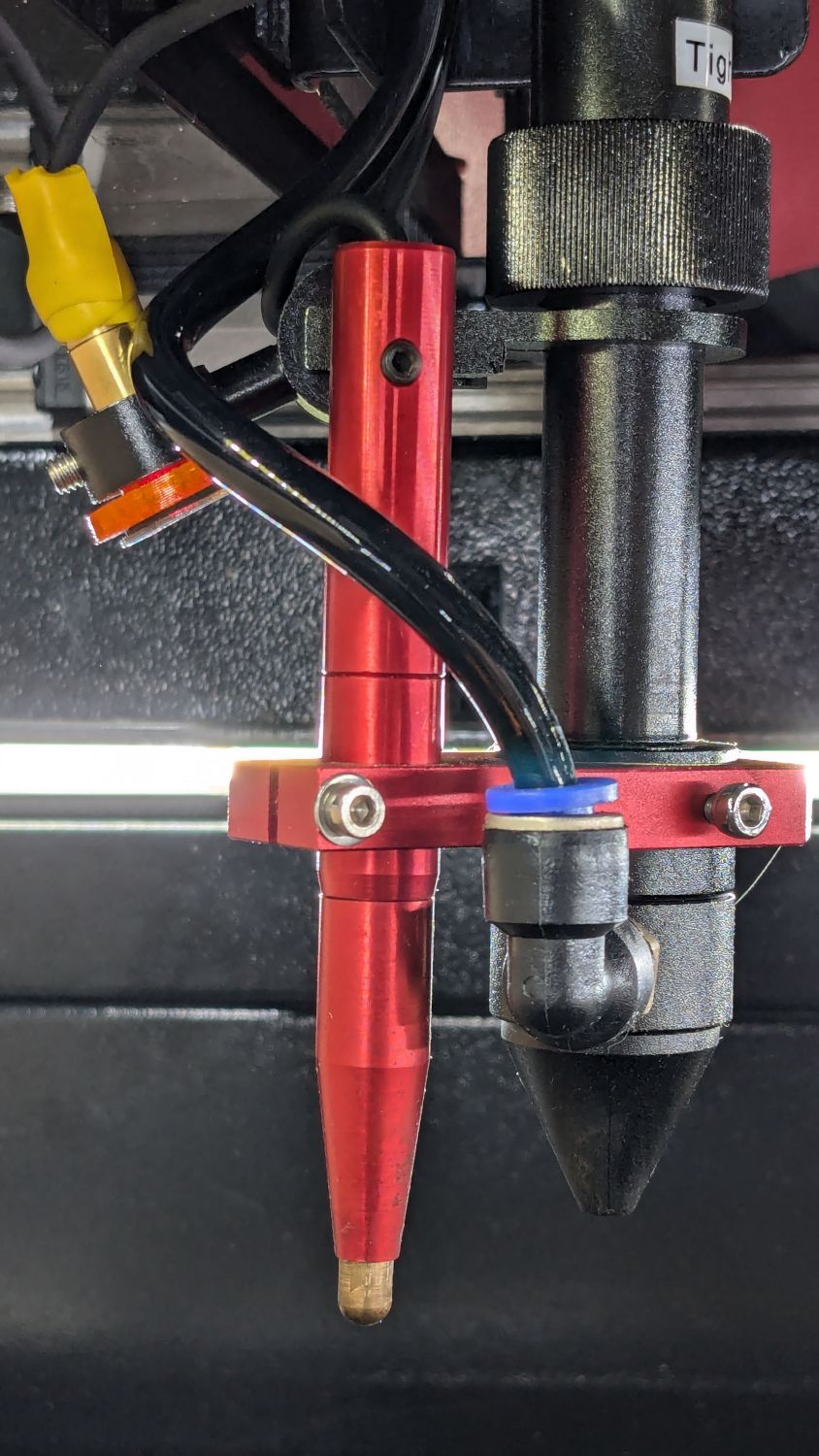
OMTech focus pen – failed operation
The autofocus “pen” = switch did not operate when the rising platform pushed the cardboard against its tip, so the controller continued raising the platform. Seconds later, the platform rammed the cardboard against the laser head and I slapped the Big Red Button.
Yeah, the platform shoved that pen straight up through its clamp until both punched through the cardboard.
The pen has a red LED (barely visible through the opening around the cable when you’re looking down into it) that did not light up when I manually triggered the switch: either the switch was dead or it wasn’t getting 24 V power.
Having spent considerable time diagnosing similar problems on the LightBurn forum, I was pretty sure the PVC-insulated wire connecting the pen to the controller had failed somewhere in the drag chain.
Update Yup, the 24 V wire was broken:
OMTech focus pen – failed 24V wire
Another discussion there showed how to dismantle the pen, so I (turned off the power and) cut the cable a few inches from the top of the pen body.
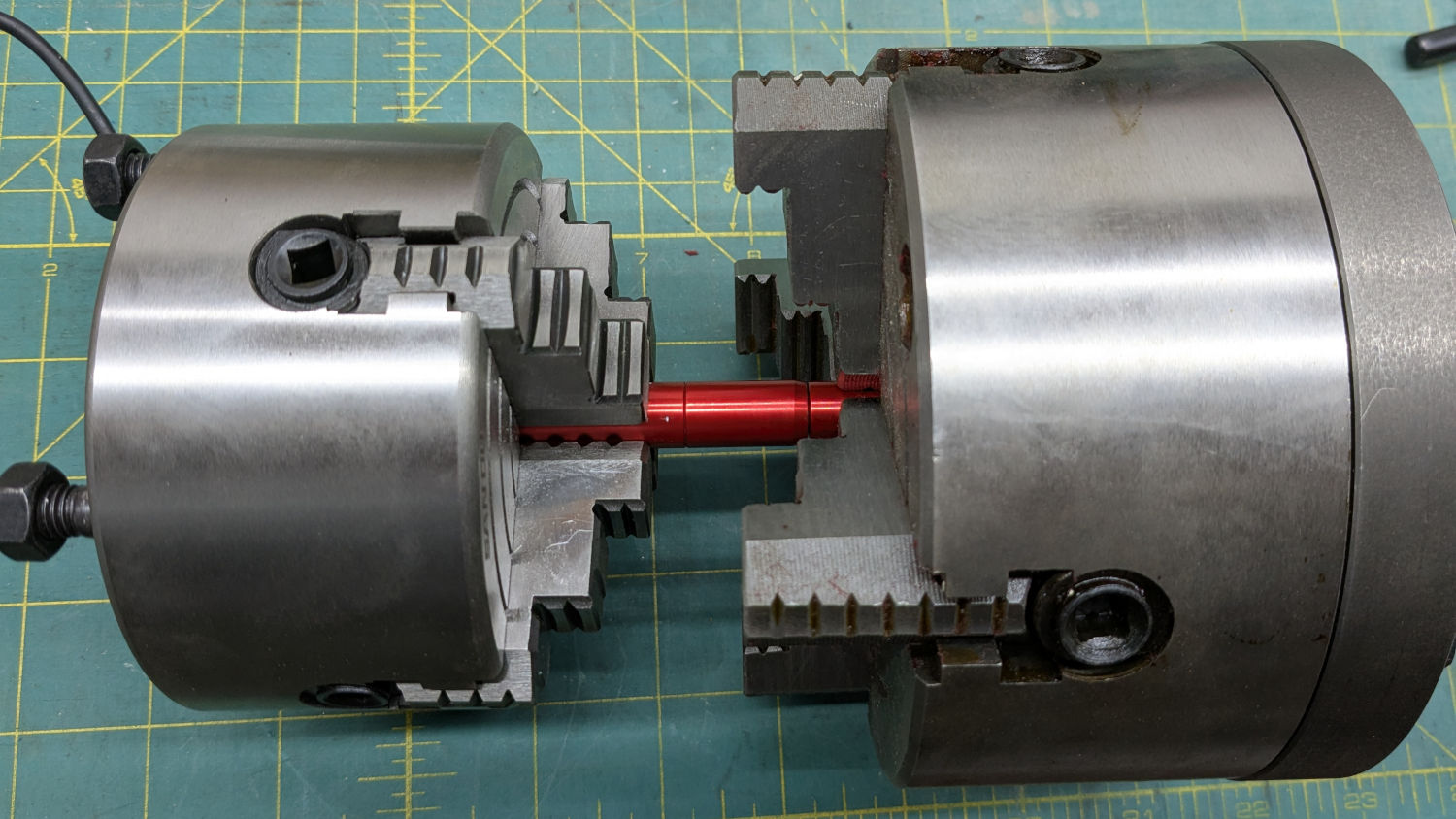
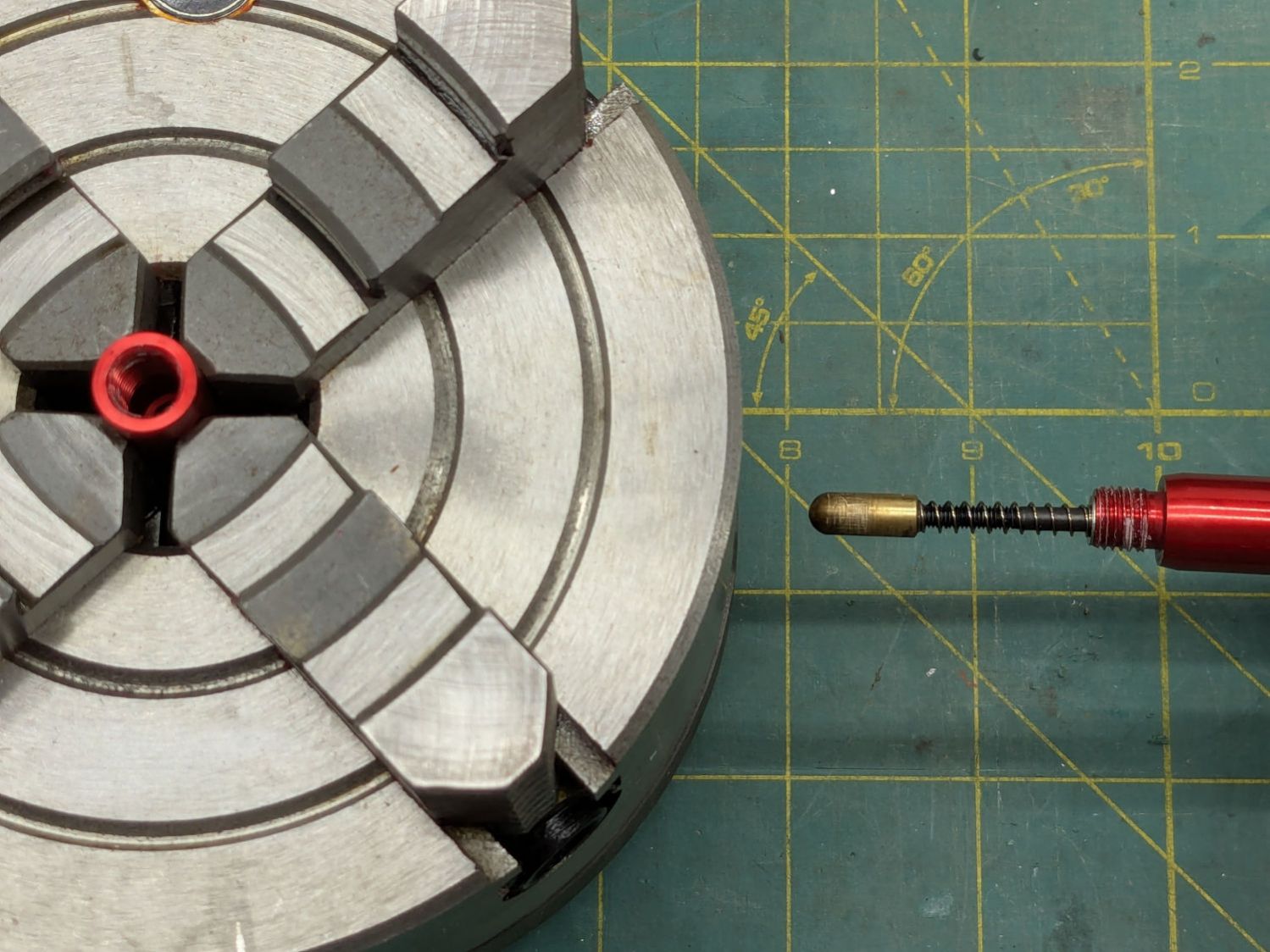
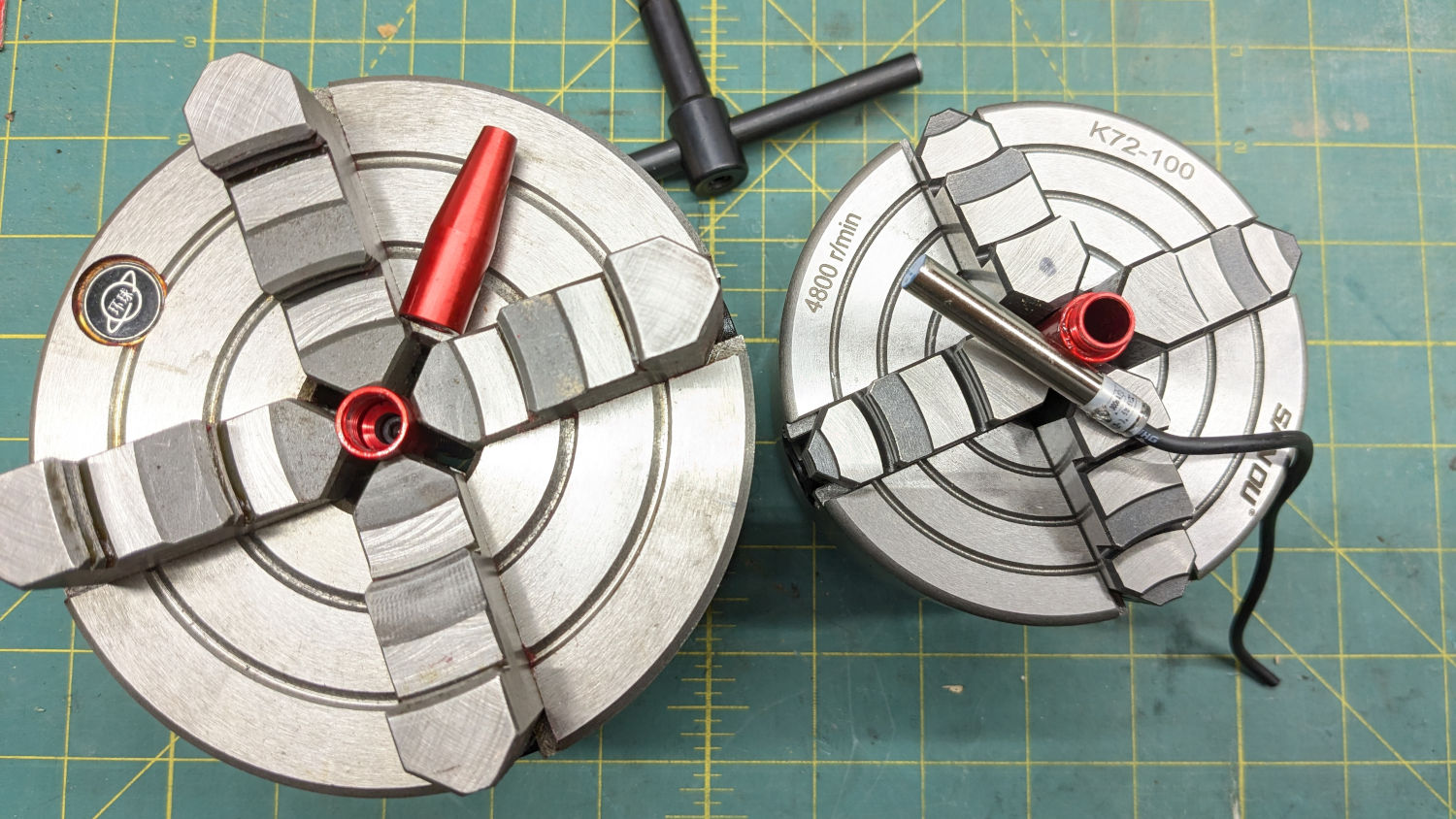
The pen body has three parts screwed together with generous application of threadlock. After demonstrating I lack enough grip strength to break the bonds, I deployed a pair of lathe chucks designed for a death grip on cylindrical objects:
OMTech focus pen – double chuck setup
The tip came off readily enough:
OMTech focus pen – nose unscrewed
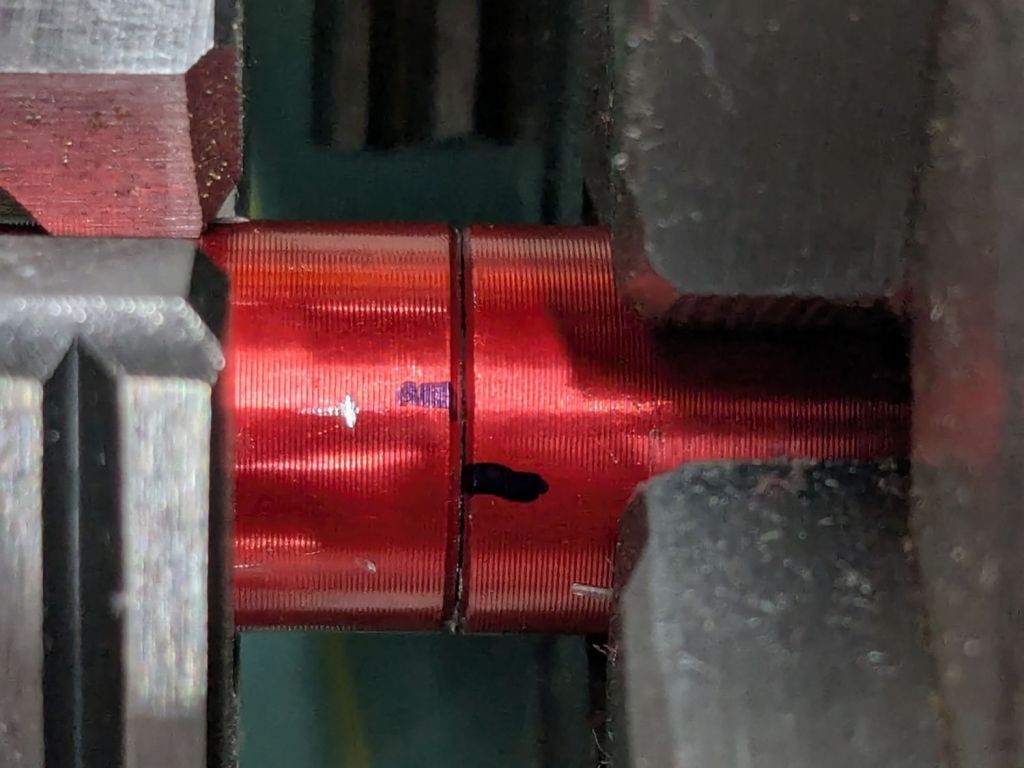
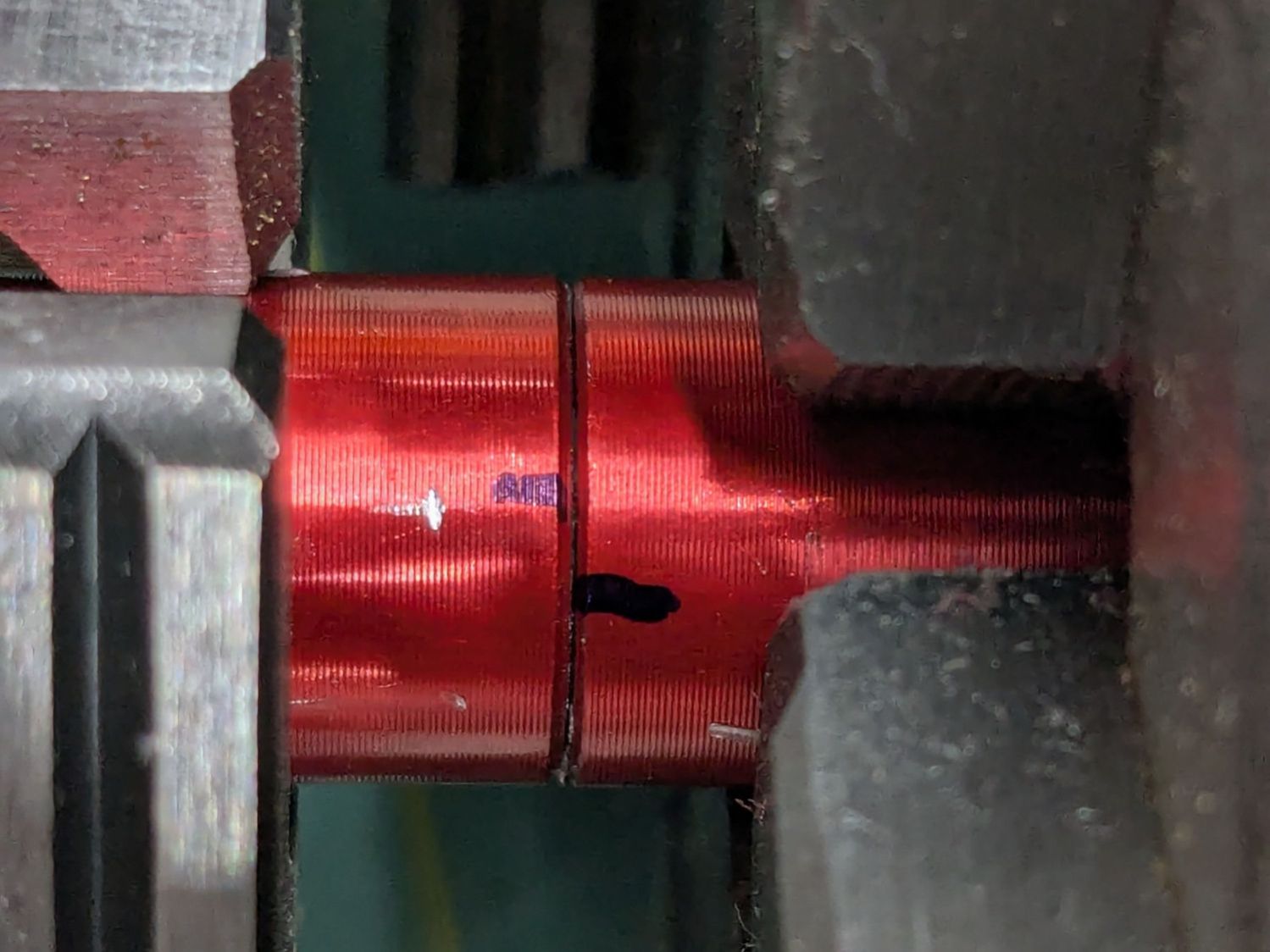
The upper joint was more reluctant, to the extent I needed witness marks to show progress:
OMTech focus pen – unscrewing witness marks
Dripping Kroil into the slightly loosened joint while twisting it back and forth eventually separated the parts:
OMTech focus pen – body unscrewed
I persuaded the last chunks of threadlock out with a stout pin (in a pin vise), eventually letting me screw the pen body together without a struggle.
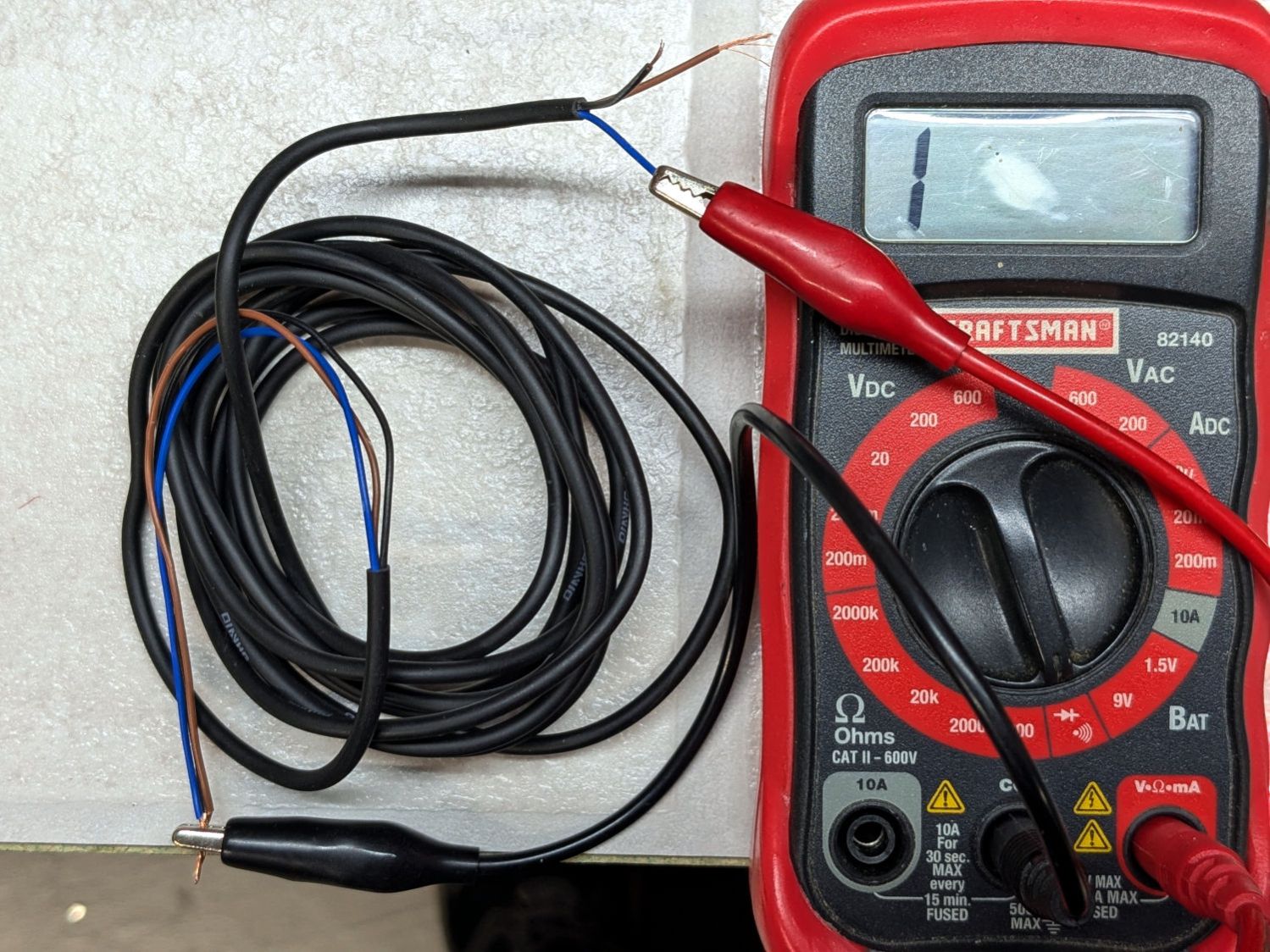
Contrary to what I originally thought, the switch is a proximity sensor triggered by the reshaped head of an M3 socket-head screw also holding the brass-colored tip. Wiring it to a bench power supply verified proper operation, with the open-collector (actually, open-drain) output going low with any ferrous metal closer than about 3 mm to the sensor tip.
Which put the fault somewhere along the wiring from the controller through both drag chains to the pen, as expected.
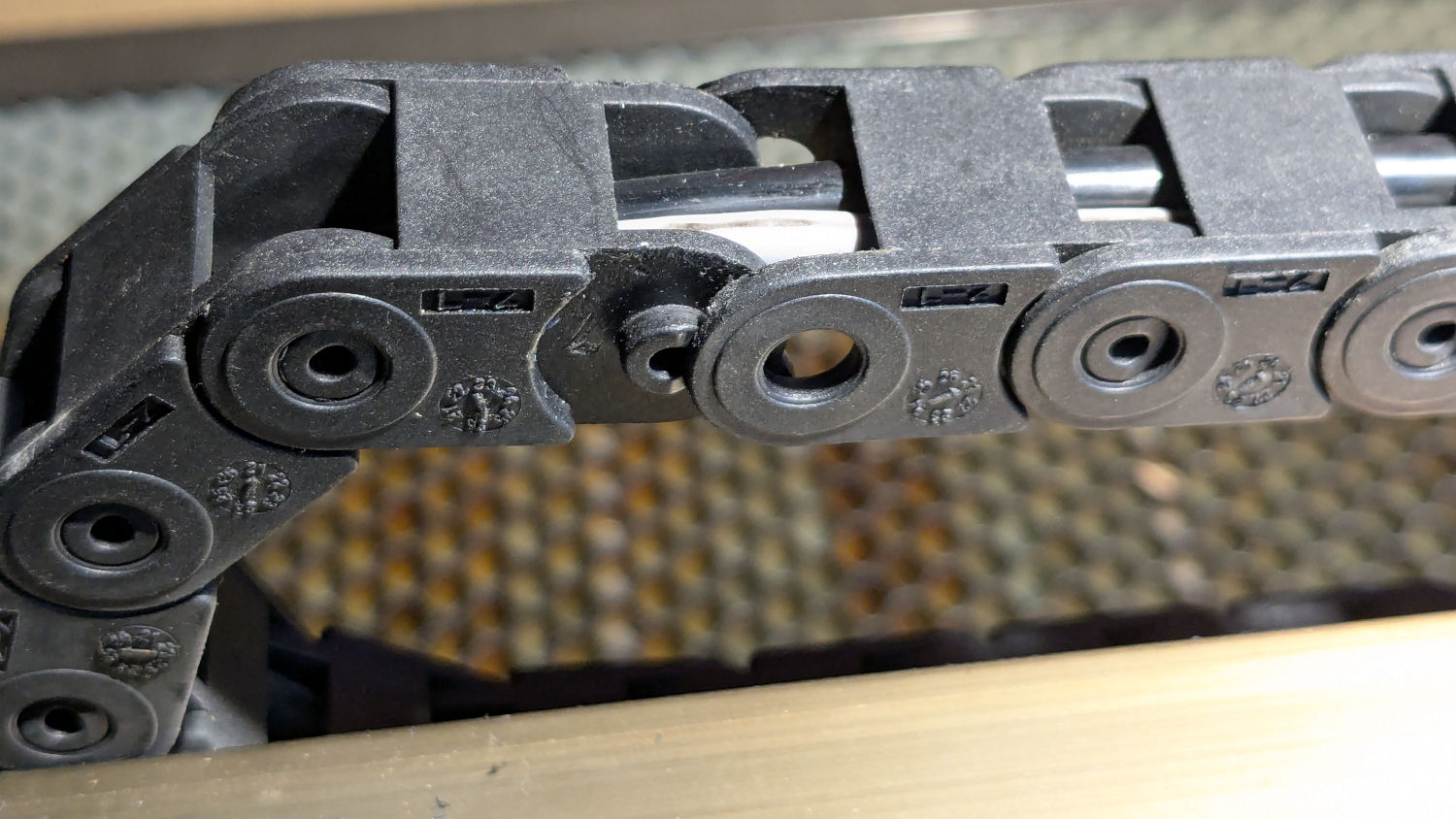
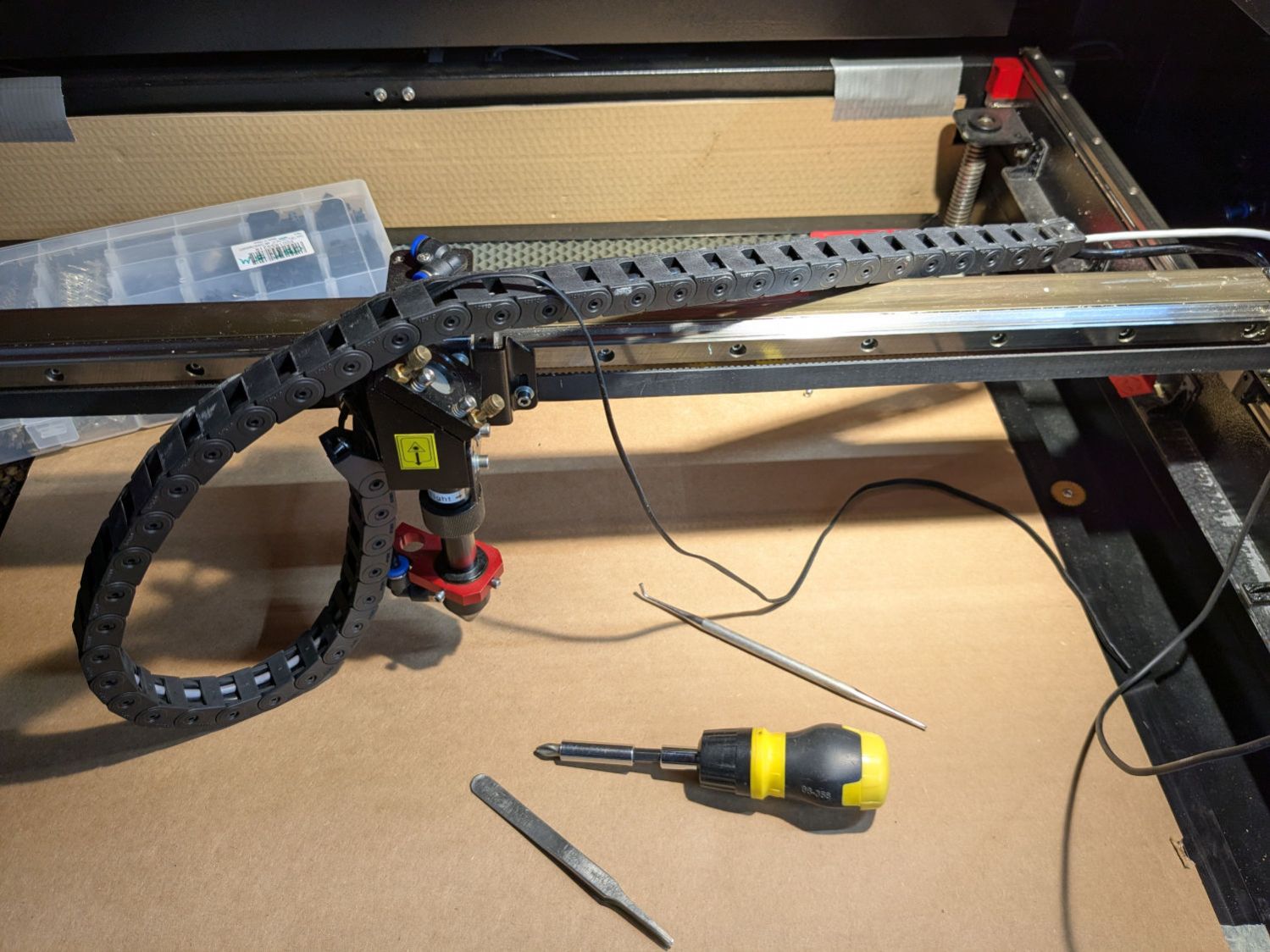
Unlinking the X axis drag chain involved a pair of small screwdrivers prying the side plates off their pivots in the next link:
OMTech focus pen – drag chain unlinked
The slightly enlarged opening let me pull enough of the cable through to verify I needed more elbow room, so I dismounted the entire drag chain:
OMTech focus pen – X axis drag chain unmounted
The Y axis drag chain was short enough to pull the cable out without drama.
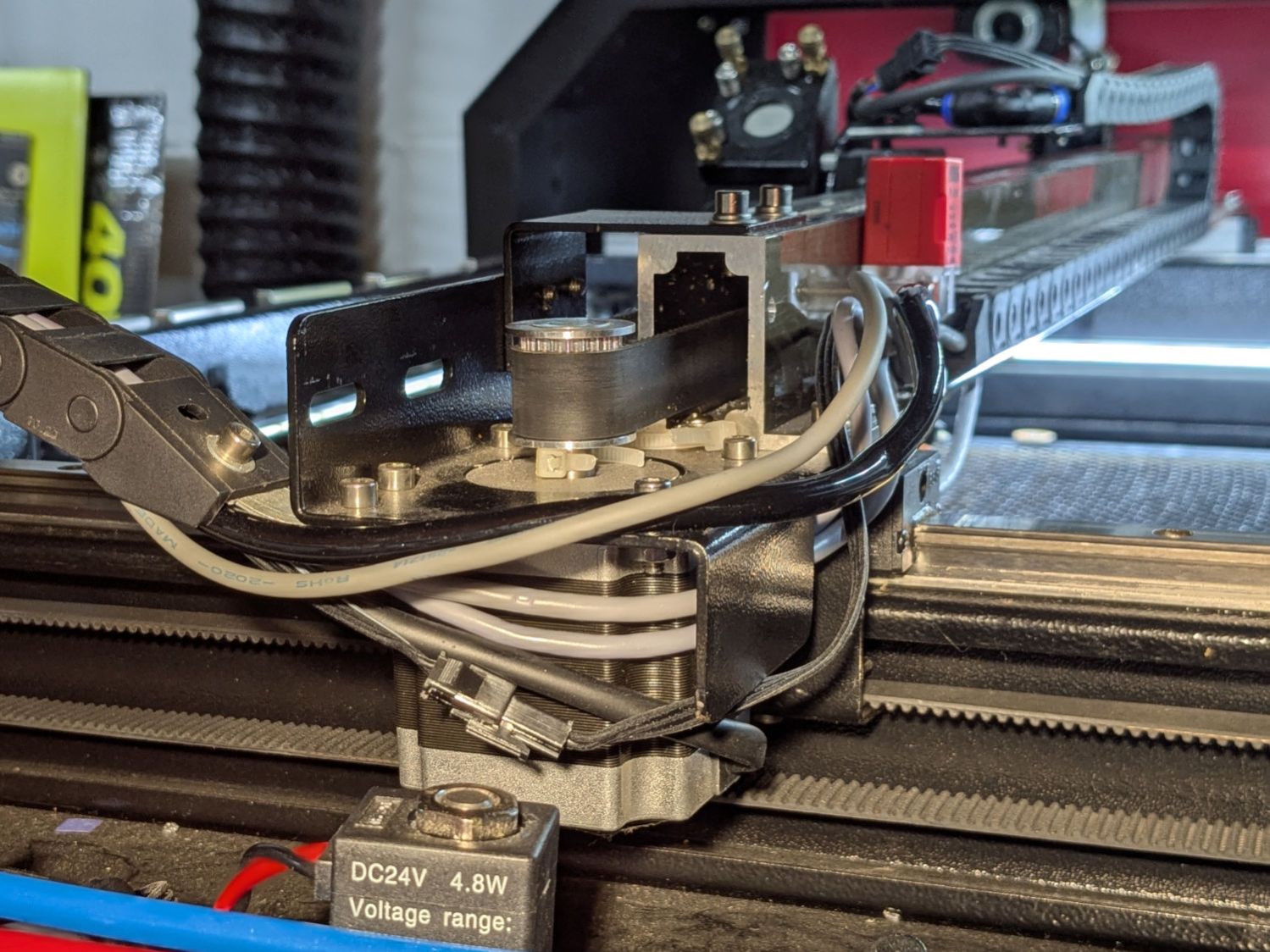
I guesstimated the overall length from laser head to controller, cut a six conductor 26 AWG silicone ribbon cable generously longer than half of that, peeled it down the middle, then put a JST SM connector where the sections meet at the end of the gantry:
OMTech focus pen – gantry wiring
Obviously, those connector halves went on before snaking the other end of the cable sections through their drag chains. I paid considerable attention to keeping the ribbons flat and untwisted throughout their lengths, in hope they’d flex easily as the chain bends.
AFAICT there was no good way to use the old wire to pull the new wire through the chain, so running flexy silicone ribbon cable through a drag chain required tweezers, patience, and persistence. I had to realign the existing wires & tubes at various points so they didn’t twine around each other and block the path.
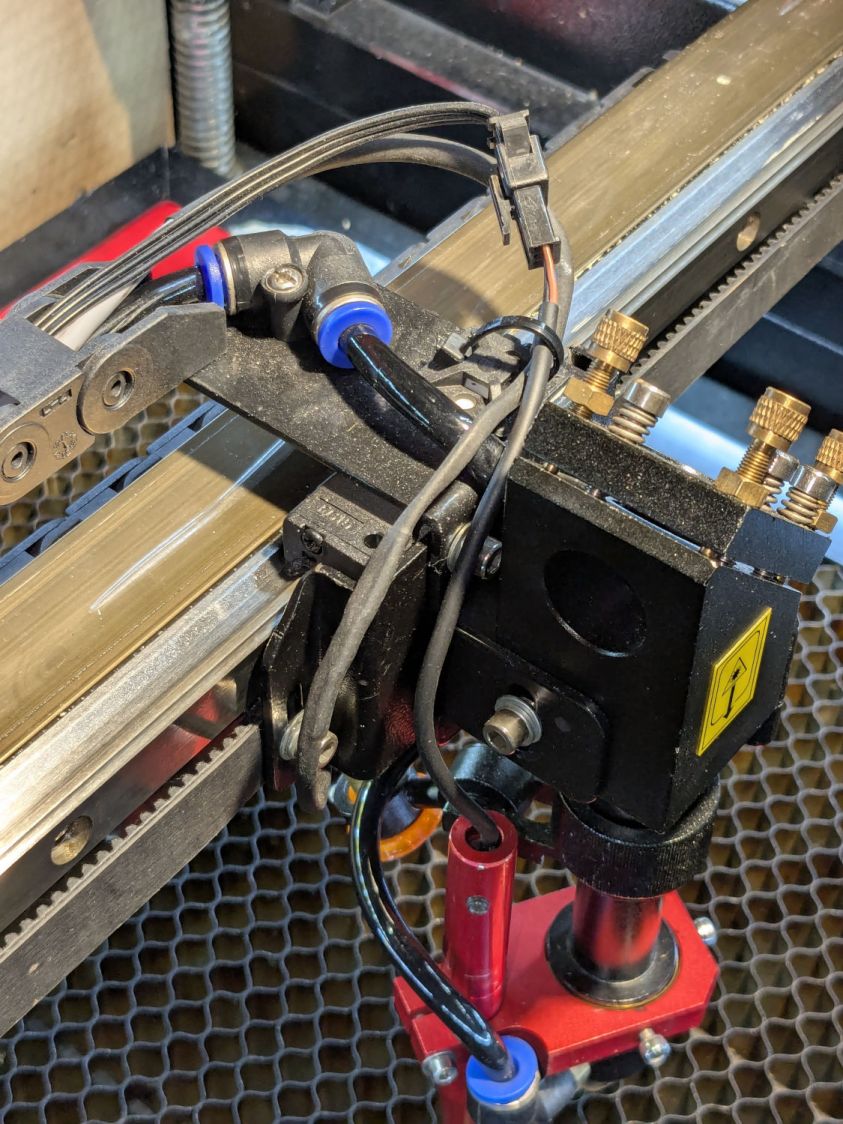
Another JST SM connector at the laser head allows removing / installing the pen as needed:
OMTech focus pen – reinstalled
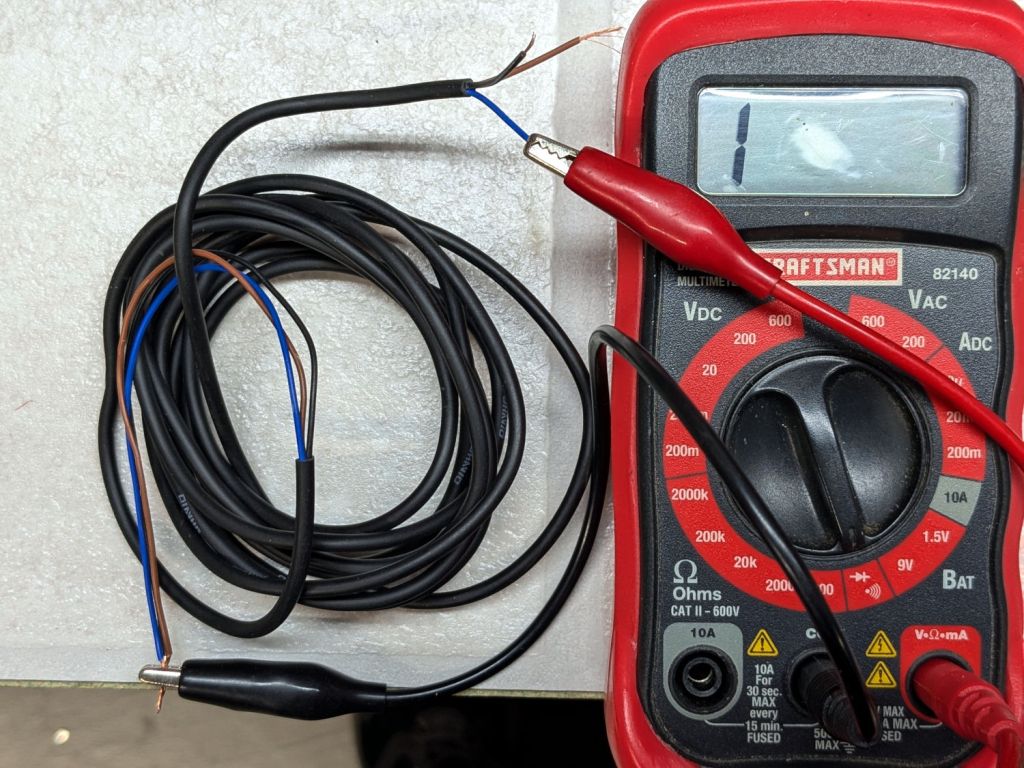
The connector pins and sensor wire colors:
GND = blue = common = marked cable conductor
OUT = black = sensor output
24V = brown = power
Wiring the new cable to the controller’s 24 V / GND / LmtU- terminals showed it now worked perfectly.
Reducing the vertical offset between the tip of the pen and the tip of the nozzle was then straightforward …
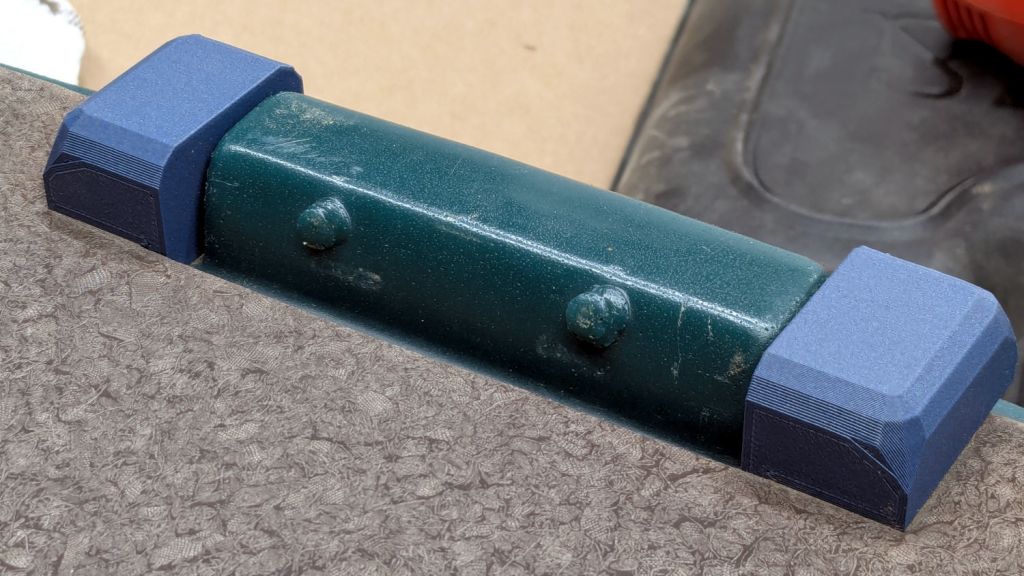
The SiLite tray is well-weathered, but remains structurally sound: still ready for service in the D-Hall breakfast line on the morning after the Apocalypse.



 The Smell of Molten Projects in the Morning