Ed Nisley's Blog: Shop notes, electronics, firmware, machinery, 3D printing, laser cuttery, and curiosities. Contents: 100% human thinking, 0% AI slop.
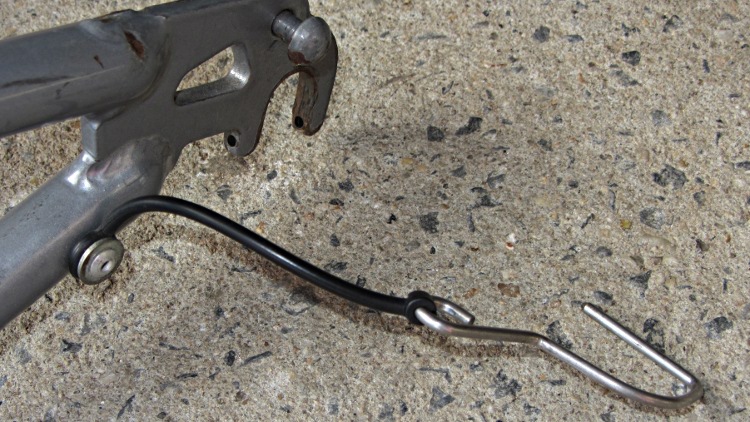
My old BOB Yak trailer mounts to the bike axle with stainless steel grenade pins, which works fine. After all these years, alas, the rubber straps securing the pins to the frame have rotted away. The original straps are nicely molded affairs:
BOB Yak – original pin strap
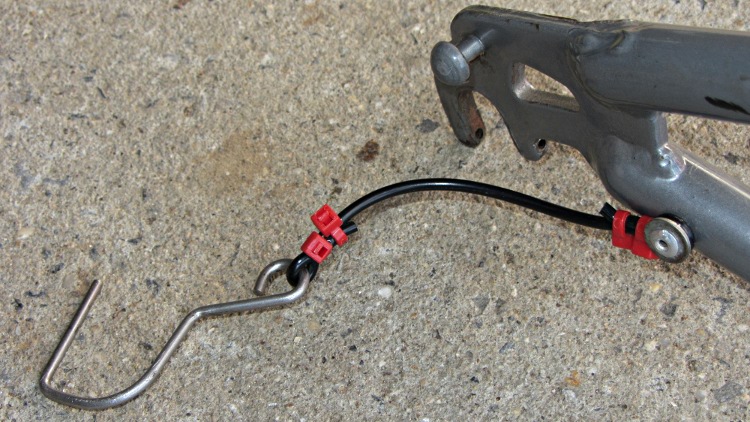
I snipped a large O-ring, deployed four small cable ties, and this ought to last for another decade:
BOB Yak – new pin strap
The strap in the first picture hadn’t quite broken, but the rubber was cracked and ready to snap. So I made a preemptive strike…
The shaft that tilts the mixer head has started walking sideways out of its hole, which is not to be tolerated. Looking up inside the base column shows a locking screw that’s worked loose:
KitchenAid mixer – pivot shaft and locking screw
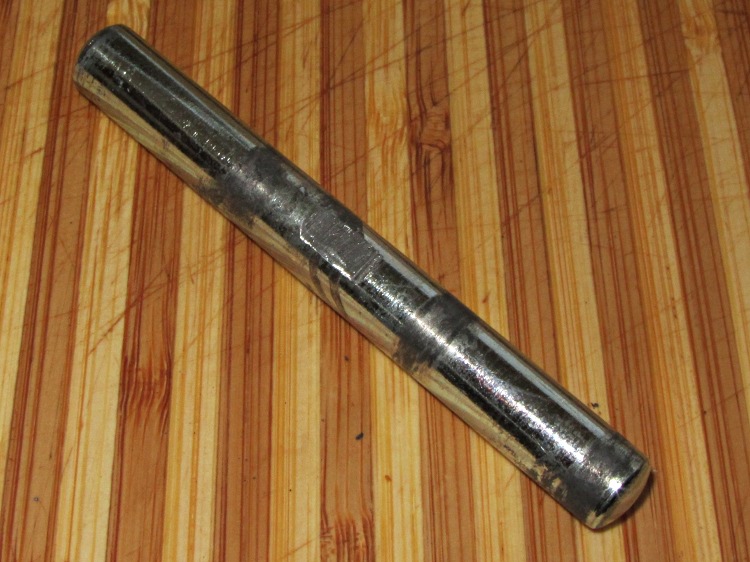
I took the thing apart and filed a flat on the shaft:
KitchenAid mixer pivot shaft – added flat
And then a dab of Loctite on the screw will prevent that from happening again:
KitchenAid mixer pivot locking screw
It’s still piddling oil on the countertop. If you have one of these things, always store it with the head tilted upward. That makes the oil run down the column onto the counter, rather than through the planetary gears into the mixing bowl…
The third hand grabbers I have all put bare alligator clip ferrules in the adjustable sockets with a thumbscrew to secure them. Over time, that thumbscrew crunches the ferrule and makes the clip hard to adjust. This has become enough of an annoyance that I rummaged around in the brass tubing cutoffs to find some that fit into the ferrules:
Alligator clip with brass tube insert
Given the sorry state of the ferrules, they required quite a bit of squeezing and shaping until that tube fit inside, but after that they rounded up nicely.
I suppose I should solder the tubes in place, but …
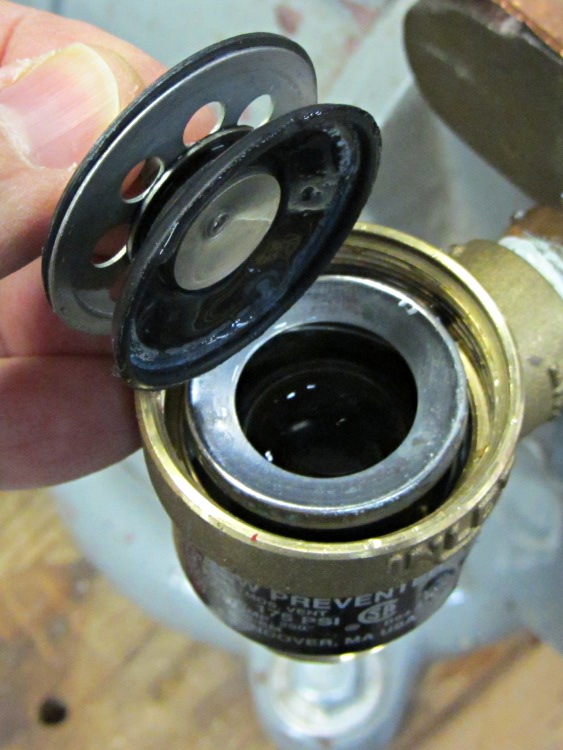
This Watts 9D-M3 Backflow Preventer Valve feeds water into our furnace, provides an overpressure relief, and prevents heating loop water from re-entering the potable water supply.
Watts 9D-M3 Backflow Preventer Valve
The vertical pipe leads downward near the floor, underneath which sits the small plastic bucket I provided to catch the occasional drip. Recently we had an all-hands scramble to soak up a pool of water spreading across the floor from the overflowing bucket, across the aisle, and below the shafts-and-rods-and-tubes-and-pipes storage rack. Evidently the occasional drip became a steady drip while we weren’t watching; not a catastrophic flood, but far more water than we want on the floor.
This is the inlet valve, which is basically a flapper. You can’t see the fine cracks around the central mount, but they’re all over the inner half of the ring.
Watts 9D-M3 – Inlet valve
And this is the outlet valve, which has pretty much disintegrated. Note the outer rim peeled back under my thumb:
Watts 9D-M3 – Outlet valve
A complete new valve is $40, in stock and ready for pickup at Lowe’s, but all I really needed was the failed rubber flapper valves, which they don’t carry. A few minutes of searching reveals the Watts 0886011 Repair Kit, which has all of the interior parts.
Pop Quiz: How much does the repair kit cost?
Answer: Starts at $38 plus shipping and goes up from there. Cheap aftermarket kits run $20 and up, but they’re all out of stock.
Now that, party people, is the sort of thing that ticks me right off.
Perhaps the local HVAC / plumbing supply stores have such kits in stock? To quote: “They may exist, but we don’t have them.”
I don’t see any way to homebrew new flapper valves, so it’s off to Lowe’s we go…
It would seem to me that these things shouldn’t fail after a mere decade of service. I thought that about the CdS flame sensor that crapped out in the middle of a sub-zero January cold snap while I was at Cabin Fever some years ago, too.
These are the bare cells, without the protection circuit in series, so the voltage is a bit higher than the camera will see. One is completely dead and two of them appear to have about 1 A·h of capacity, but the discharge voltage evidently drops below what the camera considers acceptable.
They’d work fine driving a less fussy load, though…
It seems that a much older version of Eagle allowed device names along the lines of ELECTRET MIC that contained blanks and worked perfectly at the time. Since then, the rules changed to prohibit blanks, but the EAGLE 5.x series evidently allowed those names to exist as long as they weren’t used in the schematic or touched in the library editor. In 6.x, however, you can’t even load the library without triggering an error message.
Because 6.x won’t load the library, you can’t use the library editor to remove the blank.
Because the most recent version of 5.x kvetches about the blank, you can’t use the library editor to remove the blank.
Having only two offending device names, I figured I could use a hex editor to jam a hyphen in place of the blanks and be done with it. Come to find out that EAGLE (wisely) wraps a checksum around the binary library file to detect such changes and prevent the files from loading. I think that’s an excellent idea, even if it was inconvenient in this situation.
Fortunately, 6.x both complains about the problem and offers up a “text editor” window with the complete XML source code for the library that it converted from the 5.x binary format.
So:
Copy-and-paste the text into an editor that supports highlighted XML editing
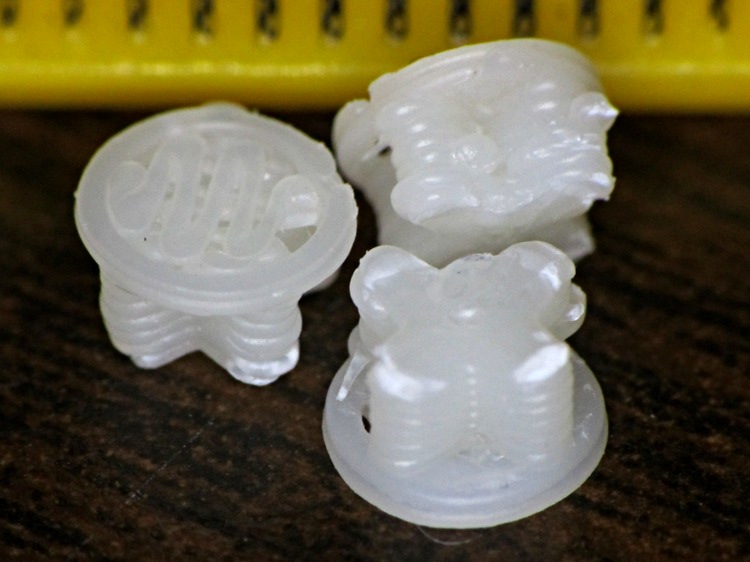
Having printed up three of those handles for Show-n-Tell, I preemptively installed one in the hasn’t-failed-yet clamp, and poked the support out of another to show how it works. They’re just the cutest little buttons:
HF bar clamp handle – support plug
The fins are a touch under 4.5 mm end-to-end and 1 mm (2 × 0.5 mm) across, with layer thickness = 0.25 mm. The first layer fill looks a bit lackadaisical, but the bottom of the surrounding handle came out glass-solid with barely visible joints between the threads, so the settings work fine for larger objects.
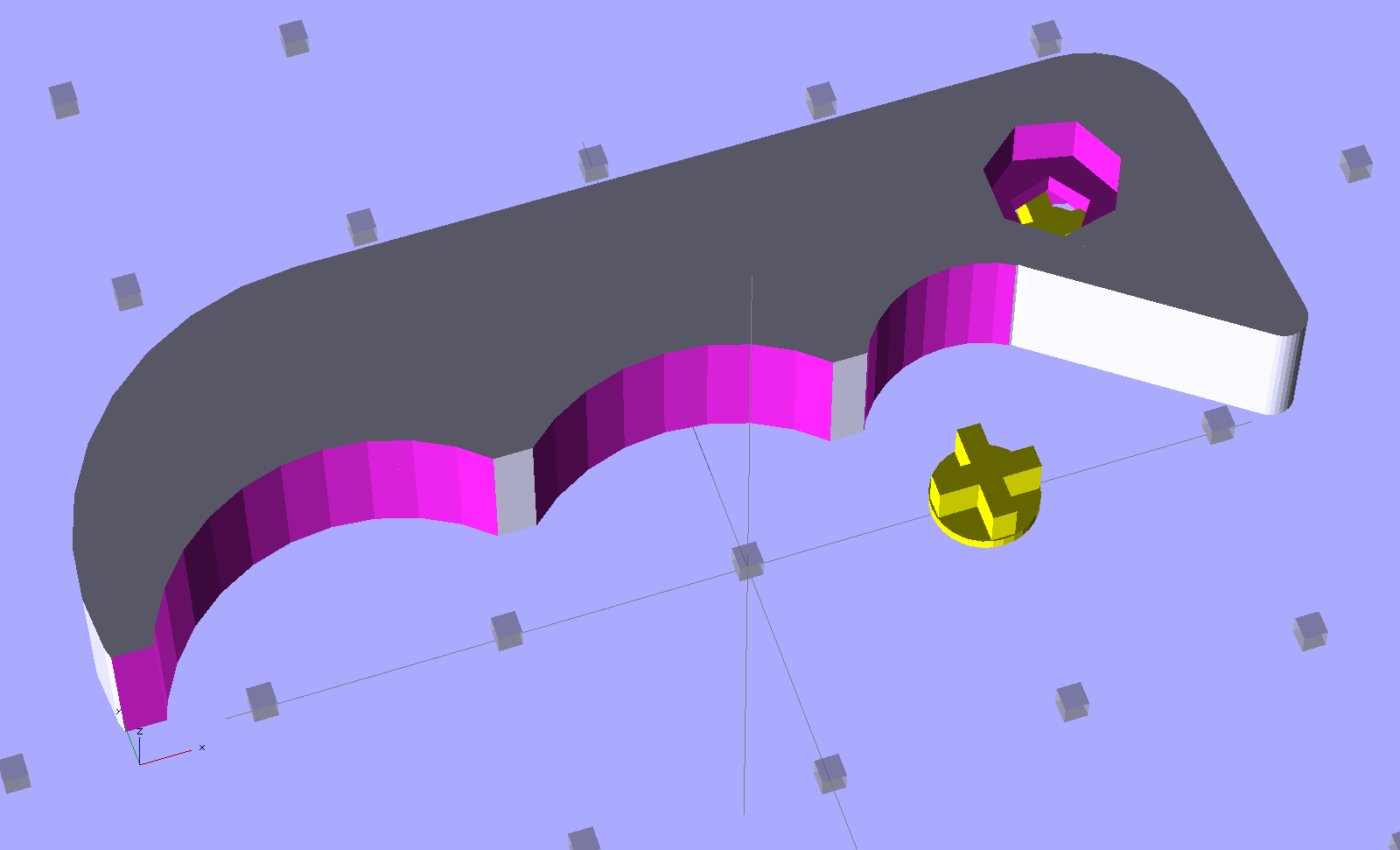
HF Bar Clamp – support – solid model
The tip of each fin has a scar where the overlying perimeter thread bonded to it. Skeinforge is set to extrude the perimeter first, which would squirt that circle (well, pentagon) into mid-air… which is why this support plug lies in wait below.