Ed Nisley's Blog: Shop notes, electronics, firmware, machinery, 3D printing, laser cuttery, and curiosities. Contents: 100% human thinking, 0% AI slop.
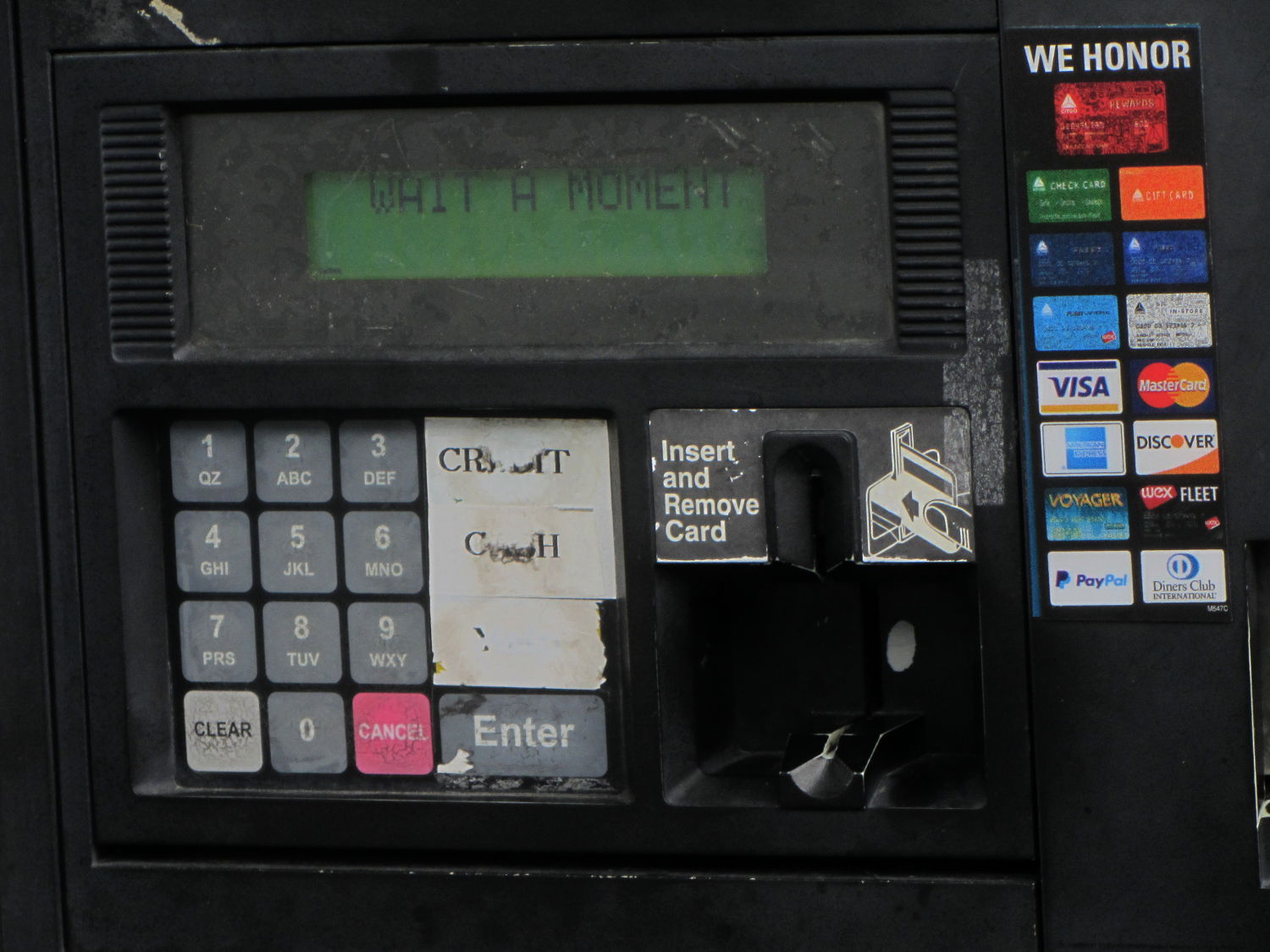
During our most recent trip, I stopped at a new-to-me gas station, managed to figure out the pump’s UI enough to swipe my card and fill the tank, then utterly failed at the Print Receipt? prompt:
Gas Pump Keypad Abrasion
A quick hike to the adjacent pump suggested pressing the illegible key above Enter, but the UI timed out before I got back and the promised “moment” never ended. The attendant generated a receipt showing I’d paid for the gas and told me to jiggle the pump nozzle, which didn’t improve the situation. We eventually agreed he’d handle it later and I drove away, never to return, hoping that the next customer didn’t get a free fill on my dimedollar C-note.
Surely I’d know what to do, were I a regular customer …
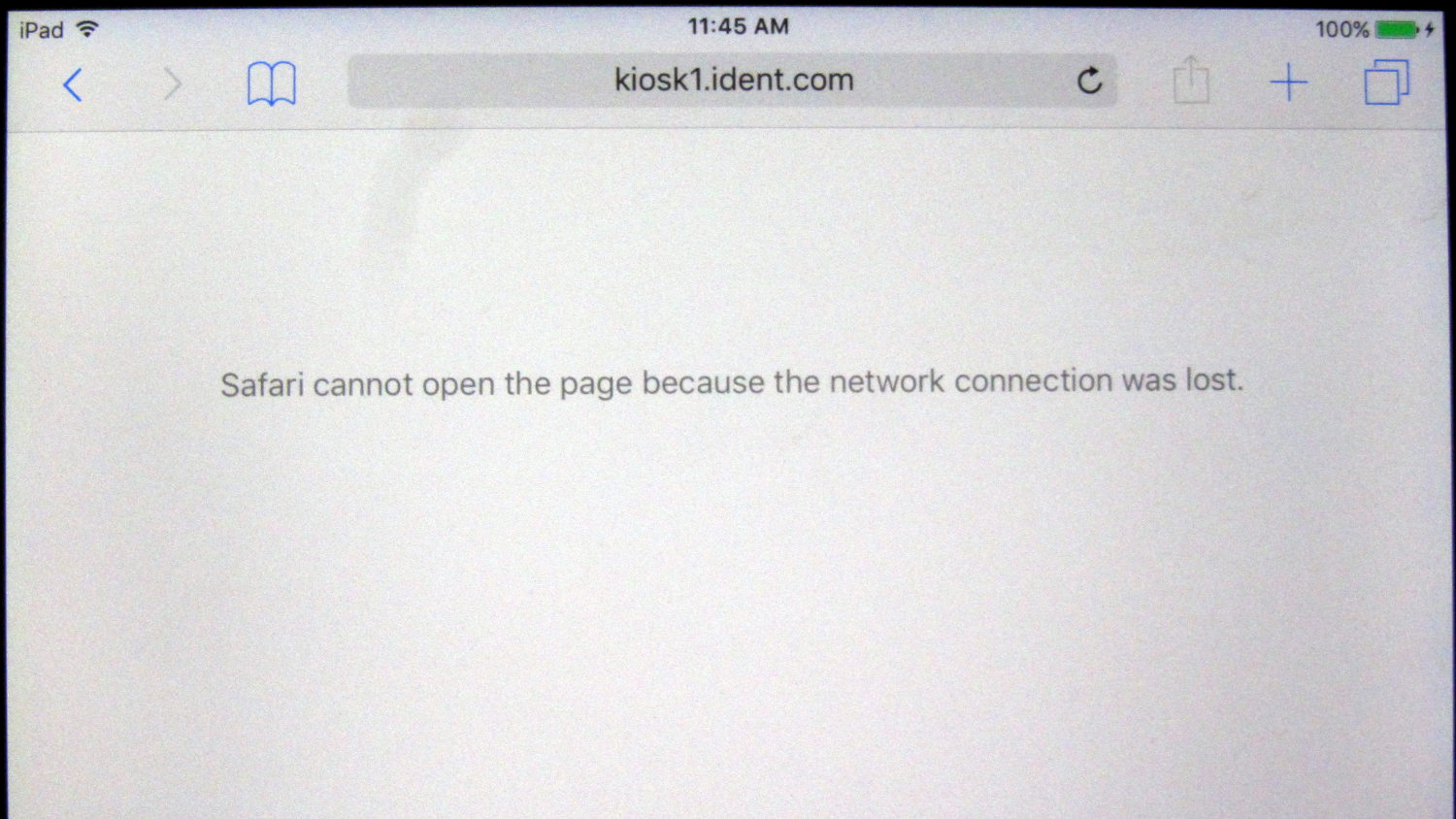
You’ll note the signal strength indicator in the upper left shows as much RF as one might reasonably expect from a router within line-of-sight across the room.
FWIW, I’m getting really tired of the hipster dark-gray on light-gray design ethos.
This eBay seller shipped delicate parts without padding, did not ship replacements as promised, has repeatedly offered a refund without actually doing so, and has attempted eBay feedback extortion.
Chronology:
11 Jan – broken parts received in unpadded envelope. Contacted through eBay, sent photos
13 Jan – “we can resend you and it will take 35-45 days,so is it ok for you ?”
(I asked for a refund, which was ignored)
16 Jan – replacements allegedly send by untracked mail, not received by 15 March = 60 days
(and still missing: draw your own conclusions)
18 Jan – “if you still haven’t received within the promised , please feel free to contact me ,i can solve the problem for you”
28 Feb – “If you agree with me, I will send your money to your paypal account, […] And meanwhile I will also send you one ebay feedback revision request, […], revise your negative feedback into positive feedback with all 5 star point.”
(I pointed out that feedback extortion is contrary to eBay policy and asked for a refund)
7 Mar – “I am really sorry for this issue. And please trust me. I’m a responsible eBay seller. I will be in charge of this problem. I will do my best to solve the problem and meet your satisfaction.”
7 Mar – “So could you please do me a little favor to send me a photo?”
(Photos first sent 11 Jan, re-sent 8 Mar)
9 Mar – “I’m so sorry about that issue . we can refund partial money for you. So is it ok for u”
(I disagreed and, again, asked for a complete refund)
10 Mar – “i will refund you soon, may i refund to your paypal?”
(I insisted on a refund through eBay for tracking)
10 Mar – “Please give me some time, I will check it for you.”
14 Mar – The seller will send you a $ 5.13 USD refund after they receive the returned item.
(At which point I escalated this to a claim with this summary)
The attempted feedback extortion on 28 Feb calls for a complete refund and punitive action.
Returning $5.13 worth of parts to China is obviously absurd and the seller knows that, having avoided mentioning that “requirement” while previously offering refunds.
After two and a half months, it’s long past time for a complete refund.
Thank you.
Those brief snippets don’t convey the flavor of the seller’s correspondence, again with (commentary in parentheses):
12 January 2017
can you use?
(No, I cannot)
13 January 2017
Dear buyer ,
thanks for your patience and understanding .
we can resend you and it will take 35-45 days,so is it ok for you ?looking forward to your reply .
Best wishes.
(No, I want a refund)
16 January 2017
Hello, my dear friend,
Thanks for your kind communication.
I place order for you now and it will be resent in 24 hours. I will call post office to deliver quickly. Hope you can get it soon. If you still haven’t received within the promised , please feel free to contact me ,I can solve the problem for you. Thank you.
Best wishes.
(I asked for the tracking number)
17 January 2017
dear buyer,
we have tracking number but it shows only the information in China, there is no information abroad, as it is an economical shipping, we have to reduce our loss, so is it ok? looking forward to your reply.
Best wishes.
(This was when I realized they were in scammer mode)
18 January 2017
if you still haven’t received within the promised , please feel free to contact me ,i can solve the problem for you. Thank you.
Best wishes.
(The “promised” was far beyond eBay’s claim limit. I said I would file a claim in late February)
28 February 2017
Hello Buyer:
I just got your negative feedback.
From your feedback, I know that you are not satisfied with the item. I am so sorry for that. And I am also so depressed with your negative feedback. It really hurt me a lot.
So I think I can give you fully money back, and you can just keep that item for compensation.
But I really hope you can revise your negative feedback into positive feedback with all 5 star seller performance. That is very important.
If you agree with me, I will send your money to your paypal account, And you can log in your paypal and accept that money. And meanwhile I will also send you one ebay feedback revision request, you can view it in your ebay message box, revise your negative feedback into positive feedback with all 5 star point.
That is the most important for me.
Is everything OK for you?
I really hope your kindly understanding.
Looking forward your answer.
God Bless you and all your family.
Best Wishes
(I filed a claim and posted negative feedback, as I wasn’t thrilled with the purchase)
8 March 2017
Dear buyer,
Thank you for your message. I’m so sorry about that issue . we can refund partial money for you. So is it ok for u?Looking forward to your reply .
Best wishes.
(I dsagreed and asked for their long-promised full refund)
9 March 2017
Dear buyer,
Please give me some time, I will check it for you. Thank you for you email.
Best wishes
(Time was not on my side)
As it turned out, the eBay claim period ended a few days earlier than I expected and eBay’s customer support recommended filing a dispute on Paypal. I asked how to handle issues like this in the future and was told, very firmly, to open an issueimmediately when a problem occurs on an order from a foreign seller. A formal eBay issue, rather than just “send a message to the seller”, starts the resolution clock and provide a powerful incentive to Make Things Happen.
The Credit Union recommends we practice “Safe Computing” with this helpful advice (clicky for more dots):
HVFCU – Safe Computing – sketchy URL
The link leading to that page was on their website, but the page is on trabian.com, whoever they are. Should I trust the links on that page to return me to the credit union site or not?
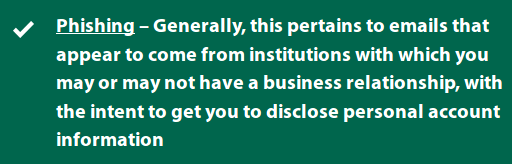
Here’s their definition of “phishing”:
HVFCU – Phishing description
Having just switched to “paperless statements” at the Credit Union, a recent email prompted me to look at my statement. Let’s start by seeing where the email came from:
HVFCU – Statement email – From address
Huh.
It claims to be from the credit union, but does its actual address (insofar as anything concerning email can be actual) of statement2web.com sound a little phishy to you, too?
Well, let’s look at the full headers, which I can do because, yo, 1337H4X0R. Here’s a snippet from the bottom of the stack:
HVFCU – Email detail header
Huh.
So the email started from statement2web.com and bankshotted off kbmla.com. Further up, the headers show it rattled through pobox.com and eventually arrived in my inbox. As far as I can tell, it never touched its alleged starting point of hvfcu.org at any point in its journey.
Quick: phish or no phish?
Of course, it’s a perfectly innocent message from the credit union, but it contains every single warning sign we’re supposed to notice in spam or phishing emails, complete with a clicky link!
The Jingle lines introduce a short interlude of chimes separating music from advertisements. The Intro chimes play for 30 seconds and the Extro chimes play for three to five seconds. Some stations have similar interludes, others do not; apparently the station gets to choose the format.
The [Targetspot - TargetSpot] lines mark two minutes of TargetSpot insertion: either advertisements (if you’re in their target market) or generic musical interludes similar to the station’s genre (if you’re out-of-market). The ads and music often lack volume-matching with the streaming music, rarely have lower volume, and the ads are incomprehensible to my ears. The musical interludes seem to be randomly chosen from a small set of candidate tracks that, along with the chimes, become annoyingly familiar in short order.
The [] lines (yes, an empty string) mark two minutes of Public Service Announcements, advertisements, or generic musical interludes. I’m uncertain how they differ from the [Targetspot - TargetSpot] insertions.
At a minimum, Radionomy inserts two minutes of TargetSpot / PSAs after every 12 to 15 minutes of music. Adding in the Jingle markers, ads occupy just under 20% of the total “airtime” for this station.
However, bizarre events like the 17 nonstop minutes of jingles and ads inserted just after noon occur with inexplicable frequency. I’ve noticed half an hour of similar back-to-back-to-back ads on other stations, so it’s not a rare event.
To quote the TargetSpot website:
TargetSpot serves ads in real time to each listener’s personalized stream, creating a one-to-one relationship between the advertiser and the listener. The result is a dramatic increase in message relevancy and campaign effectiveness
Those keyword markers turn out to be incredibly convenient. Just sayin’…
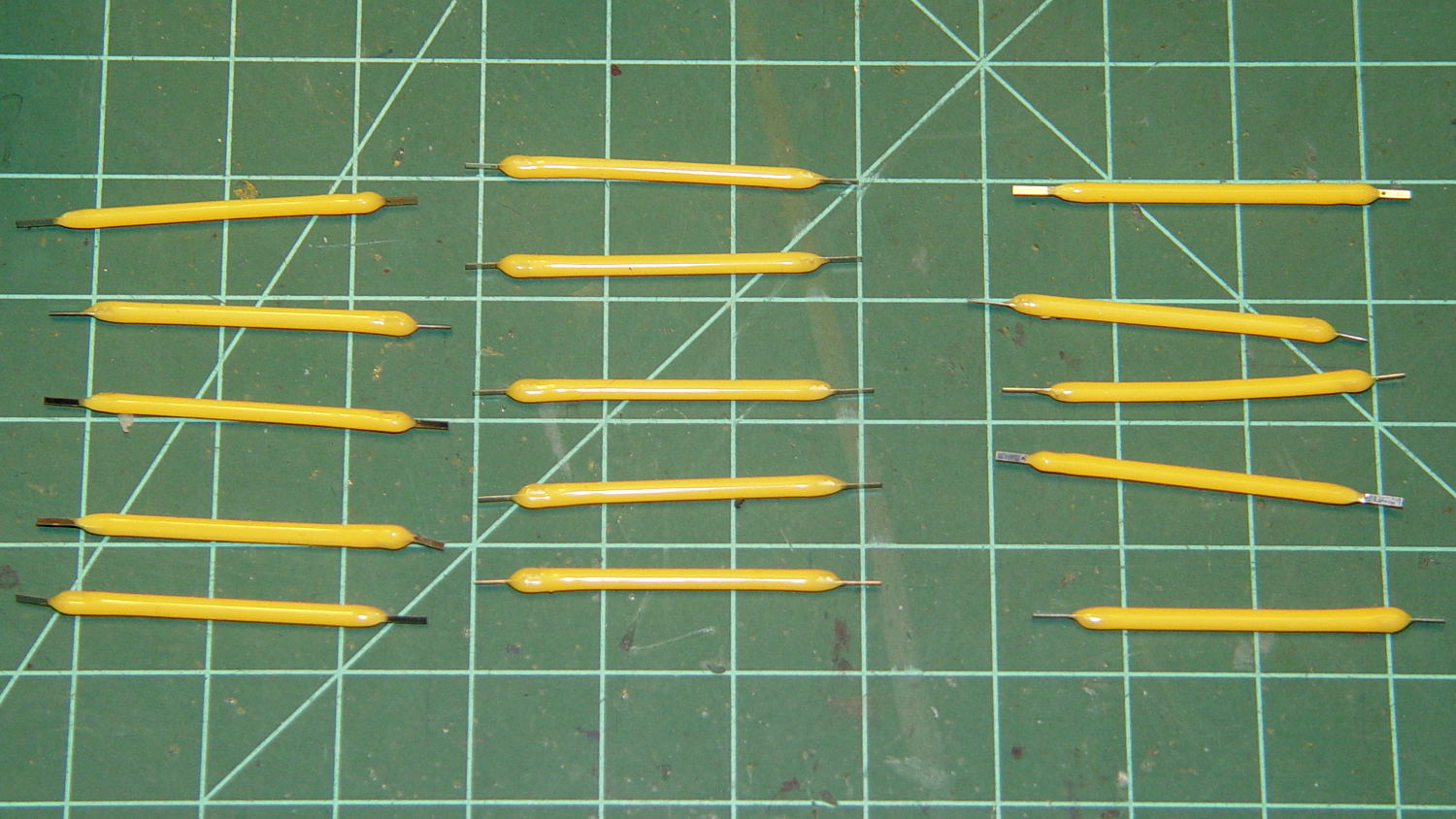
Five bucks delivered three sets of five warm-white LED filaments from halfway around the planet:
LED Filaments – 3×5 sets
Unfortunately, the “Top Rated Plus” eBay seller just popped three ziplock baggies into an unpadded envelope and tossed it in the mail:
Unpadded LED Filament Envelope
Which had pretty much the result you’d expect on the glass substrates within:
Broken LED Filament 1
Turns out every single filament had at least one break:
Broken LED Filament 3
Indeed, some seemed just as flexy as the silicone cylinder surrounding the pulverized substrate.
I reported this to the seller, with photographs, and got a classic response:
can you use?
No, I cannot imagine a use for broken LED filaments.
The seller proposed shipping replacements that would might arrive just after the eBay feedback window closed. I proposed refunding the five bucks. The seller ignored that and sent the replacements in an untracked package “as it is an economical shipping, we have to reduce our loss, so is it ok?”.
No, it’s not, but he / she / it didn’t actually intend that as a question.
Were the filaments intact, they’d pass 15 mA with 50 to 60 V applied in one direction or the other, for 1 W average dissipation. That’s probably too high for prolonged use in air (spendy bulbs with similar LEDs have argon / krypton fill for better heat transfer), but I can surely throttle them back a bit.
Perhaps the replacements will arrive before the feedback window closes?
I did order another batch from a different seller that might arrive intact before then. We shall see…







 The Smell of Molten Projects in the Morning