Ed Nisley's Blog: Shop notes, electronics, firmware, machinery, 3D printing, laser cuttery, and curiosities. Contents: 100% human thinking, 0% AI slop.
Category: Science
If you measure something often enough, it becomes science
One of the Hobo dataloggers asked for a new battery during its most recent data dump. The old battery dates back to January 2015:
Maxell CR2032 lithium cell – 22 month life
That was when a batch of Energizer cells failed in quick succession: it wasn’t the datalogger’s fault. I’ve been handling the cells a bit more carefully, too, although that certainly doesn’t account for the much longer life.
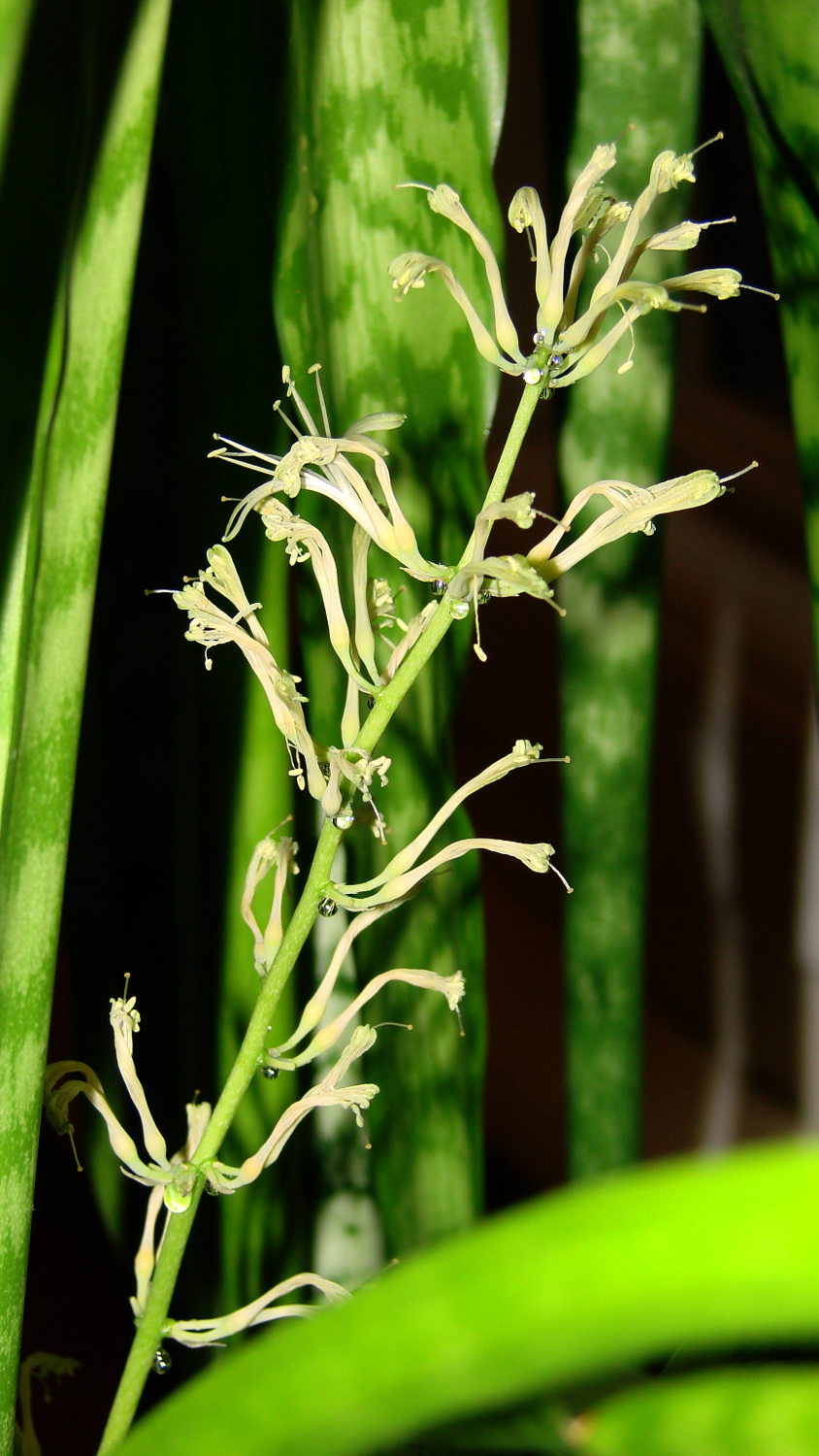
Both of us began sniffling and sneezing in early October, long after the outdoor flowers faded away, and finally remembered to check the Mother In Law’s Tongue:
Mother In Law Plant – flowering
It’s that time of the year again: we’re both wildly allergic to a houseplant with weird flowers. Even after cutting the stalk off and deporting it outdoors, we’re still sniffly.
The blossoms produce so much nectar that the droplets near the base of each flower eventually fall off, making a mess on the floor if the stalk tilts over far enough.
We kept it when we helped Mom move out of the Ancestral House, long ago, and it’s still going strong.
A friend asked why Norwegians point their satellite dishes at the ground. After maneuvering Google Streetview around Vadsø for a while, I found a dish in profile:
TV satellite dish – Vadso Norway
Turns out geostationary orbit is way low, as seen from the top of the world. A bit of doodling shows it’s only 11° above the horizon at 70° N:
TV Satellite Dish – Horizon Angle at 70° N
TV satellite antennas have an offset-fed reflector, with the receiver in the lump at the end of the spine sticking out from the bottom of the dish, so as to not obstruct the signal entering the dish. Even though the plane of the reflector points downward, the signal reflected to the receiver comes in from above.
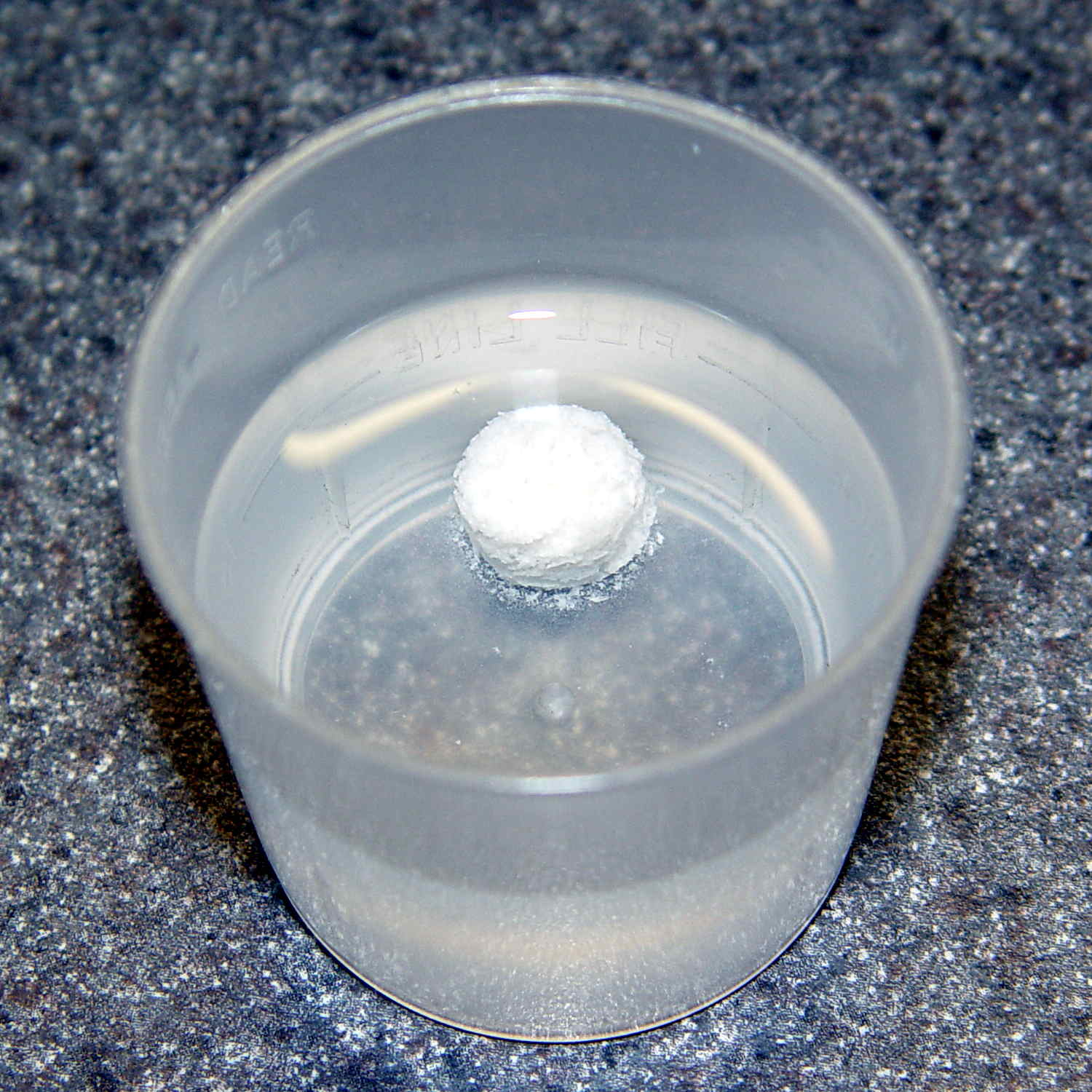
Perhaps an acidic environment would be more to its taste?
Here’s another pill after a day in vinegar:
Time-release melatonin – 24h vinegar
In both cases, poking the somewhat dissolved pill separated it into gummy chunks, so it’s probably working as designed. I suppose the usual stomach churning would help.
This being a quack nostrum, there’s no way to tell what’s inside or how much you’re getting, but I didn’t expect to get way more B6 than you’d expect from the large print on the label. Lesson: always read the fine print, no matter how well it’s concealed.
0/10 – would not buy again.
As before, the results do not differ significantly from placebo, so this is a triumph of hope over experience.
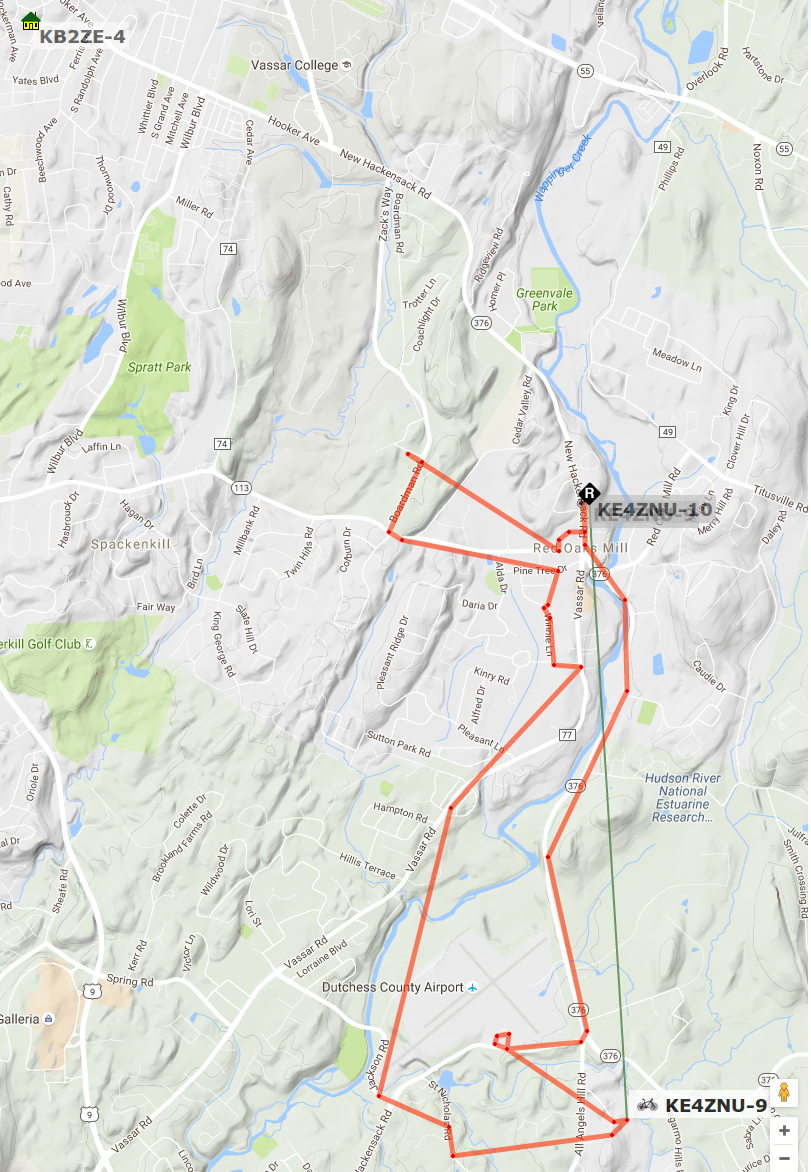
A pleasant Friday morning ride with several stops:
KE4ZNU-9 – APRS Reception – 2016-09-09
KE4ZNU-10 handled the spots near Red Oaks Mill, along parts of Vassar Rd that aren’t hidden by that bluff, and along Rt 376 north of the airport.
The KB2ZE-4 iGate in the upper left corner caught most of the spots; it has a much better antenna in a much better location than the piddly mobile antenna in our attic.
Several of the spots along the southern edge of the trip went through the K2PUT-15 digipeater high atop Mt. Ninham near Carmel, with coverage of the entire NY-NJ-CT area.
The APRS-IS database filters out packets received by multiple iGates, so there’s only one entry per spot.
All in all, KE4ZNU-10 covers the southern part of our usual biking range pretty much the way I wanted.
Another Walkway Over the Hudson Moonwalk provided a good view of the Poughkeepsie waterfront:
City of Poughkeepsie Waterfront – night view
The railroad station’s parking garage produces the big mass of sodium light in the middle and (I think) the bleached church on the far left has mercury vapor floodlights.
The smaller spots of cold-white LED lighting scattered here-and-there will gradually expand and, in five years or so, take over the entire vista …
The bottom, of course, carried a heavier layer of crust:
Wagner cast iron skillet – before – bottom
The wet areas came from the usual after-breakfast washing.
Looking down into the electrolytic stripping bath, with bubbles forming on exposed metal areas around the crust on the bottom of the pan:
Wagner cast iron skillet – in stripping bath
After a day of electrolysis, all the crust was gone. Low labor, low danger, no fuss, not much muss.
Given three stripped pans, the seasoning process involved wiping them with flaxseed oil, baking at 500 °F for an hour, cooling for two hours, and repeating. Six iterations occupied a long day, uncomfortably warmed the kitchen during a long hot summer day, and turned out to be just fussy enough to fit around some short-attention-span projects.
Fast forward one day.
The outside of the seasoned pans looks lovely:
Wagner cast iron skillet – after – bottom
I’d have been hard-pressed to pick out the “Wagner Ware” before stripping the pan.
The inside of all three pans had a peculiar mottled appearance:
Wagner cast iron skillet – after – top
The medium pan:
Medium cast iron pan – after – top
The small pan:
Small cast iron pan – after – top
The dark spots might suggest I used too much oil and it puddled / collected / whatever while baking, except that I’d slathered the oil on using a scrap from a cotton towel (actually, many scraps, one per iteration), then wiped it off with more towel scraps before baking the pans.
Breakfast proceeded pretty much as usual and the giant omelet (5 eggs, lots of chopped chard, two finely chopped bacon rashers, cheddar cheese, plenty of oil, stuff like that) seemed to stick somewhat less than usual: it’s not a Teflon-coated pan, but worked pretty well.
I did the usual post-breakfast KP, which involves washing the pan with ordinary dish soap, scuffing the recalcitrant bits, and dropping the pan in the dish drainer. I don’t scour the pans, but I don’t treat them with fawning obeisance, either; they’re utensils, not sacred objects.
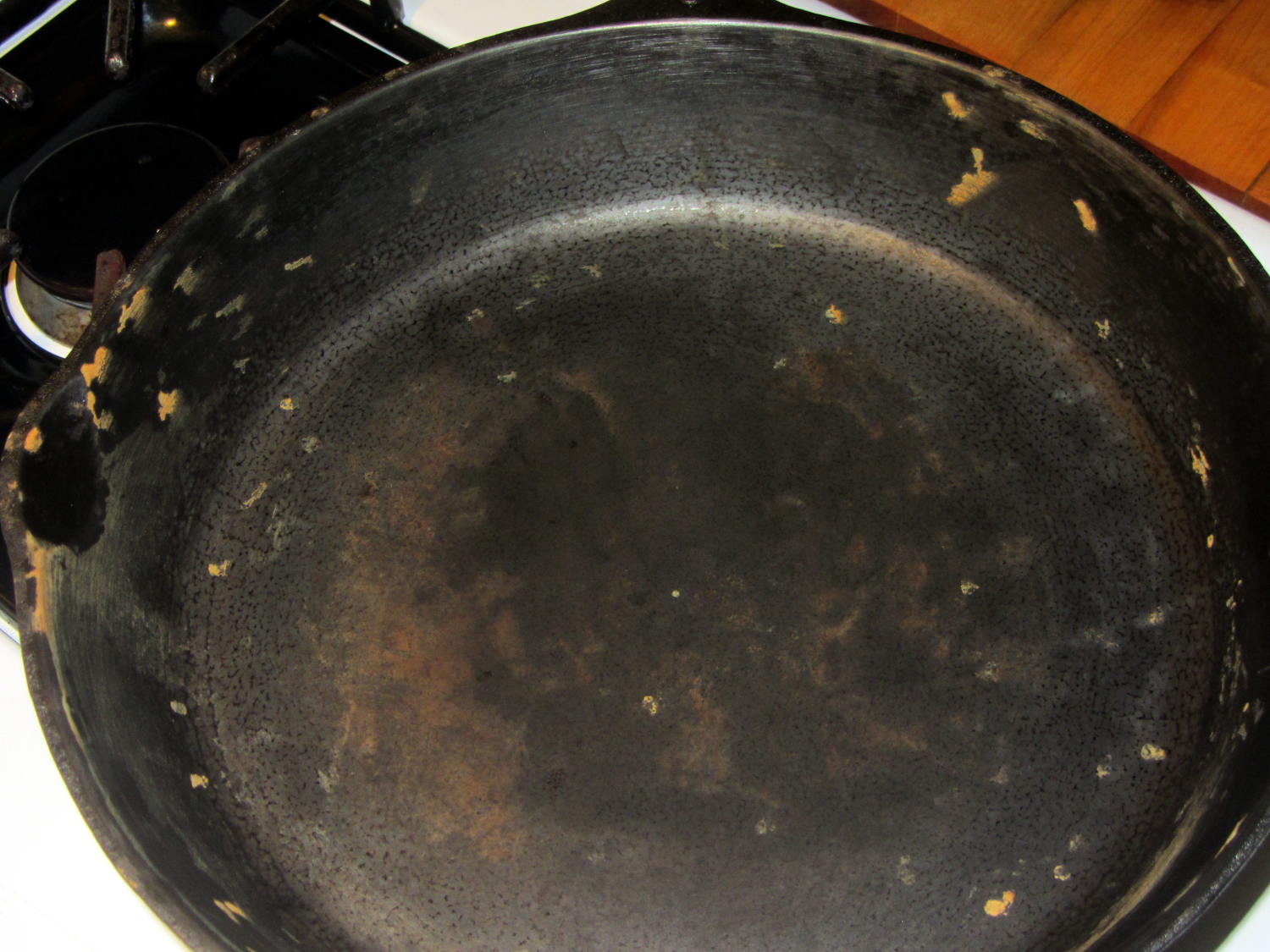
Just before lunch, this appeared:
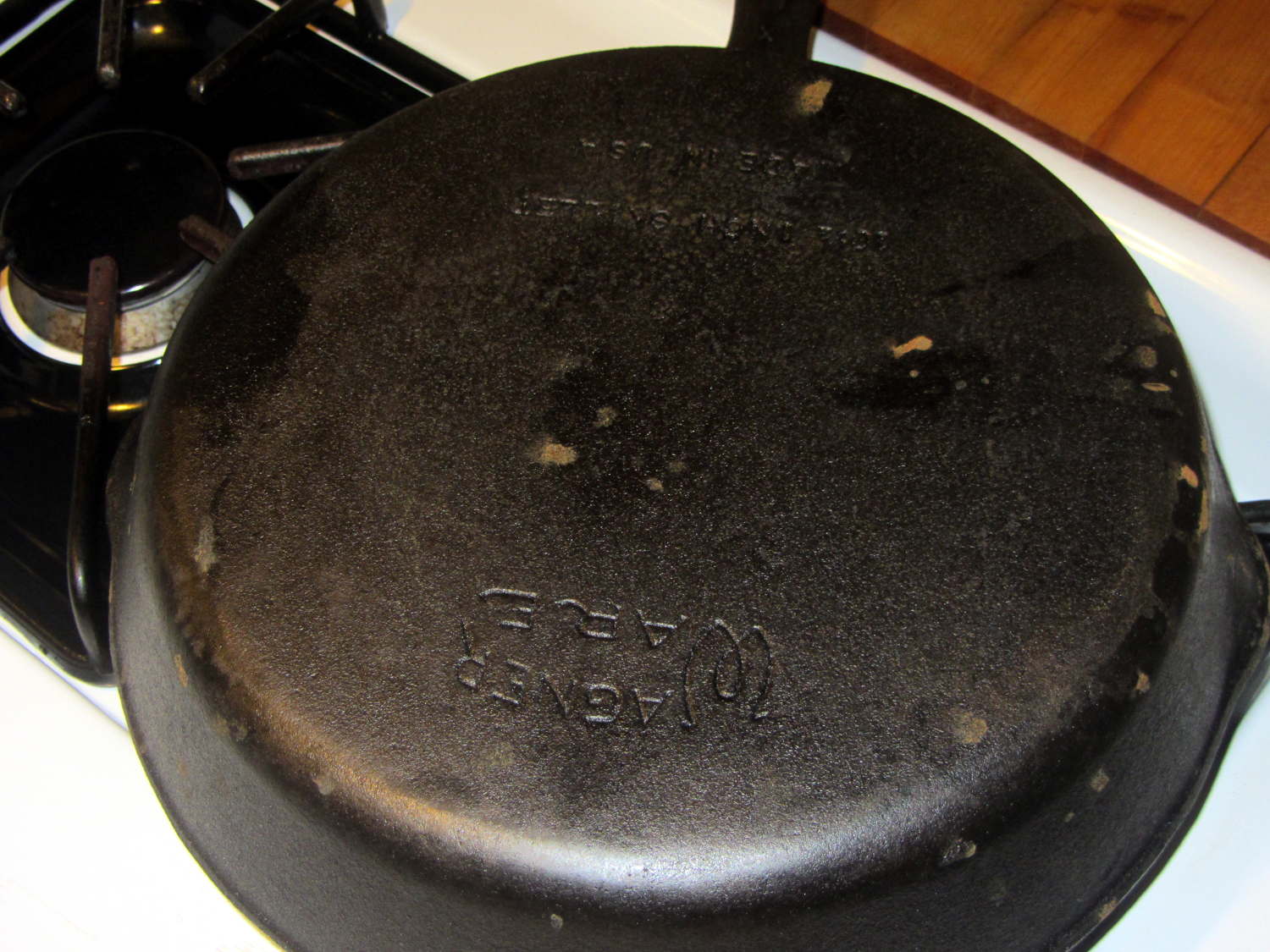
Wagner cast iron skillet – washed – top
The bottom sported similar rust spots:
Wagner cast iron skillet – washed – bottom
So that suggests I didn’t apply enough oil. Or scrubbed too hard. Or did something utterly wrong.
Haven’t a clue about what happened. If I didn’t follow the seasoning process, I don’t know what I’d change. Ditto for washing up; it’s not like we haven’t been using the pan for decades.
After supper, I washed & dried the pan, slathered on a generous oil coating, and let it sit, all in the hope the oil eventually forms a good crusty layer.
By and large, the pan works better than it did before and the seasoning not nearly as well as I expected.






 The Smell of Molten Projects in the Morning