The Smell of Molten Projects in the Morning

Ed Nisley's Blog: Shop notes, electronics, firmware, machinery, 3D printing, laser cuttery, and curiosities. Contents: 100% human thinking, 0% AI slop.

Category: Science

If you measure something often enough, it becomes science

  • Monthly Science: Maria Mitchell Astronomy Notebooks

    Back in 2016, the Special Collection Library at Vassar put on Seeing the Sun: Maria Mitchell’s Observations, 1868-1888, an exhibit featuring materials from her tenure as Vassar’s astronomer, including several notebooks of observations and calculations. Being that type of guy, I spent quite a while pondering the effort required to do science.

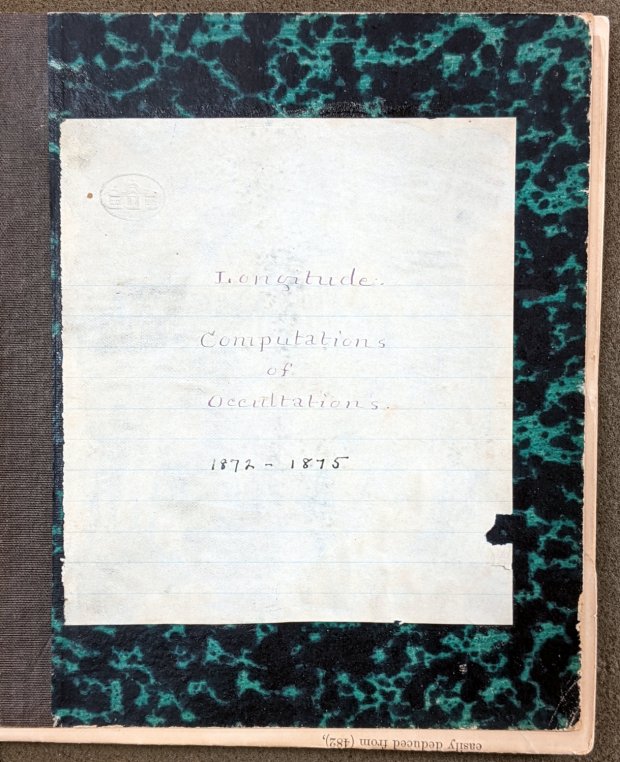
    Perhaps this notebook appeared in the exhibit:

    Mitchell 8.6 - Longitude computations of occultations 1872-1875
    Mitchell 8.6 – Longitude computations of occultations 1872-1875

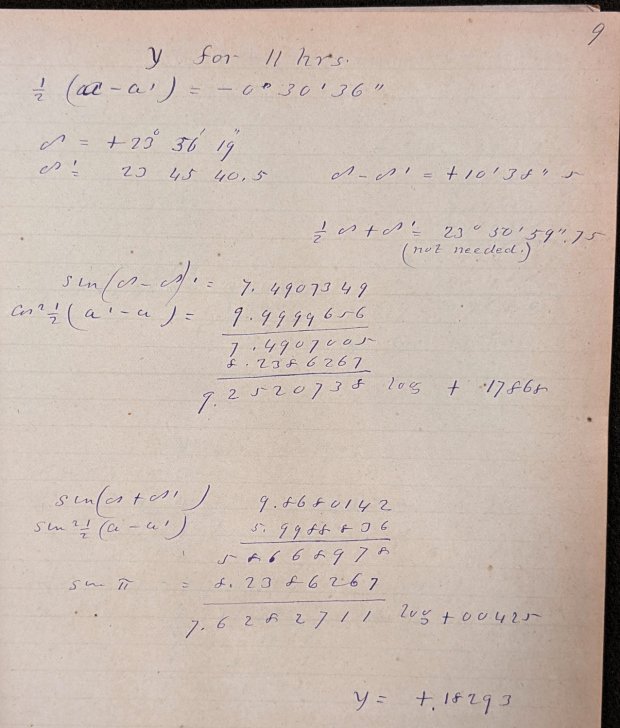
    Here’s what “calculations” looked like in 1872:

    Mitchell 8.6 p9 - Occultation of 1253 BAC at 11 hrs - calculation
    Mitchell 8.6 p9 – Occultation of 1253 BAC at 11 hrs – calculation

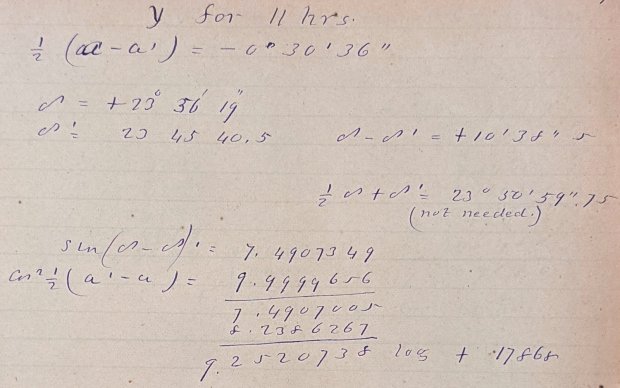
    Yeah, grinding out trigonometry by hand using seven-place logarithms:

    Mitchell 8.6 p9 - Occultation of 1253 BAC at 11 hrs - calculation detail 1
    Mitchell 8.6 p9 – Occultation of 1253 BAC at 11 hrs – calculation detail 1

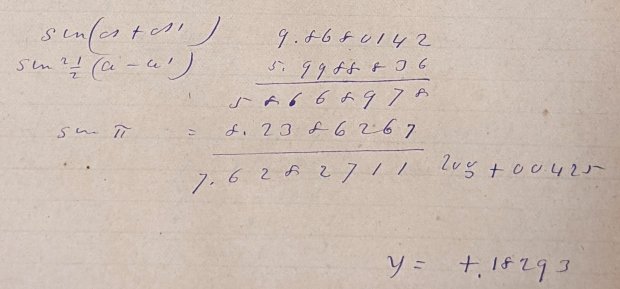
    Not just by hand, but by hand with pen and ink:

    Mitchell 8.6 p9 - Occultation of 1253 BAC at 11 hrs - calculation detail 2
    Mitchell 8.6 p9 – Occultation of 1253 BAC at 11 hrs – calculation detail 2

    Although you’ll find an occasional ink blot, she was probably using a fountain pen, rather than a dip pen, and made very few mistakes along the way. She often recorded direct instrument observations in pencil.

    The next time you start pissing & moaning about how hard solid modeling is, suck it up.

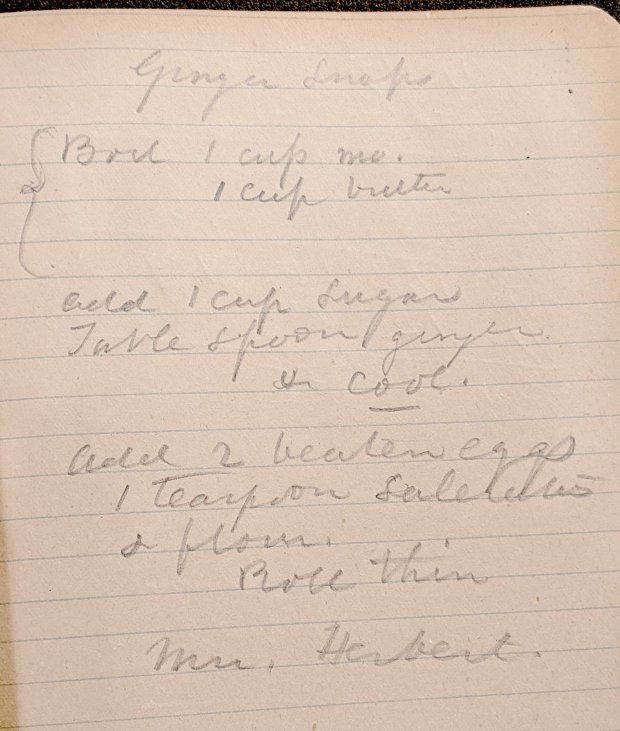
    Bonus: a Ginger Snap recipe suggesting it wasn’t all toil & trouble in the observatory:

    Mitchell 7.5 - Ginger Snap recipe
    Mitchell 7.5 – Ginger Snap recipe

    The mystery ingredient is saleratus, “aerated salt”, now known as baking soda; they used potassium bicarbonate before today’s sodium bicarbonate.

    I spent several pleasant hours browsing through selected notebooks in search of computations, taking pictures of pages under field conditions in ambient light. All images from Maria Mitchell Papers, Archives and Special Collections, Vassar College Libraries.

  • Video-rated MicroSD Card Status Report

    Having just returned from the fourth ride of the season, it’s worthwhile to note how the MicroSD cards in the cameras are doing.

    The Sony HDR-AS30V helmet camera has been running a 64 GB Sandisk high-endurance video-rated card since late August 2017:

    Sandisk - 64 GB MicroSDXC cards
    Sandisk – 64 GB MicroSDXC cards

    In those 29 calendar months (maybe 20 riding months) I’ve ridden 4500-ish miles at perhaps 12 mph, so call it 375 hr = 22.5 k min. The camera fills a 4 GB file every 22.75 min, so it’s recorded 1000 files = 4 TB, which is 62× its capacity. This is better than the defunct Sandisk Extreme Pro card (3 TB & 50×) and much much better than the Sony cards (1 TB & 15×), although I have caught the camera in RCVR mode maybe twice, which means the card or camera occasionally coughs and reformats itself.

    The Cycliq Fly6 rear camera uses a Sandisk 32 GB card that’s been running flawlessly since late 2017:

    MicroSD 32 GB - Samsung EVO and SanDisk High Endurance
    MicroSD 32 GB – Samsung EVO and SanDisk High Endurance

    The new 16850 lithium cell continues to work fine, too.

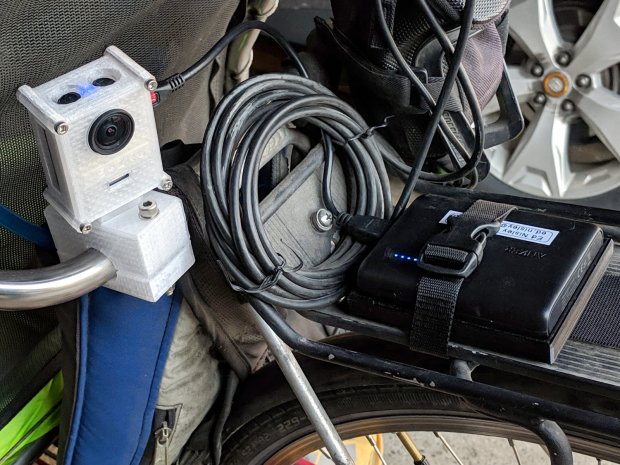
    The SJCam M20 rear camera also uses a Sandisk 32 GB high-endurance card and has worked fine since early 2018. An external battery eliminated all the hassle of its feeble internal batteries, although the one that’s been in there has faded to the point of just barely keeping the clock ticking over during winter weeks without rides:

    SJCAM M20 Mount - Tour Easy side view
    SJCAM M20 Mount – Tour Easy side view

    All in all, paying the premium for video-rated MicroSD cards has been worthwhile!

  • High-Impact Driving

    We spotted this near our usual parking spot during a recent grocery trip:

    Adams crash - stone wall
    Adams crash – stone wall

    The bush was pretty well uprooted, suggesting the vehicle stopped atop the bush after demolishing the wall.

    Wondering how it got there, I looked across the parking lot:

    Adams crash - reverse view
    Adams crash – reverse view

    Yes, that’s a dead lamp post. The impact dislodged its concrete base by about four inches:

    Adams crash - lamp pole detail
    Adams crash – lamp pole detail

    The greenery came from another eviscerated bush:

    Adams crash - bush debris
    Adams crash – bush debris

    I expected to see tire gouges in the grass, but … nope.

    The bush got a haircut, although the right half seems undamaged:

    Adams crash - bush detail
    Adams crash – bush detail

    The boulder won its disagreement with the vehicle, although there’s surprisingly little shattered plastic and other debris along the trail:

    Adams crash - boulder detail
    Adams crash – boulder detail

    The impact dislodged the boulder, which came to rest about four feet from its origin:

    Adams crash - overview
    Adams crash – overview

    The damage lies along a straight line from the middle of the Adams entrance intersection to the wall impact:

    Adams crash - trajectory
    Adams crash – trajectory

    There are no obvious skid marks, undercarriage scrapes, or gouges in the grass anywhere along the trajectory, suggesting the vehicle remained mostly airborne and ballistic during the whole event, and even the three (!) curbs involved have no marks.

    The nice lady at the Adams Customer Service counter didn’t know what happened and, as usual, the Poughkeepsie Journal (newspaper) has nothing to say.

    I did not check for a high-clearance pickup truck with tall tires and severe front-end damage in the body shop across the street, although one seems a likely suspect. Whatever the vehicle may have been, it was definitely traveling at the usual (tautological) “high rate of speed” …

  • Monthly Science: Weight

    As one might expect, the holiday season offers many suboptimal dietary choices and interferes with regular exercise:

    Weight Chart - 2020-01 - Ed
    Weight Chart – 2020-01 – Ed

    I re-origined the skin-fold measurement series for the 2020 chart to move it further from the weight series. The 2 mm jump is close to the repeatability limit, particularly as I’m now eyeballing the measurement site based on a nearby freckle, rather than depending on a fading Sharpie dot.

  • Blog Summary: 2019

    Another year of being the Domain Expert of scam-by-mail gadgets, obsolete ABS codes, and water heater anode rods:

    Blog Page View Summary - 2019
    Blog Page View Summary – 2019

    Plotting the log of page views against posts in descending order of popularity gives a power-law relationship of some sort:

    Blog Page View Graph - 2019
    Blog Page View Graph – 2019

    The log-log view has odd discontinuities:

    Blog Page View Graph - 2019 - log-log
    Blog Page View Graph – 2019 – log-log

    Overall page views are down 30% from last year: 205k vs 290k.

    WordPress served 1 million ads (vs 1.2 million in 2018) on those 205k page views, nearly five ads per page view, which seems horrifying. If you’re not using an ad blocker, you surely have difficulty finding the blog post amid all the crap.

    The implosion of on-line advertising continues apace, however, as WordPress paid only 63% as much per ad: $0.40 (vs $0.70 in 2018) per thousand views. Obviously, ads on WordPress blogs aren’t worth much these days.

    Recommendations:

    While I could pay WordPress their upgrade ransom to eliminate the ads, it’s better if you defend yourself by eliminating all ads, wherever they may be.

  • Bird Feeder Icing

    After a day of snow + sleet + ice, followed by overnight cooling, the bird feeder looked like this:

    2019-12-19 - Ice on bird feeder - Day 0
    2019-12-19 – Ice on bird feeder – Day 0

    The ice generally doesn’t bond across the top, so the sheets slide off separately to the front and back. This time, they stayed together and began sliding off to the side.

    The next two days were unusually cold and the glacier stopped sliding:

    2019-12-21 - Ice on bird feeder - Day 2
    2019-12-21 – Ice on bird feeder – Day 2

    The temperature warmed enough during the day to let the glacier resume sliding, whereupon it fell and shattered on the patio.

    No birds or squirrels were injured during this incident.

  • Cheese Slicer: JB Weld Epoxy FTW

    The JB Weld epoxy I slathered on our trusty hand-held cheese slicer a year ago continues to withstand daily washing and occasional trips through the dishwasher:

    Cheese Slicer JB Weld 1 year - top
    Cheese Slicer JB Weld 1 year – top

    The bottom is in fine shape, too:

    Cheese Slicer JB Weld 1 year - bottom
    Cheese Slicer JB Weld 1 year – bottom

    Compare it with XTC-3D epoxy, which admittedly isn’t rated for continuous water exposure, after a year:

    Cheese Slicer - epoxy coating split
    Cheese Slicer – epoxy coating split

    JB Weld FTW!