The Smell of Molten Projects in the Morning

Ed Nisley's Blog: Shop notes, electronics, firmware, machinery, 3D printing, laser cuttery, and curiosities. Contents: 100% human thinking, 0% AI slop.

Category: Science

If you measure something often enough, it becomes science

  • Monthly Science: Batmax NP-BX1 Status

    Monthly Science: Batmax NP-BX1 Status

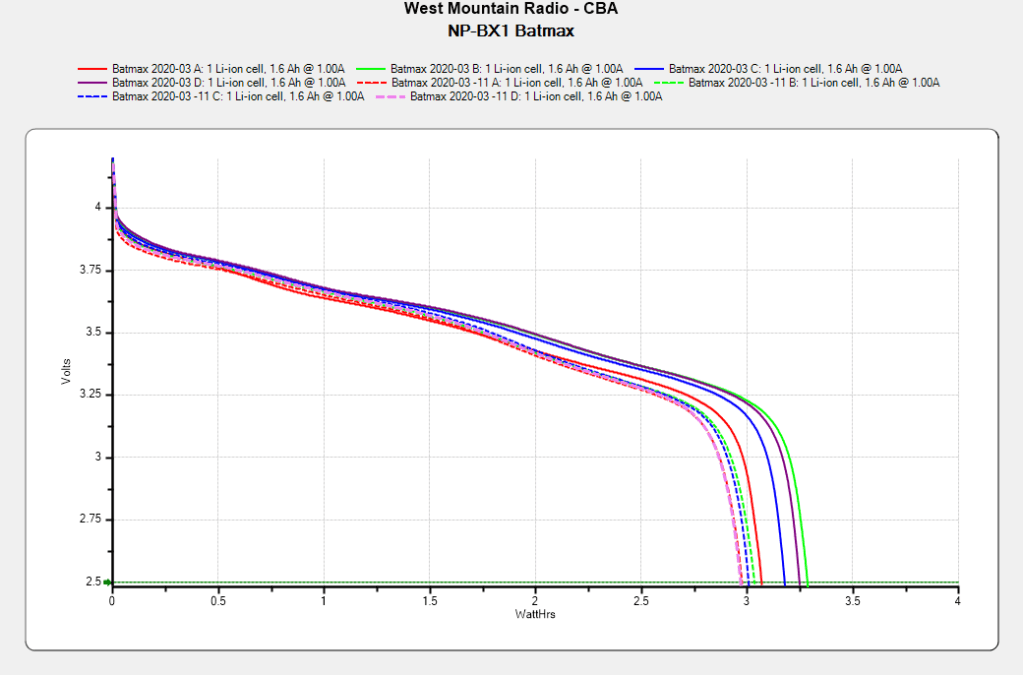
    After powering my Sony HDR-AS30V helmet camera for nearly all of this year’s riding, the Batmax NP-BX1 lithium batteries still have roughly 90% of their original capacity:

    Batmax NP-BX1 - 2020-11
    Batmax NP-BX1 – 2020-11

    Those are hot off the Official Batmax charger, which appears identical to other randomly named chargers available on Amazon.

    They’re holding up much better after a riding season than the DOT-01 batteries I used two years ago:

    Sony DOT-01 NP-BX1 - 2019-10-29
    Sony DOT-01 NP-BX1 – 2019-10-29

    Empirically, they power the camera for about 75 minutes, barely enough for our typical rides. I should top off the battery sitting in the camera unused for a few days, although that hasn’t happened yet.

    Of course, the Batmax NP-BX1 batteries I might order early next year for the new riding season have little relation to the ones you see here.

  • Roadside Overgrowth: Life Finds a Way

    Roadside Overgrowth: Life Finds a Way

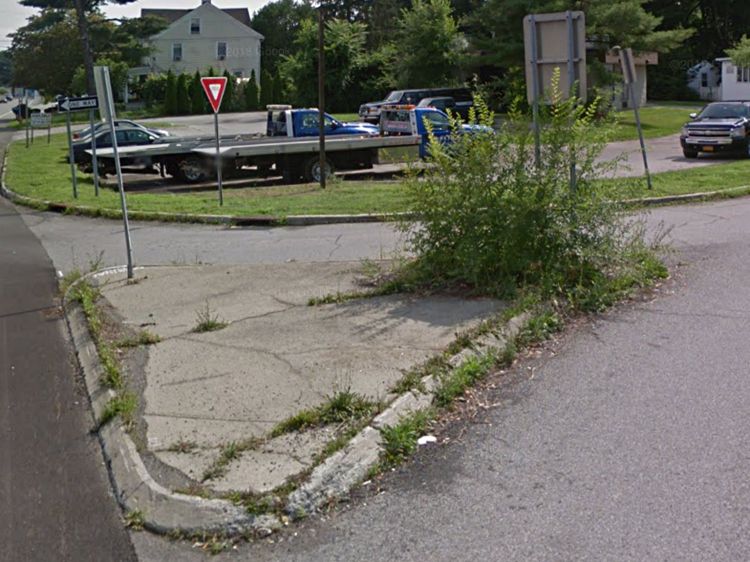
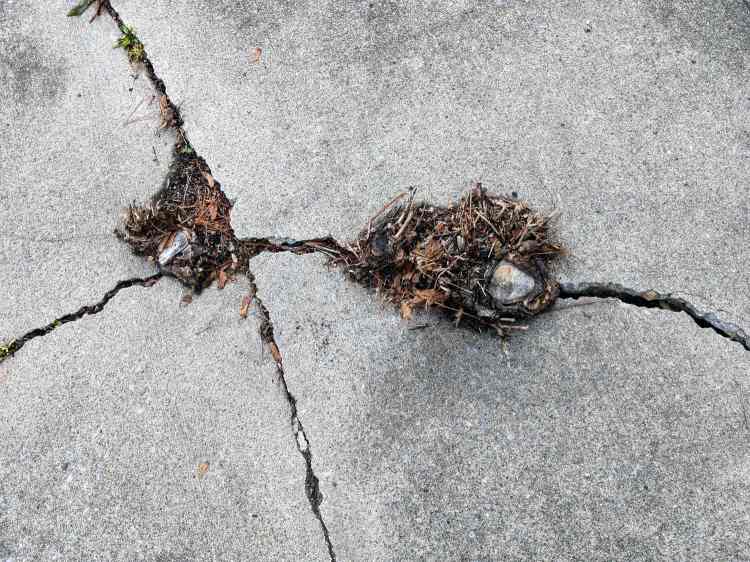
    A few years ago, this traffic splitter had a magnificent overgrowth goin’ on:

    Traffic splitter bushes - Vassar Rd at Pine Tree Dr - Streetview 2018-07
    Traffic splitter bushes – Vassar Rd at Pine Tree Dr – Streetview 2018-07

    Eventually, somebody (perhaps the NYS DOT) cut the bushes off at their bases and probably hit them with defoliant to keep them down:

    Traffic splitter stumps - Vassar Rd at Pine Tree Dr - 2020-11
    Traffic splitter stumps – Vassar Rd at Pine Tree Dr – 2020-11

    I don’t know that the stems cracked the concrete, but they surely eased the slabs apart.

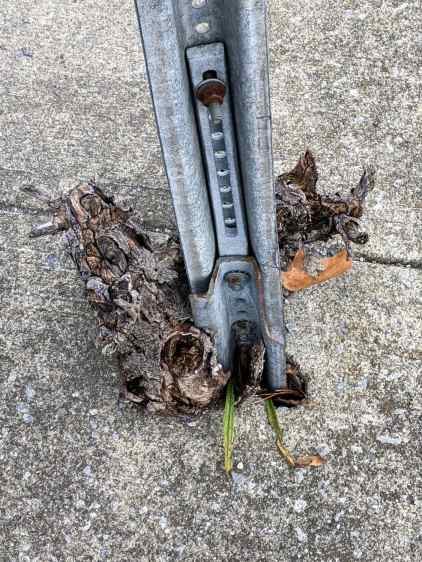
    The signpost had a substantial bush at its base:

    Traffic splitter stumps - signpost - Vassar Rd at Pine Tree Dr - 2020-11
    Traffic splitter stumps – signpost – Vassar Rd at Pine Tree Dr – 2020-11

    It’s tough to keep civilization running ahead of Mother Nature

  • Mini-lathe DRO Battery Lifetime

    Mini-lathe DRO Battery Lifetime

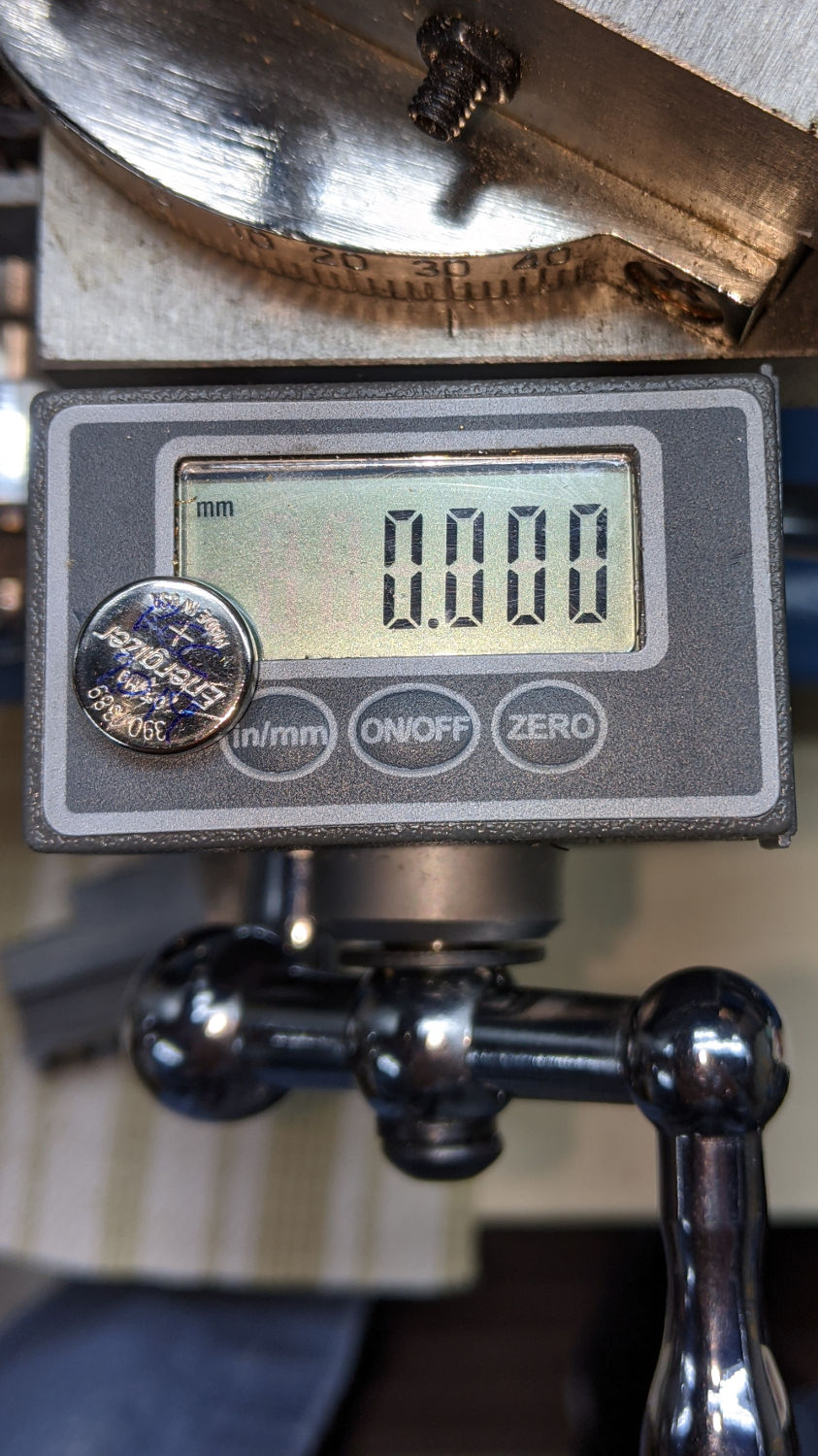
    It seems 390/389 alkaline button cells can power the mini-lathe’s DROs for about a year:

    Mini-lathe DRO battery replacement - 11 months
    Mini-lathe DRO battery replacement – 11 months

    Given that the replacement cells all come from the same batch, they’re aging on the shelf as well as in the DROs.

    Once again, I replaced both of them.

  • Monthly Science: Chestnut Weevil Damage

    Monthly Science: Chestnut Weevil Damage

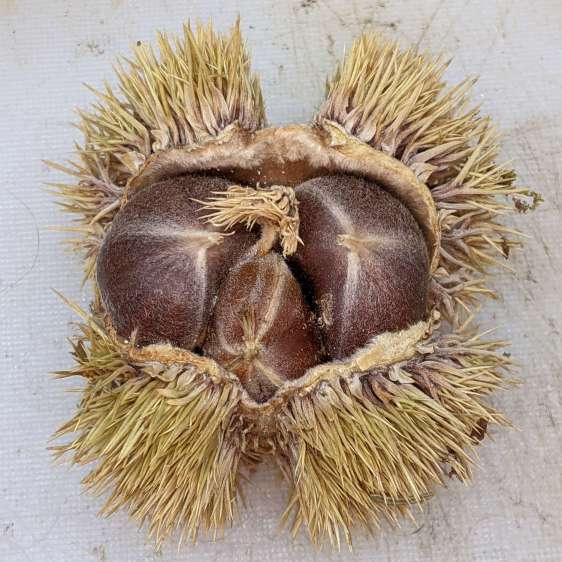
    The dried chestnuts looked undamaged in their husk, but three groups of weevil grubs surely left some damage behind:

    Chestnut husk - dried
    Chestnut husk – dried

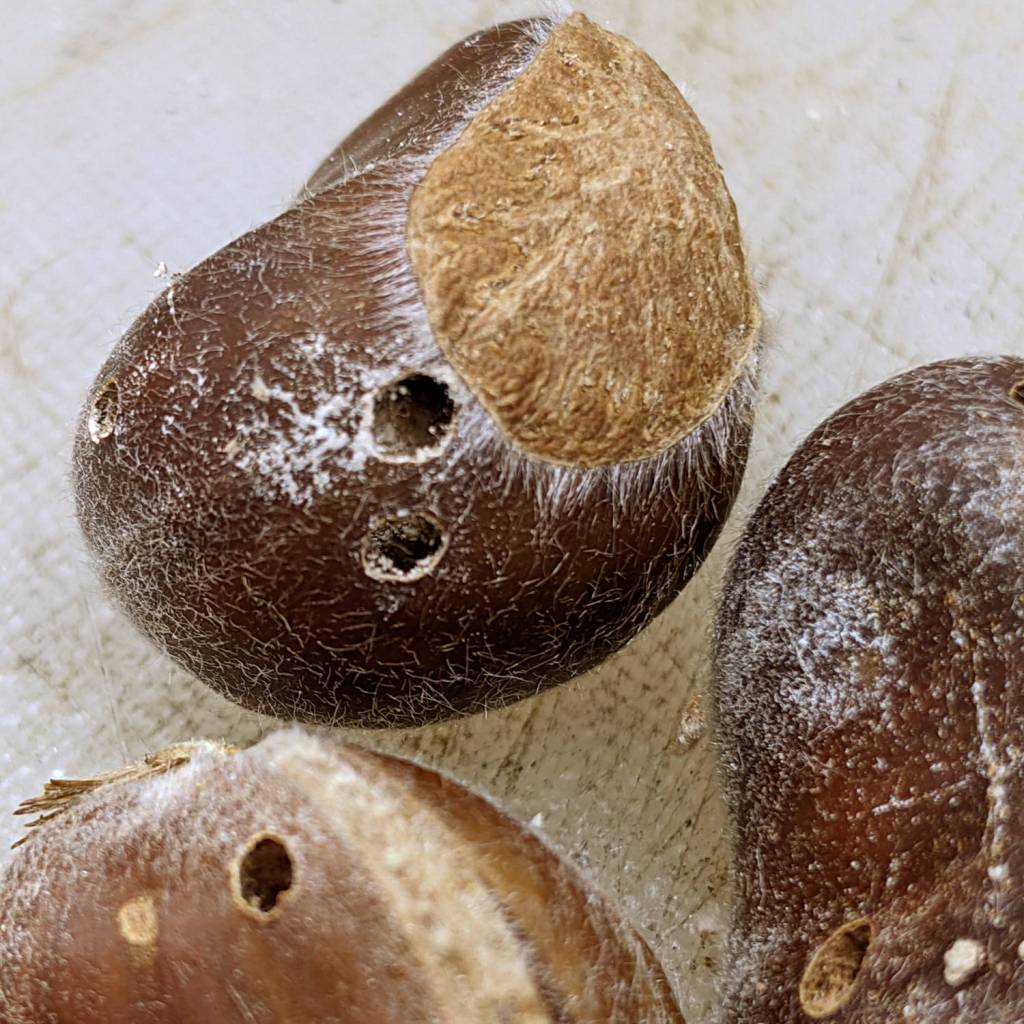
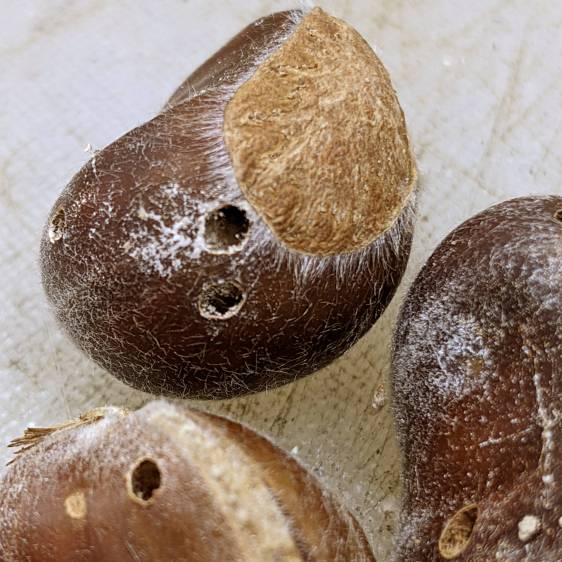
    Gingerly prying the seeds out revealed holes in all three:

    Chestnut weevil damage - exterior
    Chestnut weevil damage – exterior

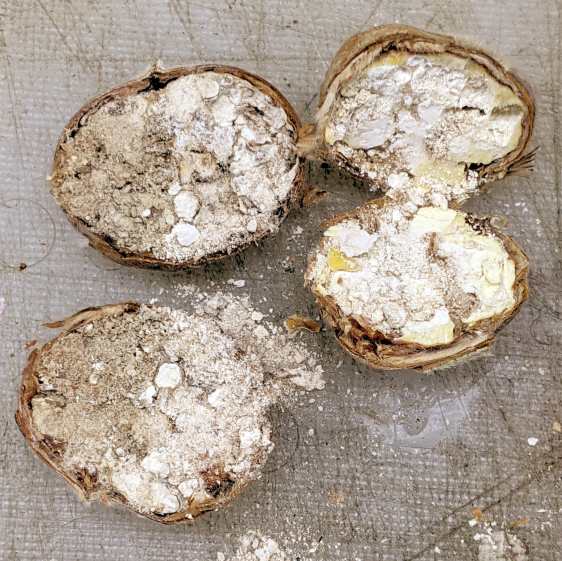
    The weevils converted the nut meat into what looks like solid frass:

    Chestnut weevil damage - interior
    Chestnut weevil damage – interior

    Having eaten themselves out of house and home, they moved on to the next plane of existence.

    For most of them, that would be bird food.

  • Brita Water Filter Innards

    Brita Water Filter Innards

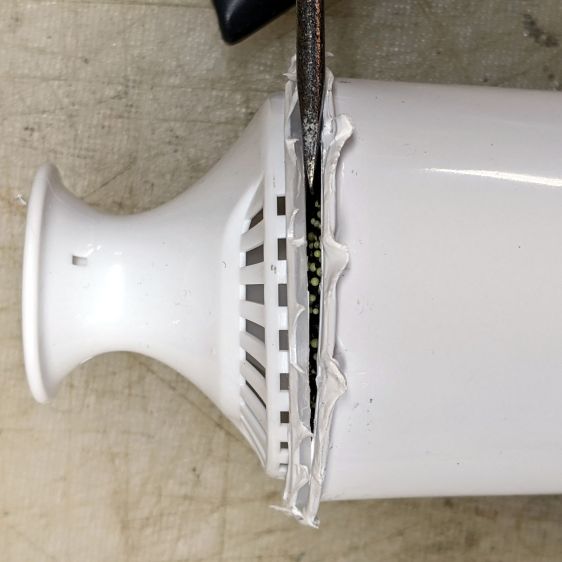
    Having replaced our disintegrating Brita pitcher a few years ago, I finally got around to opening a used filter to see what’s inside. Start by cutting off the flexible rim (intended as a seal against the pitcher) to reveal the joint, then pry the lid off:

    Brita pitcher filter - opening
    Brita pitcher filter – opening

    Stand it upright before getting the lid off, because the filter contains a zillion charcoal granules and two zillion ion-exchange resin beads:

    Brita pitcher filter - granules
    Brita pitcher filter – granules

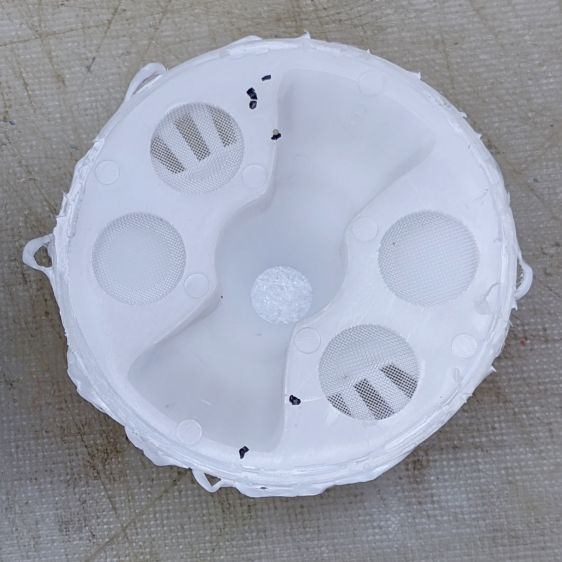
    The inside of the lid has mesh screens to keep the innards in place while distributing the raw water:

    Brita pitcher filter - lid
    Brita pitcher filter – lid

    Similarly, mesh on the bottom drains let the filtered water out:

    Brita pitcher filter - emptied
    Brita pitcher filter – emptied

    No surprises, but now we all know what’s in there.

  • Arducam Motorized Focus Camera: Depth of Field

    Arducam Motorized Focus Camera: Depth of Field

    According to the Arducam doc, their Motorized Focus Camera has a 54°×41° field of view, (roughly) equivalent to an old-school wide(-ish) angle 35 mm lens on a 35 mm still camera. For my simple purposes, the camera will be focused on objects within maybe 200 mm:

    Arducam Motorized Focus Camera - desktop test range
    Arducam Motorized Focus Camera – desktop test range

    The numeric keys are 6.36 mm = ¼ inch tall, the function keys are 5.3 mm tall, and the rows are 10 to 11 mm apart.

    The focusing equation converting distance to lens DAC values depends critically on my crude measurements, so the focus distance accuracy isn’t spot on. Bonus: there’s plenty of room for discussion about where the zero origin should be, but given the tune-for-best-picture nature of focusing, it’s good enough.

    I set the CANCEL legend at 50 mm and it’s in good focus with the lens set to that distance:

    Arducam Motorized Focus Camera - 50 mm
    Arducam Motorized Focus Camera – 50 mm

    Focusing at 55 mm sharpens the ON key legend, while the CANCEL legend remains reasonably crisp:

    Arducam Motorized Focus Camera - 55 mm
    Arducam Motorized Focus Camera – 55 mm

    Adding another 5 mm to focus at 60 mm near the front of the second row shows the DoF is maybe 15 mm total:

    Arducam Motorized Focus Camera - 60 mm
    Arducam Motorized Focus Camera – 60 mm

    Focusing at 65 mm, near the middle of the second row, softens the first and fourth rows. Both of the middle two rows seem OK, making the DoF about 20 mm overall:

    Arducam Motorized Focus Camera - 65 mm
    Arducam Motorized Focus Camera – 65 mm

    Jumping to 100 mm, near the top of the first function row:

    Arducam Motorized Focus Camera - 100 mm
    Arducam Motorized Focus Camera – 100 mm

    At 150 mm, about the top of the far row just under the display:

    Arducam Motorized Focus Camera - 150 mm
    Arducam Motorized Focus Camera – 150 mm

    I think 200 mm may be the far limit of useful detail for a 5 MP camera:

    Arducam Motorized Focus Camera - 200 mm
    Arducam Motorized Focus Camera – 200 mm

    At 300 mm the DoF includes the mug at 600 mm, but the calculator keyboard is uselessly fuzzy:

    Arducam Motorized Focus Camera - 300 mm
    Arducam Motorized Focus Camera – 300 mm

    At 500 mm, the mug becomes as crisp as it’ll get and the text on the box at 750 mm is entirely legible:

    Arducam Motorized Focus Camera - 500 mm
    Arducam Motorized Focus Camera – 500 mm

    At 1000 mm, which is basically the edge of the desk all this junk sits atop, the mug and text become slightly fuzzy, so the DoF doesn’t quite reach them:

    Arducam Motorized Focus Camera - 1000 mm
    Arducam Motorized Focus Camera – 1000 mm

    I limited the focus range to 1500 mm, which doesn’t much change the results:

    Arducam Motorized Focus Camera - 1500 mm
    Arducam Motorized Focus Camera – 1500 mm

    I could focus-stack a set of still images along the entire range to get one of those unnatural everything-in-focus pictures.

  • Chestnut Parasites

    Chestnut Parasites

    I spotted this little gadget chugging steadily across a table in the living room:

    Chestnut parasite larva - detail
    Chestnut parasite larva – detail

    Nearby, two of its friends / siblings / clones remained near their landing craft:

    Chestnut parasite larvae - overview
    Chestnut parasite larvae – overview

    They’re about 5 mm long and, although there are no larva-size holes visible in the chestnuts tucked inside the burr, that’s definitely where they started their journey.

    A few hours later, the rest of the crew bailed out:

    Chestnut parasite larvae - irruption
    Chestnut parasite larvae – irruption

    The exit hole must be on a nut under the curve of the husk, but they’re sufficiently squishy to wriggle their way out. The little brown dot over on the left belongs to the top larva of a pair queued in the exit corridor:

    Chestnut parasite larvae - exiting husk
    Chestnut parasite larvae – exiting husk

    I lost count at 18. There’s surely more where they came from, so I replaced the plate with a bowl to reduce the quantum tunneling probability.

    In an ideal world, they’d grow up to be chestnut weevils, but I put them out near the suet feeder and, a few hours later, my offering was accepted.