The Smell of Molten Projects in the Morning

Ed Nisley's Blog: Shop notes, electronics, firmware, machinery, 3D printing, laser cuttery, and curiosities. Contents: 100% human thinking, 0% AI slop.

Category: Recumbent Bicycling

Cruisin’ the streets

  • M5 Tee Nut: Test To Destruction

    M5 Tee Nut: Test To Destruction

    The mounting block under the electronics box for the new UPP battery has a recess for an M5 tee nut:

    UPP Battery Mount - Block 5 Show View
    UPP Battery Mount – Block 5 Show View

    As with the Terry frame mounts, I glued the modified tee nut in place with JB Plastic Bonder urethane adhesive, did a test fit on the bike, discovered the whole affair had to sit about 10 mm forward, put the new frame measurement into the OpenSCAD code, and ran off a new block.

    Which gave me the opportunity to perch the old block atop the bench vise with the tee nut aimed downward between the open jaws, run an M5 bolt into the nut, and give it a good thwack with a hammer:

    UPP Battery Mount - M5 insert adhesive test
    UPP Battery Mount – M5 insert adhesive test

    Although the urethane adhesive didn’t bond uniformly across the tee nut, it had enough grip to tear the PETG layers apart and pull chunks out of the block.

    As with the tee nuts on the Terry bike, this one will be loaded to pull into the block, so it will never endure any force tending to pull things apart, but it’s nice to know how well JB Plastic Bonder works.

    I chiseled the PETG and adhesive debris off the tee nut, cleaned it up, slathered more Bonder on the new block, and squished the nut in place. After I get the electronics box sorted out, the whole affair will never come apart again!

  • IWISS SN-2549 Crimping Tool Instructions

    IWISS SN-2549 Crimping Tool Instructions

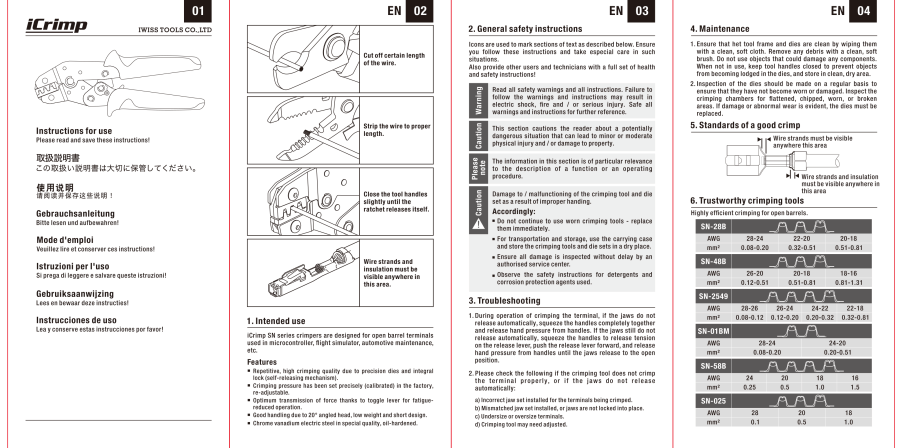
    Because I needed to know which of the four dies in the jaw of my IWISS SN-2549 crimper was the right one for 24 AWG ribbon cable:

    IWISS SN-2549 JST Crimper Manual
    IWISS SN-2549 JST Crimper Manual

    It turns out either of the two middle slots should work, but the crimps look better in the smaller one.

    Admittedly, the instructions are thin on technique, but I only wrecked four pins while retraining my crimping hand. The key trick is indexing the insulation fingers on the step inside the jaw, thus putting the socket box or the male pin outside where it won’t get smashed flat. Squishing those fingers from their normal splayed condition into a rectangular shape helps fit them into the jaw against the step.

    Living in the future where the right crimping tool doesn’t cost five Benjamins is great …

  • Laser-cut Profile Test Pieces

    Laser-cut Profile Test Pieces

    A new battery for my electrified Tour Easy recumbent arrived. It has newer 21700 lithium cells in the same overall box, but the baseplate requires new blocks adapting it to the frame:

    UPP Battery Mount - solid model
    UPP Battery Mount – solid model

    The top profile fits snugly into the battery mounting plate, with clearance on the sides for the latches:

    UPP Battery Mount - trial fit
    UPP Battery Mount – trial fit

    However, I had enough trouble measuring those recesses that I broke down and added a projection() view to the OpenSCAD code:

    UPP Battery Mount - profile
    UPP Battery Mount – profile

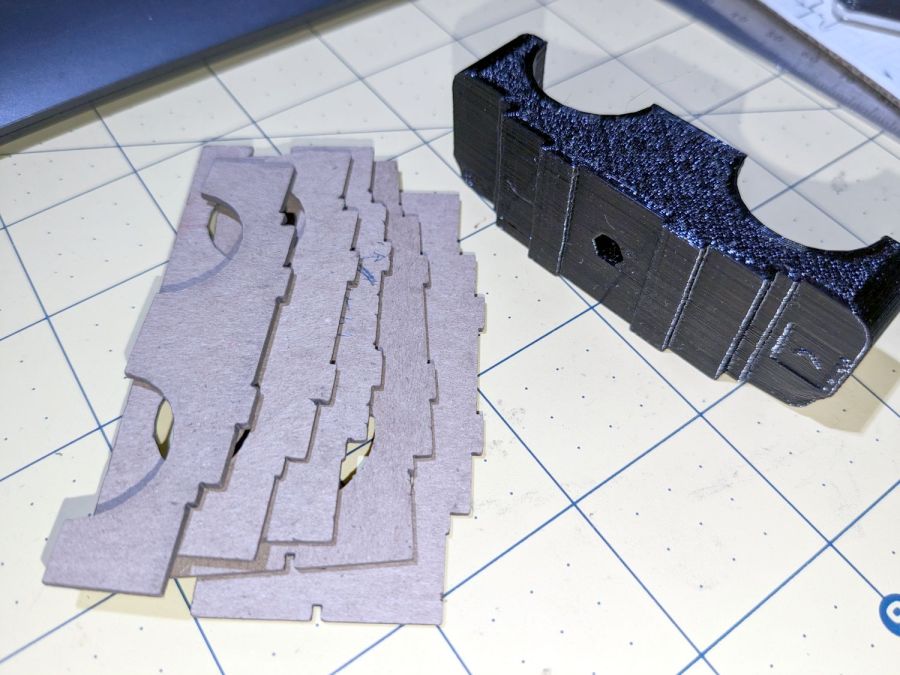
    Exporting that as an SVG image and importing it into LightBurn let me cut it out of chipboard:

    UPP Battery Mount - laser cut profiles
    UPP Battery Mount – laser cut profiles

    Obviously, it took several iterations to fit the top profile to the baseplate, particularly after finding slightly different measurements at each block position. On the other paw, laser cutting the profiles proceeded much more quickly than 3D printing just a few millimeters of the block, so it was a net win.

    The new battery baseplate doesn’t have an internal space for the buck converter feeding the running lights, so there’s more construction ahead.

  • Baofeng UV-5 Wiring Plate Globbery

    Baofeng UV-5 Wiring Plate Globbery

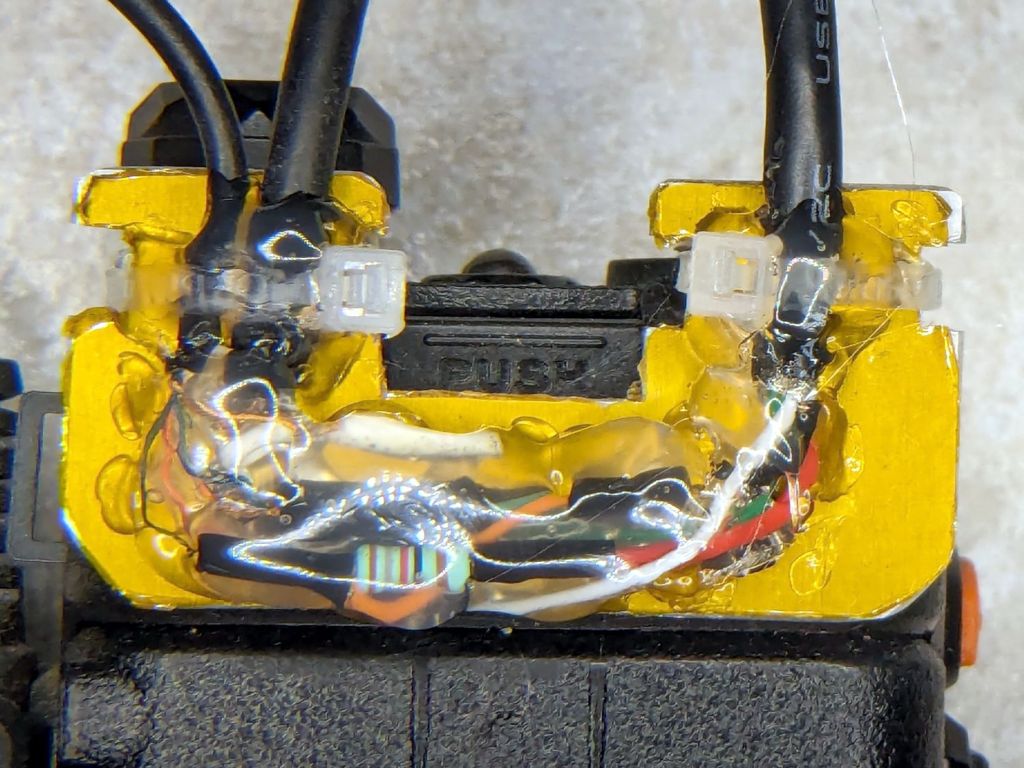
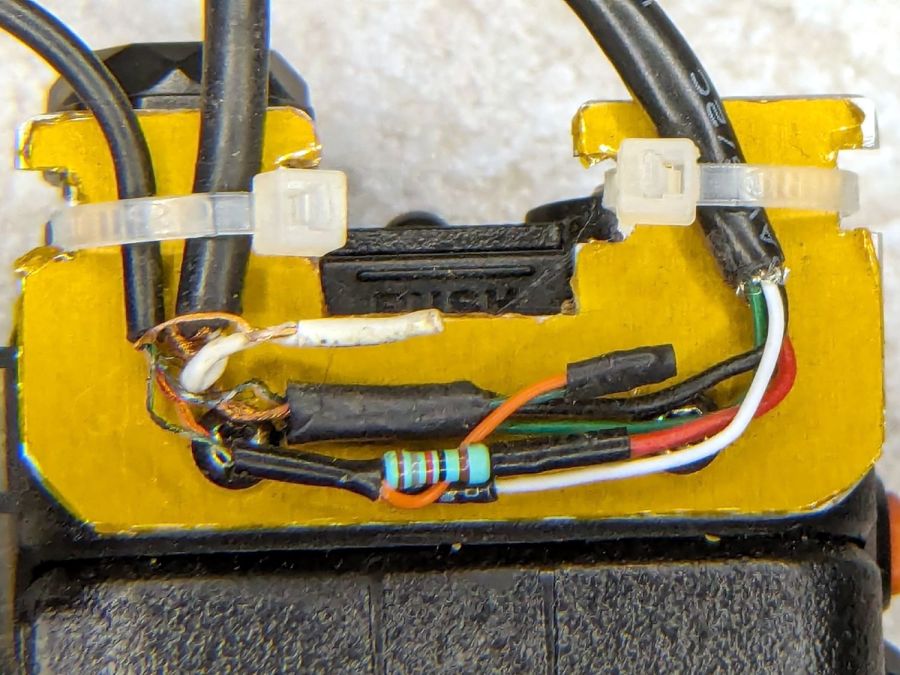
    The weekly battery swap revealed the dismal state of the headset wires on Mary’s radio:

    Baofeng wiring plate - loose wires
    Baofeng wiring plate – loose wires

    That’s after sorting & disentangling loose ends, ramming cables under their ties, and generally tidying things up.

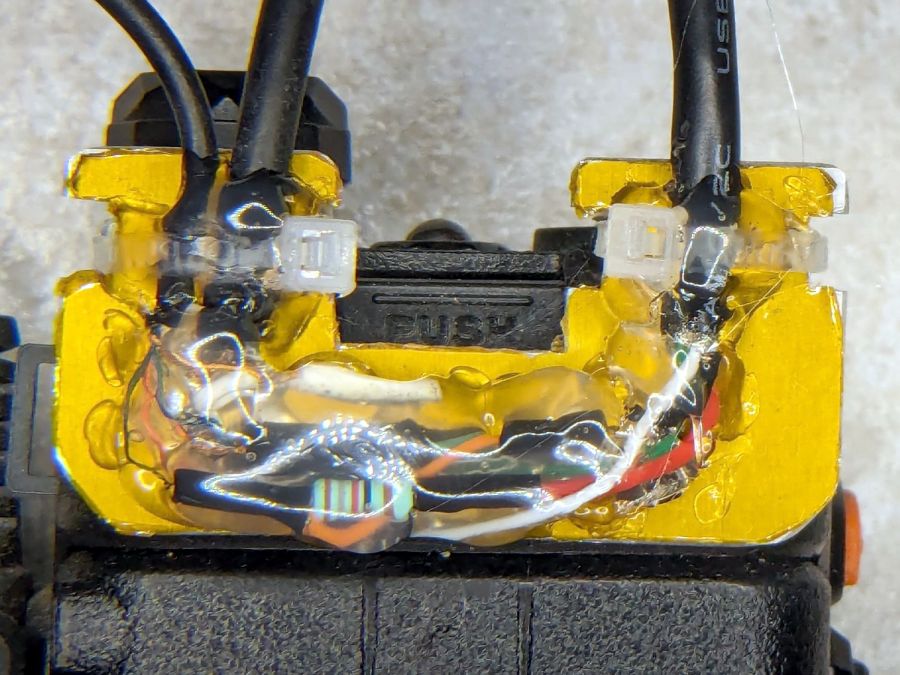
    Which suggested an improvement I should have done long ago:

    Baofeng wiring plate - globbed
    Baofeng wiring plate – globbed

    Verily, it is written: the bigger the blob, the better the job.

    Gotta glob my bike the next time around.

    Update: It’s hot melt glue!

  • Somebody’s Gotta Go First: Cybertruck

    Somebody’s Gotta Go First: Cybertruck

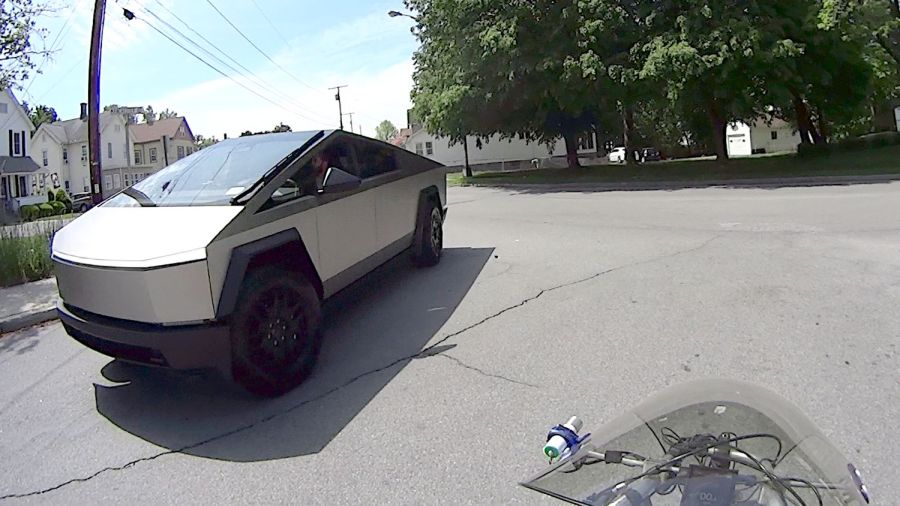
    Encountered on the way home with a trailer load of groceries:

    Tesla Cybertruck - front - 2024-05-14
    Tesla Cybertruck – front – 2024-05-14

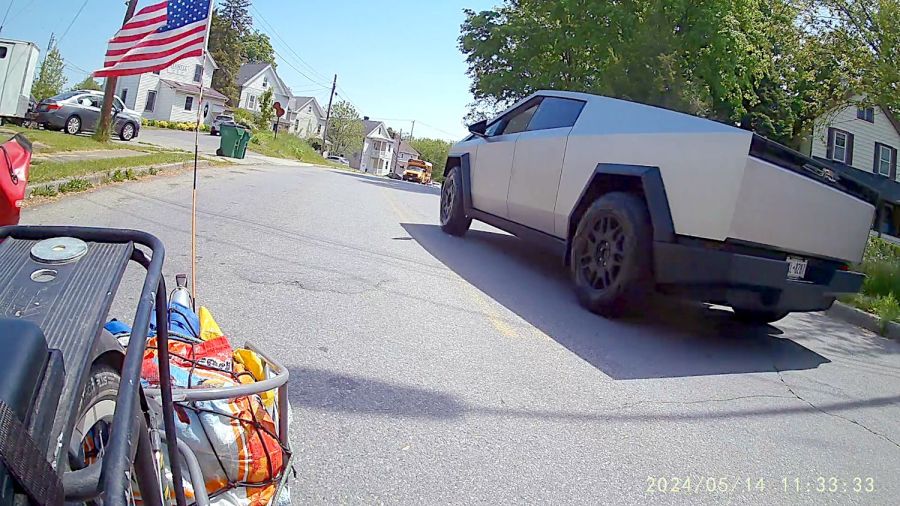
    It’s about as distinctive as (yet much uglier than) Amazon’s Rivian trucks:

    Tesla Cybertruck - rear - 2024-05-14
    Tesla Cybertruck – rear – 2024-05-14

    What I do not understand is the lack of a license plate on that front bumper, here in New York State where front license plates are mandatory. I’ve noticed several Tesla vehicles (in their S3XY automotive series, among which I cannot distinguish) without front plates, so it must be a Tesla owner thing.

    The WordPress AI image for this post gets the angular aspect right, along with the missing plate:

    Tesla Cybertruck - WP AI image
    Tesla Cybertruck – WP AI image

    Cybertruck, fear me!

  • Tour Easy Coolback Seat Restringing

    Tour Easy Coolback Seat Restringing

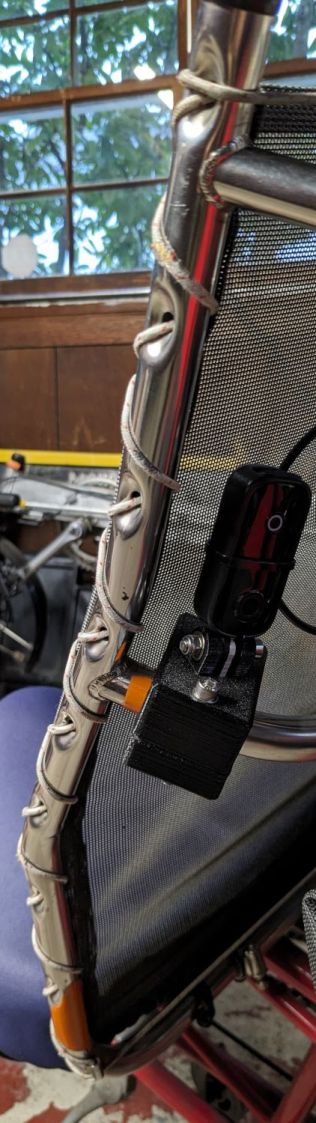
    The Kevlar cord on Mary’s bike survived the crash without breaking, but it was badly scuffed and holding on by only a few strands. Unlike in years gone by, Kevlar cord is now cheap & readily available, so I decided to restring the thing:

    Tour Easy - seat cord - restrung
    Tour Easy – seat cord – restrung

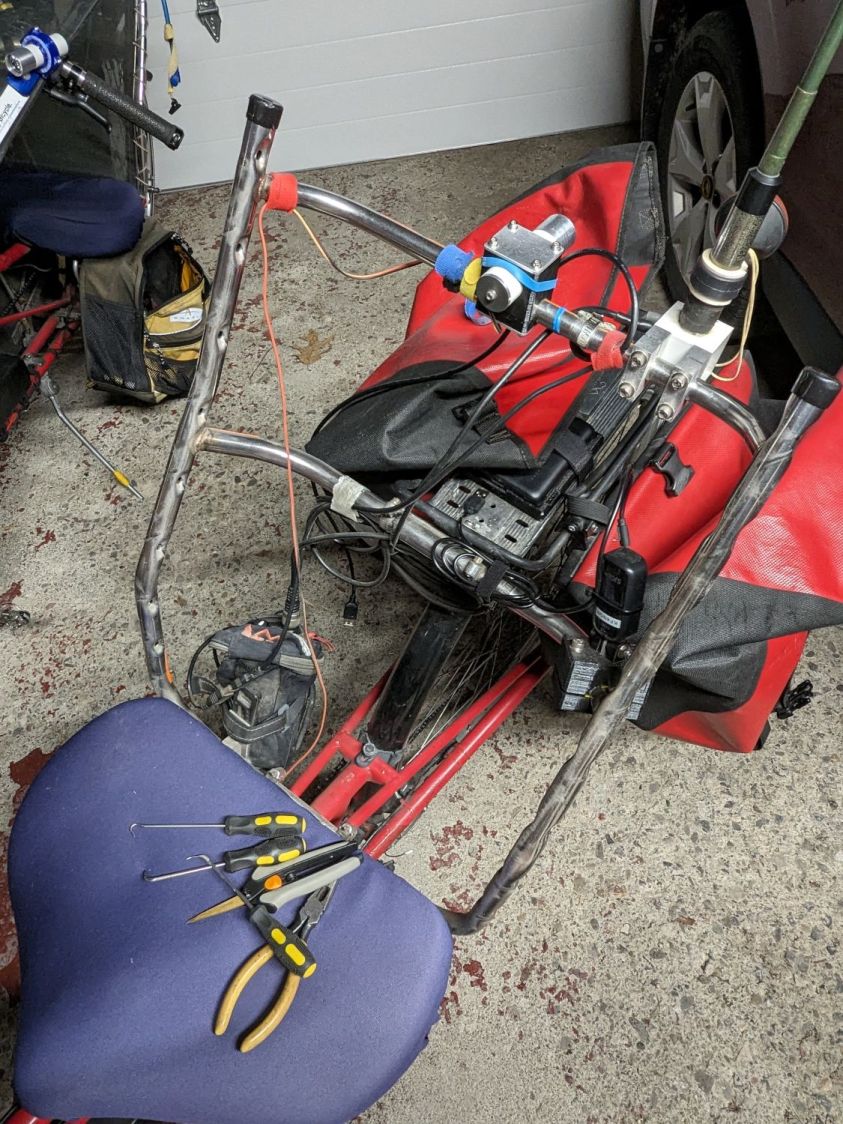
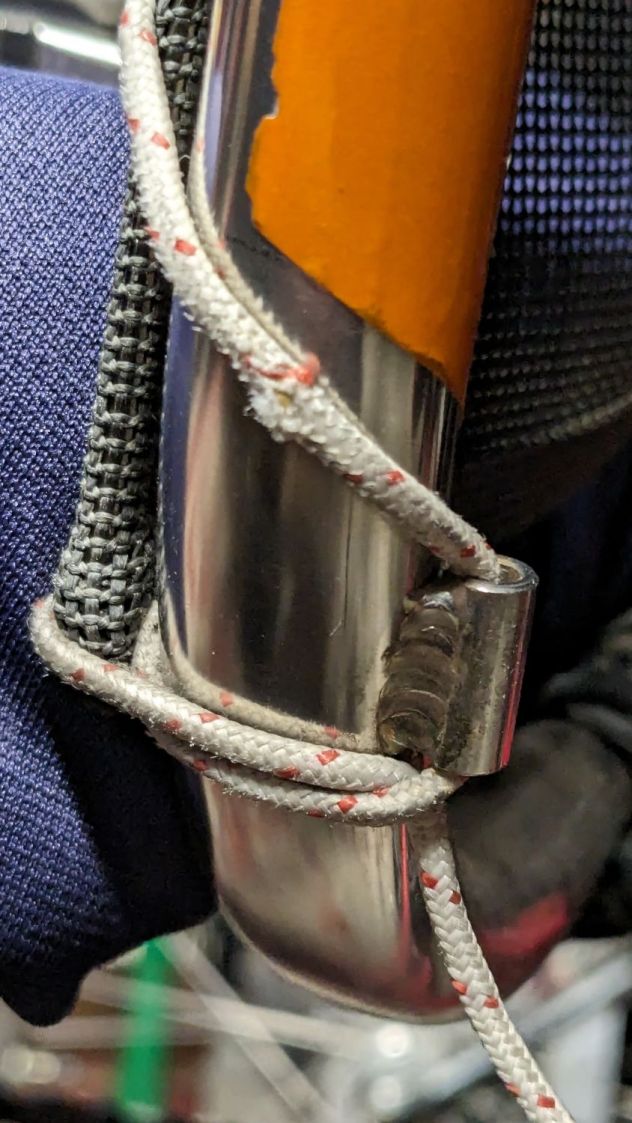
    The cord path isn’t at all obvious, even given the smudges on the seat struts:

    Tour Easy - seat mesh removed
    Tour Easy – seat mesh removed

    Pictures of the original cord as installed at the Easy Racers “factory” served as guidance:

    The knots joining the cord at the top, taken juuust before I pulled the right knot apart:

    Tour Easy - seat cord - knots
    Tour Easy – seat cord – knots

    Those are in addition to my Tour Easy a few feet away, but you can never have enough pictures.

    A 3.5 meter cord will be plenty long enough and marking the midpoint simplifies equalizing the two sides. The cord crosses the seat frame at the bottom from the lower guides, although I’m reasonably sure it wouldn’t matter if you ran separate lengths up the two sides with a knot in the lower guide.

    The new cord claims to be 1000 pound test (200 pound working), but the vital dimension is its 2.6 mm diameter to match the OEM cord. It does not claim to be UV stabilized, which may turn out to be a problem over the course of a few years.

    Tightening the cord proceeded as before and a test ride indicated the installation was all good.

  • Novus Polish vs. Fairing Fragment

    Novus Polish vs. Fairing Fragment

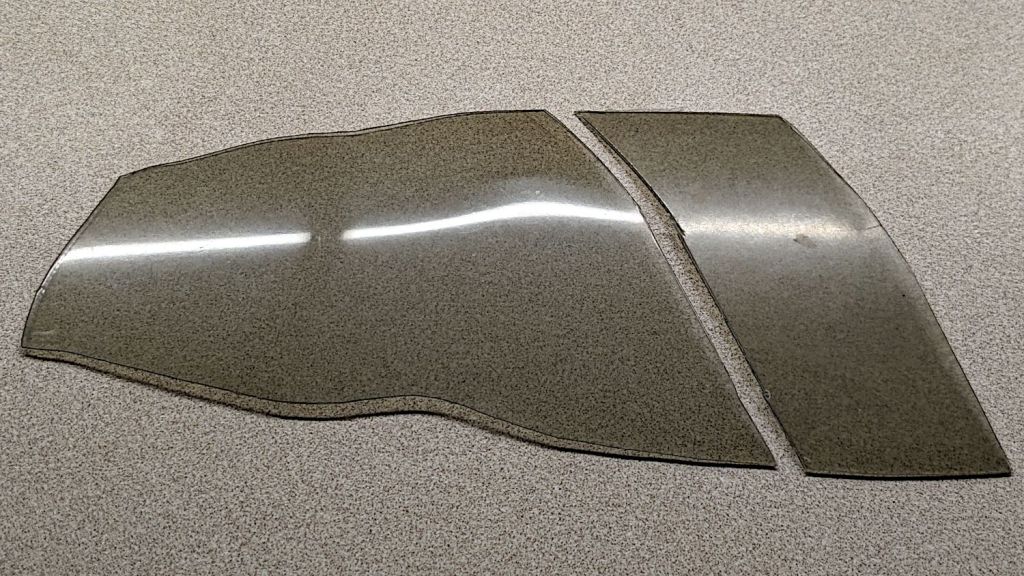
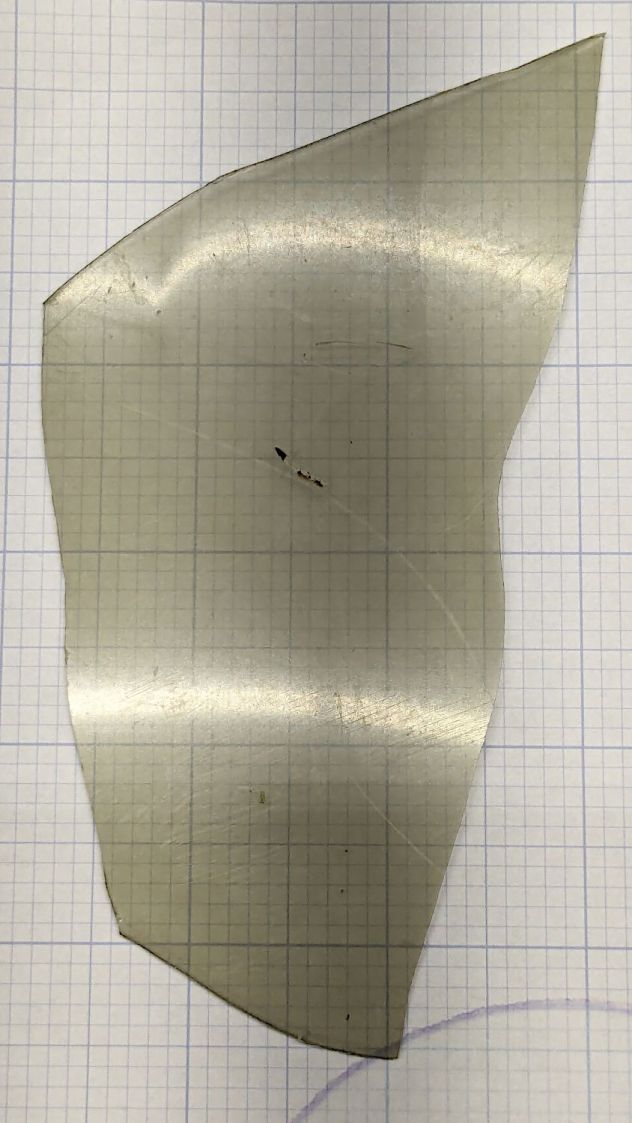
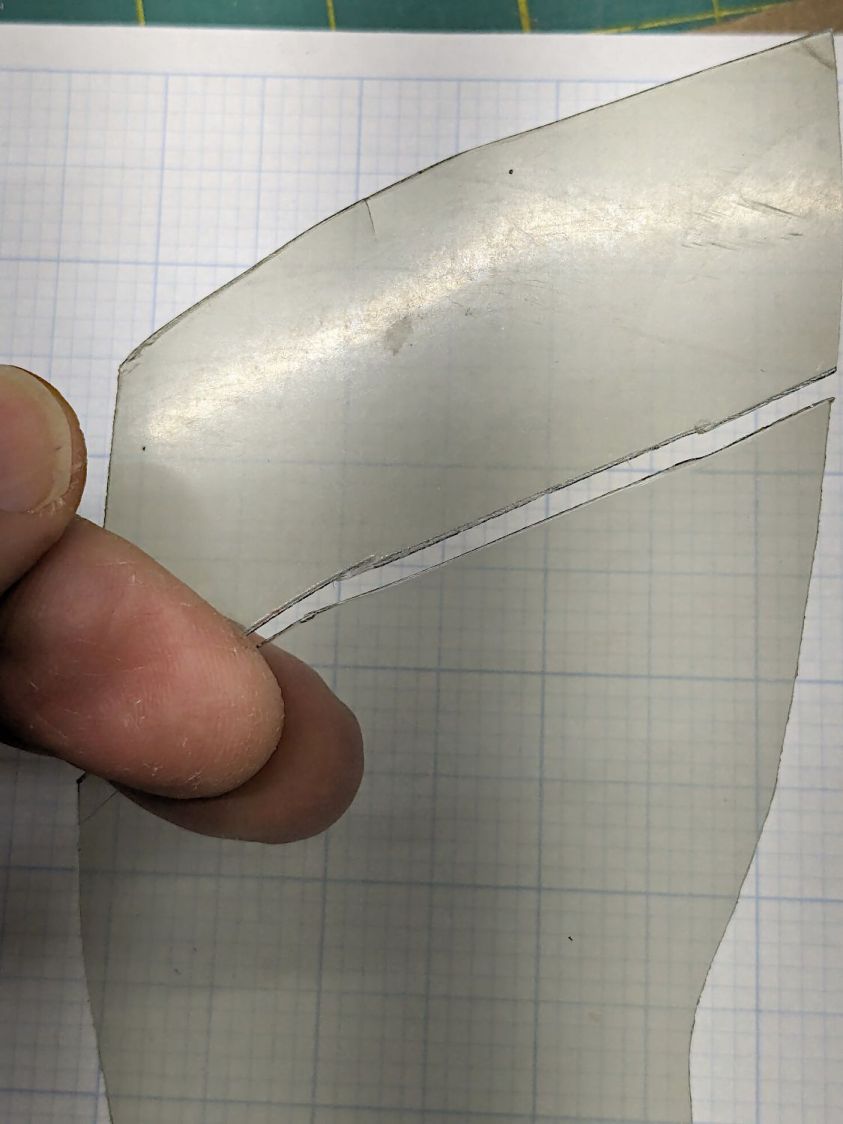
    A fairing fragment provided an excuse to practice plastic polishing:

    Fairing polish - start
    Fairing polish – start

    That’s from a EZR-SZ Zzipper fairing ridden about 2000 miles a year since 2001, so it’s spent far too much time in the sun and definitely not gotten all the finicky care it deserves. It’s tinted 60 mil polycarbonate, vacuum-molded into the bubble shape required to fit on a Tour Easy recumbent.

    Fairing Flashlight Mount - Mary approaching
    Fairing Flashlight Mount – Mary approaching

    On the other paw, Karl Abbe (the guy behind Zzipper) says the typical fairing survives maybe half a decade, so it doesn’t owe us anything.

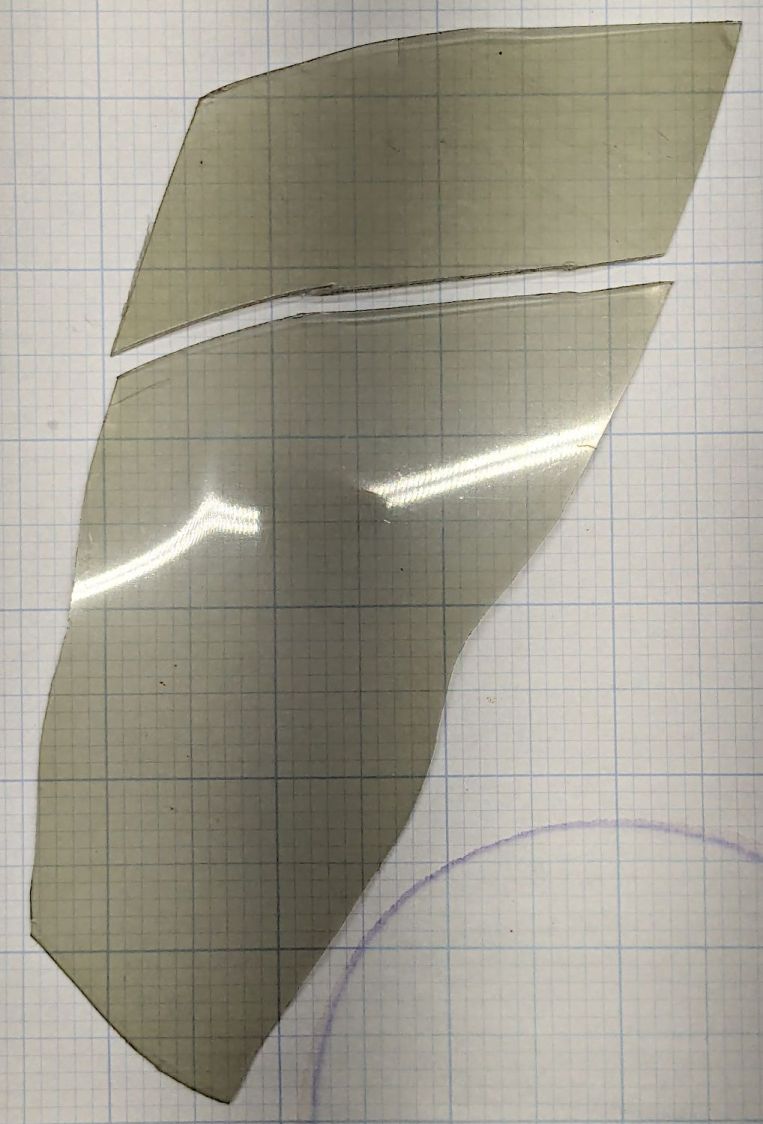
    I applied all three bottles of Novus Plastic Polish in descending numeric order, using snippets of Official Polish Mates (which could be a Krakow escort service) with a vigorous circular motion, ending up with a reasonable result:

    Fairing polish - transmission
    Fairing polish – transmission

    I cut the smaller chunk from the fairing for comparison. It’s been washed to dislodge loose crud, but is otherwise as-ridden.

    The fairing has deeper scratches than Novus can buff out, but removing the surface scuffs and haze definitely improves the clarity:

    Fairing polish - clarity
    Fairing polish – clarity

    The view from father away:

    Fairing polish - clarity
    Fairing polish – clarity

    Eks describes this sort of thing as a “Used Car Finish” = high polish over deep scratches:

    Fairing polish - surface finish
    Fairing polish – surface finish

    All in all, a nice result from very little effort.

    The canonical Novus Polish application is removing the haze from plastic headlight covers, but our decade-old Forester is a garage queen and the headlights remain in fine shape.