The Smell of Molten Projects in the Morning

Ed Nisley's Blog: Shop notes, electronics, firmware, machinery, 3D printing, laser cuttery, and curiosities. Contents: 100% human thinking, 0% AI slop.

Category: Photography & Images

Taking & making images.

  • Sony 64 GB MicroSDXC Card: Speed Reduction Thereof

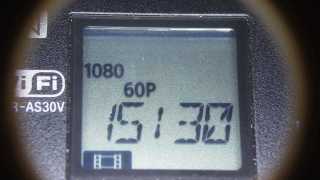
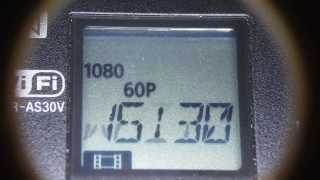
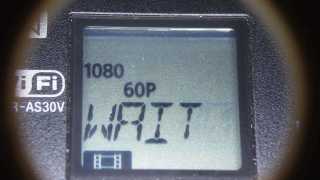
    So one of my Genuine Sony 64 GB MicroSDXC cards stopped working in my Genuine Sony HDR-AS30V action camera, failing to record video after starting normally.

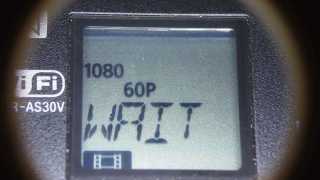
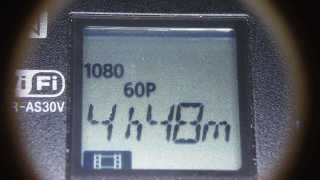
    For example:

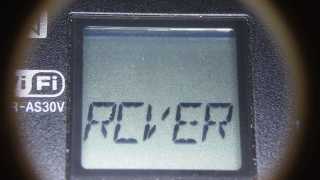
    The RCVER status display doesn’t appear anywhere in the manual, but also occurs when the camera must rebuild its metadata indexes. Or something like that. Anyhow, it’s obviously unhappy about what just happened in the course of recording.

    After several weeks of having Sony ignore my emailed requests (no “email agent” never contacted me after the initial “we’re on it” autoreplies) and after several days of being blown off by their phone menu (800-222-7669 and 800-282-2848 lead to the same tree, after which 5 – 1 – 6 disconnects after one ringy dingy), I got another number by picking a reasonable (to me) option and bulldozing the pleasant voice off-script: 877-440-3453. It turns out that if you’re at the Digital Camera node in the Sony tech support tree, the helpful agent cannot find the model number of the SR-64UY MicroSDXC card in their database, even though I’m looking at the Sony Support web page describing it.

    Anyhow, 877-440-3453 (or the “direct” 956-795-4660) produces a pleasant voice that directs me to their Media Services center in Texas and, after clicking on the Ordering Information menu item (isn’t that obvious?), produces a PDF that one fills in and sends with the failed media for their perusal.

    Being that type of guy, I sent in a somewhat more extensive description than would fit in the tiny space on the form:

    The problem with this SR-64UY MicroSDXC card (serial N73WAXOP) is that it cannot record video at the highest resolution produced by my SONY HDR-AS30V action camera: 1920x1080p @ 60 fps.

    The formatted data capacity seems unchanged at 59 GB, so the problem is not a loss of capacity.

    The camera starts recording and will continue for a few seconds or a few minutes, at which point it stops recording, flashes WAIT, then RCVER (“recover”), then returns to its idle mode. The recorded video is correct up to the failure.

    I have reformatted the card in the camera, which does not correct the problem.

    An identical SR-64UY MicroSDXC card (serial N73WA9JM), bought shortly afterward and not used, continues to operate correctly, so the problem isn’t the fault of the camera.

    The failing card (XOP) has recorded less than 100 sessions since August, while the working card (9JM) has been sitting, unused, on my desk. Recording sessions generally run 45 to 90 minutes and the AS30V produces a 4 GB every 22 minutes, so each session involves 2 to 6 large video files, plus the same number of thumbnails. I transfer the files to a PC and delete them from the card after each session. The card has therefore recorded only 1000 GB of video before failing.

    The XOP card can record video at 1920×1080 @ 30 fps and all lower resolutions. The camera requires a Class 4 speed, which means that the SR-64UY card no longer meets its Class 10 / U 1 speed rating.

    Please replace this card with one that meets its speed rating.

    Thank you…

    The replacement card just arrived, so a speed reduction is a warranty failure.

    I’ll test this one by plugging it into the high-amperage Micro-USB charger for the Kindle, aiming it at a clock, and letting it run until it’s either filled the card with excruciatingly boring high-data-rate video or crashed & burned in the attempt.

  • Iomega 500 GB NAS Drive for Helmet Camera Storage

    I recently exhumed an Iomega 500 GB Home Network Hard Drive (model MDHD-500-N) from the Big Box o’ Drives, with the intent of dumping video files from the Sony HDR-AS30 helmet camera thereupon.

    Remember Iomega of ZIP Drive fame? Seems EMC Borged ’em a while back, collided with Lenovo, discarded all the old hardware support, and that’s the end of that story.

    Exhuming the setup password from my backup stash wasn’t worth the effort, so I experimentally determined that holding the Reset switch closed while turning the drive on blows away the existing configuration. It woke up, asked for an IP address, got 192.168.1.52 from the DHCP server (you can find that by checking the router’s tables), and popped up the administration console at 192.168.1.52:80 as you’d expect.

    The userid will always be admin, but you can change the password from admin to whatever you like; you may safely assume I have done somewhat better than what you see below.

    Twiddling the configuration through the IOmega web-based console:

    • Device name: IOMEGA-500MB (for lack of anything more creative)
    • Group name: WHATSMYNET
    • Password: not-admin
    • Drag the date/time into the current millennium
    • Time Zone: GMT-5:00
    • Time Server: 0.us.pool.ntp.org
    • Static IP: 192.168.1.10 (suitable for my network)
    • Gateway & DNS as appropriate
    • Windows File Sharing enabled for the PUBLIC directory
    • FTP turned off
    • Sleep time: 10 minutes

    Changing either the IP address or the password requires logging in again, of course.

    I reformatted the drive, just to be sure.

    Then, after a bit of Googling to remember how all this works…

    A line in /etc/hosts (left over from the last time I did this) gives the new static IP address:

    192.168.1.10 nasty
    

    Install the cifs-utils package to enable mounting the drive.

    Create a mount point:

    sudo mkdir /mnt/video
    

    Create a file (/root/.nas-id) holding the super-secret credentials used to gain access to the drive:

    domain=WHATSMYNET
    username=ed
    password=not-admin
    

    Then restrict the file to the eyes of the root user:

    sudo chmod 700 /root/.nas-id
    

    It’s not clear that the username or domain really make any difference in this situation, but there they are.

    Define where and how to mount the network drive with a new line at the bottom of /etc/fstab, which refers to the aforementioned super-secret credentials file:

    //nasty/PUBLIC  /mnt/video      cifs    noauto,uid=ed,credentials=/root/.nas-id 0 0
    

    Mounting it with my userid gives the shared directories & files proper permissions for me (and nobody else, not that anybody else around here cares).

    So the manual mounting process looks like this:

    sudo mount /mnt/video
    

    Adding the user mount option would eliminate the sudo, but manual mounting won’t be necessary after a normal boot when the automagic startup script does the deed.

    The drive must have the noauto attribute to prevent the upstart Pachinko machine from trying to mount the network drives before the network comes up. Actually mounting the drive at the proper time requires an additional line in /etc/init/local.conf:

    description "Stuff that should be in /etc/rc.local"
    author "Ed Nisley - KE4ZNU"
    
    start on (local-filesystems and net-device-up IFACE=em1)
    stop on shutdown
    
    emits nfs-mounted
    
    script
    
    logger Starting local init...
    
    logger Mounting NFS (and CIFS) filesystems
    mount /mnt/bulkdata
    mount /mnt/userfiles
    mount /mnt/diskimages
    mount /mnt/music
    mount /mnt/video
    initctl emit nfs-mounted
    logger Ending local init
    
    end script
    

    The reason the drive wound up in the Big Box o’ Hard Drives was its lethargic transfer speed; copying a 4 GB video file from either the MicroSDXC card (via an SD adapter) or the previous 750 GB USB-attached hard drive to the IOmega NAS trundles along at a little over 6 MB/s. The camera stores 25 Mb/s = 3 MB/s of data in 1080p @ 60 fps, so figure 1/2 hour of copying per hour of riding. The USB drive can write data from the aforementioned MicroSDXC card at 18 MB/s, so the card and USB interface aren’t the limiting factors.

    I’m not (generally) in a big hurry while copying files from the camera’s SD card, because that’s now automated:

    #!/bin/sh
    thisdate=$(date --rfc-3339=date)
    echo Date is [$thisdate]
    # IOmega NASalready mounted as /mnt/video in fstab
    mkdir /mnt/video/$thisdate
    sudo mount -o uid=ed /dev/sdb1 /mnt/part
    rsync -ahu --progress /mnt/part/MP_ROOT/100ANV01/ /mnt/video/$thisdate
    if [ $? -eq 0 ] ; then
     rm /mnt/part/MP_ROOT/100ANV01/*
     sudo umount /mnt/part
    fi
    

    I’ve been discarding the oldest month of videos as the USB hard drive fills up, which will happen a bit more often than before: the drive’s 466 GB can hold barely 35 hours of ride video.
  • Monthly Image: Ice Crystals

    Two mornings after a heavy, wet snowfall, the meltwater atop the concrete patio puckered up into ice crystals:

    Ice crystals on patio
    Ice crystals on patio

    It seems the liquid water collects into the crystals as they freeze, leaving the concrete between the ice patches nearly dry. They seem surprisingly linear, with only a few hexagonal flourishes here and there.

    That’s almost as picturesque as the window crystals

  • Cooper’s Hawk: Digesting

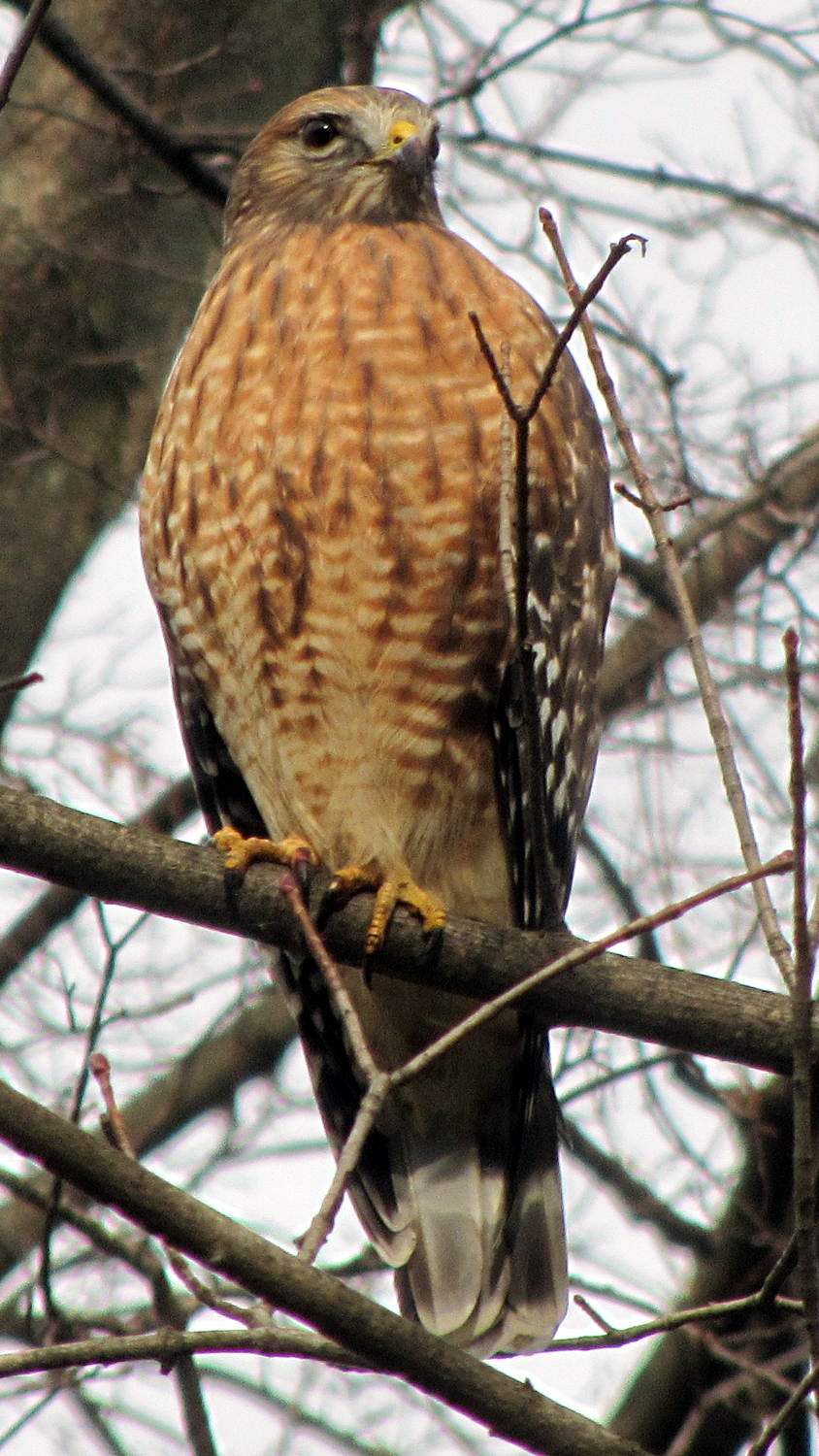
    This Cooper’s Hawk (*) kept an eye on us as we walked down the driveway:

    Coopers Hawk - keeping an eye on us
    Coopers Hawk – keeping an eye on us

    We obviously pose no threat, so he let us pass unmolested.

    I think the real reason had more to do with the dark brown-red stains on his (?) claws: that hawk just ate a fine meal and wanted time for quiet digestion and contemplation…

    Hand-held Canon SX230HS, plenty of zoom, lots of purple fringing, and a cooperative bird.

    (*) A juvenile, obviously, who could be either a Cooper’s or a Sharp-Shinned Hawk.

  • MakerGear M2: Better Lighting, Redux

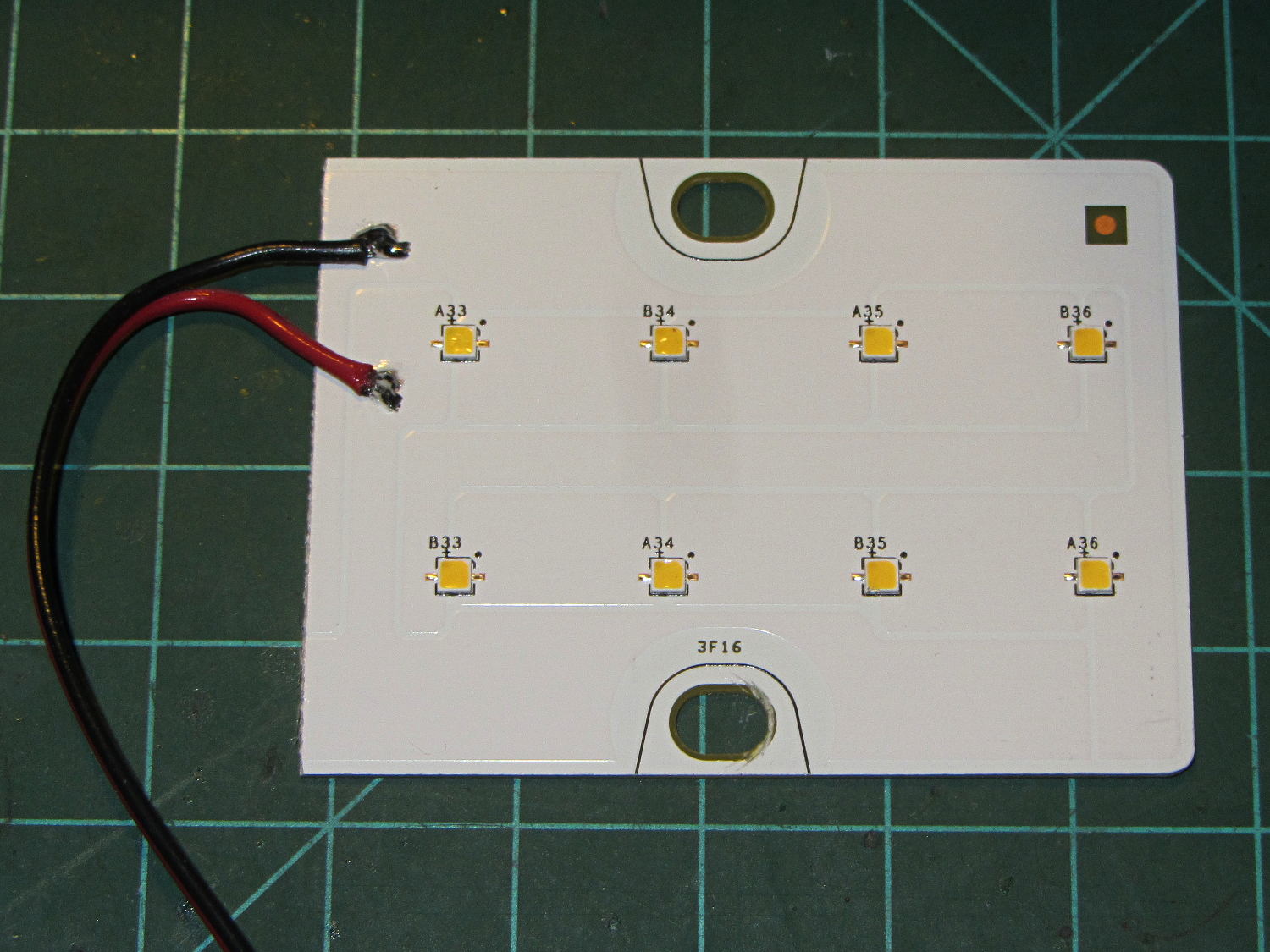
    A surplus haul of 24 V / 150 mA white LED panels arrived:

    LED Panel - 24 V 150 mA
    LED Panel – 24 V 150 mA

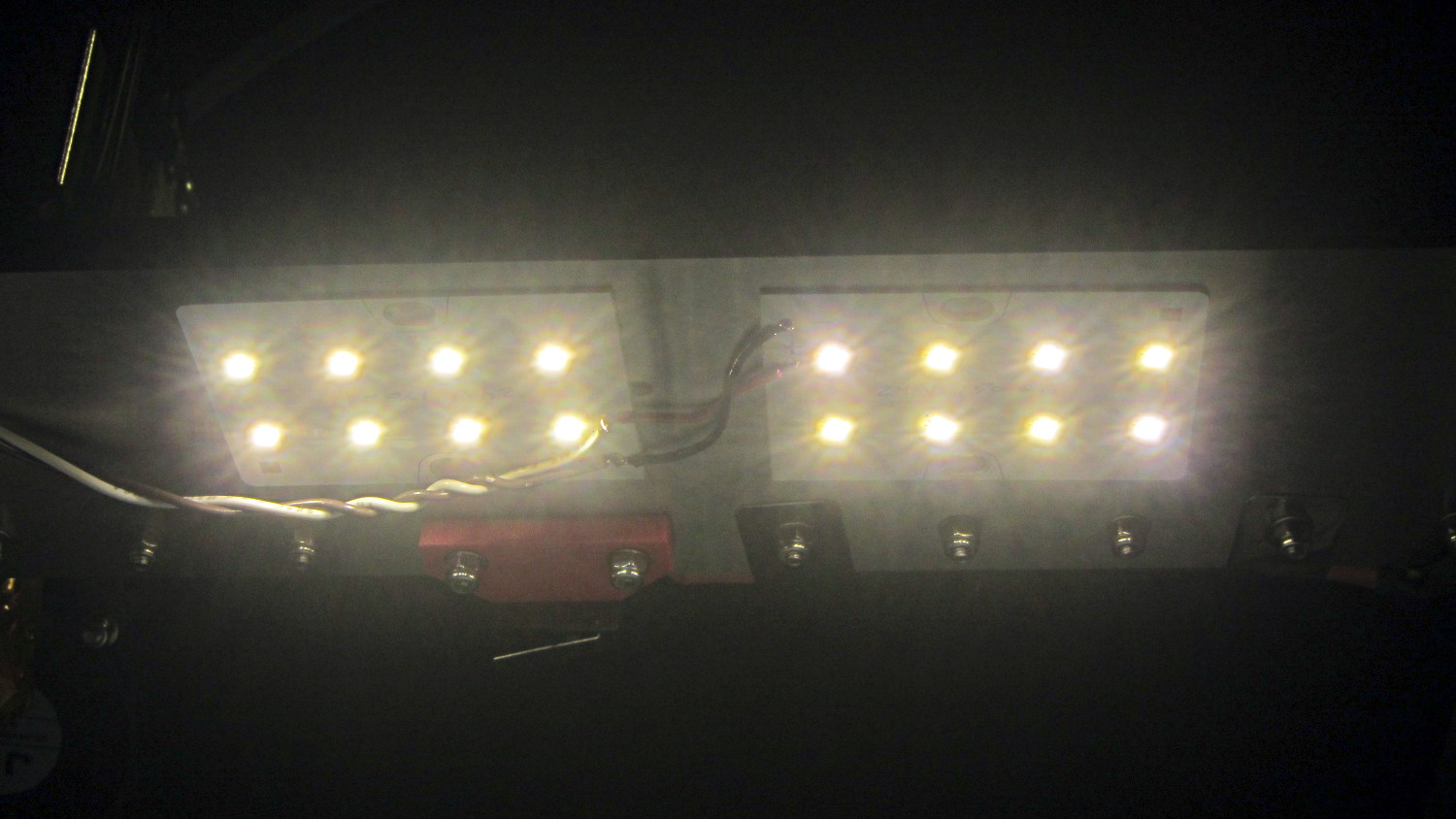
    I wired a pair to a 24 V wall wart and stuck them under the M2’s bridge supporting the X stage:

    LED Panel - on M2 Gantry
    LED Panel – on M2 Gantry

    I thought about epoxying them in place to get better heatsinking to the metal bridge. The ever-trustworthy description said the big copper baseplate meant the panels didn’t need any heatsinking, so I used tapeless sticky and will hope for the best. Should the sticky give out, then I’ll use epoxy.

    They’re much better than the previous white LED strip, although it’s tough to tell in the pictures. The chain mail armor appears under the new lights; some older pictures will creep in from time to time.

  • Red-bellied Woodpecker: Too Heavy!

    A red-bellied woodpecker landed on the seed feeder, but the flapping tells you something’s not right:

    Red-bellied woodpecker at feeder - closing
    Red-bellied woodpecker at feeder – closing

    After the fluttering stopped, the seeds had vanished:

    Red-bellied woodpecker at feeder - puzzled
    Red-bellied woodpecker at feeder – puzzled

    According to our books, a red-bellied woodpecker weighed 72.5 g = 2.6 oz back in 1952. The feeder counterweight reads 3 oz and that’s confirmed by my pull scale. Perhaps woodpeckers suffer from the obesity epidemic, too?

    The feeder closes with one cardinal (44 g) and two tufted titmouses (2 x 22 g), all of whom seem rather surprised at the situation.

  • Sony HDR-AS30V Audio: Fake Fur FTW!

    A scrap of fake fur cut to fit the outline of the Sony HDR-AS30V helmet camera and stuck in place with a square of double-stick foam centered above (or below, in the normal orientation) the lens:

    Sony HDR-AS30V - fake fur installed
    Sony HDR-AS30V – fake fur installed

    Snippy remarks about what that looks like will not be tolerated, m’kay?

    It reduces wind noise to an occasional rumble from strong gusts and even those don’t crush the AGC. My side of our radio conversations became clearly audible, as did shifters clicking and gravel crunching. There’s still plenty of noise, but now it comes from actual sound sources that don’t overwhelm the amp.

    A layer of ordinary adhesive tape still covers the mic pores and the fur’s fabric backing extends over the tape, so the combination must muffle the sound at least a little bit. Given the source material and my hearing, it’s Good Enough; Golden Eared Audiophiles need not apply.

    I also cannot detect any difference between the left and right audio channels, so the stereo separation at 15 mm isn’t worth much. I don’t know if the camera swaps the audio channels in video flip mode; that would be a nice touch.

    The hairs extending outward beside the lens occasionally blew into view, so a haircut is in order:

    mah00242-075 - Fake Fur in view
    mah00242-075 – Fake Fur in view

    Perhaps a clip that snaps over the skeleton frame to hold a neat patch of fur in place without adhesive on the camera body would be even better?