Ed Nisley's Blog: Shop notes, electronics, firmware, machinery, 3D printing, laser cuttery, and curiosities. Contents: 100% human thinking, 0% AI slop.
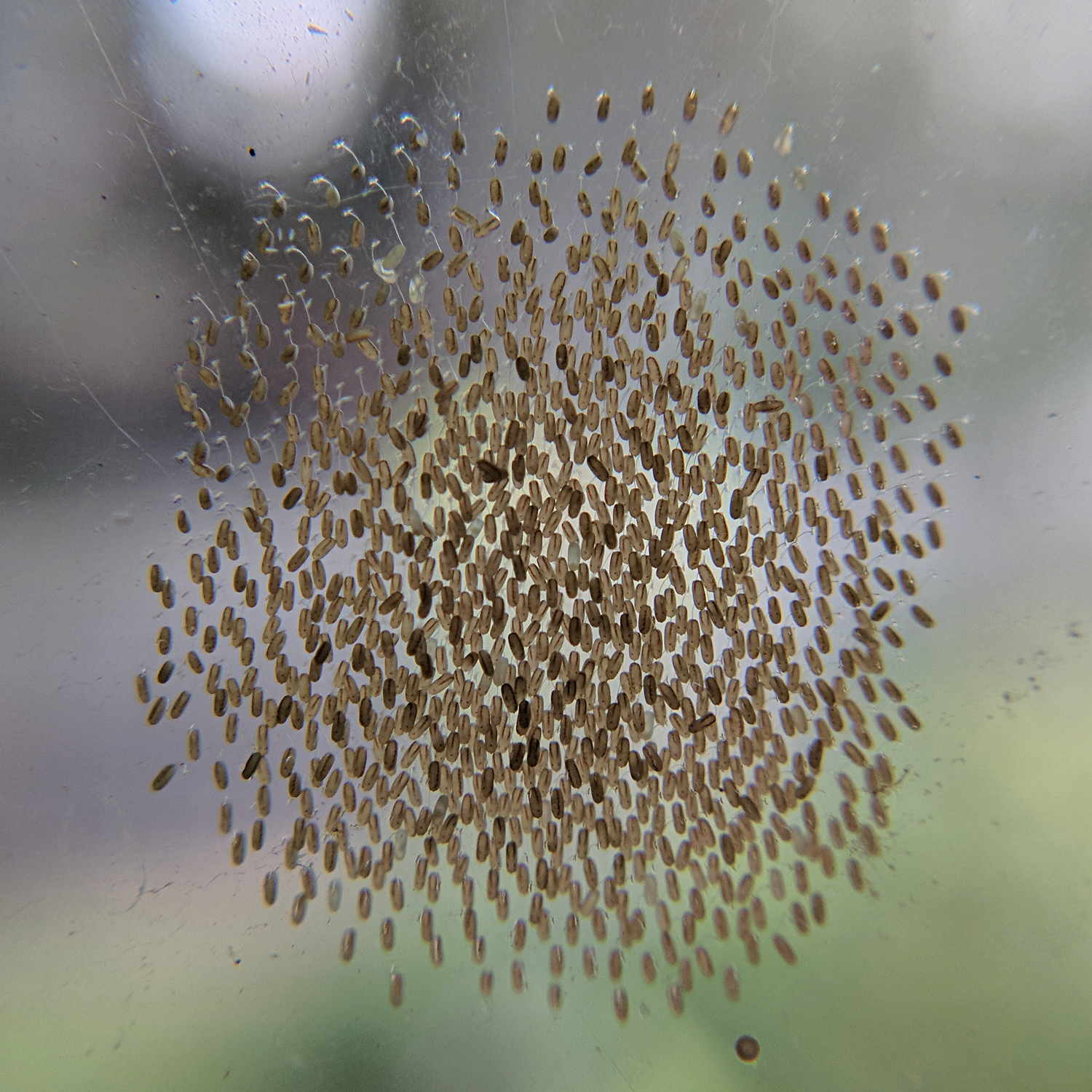
An array of tiny eggs appeared on the outside of our bedroom window:
Insect eggs on glass – 2017-09-17
The patch measures 12 mm across and 14 mm tall. From across the room, it looks like a smudge, but it consists of hundreds of eggs, each on a tiny stalk glued to the glass:
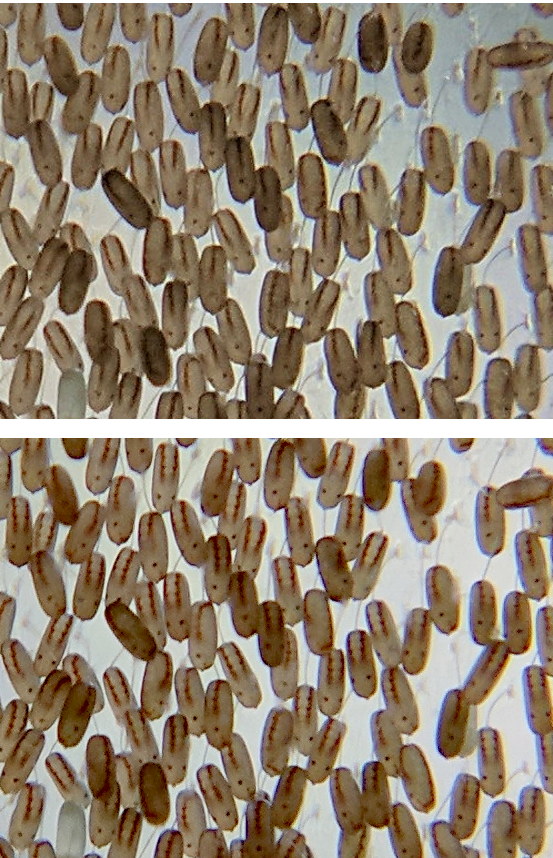
IMG_20170919 vs 0917- Insect eggs on glass
The bottom image is two days later than the top one, both are scaled to about the same size and contrast. The critters look about the same, although I think the lines have more prominent ripples or bumps.
We have no idea what they’ll turn into, but they certainly look like they have two eyes and wings …
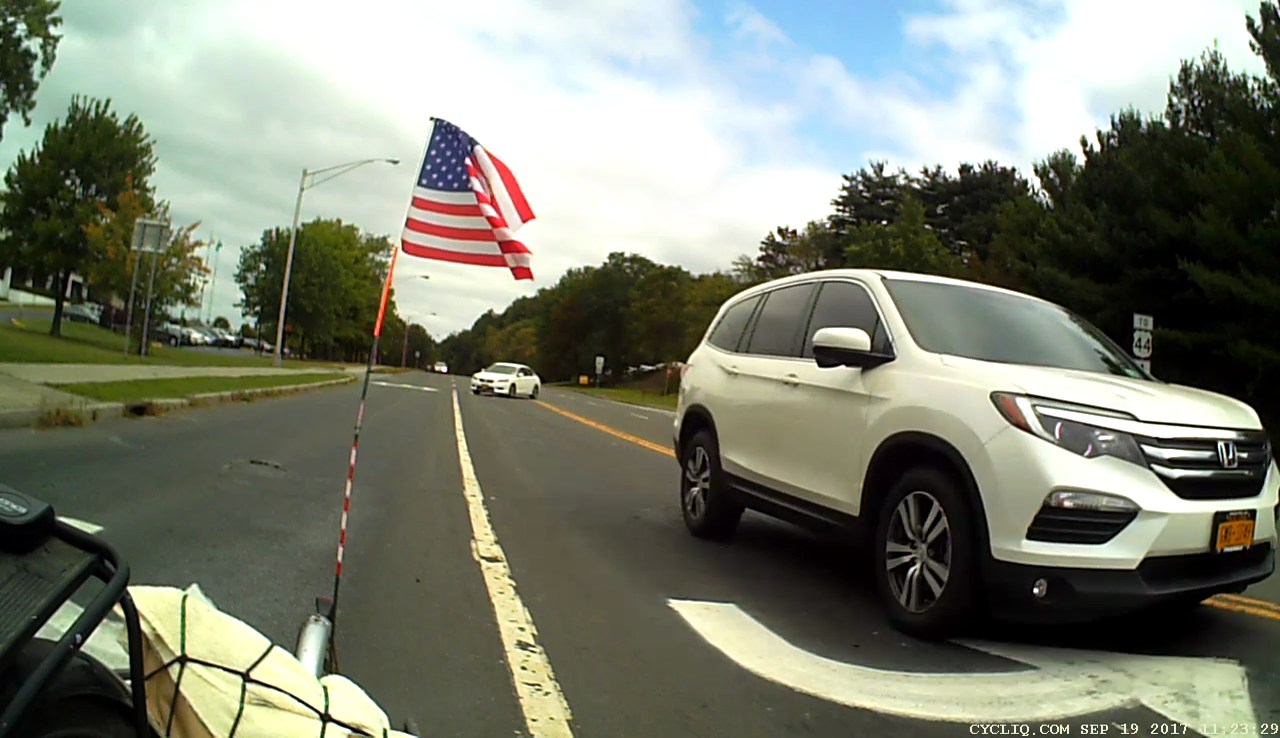
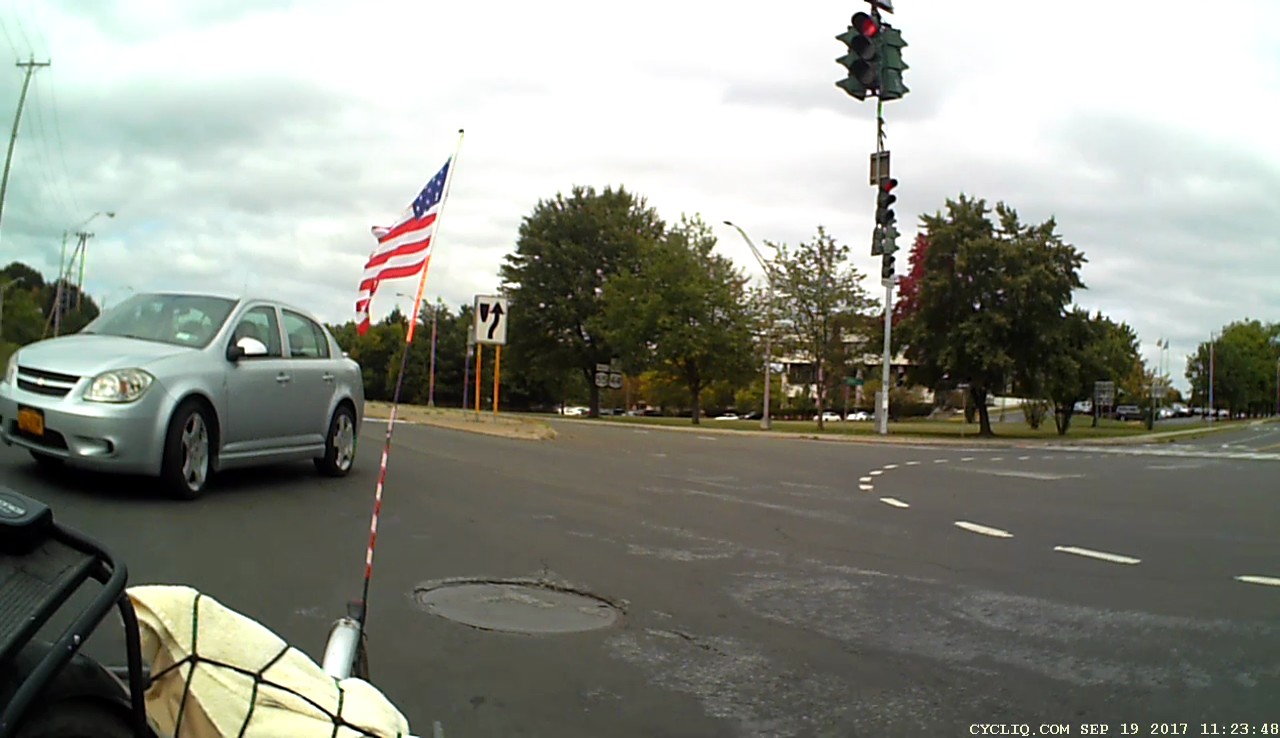
As usual, we’re at the Rt 55 end of Burnett Blvd, returning home from a grocery trip; I’m hauling two full bags of chow in the trailer. The white car pulling up immediately to our left will make a left turn from the left lane:
Burnett at Rt 55 – Right Pass – 2017-09-19 – 01
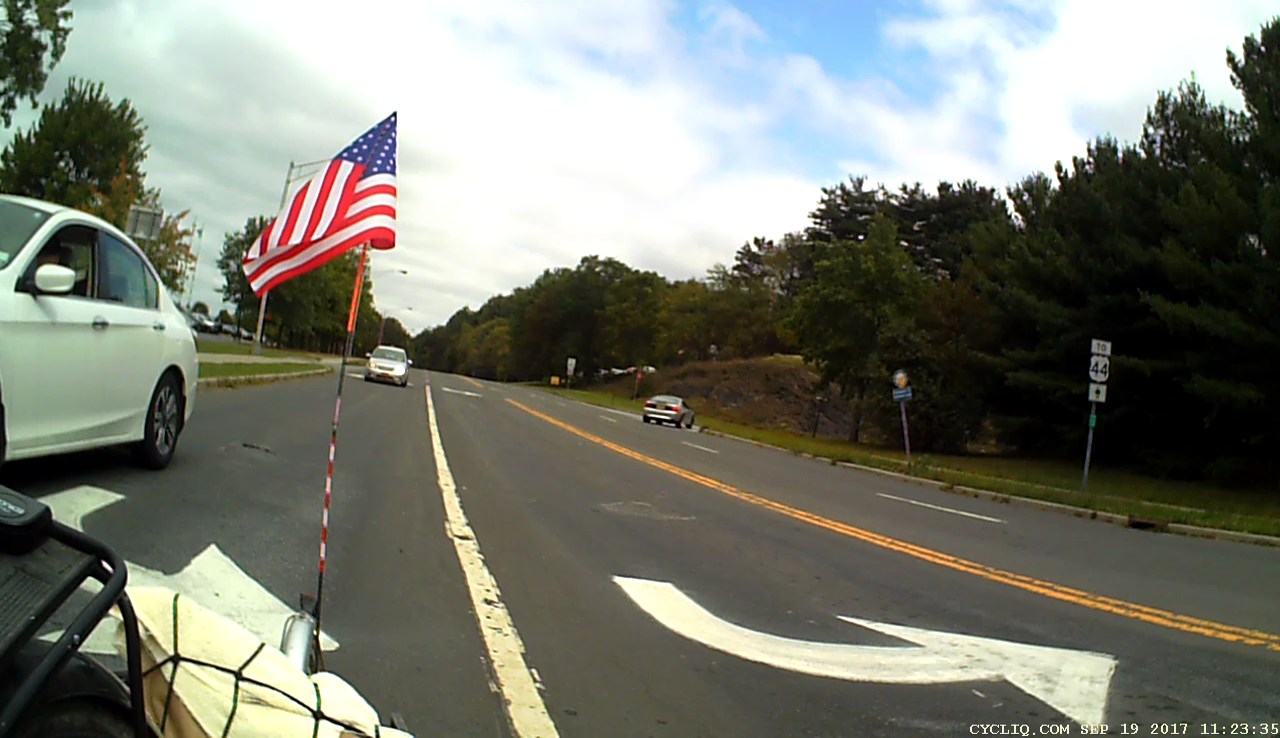
The more distant white car, turning left out of Overocker, is eases past us in the right lane to make a right turn:
Burnett at Rt 55 – Right Pass – 2017-09-19 – 02
We’re on the left side of the right lane, rather than the right, to avoid right hook collisions with drivers who flat-out do not stop before turning. Been there, had that happen, we know better.
The car approaching in the right lane will attempt to pass us on the right:
Burnett at Rt 55 – Right Pass – 2017-09-19 – 03
That’s happened before, too, so I’m watching this happen in my mirror. My line will pass to the right of the inconveniently placed manhole cover in the intersection:
Burnett at Rt 55 – Right Pass – 2017-09-19 – 04
Mary’s nearing the right side of the lane, I’m in the middle, and the driver jams to a stop rather than run up over the sidewalk:
Burnett at Rt 55 – Right Pass – 2017-09-19 – 05
The passenger window is rolling down, which is always a Bad Sign:
Burnett at Rt 55 – Right Pass – 2017-09-19 – 06
It’s all the way down and I know what’s about to happen:
Burnett at Rt 55 – Right Pass – 2017-09-19 – 07
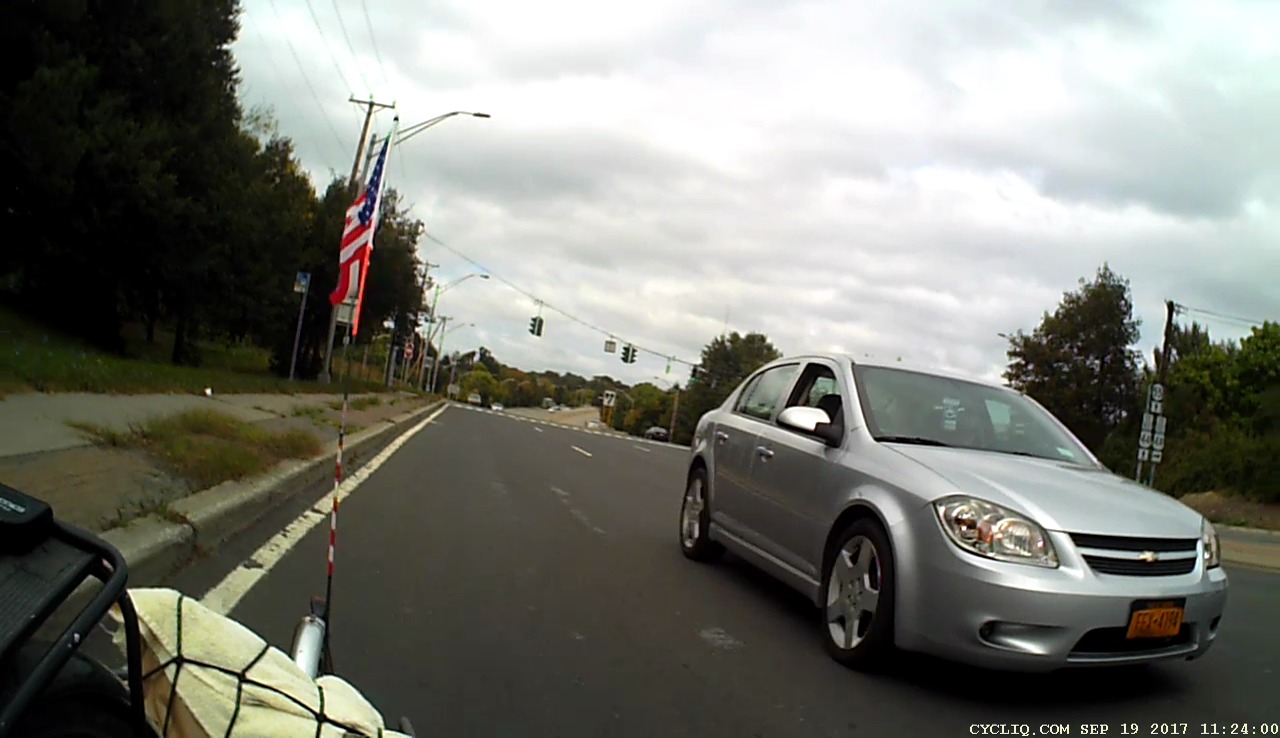
So I preempt the discussion by pointing out she was passing in an intersection and the license plate on the silver Chevy say FEX-4194:
Burnett at Rt 55 – Right Pass – 2017-09-19 – 08
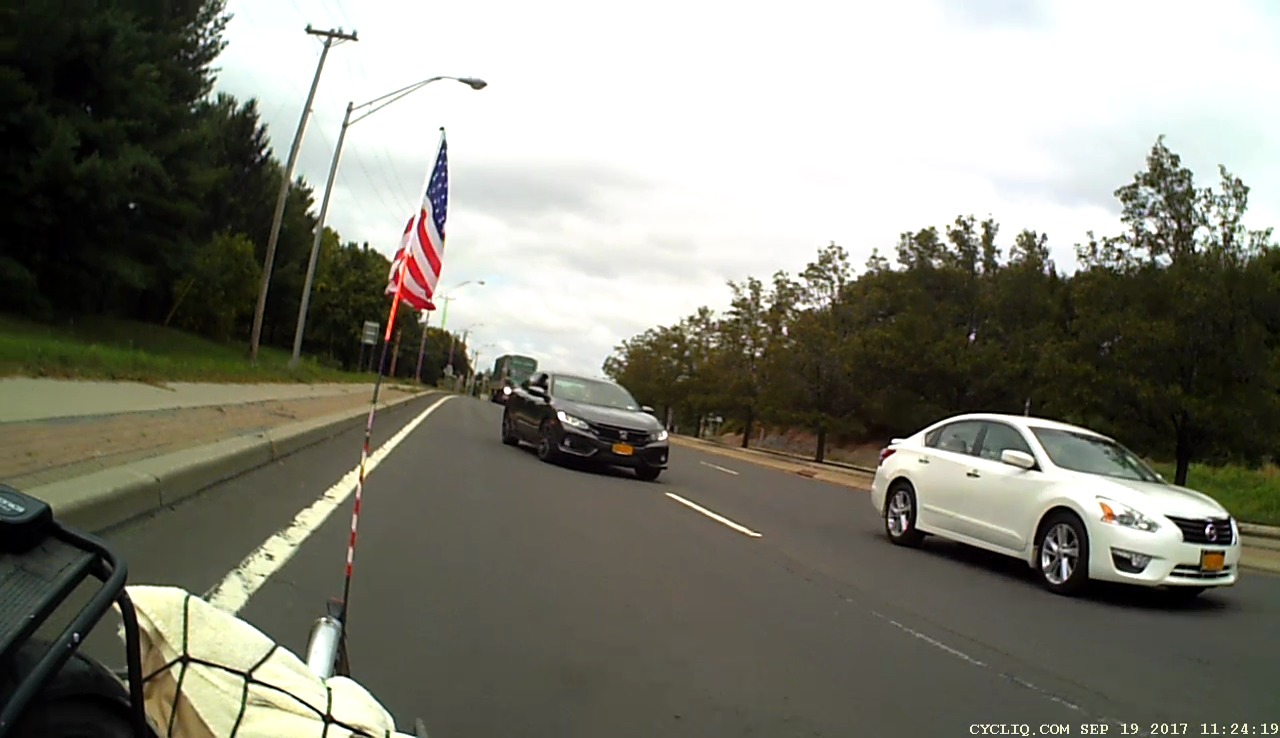
She passes Mary and stops directly ahead of us in the middle of the right-hand lane. We jam to a stop behind her. The black car approaching us swerves into the middle lane:
Burnett at Rt 55 – Right Pass – 2017-09-19 – 09
She pulls around the corner onto Manchester and stops in the intersection. I stop well behind her to remain visible from Rt 55, which turns out to be a Good Idea:
Burnett at Rt 55 – Right Pass – 2017-09-19 – 10
Mary eases beside the drivers window, which rolls down. The driver says she’s going to call the police, “because we pulled directly in front of her”. Mary points out we have video of the entire encounter. The window rolls up and the driver pulls away.
Overocker, Burnett, and a short sprint on Rt 55 to Manchester is the only route from the grocery store to Rt 376 and home, so it’s not like we’re looking for trouble.
No helmet camera video, alas, because I tried those piece-of-crap Wasabi batteries in the Sony HDR-AS30V and the second one was flat-out dead. The first one, in the camera when I left home, showed empty after the half-hour ride to the grocery store, so they really are junk; “Premium Japanese cells” my foot.
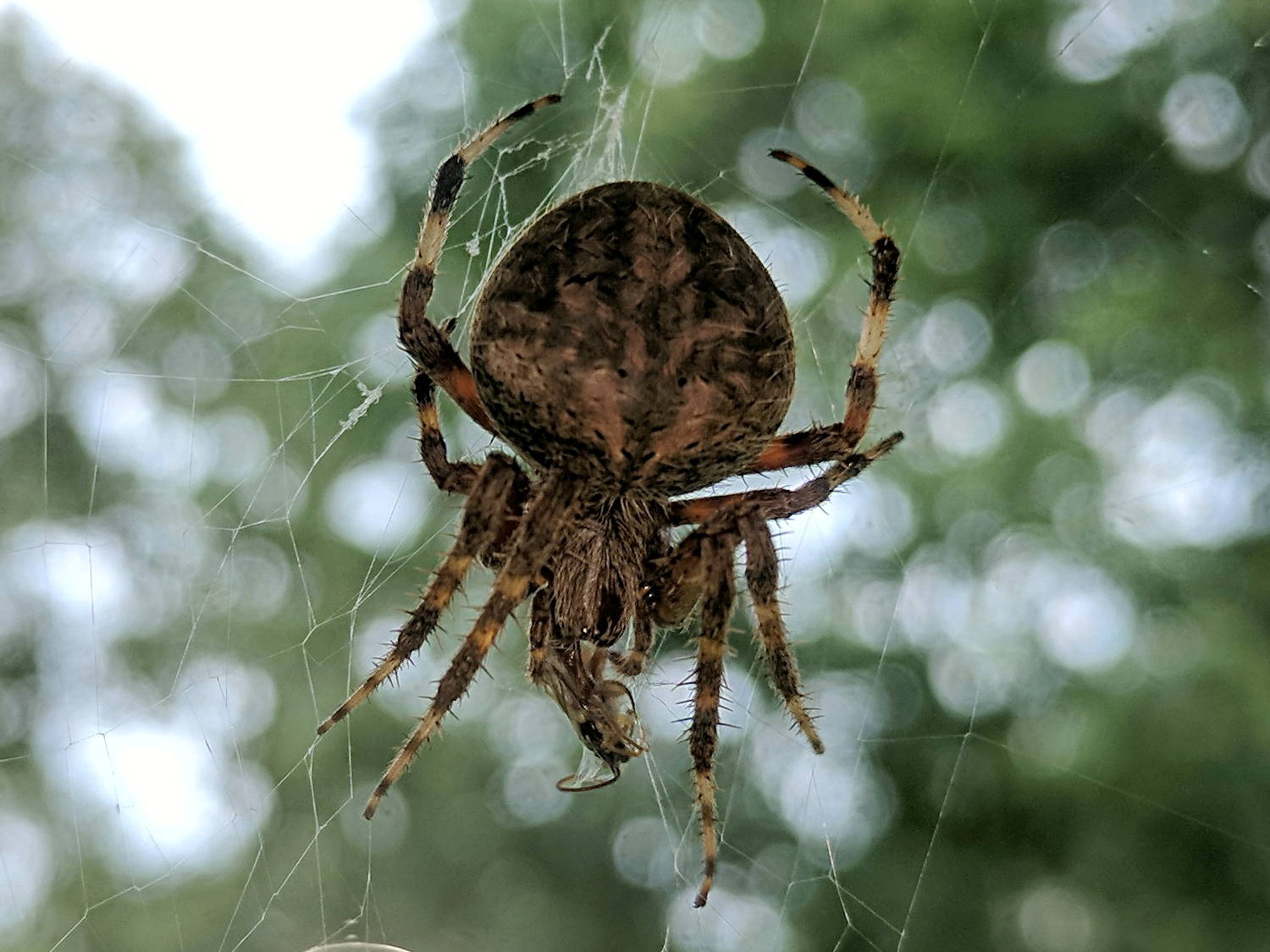
Once again, the season of orb-weavingspiders has arrived, with this one building her web across a living room window:
Orb Weaving Spider – with insect
I set the Sony HDR-AS30V atop a tripod, told it to take photos at 5 second intervals, then stitched the images into a Youtube video. It won’t go viral, but watching the spider construct her web over the course of two hours was fascinating.
She finishes the spiral at about 1 m video = 1.25 h real time, settles down for what might be a nap (it’s hard to tell with spiders), and has an insect join her for supper at 1:28, half an hour later. Spiders go from “inert” to “death incoming” almost instantly, even in real time running.
Another orb weaver set up shop in the adjacent window, but moved out the next day. Perhaps there’s a minimum spacing requirement?
Two more orb weavers guard windows in the kitchen and laundry room. We sometimes leave the lights on for them.
YouTube has other web-building videos with far more detail, of course.
The magic incantation to create the video from a directory of images in the form DSC01234.JPG:
sn=1 ; for f in *JPG ; do printf -v dn 'dsc%04d.jpg' "$(( sn++ ))" ; mv $f $dn ; done
ffmpeg -r 15 -i /mnt/video/2017-09-03/100MSDCF/dsc%04d.jpg -q 1 Orb-Weaving-2017-09-03.mp4
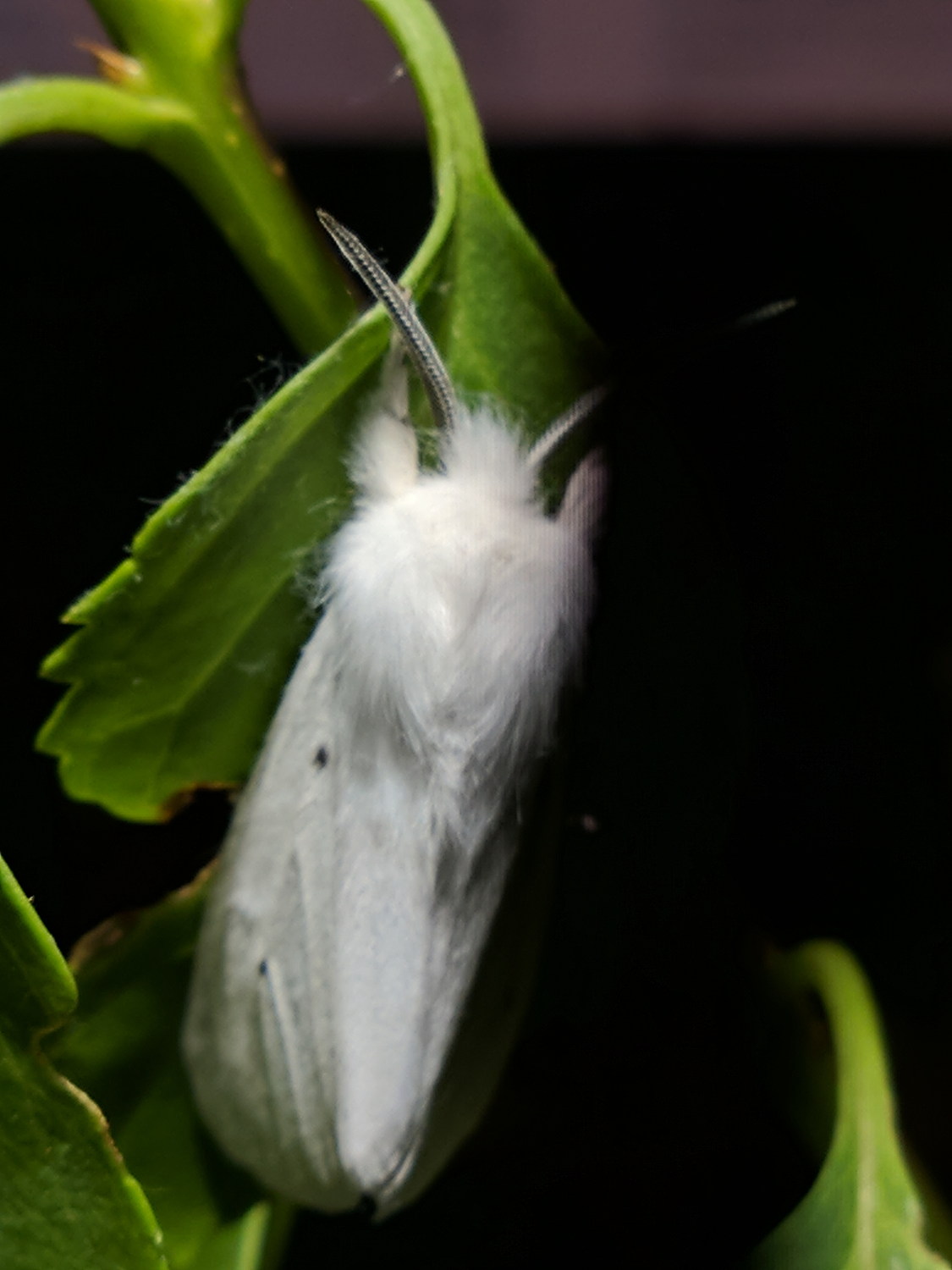
The Pixel’s camera shows a black stripe across both the live preview and the final image:
Pixel XL Camera – shutter stripe
That’s under the high-intensity LED lamp on my desk, which must have a high-frequency flicker. I’m amazed the camera remains in absolutely stable sync with the flicker for as long as I’m willing to aim it.
The stripe covers only the moth and greenery, not the LCD monitor in the background, so it’s caused by the overhead lamp, not something internal to the Pixel or its camera.
A closer look shows shading on either side of the deepest black (clicky for more dots):
Pixel XL Camera – shutter stripe – detail
The stripe location and width differ based on the image zoom level, although in no predictable way:
Pixel XL Camera – shutter stripe – 2
The Pixel camera definitely doesn’t have optical zoom, so it’s surely related to the scaling applied to convert the physical sensor array into the final image. Even though all images have 4048×3036 pixels (or the other way around, at least for these portrait-layout pix), zoomed images get made-up (pronounced “interpolated”) data in their pixels.
Not a problem under any other illumination I’ve encountered so far, so it’s likely something to do with this specific and relatively old LED lamp.
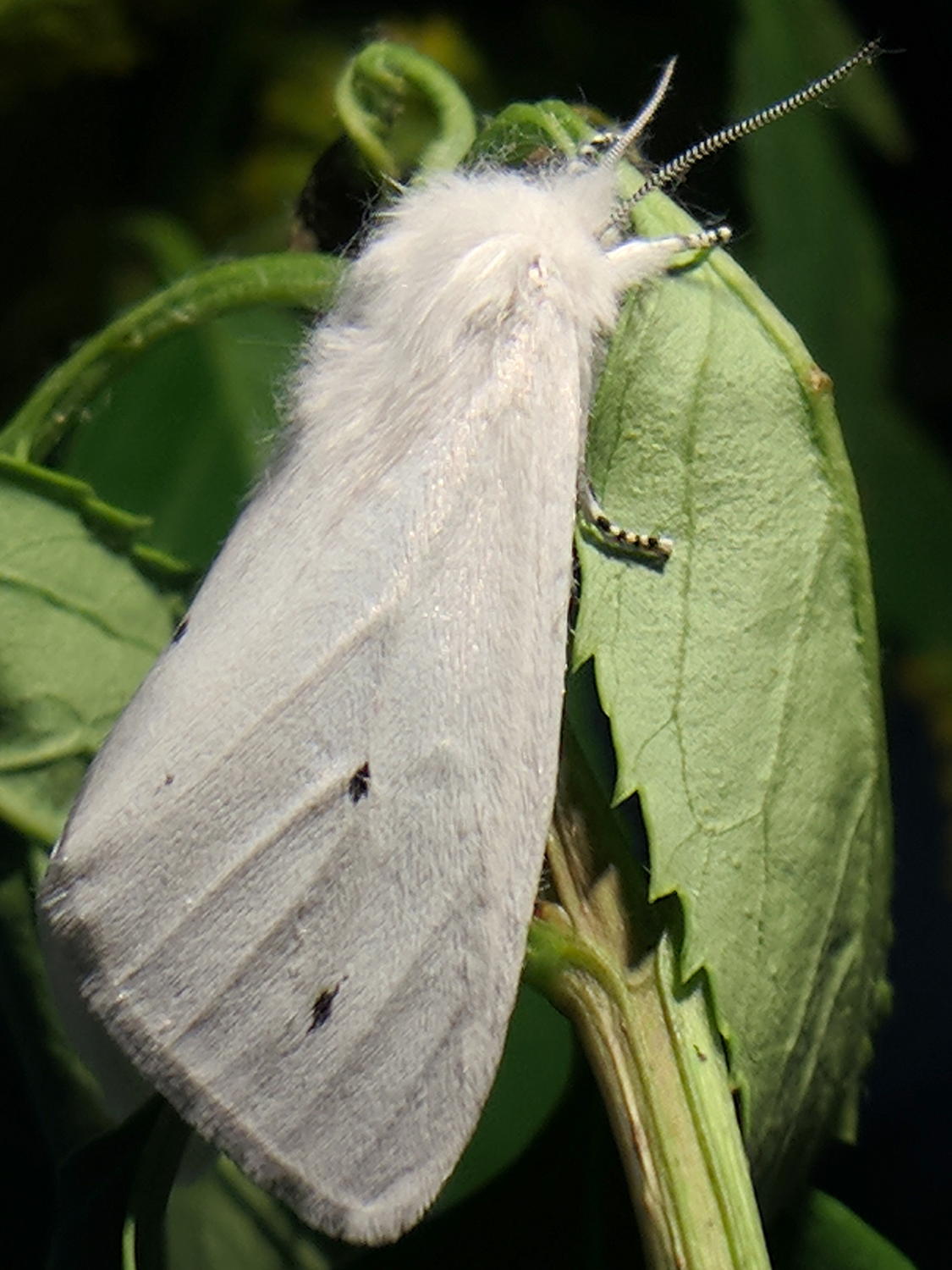
Moth 1, with wonderful antenna fringes identifying him as a male:
Spilosoma virginica 1 – right
Moth 2, a female with smaller antenna:
Spilosoma virginica 2 – right
Moth 3, another male:
Spilosoma virginica 3 – dorsal
The underside is diagnostic (ignore the crud on the aquarium glass):
Spilosoma virginica 3 – ventral
We set each one on the goldenrod plant inside the garden gate, whereupon they charged up in the sun for an hour or so, then flew off about their business. They may eat a few leaves in the garden, but they’re not particularly harmful to anything and entitled to a peaceful life.
I must organize all their pictures into a life history.
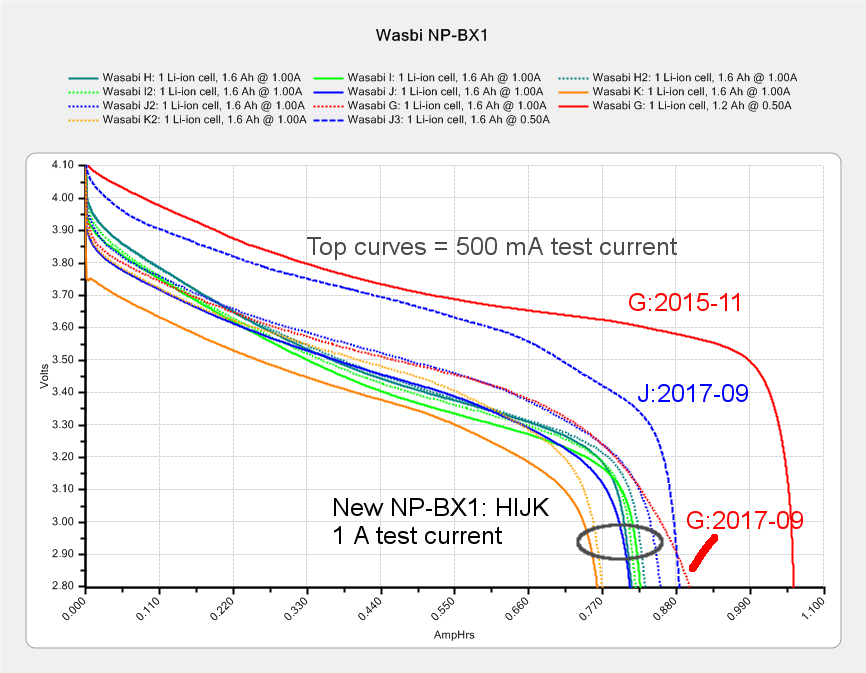
The replacement NP-BX1 batteries arrived and, as I expected, perform just as badly as the previous pair:
Sony NP-BX1 – Wasabi GHIJK – 2017-09-01 – annotated
The note I sent to Wasabi’s tech support summarizes the details:
The second pair of NP-BX1 batteries are just as bad as the first two. In fact, all four perform worse than the nearly two-year-old Wasabi batteries I’ve been using.
The graph shows the test results from my CBA III analyzer. All batteries were all charged in a Wasabi wall charger.
The top solid red curve shows the as-delivered performance in late 2015 for the battery I labeled “G”, tested at 500 mA. It delivered only 1 Ah, not the claimed 1.6 Ah, even at that relatively low current, but has delivered over one hour of service in the camera.
The top dotted-blue curve shows the as-delivered performance for the NEW battery I labeled “J”, also tested at 500 mA. It delivers only 0.88 Ah, 55% of the claimed 1.6 Ah, at a much lower voltage while discharging.
After two years, OLD battery “G” has more capacity and a higher voltage than the NEW battery “J”!
The lower curves shows the results for the four most recent batteries I labeled H I J K, all tested at 1 A to better match the camera’s actual current; the dotted traces mark the second test of each battery.
The orange traces show battery K has about 0.77 Ah of capacity, less than half of the claimed 1.6 Ah and much worse than the others.
I also re-tested battery old battery G at 1 A, as shown by the dotted red curve labeled “G:2017-09”. It outperforms ALL of the new batteries!
Batteries H and I have date codes BQF22, which I interpret as 2017-06-22: fairly recent stock.
Batteries J and K have date codes BPL28: 2016-12-28. They’ve been sitting around for a while, which may account for the poor performance of battery K.
These Wasabi batteries cost roughly twice (*) as much as they did in late 2015, have /much/ lower capacity, and, to judge from the date codes, they’ve been consistently poor since late last year.
What is going on?
It’s worth noting that Wasabi NP-BX1 batteries are currently $16 for the pair on Amazon and were $9 in late 2015. Allegedly genuine Sony NP-BX1 batteries run $50 MSRP and a suspiciously consistent $37.99 from all the usual big-box sources, including Amazon, where they’re out-of-stock for the next few months. Combining the number of counterfeits in the supply chain with Amazon’s commingled SKU stock bins, I have my doubts about what I’d get by increasing my battery spend by a factor of five.
I think it’s about time to conjure an external 18650 holder / helmet mount for that camera and be done with it.
[(*) Edit: I screwed up the unit of measure: the old invoice had two single batteries. The new order was one pair, so I now pay slightly less for much worse performance. A refund is wending its way through the system.]











 The Smell of Molten Projects in the Morning