It’s early springtime in the Hudson Valley:

The birds have been making companionable springtime noises, but it’ll be a while before the nesting season starts up.
Taken with the DSC-H5, diagonally through two layers of 1955-ish window glass.
The Smell of Molten Projects in the Morning
Ed Nisley's Blog: Shop notes, electronics, firmware, machinery, 3D printing, laser cuttery, and curiosities. Contents: 100% human thinking, 0% AI slop.
Who’d’a thunk it?
It’s early springtime in the Hudson Valley:
The birds have been making companionable springtime noises, but it’ll be a while before the nesting season starts up.
Taken with the DSC-H5, diagonally through two layers of 1955-ish window glass.
This appeared while harvesting heatsinks and suchlike from a defunct Dell Optiplex:
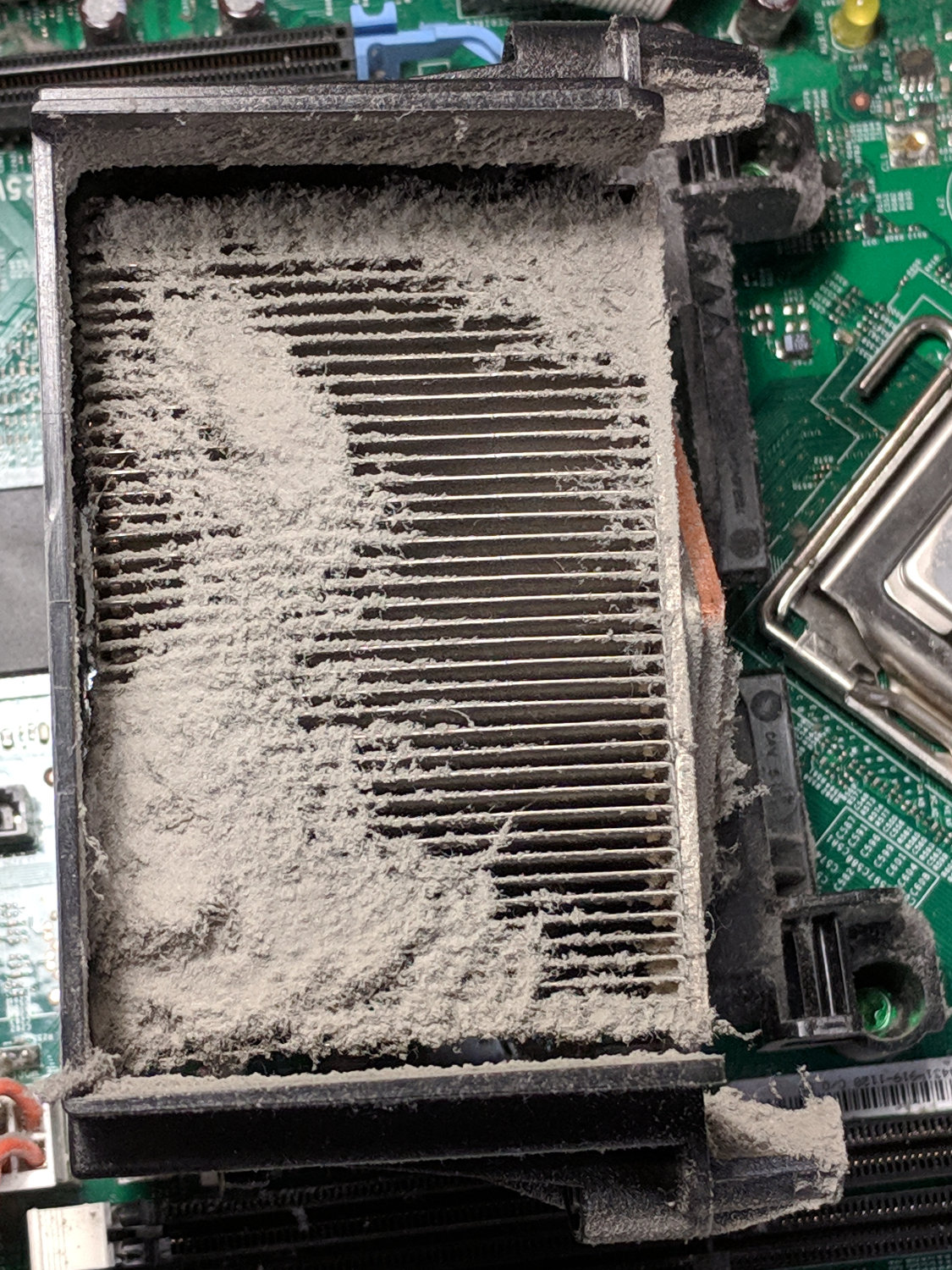
The only way to get access to that end of the heatsink is to break the heatsink’s thermal bond to the CPU, which seems like a Bad Idea if you intend to continue using the thing:
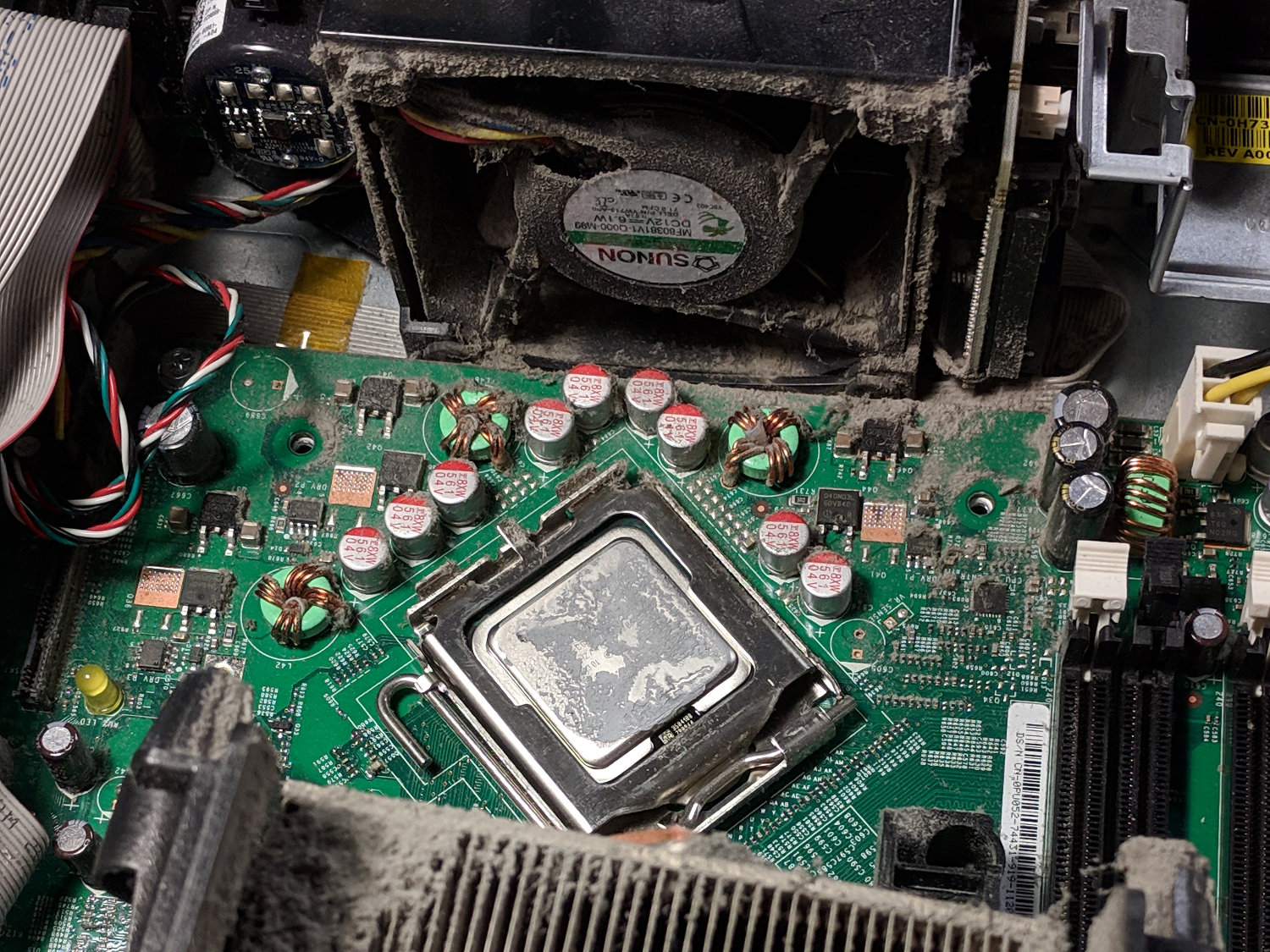
I buy off-lease Optiplexes from Dell Financial Services (a.k.a. Dell Refurbished) and, although their interiors always look well-cleaned, Dell (or, nowadays, FedEx Reverse Logistics) may have decided against breaking the CPU’s thermal bond and just sent me an office’s dust collection.
Doesn’t look like my dust. That’s my story and I’m sticking with it.
From a discussion on the Makergear 3D printer forums …
A Makergear M2 user had a strange problem:
Octopi claims the serial connection went down.
LED2 was blinking red, rapidly, and LED3 was shining with a steadfast red light.
LED2 shows the extruder heater PID loop is running and LED3 shows the extruder fan is on:
https://reprap.org/wiki/Rambo_v1.1
You just never noticed the blinkiness before … [grin]
Because the extruder heater is still running, the firmware hasn’t detected a (possibly bogus) thermal runaway or any other fatal problem. It’s just waiting for the next line of G-Code, but Octopi isn’t sending it.
Casually searching the GitHub issues, there’s a report of intermittent serial problems from last year:
https://github.com/foosel/OctoPrint/issues/2647
Which points to the FAQ:
https://community.octoprint.org/t/octop … eption/228
Look at the Octopi Terminal log to see if the conversation just before the failure matches those descriptions.
Assuming you haven’t updated the printer firmware or anything on the Octopi, then something physical has gone wrong.
First and least obviously, the Pi’s MicroSD card has probably started to fail: they’re not particularly durable when used as a mass storage device and “the last couple of years” is more than you should expect. Download a fresh Octopi image, put it on a shiny-new, good-quality card (*), and see if the situation improves.
Then I’d suspect the Pi’s power supply, even though you’re using the “official rpi power supply”. All of those things contain the cheapest possible electrolytic capacitors, running right on the edge of madness, and produce bizarre errors when they begin to go bad. Get a good-quality wall wart (**), ideally with a UL rating, and see if the situation improves.
While you’re buying stuff, get a good-quality USB cable (***) to replace the one that (assuming you’re like me) you’ve been saving for the last decade Just In Case™. Use the shortest cable possible, because longer does not equal better.
After that, the problems get truly weird. Apply some tweakage and report back.
(*) This is harder to do than you might think. You may safely assume all cards available on eBay and all “Sold by X, Fulfilled by Amazon” cards will be counterfeit crap. I’ve been using Samsung EVO / EVO+ cards (direct from Samsung) with reasonable success:
https://softsolder.com/2018/10/16/raspb … sk-memory/
https://softsolder.com/2017/11/22/samsu … ification/
https://www.samsung.com/us/computing/me … 22y+zq29p/
The card in question eventually failed, so having a backup card ready to go was a Good Idea™.
(**) Top-dollar may not bring top quality, but Canakit has a good rep and costs ten bucks through Prime.
(***) Amazon Basics cables seems well-regarded and work well for what I’ve needed.
The intent was to wire the “5 W” COB LED to the 12 VDC supply grafted on the Juki TL-2010Q, through a suitable resistor around 18 Ω. Unfortunately, the next morning I managed to run 12 V directly to the LEDs, which produced an astonishingly bright flash of blue-white light and an opportunity for some post-mortem analysis.
A sharp tap with a chisel popped the COB LED PCB off its heatsink:
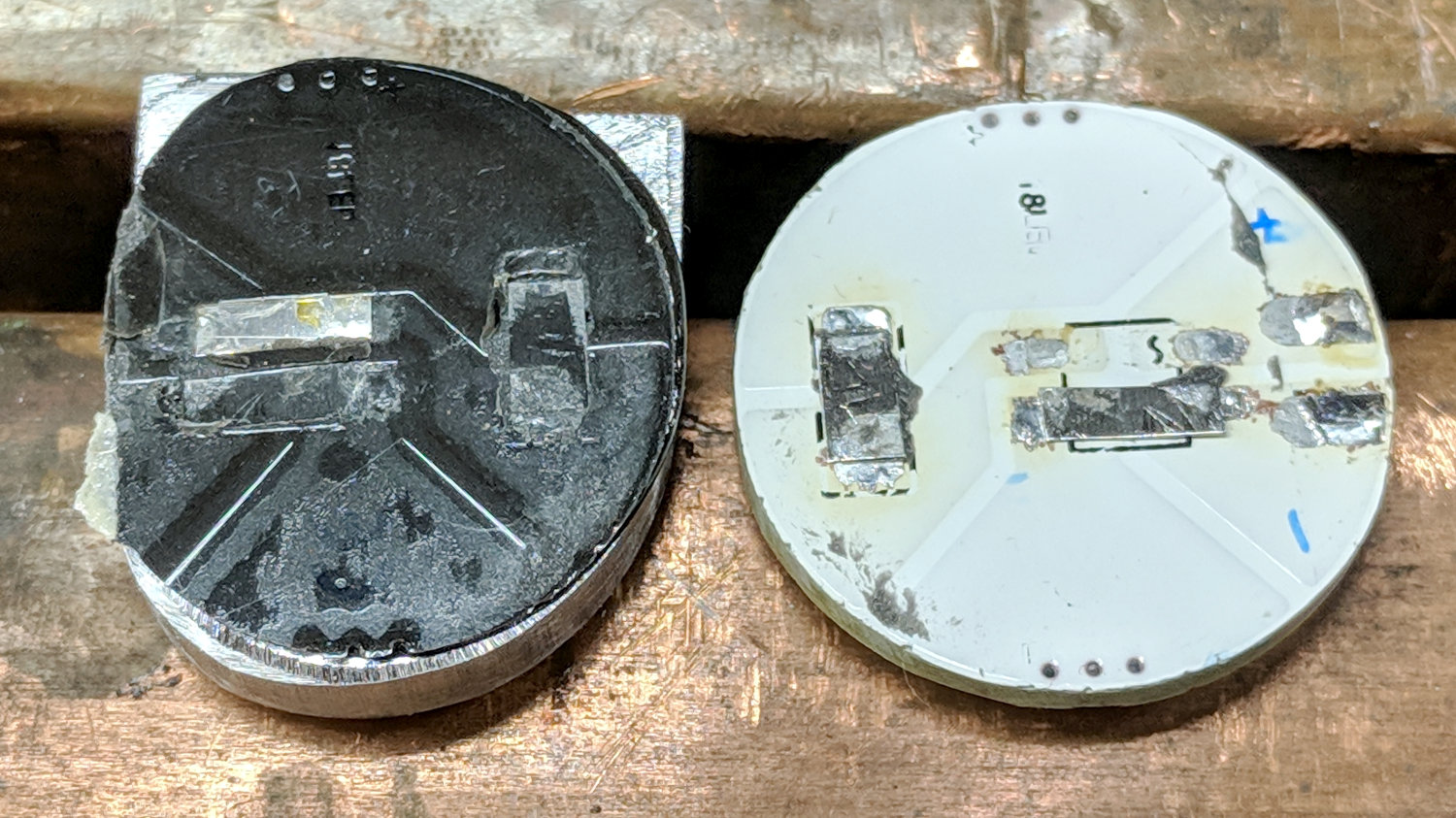
That’s a pretty nice thermal joint and ought to transfer as much heat as reaches the back surface. Mechanically, it yanked one of the nickel tabs right off the solder pads; obviously, I must now level up my soldering game.
Scraping the yellow silicone filter off the PCB reveals the minuscule LEDs:

You’ll recall they’re arranged in three series sets of six:
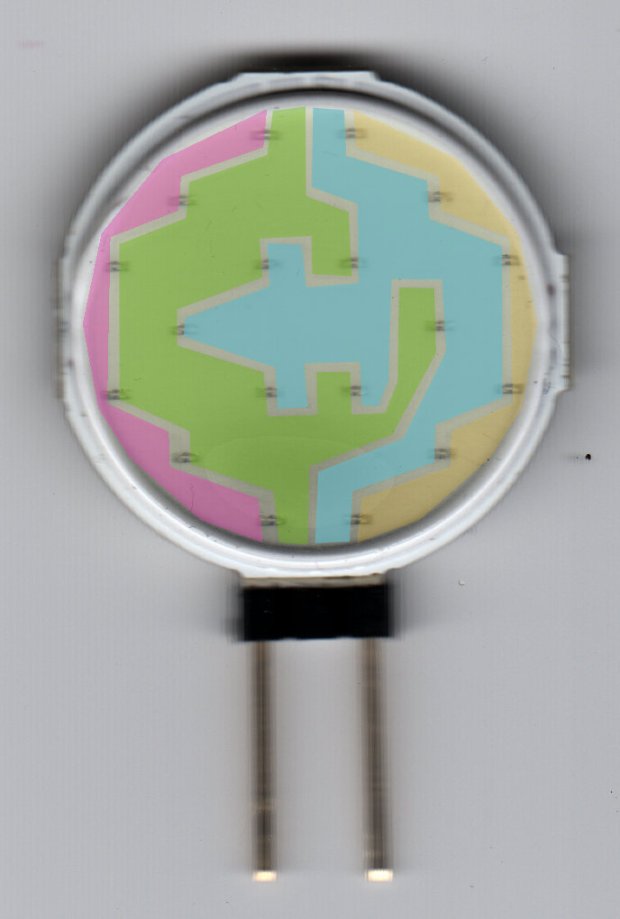
Some probing revealed five of six LEDs in one set was still functional:
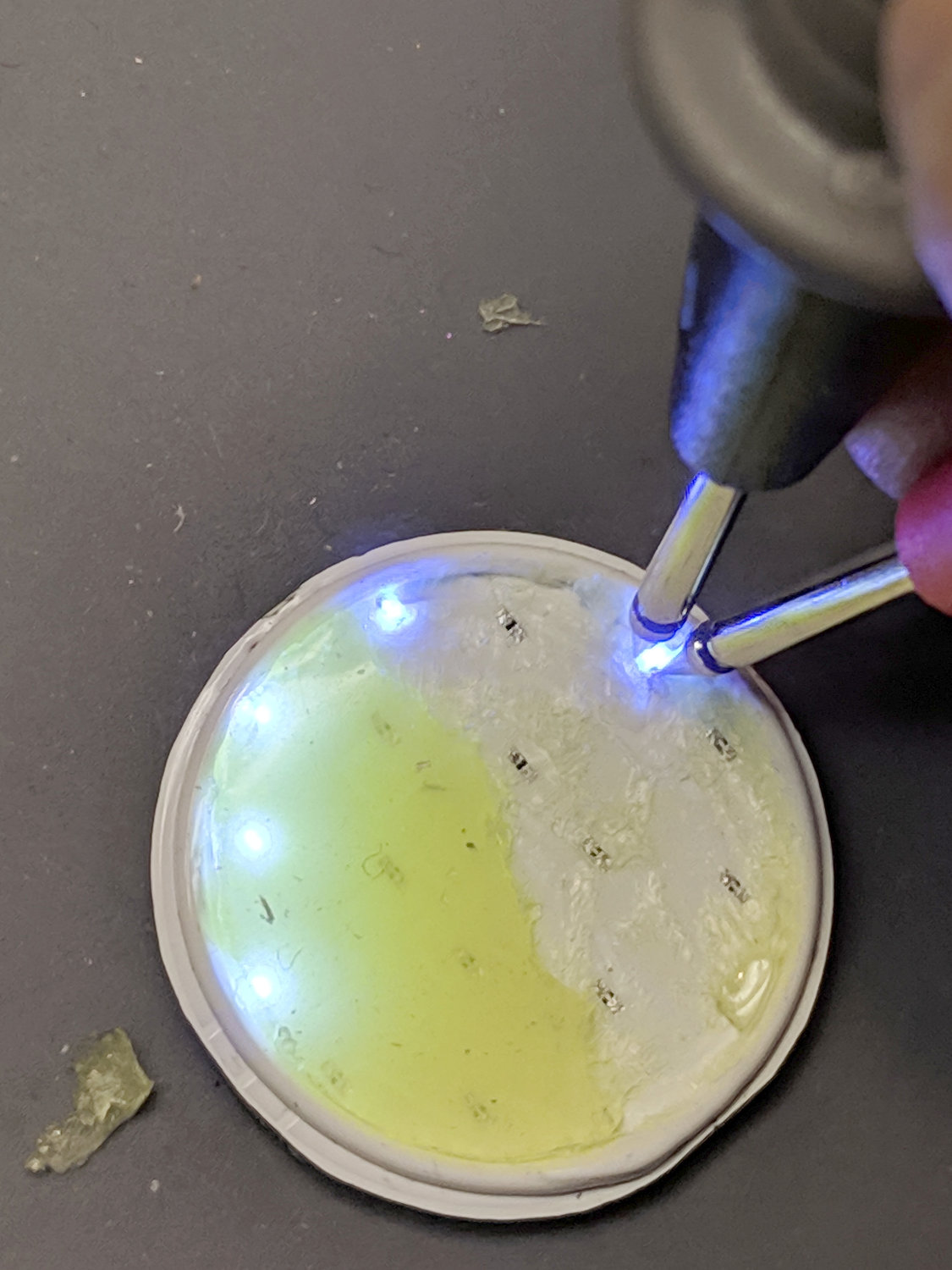
Although a few other LEDs across the PCB survived, that’s not the way to bet when you run so much current through the poor things.
Ah, well, that’s why I always buy a few more parts than I really need …
Being that type of guy, I tucked a bag of silica gel desiccant and a humidity indicator card into a #10 can of baking powder, then recorded the bag weight whenever I refilled the kitchen container:
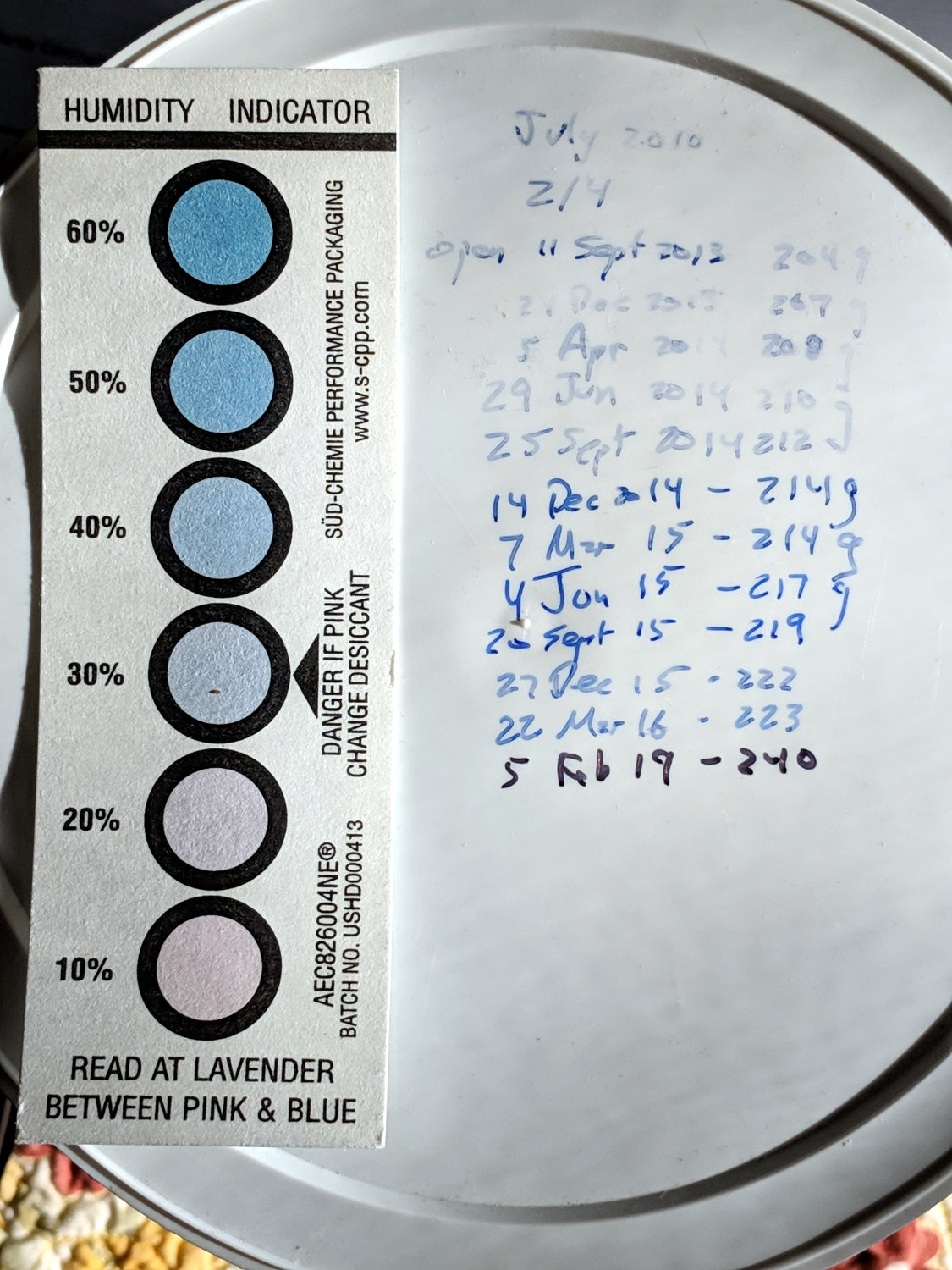
For reasons not relevant here, we pretty much stopped using baking powder a couple of years ago, so there’s a protracted silence between the last two data points:
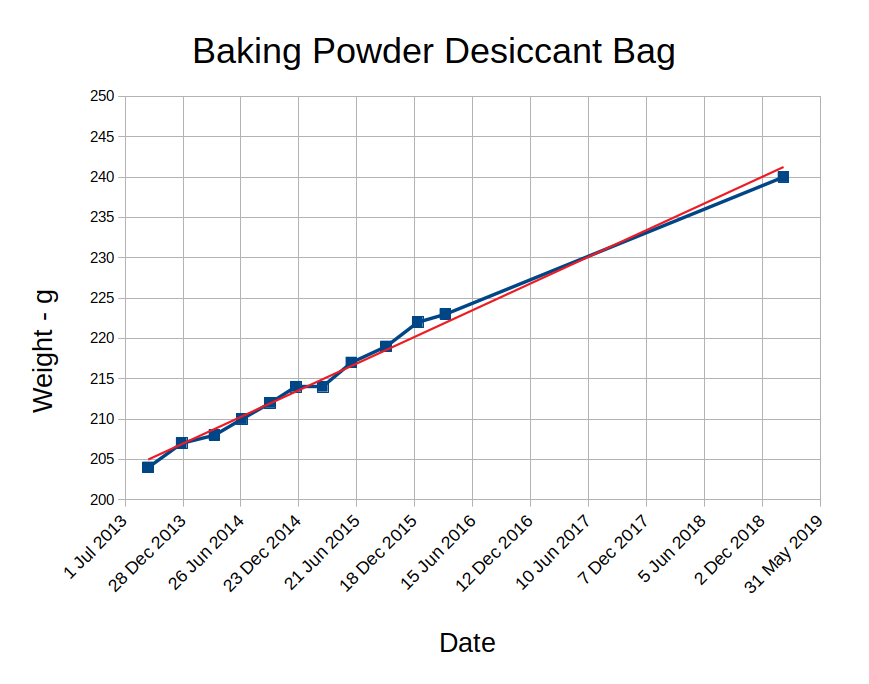
That last point emptied the can and, after a few days in the 60% RH basement, the bag weighed 243 g. The slope of the line suggests it’s been near 240 g for a while, although the humidity card showed the air was reasonably dry in there.
At our current rate, we’ll open the next can in a year or so …
Our room in a pretty good motel (pronounced “No Pets Allowed”) had the light on the wall above the beds plugged in thusly:

Next to the other bed was the outlet for the between-the-beds nightstand with lamp and clock radio plugs:

Which looked not-so-bad from the side, but not-so-good from the top:

It’s all fun and games until you grope for your metal-frame glasses in the middle of the night and they fall off the nightstand … hasn’t happened yet, but it’ll be spectacular when it does.
I think the original beds were narrower, with more clearance around the outlets, but we’ll never know. Those Panera Bread outlets pose similar problems.
We spotted a motion twitch outside and finally figured out what was going on:

There must be something yummy down inside that branch scar, but you gotta keep checking your six:

Where’s a hawk when you need one?
 The Smell of Molten Projects in the Morning