The Smell of Molten Projects in the Morning

Ed Nisley's Blog: Shop notes, electronics, firmware, machinery, 3D printing, laser cuttery, and curiosities. Contents: 100% human thinking, 0% AI slop.

Category: Oddities

Who’d’a thunk it?

  • Gauge Block Set Oiling

    Ray’s Rule of Precision:

    Measure with a micrometer. Mark with chalk. Cut with an axe.

    While pondering the problem of having the Sherline’s Z-axis anti-backlash nut unscrew at the top of its travel, I excavated the gauge block set and measured the gap between it and the bearing preload nut:
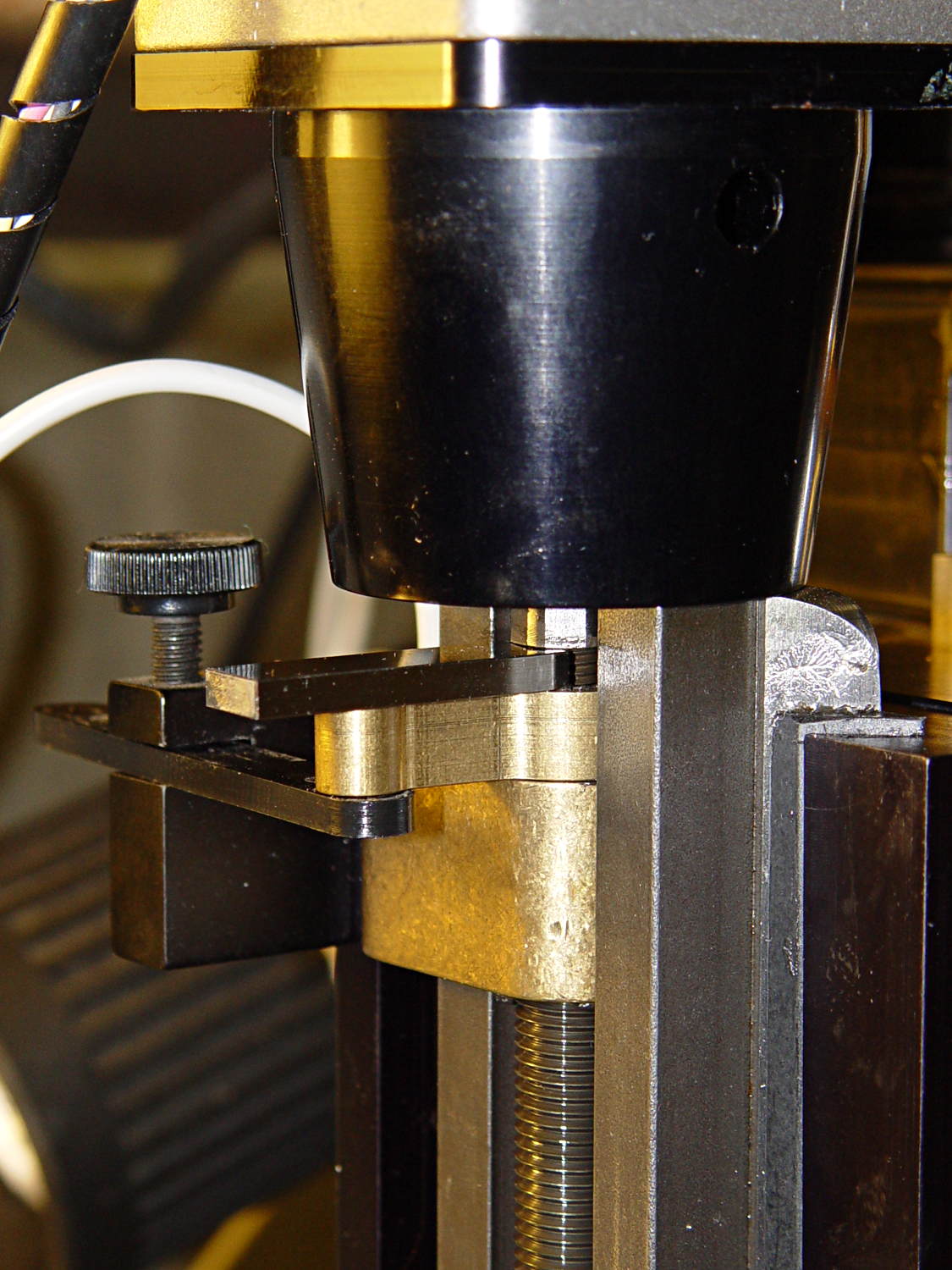
    Sherline Z-axis leadscrew nut - gauge block
    Sherline Z-axis leadscrew nut – gauge block

    Turns out that it’s 0.1340 inches, determined by bracketing the sliver above that 0.1300 block with feeler gauges. I don’t believe that last zero, either, as the Basement Shop was about 10 °F below the block’s 68 °F calibration temperature.  [grin]

    The actual size of that gap makes absolutely no difference whatsoever, but fooling around with the gauge blocks gave me an excuse to renew my acquaintance with them and, en passant, massage some oil over their long-neglected bodies:
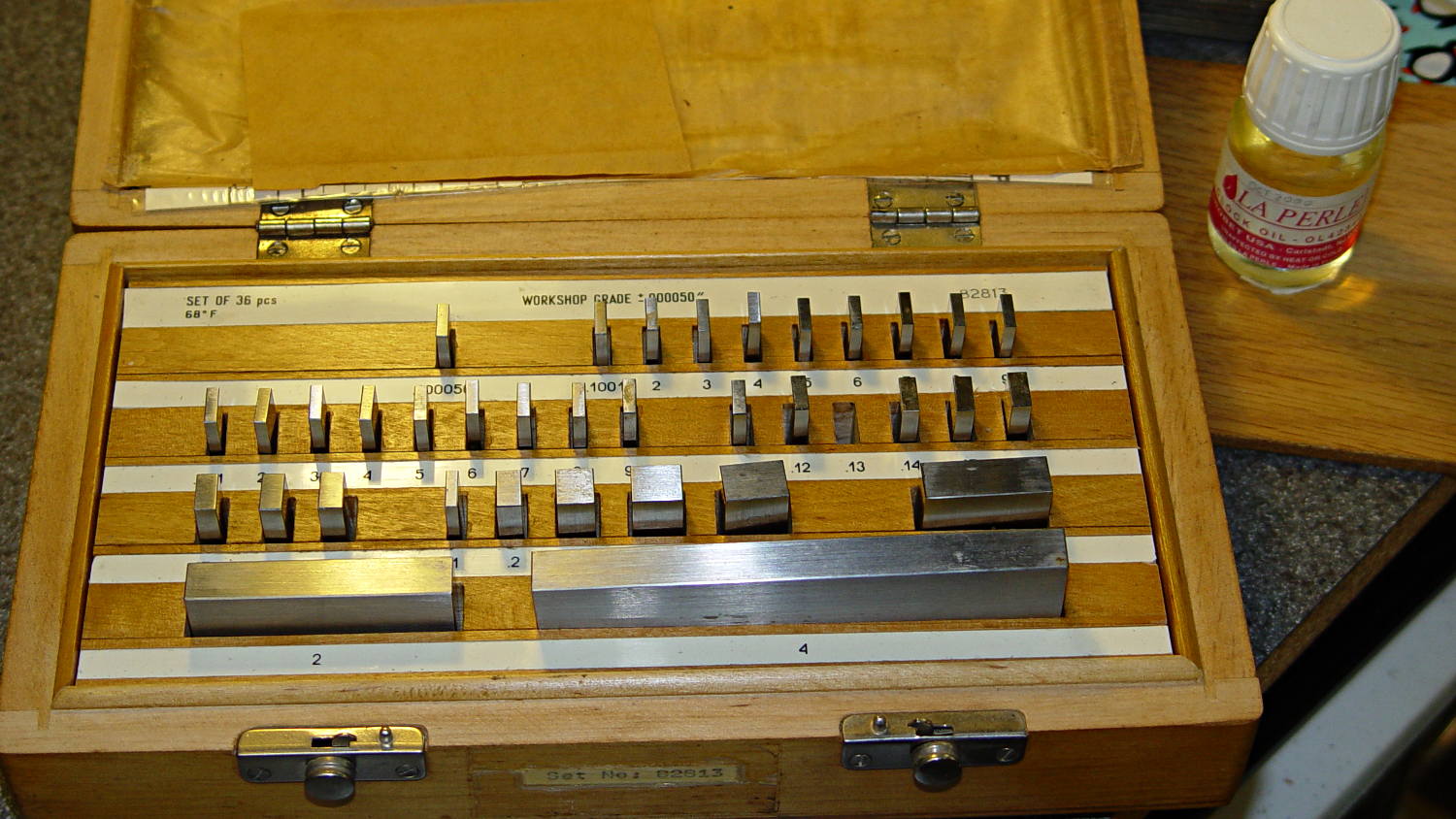
    Gauge block set
    Gauge block set

    I used La Perle Clock Oil, which isn’t Official Gauge Block Oil, but doesn’t go bad on the shelf. Verily, this bottle may be the last of its kind, as it’s no longer available from any of the usual sources; it appears I bought it back in 2000.

    The blocks are in good shape, probably because they don’t often see the light. FWIW, I have experimentally determined that my body oil doesn’t etch fingerprints into steel.

    The block set, which is similar to a current box o’ blocks from Enco, claims “Workshop Grade”, but the ±0.00050 inch = 1.27 μm tolerance shown in the top row of the labels is much worse than even grade B’s sub-micron tolerance. That newer box claims “Economy” accuracy with the same spec, so I suppose somebody kvetched about mis-using the terms.

    Ah, well, they’re far better than any measurements I’ve needed in a while and entirely suitable for verifying my other instruments.
  • Northern Cardinal: Window Strike

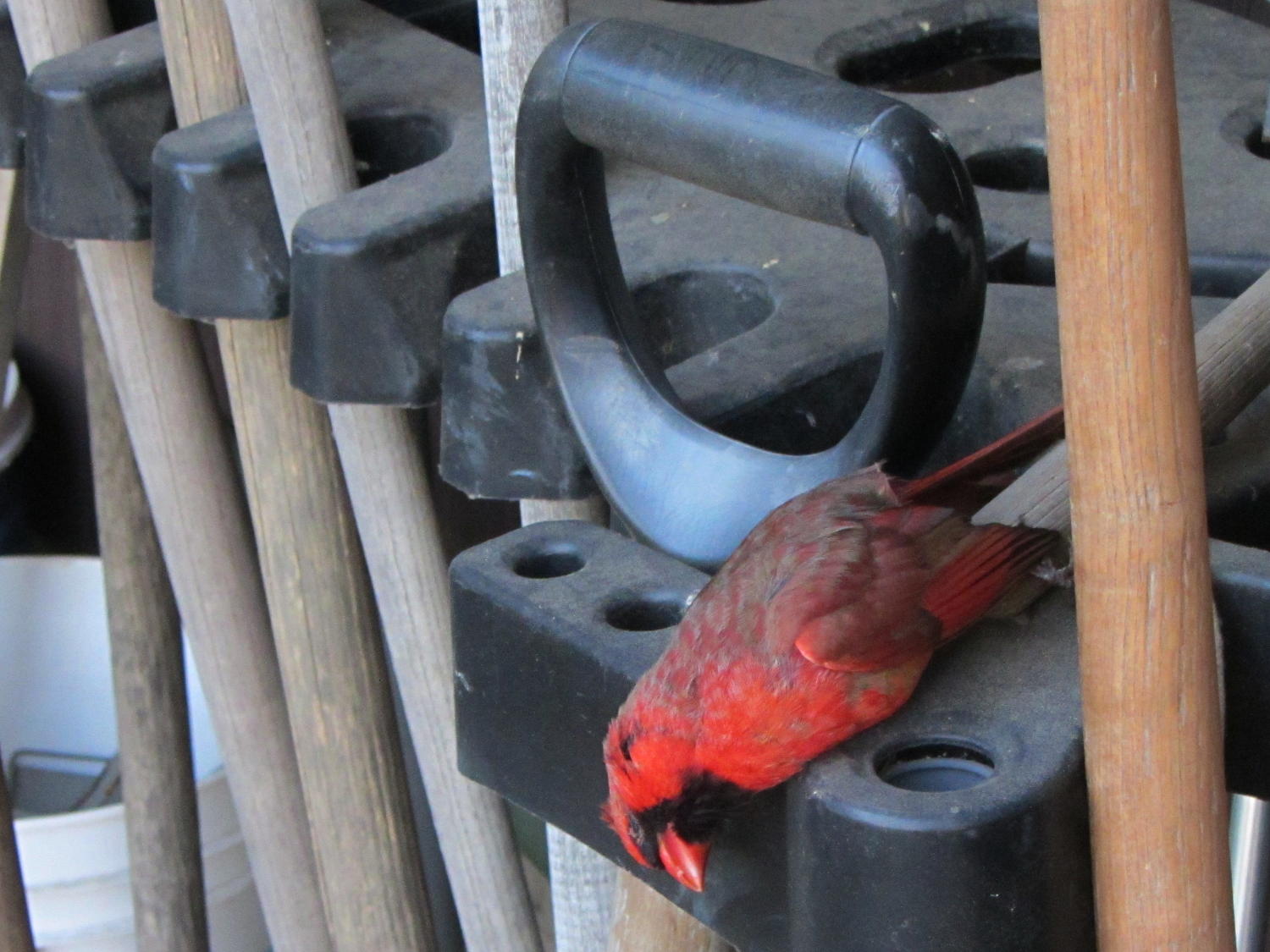
    For all the usual reasons, I didn’t hang the mesh netting over the bedroom window when I put up the bird feeder on the far corner of the patio:

    Male cardinal - window strike death
    Male cardinal – window strike death

    That window is far enough away that birds get up to full speed and low enough that they can see through the windows on the far side of the bedroom to the bushes and trees north of the house.

    The mesh is up now and I feel like crap.

  • Bird Feeder Season

    Word got around quickly after I set up the bird feeder at the corner of the patio, one week before Mary’s Project Feederwatch data collection started up:

    Nuthatch on patio
    Nuthatch on patio

    You can tell this chipmunk wasn’t at all bothered by my presence:

    North end of southbound chipmunk
    North end of southbound chipmunk

    We call them fur birds, but they don’t count for Feederwatch:

    Chipmunk in vacuum cleaner mode
    Chipmunk in vacuum cleaner mode

    A few days later, I put a casserole of fresh-cooked brown rice on a patio table to cool, only to have a raccoon drag it off. Of course, the Pyrex bowl shattered on the concrete: neither of us got much of the rice…

  • Shagbark Hickory Nut Season

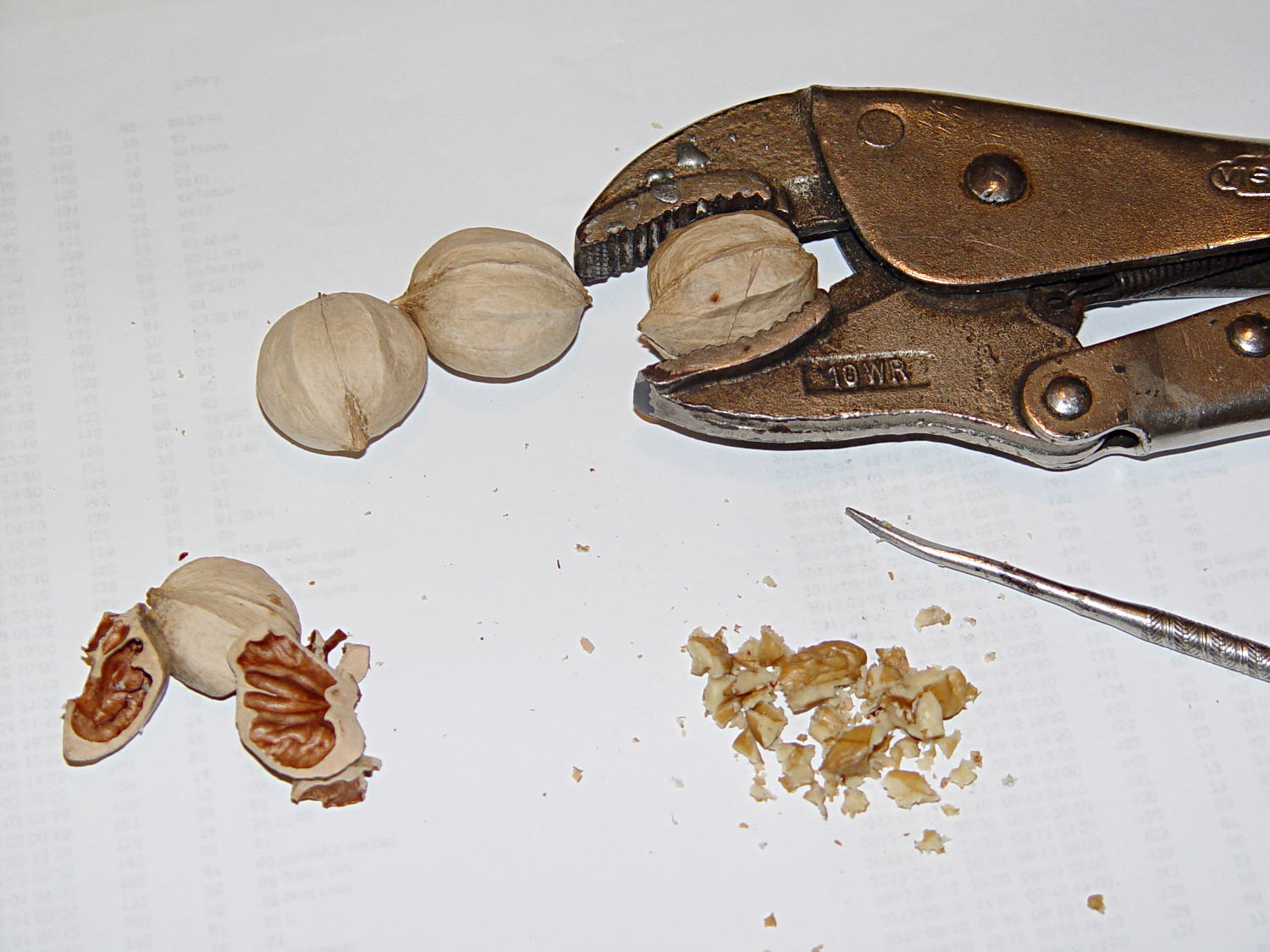
    Mary managed to outcompete the local squirrels to the tune of 10 pounds of Shagbark Hickory nuts, which we’ve been enjoying after supper. The thickly armored nuts shrug off ordinary nutcrackers, so we deploy heavy weaponry: good old 10WR Vise-Grip pliers:

    Cracking nickory nuts with a Vise-Grip
    Cracking nickory nuts with a Vise-Grip

    She describes the process better than I; for what it’s worth, I work on one nut at a time. We both celebrate when a shell releases its nut with minimal damage; most often, we extract fragments into a pile like the one shown. I can process half a dozen nuts before deciding I’ve had enough.

    I’d be in favor of a genetic modification producing a fluorescent green shell, because overlooking a minute piece of shell in that pile of nutmeat is a Very Bad Thing…

    Some Vise-Grip history may be of interest.

  • LED Bug

    Our Larval Engineer has a bug report that blows away anything I’ve ever seen:

    Check out her post for the rest of the story…

    Forgot to mention this when she first told me about it; the discussion of LED and CFL lifetime brings it to mind.

  • Nerf Pistol: Red PLA Version

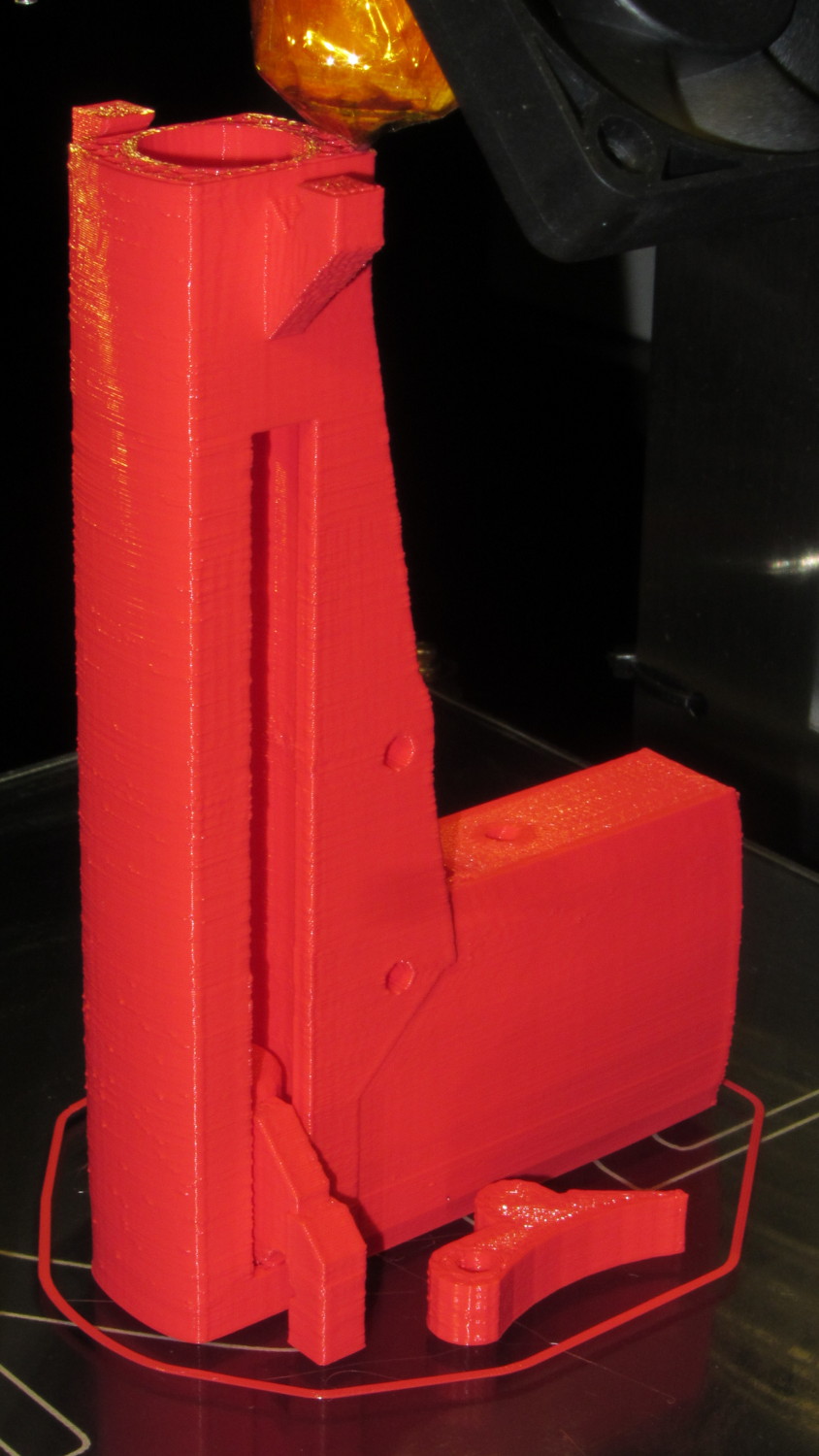
    No, not that red PLA, just PLA plastic:

    Nerf pistol - on M2 platform
    Nerf pistol – on M2 platform

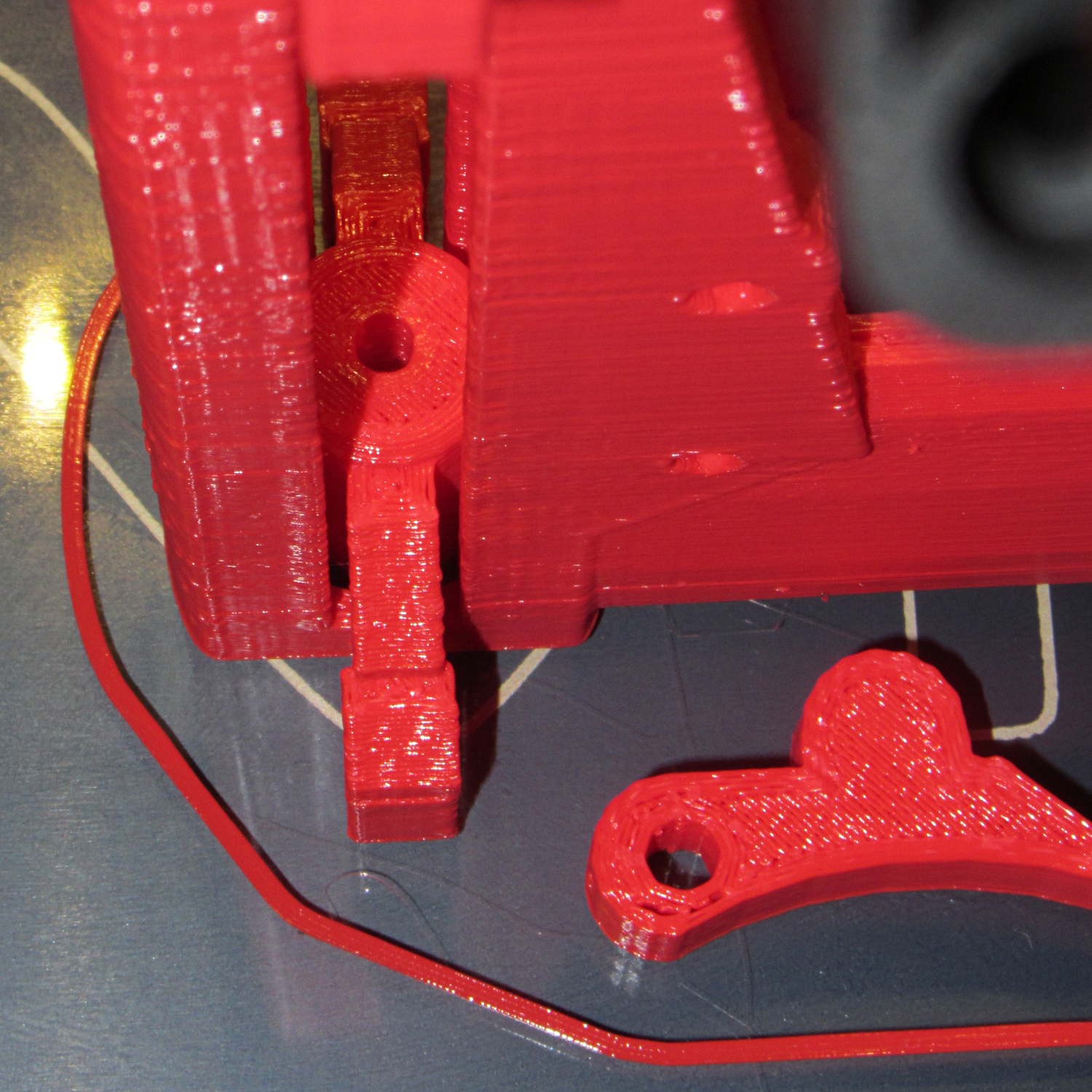
    A detailed look at the dart carrier and trigger:

    Nerf pistol - build detail - on M2 platform
    Nerf pistol – build detail – on M2 platform

    As you can tell from the stock Makergear HBP, I printed it a while ago. It’s the full-length version of that classic, not the shortened Barbie Pistol for the Thing-O-Matic which has been fending off zombies for the last three years (unsuccessfully, from what I hear).

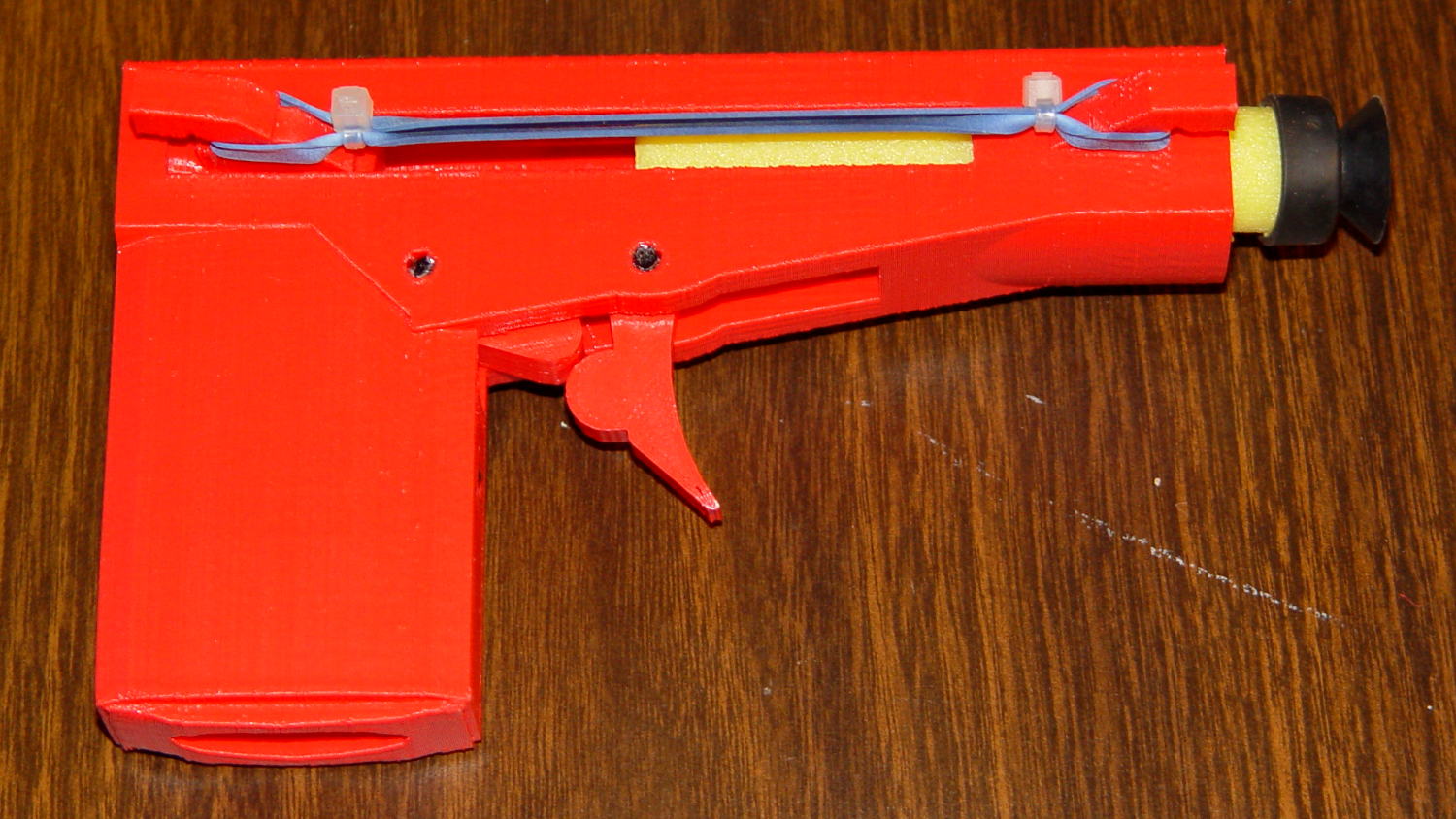
    The finished product is a bit ungainly:

    Nerf pistol - loaded
    Nerf pistol – loaded

    That’s not the proper Nerf dart for the thing, but it’s scavenged from tag sale debris and some day I’ll pick up a pack of the skinny ones.

    All the pivot points and the sear spring are 3 mm black ABS filament, mostly for contrast. They’re glued in with dabs of Oatey clear PVC cement, the kind with tetrahydrofuran in addition to the usual hellish mix of acetone and MEK.

    I bring it along to my show-n-tells, just so I can say I downloaded and printed a gun long before Defense Distributed made it trendy. Haven’t gotten into any trouble yet, but I’m sure some Zero Tolerance regime will bust my ass one of these days.

    It was a big hit with the adolescent males at a Squidwrench event, for some reason. [grin]

  • Hunting Spider

    Back in the early 1950s, Anderson’s state-of-the-art awning windows had screens on the inside: you must open the screen to open or close the window. This surely seemed like a good idea at the time, but in practice we don’t open the screen very much, very often, during peak insect season, as insects tend to collect on the outer surface.

    We’ve learned to live with the smaller bugs, but this critter gave me pause one evening:

    Hunting Spider on Window Screen
    Hunting Spider on Window Screen

    It’s a Hunting Spider (or, more exactly, a Wolf Spider), perched on the outside of the screen, inside the (opened) window. The (hard inch) screen grid is about 70×55 mils, so those legs span about 2-1/8 inch, call it 55 mm.

    We’re big fans of spiders, but this portends a bit more intimacy than I’m comfortable with. I blew through the screen to tickle its tummy until it moved outside the window frame, then opened the screen and closed the window without pause.

    Wake up with one of those on your pillow and tell me how it works for you.