The Smell of Molten Projects in the Morning

Ed Nisley's Blog: Shop notes, electronics, firmware, machinery, 3D printing, laser cuttery, and curiosities. Contents: 100% human thinking, 0% AI slop.

Category: Machine Shop

Mechanical widgetry

  • HP 7475A Plotter: 09872-60066 Digitizing Sight

    I found this antique on eBay for (somewhat) under HP’s 1980-era $35 price:

    HP 09872-60066 Digitizing Sight - overview
    HP 09872-60066 Digitizing Sight – overview

    The prevailing price for HP 09872-60066 Digitizing Sights seems to be $100 and upwards, with outliers in both directions, so I just couldn’t pass it up.

    Anyhow, the fiber optic pipe still works just like it did, back in the day:

    HP 09872-60066 Digitizing Sight - text target
    HP 09872-60066 Digitizing Sight – text target

    The small dot in the middle is actually a paint-filled indentation on the bottom surface:

    HP 09872-60066 Digitizing Sight - bottom detail
    HP 09872-60066 Digitizing Sight – bottom detail

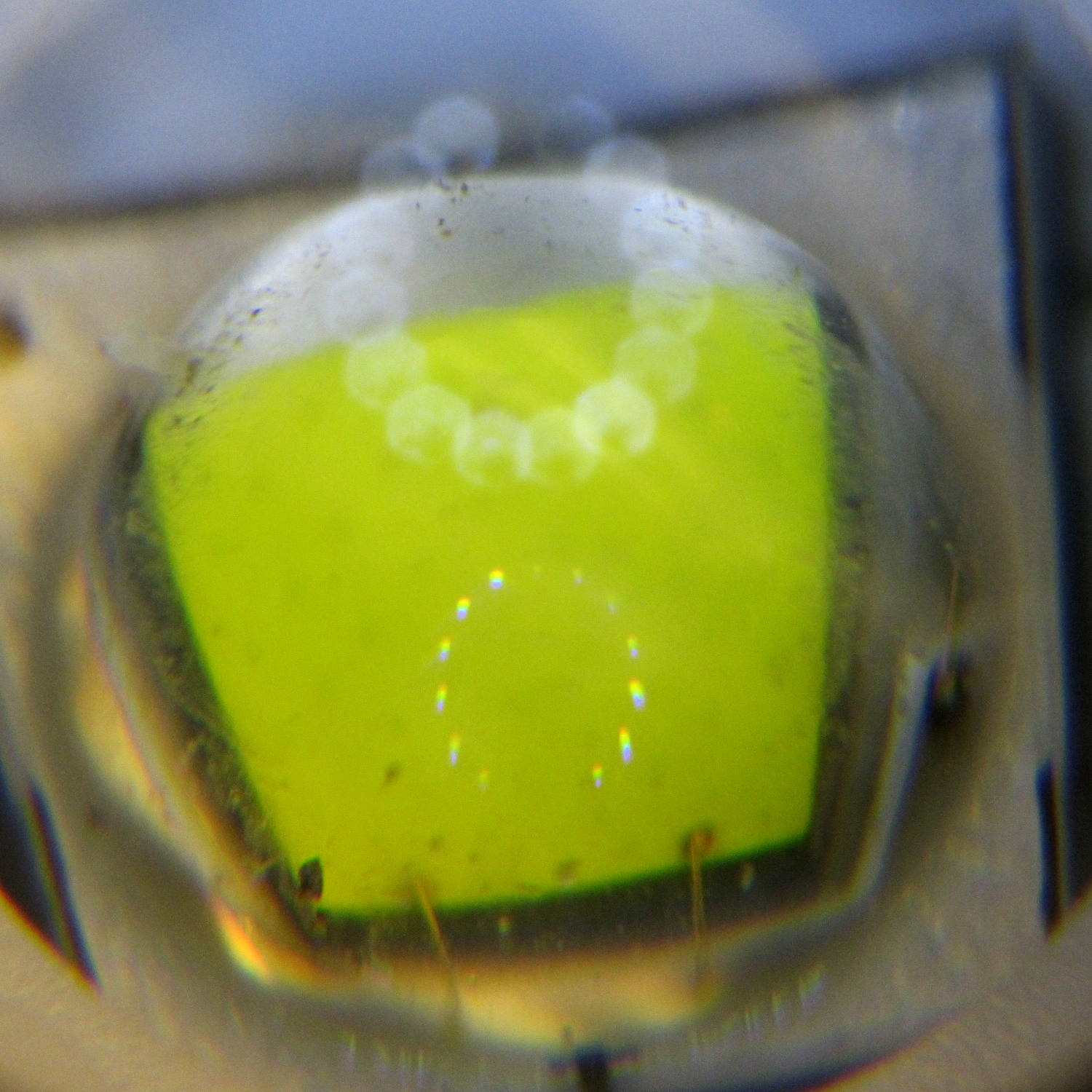
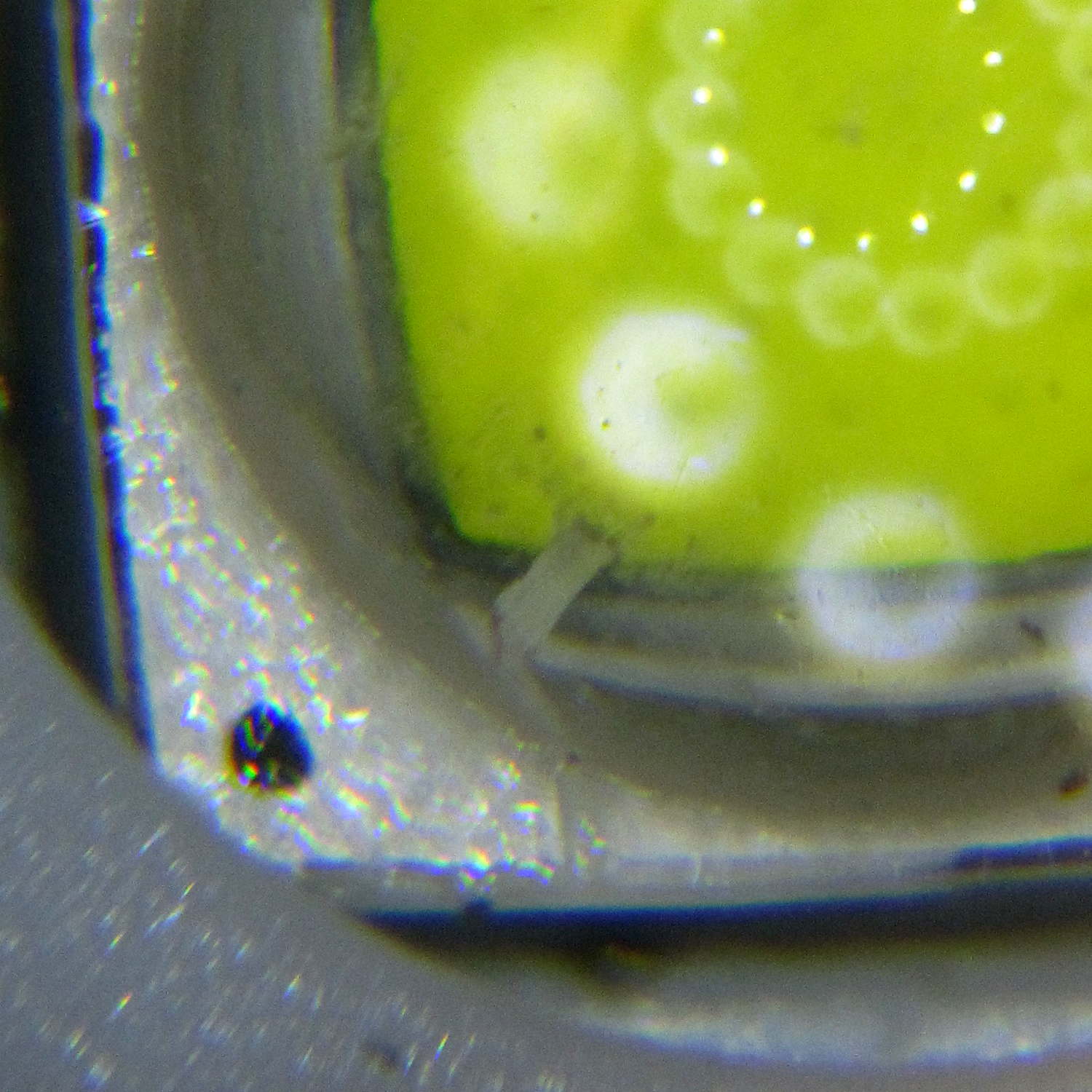
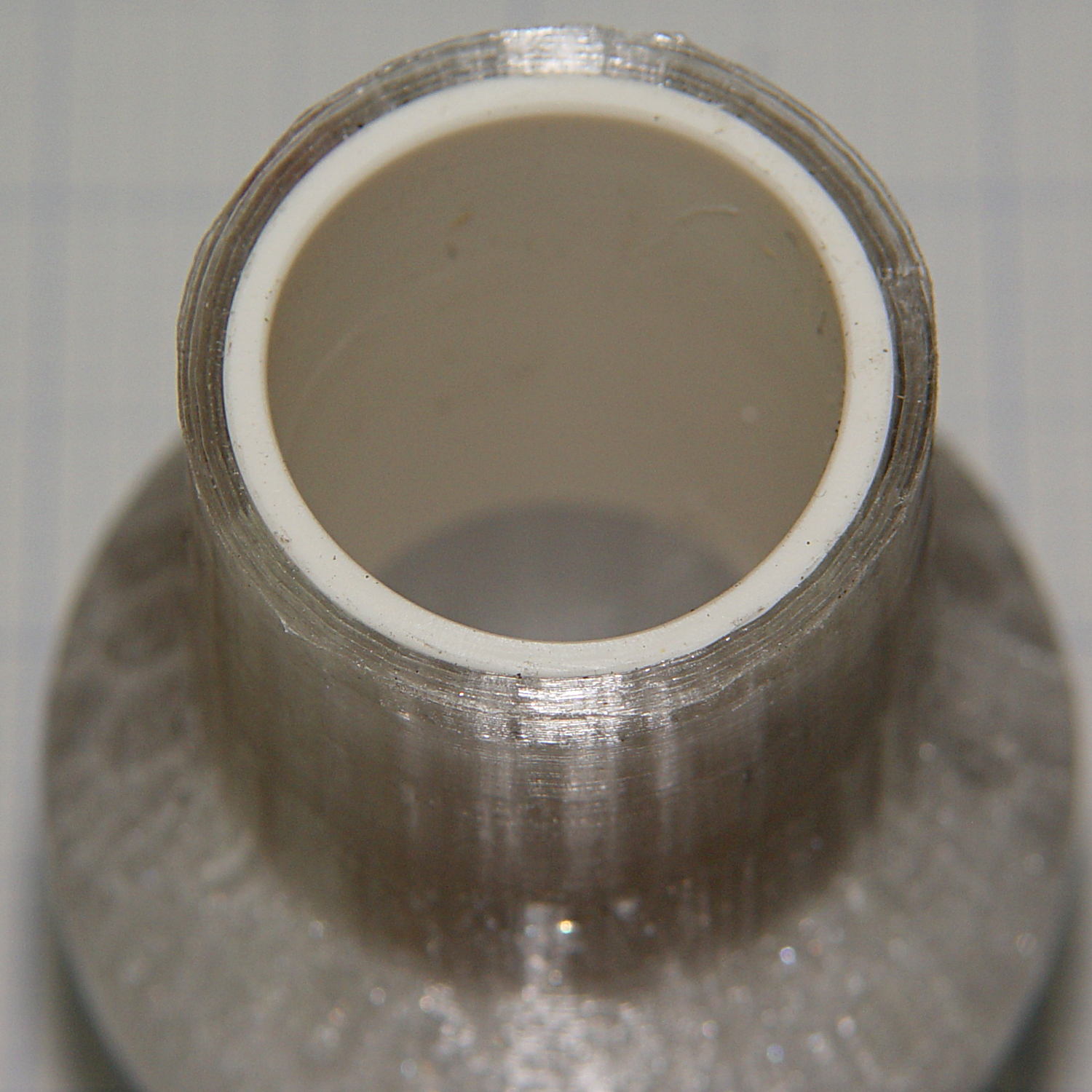
    With the bottom flat on the target, the relayed image is in perfect focus:

    HP 09872-60066 Digitizing Sight - top detail
    HP 09872-60066 Digitizing Sight – top detail

    The bezel recesses the top surface by 25 mil to protect the imaging plane.

    OK, it’s a gadget gloat; I have absolutely no intention of ever chucking a piece of paper in the plotter and digitizing any points.

  • Kitchen Spatula Search

    A long long time ago, we bought a kitchen spatula that’s served us well ever since:

    Spatula Search - original
    Spatula Search – original

    To give you an idea of how old that poor thing is, the back of the handle bears a Japan stamp. I’ve re-set the rivets several times, the blade has rusted as badly as you think, and we recently, very reluctantly, decided it has passed its best-used-by date.

    The 3 x 4.5 inch blade is 19 mil = 0.45 mm plated carbon steel, stiff enough to remain flat and springy enough to bend a little, with a 9 inch = 230 mm steel handle ending in a plastic overmold.

    These days, it’s essential to the cutting, flipping, and serving of the morning’s omelet-like substance, made of eggs, bacon, veggies, green leafy things, plus this-and-that, in the cast-iron pan. Mary chops the disk into quarters with the reasonably sharp edge, maneuvers the reasonably bendy blade under each quarter, flips them over, tops with bacon & cheese, pauses for consolidation & melting, then pops them onto plates. Yum!

    Omelet in cast-iron pan
    Omelet in cast-iron pan

    So we set out to buy a replacement.

    Here’s what we’ve tried and rejected so far:

    Spatula Search - overview
    Spatula Search – overview

    I’ve used this one for many years to flip pancakes on a succession of non-stick griddles, a service at which it excels. The edge isn’t sharp enough to cut the green-and-leafy and the completely inflexible blade cannot be maneuvered under the omelet quarters:

    Spatula Search - heavy solid plastic
    Spatula Search – heavy solid plastic

    This one gets deployed for burgers and their ilk, also in the cast-iron pan. The blade, although sharp enough, is completely rigid:

    Spatula Search - heavy slotted metal
    Spatula Search – heavy slotted metal

    On the other paw, a slightly concave 7 mil = 0.18 mm spring steel blade is much too thin and, well, springy. Although very sharp, you cannot apply enough cutting force without suddenly bending the blade and, if the omelet quarter isn’t positioned exactly right, the blade will bend underneath it and dump breakfast on the stovetop. The alert reader will notice a missing weld between the blade and the bottom wire handle:

    Spatula Search - thin spring steel
    Spatula Search – thin spring steel

    This very thin plastic blade has similar problems with poor cut-ability and excessive flexibility:

    Spatula Search - thin springy plastic
    Spatula Search – thin springy plastic

    This one looked really promising and worked almost perfectly. Regrettably, its nylon blade bears a 400 °F rating and the bottom of the omelet reaches nearly 450 °F. You can see what happens to the reasonably sharp edge as it scrapes across the pan:

    Spatula Search - heavy slotted nylon
    Spatula Search – heavy slotted nylon

    The omelet cooks at the temperature it cooks at, which part of the specifications is not subject to further discussion.

    So, we’re stumped. Having trawled the usual online and big-box stores, we’ve been unable to find a replacement. Simple steel blades aren’t available. Trendy silicone-bonded stainless steel blades combine the worst of all worlds: won’t cut and won’t flip. Pretty nearly anything you don’t see above seems obviously unsuitable for our simple needs: too big, too small, or too melty.

    We’ll consider all recommendations and suggestions! Thanks …

  • Vacuum Tube LEDs: 6H6GT Dual Diode

    Having accumulated a set of octal tube base clamps, it’s now a matter of selecting the proper clamp for each tube:

    Octal tube base V-block clamps
    Octal tube base V-block clamps

    The process of shell-drilling the tube base, drilling the hard drive platter, printing a tube socket and case, wiring up the Arduino and base LED, then assembling the whole thing requires a bit of manual labor, assisted by some moderately exotic shop machinery.

    The getter flash atop this small 6H6GT dual diode tube rules out a cap and there’s not enough space for a side light:

    6H6GT - on platter
    6H6GT – on platter

    Fortunately, the base LED completely lights the internal glass:

    6H6GT - purple phase
    6H6GT – purple phase

    The slowly changing color would make a fine night light:

    6H6GT - cyan phase
    6H6GT – cyan phase

    It must be Art!

  • Cast Iron Pan Electrolysis: Anode Fragment

    Sacrificing a scrap EMI shield from a junked PC as the electrolysis anode, I grabbed a tab with the battery charger clamp:

    Cast iron pan electrolysis - bucket
    Cast iron pan electrolysis – bucket

    Turns out it didn’t survive the encounter:

    Cast iron pan electrolysis - anode front
    Cast iron pan electrolysis – anode front

    That white blob extends around to the other side:

    Cast iron pan electrolysis - anode rear
    Cast iron pan electrolysis – anode rear

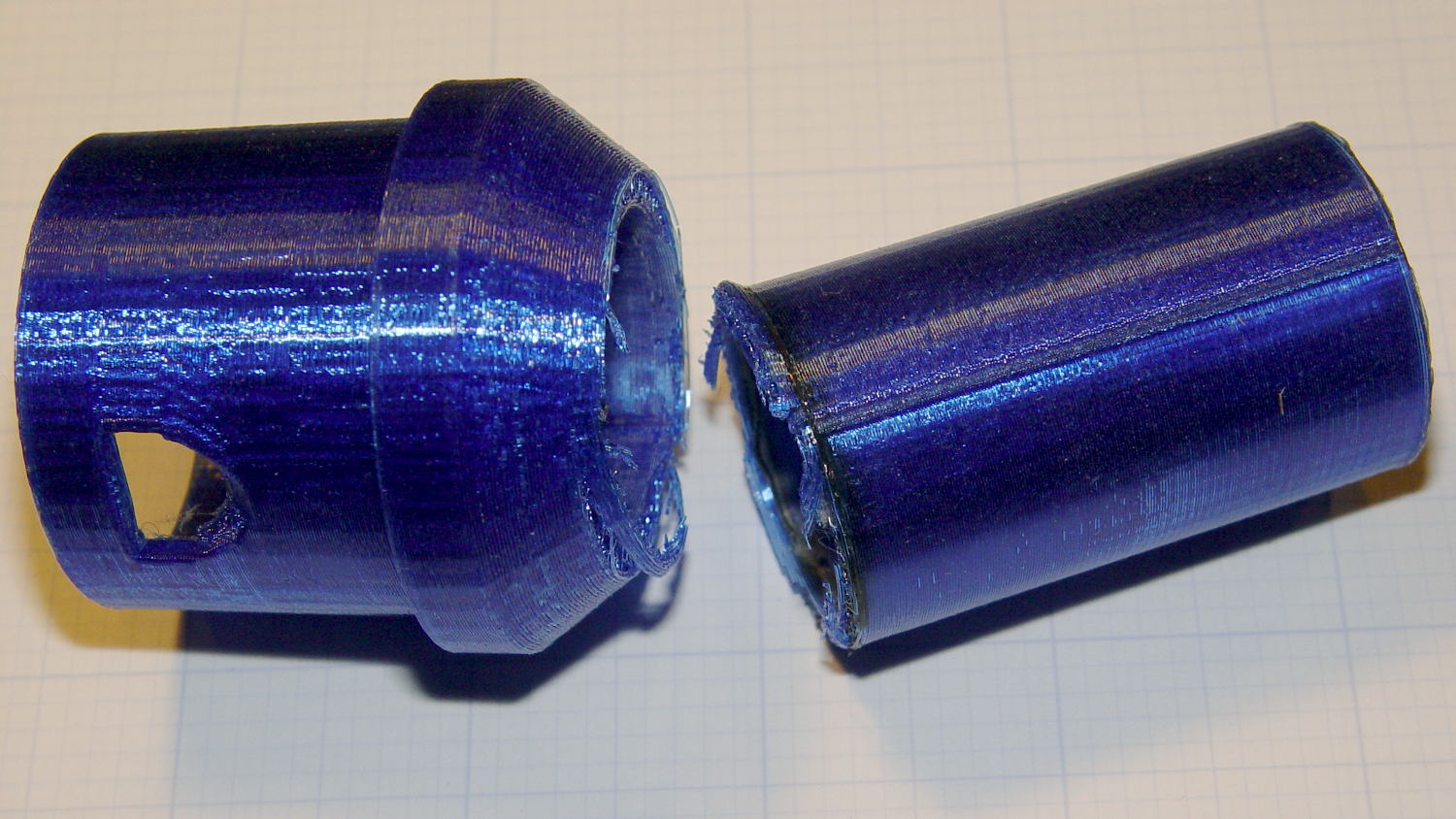
    Yeah, it got hot enough to melt a blob from the 6 gallon plastic bucket before burning through.

    I tossed that into the garage so I wouldn’t forget it aaaand here we are …

  • Hand Sprayer Hose Kink Prevention

    Mary’s new half-gallon sprayer arrived with a kink in the hose just below the handle, which is about what you’d expect from a non-reinforced plastic tube jammed into the smallest possible box containing both the sprayer and its wand. Fortunately, the Box o’ Springs had one that just fit the hose and jammed firmly into the handle:

    Sprayer hose with kink-resisting spring
    Sprayer hose with kink-resisting spring

    The kink slowly worked its way out after being surrounded by the spring and shouldn’t come back.

    That was easy…

  • Vacuum Tube LEDs: 5U4GB Vacuum Rectifier with Sidelight

    A larger version of the V-block clamp accommodates the 35 mm = 1-3/8 inch octal base of a 5U4GB Full-Wave Vacuum Rectifier tube:

    5U4GB - spigot milling
    5U4GB – spigot milling

    The evacuation tip nearly touched the inside end of the base spigot!

    I had to cut the shaft and half the body off the shell drill in order to fit it into the space above the tube base and below the chuck:

    5U4GB - base shell drilling
    5U4GB – base shell drilling

    A slightly larger shell drill would still fit within the pin circle, but the maximum possible hole diameter in the base really isn’t all that much larger:

    5U4GB - base opening
    5U4GB – base opening

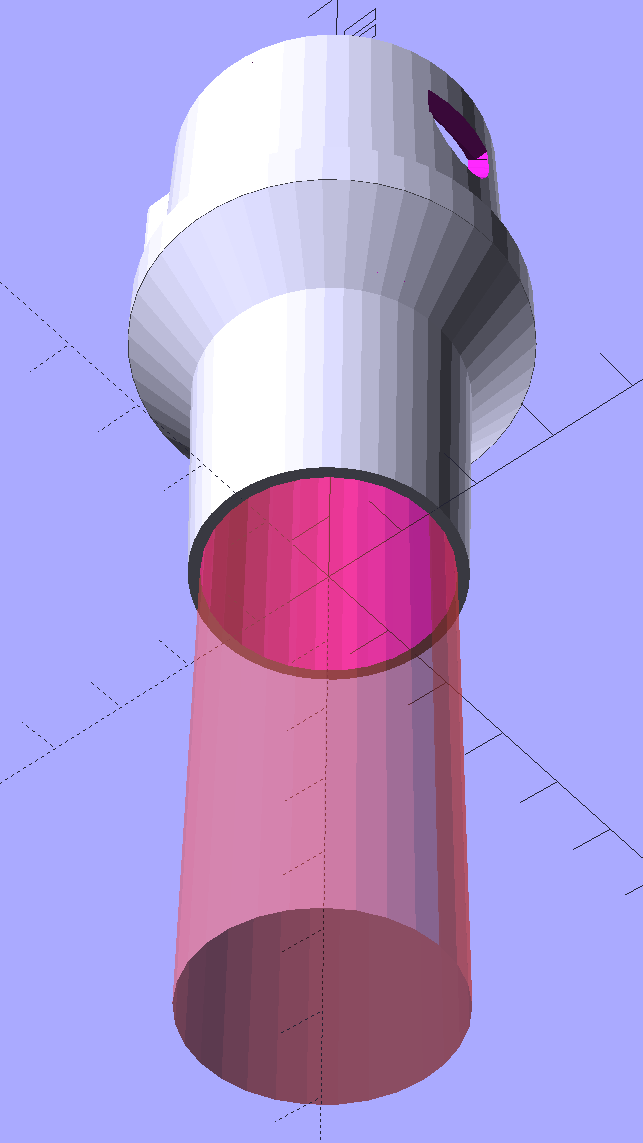
    The getter flash covers the entire top of this tube, so I conjured a side light for a rectangular knockoff Neopixel:

    Vacuum Tube Lights - side light - solid model
    Vacuum Tube Lights – side light – solid model

    There’s no orientation that doesn’t require support:

    Vacuum Tube Lights - side light support - Slic3r preview
    Vacuum Tube Lights – side light support – Slic3r preview

    A little prying with a small screwdriver and some pulling with a needlenose pliers extracted those blobs. All the visible surfaces remained undamaged and I cleaned up the curved side with a big rat-tail file.

    I wired the Arduino and Neopixels, masked a spot on the side of the tube (to improve both alignment and provide protection from slobbered epoxy), applied epoxy, and taped it in place until it cured:

    5U4GB - sidelight epoxy curing
    5U4GB – sidelight epoxy curing

    The end result looks great:

    5U4GB Full-wave vacuum rectifier - side and base illumination
    5U4GB Full-wave vacuum rectifier – side and base illumination


    It currently sends Morse code through the base LED, but it’s much too stately for that.

  • American Standard Kitchen Faucet: Ceramic Valve

    It seems everybody must disassemble an American Standard kitchen faucet to replace the spout seal O-rings, as my description of How It’s Done has remained in the top five most popular posts since I wrote it up in 2009.

    About two years ago, I replaced the valve cartridge with a (presumably) Genuine Replacement; unlike the O-rings, the original valve lasted for nigh onto a decade. A few weeks ago, the replacement valve began squeaking and dribbling: nothing lasts any more. Another (presumably) Genuine Replacement, this time from Amazon, seems visually identical to the previous one and we’ll see how long it lasts.

    I always wondered what was inside those faucets and, after breaking off the latching tabs in the big housing to the upper right, now I know:

    American Standard Faucet - disassembled
    American Standard Faucet – disassembled

    You get a bunch of stuff for twelve bucks! The stainless steel valve actuator is off to the right, still grabbed in the bench vise.

    The valve action comes from those two intricate ceramic blocks with a watertight sliding fit:

    American Standard Faucet - ceramic valve parts
    American Standard Faucet – ceramic valve parts

    In fact, you (well, I) can wring the slabs together, just like a pair of gauge blocks. That kind of ultra-smooth surface must be useful for some other purpose, even though I can’t imagine what it might be…