Ed Nisley's Blog: Shop notes, electronics, firmware, machinery, 3D printing, laser cuttery, and curiosities. Contents: 100% human thinking, 0% AI slop.
The back tire on my bike was flat when I rolled it out for a ride (the day after replacing the front shifter cable), which ought not be possible with a Michelin Protek Max tube inside. On the other paw, we’ve had zero flats in the not quite two years since installing the things, which says they’re doing very well, and I’ll take a flat in the garage over a flat on the road any day.
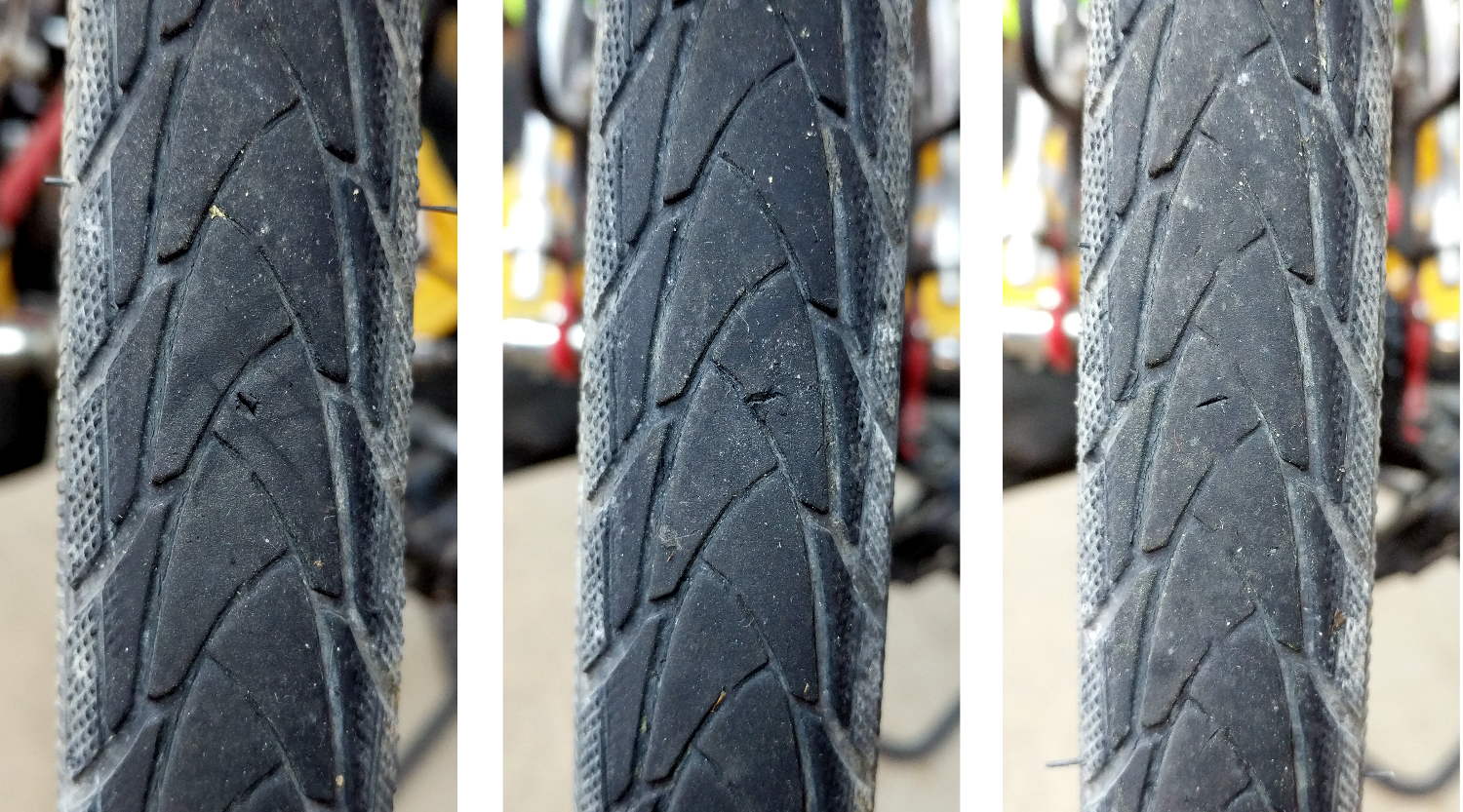
With the bike up on the stand, I didn’t spot the expected large glass chip or sharp wire, but I did find three smaller gashes:
Bike tire tread gashes – composite – 2017-05-13
… from which I extracted two small glass shards. Perhaps a wee puncture spent four days parked at the top of the wheel, with the ProTek’s internal goop drained away and unable to plug the slow leak.
Having spun the tire a few times while looking for trouble, I pumped it back up to 80 psi. After delaying the ride for half an hour, the tire pressure remained constant, and we enjoyed a fine ride around the block.
Because I’m writing this in the future, I know it’ll hold pressure just fine, which means I can declare victory and move on.
The tube & tire weigh more than some frames, but they’re worth it!
The rear shifter on my Tour Easy stopped working when we were most of the way to the grocery store, due to what turned out to be due to a broken cable. I managed to yank the frayed end out of the shifter, pulled the derailleur into a middling gear, and belayed the cable into a deadly cactus:
SRAM X.9 Rear Shifter – frayed cable
A three-speed recumbent got me home again, albeit with spin-it-out high gear and a low gear barely sufficient for trailer hauling.
Attempting to remove the frayed cable from the SRAM X.9 grip shifter didn’t go well at all:
SRAM X.9 Rear Shifter – cable tangle
I managed to extract the lead pellet, but, while it may be possible to extract the remaining tangle, even pulling on individual wires wasn’t productive.
AFAICT, the shifter came as original equipment on the bike, so it’s been in constant use for the last 17-ish years. The nice soft grip material (and the cover over the cable port) turned into gummy sludge under the cheerful silicone tape I applied some years ago, so I sliced the old grip and pulled it off:
SRAM X.9 Rear Shifter – gummified grip
Popping a new-old-stock X.9 shifter from the Big Box o’ Bike Parts and installing it proceeded without problems. This being the rear shifter, I had to remove the shiny OEM cable and replace it with a PTFE-coated tandem-length rear cable, but that’s normal for a long wheelbase recumbent.
For the record, both black shift indicator tabs still show no signs of failing after half a year, so a bent piece of polypropylene sheet looks like a win.
This file contains hidden or bidirectional Unicode text that may be interpreted or compiled differently than what appears below. To review, open the file in an editor that reveals hidden Unicode characters.
Learn more about bidirectional Unicode characters
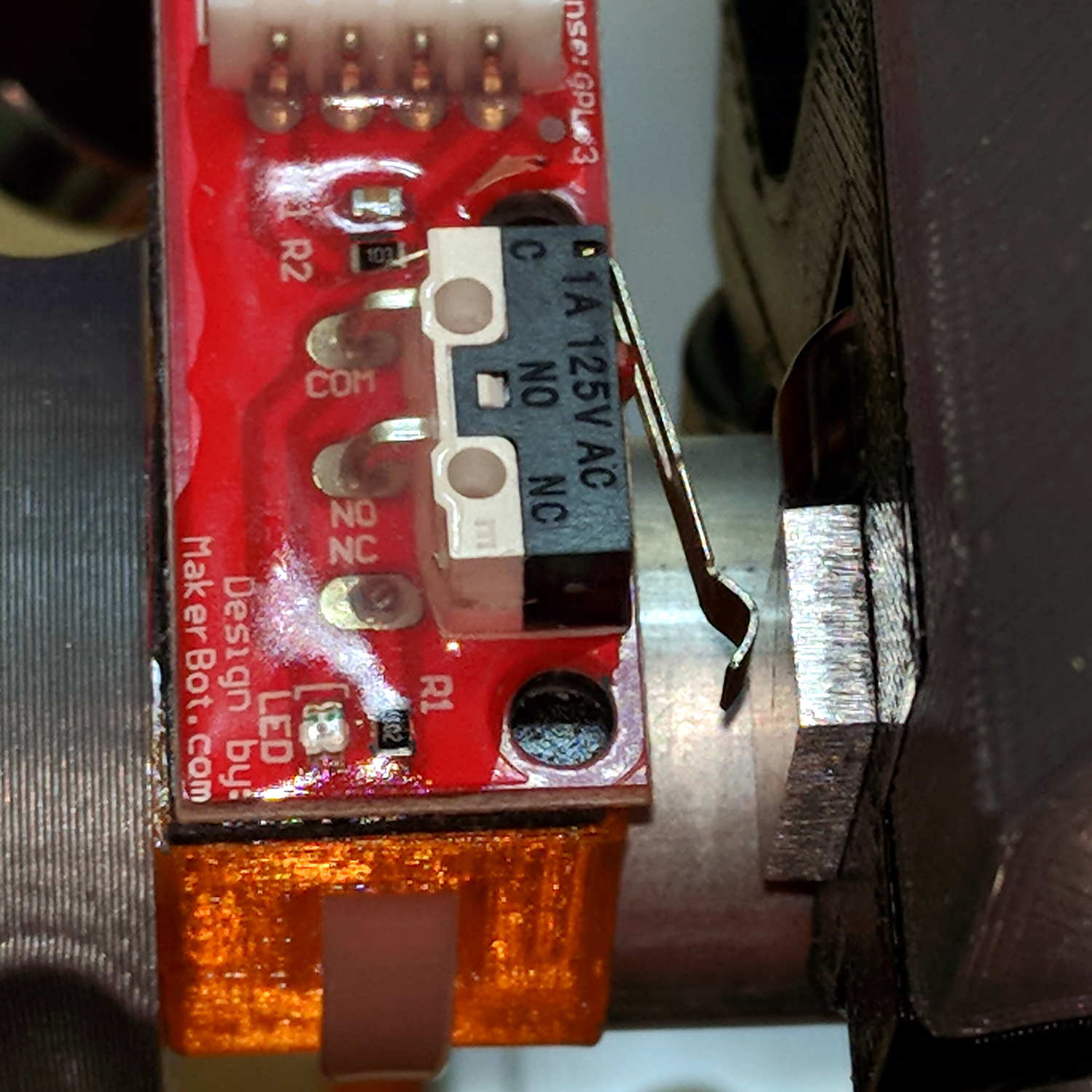
The overall XY travel is slightly smaller than the initial configuration, because the router sticks out further than the penholder I’d been using. Increasing the $27 Homing Pulloff distance to 3 mm leaves a comfortable space beyond the limit switches after homing to the positive end:
MPCNC – X-axis endstop – home
Adjusting the $13[01] XY travel distances and switch positions on the other end of the rail leaves a similar comfort zone at the negative end:
MPCNC – X-axis endstop – X min
Both switches now live on the rear X-axis rail and appear as seen from behind the bench; they just look backwards. The Y-axis switches are on the left rail and look exactly the same.
The XY travel works out to 630 × 460 mm = 24.8 × 18.1 inch, which is Good Enough.
Some fiddling with the Z axis limit switch tape mask produces a nice round 100 mm = 3.9 inch vertical travel. The Z-axis rails just barely clear the table at the lower limit and just barely stay in the bottom bearings at the upper limit, so it’s a near thing. In practical terms, the rails or the tool will smash into the workpiece sitting atop the table before the limit switch trips.
Setting both $20=1 Soft Limits and $21=1 Hard Limits may be excessive, but I vastly prefer having the firmware detect out-of-range moves and the hardware forcibly shut down if the firmware loses track of its position, rather than letting it grind away until I can slap the BRS. The steppers aren’t powerful enough to damage anything, of course, so it’s a matter of principle.
The $N1=G10L2P1X-633Y-463Z-3 sets the default G54 coordinate origin to the front-left corner, with Z=0 at the home position up top, so as to prevent surprises. I expect to use G55 for most work holder touchoffs, although we’ll see how that plays out.
The G28 and G30 settings depend on the tool change location and the Z-axis probe location, so they’re still not cast in concrete.
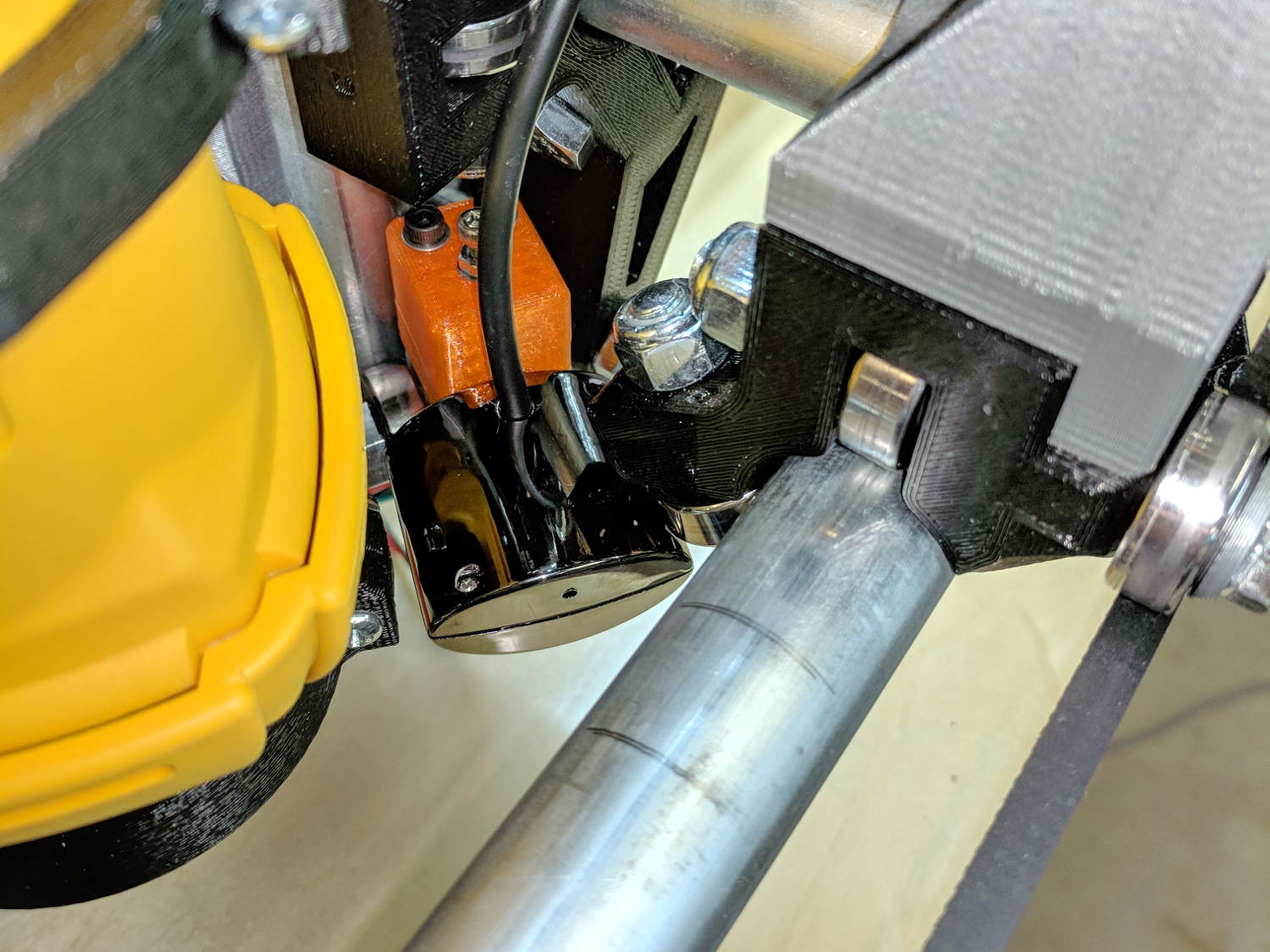
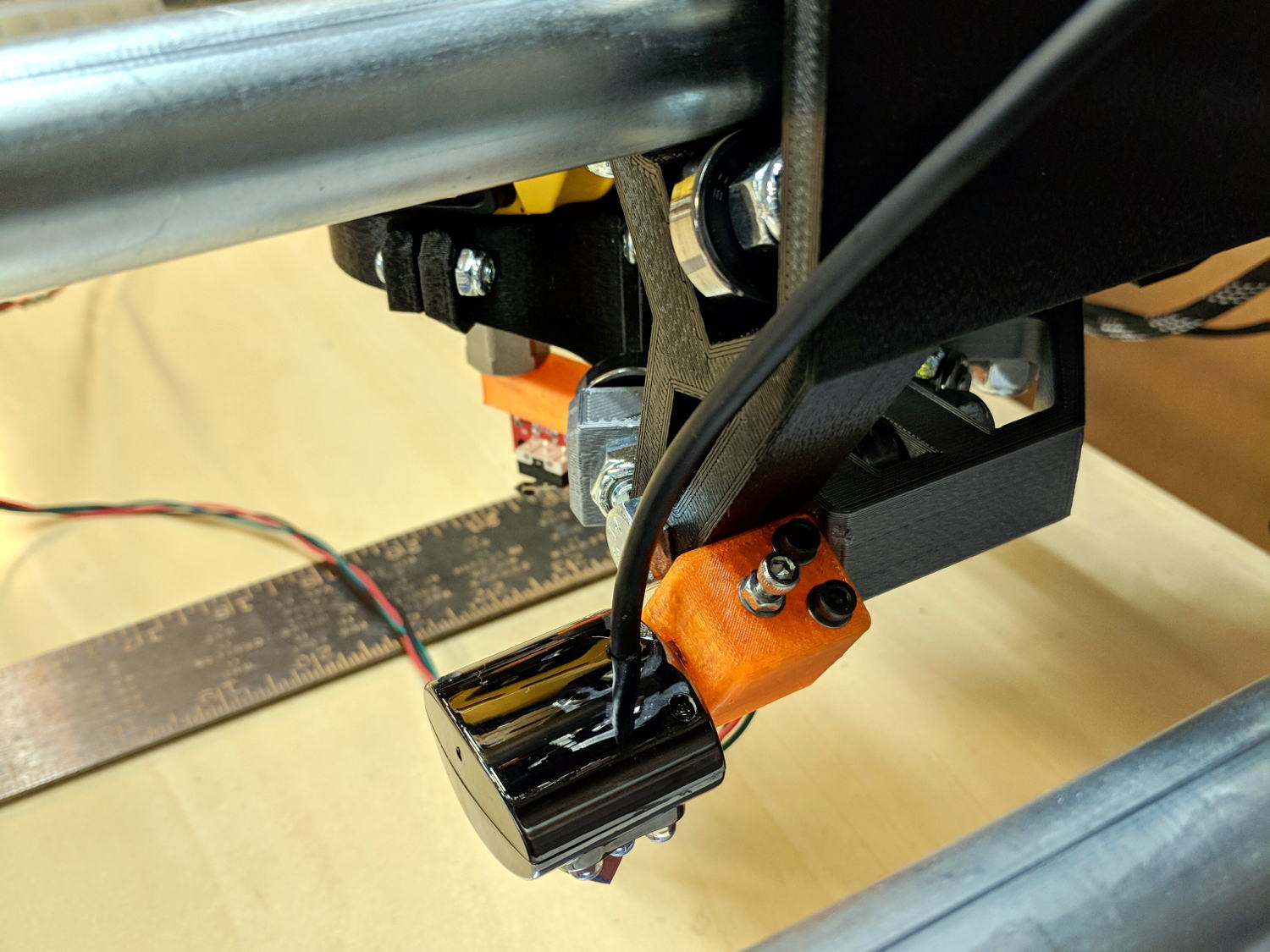
Unfortunately, it sat slightly too close to the gantry roller along the X-axis for comfort.
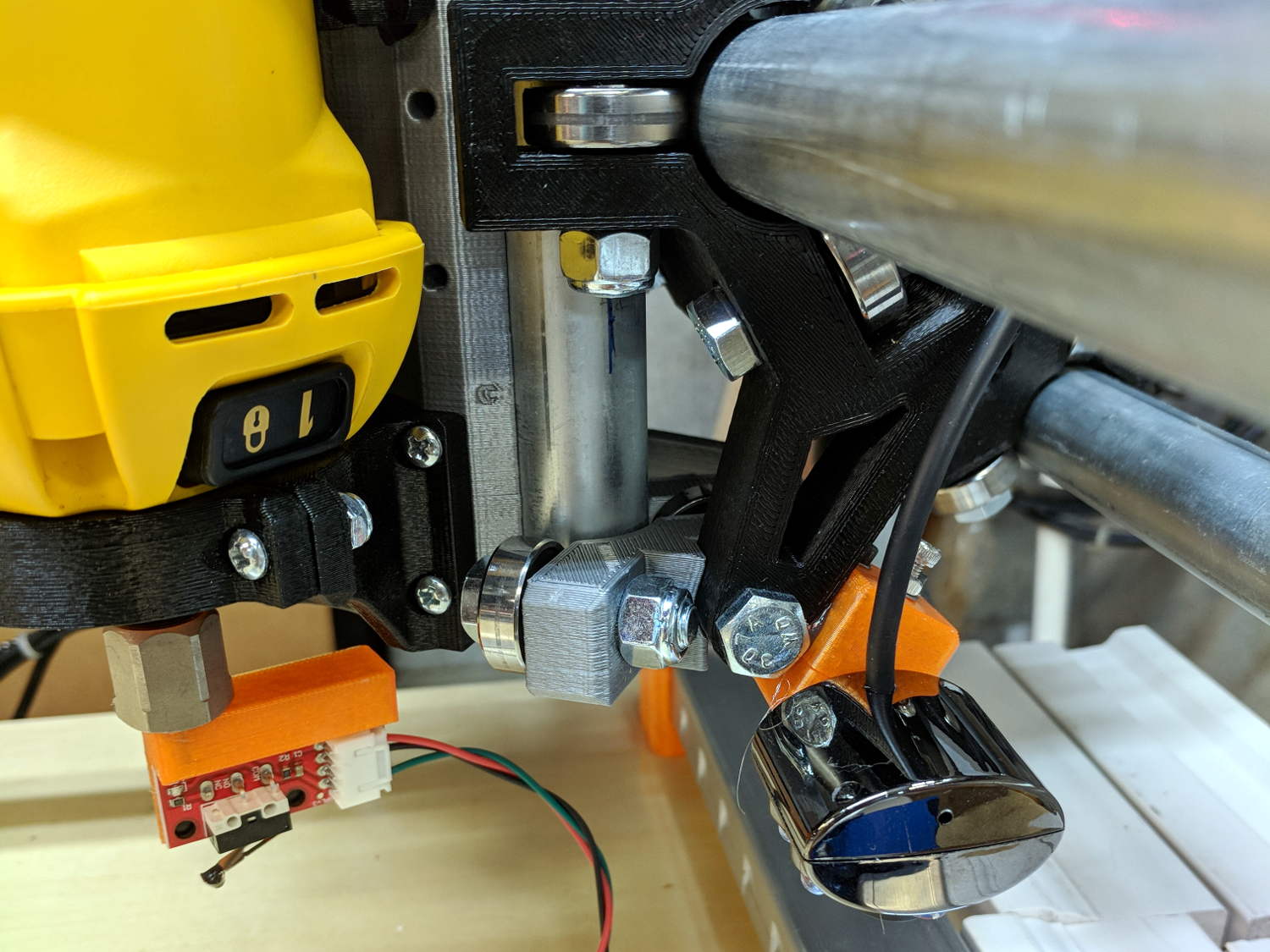
The effort required to pry the mount off its hot-melt glue bed showed it wasn’t ever going to shake loose, so I fired up the glue gun and stuck it to a better spot on the XY assembly:
MPCNC – relocated camera – front view
Seen from the side:
MPCNC – relocated camera – side view
Bonus: it’s now trivially easy to tweak the locking screw!
Realigning the camera and recalibrating its offset proceeded as before.
Although I knew the Sienna showed signs of a leaky head gasket, the exhaust system needed some attention, and a sporty used car recently put it in the shade, this still came as a surprise:
I’m trying to get a crew … together and live the demolition derby dream
By the time I arrived, the dashboard trim had vanished and the air bags were safely out:
I managed to pry the glass off using a Gasket Scraper and considerable muttering.
With all the exterior trim, lights, and mirrors gone, the Sienna was in fine race trim:
Sienna – Demo derby race trim
But, being no longer street-legal, it required trailering. For the record, not all huge pickup trucks have bulky guys with pot bellies behind the wheel:
The red dial scale has the Guide Numbers (aperture × feet) and the lower black dial scale gives the lens apertures. The manual doesn’t mention the black figures above the red Guide Numbers; they’re metric Guide Number (aperture × meters), which would have been obvious back in the day.
The tidy shell slides off when you release a latch in the back:
Zeiss Ikon Ikoblitz 4 – front – stowed
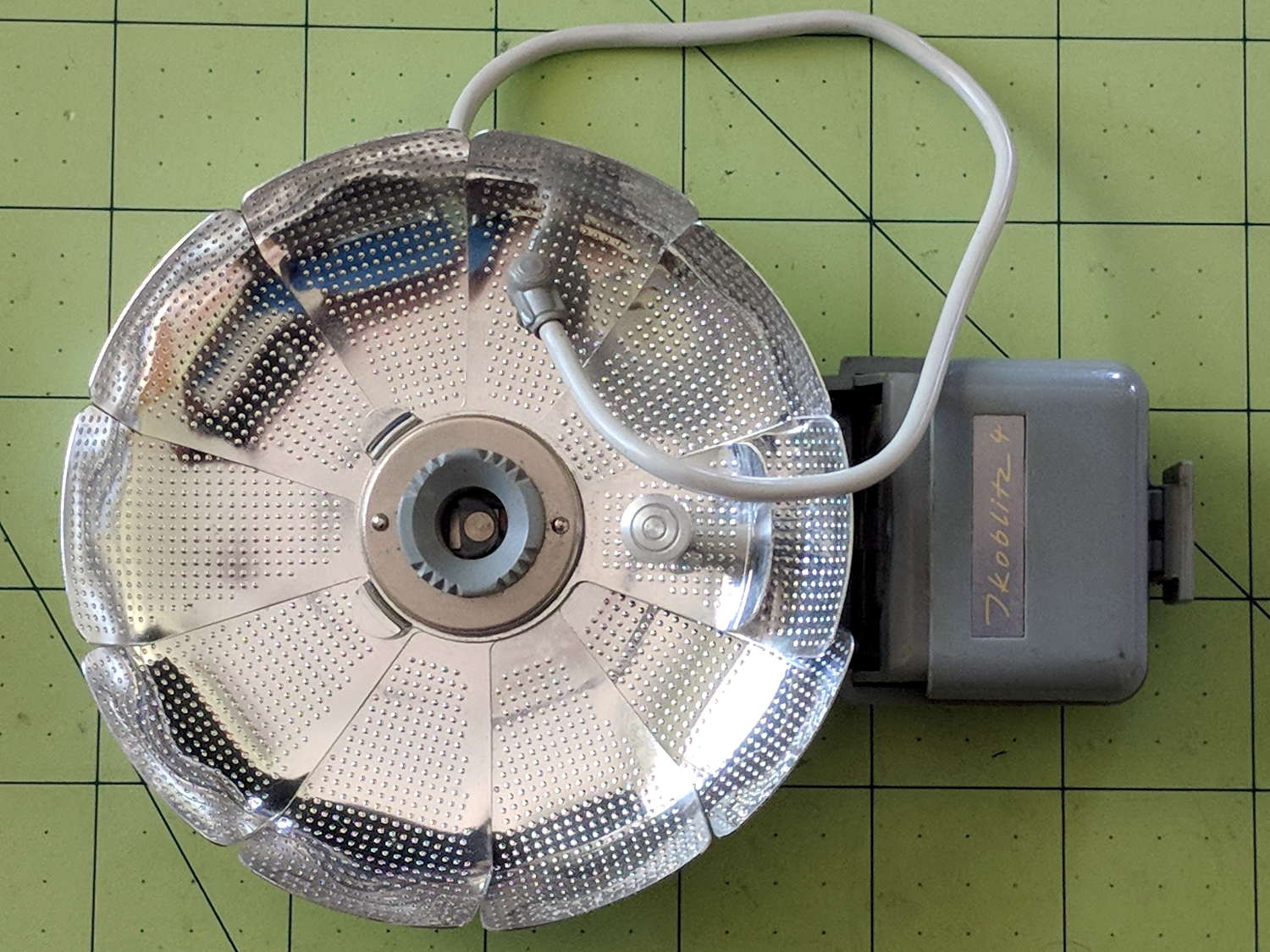
Then the reflector unfurls:
Zeiss Ikon Ikoblitz 4 – front unfurled
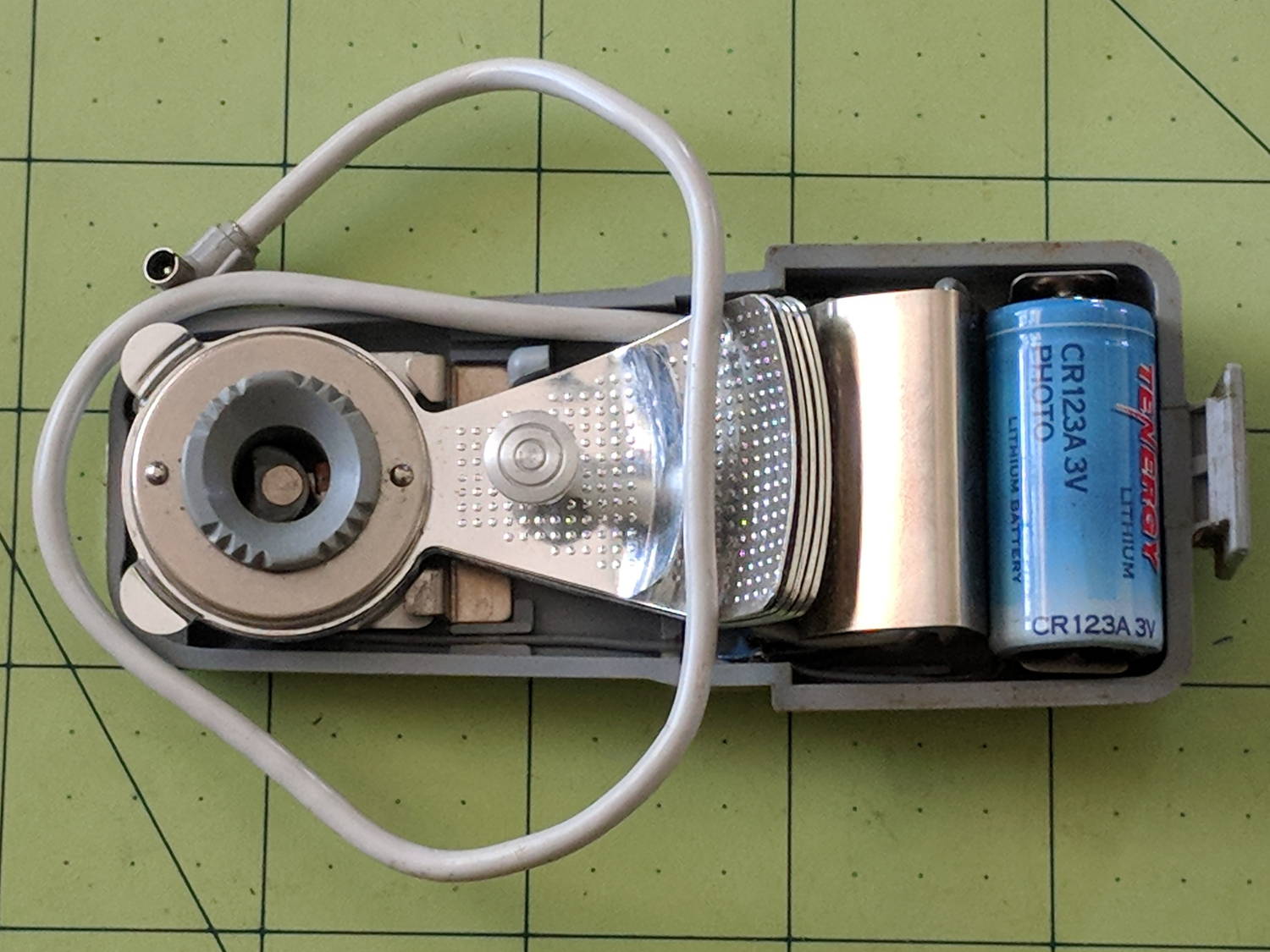
Mirabile dictu, the previous owner removed the 15 V “hearing aid” battery (Eveready 504, 60 mA·h in the 504A alkaline version) before storing the flash, leaving the contacts in pristine condition:
Zeiss Ikon Ikoblitz 4 – CR123A test fit
A 3 V CR123A primary lithium cell snaps perfectly into the battery holder, which I define as a Good Omen: a dab of circuitry could turn this into self-powered and highly attractive Art. This would be one of the very few applications well-suited for the coldest blue-white LEDs.
One could adapt an A23 12 V alkaline battery (33 mA·h) to the holder, at the cost of half the capacity.
The silver shield just to the left of the battery conceals a 250 μF (!) nonpolarized capacitor.
One could build a bayonet-base (GE #5 / Press 25) adapter or poke a doodad with a 9 mm cylindrical base into the M2 bulb adapter (unrelated to my M2 printer):
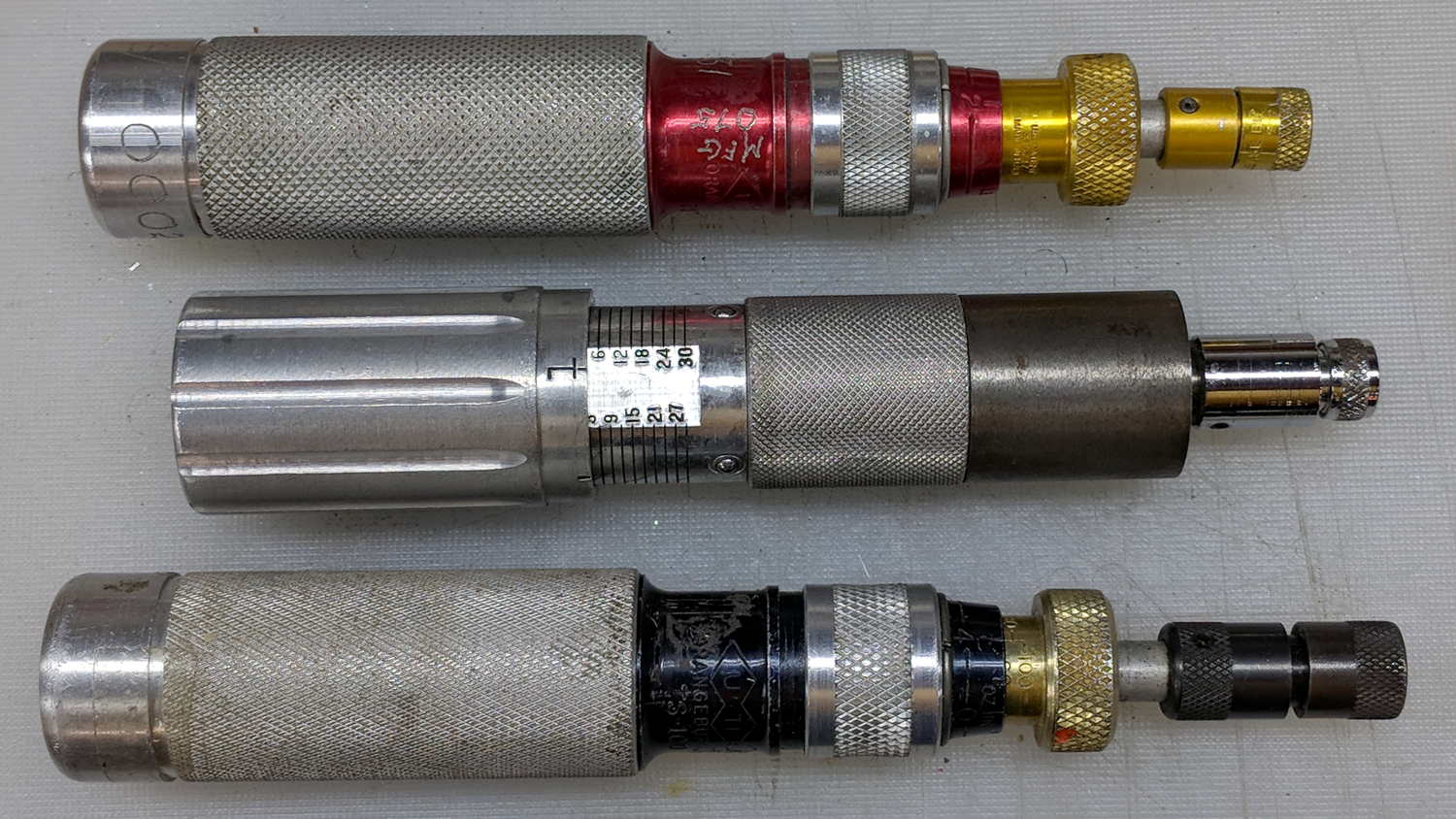
A stack of loot boxesprize crates treasure chests on the Squidwrench Operating Table yielded a big box of torque drivers, two of which now grace my collection:
Torque Drivers
As with clocks: when you have more than one torque wrench, you don’t know what torque it is. The black driver had a solder blob in its adjustment socket, obviously intended to prevent unqualified people (that would be me) from bungling a production-critical calibration.
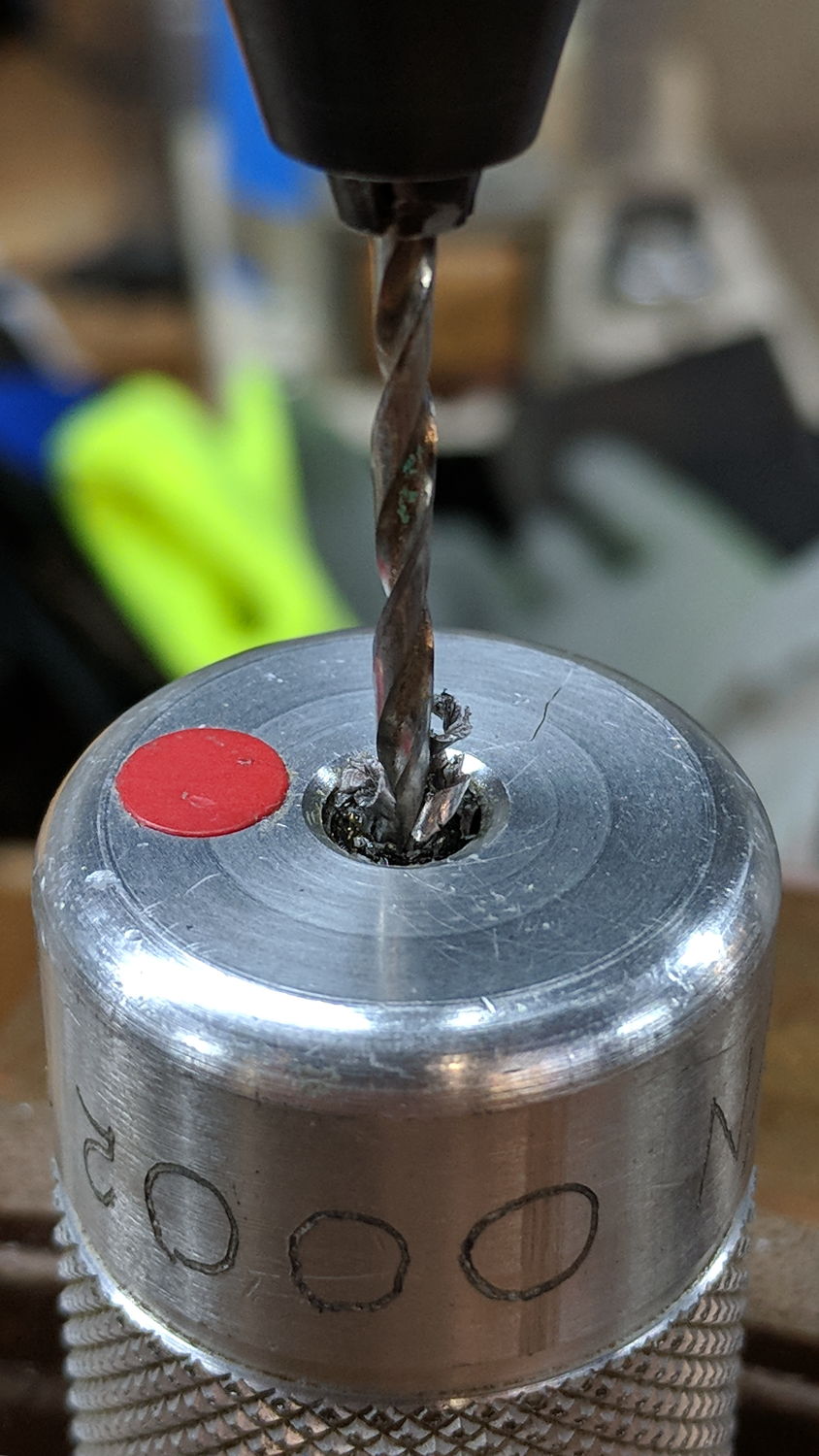
A suitable drill in a pin vise put a hole down the middle of the blob:
Torque Driver – lead calibration seal
Turning a tap into the hole produced enough traction to yank the solder shell straight out of the hex. Whew!
The red driver goes to 30 lb·in, the silver to 30 lb·in, and the black to 100 oz·in. The red and black now agree to within maybe 4 oz·in, which I think is Good Enough, and both within 4 lb·ft of my Harbor Freight 200 lb·ft clicky wrench, which probably doesn’t mean much at the low end of the wrench’s scale.
The silver driver refuses to agree with anything, which suggests somebody else monkeyed with its calibration before I laid hands on it.