Ed Nisley's Blog: Shop notes, electronics, firmware, machinery, 3D printing, laser cuttery, and curiosities. Contents: 100% human thinking, 0% AI slop.
This just in (clicky for more dots, but not clearer dots):
Spam image – xxx
Yes, the attachment was named xxx.jpg, presumably so I wouldn’t suspect it of containing anything untoward.
The name-dropping definitely adds verisimilitude: not just Microsoft (or Micro Soft) Windows and Google, but Yahoo, too. Be still, my heart!
It’s unclear how I would contact their “fiduciary agent in LIMA PERU” by dialing a 909 area code in California or sending an email to, um, eaaj@europe.com, but, hey, why not? Perhaps another version of me in a parallel universe used the Peruvian Internet?
This must be one of those scams where, if you’re bright enough to notice the problems, they won’t need to waste any time on you.
You’re welcome to my identification numbers. When you get the check, slip me maybe 100 large, preferably under the table, and we’ll call it square.
The outer doorknob on the kitchen pantry became very loose and sloppy, with the screw holding the inner knob on the shaft remaining snug. Obviously, something else was wrong inside the door.
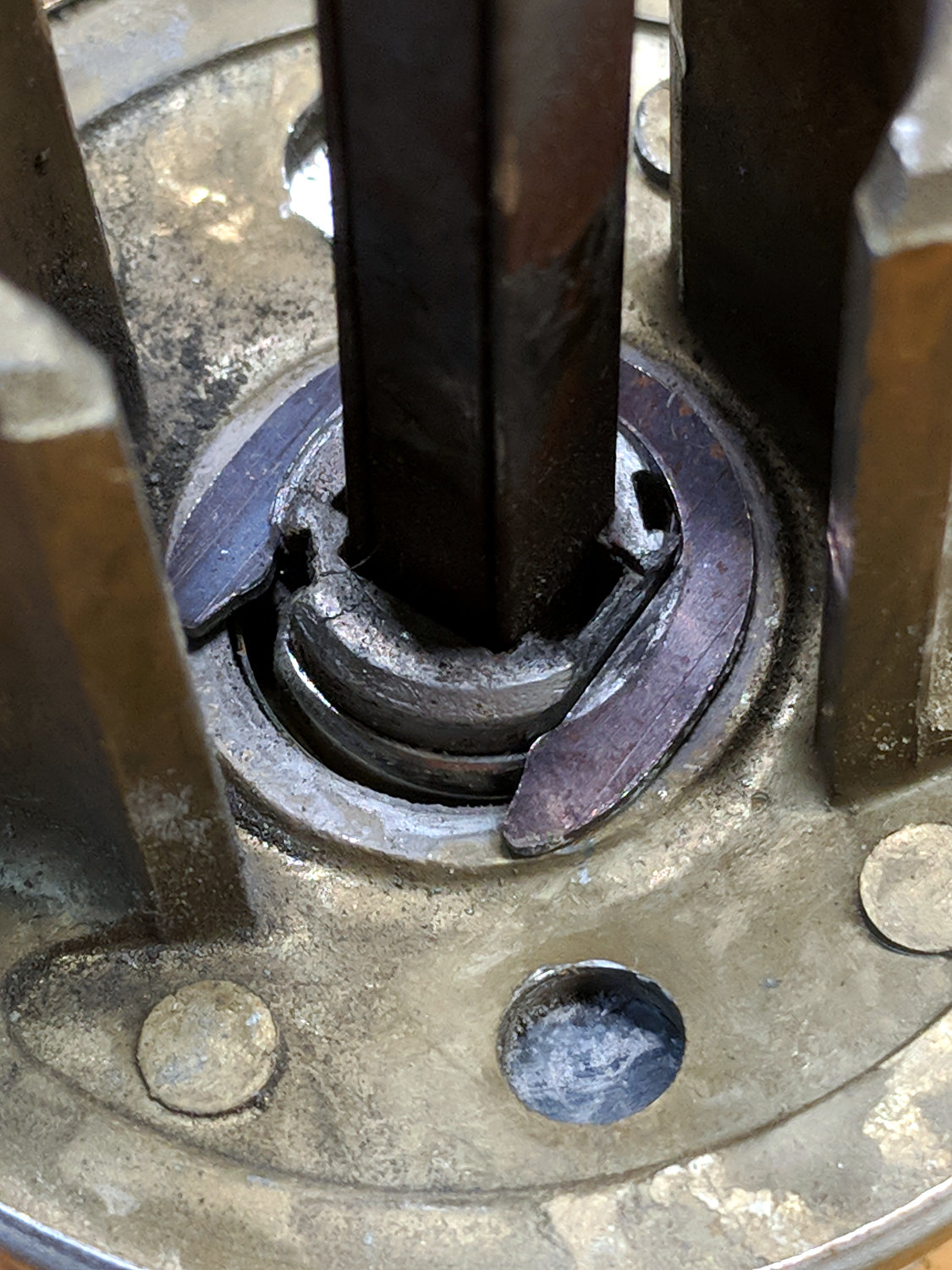
A spring clip should retain the outer knob in the escutcheon:
Doorknob – worn retaining flange – detail
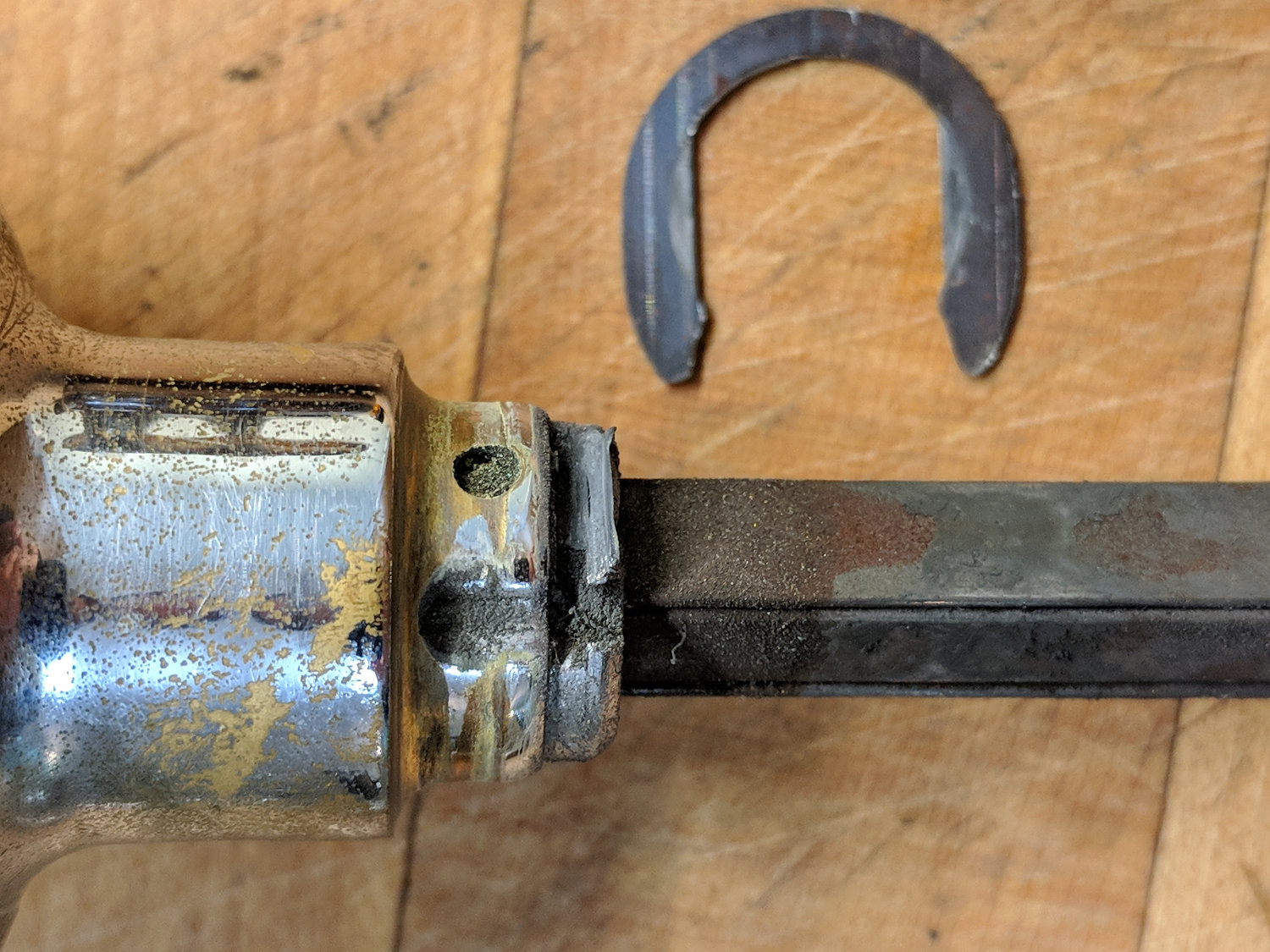
The flange holding the clip has worn away, letting the clip fall loose. A side view shows the problem:
Doorknob shaft – worn retaining flange
Yes, the knob’s chrome plating is in sorry shape after six decades of wear. I’d rather keep using a solid knob, instead of force-fitting some contemporary half-assed / cost-reduced junk into the door.
Reference: beausage. I say it “beau-sage”, the beauty that comes from usage.
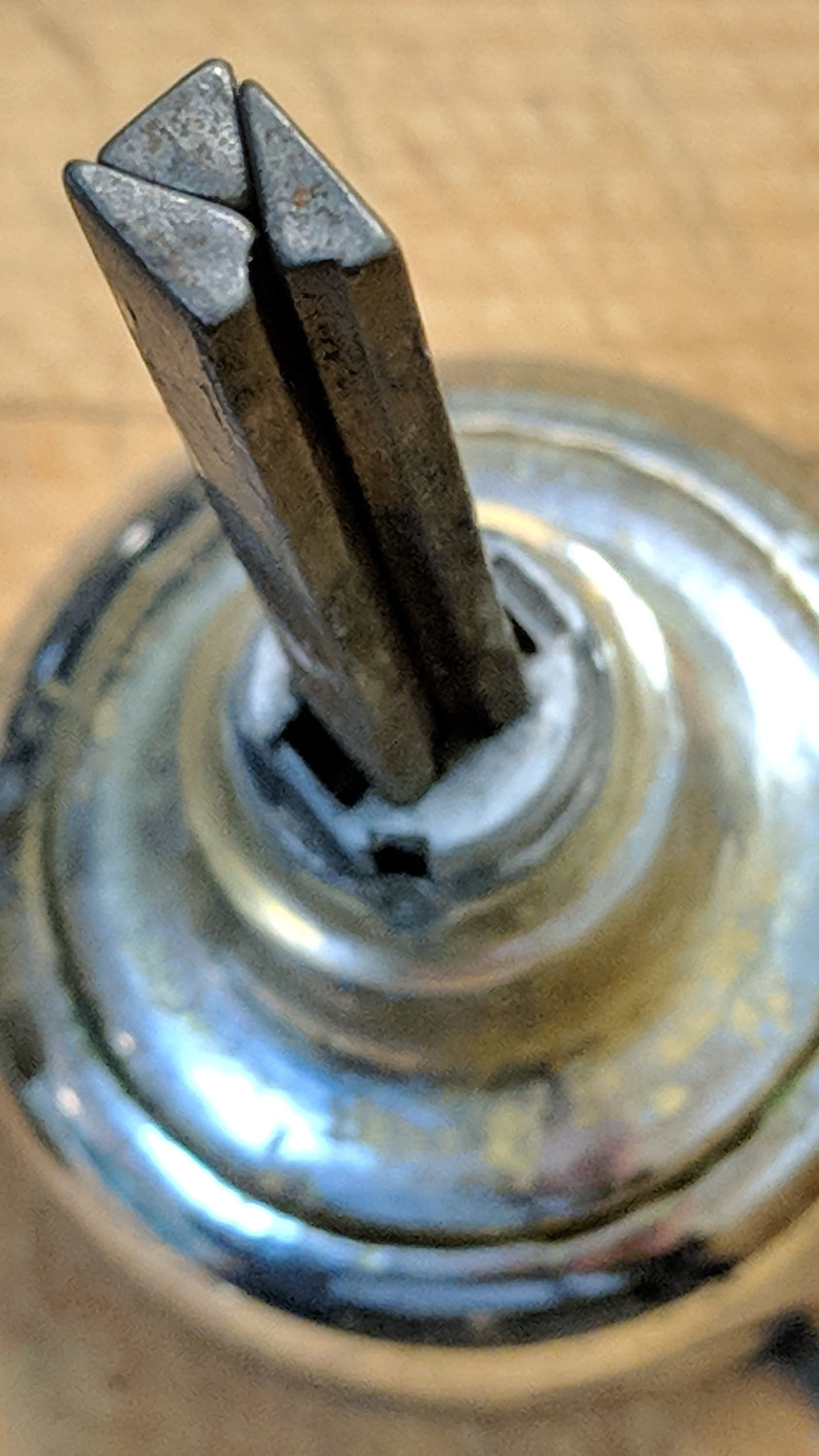
The shaft consists of three triangular rods, with the setscrew on the inner knob pressing against the smaller rod to lock all three of them in place and eliminate all rattle & play:
Doorknob shaft – detail
A tapered pin (!) locks the three shaft rods into the outer knob:
Doorknob shaft – tapered pin
Some doodling, most of which turned out to be irrelevant, captured the essential dimensions and suggested how to replace the flange:
Doorknob – dimension doodles
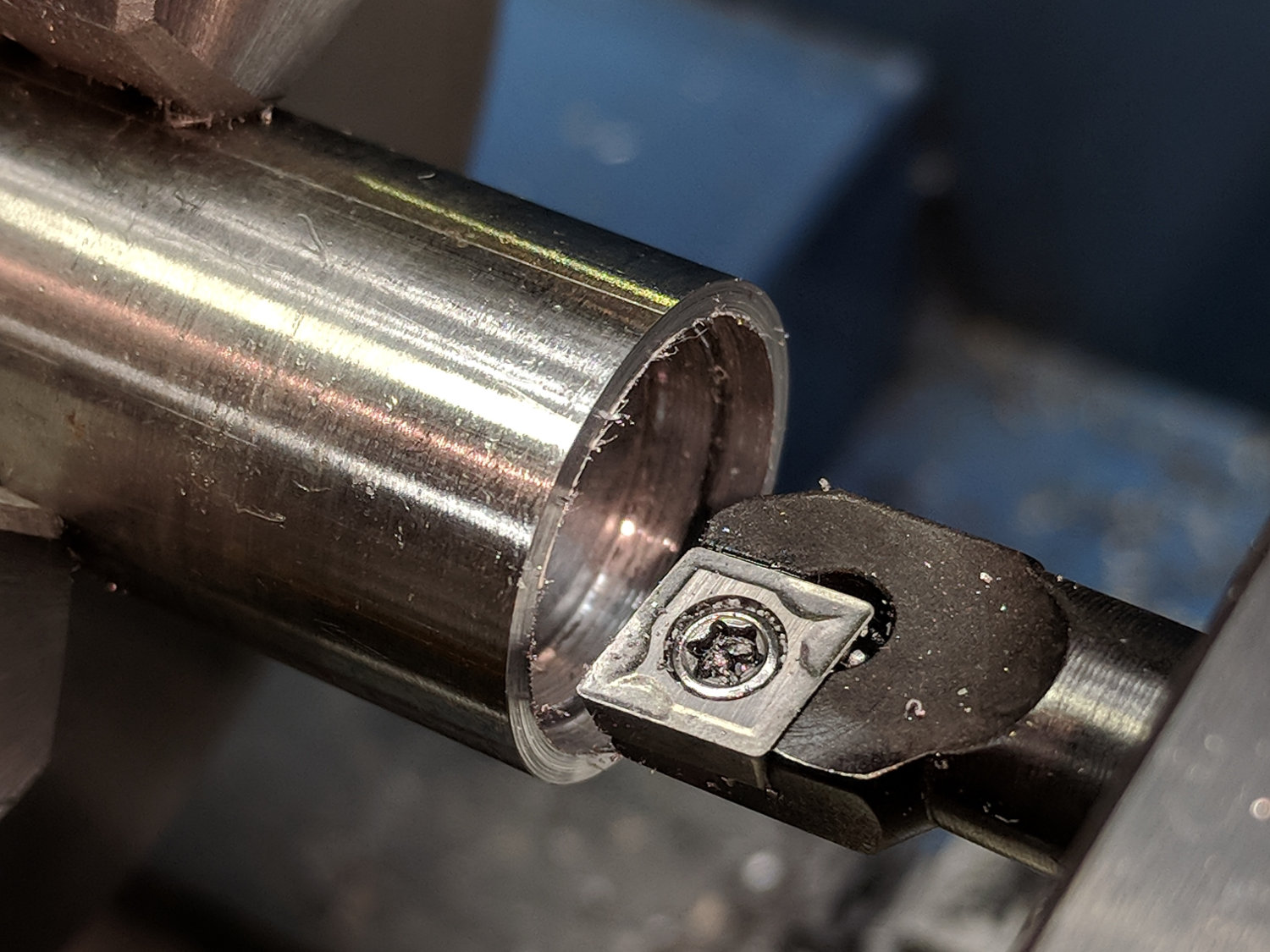
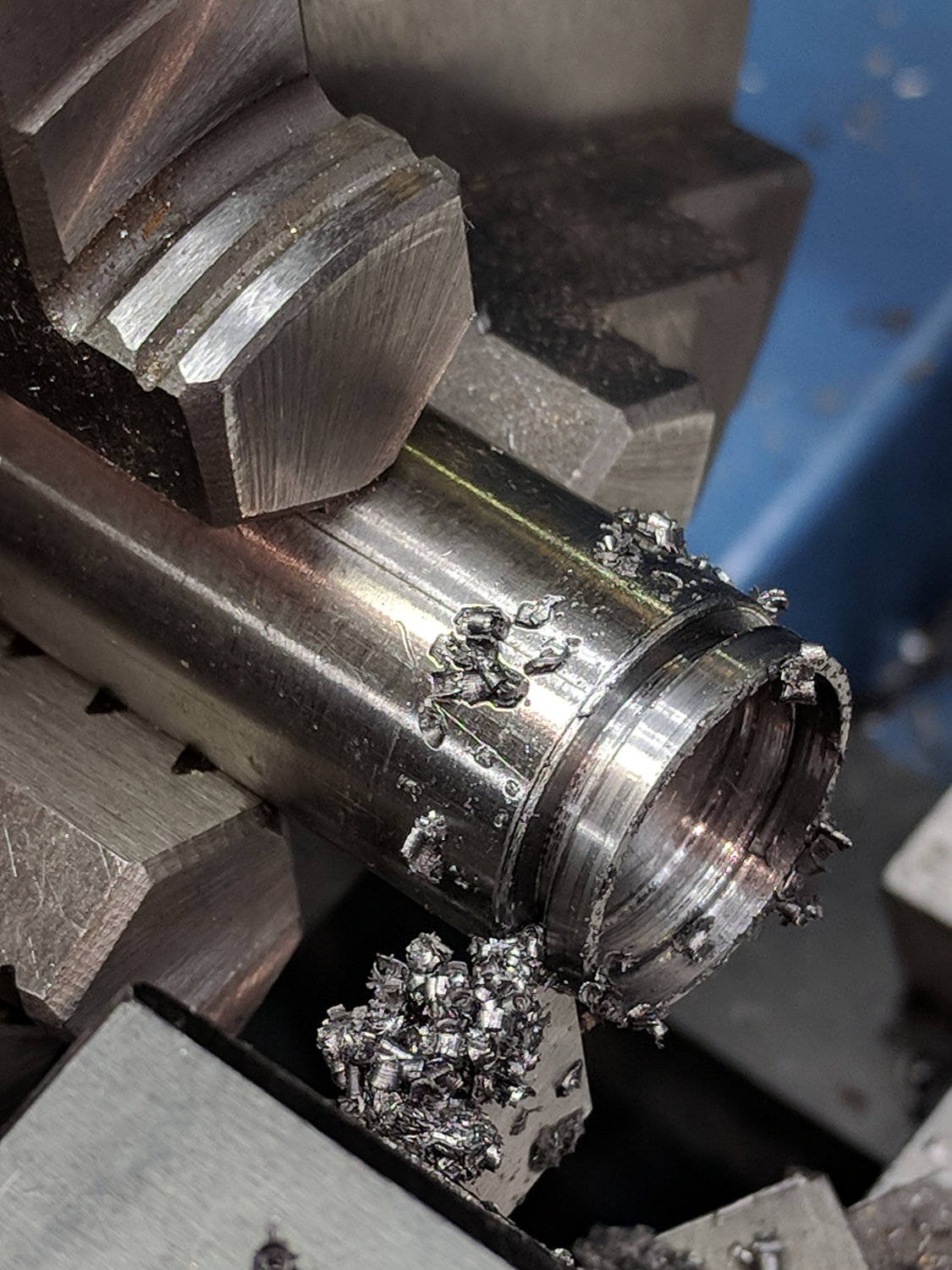
The stock is 11/16 inch O-1 oil-hardening rod, forever to remain unhardened:
Doorknob – retainer ring boring
I drilled a few holes to get up to 1/2 inch, the largest drill bit I have and just barely clearing the the boring bar.
With the hole bored out to fit the end of the knob, cut it off:
Doorknob – retainer ring cutoff
Trial-fit the ring on the knob with the spring clip:
Doorknob – retainer trial fit
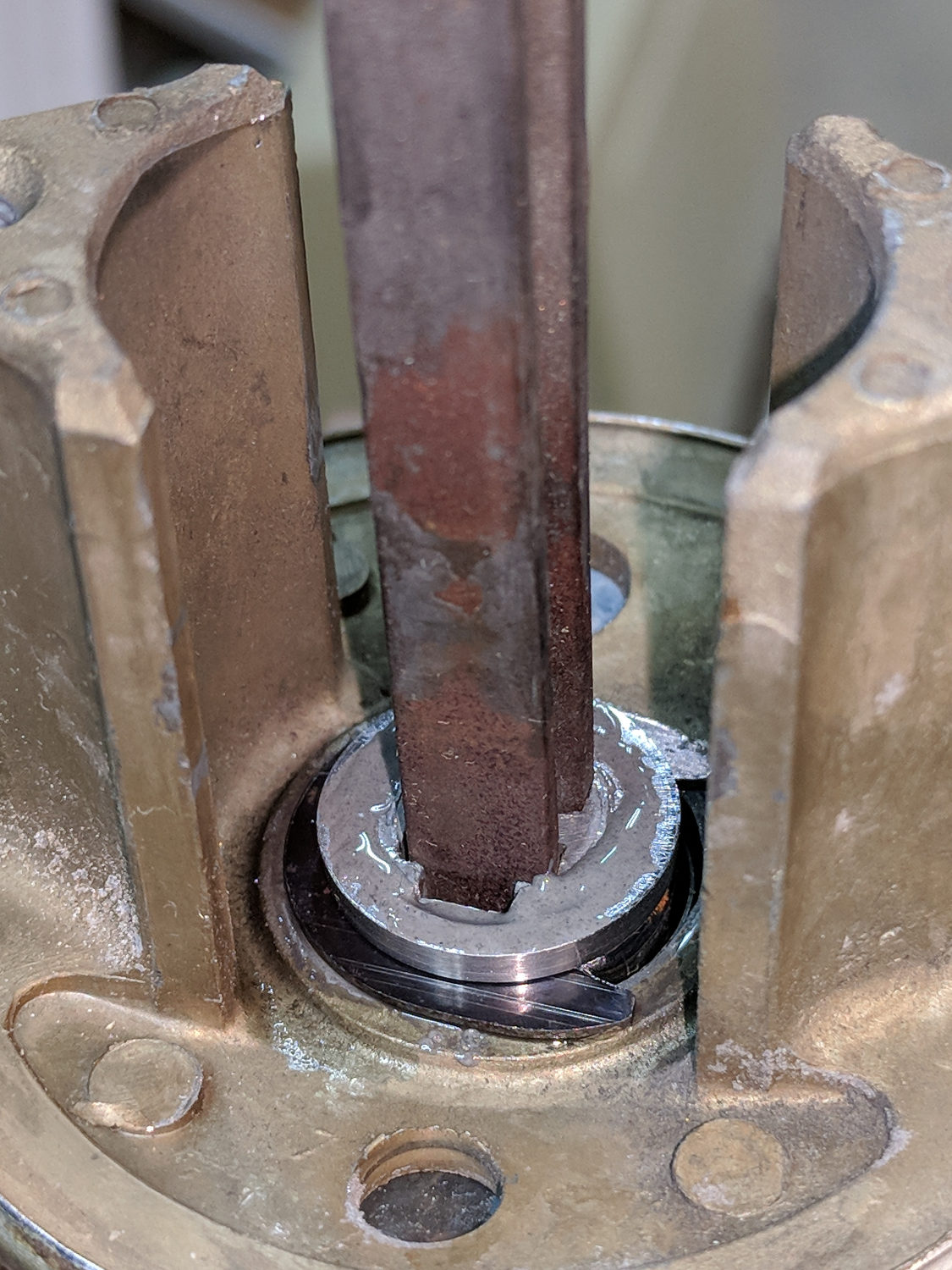
Reinstall the shaft, tap in the retaining pin, then epoxy the ring in place with the knob supported from below to eliminate having to fiddle with the spring clip:
Doorknob – retainer ring epoxy
Add a few dots of oil here & there, reinstall the parts in reverse order, and the knob works perfectly again. Still looks heavily used, of course, but that’s OK.
They definitely don’t make ’em like that any more …
Backstory: we get Kirkland almond butter from Amazon, because it has consistently good quality at a reasonable price. Kirkland being the Costco house brand, we’re obviously buying it from someone arbitraging the Costco price. The nearest Costco is over an hour away, so spending $60 for a membership (*) just to get almond butter doesn’t make sense.
However, I’ve discovered Amazon’s “buy it again” prompting generally doesn’t offer the best deal, so I start each purchase cycle with a general search. The current results proved interesting (clicky for more dots):
Amazon – unit pricing FAIL
Let’s go through this slowly.
The first result shows the “unit pricing” isn’t done automatically, because it’s completely wrong:
Amazon – unit pricing puzzle
I can figure half of $27.52 isn’t $9.17, but dividing $27.52 by three really is. Dividing by two, the actual size, says the correct “unit price” is $13.76 each. Oddly, searching a day later showed the price went up to $28.69, with the same incorrect divide-by-three unit pricing error.
The “Amazon’s Choice” result simply means a bunch of people bought from that listing, not that Amazon has an actual involvement apart from raking in their take. There’s no unit pricing, but each jar works out to $13.59.
The last result confirms Amazon’s unit pricing bogosity by (correctly!) dividing $26.23 by two, but then claiming the unit price is “per ounce”.
Weirdly, everybody selling the two-pack prices it that way:
Amazon – unit pricing consistent FAIL
We’re surely not looking at half a dozen heads of the same hydra, so this bogosity derives from the commingled UPC (ASIN, whatever) warehouse stock technique giving Amazon a way to avoid responsibility for counterfeits. Somebody (presumably at Amazon) selected the calculation to produce the unit price, but fat-fingered “per ounce” rather than “per each”, and now vendors just bid for that UPC without sweating the details.
You’d (well, I’d) think a bit of Amazon’s much-vaunted machine learning would go a long way toward sorting this out, but it doesn’t.
Word: any sufficiently advanced stupidity is indistinguishable from malice.
(*) Right now, it’s $8.79 direct from Costco online and their 5% non-member surcharge seems survivable.
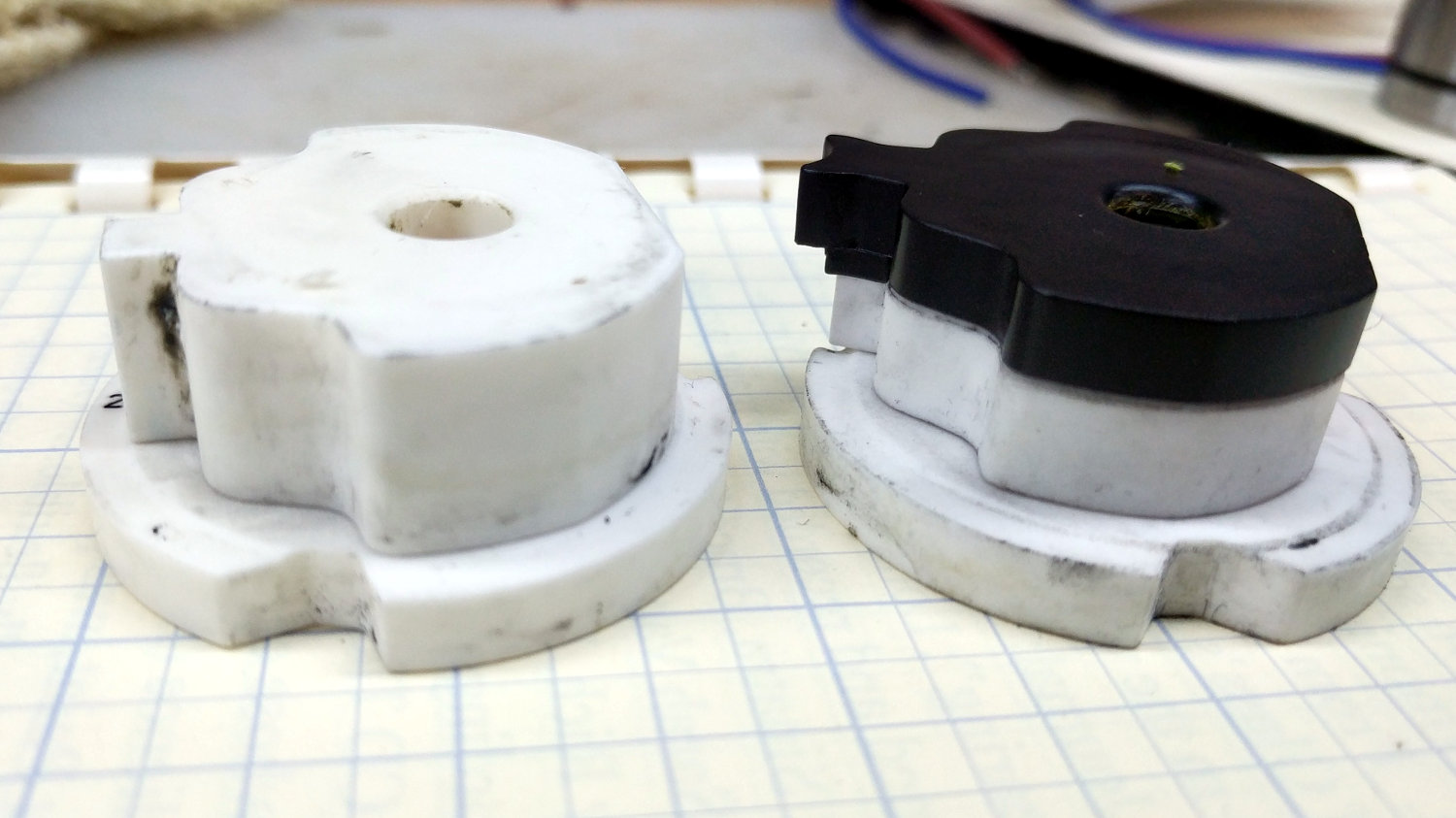
The ceramic valve core from our kitchen faucet certainly qualifies for a spot on the bottom flange of the I-beam across our basement serving as a display case / collection area for shop curiosities, mementos, and the like. I am, if nothing else, a creature of fixed habits, because the spot where the core belonged already had one:
American Standard Ceramic Faucet Valve Cores – old vs new
The core on the left dates back to the 2016 replacement, so they’ve apparently decided plastic will work fine for the handle socket.
Having the ceramic core fail after two years suggests the manufacturing process needs attention, though. I can still wring the slabs together, though, and they’d need a drop of oil to serve as bearing surfaces.
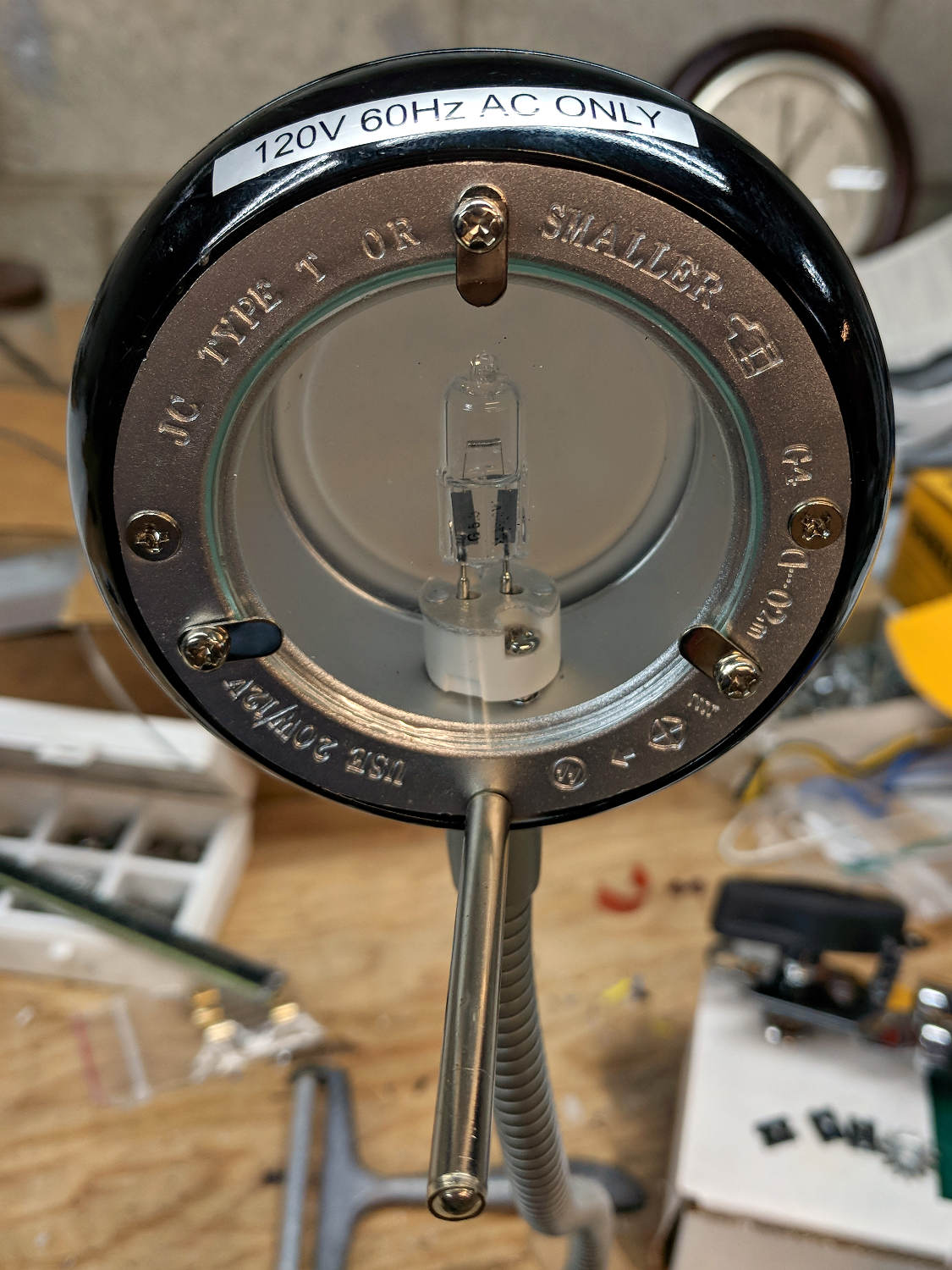
A discarded 20 W halogen desk lamp arrived in the Basement Laboratory for rebuilding:
Halogen Desk Lamp – head layout
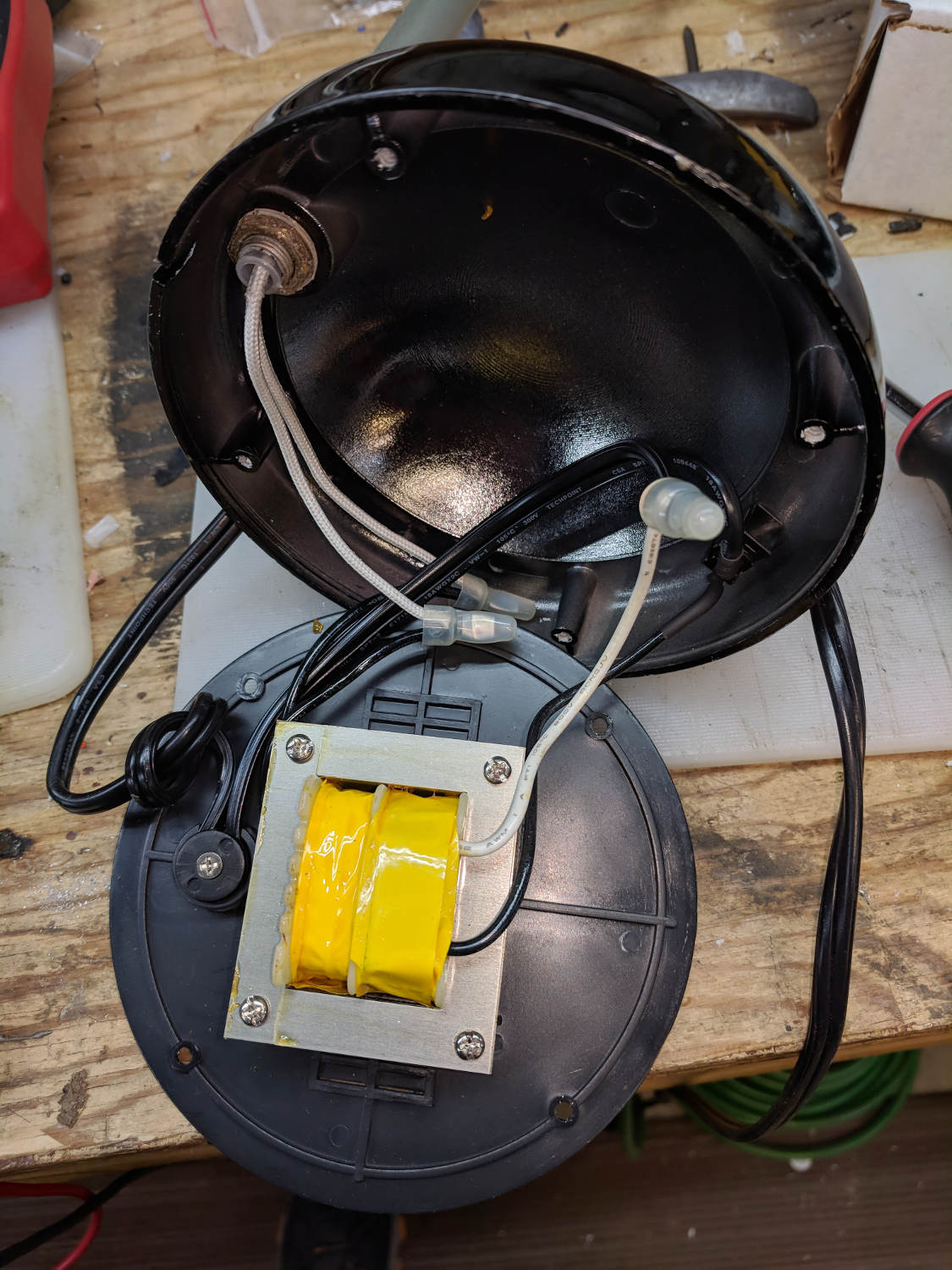
An incandescent bulb doesn’t care about AC or DC, so a simple transformer also serves as a counterweight in the base:
Halogen Desk Lamp – 12 V 20 W transformer
I might replace it with some steel sheets, although I have no immediate need for a bare transformer.
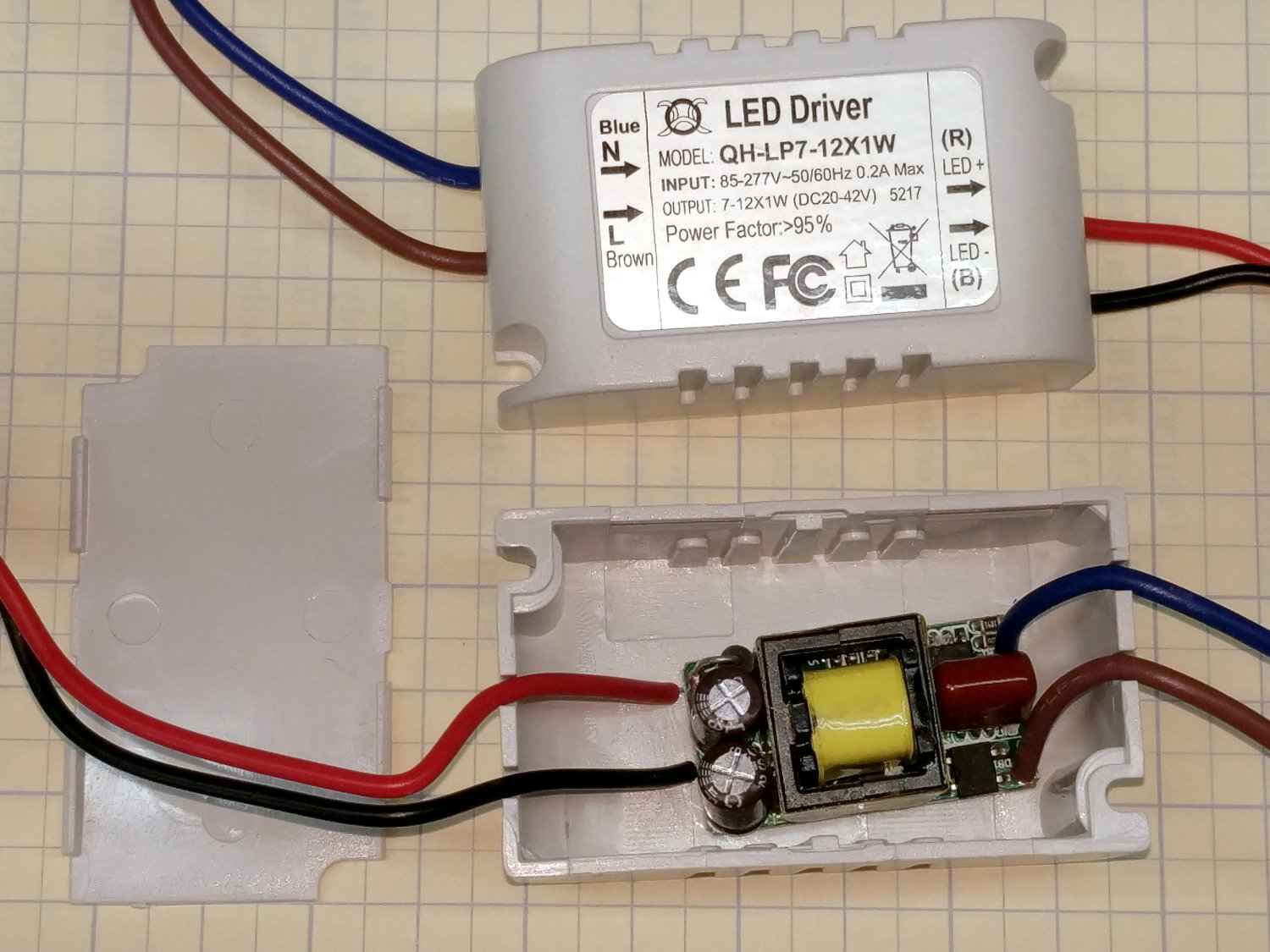
A case adds 19¢ to each 10 W 300 mA LED driver:
Halogen Desk Lamp – 10 W LED driver innards
Nice strain relief on those line-voltage wires, eh?
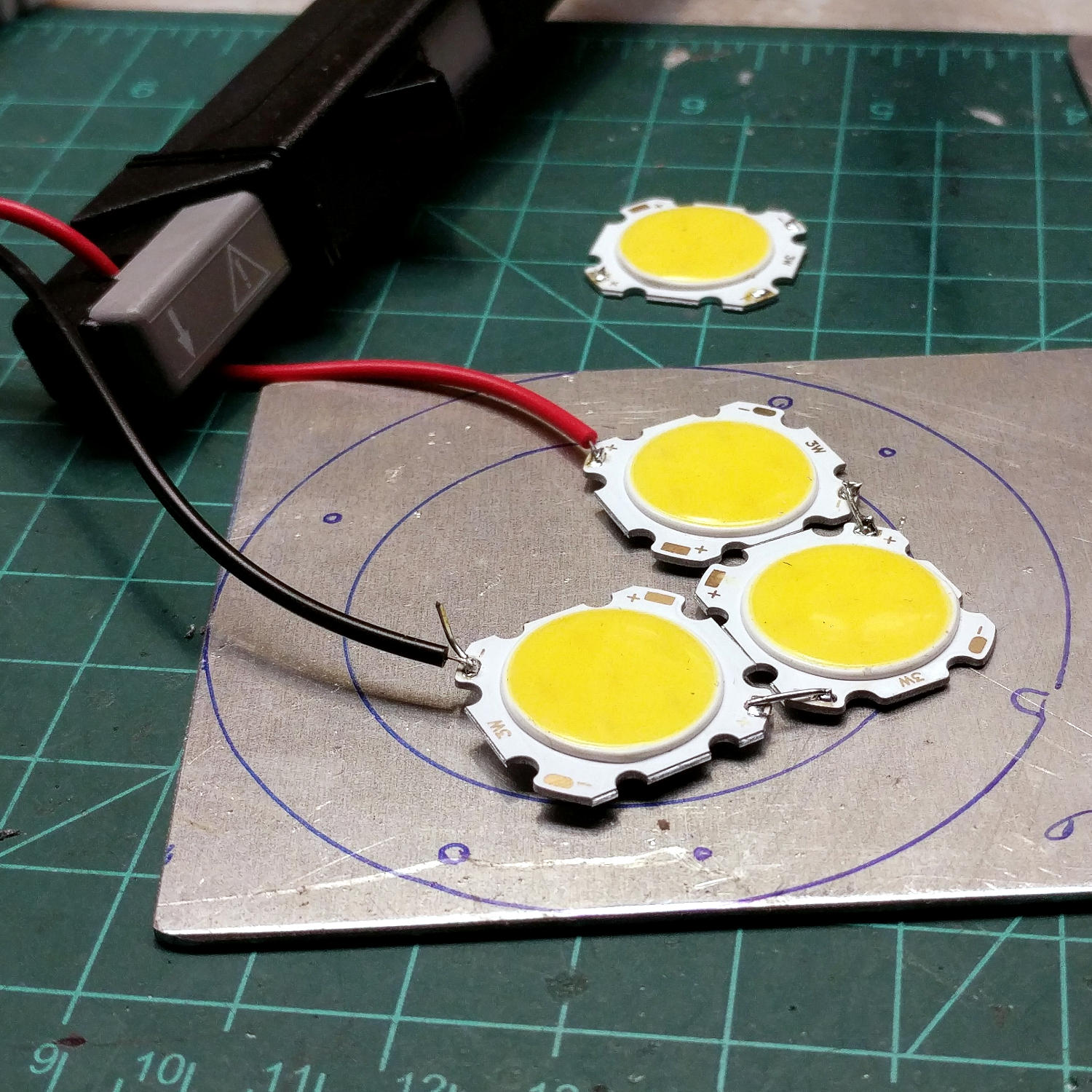
A simple test setup with three 3 W COB LED panels:
Halogen Desk Lamp – 3x3W COB LED test
I clamped them to the aluminum sheet for heatsinking before I lit ’em up. The circles traced directly from the lamp’s hardware give some idea of the eventual layout.
I have more-intense LEDs, but spreading the light over a larger area should work better for the intended purpose. These are pleasant warm-white LEDs, too.
The fourth LED raised the forward voltage beyond the supply’s 42 V maximum, causing the supply to blink on and off.
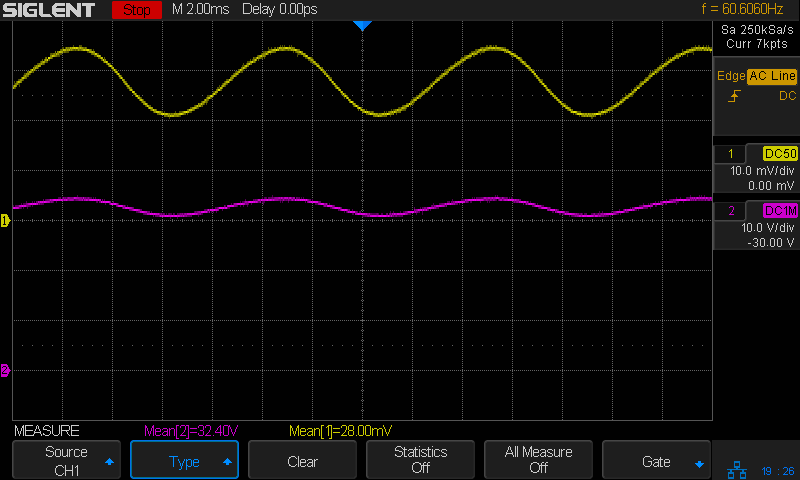
Much to my surprise, the driver has plenty of 60 Hz ripple:
COB LED 3x3W – 10 W driver – 100 mA-div 10 V-div
The top trace averages 280 mA and the bottom trace 32 V, so the LEDs run at 9 W = 3 W apiece, as they should.
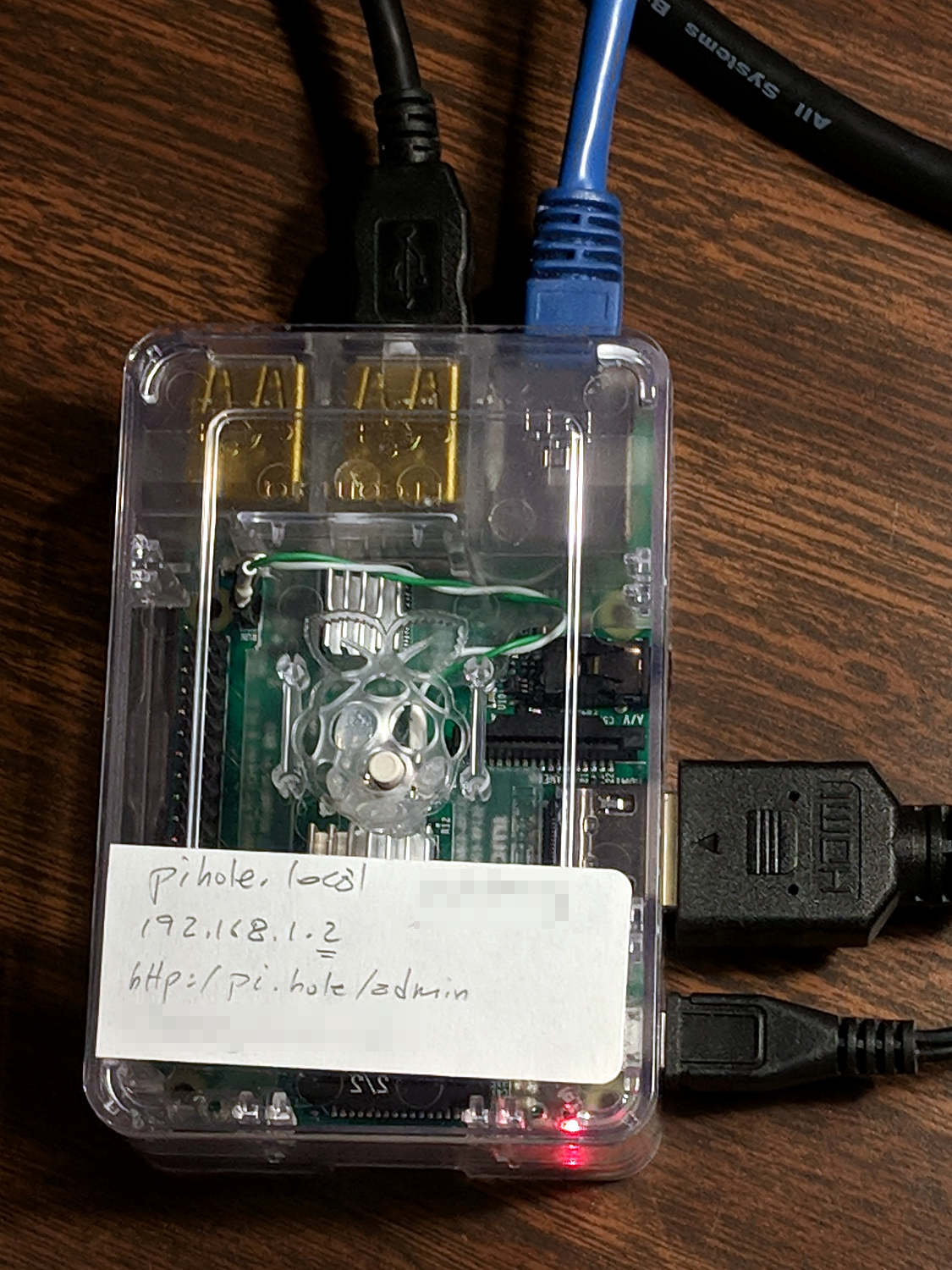
Raspbian now arrives with ssh disabled, so the first boot requires a keyboard and display:
Pi-Hole first boot wiring
Then do some configuration required to get a fresh Raspberry Pi ready for remote access:
sudo apt-get update
sudo apt-get upgrade
sudo apt-get install screen iotop
sudo raspi-config   # enable ssh
ssh-keygen -t rsa
cd ~/.ssh
cp -a /my/public/key authorized_keys
chmod go-rwx authorized_keys
cd
sudo nano /etc/ssh/sshd_config  # unusual port, no root login, etc
sudo service ssh restart
As the good folks at Pi-Hole say, “Piping to bash is controversial, as it prevents you from reading code that is about to run on your system.” I took a look, it’s beyond my comprehension, so just get it done:
curl -sSL https://install.pi-hole.net | bash
Configure Pi-Hole:
Static IP: 192.168.1.2/24
DNS using, say, Cloudflare’s 1.1.1.1
DHCP turned off, which is the default
Configure the router’s DHCP to hand out the Pi-Hole’s IP, with, say, 9.9.9.9 as a backup.
Boot a few random PCs and whatnot to verify it works as expected, which it did the second time around, thus this particular post.
Controversies over the ethics of ad and tracker blocking will go nowhere here, as I’ve cleaned out enough Windows machines to have absolutely no sympathy with the unholy spawn of adtech (not just the company, which I didn’t know existed until just now, but, yeah, them too).








 The Smell of Molten Projects in the Morning