The Smell of Molten Projects in the Morning

Ed Nisley's Blog: Shop notes, electronics, firmware, machinery, 3D printing, laser cuttery, and curiosities. Contents: 100% human thinking, 0% AI slop.

Category: Home Ec

Things around the home & hearth

  • Simpleminded Photographic Light Box

    Simpleminded Photographic Light Box

    The general idea of a light box is (wait for it) a uniform background in a box full of bright light:

    Light Box - overview
    Light Box – overview

    Obviously, this is a low-budget light box, but it makes perfect sense if you already have an essentially unlimited supply of moving boxes, 11×17 inch plotter paper, and a couple of photo / video lights lying around.

    A two-layer cardboard ring glued to the top keeps the light from sliding off the box and stiffens the gaping hole letting the light shine through.

    You’d normally use a fabric background to get rid of those ugly gaps around the edges and a larger box would be better, so this is along the lines of a proof-of-concept.

    From the camera’s viewpoint, it looks better than my crusty desktop cutting mat:

    Light Box - gears overview
    Light Box – gears overview

    Those gears would not look out of place in Bowman’s bedroom in 2001: A Space Odyssey.

    In this day and age, you’d normally use a phone camera:

    Light Box - gears overview - DOF
    Light Box – gears overview – DOF

    The lens on my Pixel 6a has a fixed focal length (around 4.4 mm = 27 mm equivalent) and a fixed f/1.8 (-ish) aperture, producing a razor-thin depth of field at the rear of the front gears. Note the fuzzy gears in the background, all of three inches away, and the slightly fuzzy front edge of the front gears. The camera’s digital zoom doesn’t help matters in the least, despite the AI-powered interpolation.

    Keeping things close together helps, although the far end of the wipe towers and the rear of the gears lose detail:

    Light Box - gears stacked
    Light Box – gears stacked

    Looking from above also helps a little, but a top viewing port would reduce the skewed perspective:

    Light Box - gears detail - DOF
    Light Box – gears detail – DOF

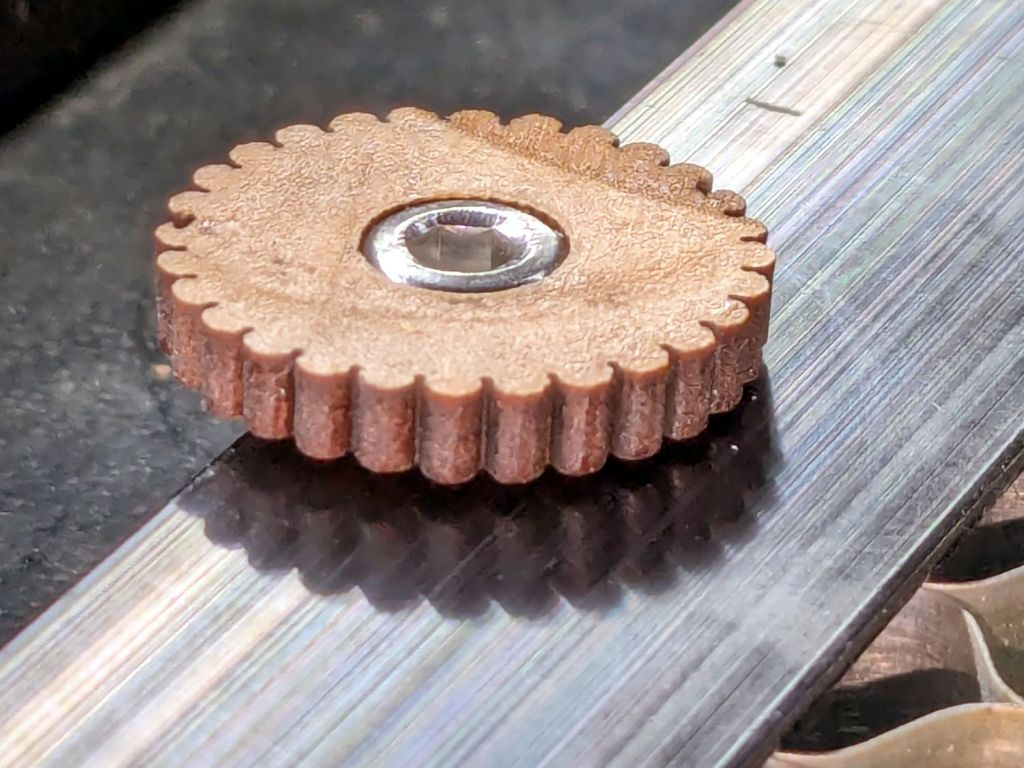
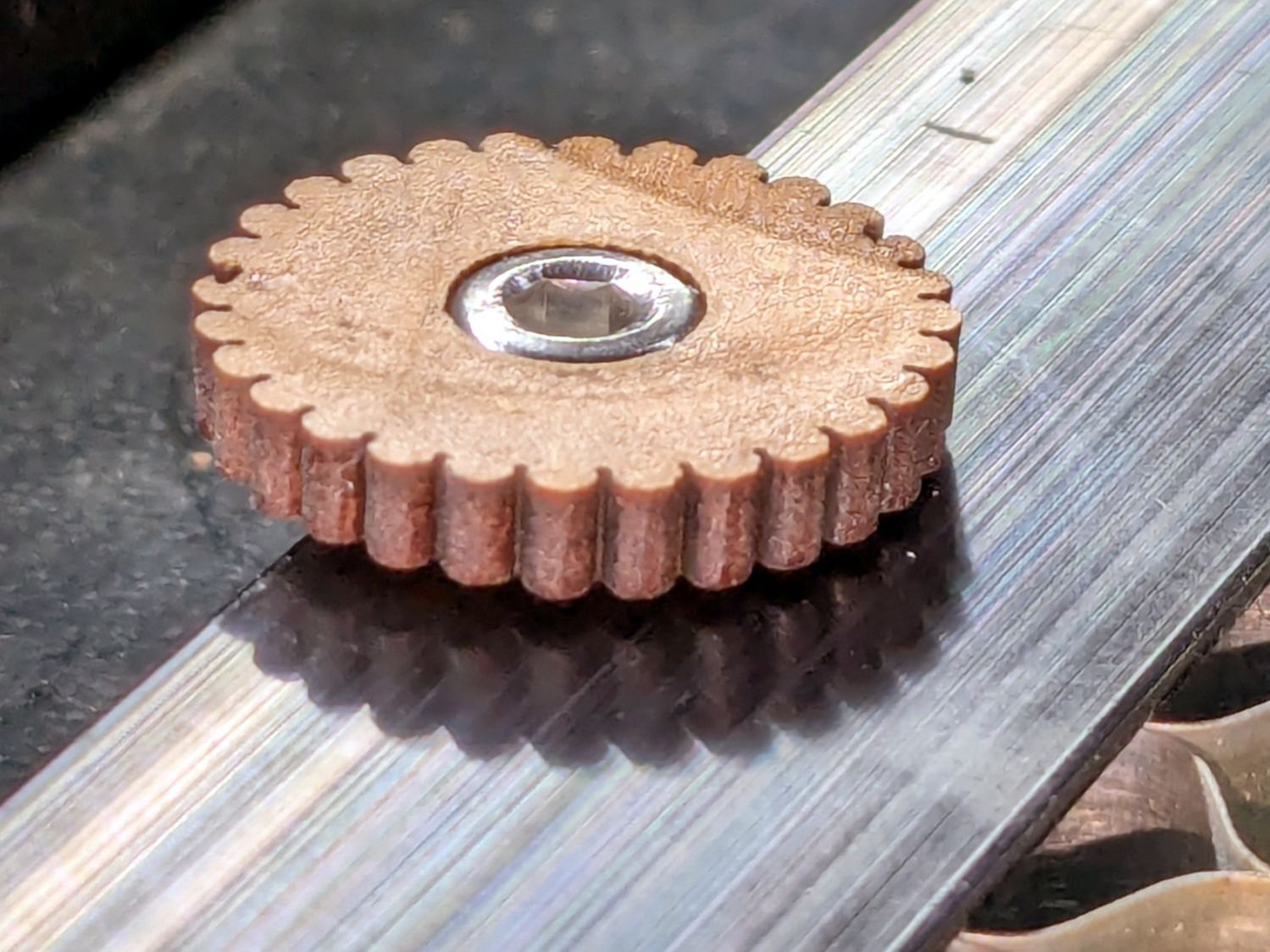
    Shallow DOF keeps your attention on the foreground, which is why real photographers use it for portraits:

    Light Box - gears standing - DOF
    Light Box – gears standing – DOF

    The camera, an ancient Sony DSC-H5 with a zoom lens going down to f/8, still does nice work through a 2× macro adapter lens:

    Light Box - gear detail - top light
    Light Box – gear detail – top light

    The DOF is still narrow, but at least the entire front gear is in focus.

    Adding a front light picks out the knurling:

    Light Box - gears detail - front light
    Light Box – gears detail – front light

    The results definitely look better than before, but it’ll take a bit of getting used to traipsing to the Basement Laboratory for every photo …

  • Husky Workbench Caster Feet

    Husky Workbench Caster Feet

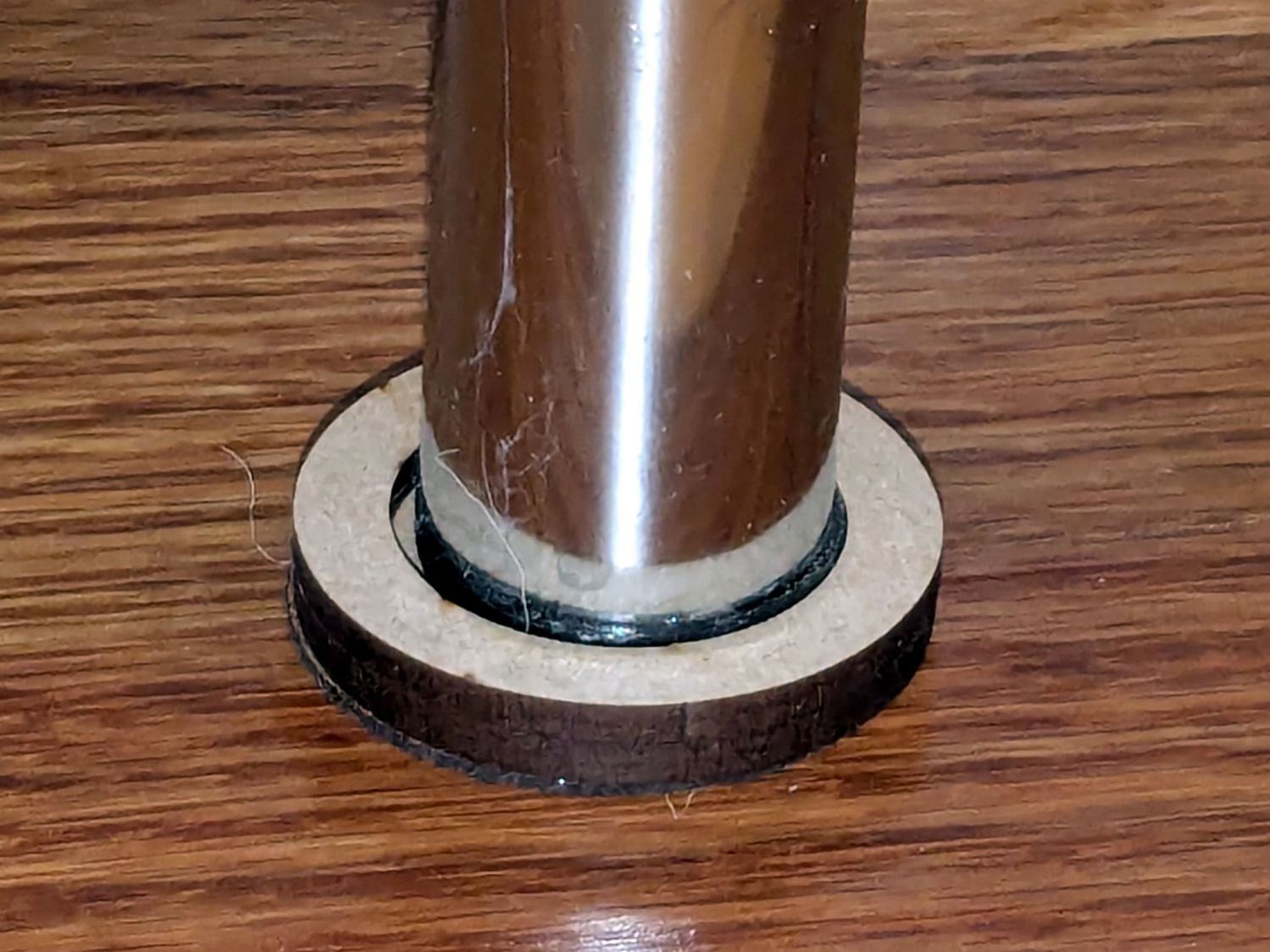
    The flat robot vacuum assigned to clean the floors around here would occasionally get stuck under the leg of my Husky workbench-as-desk and fail to complete its mission. Living in the future makes solving that problem a matter of minutes:

    Husky workbench caster feet - installed
    Husky workbench caster feet – installed

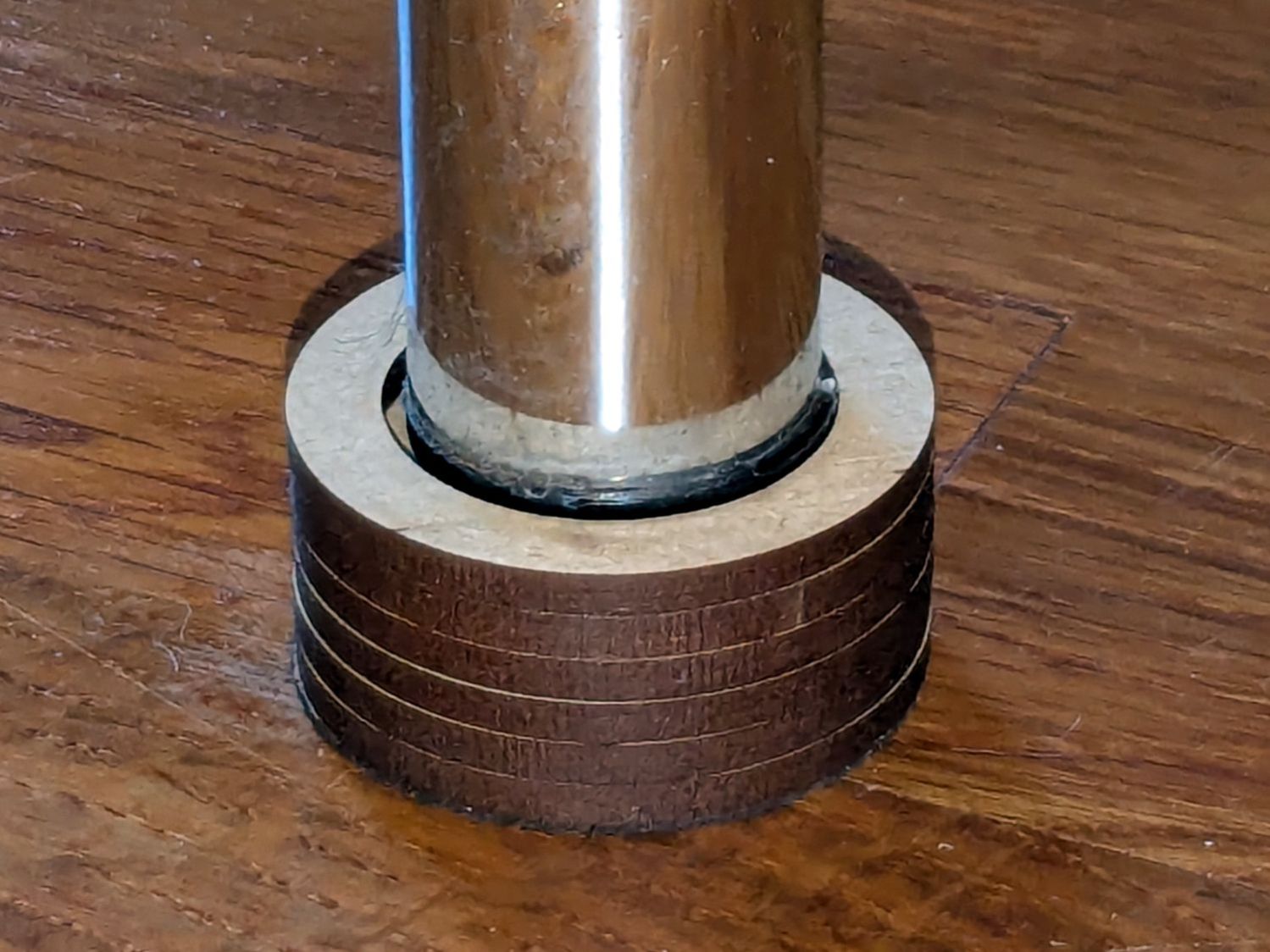
    The upper rim captures the locked-in-place wheel in a 35×25 mm recess atop the middle 45×35 mm slab, with a 2.5 mm cork layer on the bottom. Laser-cut, of course, glued with ordinary yellow wood glue, and clamped for about half of a Squidwrench remote meeting.

    Raising the desk by 5.5 mm gives the Flat One juuust enough clearance to scuttle under there:

    Husky workbench caster feet - vacuum clearance
    Husky workbench caster feet – vacuum clearance

    That was easy …

  • Revised Measuring Spoon Drainer

    Revised Measuring Spoon Drainer

    A small tweak to the venerable spoon drainer adds a configurable cutout adapting it to a slightly different dish drainer rack:

    Measuring Spoon Drainer - solid model
    Measuring Spoon Drainer – solid model

    Which lets it snuggle into the corner:

    Measuring spoon drainer - installed
    Measuring spoon drainer – installed

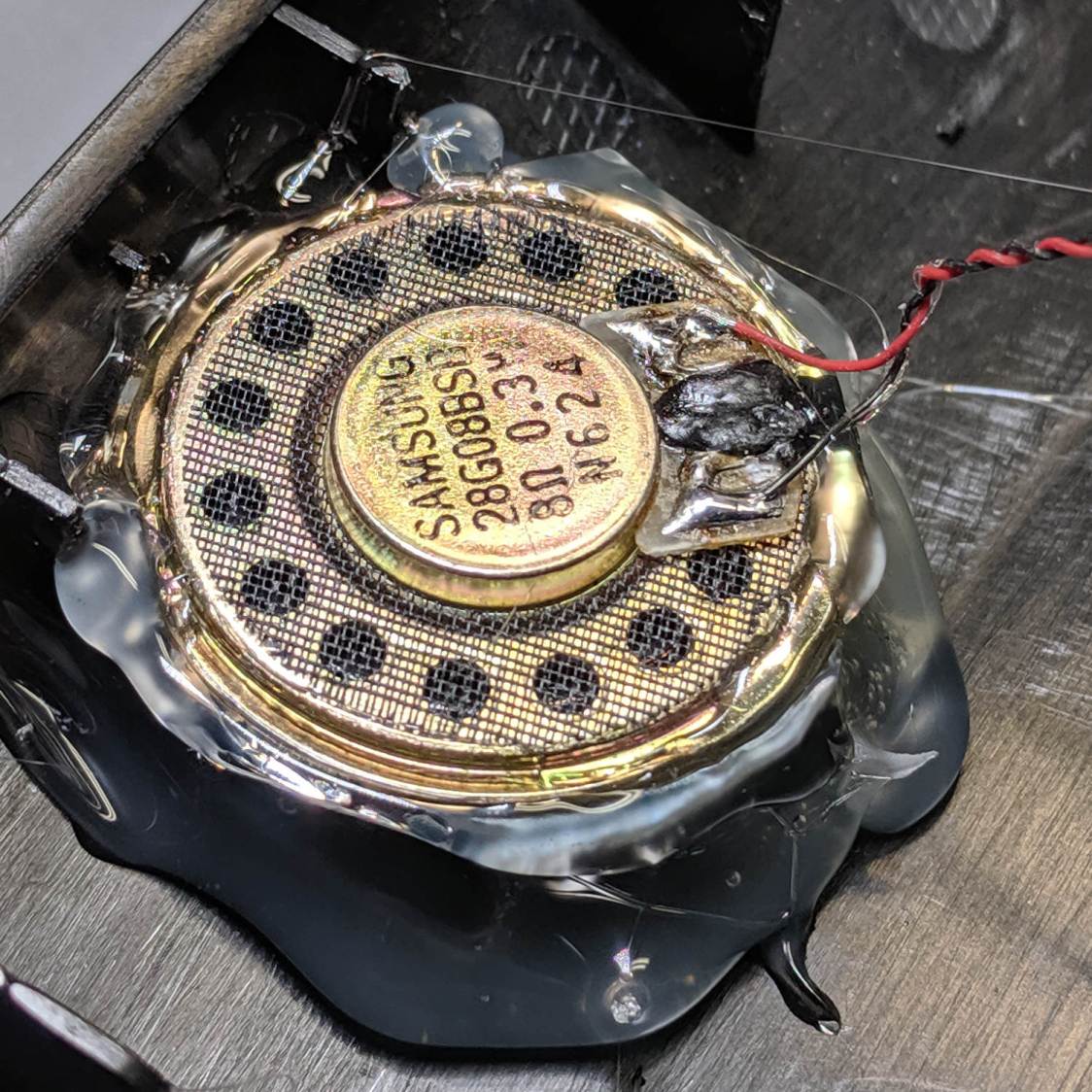
    Both the old and new racks had coated steel loops stuck into rubberoid feet perfectly suited to collect water and eventually rust the loops. Given a new rack, I figured potting the feet in JB PlasticBonder urethane adhesive would help forestall the rust:

    Rubbermaid dish drainer - foot potting
    Rubbermaid dish drainer – foot potting

    I wish it were white, rather than black, but the only other color choice is tan and I can’t wish nearly that hard.

    Along those lines, however, the gray JB Weld epoxy coating on the cheese slicer and the smaller repairs on the big knife are doing fine after years of use. JB Weld is good stuff!

  • Prusa MK4 + MMU3 vs. Steamopus

    Prusa MK4 + MMU3 vs. Steamopus

    So as not to bury the lede:

    Steamopus - test pieces
    Steamopus – test pieces

    The model is the Steampunk Octopus (in retrospect, the lower-vertex NixFix version should print better with its under-engine braces). The tests were to see how well its articulated tentacles printed and whether I understood how PrusaSlicer’s Multimaterial Painting worked. The answers: “Perfectly” and “Undo is my copilot”.

    They’re both in PETG, with the orange eyes & features painted onto the STL model using the Smart Fill tool type to select surface facets joined within a given angle. Getting that right requires some fiddling, because you (well, I) can inadvertently select & flood a nearby area.

    With Halloween fast approaching, they should be useful:

    Steamopus - black at door
    Steamopus – black at door

    Readers of long memory will recognize the doorbell button.

    The albino Steamopus looks downright weird:

    Steamopus - white at door
    Steamopus – white at door

    Only the delivery folks have seen them so far …

  • Double-faced DVD Coasters

    Double-faced DVD Coasters

    Given an essentially unlimited supply of scrap CDs / DVDs (rendered unreadable by scarring the label side with a Guilloche pattern) and the failure of foam backing, it seemed reasonable to try sticking two of them together:

    Double-faced DVD coaster - components
    Double-faced DVD coaster – components

    The fixture in the lower left is just an MDF square with a 15 mm post of more MDF glued in the middle to align the pieces. The white disk is the adhesive sheet, cut to 119 mm OD to leave half a millimeter clear around the outer edge, thus avoiding embarrassing stickiness.

    Peel one side of the adhesive sheet and drop it over the post sticky side up:

    Double-faced DVD coaster - adhesive sheet ready
    Double-faced DVD coaster – adhesive sheet ready

    Drop one of the DVDs over it, label side down:

    Double-faced DVD coaster - first disc on adhesive
    Double-faced DVD coaster – first disc on adhesive

    Lift it off, peel the other side of the adhesive sheet, put it over the post sticky side up, and drop the other DVD on top:

    Double-faced DVD coaster - finished
    Double-faced DVD coaster – finished

    The data side of the discs has a 0.3 mm raised rim just inside the track zone, so they don’t sit exactly flat on the table and expect a slightly concave lower surface on the mug / glass / cup. Neither of those seem like dealbreakers thus far, although I’m sure somebody will object.

    A ring or two of general-purpose glue, along the lines of E6000 urethane, would be significantly less fussy than cutting adhesive sheets.

  • Sting-Kill: Everyday Carry Tube

    Sting-Kill: Everyday Carry Tube

    One of Mary’s gardening cronies suggested Sting-Kill might reduce her dramatic swelling [^1] after a bee / wasp / insect sting. Because it must be applied immediately after the sting, the swab must be on hand in the garden or on a bike ride, but the glass vial inside seem entirely too fragile to survive amid the usual clutter of a purse / pocketbook / belt pack / bike pack.

    Well, I can fix that:

    Pill tube - PETG default
    Pill tube – PETG default

    It’s a KeyChain Pill Tube from Printables, enlarged 20% in the XY plane to fit the Sting-Kill swab, with the white applicator end fitting neatly into the domed screw-on lid for a bit of cushioning.

    The solid model looks about like you’d expect:

    Pill Tube - slicer preview
    Pill Tube – slicer preview

    Despite that preview, I printed it with a brim. PETG sticks tenaciously to the Textured PEI steel sheet and a brim wasn’t really needed; just pop the parts off the platform when cool.

    Somewhat to my astonishment, the threads screwed together easily, smoothed out after a few on-and-off cycles, and it’s ready for a moment we both hope will never occur.

    [^1] Mary did tote an EpiPen back in the day, but a few near misses indicated she’s no longer quite as sensitized. She does swell up something powerful and we’re hoping immediately applying a Sting-Kill will help knock it down.

  • Vole Traps: Rebaited

    Vole Traps: Rebaited

    Although the drilled sunflower seeds worked reasonably well, various critters gnawed through the threads and escaped unharmed with the seeds. We tried gluing seeds to the trigger with good old Elmer’s Non-Toxic School Glue, only to find garden ants absolutely love the stuff.

    Well, if voles like seeds, they’ll surely like nuts:

    Rat traps - walnut halves
    Rat traps – walnut halves

    Those are rat traps (much bigger than mouse traps) with walnut halves secured to the top and bottom of the trigger with hot melt glue.

    Yes, the plywood plates under the traps hold them together. There’s no reason to put fancy new traps outdoors where they succumb to weather in short order; these are veterans from previous episodes.

    Having taken out two voles with sunflower seeds over the course of a week, the walnuts accounted for two more voles in three days. Mary thinks a neighbor vole needs a day to notice its buddy has gone missing, so the average pace may be a vole every other day.

    Bonus: Gnawing on the nuts or trying to pull them away triggers the trap, so those walnuts are still out there.

    The community gardens have enough voles to attract Red Tailed Hawks, which have started perching on fence posts and stooping on voles foolish enough to run along the paths or into grassy areas. Some gardeners seem disconcerted by the presence of such large birds in close proximity, but Mary assures them they’re helpers.