The Smell of Molten Projects in the Morning

Ed Nisley's Blog: Shop notes, electronics, firmware, machinery, 3D printing, laser cuttery, and curiosities. Contents: 100% human thinking, 0% AI slop.

Category: Home Ec

Things around the home & hearth

  • Bed Bugs: Overview

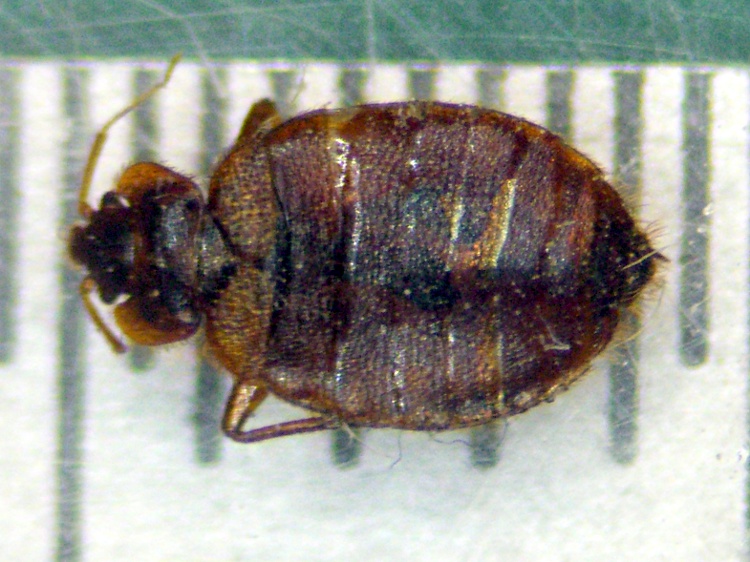
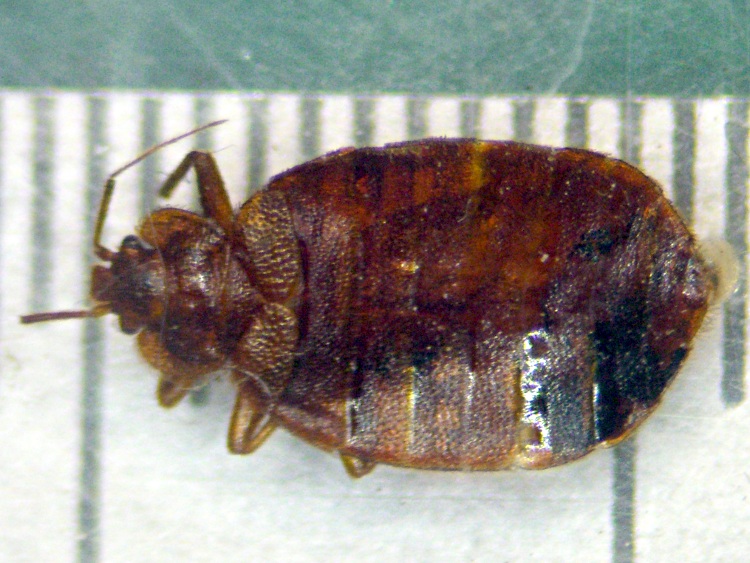
    Back in July, we returned from our bicycling vacation with a few bed bugs in our luggage. We have our suspicions about where they came from, but that’s not really relevant: bed bugs can come from nearly anywhere. You can bring a bed bug home from a classy hotel just as easily as from a sleazy dive… and you will!

    After three months, we think we’ve eliminated the last bed bug: no bites for the last three weeks. One can never be absolutely certain, but that’s definitely a good sign, particularly in combination with the monitoring measures we’re using.

    We accomplished this on our own, without the use of a licensed PCO (Pest Control Operator) and without the use of toxic chemicals. It was, however, extremely expensive in terms of time, materials, and furnishings, as well as completely disrupting our family life.

    While our methods definitely do not scale to the level required for a major infestation, most likely you’ll be in our situation: you return from a vacation with one or two, um, guests. If you understand what we’ve done and why we’ve done it, you’ll have a better basis for your own decisions and actions.

    So.

    Most of what you’ll find in the usual Internet forums comes from (possibly) well-meaning folks who haven’t done any reading or experimentation: it’s raw anecdotal experience. Not to slander them, but it’s better to start with the basics, which you get from the primary sources.

    To that end, here are the better sources we’ve found and used:

    With those references in hand, I can describe what we did and how it worked. If you’re the sort who can’t drive past a nasty accident without gawking (and we are all that sort, really), then the next week or so should be good for at least that level of amusement…

    A note to the potential purchasers of our house, when you read this in what’s currently our future: yeah, bed bugs. The only difference between this house and the next one on your list is that you know what happened here, what we did, and how it worked out. Trust me on this: no other homeowner will tell you anything about their bed bug experiences, to the extent of lying to your face.

    Believe it.

    Update: Here’s a quick index to the rest of (this chapter of) the Bed Bug Story:

  • Refurb HP w2408h Monitor Factory Menu

    A year or so ago I picked up a refurbished HP w2408h monitor that’s been entirely satisfactory, although the backlight now seems to flicker occasionally. In the course of enabling the backlight sensor to see if that changes anything, I came across this useful bit of information about enabling the Factory Mode menu (lightly edited for clarity):

    1. Make sure you have video on your current input.
    2. Then turn off monitor.
    3. Hold down the “Menu”  and  ” +” keys while turning OFF/ON REAR Power switch. If monitor does not have rear power switch (ex. w2408) then just do with front power switch.
    4. Bring up OSD and scroll up/down to “F” letter at one corner of the OSD window.
    5. Press Menu/select button to enter Factory menu.
    6. Scroll down and turn off BurnIn.
    7. Scroll back up to “Exit” menu.
    8. Cycle power with front power button.

    The menu isn’t particularly useful to mere mortals, although it does show total power-on hours (3700, IIRC) and some other settings. It seems the refurb shop shipped some of the monitors with Burn-In mode enabled, much to the confusion of purchasers.

    Makes you wonder what other Easter Eggs lie in wait, doesn’t it?

  • Dehumidifier Performance

    Having ever so many books & papers in the Basement Shop & Office, I must run a dehumidifier to fight the mildew to a standstill. It’s actually under 55% most of the time, but humid summer days are killers.

    Being the sort of bear who owns a Kill-A-Watt meter, I jotted down dates, runtime hours, and kWh when I filled each 5-gallon bucket. Eventually, we acquired a cheap scale that found its way under the buckets to weigh the outgoing water.

    My data collection foundered on errors of omission, power failures, and general forgetfulness, but, nonetheless, a few interesting numbers emerged.

    Outside weather:

    • Dry weather = 0.14 kWh/elapsed hour
    • Wet weather = 0.37 kWh/elapsed hour

    It draws about 485 W, so the duty cycle works out to

    • 0.14 kWh/hour -> 140 W -> 29%
    • 0.37 kWh/elapsed hour -> 370 W -> 76%

    If I were more industrious, I’d grab a plot of daily humidity from the NWS and rub those numbers against it, but … maybe next year.

    The thing requires somewhere between 2.0 and 3.5 kWh to extract each pound of water. It’s rated at 1.6 liter / kWh = 3.5 lb / kWh, undoubtedly under standard conditions, so the actual efficiency is in the right ballpark.

  • Cusinart Santoku Knife

    The killer discount coupon that brought a new cutting board into the house also produced a new santoku knife from Cusinart (not that that makes much difference), seen here with my favorite knife:

    Santoku knives
    Santoku knives

    Pursuant to that discussion, I’ve been looking for a Teflon-coated Santoku blade, but nobody in the area seems to have one.

    This one claims that the row of dimples on each side make cheese slices slide right off, but that’s not what happens. Maybe it’s not quite so sticky as my knives, but I’d call it a tie.

    Likes:

    • It’s scary sharp, but so are my knives. In fact, I think mine are even more keen, because the blade is thinner.
    • The metal handle feels better than I expected. Dishwasher safe, not that we run ’em through there very often.
    • Thin blade with good keen edge.
    • Surprisingly light, despite the handle.

    Dislikes:

    • Weird balance point, maybe 20 mm back from the heel. It wants to fall out of the dish drainer.
    • The heel is an obtuse angle; I like an acute heel to punch into things like orange peels and milk jugs (to convert them into worm compost bins). Nothing I can’t fix with a grinding wheel, but I’m letting it slide for now.
    • The blade is curved, which means I can’t just whack my way along the veggies.
    • The handle is marginally too close to the cutting board for my fingers: I tend to knock my knuckles on the board when rocking through the cut.

    On the other paw, maybe you can see how the blade near the heel on the old knife is getting ever so slightly hollowed out from my use of the steel. The new flat cutting board makes that embarrassingly obvious; it’s getting to be time for a trip to the slow stone.

    All in all, pretty good. I use it, but not as much as the Good Old Knives.

  • Floor Lamp Base: Poor Planning

    Floor lamp base - cord exit
    Floor lamp base – cord exit

    We have an old floor lamp that’s always been a bit tippy and I finally got around to wondering what’s going on.

    The cord exits through the center of the base, where it passes through a plastic nut that keeps it off the raw metal edge of the central rod holding the lamp together.

    The ruler has 1/16 inch divisions, so the cord requires a bit over half an inch of clearance.

    Floor lamp foot with bumper
    Floor lamp foot with bumper

    Here’s what one of the five molded-in feet look like, with a white rubber bumper that I just added to improve the ground clearance…

    Notice that the foot is barely 1/4 inch tall, so the lamp has always been resting on the cord and two other randomly chosen feet. No wonder the thing was tippy.

    The new rubber feet make it a lot less tippy, but there’s not a lot of clearance under there. When one of those things falls off, I’ll think of something better.

    The lamp was nominally UL approved, of course…

  • Our Old Studebaker: Back in the Day

    In addition to those after-restoration images, here are some pix from an old family album that show our 1957 Studebaker President in its prime.

    I think these were taken around 1970, but I really don’t know. As with many family pix, I also have no idea why these were so important…

    The photos were in bad shape, as you can see in the lower-right image, with the magenta dye having faded very little over the decades compared to cyan and yellow; they’ve been brutally color-corrected and contrast-stretched. They were also printed on horrible satin-finish paper and that fishnet overlay is painfully obvious.

    If you need an original image for some perverse purpose, let me know…

  • Water Bottles: Adding a Vent Plug

    Those water bottles turned out to have an unexpected feature: the vent hole dribbles when they’re laid sideways. I think it’s an unfortunate side effect of a product cheapnification: the spout is slightly concave on the side that could seal the vent, so surface tension sucks water out of the hole.

    The hole is to the right of the spout, in the center of the transverse ridge. Looks like a little black dot here; clicky for a somewhat bigger image.


    Water bottle cap showing vent hole
    Water bottle cap showing vent hole


    The solution is to put a silicone plug at the Spot Marked X on the spout, which I marked by running a small punch through the vent hole and scarring the spout. You might be able to see the tiny mark on the spout if you look closely.

    The spout comes out of the cap with a firm pull, but the sockets in the cap are obviously not intended to take much of that abuse. It’s not clear to me that the designers of these things ever take cleaning into consideration; past experience says you must completely dismantle fluid-facing components to get the crud out.

    Anyway.

    Chuck the spout up in the Sherline mill, align over the spot, and mill a 1/8 inch diameter flat-bottom hole 0.100 inch deep. The spout has a large finger-friendly flange directly underneath the Spot Marked X, so this setup isn’t quite as precarious as it looks.


    Milling socket for vent plug
    Milling socket for vent plug


    Dab in a little silicone caulk, leave a mostly flat surface standing just higher than the spout’s concavity, and we’ll see how well it works.


    Vent plug
    Vent plug


    The little nub just to the left of the new plug (on the ball-shaped part of the spout) engages the edge of the socket in the cap to sorta-kinda hold the spout closed. Doesn’t really accomplish much, but it’s a nice thought.