Ed Nisley's Blog: Shop notes, electronics, firmware, machinery, 3D printing, laser cuttery, and curiosities. Contents: 100% human thinking, 0% AI slop.
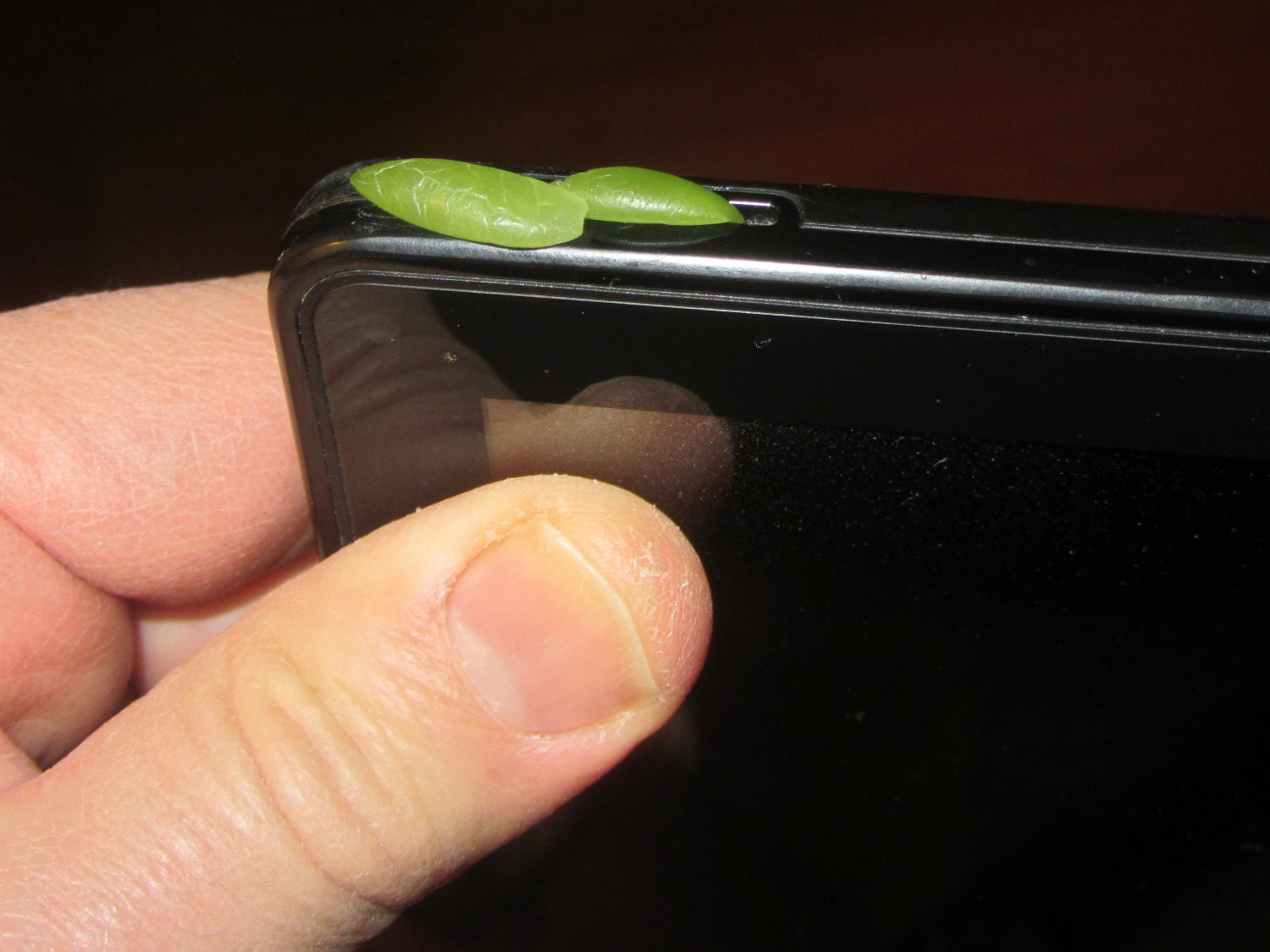
So I pulled my trusty Kindle Fire out of my pocket, only to find slugs racing across the edge:
Lambs Tail leaves atop Kindle Fire
Turns out those are leaves of the Sedum Morganianum, a.k.a. Lamb’s Tail, plant next to the window behind my desk:
Sedum Morganianum – Lambs Tail
I’d been leaning in there past the plant stand to swap cables for the new portrait monitor, brushed against the plant, and knocked some leaves into my pocket. The bare sections on the right side are entirely my fault, although not entirely during this incident; the leaves seem perfectly willing to fall off during a harsh glance.
You can find more than you probably want to know about the care & feeding of Sedum Morganianum, some of which suggests that those tendrils have reached pretty nearly their maximum length. If past experience is any guide, the heavy glazed ceramic pot will eventually overbalance and auto-trim the stems to a length suitable for replanting in a new & intact pot.
My biz records from 1985 emerged from hiding on their way to the recycling bin:
Hardware Expenses – 1985
Yup, you read it right:
$944 for what might have been a 20 MB drive
$406 for a 10 MB (!) hard drive
$1400 for an EGA graphics board & matching display
A few years after that, I gingerly plugged a $750 80387 math coprocessor into an 80386 system that we depreciated forever.
Another page of that report says I dropped nearly $3500 on various chunks of software.
The times, they definitely have changed. Nowadays, I buy throwaway off-lease Dell boxes costing less than that 10 MB hard drive and use Free Software for essentially everything I do.
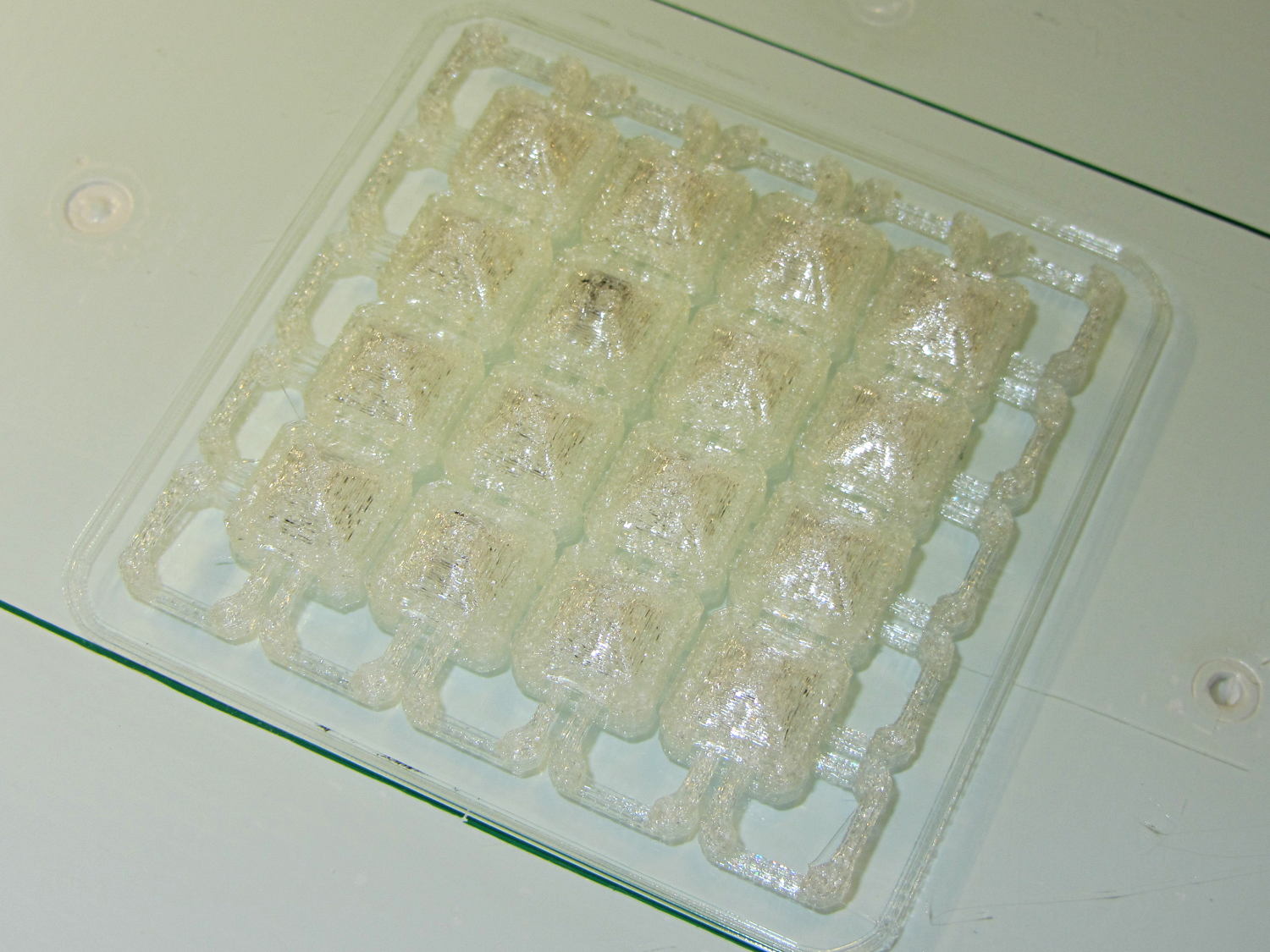
Reducing the link bars to 4×4 threads produced a diminutive patch:
Square Armor – small links – platform
Most of the dark smudges come from optical effects in the natural PLA filament, but the second-from-upper-left armor button contains a dollop of black PLA left in the nozzle from the end of that spool; running meters and meters of filament through the extruder isn’t enough to clean the interior. I now have some filament intended to clean the extruder, but it arrived after the black ran out.
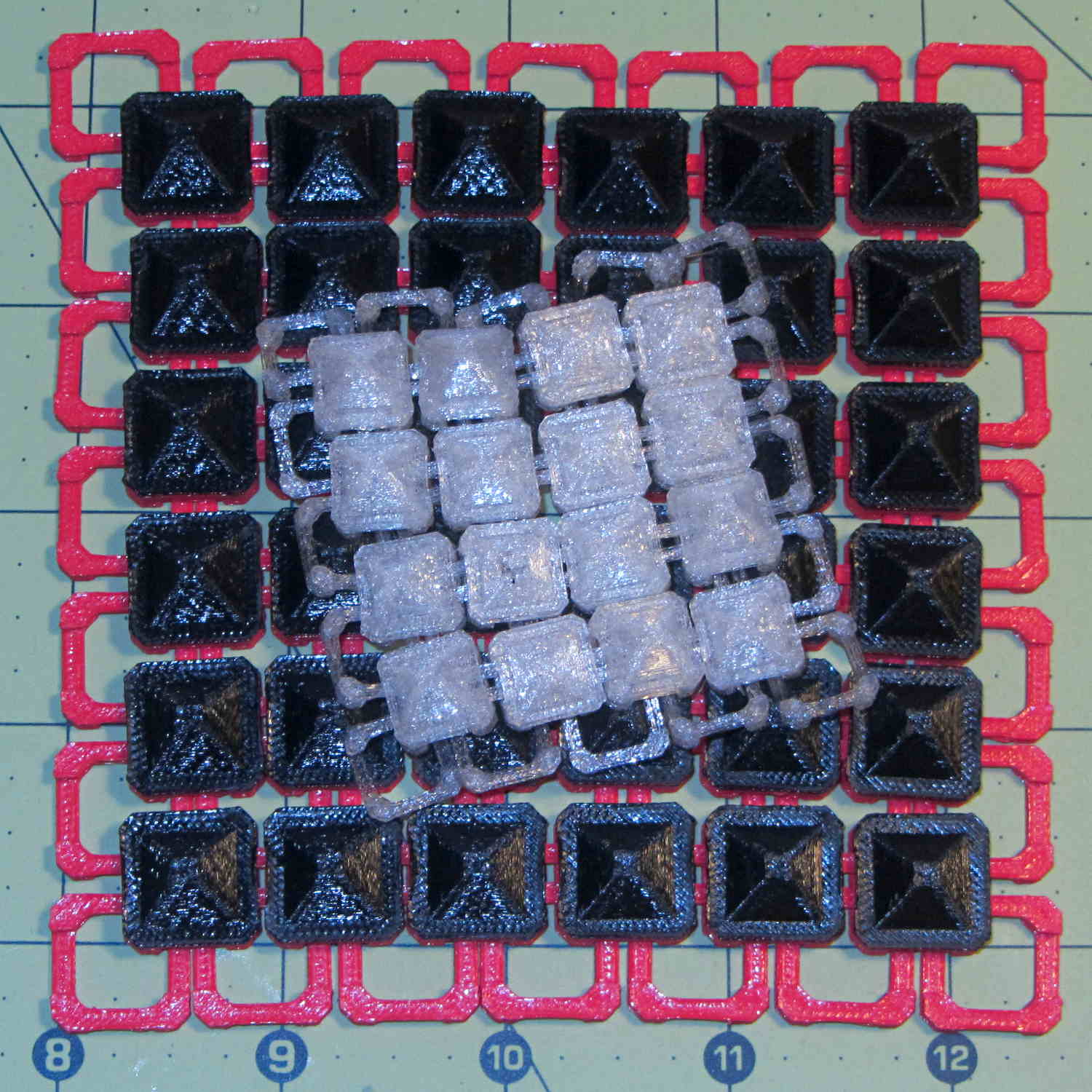
Comparing the patch with the original buttons shows the size difference:
Square Armor – large vs small links
A trial fit suggested a 5×5 patch would fit better, so …
Square Armor – small links – mounted
The whip stitching accentuates the jacket’s style. We I think a glittery piping cord square around the armor links would spiff it up enormously and hide the open links, but that’s in the nature of fine tuning.
I’ll eventually see what happens with 3×3 thread = 1.2×0.6 mm links, which may be too small for reliable bridging and too delicate for anything other the finest evening wear.
The cardboard package liner claims the lithium-ion battery inside our Larval Engineer’s shiny new InstaBoost jump starter is good for 10.8 A·h and and the minuscule inscription on the case truncates it to 10 A·h. Given what I’ve seen for other batteries, either value would be true when measured under the most favorable conditions, but these curves still came as a bit of a surprise (clicky for more dots):
Pilot Instaboost
The three short, abruptly dropping curves come from the main terminals, with the battery clamps attached to similar clamps (with a glitch when they shifted position) plugged into my CBA II/IV battery tester, showing that the InstaBoost shuts off after a few minutes, regardless of load. That makes good sense: don’t connect a lithium battery to a lead-acid battery for more than a few minutes!
The two longer curves come from the 12 V jack on the side and show that it will run until the battery goes flat. Evidently, the internal battery protection circuit cuts out at less than the 10 V minimum I used for these tests.
I didn’t bother testing the USB charging outlet, as I assume it would produce 5 V at 1 A for slightly less than twice as long.
Under the most favorable conditions I could come up with, the actual battery capacity of 3.5 A·h is a third of what it should be. I’d expect that from the usual eBay supplier, not Lowe’s.
Given the cheapnified clamps, perhaps Pilot deliberately gutted the battery capacity to save a few bucks. After all, the customers will never notice. Will they?
Except…
Another customer took his apart and found three 3.6 A·h “high output” (whatever that means) lithium cells in series. In that configuration, the individual cell capacity does not add and the pack should produce about 3.6 A·h. Those curves show it produces slightly less than that when discharged to 10 V, which means the thing works exactly like you’d expect. Indeed, it’s better than a typical second-tier product and much better than typical eBay crap.
The most charitable explanation would be that somebody screwed up, multiplied the number of cells by their individual capacity, put that number in the specs, and everyone downstream ran with it. If the cells were in parallel, then the total capacity in ampere·hours would equal the sum of the cell capacity.
If you change the specs to match the as-built hardware, then, apart from those cheapnified clamps, it’s working just fine…
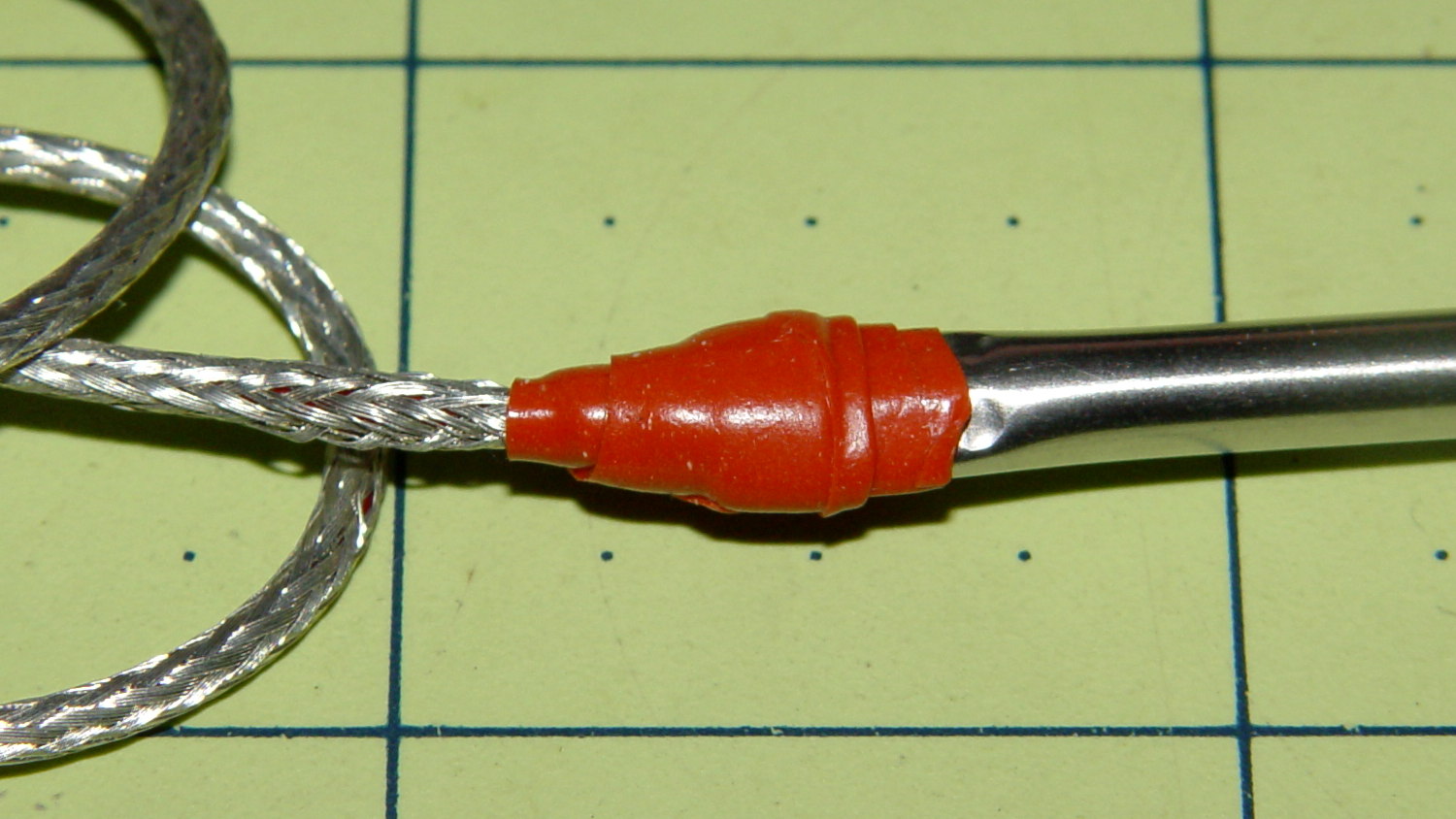
The replacement probe has a woven metal jacket that’s allegedly more rugged than the original plastic, but I think the main difference comes from the additional strain relief at the end of the probe:
Kitchen thermometer – new probe
That still looks abrupt to me, so I wrapped a silicone tape snippet around the joint:
Kitchen thermometer – new strain relief
Probably not food-safe, definitely butt-ugly, but I don’t want to replace the probe again for a long time.
FWIW, although the probe description says it’s compatible with Taylor 1970N thermometers and doesn’t mention the 1478 we have, the 2.5 mm plug fits (no suprise there) and the display shows appropriate temperatures; it seems no less accurate than the original probe.







 The Smell of Molten Projects in the Morning