The Smell of Molten Projects in the Morning

Ed Nisley's Blog: Shop notes, electronics, firmware, machinery, 3D printing, laser cuttery, and curiosities. Contents: 100% human thinking, 0% AI slop.

Category: Electronics Workbench

Electrical & Electronic gadgets

  • eBay Listings: Read Carefullly

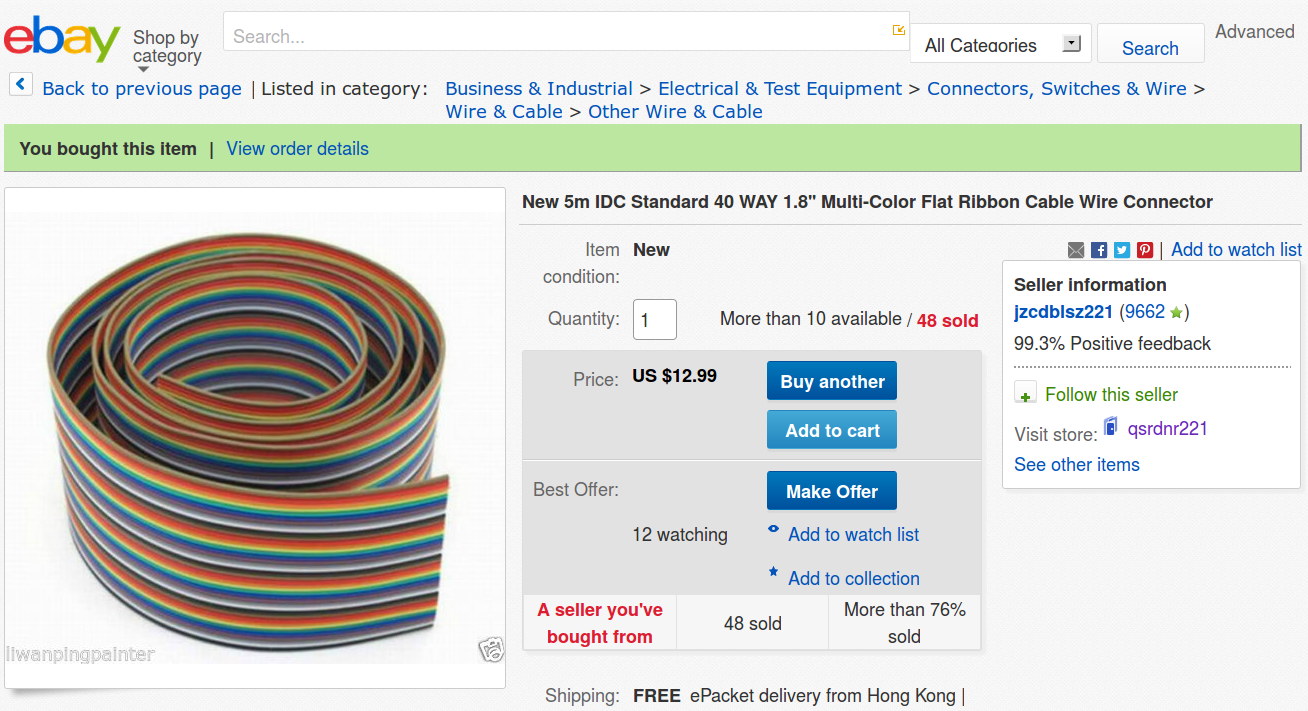
    What’s wrong with this picture? (clicky for more dots)

    eBay - 40 pin IDC cable - header
    eBay – 40 pin IDC cable – header

    Not obvious?

    Here’s the description, slightly reformatted for clarity:

    New 5m IDC Standard 40 WAY 1.8” Multi-Color Flat Ribbon Cable Wire Connector

    Description

    Type: IDC standard.

    10 colors, 4 group, total 40 pcs cables per lot

    5 meter per lot.

    width: 4.7 cm / 1.8 inch

    Package content: 5M Flat Color Ribbon Cable

    If you divide the 1.8 inch cable width by its 40 conductors, you find the wires lie on a 45 mil pitch. If you were expecting this “IDC standard” cable to fit in standard insulation displacement cable connectors with a 50 mil pitch, you’d be sorely disappointed. You can get metric ribbon cable with a 1 mm = 39 mil pitch, but this ain’t that, either.

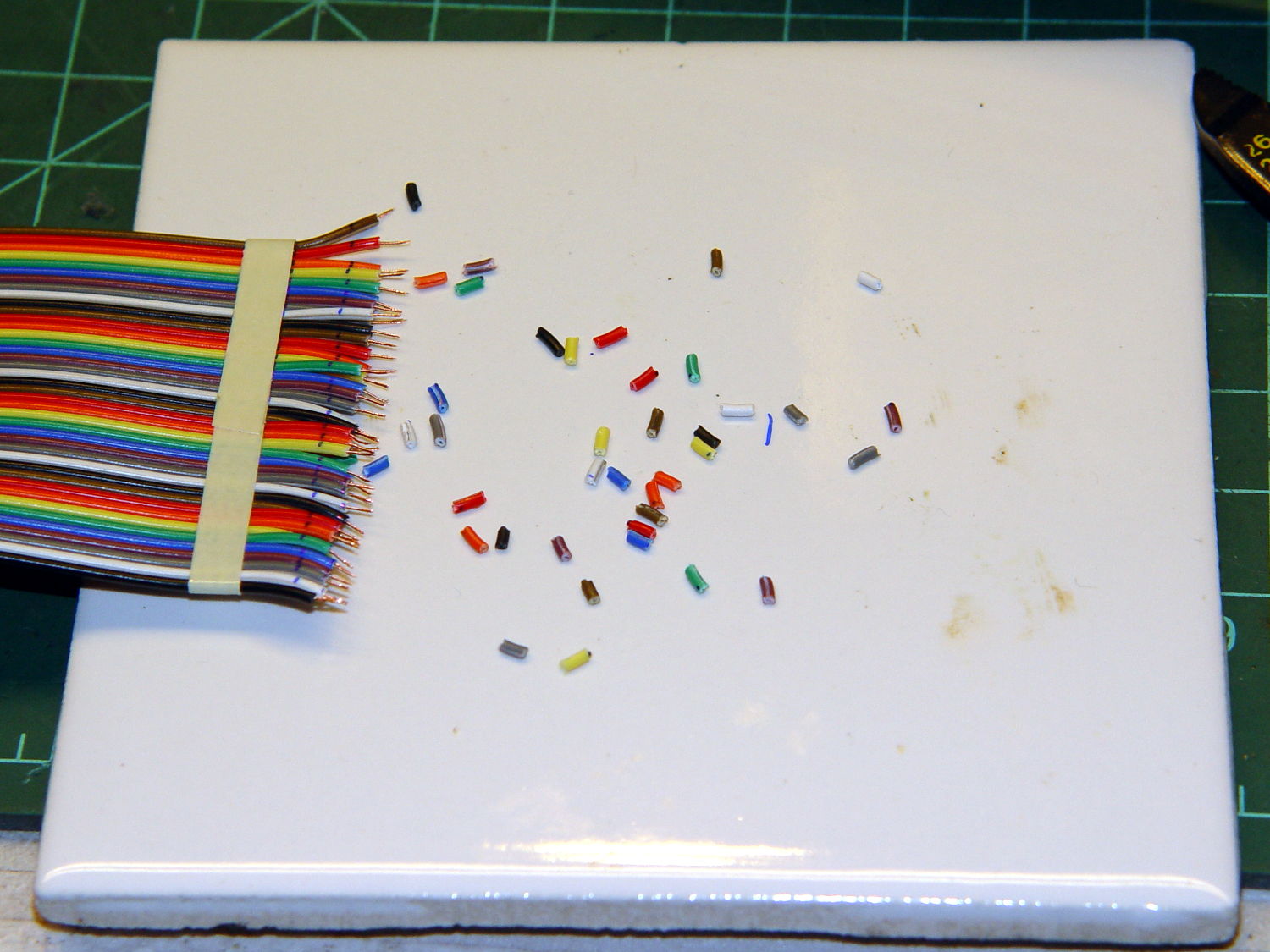
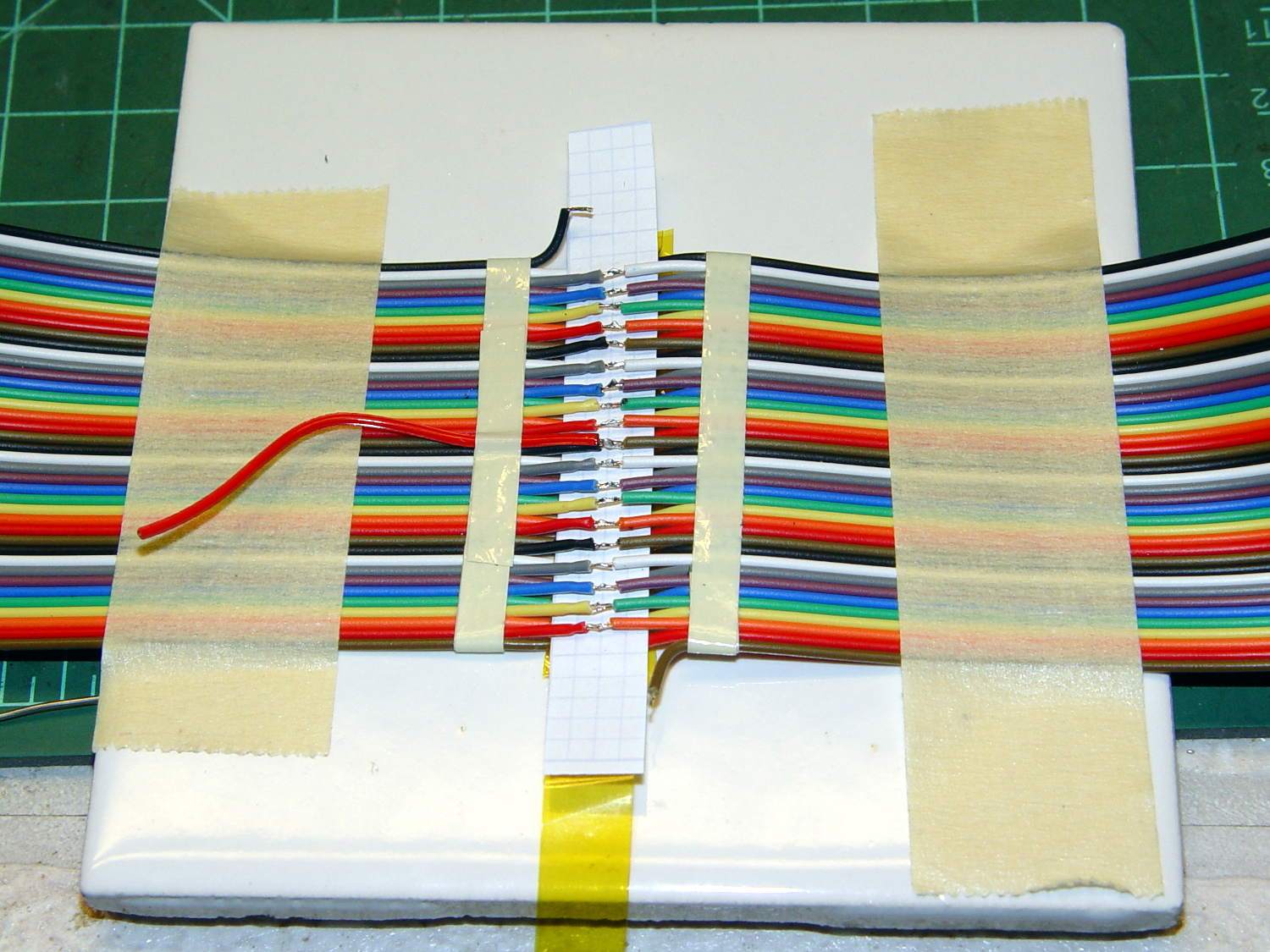
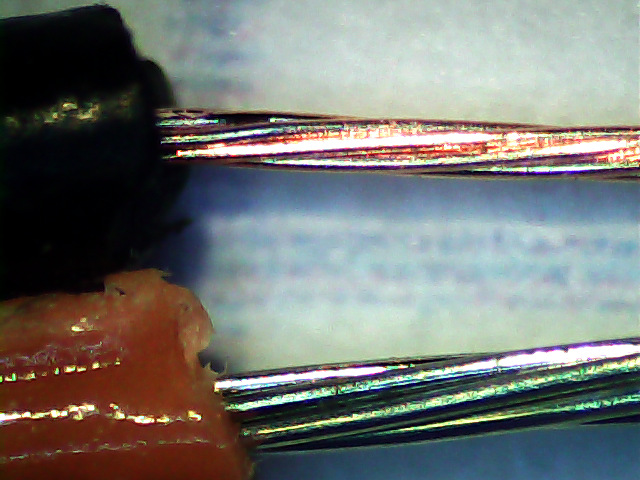
    Here’s what an individual eBay wire (black jacket) looks like, compared to a wire from a standard ribbon cable (red jacket):

    Ribbon cable - 26 AWG - eBay vs standard
    Ribbon cable – 26 AWG – eBay vs standard

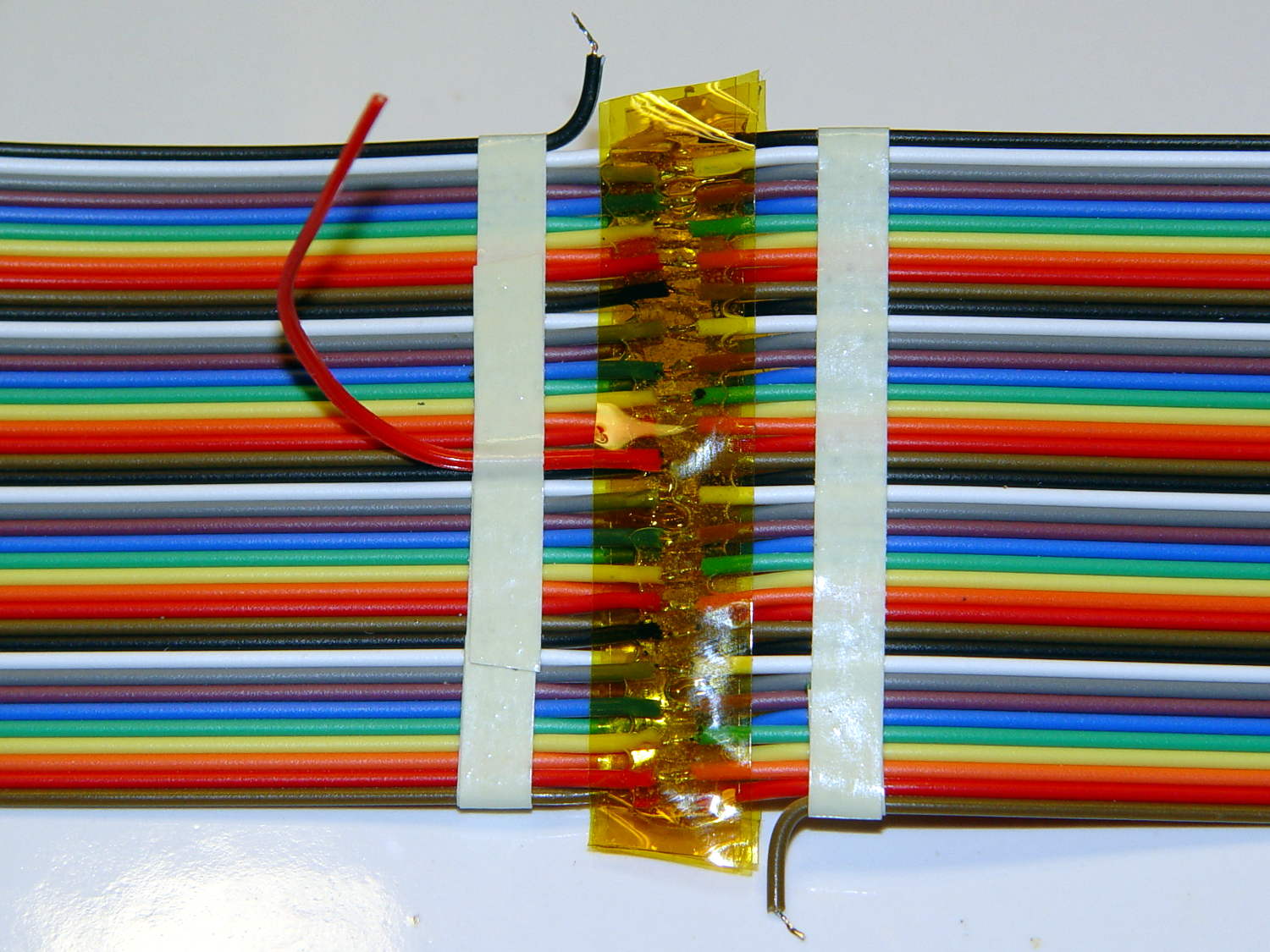
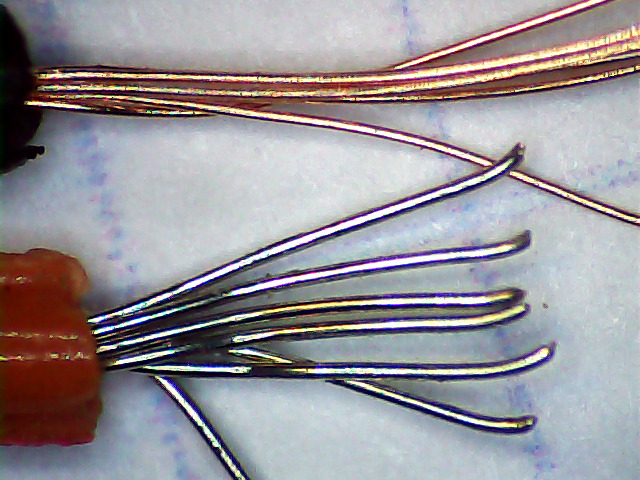
    A closer look at the strands making up the wires:

    Ribbon cable - 26 AWG - eBay vs standard - strands
    Ribbon cable – 26 AWG – eBay vs standard – strands

    As nearly as I can measure with my trusty caliper, the eBay ribbon cable has wire slightly smaller than 30 AWG, made up of seven 40 AWG strands, as opposed to standard 26 AWG wire made of seven 34 AWG strands. The good stuff might be 28 AWG / 7×36 AWG, but I was unwilling to break out the micrometer for more resolution.

    I’d like to say I noticed that before buying the cable, but it came to light when I measured the total resistance of the whole cable: 80 Ω seemed rather high for 200 meters of 26 AWG wire. The wire tables say that’s about right for 31 AWG copper, though.

    Changing the AWG number by three changes the conductor area by a factor of two, so you’re getting less than half the copper you expected. Bonus: it won’t fit any IDC connectors you have on the shelf, either.

    Turns out a recent QEX article suggested building an LF loop antenna from a ribbon cable, so I was soldering all the conductors in series, rather than using connectors, and it should work reasonably well despite its higher DC resistance.


  • Kenmore Model 158 Power Switch: Laying-on-of-hands Repair

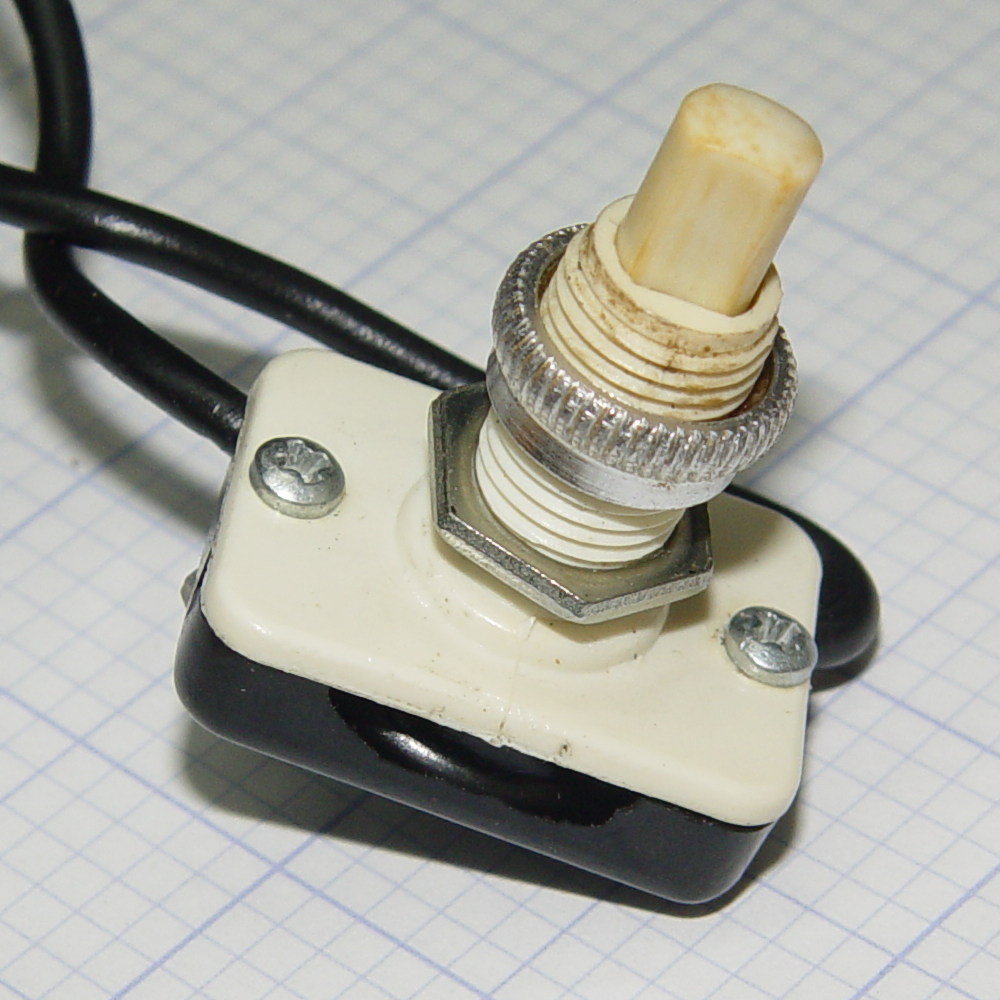
    The power switch on Mary’s “embroidery” Kenmore Model 158 sewing machine became exceedingly stiff, to the extent she said it was painful to push. Buying a shiny new switch seemed iffy, because a cursory search through the usual reputable electronic suppliers suggested there’s no way to specify how stiff the button might be, nor how that might feel in actual practice.

    The switch harvested from the pulse-drive machine felt somewhat less stiff, so I decided to (try to) loosen it up and, if that worked, swap it for the stubborn one.

    A pair of rivets hold the two halves of the switch together, obviously intended as a permanent solution. A carbide burr in the Dremel tool dealt with them easily enough:

    Model 158 Power Switch - grinding rivets
    Model 158 Power Switch – grinding rivets

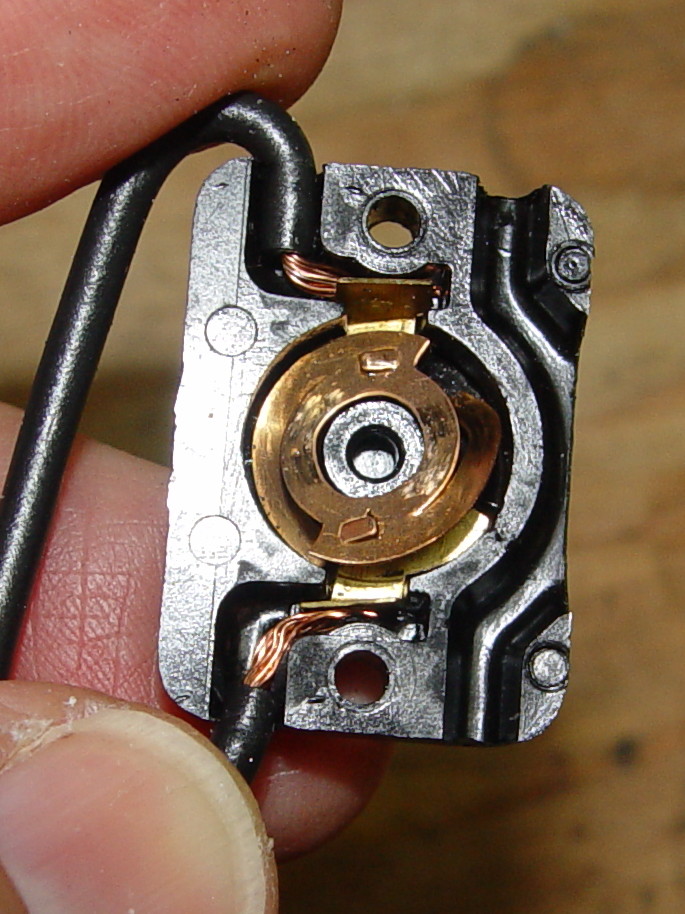
    Inside, the actuator drives a rotating brass contact:

    Model 158 Power Switch - rotor
    Model 158 Power Switch – rotor

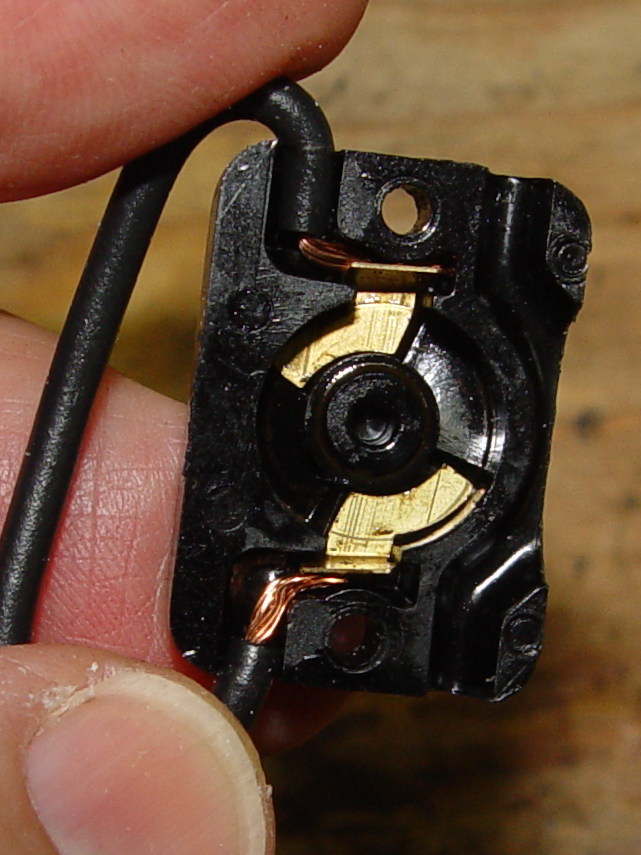
    Two stationary brass contacts are spot-welded to the wires:

    Model 158 Power Switch - contacts
    Model 158 Power Switch – contacts

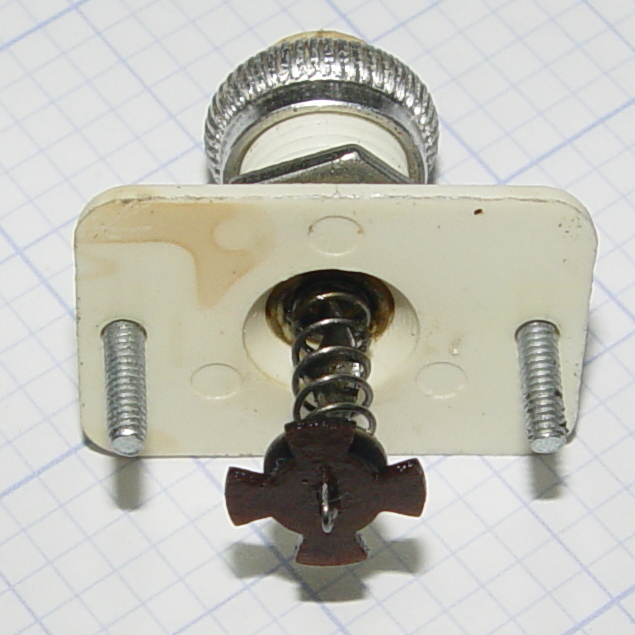
    The actuator under the button consists of a helix-twisted steel rod, a rather stiff spring, and a four-vaned phenolic blade that engages those two little flaps on the rotor. The rivet holes exactly fit plain old 1-72 screws:

    Model 158 Power Switch - actuator stem
    Model 158 Power Switch – actuator stem

    Not seeing anything obviously fix-able inside, I wiped the excess oil off and reassembled it in reverse order:

    Model 158 Power Switch - reassembled
    Model 158 Power Switch – reassembled

    Astonishingly, that bit of attention loosened it up: the button now presses easily!

    I swapped it with the too-stiff switch and declared victory…

  • Vacuum Tube LEDs: Brass Ersatz Heatsink

    A chunk of 1/2 inch = 12.7 mm brass hex rod looks pretty good as an ersatz heatsink serving as an ersatz plate cap on a halogen bulb standing in for a vacuum tube:

    Halogen bulb brass cap - overview
    Halogen bulb brass cap – overview

    The knockoff Neopixels measure just over 10 mm at their widest points, but some judicious filing rounded it off and brought it down to fit in the 3/8 inch = 0.375 = 9.52 mm hole I drilled in the hex:

    Halogen bulb brass cap - wiring
    Halogen bulb brass cap – wiring

    I let it run for a day like that to make sure the thing wasn’t going to crap out, then epoxied everything in place. If the WS2812B controller fails, the repair will require drilling out all the electronics and wiring, then rebuilding it in place.

    The fins come from the same HSS cutoff tool I used for the Bowl o’ Fire cap, cut at 2.5 mm intervals to produce 0.9 mm fins that IMO better suit the smaller diameter. I stopped cutting when the tool got through the hex flats to produce a continuous ring, cut the hex off a bit above the top fin, rounded the end with a carbide insert cutting tool, then sanded the flats to shine ’em up a bit:

    Halogen bulb brass cap - detail flash
    Halogen bulb brass cap – detail flash

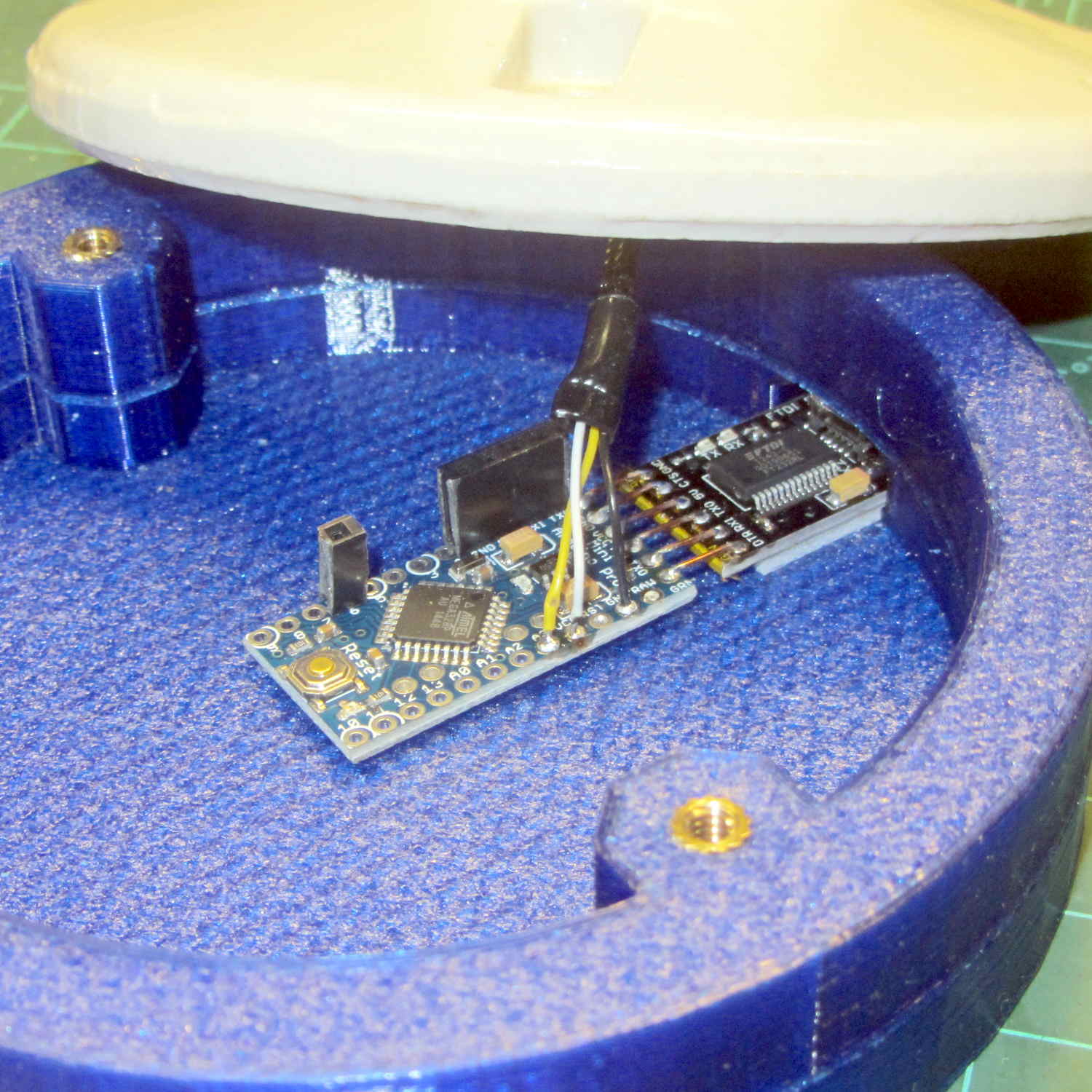
    It turns out that 12 inches of wire inside PET braid barely reaches from the cap to the Arduino Pro Mini in the base:

    Halogen bulb brass cap - Arduino Pro Mini
    Halogen bulb brass cap – Arduino Pro Mini

    Next time, I’m going to add half a foot more wire than I think it can possibly require, with PET braid to suit.

    A thin ring of clear epoxy holds the “heatsink” at the dead center of the bulb. It lights up a bit more than I expected, so opaque epoxy may be in order:

    Halogen bulb brass cap - detail red
    Halogen bulb brass cap – detail red

    It’s still too big to suit even the big 21HB5A tubes, but brass definitely wins over plastic!

    That blue PETG base has become the least-attractive part of the lamp, but it’s survivable for now.

    It runs the same TubeMood firmware as the Bowl o’ Fire.

  • Fairchild and Stoddard RF Current Probes / EMC Field Sniffers

    I’ve always wondered how noisy those Arduino + fake Neopixel lamps might be and these RF sniffers might come in handy:

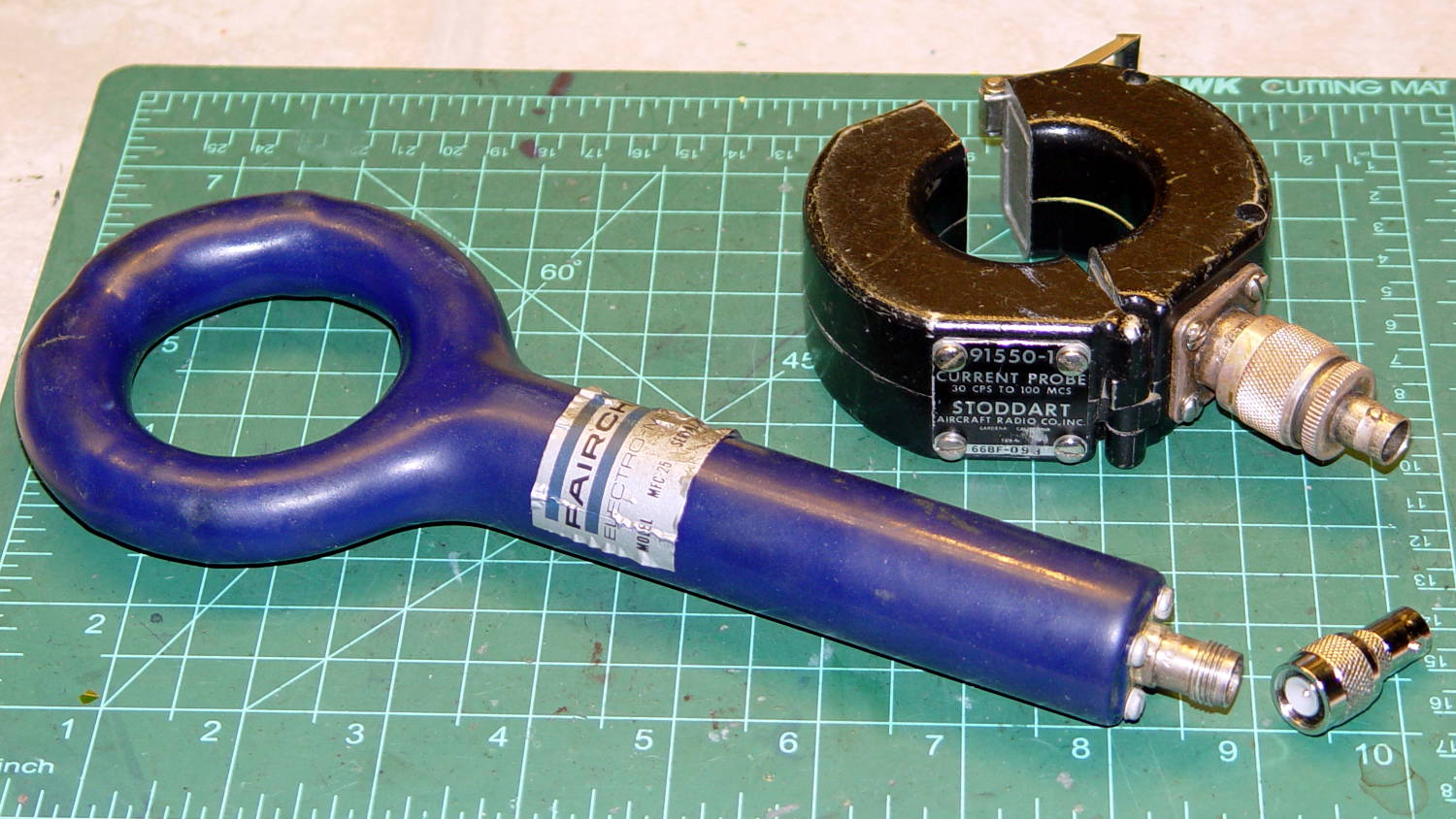
    Fairchild MFC-25 and Stoddart 91550-1 Current Probes
    Fairchild MFC-25 and Stoddart 91550-1 Current Probes

    Even though they’re long obsolete, RF fields haven’t changed much in the intervening decades.

    Fairchild Electronics may have become Electro-Metrics before they vanished in turn; the single useful search result offers a limited spec sheet that describes it as part of a set of three “loop probes covering the frequency range 10kHz-230MHz designed to search for RF magnetic leaks, especially in cabinets and shielded enclosures”. This one, with the blue coating, has a bandwidth of 22 MHz to 230 MHz. It has a TNC connector that now sports a cheap BNC adapter; note that it has standard polarity, not the reverse polarity required by FCC regulations that don’t take Amazon Prime into consideration.

    Stoddard Aircraft Radio Co, Inc passed the 91550-1 baton to ETS-Lindgren, which (as of right now, anyway) offers a datasheet for a gadget that looks remarkably similar. The 30 Hz lower limit on the data plate suggests it’s roughly equivalent to ETS-L’s contemporary 20 Hz 91550-1L probe, but I doubt that makes much practical difference for my simple needs. The adapter takes the probe’s N connector to BNC.

    The Word According to Mad Phil: If you can get to BNC, you can get to anything.


  • Vacuum Tube LEDs: Bowl of Fire Floodlight

    Although I didn’t plan it like this, the shape of the first doodad on the mini-lathe reminded me that I really wanted something more presentable than the (now failed) ersatz Neopixel inside the ersatz heatsink atop that big incandescent bulb.

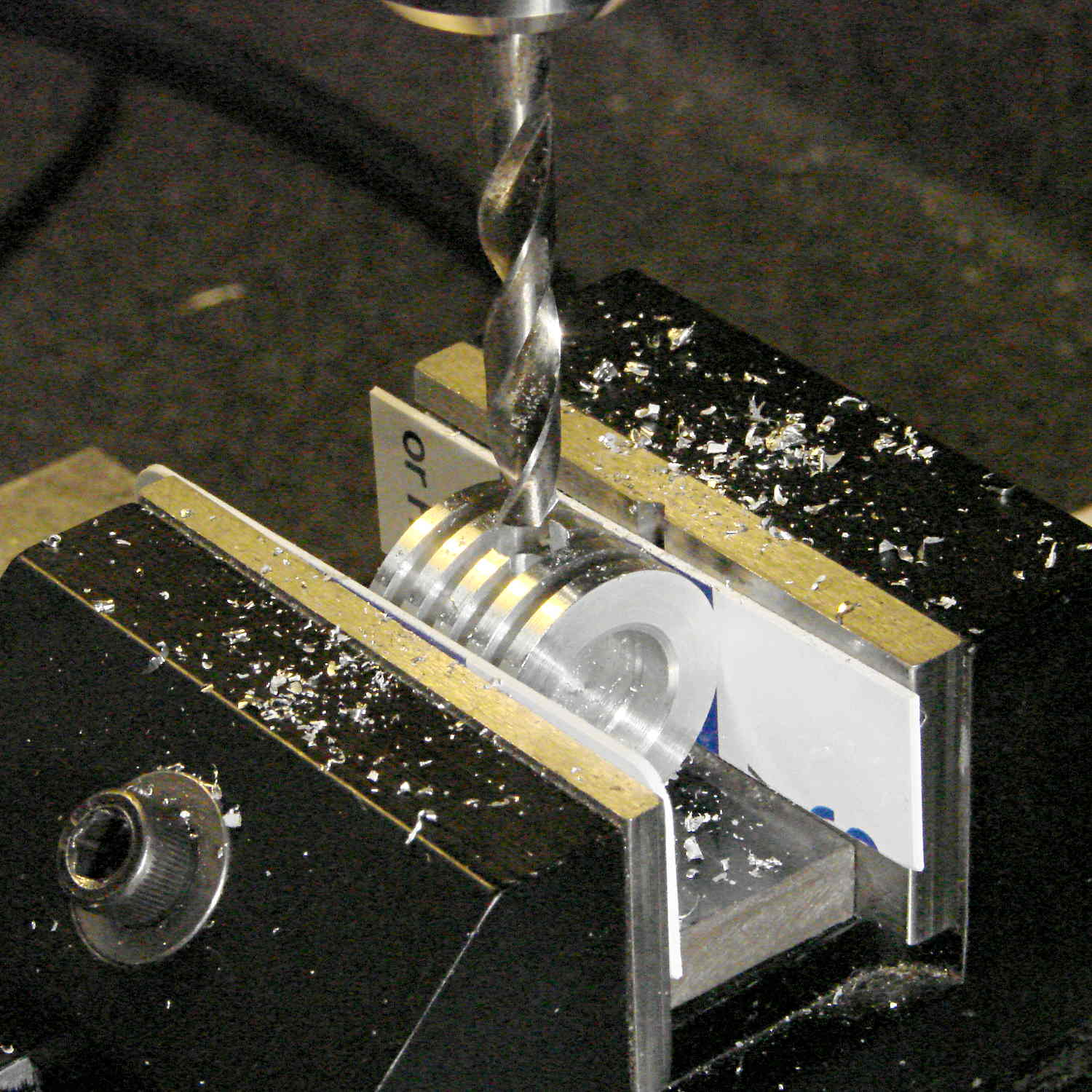
    So, drill a hole in the side:

    Ersatz aluminum heatsink - drilling
    Ersatz aluminum heatsink – drilling

    Epoxy a snippet of brass tubing from the Bottomless Bag o’ Cutoffs into the hole:

    Ersatz aluminum heatsink - tubing trial fit
    Ersatz aluminum heatsink – tubing trial fit

    Recycle the old wire and PET loom, solder to another fake Neopixel, blob epoxy inside to anchor everything, and press it into place:

    Ersatz aluminum heatsink - epoxying LED
    Ersatz aluminum heatsink – epoxying LED

    Cutting the failed LED & plastic heatsink off the wire left it a bit too short for that tall bulb, but some rummaging in the heap produced a 100 W incandescent floodlight with a nicely pebbled lens:

    Reflector floodlight - overview
    Reflector floodlight – overview

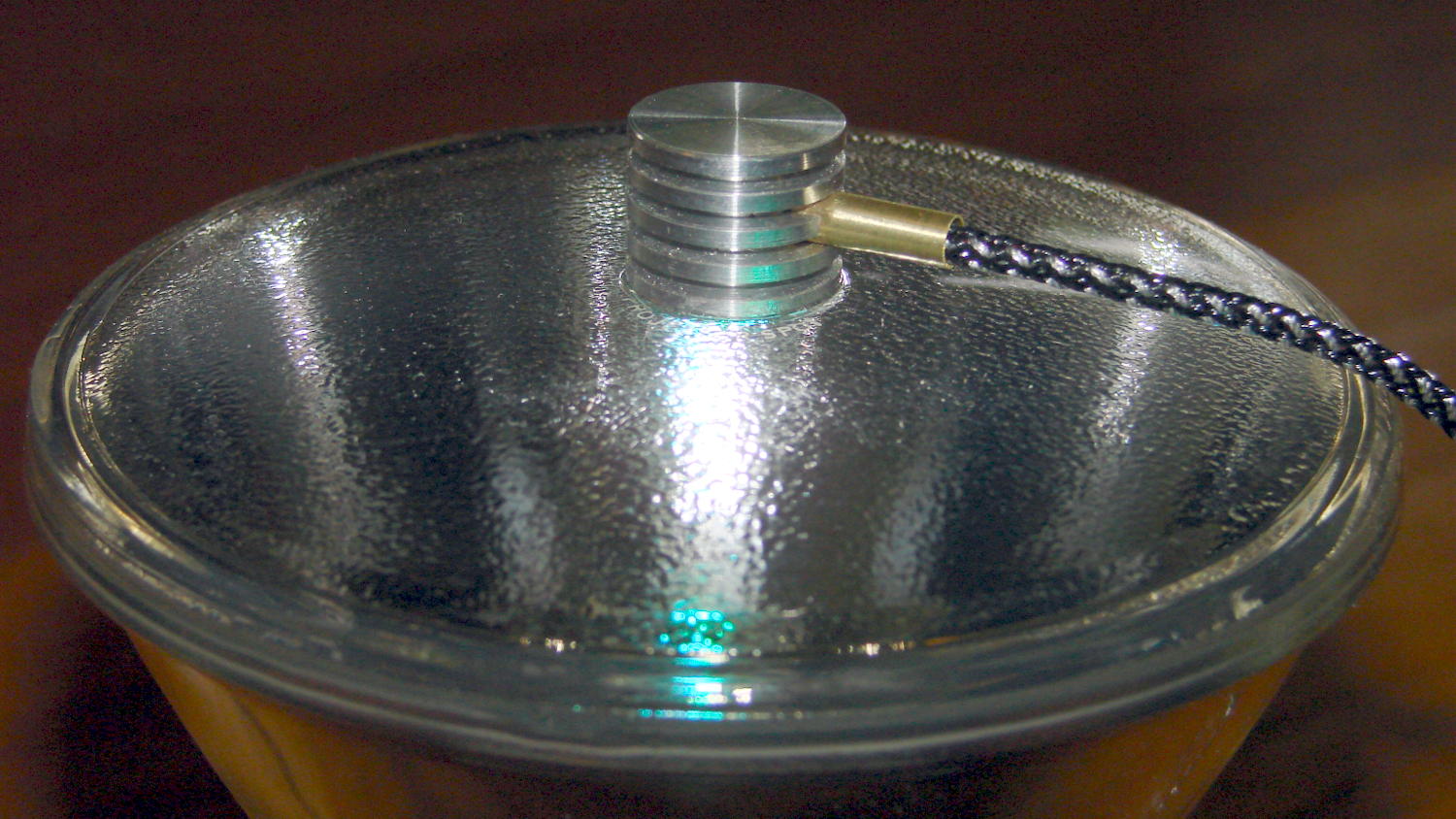
    A thin ring of clear epoxy secures the ersatz heatsink to the floodlight:

    Reflector floodlight - finned LED holder
    Reflector floodlight – finned LED holder

    This time, I paid more attention to centering it atop the General Electric logo ring in the middle of the lens, which you can just barely see around the perimeter of the aluminum fin. By pure raw good fortune, the cable ended up pointed in the general direction of the socket’s pull-chain ferrule; you can’t unscrew the bulb without tediously unsoldering the wires from connector atop the knockoff Pro Mini inside the base and squeezing them back out through the ferrule.

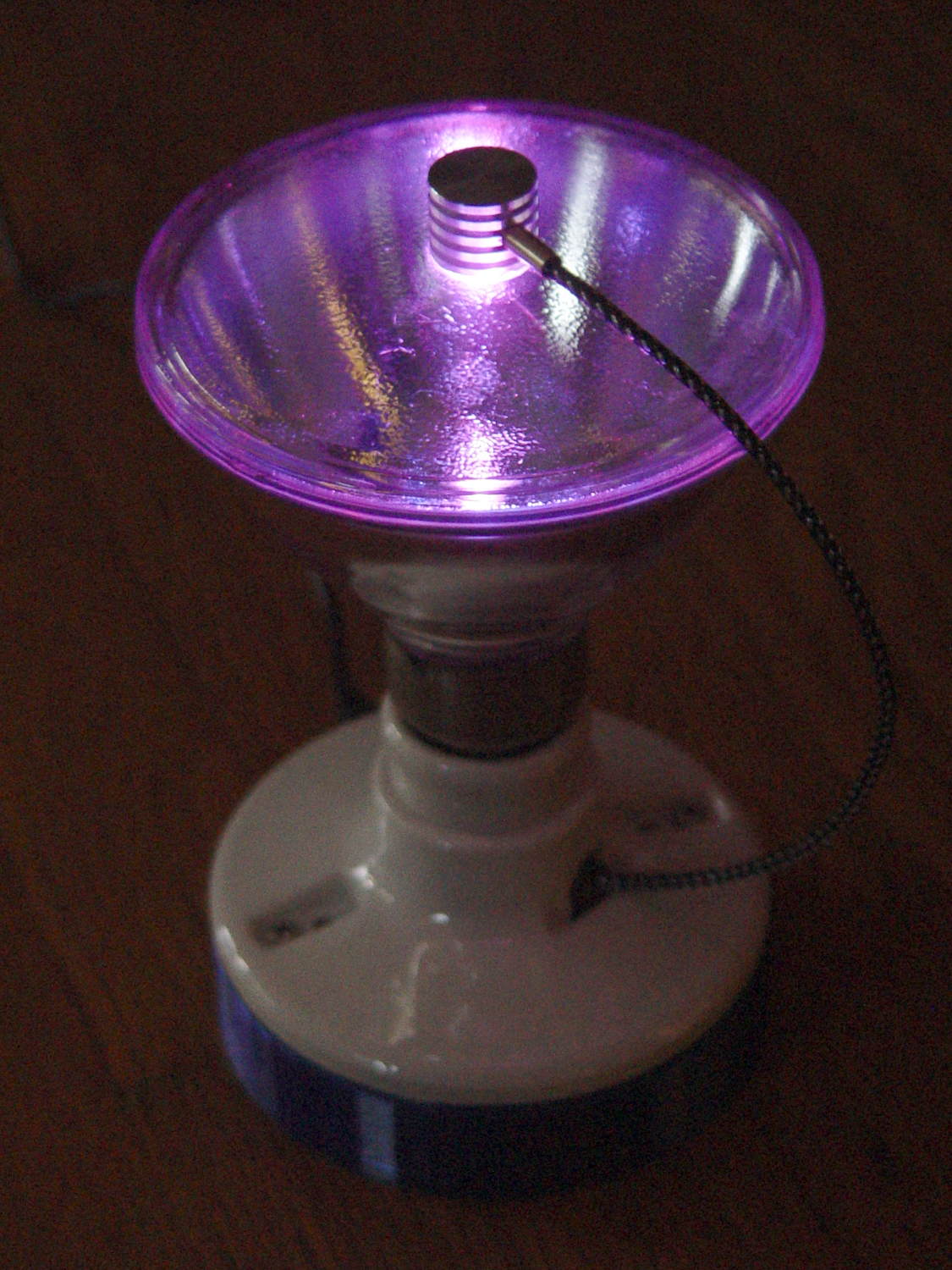
    With the firmware set for a single fake Neopixel on pin A3 and a 75 ms update rate, the floodlight bowl fills with color:

    Reflector floodlight - purple phase
    Reflector floodlight – purple phase

    It puts a colored ring on the ceiling and lights the whole room far more than you’d expect from 200 mW of RGB LEDs.

    Pretty slick, even if I do say so myself …

  • Inspiron Mini 10 as a 3D Printer Controller

    It turns out that the dual-core Intel Atom Inside an old Dell Mini 10 isn’t up to the demands of rendering modern web design; disk I/O speed has nothing to do with the CPU’s (lack of) ability to chew through multiple layers of cruft adorning what used to be straightforward static HTML.

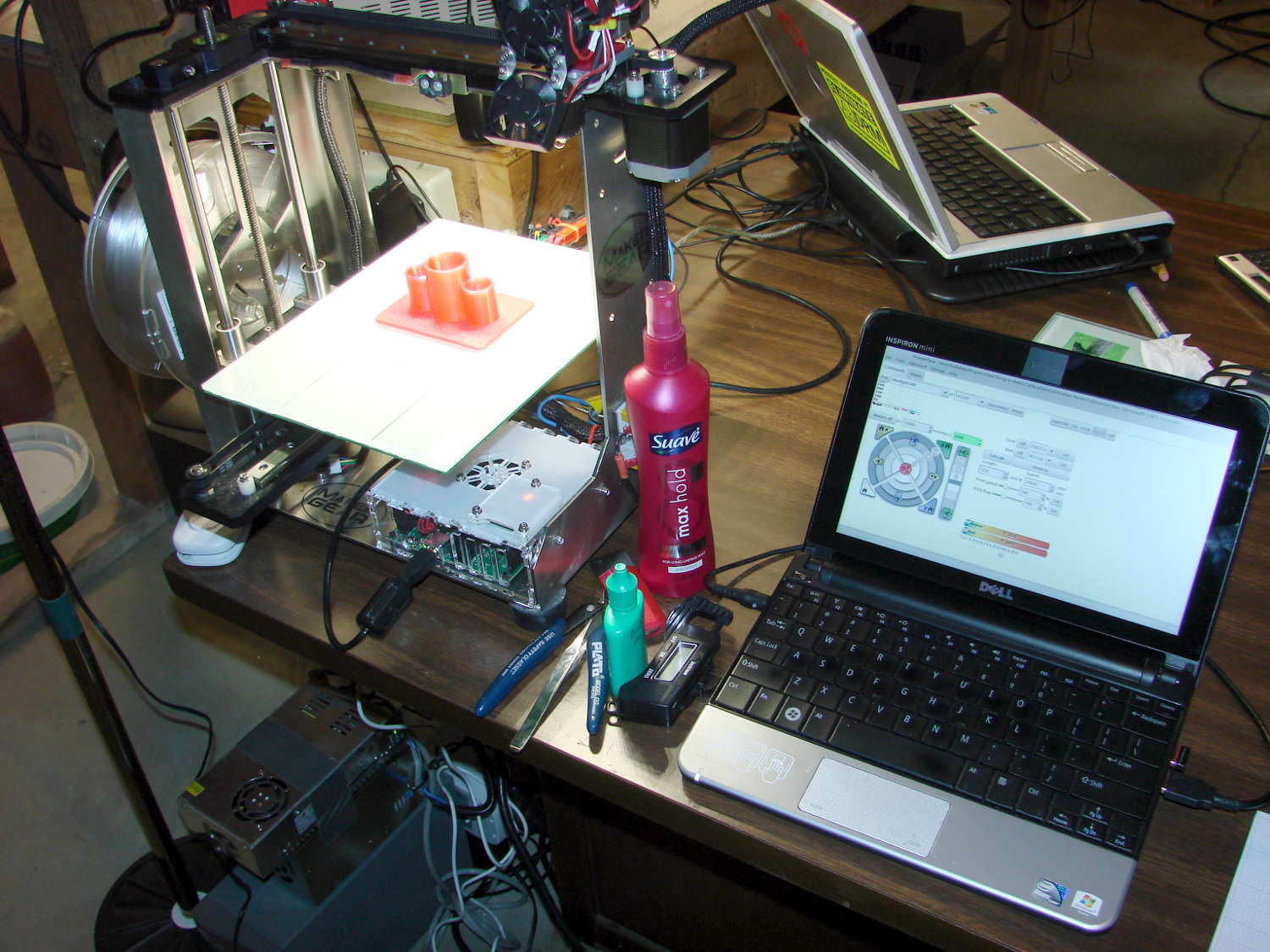
    So, equipped with Linux Mint / XFCE, it’s now found a new purpose in life:

    SnowWhite back in action
    SnowWhite back in action

    In truth, an Atom isn’t quite up to the demands of modern 3D printing, either, at least in terms of processing a huge G-Code file into a layer-by-layer path preview. Fortunately, Pronterface doesn’t generate the preview until you ask for it: arranging the UI to put the preview on a separate tab eliminates that problem.

    The Mini 10 can dribble G-Code into the printer just fine and looks much cuter than the hulking laptop in the background.

  • Recommended Stubby Multi-Driver

    This recently acquired Klein 32561 Stubby Multi Driver is definitely better than the others in my collection:

    Klein Stubby Multi Driver
    Klein Stubby Multi Driver

    The steel shaft has a 1/4 inch hex socket on one end, a 5/16 hex socket on the other, the two hex bits handle the usual screws, and it’s smaller than it looks.

    You must figure out what to do with the loose driver bit while using a socket.

    No ratchet, but you won’t miss it.

    Available from the usual online sources for about ten bucks; accept no substitutes…