Ed Nisley's Blog: Shop notes, electronics, firmware, machinery, 3D printing, laser cuttery, and curiosities. Contents: 100% human thinking, 0% AI slop.
That works out to a bit under 1000 page views/day of purely organic traffic.
As always, way more people than I’d expect come here with plumbing problems. On the upside, much of the bedbug saga has fallen off the trailing edge of the wedge; life is good!
Recent news about Dropbox removing its Public folder feature reminded me to do my every-other-month blog backup. Wordpress provides a method to “export” the blog’s text and metadata in their XML-ish format, so you can (presumably) import your blog into another WordPress instance on the server of your choice. However, the XML file (actually, ten of ’em, all tucked into a paltry 8 MB ZIP file) does not include the media files referenced in the posts, which makes sense.
Now, being that type of guy, I have the original media files (mostly pictures) tucked away in a wide variety of directories on the file server. The problem is that there’s no easy way to match the original file to the WordPress instance; I do not want to produce a table by hand.
Fortunately, the entry for each blog post labels the URL of each media file with a distinct XML tag:
Note the two leading tabs: it’s prettyprinted XML. (Also, should you see escaped characters instead of < and >, then WordPress has chewed on the source code again.)
While I could gimmick up a script (likely in Python) to process those files, this is simple enough to succumb to a Bash-style BFH:
That fetches 6747 media files = 1.3 GB, tucks them into directories corresponding to their WordPress layout, and maintains their original file dates. I rate-limited the download to an average of 5 s/file in the hope of not being banned as a pest, so the whole backup takes the better part of ten hours.
So I wind up blowing an extra gig of disk space on a neatly arranged set of media files that can (presumably) be readily restored to another WordPress instance, should the occasion arise.
Memo to Self: investigate applying the -r option to the base URL, with the -N option to make it incremental, for future updates.
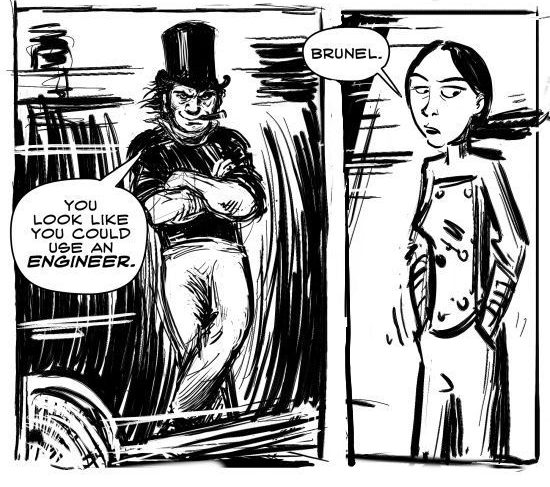
Earlier versions of the comics graphic novel are on her blog, including several stories that didn’t make the final book cut.
Highly recommended; if you don’t have wet eyes occasionally, you’re entirely too hard-hearted.
You should read Ada’s Analytical Engine Programming Guide; that’s not her title, but that’s what she wrote. If you’ve ever done any assembly language programming, you’ll feel right at home.
Also, get historical documents, commentary, and Analytical Engine emulators (!) at Fourmilab.
Makes me wish I lived in that Pocket Universe, it does:
Got an email, nominally from one Richard Gilmore of FedEx, concerning a parcel sent as International Next Flight (whatever that is). The Subject line read “We could not deliver your parcel, #00000665103”, although the message didn’t quite match:
Dear Customer,

This is to confirm that one or more of your parcels has been shipped.
Delivery Label is attached to this email.

Kind regards,
Richard Gilmore,
Sr. Delivery Agent.
The email address had nothing to do with FedEx, of course, and my filters tagged it as spam.
The “label” came in a ZIP file: Label_00000665103.zip
Extracting the “label” produced what would look like an MS Word file, if you were so trusting as to hide extensions of “known” filetypes and didn’t worry when you saw a file still sporting a DOC extension: Label_00000665103.doc.wsf
Handing that to VirusTotal produces no surprise at all:
VirusTotal Report
The file contains one very long line, the first chunk of which suggests it’s up to no good:
<job><script language=JScript>var a59253 = '+"HKCU"+cs'; var a59168 = '"); fp.WriteLine(" '; var a5988 = ';} else if('; var a59196 = 'gth;i'; var a59160 = 'fp.W'; var a59261 = 'ion"+c'; var a5999 = 's(f'; var a59254 = '+"SOFTWARE"+';
After a bit of poking, I applied a few minutes of sed reformatting, manual cleanup, and sorting:
sed 's/; var a/;\n/g' Label_00000665103.doc.wsf > lines.txt
... fix a few lines ...
sort -n lines.txt > sort.txt
Yeah, tanker boots and all; not the weirdest thing we saw during RIT’s graduation ceremonies.
This summer marks her fourth of four co-op semesters with Real Companies Doing Tech Stuff and her final classes end in December; RIT holds one ceremony in the spring and being offset by a semester apparently isn’t all that unusual. She (thinks she) has a job lined up after graduation and doesn’t need her doting father’s help.
But, hey, should you know someone with a way-cool opportunity (*) for a bright, fresh techie who’s increasingly able to build electronic & mechanical gadgets and make them work, drop me a note and I’ll put the two of you in touch. [grin]
(*) If that opportunity should involve 3D printed prosthetics with sensors and motors, she will crawl right out of your monitor…
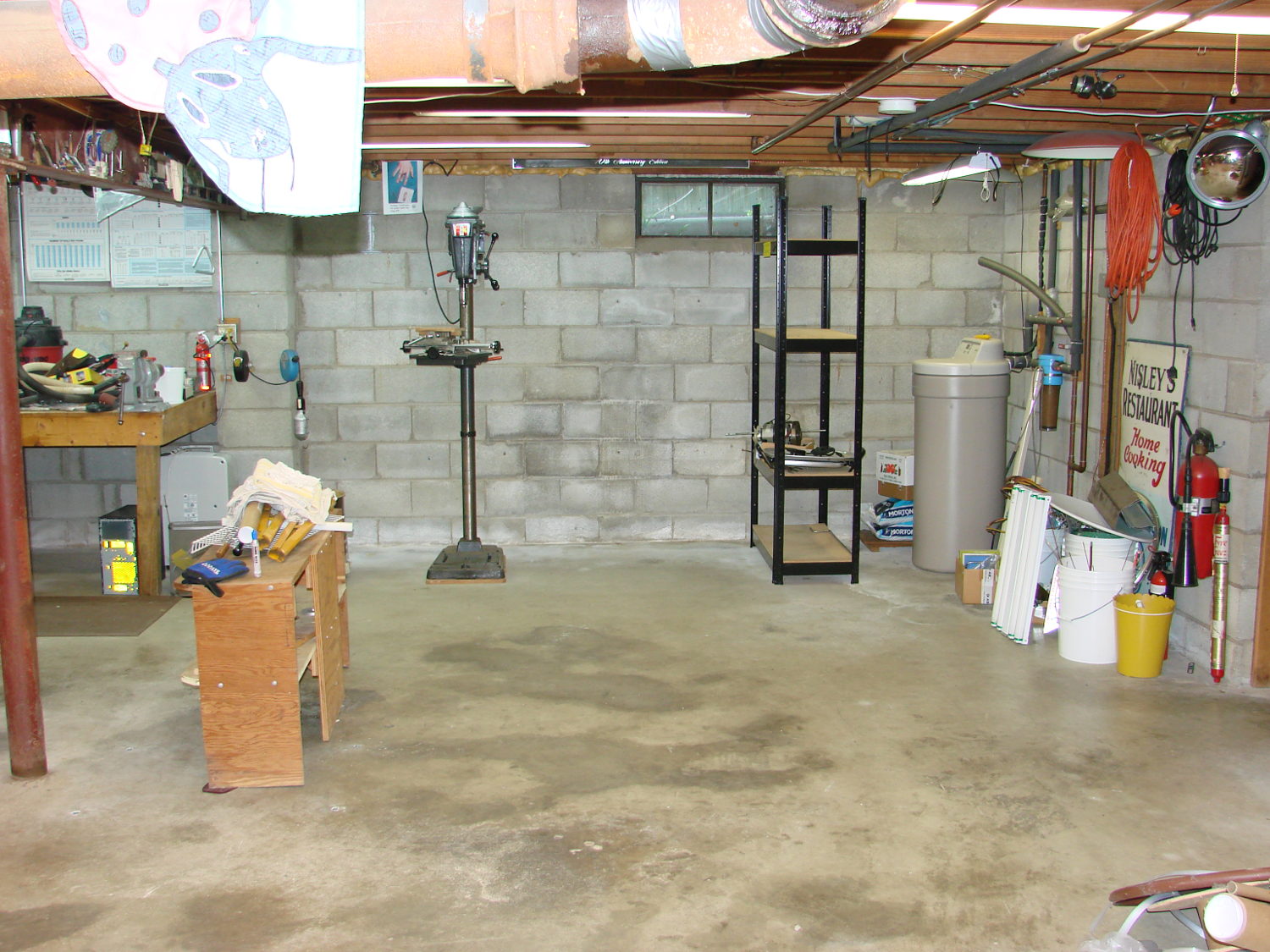
I now have some difficulty accomplishing what needs to be done:
Basement Shop – right
During the rest of May I must write a pair of columns, unpack / arrange / reinstall my remaining tools / parts / toys, endure a road trip to our Larval Engineer’s graduation (*), enjoy bicycling with my Lady, and surely repair a few odds-n-ends along the way.
I’ll generate occasional posts through June, after which things should be returning to what passes for normal around here…
(*) For reasons not relevant here, our Larval Engineer’s schedule includes a final co-op and wind-up semester after “graduation”. Perhaps she’s entering the Chrysalis phase of her development?
Autodesk just Borged Netfabb and, in the process of merging their address lists, asked me to update my info and agree to their very detailed Privacy Statement. You should take a look at it; the link will open in a new tab / window / whatever, so you don’t lose your place here.
Have you noticed how those “statements” always have a very long and firmly fixed line width that doesn’t adapt to your window size, use various shades of light-gray-on-white typefaces in the smallest sizes, and continue for pages and pages. I don’t believe in coincidences, either.
Some web browsers may transmit “do-not-track” signals to websites with which the browser communicates. Because of differences in how web browsers incorporate and activate this feature, it is not always clear whether users intend for these signals to be transmitted, or whether they are even aware of them.
Participants in the leading Internet standards-setting organization that is addressing this issue are in the process of determining what, if anything, websites should do when they receive such signals. Autodesk currently does not take action in response to these signals. If and when a final standard is established and accepted, we will reassess how to respond to these signals.
For information about cookies, web beacons and similar technologies, please read our Cookie Policy.
After plowing through much of their “statement”, I decided Autodesk doesn’t do anything I need to know about and, seeing as how Netfabb gradually faded from my attention when their web service joined Microsoft’s Azure cloud, I declined to “confirm my preferences” and didn’t click the big blue button. I doubt such inaction will remove my email address from their list, but it’s the only choice they offer.
Because I can’t tell if a website really wants to track me, I block ads, disable Flash, and destroy all cookies when I leave their site, Just In Case they inadvertently deployed all that crap. I’m sure they never intend to serve malware through an ad slot brokered on their site, but mistakes do happen, and I’m glad to assist them.
If you’re seeing ads on this page right now, they come from WordPress and I get a small cut. You should start using an ad blocker right now; if your browser doesn’t permit you to block ads, change browsers. If you worry that reducing my advertising revenue will compromise the quality and quantity of what you see here, send me a sack of money through Paypal. Fair enough?