Ed Nisley's Blog: Shop notes, electronics, firmware, machinery, 3D printing, laser cuttery, and curiosities. Contents: 100% human thinking, 0% AI slop.
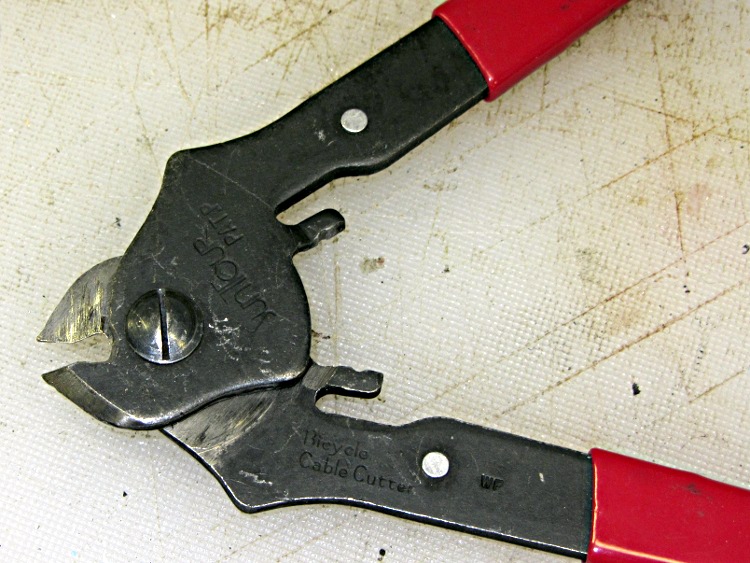
It should go without saying, but you do not cut music wire with diagonal cutters intended for electrical wire or the low-carbon steel shears built into wire strippers. I use a bicycle cable cutter that easily slices through the hard wire used in brake cables and their housing:
Every now and again I touch up the jaws with a diamond file to get rid of small dings; despite being hardened, those fine points seem particularly prone to burrs.
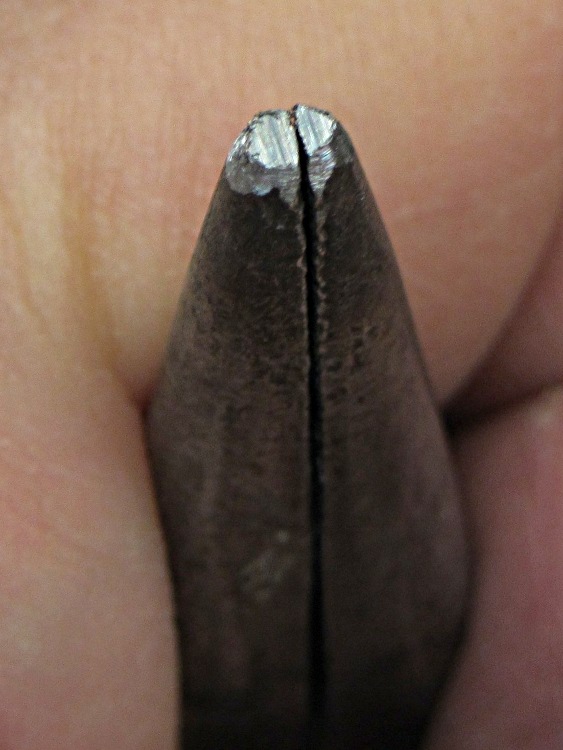
When you see an ordinary wire cutter with matching half-moons in each blade, you know what happened…
Wrestling with those springs suggested the tips of the needle nose pliers needed attention, so I introduced them to Mr. Grinding Wheel:
That flattened the tips, but the jaws no longer meet flush at their ends. They’ve been reshaped a while ago, so (much though it pains me to admit this) it’s time to deploy the backup pliers…
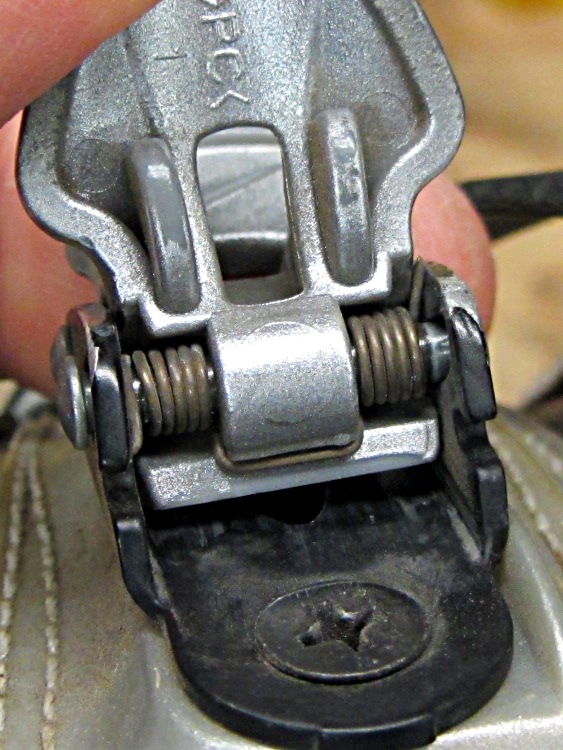
The Nike cycling shoes I bought some years ago (at a steep discount when they got out of the cycling shoe biz) close with a ratcheting plastic strap rather than laces, so I bought a spare set of straps: the plastic part always breaks first. As it turned out, a coil spring inside each latch failed and the stub end (on the right side here) gradually worked its way between the latch tab and the frame:
Cycling shoe latch – broken spring
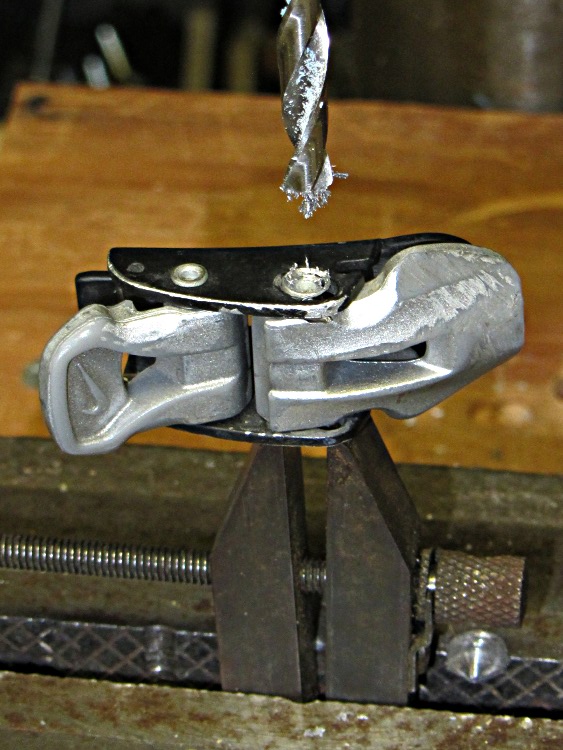
Eventually this got to the point where the latches jammed and I had to do something. The first step was to drill out the rivet holding the spring and tab in place:
Drilling latch rivet – magnetized bit
You’ll note the rich collection of swarf clinging to the drill bit, which indicates this one hasn’t been used since a lightning strike magnetized all the steel in the house. A pass through that demagnetizer shook off the swarf and prepared the bit for the next time.
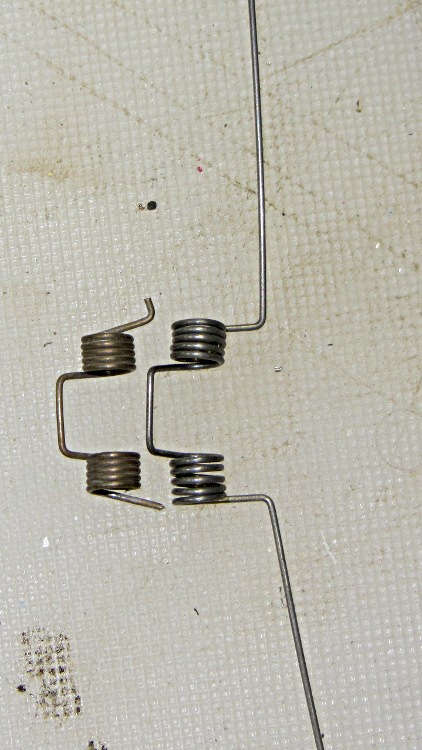
Releasing all the parts shows the problem:
Nike cycling shoe latch – broken spring
The OEM springs used 24 mil spring wire that, surprisingly, matched a box of music wire in the Basement Laboratory Warehouse Wing. The spring coils have 5 turns that just clear the 3 mm rivet that I recycled as a mandrel; I think a 2.5 mm pin would produce a better fit. Not being a fan of rivets, I replaced them with 4-40 machine screws, even though the threads probably won’t do the aluminum frame any good at all.
A protracted bending and wrapping session produced a reasonable approximation of the OEM spring:
Latch spring – formed
It’s worth noting that each of those coils uses up about 55 mm of wire: 5 × 3.5 mm × π. Cut an excessively long piece from the music wire coil!
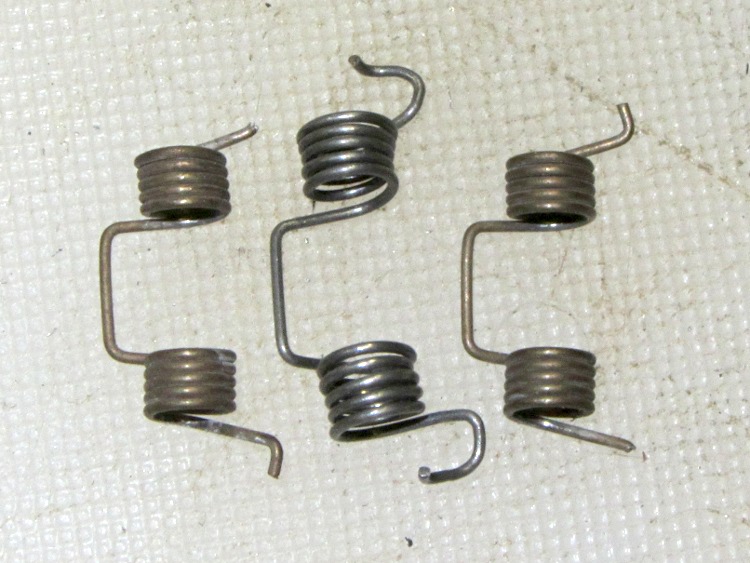
Trimming and shaping the ends to fit through the notches and around the outside of the frame shows that my wire-bending skills need considerably more practice. This spring (the second one I made) also shows that my beginner’s luck with the first coils wore off all too quickly:
OEM springs with homebrew replacement
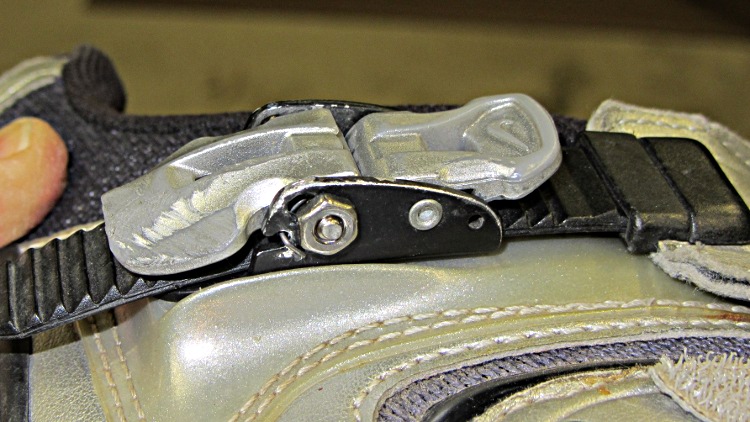
But both springs fit and work fine, so I’ll call it done for now:
Repaired latch – nut side
Will a replacement spring break before the plastic strap?
The Locust Grove / Morse Estate (yes, that Morse) holds Sunset Sensations fundraisers throughout the year, wherein local restaurants and caterers prepare three food samples based on what’s growing in the historically accurate gardens and a local wine store selects matching wines. Mary and I volunteer as servers and they generally assign me to the wine table; being one of the few volunteers with Y chromosomes, I’m good at toting boxes and yanking corks.
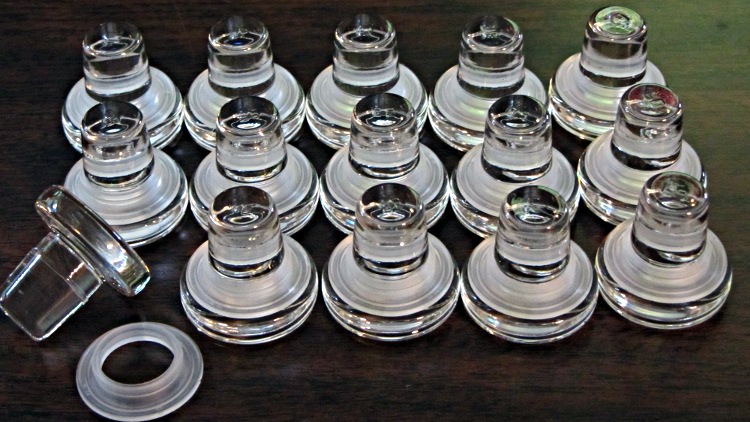
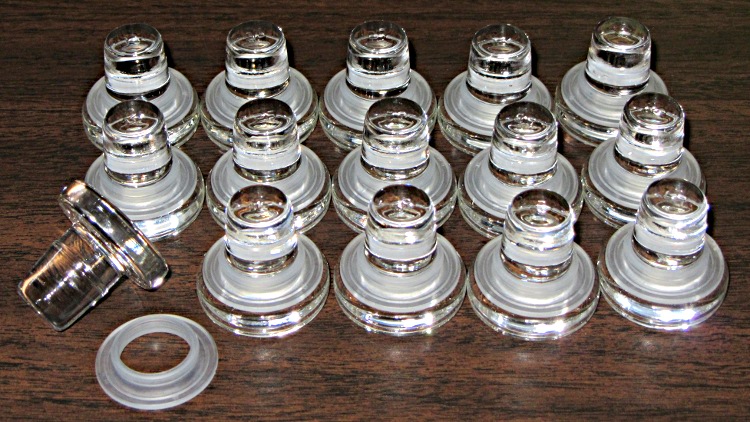
The most recent event featured Cusumano Insolia wine in bottles with glass stoppers:
Glass wine corks – natural light
Front lighting with the flash makes them even more glittery:
Glass wine corks – flash
I’m thinking one of these atop a little box with an internal LED would make a dandy nightlight. Maybe etch the stem surface to add a bit of diffuse illumination?
Saw this at a rest stop along I-90 during the Semiannual Migration of the College Students…
He’s pouring water into a small funnel with a large paper cup, which explains all the spillage. I couldn’t hoist that 5 gallon bucket over my head, much less pour its contents into the tiny opening, so what he’s doing has a certain internal logic, but …
I think he’s refilling the toilet flush tank and, if so, I hope the bus designers made the drain tank much larger than the flush tank!
The display on Mary’s Cateye Astrale cyclocomputer (remember cyclocomputers?) faded to gray, which meant a new CR2032 lithium cell was in order. I grabbed one from the heap, popped out the old cell, inserted the new cell, and … the display stayed blank.
Quick like a bunny, I reinserted the old cell to save the odometer (15524 miles) and wheel circumference (1475 mm) data; the display returned to dim gray.
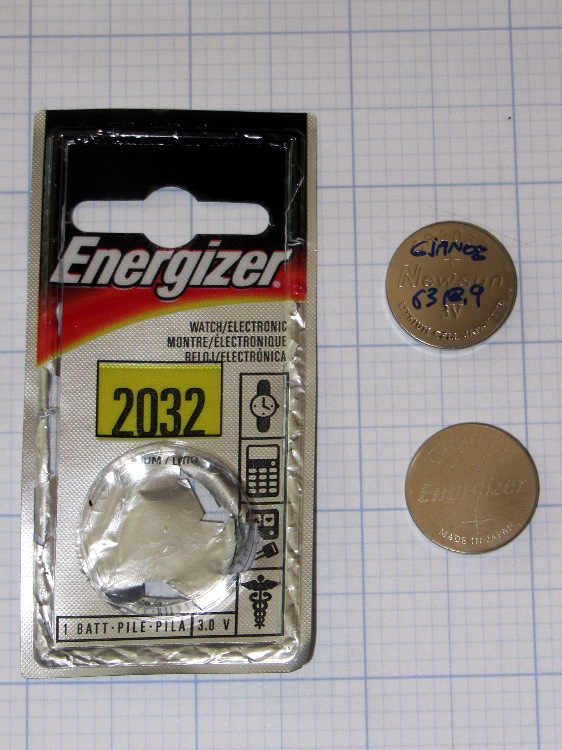
The “new” cell, which came from an unopened pack, read 0.45 V with no load…
The cell didn’t have a date code, but the package sports a cryptic MU that might encode the date of manufacture or the date of packaging or the copyright date or something; the various search results aren’t forthcoming and the Energizer site gives no explanation.
I’m pretty sure I haven’t owned that package for more than a few years and it’s been in a shirtsleeve environment (plus the occasional hot van) ever since.
Another Energizer cell from a more recent lot, bearing CA on the package and YA on the cell, worked fine.
Being that sort of bear, I wrote the date and mileage on the previous cell (a Newsun, whoever they are, with a 3Y code), because the last time around the odometer value didn’t survive the cell change. The current total works out to 277 miles/month = 3300 miles/year, including winter downtime, which is fine with us; we mostly ride the bikes around town on errands and take the occasional tour.
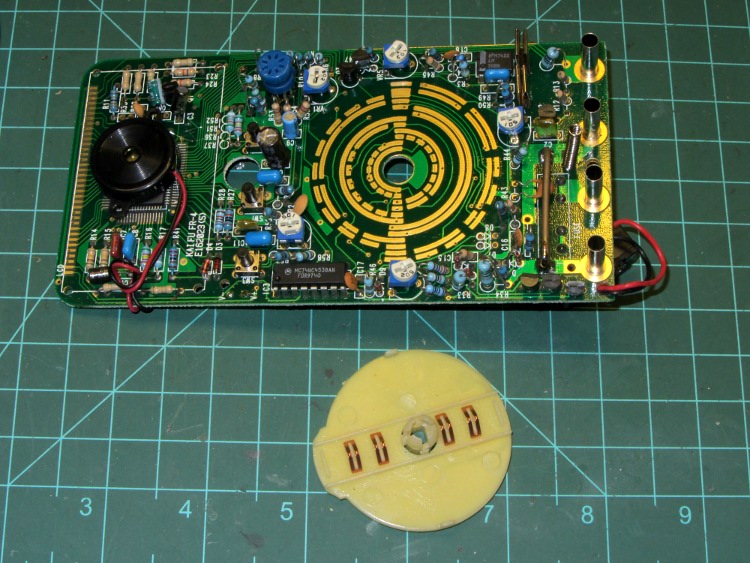
One of my multimeters began reporting bogus values that improved by working the range switch back-and-forth, which suggested the switch contacts need cleaning. Taking the meter apart was easy, right up to the point where I removed the range switch from the PCB by compressing the four locking tabs on the central shaft:
Multimeter range selector switch
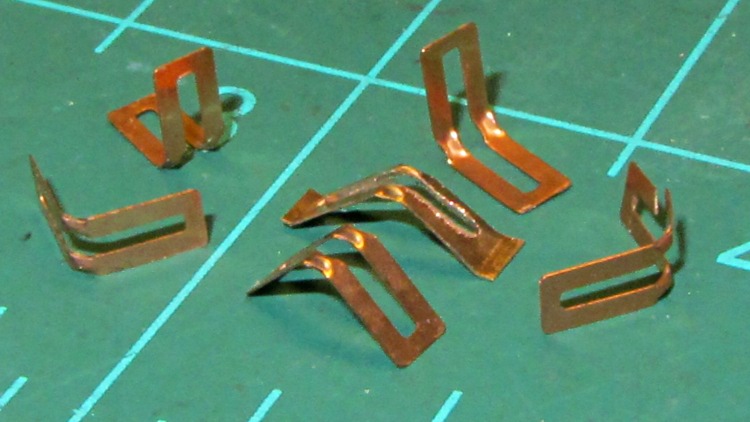
Just before taking that picture, the switch launched half a dozen spring contacts across the bench, my shirt, and the floor… I recovered four for the picture and later found a fifth smashed on the floor, but the last contact remains AWOL.
The contact in the middle, the oddly shaped one with small tabs on the ends, is a prototype replacement conjured from 6 mil phosphor bronze stock:
Multimeter range switch contacts
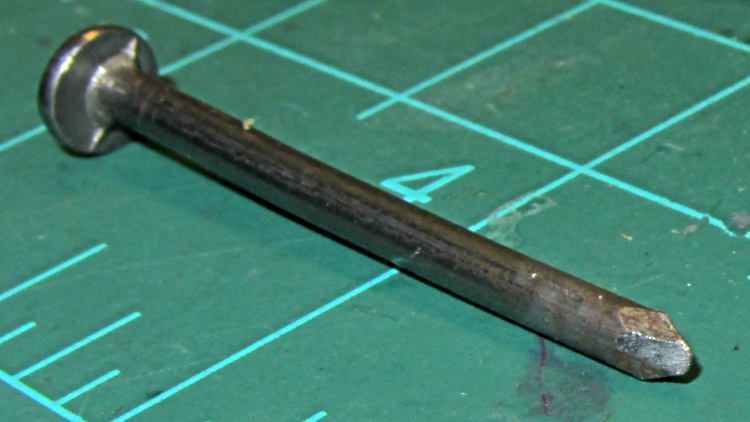
The little domes ensure a good sliding surface, but require two bends in the middle of the contact and some way to shape the metal into a dome. After a few experiments, I filed the end of a nail into a rounded chisel that worked pretty well:
DMM switch contact punch
The original contacts came from 3.5 mil stock and have considerably more flex; 6 mil stock is what I have.
I think I should make half a dozen contact springs to replace the entire set, a task requiring more time than I have right now. For the record, the overall process goes like this:
lay out overall shape, slightly longer than needed
cut center opening with abrasive wheel
cut out contact
punch contact domes (from back = dimples)
bend to shape
trim ends to length (not done in picture)
dress raw edges (not done in picture)
Given the number of parts and the fiddly accuracy required to make the slot, this might be a good job for the Sherline, although clamping each little proto-spring down while getting the abrasive wheel in there seems daunting.
Perhaps cutting the slots and punching the dimples would work better before cutting out the contacts, with a sheet clamped on four sides? The center will be floppy, what with all the slots, but grinding slots on the middle contacts first might be helpful. Would adhesive under the sheet to hold down the middle gunk up the abrasive wheel?


 The Smell of Molten Projects in the Morning