The Smell of Molten Projects in the Morning

Ed Nisley's Blog: Shop notes, electronics, firmware, machinery, 3D printing, laser cuttery, and curiosities. Contents: 100% human thinking, 0% AI slop.

Author: Ed

  • Garden Hose Ball Valve Handle Replacement

    The handle cracked and fell off this ball valve while I collected the hoses and suchlike from the Vassar Farms plot:

    Ball valve with broken handle
    Ball valve with broken handle

    Surprisingly, it’s not plastic, but (most likely) some cheap & grainy pot metal that wasn’t designed for durability. Rather than throw out that nice brass and stainless steel valve body, I figured a new handle was in order.

    To the Basement Laboratory Machine Shop Wing!

    The ball rotates freely inside the valve with the handle missing, so I found an aluminum rod (which, IIRC, was the original kickstand from my Linear Mach III ‘bent) that exactly fit the ball opening’s ID:

    Ball valve - removing nut
    Ball valve – removing nut

    What with it being a dark and stormy night outside (and having shut down all the computers in anticipation of a monster thunderstorm), I decided to get medieval with some hand tools. The first step involved finding an aluminum plate of about the right size and thickness, with markings left over from whatever I’d been building when it last saw the ceiling lights:

    Ball valve handle - initial layout
    Ball valve handle – initial layout

    After carefully drilling & filing the shaft hole, it looked like it’d work fine. Then I realized that, for whatever reason, the original design aligned the handle parallel to the hose when the valve was closed, which made very little sense when analyzed according to the Principle of Least Surprise.

    So I drilled-and-filed another hole on the other end at right angles to the first one:

    Ball valve handle - proper alignment
    Ball valve handle – proper alignment

    The original handle had two bumps molded on the bottom that acted as stops at each end of its 90° rotation. I figured a pair of 10-32 screws would suffice, not to mention they’d provide a bit of adjustment in case I blundered the hole positions. I planned to chop these stubs to whatever set the proper length below the plate:

    Ball valve handle - trial fit
    Ball valve handle – trial fit

    It turned out that the proper length was just about exactly that of a 1/4 inch 10-32 set screw flush with the top of the plate, so that’s what I used instead. They’re located one radius out from the outline of the valve body; trace the body shape on the handle in each orientation, eyeball one setscrew radius out from those intersections, and drill the holes.

    Lay out a nice handle shape by eye, rough it on the bandsaw, introduce it to Mr Belt Sander for final shaping, touch up the concave corners with a rat-tail file, scuff the flat surfaces clean with a Dremel stainless steel wire brush to produce a used-car finish (nice polish over deep scratches), and it’s all good:

    Ball valve handle - top view
    Ball valve handle – top view

    The knob on the end is actually a foot intended for the bottom of a widget case:
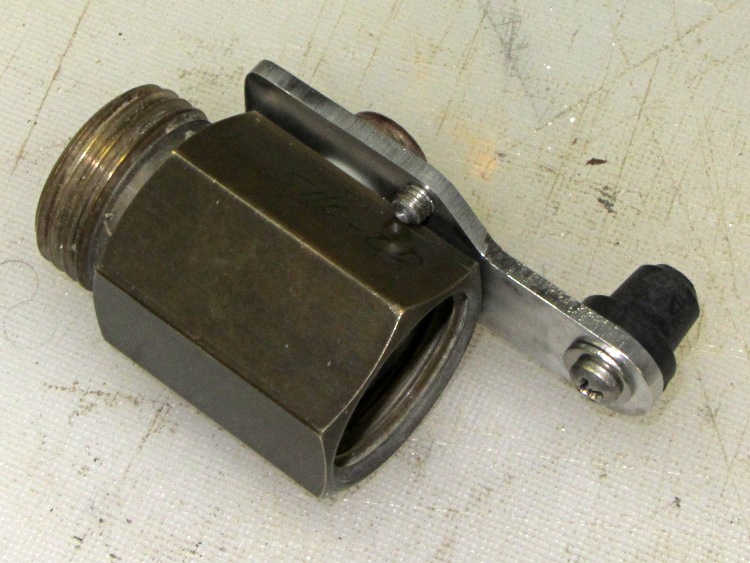
    Ball valve handle - bottom view
    Ball valve handle – bottom view

    It won’t get leak-tested until next year, but what could possibly go wrong?

    One thing, perhaps: that screw likely lies too close to the hose, particularly one sporting a replacement connector. I may be forced to bend the narrow part of the handle up a bit…

  • Unit Pricing: Fiddling the Unit of Measure

    Another trip to WalMart, another unit pricing puzzle

    Here’s the house brand towel:

    WM Deco Towel - unit price
    WM Deco Towel – unit price

    And here’s the name-brand towel for a mere one cent more per hundred towels:

    Bounty Select-a-Size Towel - unit price
    Bounty Select-a-Size Towel – unit price

    How can this be?

    Easy! Notice that the name-brand towel allows you to tear off a smaller sheet, which is actually a good idea. Even better, at least from their perspective: more sheets per package = lower unit price! I didn’t check the actual mini-towel size, but surely it’s less than half the usual size, so the comparable unit prices is more than a factor of two higher than shown.

    I suppose it’s only a matter of time before WalMart slices their towels in half to get an even better unit price.

    Carpet and floor tile used to be priced per square yard. Now it’s roughly the same dollar amount per square foot.

  • Cutting Music Wire

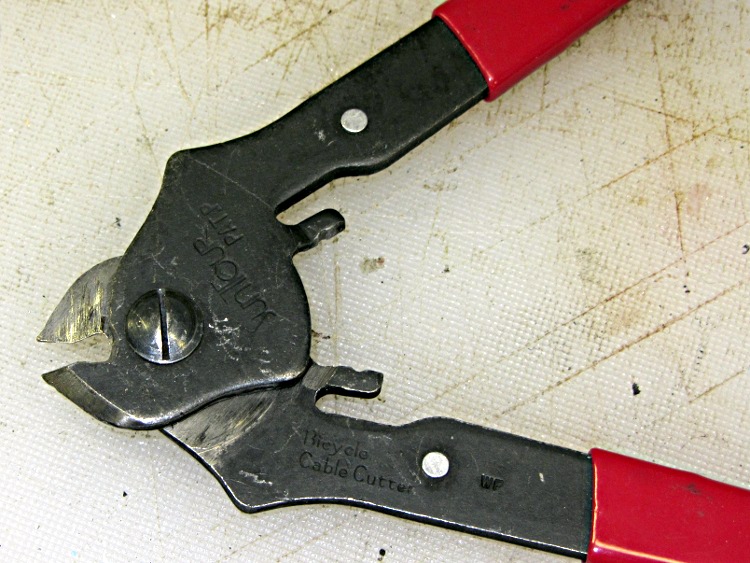
    It should go without saying, but you do not cut music wire with diagonal cutters intended for electrical wire or the low-carbon steel shears built into wire strippers. I use a bicycle cable cutter that easily slices through the hard wire used in brake cables and their housing:

    Bicycle cable cutter
    Bicycle cable cutter

    I’ve owned this one forever, but those cutters from Park should work just as well; the odd protrusions behind the pivot crimp aluminum caps on stranded cable. I also have diagonal cutters with hardened jaws, but they’re too bulky for fine work and tend to fire the stub ends across the Basement Laboratory.

    Every now and again I touch up the jaws with a diamond file to get rid of small dings; despite being hardened, those fine points seem particularly prone to burrs.

    When you see an ordinary wire cutter with matching half-moons in each blade, you know what happened…

  • Needle Nose Pliers Reshaping

    Reshaped needle nose pliers jaws
    Reshaped needle nose pliers jaws

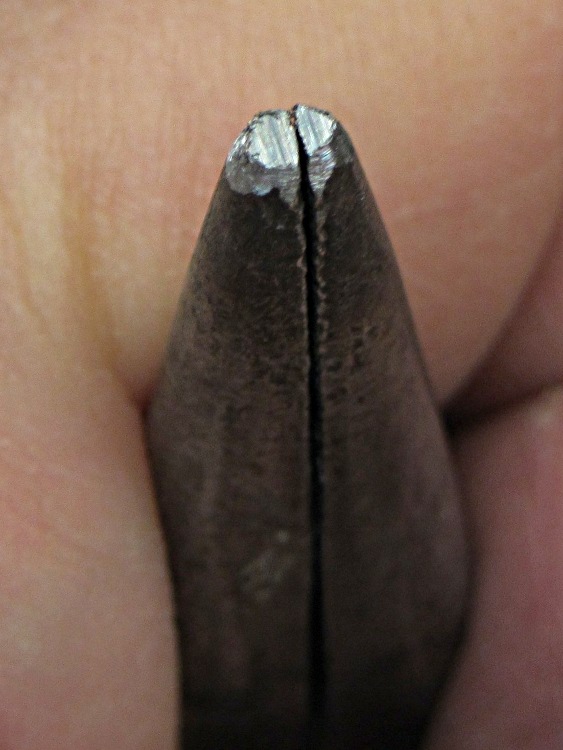
    Wrestling with those springs suggested the tips of the needle nose pliers needed attention, so I introduced them to Mr. Grinding Wheel:

    That flattened the tips, but the jaws no longer meet flush at their ends. They’ve been reshaped a while ago, so (much though it pains me to admit this) it’s time to deploy the backup pliers…

  • Nike Cycling Shoe Latches: Resprung

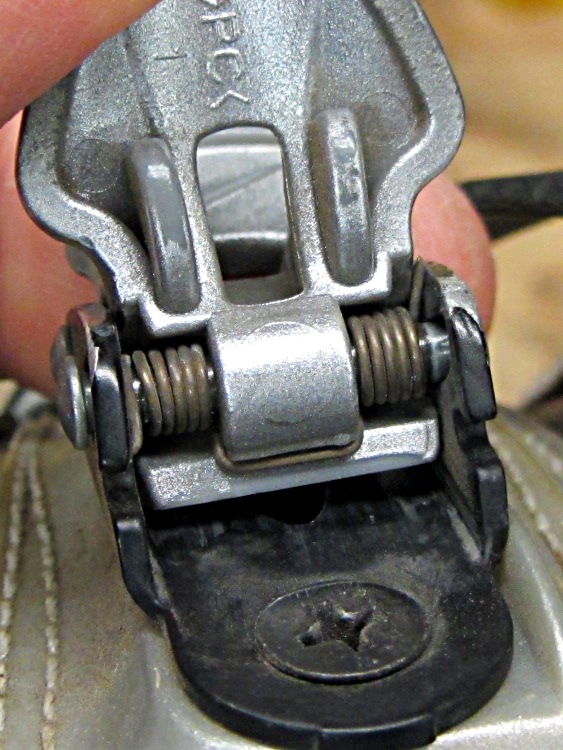
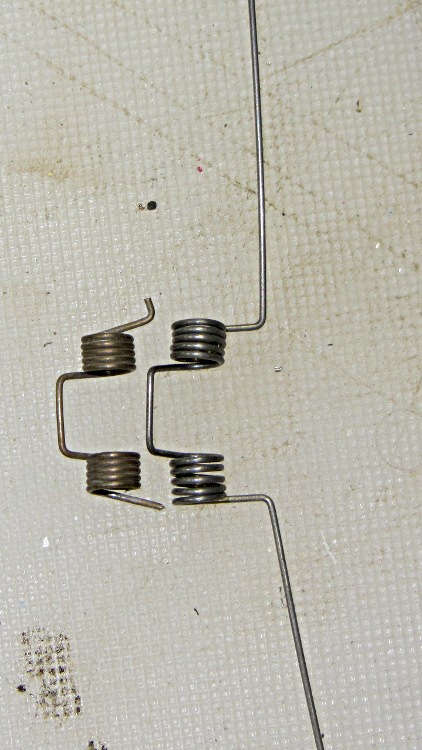
    The Nike cycling shoes I bought some years ago (at a steep discount when they got out of the cycling shoe biz) close with a ratcheting plastic strap rather than laces, so I bought a spare set of straps: the plastic part always breaks first. As it turned out, a coil spring inside each latch failed and the stub end (on the right side here) gradually worked its way between the latch tab and the frame:

    Cycling shoe latch - broken spring
    Cycling shoe latch – broken spring

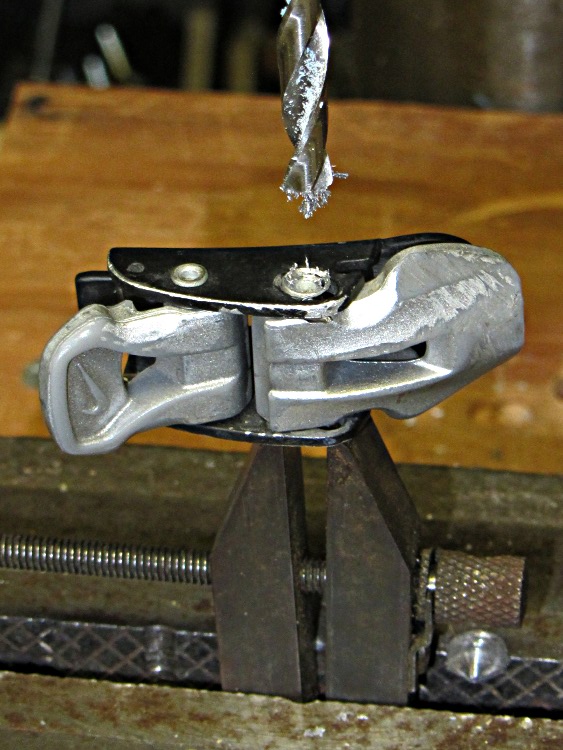
    Eventually this got to the point where the latches jammed and I had to do something. The first step was to drill out the rivet holding the spring and tab in place:

    Drilling latch rivet - magnetized bit
    Drilling latch rivet – magnetized bit

    You’ll note the rich collection of swarf clinging to the drill bit, which indicates this one hasn’t been used since a lightning strike magnetized all the steel in the house. A pass through that demagnetizer shook off the swarf and prepared the bit for the next time.

    Releasing all the parts shows the problem:

    Nike cycling shoe latch - broken spring
    Nike cycling shoe latch – broken spring

    The OEM springs used 24 mil spring wire that, surprisingly, matched a box of music wire in the Basement Laboratory Warehouse Wing. The spring coils have 5 turns that just clear the 3 mm rivet that I recycled as a mandrel; I think a 2.5 mm pin would produce a better fit. Not being a fan of rivets, I replaced them with 4-40 machine screws, even though the threads probably won’t do the aluminum frame any good at all.

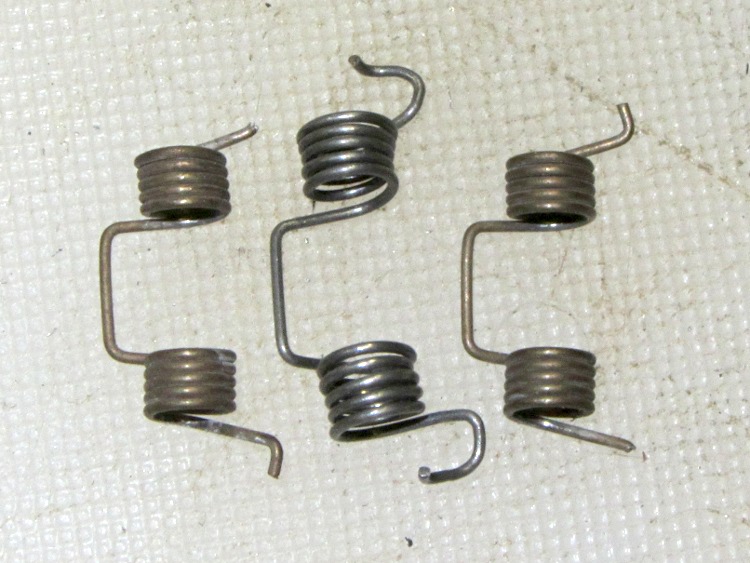
    A protracted bending and wrapping session produced a reasonable approximation of the OEM spring:

    Latch spring - formed
    Latch spring – formed

    It’s worth noting that each of those coils uses up about 55 mm of wire: 5 × 3.5 mm × π. Cut an excessively long piece from the music wire coil!

    Trimming and shaping the ends to fit through the notches and around the outside of the frame shows that my wire-bending skills need considerably more practice. This spring (the second one I made) also shows that my beginner’s luck with the first coils wore off all too quickly:

    OEM springs with homebrew replacement
    OEM springs with homebrew replacement

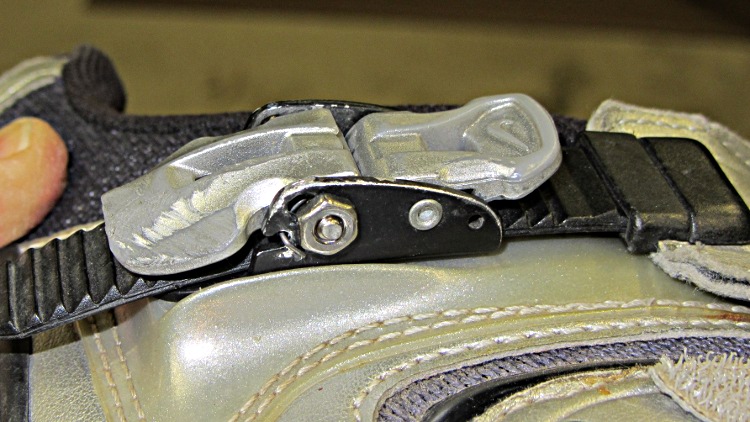
    But both springs fit and work fine, so I’ll call it done for now:

    Repaired latch - nut side
    Repaired latch – nut side

    Will a replacement spring break before the plastic strap?

    Obviously, I need a CNC spring bender

  • Glass Wine Corks

    The Locust Grove / Morse Estate (yes, that Morse) holds Sunset Sensations fundraisers throughout the year, wherein local restaurants and caterers prepare three food samples based on what’s growing in the historically accurate gardens and a local wine store selects matching wines. Mary and I volunteer as servers and they generally assign me to the wine table; being one of the few volunteers with Y chromosomes, I’m good at toting boxes and yanking corks.

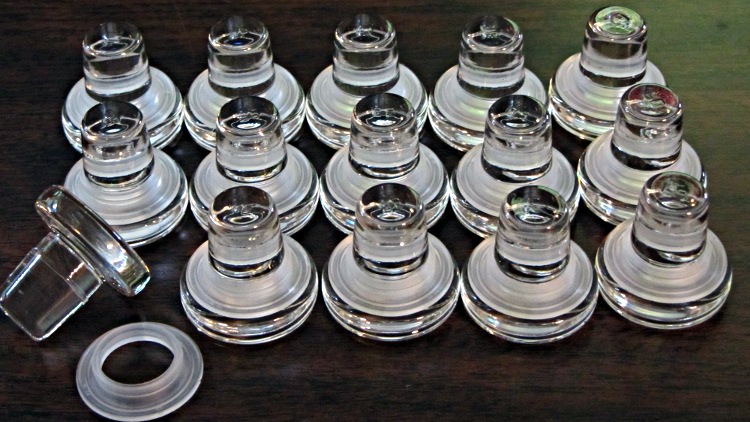
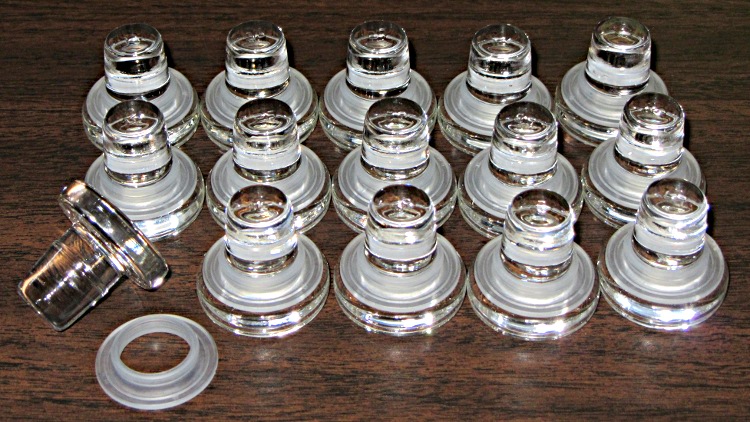
    The most recent event featured Cusumano Insolia wine in bottles with glass stoppers:

    Glass wine corks - natural light
    Glass wine corks – natural light

    Front lighting with the flash makes them even more glittery:

    Glass wine corks - flash
    Glass wine corks – flash

    I’m thinking one of these atop a little box with an internal LED would make a dandy nightlight. Maybe etch the stem surface to add a bit of diffuse illumination?

    Perhaps I don’t get out nearly enough…

  • Bus Maintenance?

    Refilling bus tank
    Refilling bus tank

    Saw this at a rest stop along I-90 during the Semiannual Migration of the College Students…

    He’s pouring water into a small funnel with a large paper cup, which explains all the spillage. I couldn’t hoist that 5 gallon bucket over my head, much less pour its contents into the tiny opening, so what he’s doing has a certain internal logic, but …

    I think he’s refilling the toilet flush tank and, if so, I hope the bus designers made the drain tank much larger than the flush tank!