Ed Nisley's Blog: Shop notes, electronics, firmware, machinery, 3D printing, laser cuttery, and curiosities. Contents: 100% human thinking, 0% AI slop.
mkdir /tmp/Video
cd /tmp/Video
sn=1 ; for f in /mnt/backup/Video/2014-05-29/* ; do printf -v dn 'dsc%05d.jpg' "$(( sn++ ))" ; cp -a $f $dn ; done
avconv -r 30 -i dsc%05d.jpg -q 5 Pok-Saratoga-Rochester.mp4
I tossed out a few images you didn’t need to see, then renumbered the remainder:
sn=1 ; for f in * ; do printf -v dn 'dsc%05d.jpg' "$(( sn++ ))" ; mv $f $dn ; done
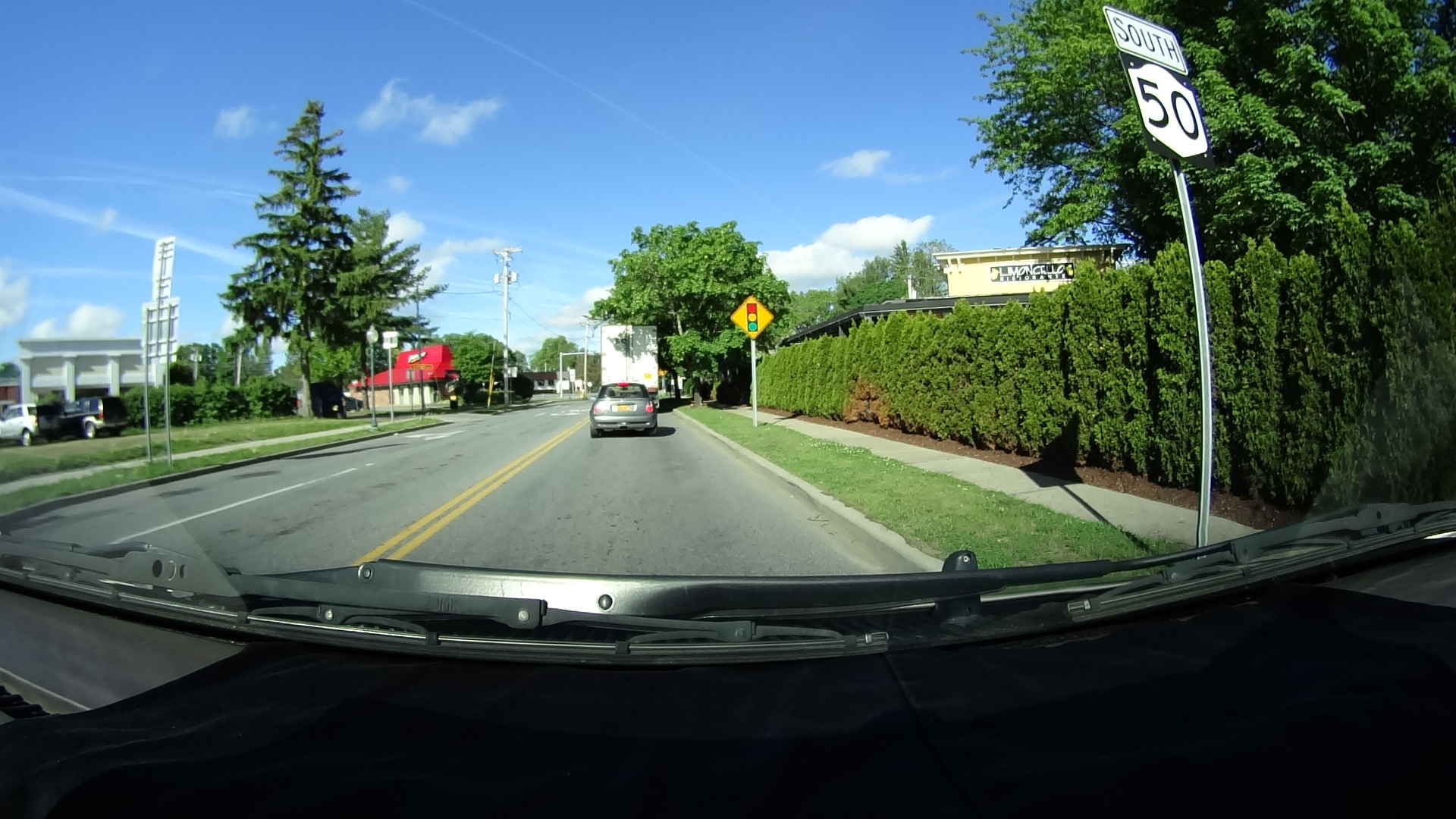
The point of this exercise was to find out how Youtube treats “HD” movies. The original 1920×1080 MP4 file weighed in at nearly 500 MB with very good quality (due to the -q 5), but the Youtube “HD” result exhibits terrible compression artifacts; the black cloth crawls with huge checkerboard squares. Because the relatively slow-moving sequences at traffic signals and rest stops have excellent quality, I’d say Youtube’s video bit rate just doesn’t support images that change completely from frame to frame. Makes sense; nobody could watch such a thing, so why allocate that many bits?
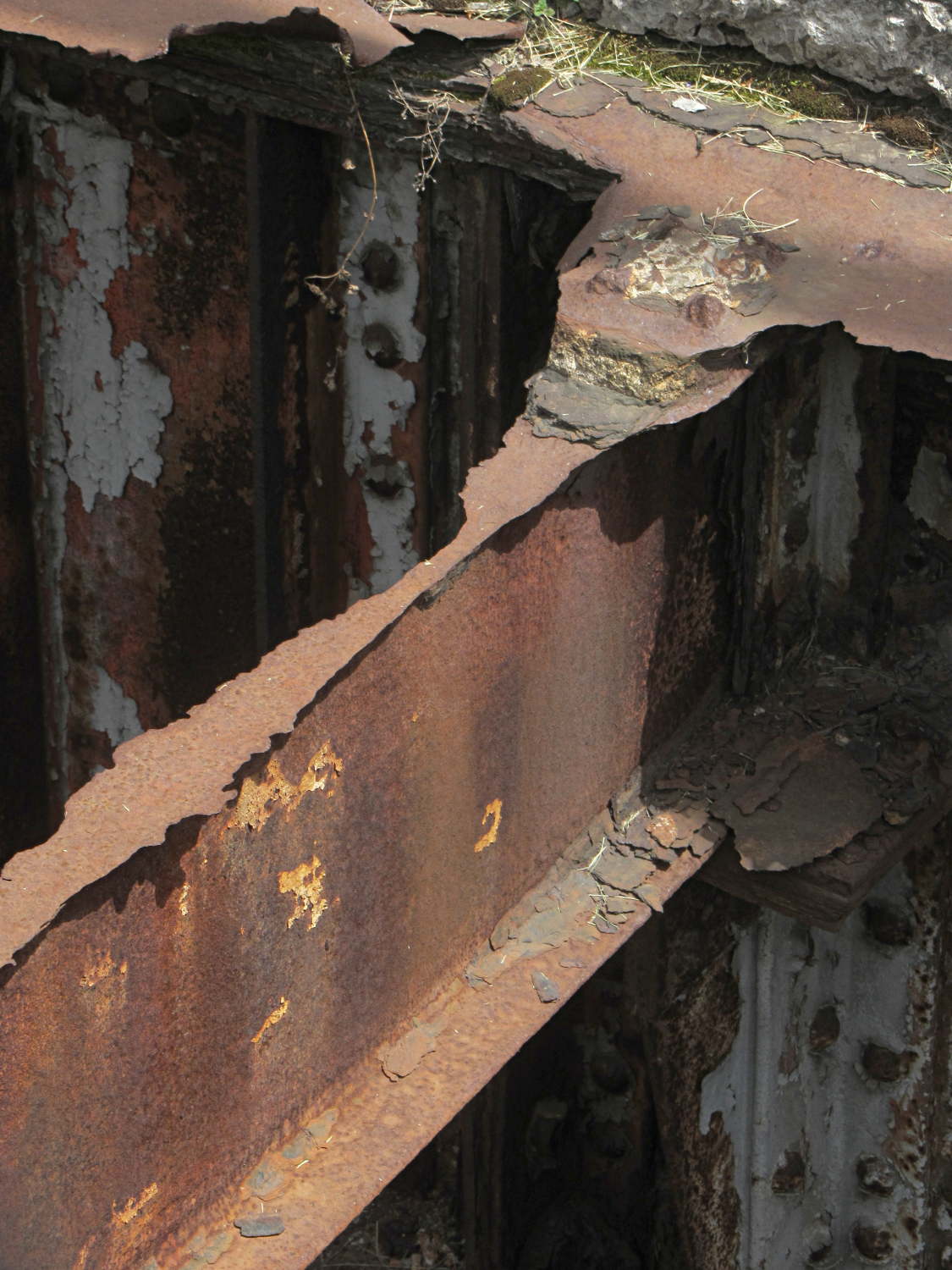
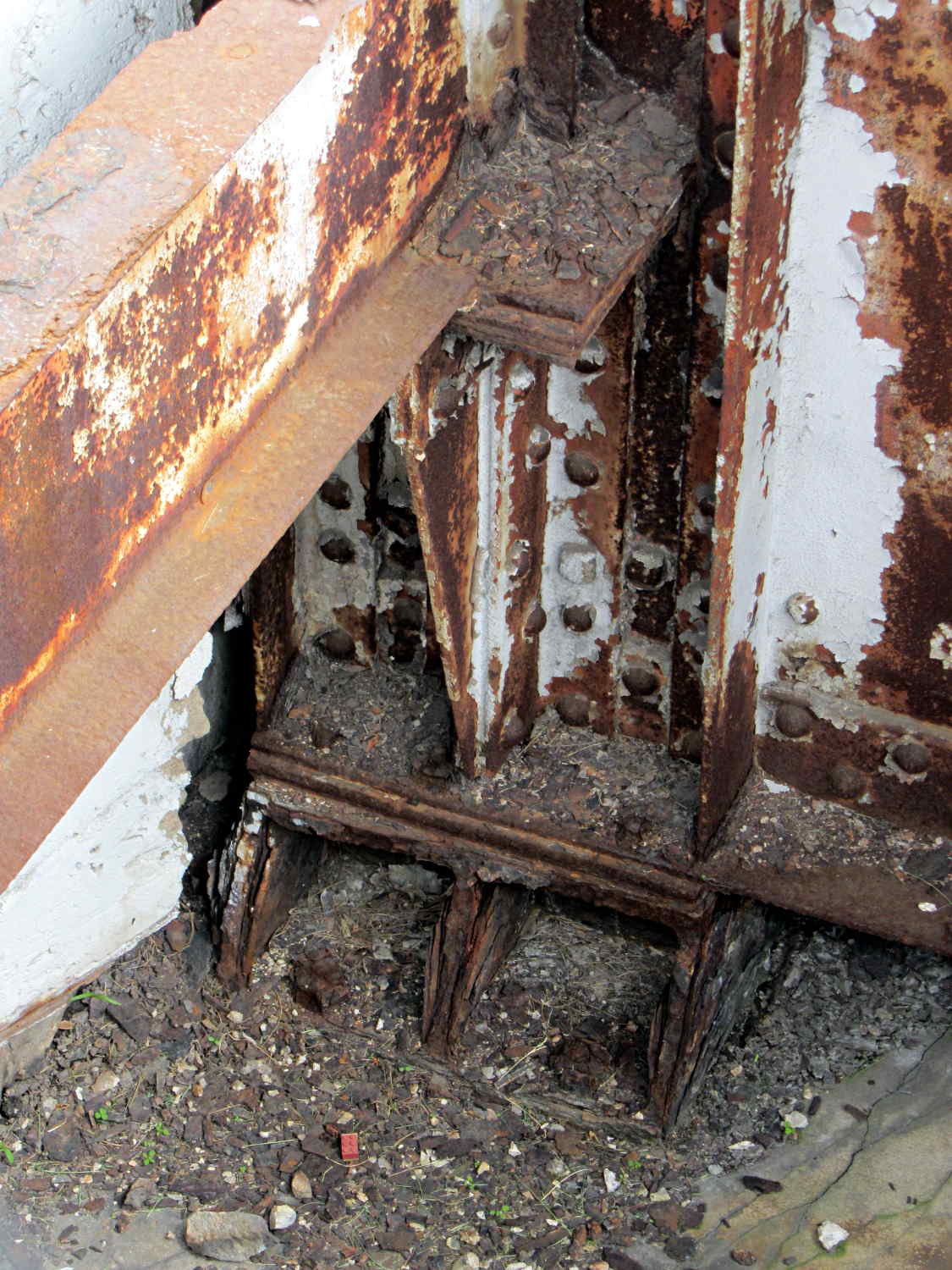
The longitudinal I beams have more iron and haven’t corroded through:
Rusted beams – Rochester RR station
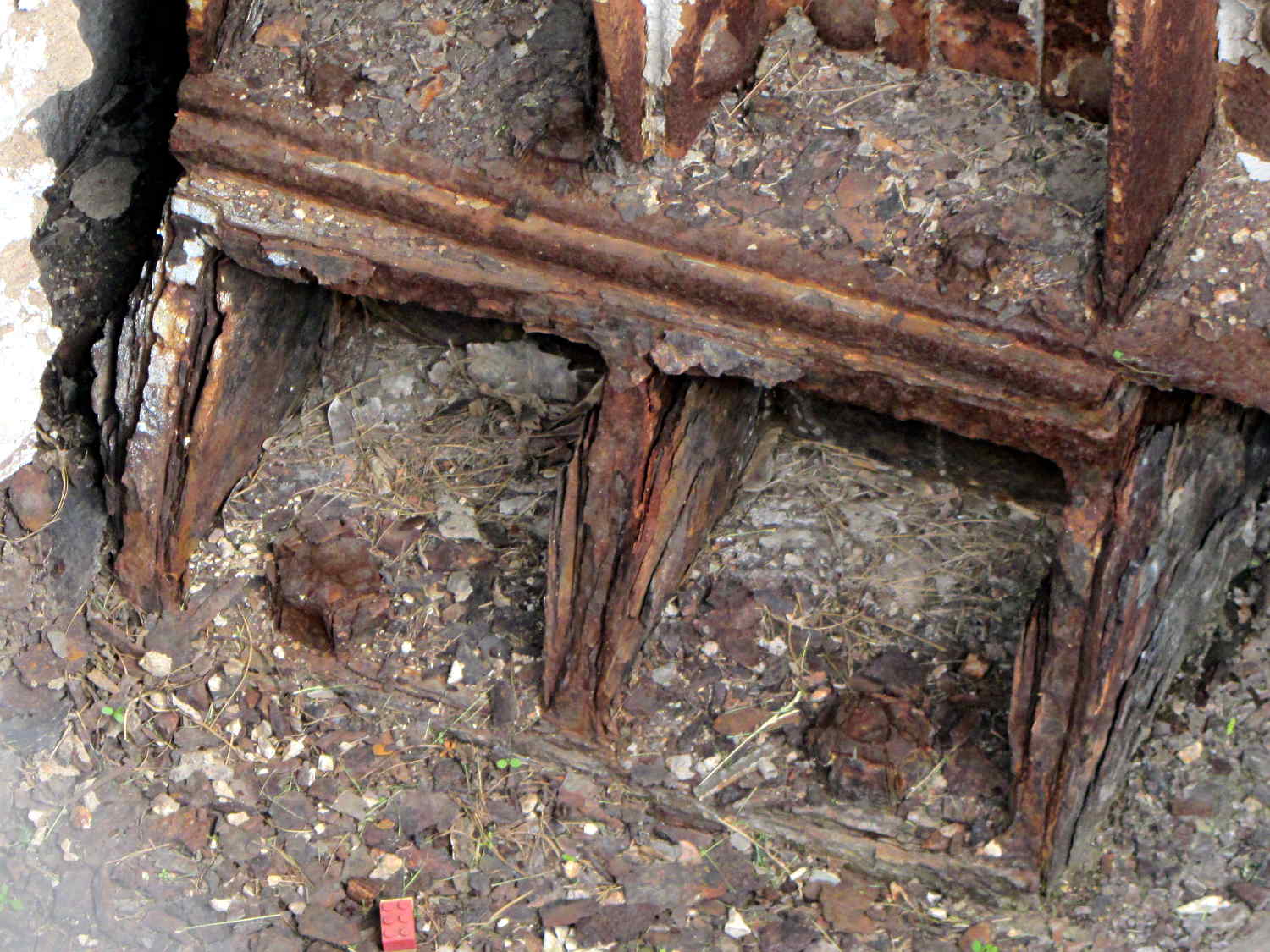
But the footing under that beam doesn’t look very good at all:
Rusted beam base – Rochester RR station
I think that Lego brick is a nice touch …
We drove the van along I-90 to Rochester and passed many bridge repair operations. The NY Thruway isn’t all that old and the rebar has been corroding out of the concrete pylons for years.
Nowadays, we use exactly enough material to carry the anticipated loads and not one gram more; fast forward a century and our structures won’t be around.
Those pictures were taken from the platform just west of the covered section.
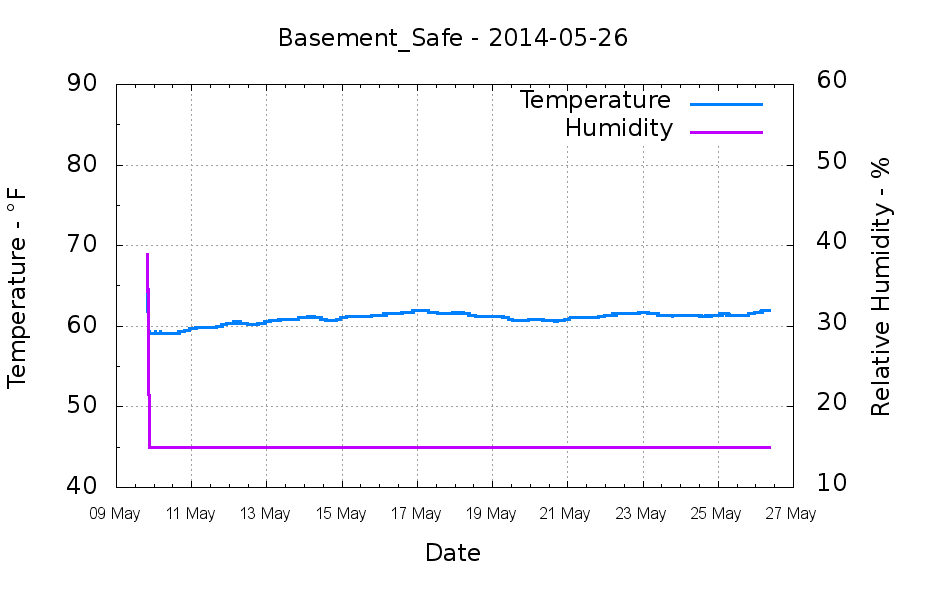
Back in early May, I swapped in a new bag of silica gel, which (as always) immediately punched the humidity down to the Hobo datalogger’s 15%RH minimum reading:
Basement Safe – 2014-05-26
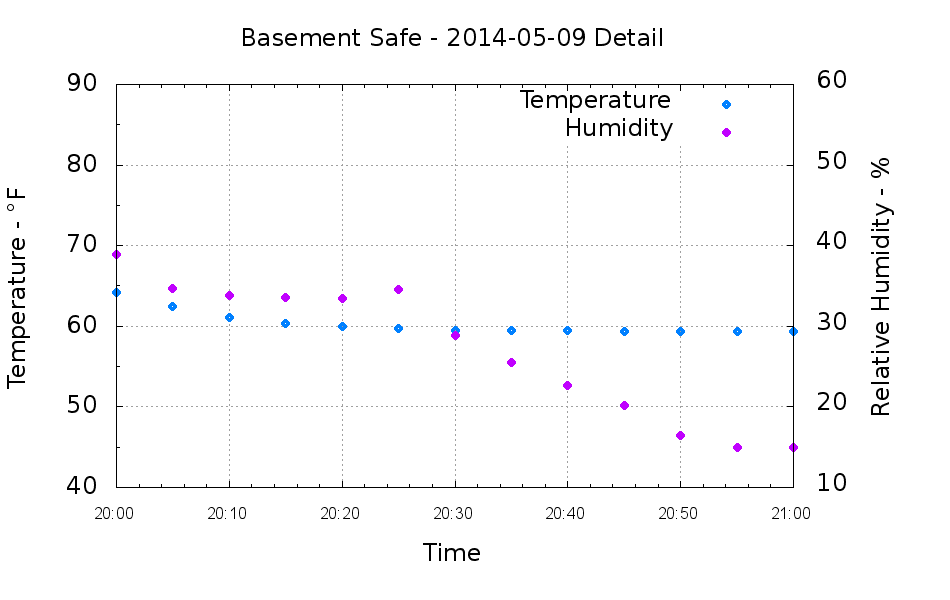
A closer look at the very beginning of that data shows the humidity dropping for an hour after the door closes:
Basement Safe – 2014-05-09 Detail
The logger is on the bottom of the safe, with the desiccant bag on the shelf above it, and there’s no mechanical air circulation: it’s all done by air currents, driven by whatever drives them. I have no idea what that bump in the middle means.
My first thought was that you can’t make this stuff up:
Dry Water – Pok RR Station
That’s taken through one of the windows over Track 3 at the Poughkeepsie railroad station, so it’s a bit blurrier than usual.
It turns out a “Dry Water” pipe delivers ordinary water, but normally contains pressurized air to prevent freezing. An intricate valve in a heated room balances air pressure in the pipe against the supply water pressure; when the air pressure drops, water flows through the valve to the outlet.
Normally, you’d use a Dry Water pipe in a fire suppression system, but it makes perfect sense for an outdoor hose bib (or whatever you call that quick disconnect fitting) on the top level of the Poughkeepsie Railroad Station.
There’s (almost certainly) an automatic drain valve that removes water from the dry pipe: otherwise, it’d remain full after use and pop the pipe during the next freeze.
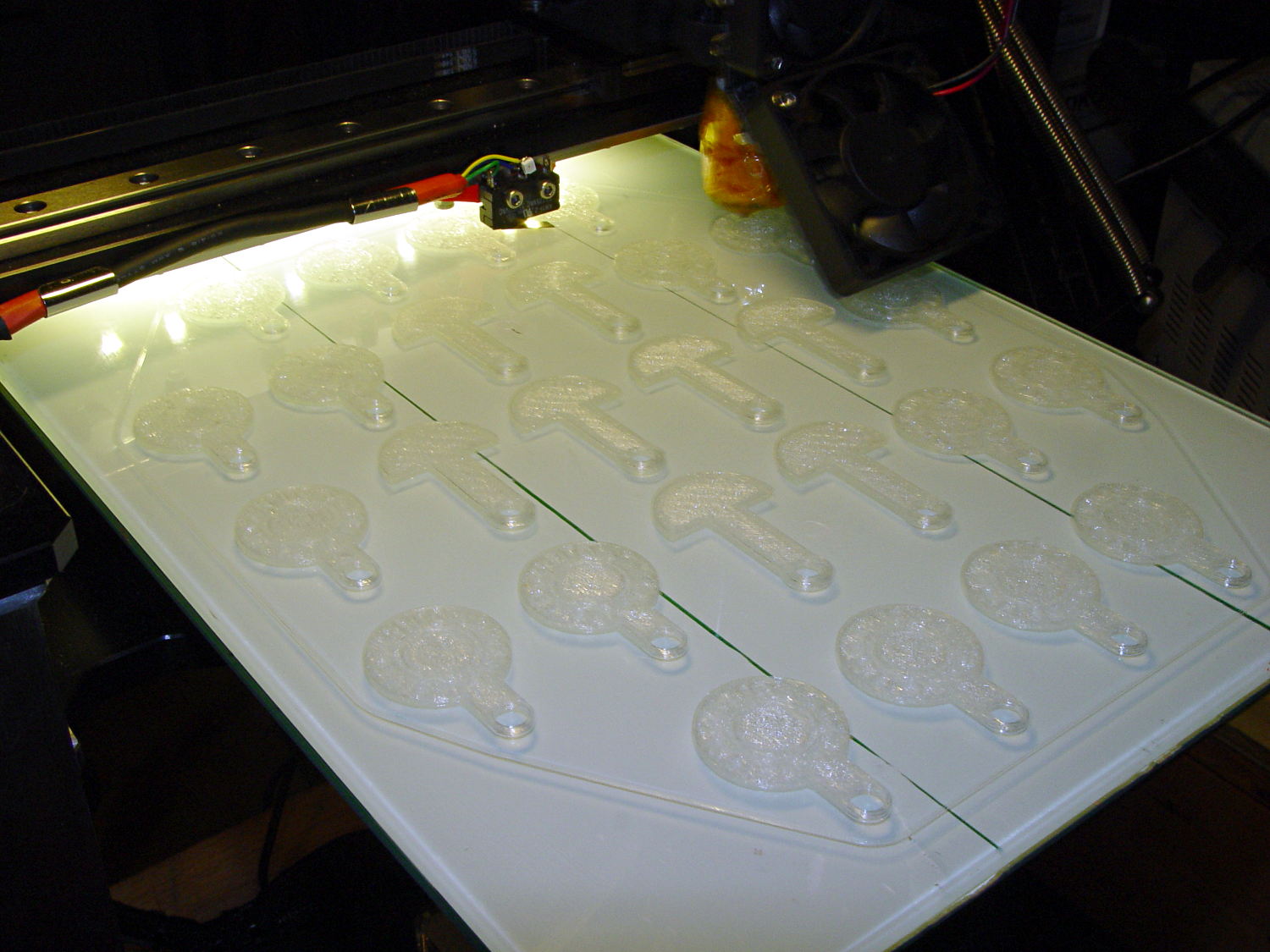
It turns out that an array of Cart Coins and Cart Releasers make a fine thickness test pattern and become useful tchotchkes when you’re done:
Cart Coins – printing
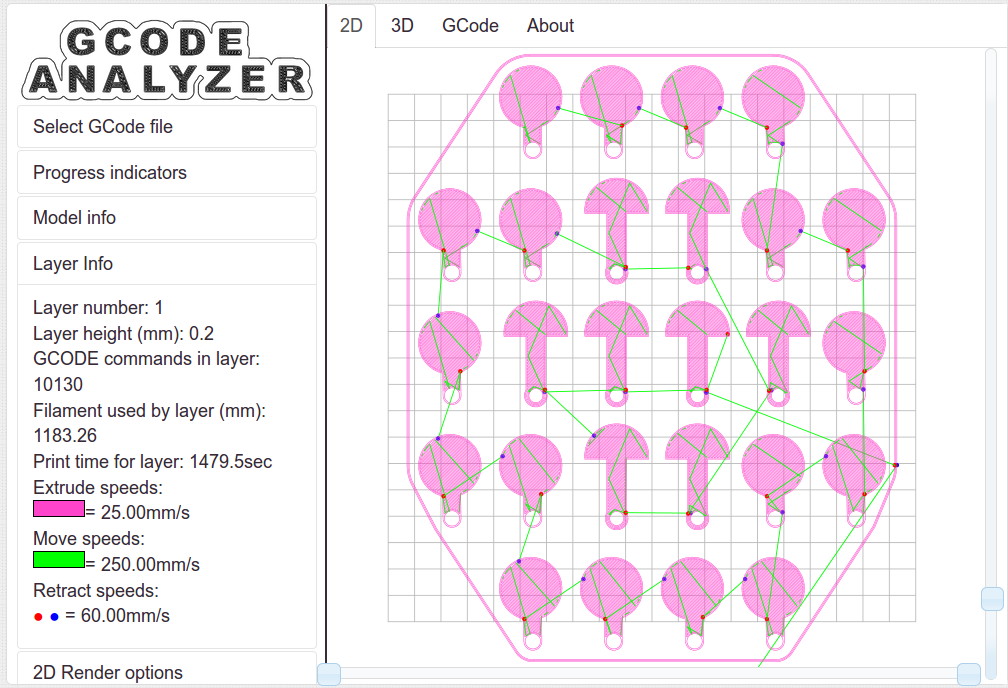
They’re a bit easier to see in the digital realm:
Cart Coins – platform layout – layer 1
The trick is that they’re both eight layers thick at 0.20 mm/layer. With the platform aligned exactly right, all the objects should measure exactly 1.60 mm thick.
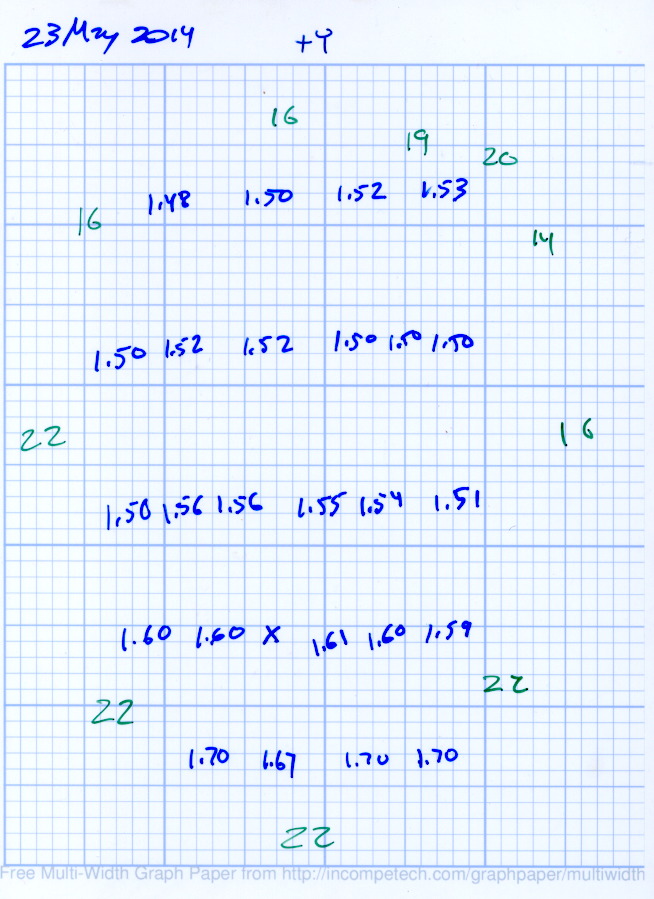
The blue numbers give the thickness measured across the stem, just above the hole, on each object:
Platform Leveling – Initial
The green numbers are the skirt thickness: 22 = 0.22 mm.
The platform has a tilt of 0.20 mm from +Y to -Y and is just about perfect from -X to +X.
The M3x0.5 adjusting screws under the (improved) platform, seen from the front (-Y) end of the platform:
M2 – Improved HBP – bottom view
The silicone plugs inside the springs are slightly compressed, so the springs are only decorative. The platform is rigidly mounted on the plugs, with only very slight compliance, and I haven’t leveled the platform in a few months.
Tightening the “north” adjusting screw by 1/6 turn lowered the +Y end of the plate by about 0.05 mm and tilted the +X side slightly higher:
Platform Leveling – Adjustment 1
The skirt thicknesses are now in blue, too.
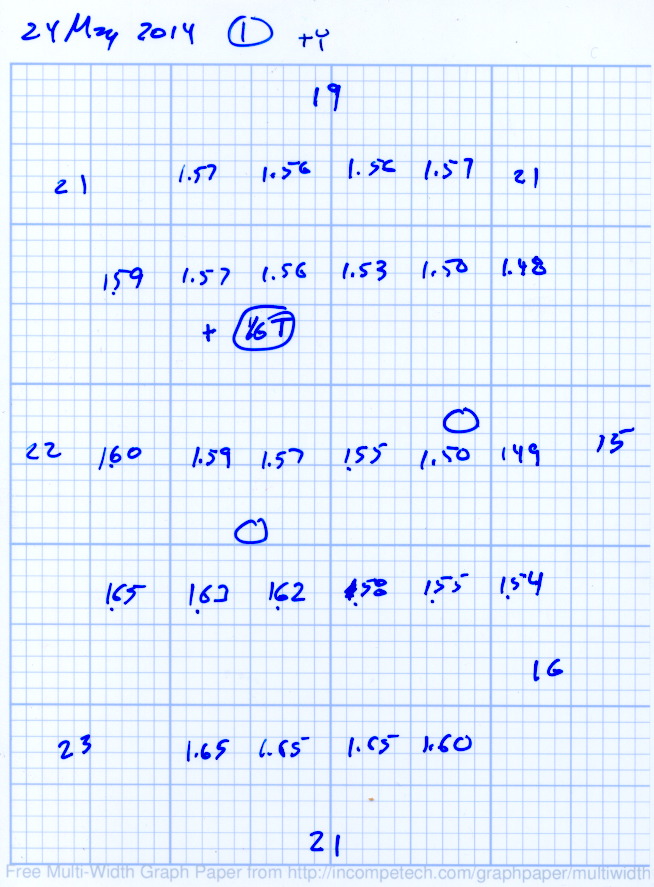
Tightening the “north” screw an additional 1/6 turn and tightening the “east” screw 1/6 turn produced an almost perfect result:
Platform Leveling – Adjustment 2
The thicknesses don’t vary quite randomly, but I think further adjustments won’t make much difference: the total range is only 0.12 mm = 1.53 to 1.65 mm. That’s pretty close to the limit of my measurement ability on the plastic pieces.
Notice that the skirt thread, which should be exactly 0.2 mm thick all around, really isn’t. I’m going to see whether a two-layer-thick skirt measures a more consistent 0.40 mm.
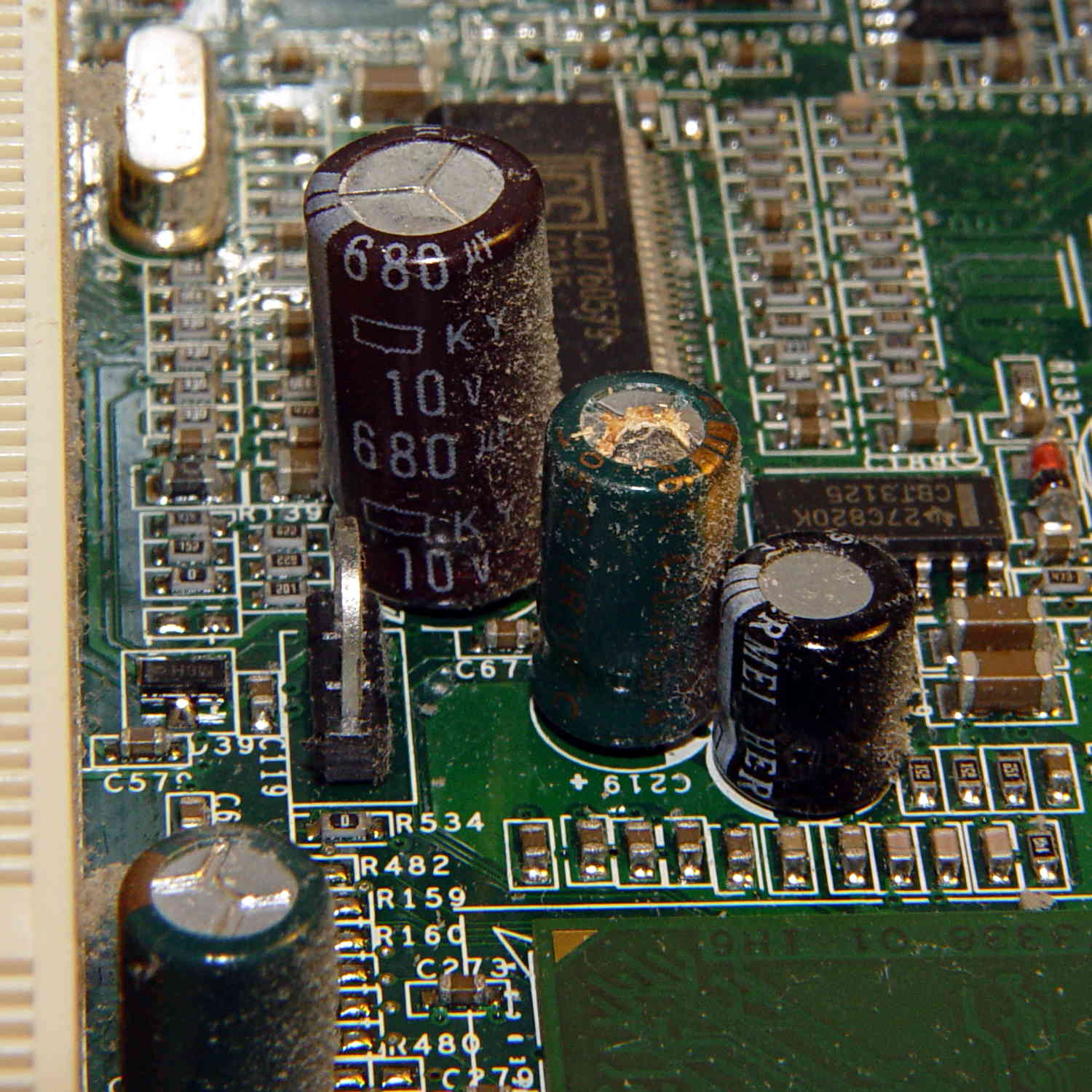
According to its Service Tag, this Dimension 2300 came off the line in late November 2002. All of the other caps on the board seemed OK, so apparently the plague affected just this lot of Hermei 470 µF 6.3 V capacitors.
Or, hey, they’re not supposed to last a dozen years and this is perfectly normal …





 The Smell of Molten Projects in the Morning