The Smell of Molten Projects in the Morning

Ed Nisley's Blog: Shop notes, electronics, firmware, machinery, 3D printing, laser cuttery, and curiosities. Contents: 100% human thinking, 0% AI slop.

Author: Ed

  • 3D Printer Design Conversation: Part 1

    I recently engaged in a wide-ranging email exchange with a guy planning to scratch-build a large-format 3D printer. He figured it would be a straightforward exercise and asked for some advice; I may be more cynical that he expected.

    Over the next few days, I’ll dump my side of the conversation so I can refer to it in other contexts. I’ve left his side of the conversation as the short quotes that prompted my replies, but you can probably infer what he was thinking.

    He’s well-acquainted with CNC machining and recently added a Makergear M2 to his collection …

    I’m hooked.

    All of sudden, you realize what you’ve been missing!

    In round numbers, I’ve been designing & printing one “thing” every week for the last five years. Granted, my “things” look a lot like brackets, because they go into other shop projects, but 3D printing is how I make nearly all the shapes I formerly bashed from metal.

    I loves me my 3D printer!

    an open source design with AFFORDABLE, EASILY ACCESSIBLE parts with a build platform of at least 150% X/Y volume of the MakerGear

    Some years ago, I had the same general idea. Then I bought an M2 (replacing my Thing-O-Matic), considered LinuxCNC / Machinekit for motion control, and realized there wasn’t much point; I didn’t want to devote far too much time & effort to solving an already solved problem.

    A larger build volume doesn’t buy you as much as you think, while imposing far too many hard constraints. Basically, good-resolution extruders run at 2 to 10 mm³/s, so large objects require print times beyond the 12-hour MTTF of the “printing system”: something will go wrong often enough to drive you mad.

    Bonus: plastic’s thermal coefficient guarantees bed adhesion problems. Using high-traction materials (PEI / hairspray / whatever) introduces problems in the other direction. There’s a limit to how big you can make things before they either don’t stick or stick too hard.

    Some the fundamental design problems that nobody recognizes until far too late in their design:

    • nozzle-to-platform accuracy < ±0.05 mm
    • XY axis speeds 30 mm/s to 500 mm/s
    • Z axis stiction & backlash < 0.1 mm
    • filament drive with excellent retraction control / speed
    • bed adhesion vs. part removal vs. Z accuracy
    • Arduino-class firmware (Marlin, et. al.) is a dead end
    • Windows is crap in any part of a machine-control problem

    Those are hard requirements. At a minimum, your design must satisfy all of them: miss any one and you’re not in the game. It’s easy to build a cheap and crappy fused-filament 3D printer (see Kickstarter), but exceedingly difficult to build one at the state of the art (see patent litigation).

    The M2 descends from the original RepRap design, with the Y axis slinging far too much mass back & forth. That kills nozzle-to-platform accuracy, introduces temperature instability, and soaks up bench space. On the other paw, look at the problems Makerbot (not Makergear) had with their direct-drive extruder on an XY platform; getting that right requires nontrivial engineering

    Bowden filament drives have improved, but really can’t provide enough retraction control / speed. Delta printers always use Bowden drives, because they can’t sling a direct-drive extruder with enough XYZ speed & accuracy. Bowden on an XY platform has the worst of both worlds: bad retraction and difficult mechanical design.

    I think the M2 occupies a sweet spot in 3D printer design: excellent results without excessive complexity or expense. It’s not perfect, but good enough.

    But, then, I’m a known curmudgeon …

    (Continues tomorrow)

  • Patient Sign-In FAIL

    We must announce our arrival at the dentist by signing in through a web-based iPad app:

    Dentist iPad sign-in - network fail
    Dentist iPad sign-in – network fail

    You’ll note the signal strength indicator in the upper left shows as much RF as one might reasonably expect from a router within line-of-sight across the room.

    FWIW, I’m getting really tired of the hipster dark-gray on light-gray design ethos.

  • Monthly Image: Turkey Mating

    Early spring brings out large turkey flocks and provides a window into their otherwise rather private lives.

    Despite all the strutting and posturing by the males, the ladies call the shots. When we see a hen go hull-down like this, we know what’s about to happen:

     Turkey mating - invitation
    Turkey mating – invitation

    Getting into the right position seems remarkably awkward and requires some cooperation:

    Turkey mating - mounting
    Turkey mating – mounting

    When her head and tail pop up, you know the thing is going right:

    Turkey mating - the moment
    Turkey mating – the moment

    And a back massage always feels so fine:

    Turkey mating - massage
    Turkey mating – massage

    Then he’s back to strutting & posturing:

    Turkey mating - aftermath
    Turkey mating – aftermath

    We hope they’ll show us their chicks

    Taken with the DSC-H5, hand-held through two panes of 1955-era window glass: ya get what ya get.

  • Aluminum Armature Wire

    Sculptors build figures with aluminum armature (*) wire, because it’s dead-soft, bends easily, and holds its shape:

    Armature Wire assortment
    Armature Wire assortment

    The sizes: 1/4 inch, 3/16 inch, 1/8 inch, 1/16 inch. The latter came from my Big Box o’ Specialty Wire, with the others from Richeson via Amazon. You can certainly get better prices for larger quantities from metal suppliers.

    I’m thinking it might hold RGB LEDs around glass doodads, eliminating the need for epoxy, as the utter unreliability of those WS2812 chips has burned out my enthusiasm for permanent assemblies:

    Failed WS2812 LED - drilling
    Failed WS2812 LED – drilling

    Observations:

    • 1/4 inch wire is way too rigid, although a stalk might hold a display
    • The 1/8 inch wire looks much different than the others
    • 1/16 inch wire may work better inside a braided sheath with the LED conductors

    The wire is probably a 1000-series alloy, if only because anything else would start out too stiff and work-harden too quickly, although the sharp bends in the coils already feel hard. It’s possible to anneal aluminum by hand with some soap and a torch, with meltdown an ever-present hazard. Other references suggesting soaking at temperatures in the 300-400 °C range in a furnace I don’t have.

    (*) Armature wire has nothing to do with motor armatures!

  • Caution 480 V Power

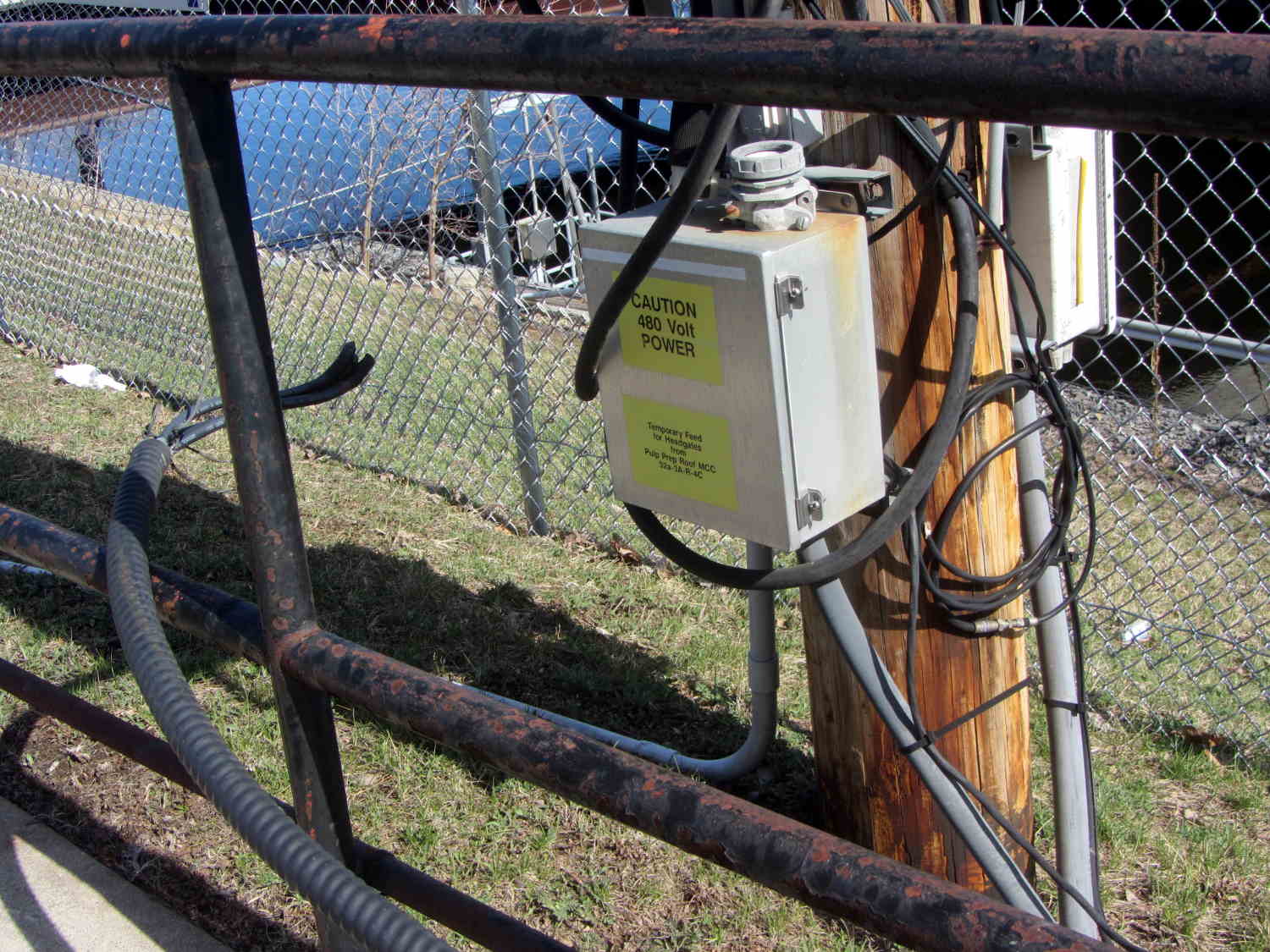
    This seemed rather … casual:

    Caution 480 Volt Power
    Caution 480 Volt Power

    The armored cable draped over the fence probably came from the gland at the top of the box, which now sports a blocking plate that might actually be weatherproof. It had taped-over ends and I assume it fed something downstream that’s now disconnected; the far end of a large loop to the right burrows underground along the sidewalk.

  • Cheap WS2812 LEDs: Test Fixture Failure 2

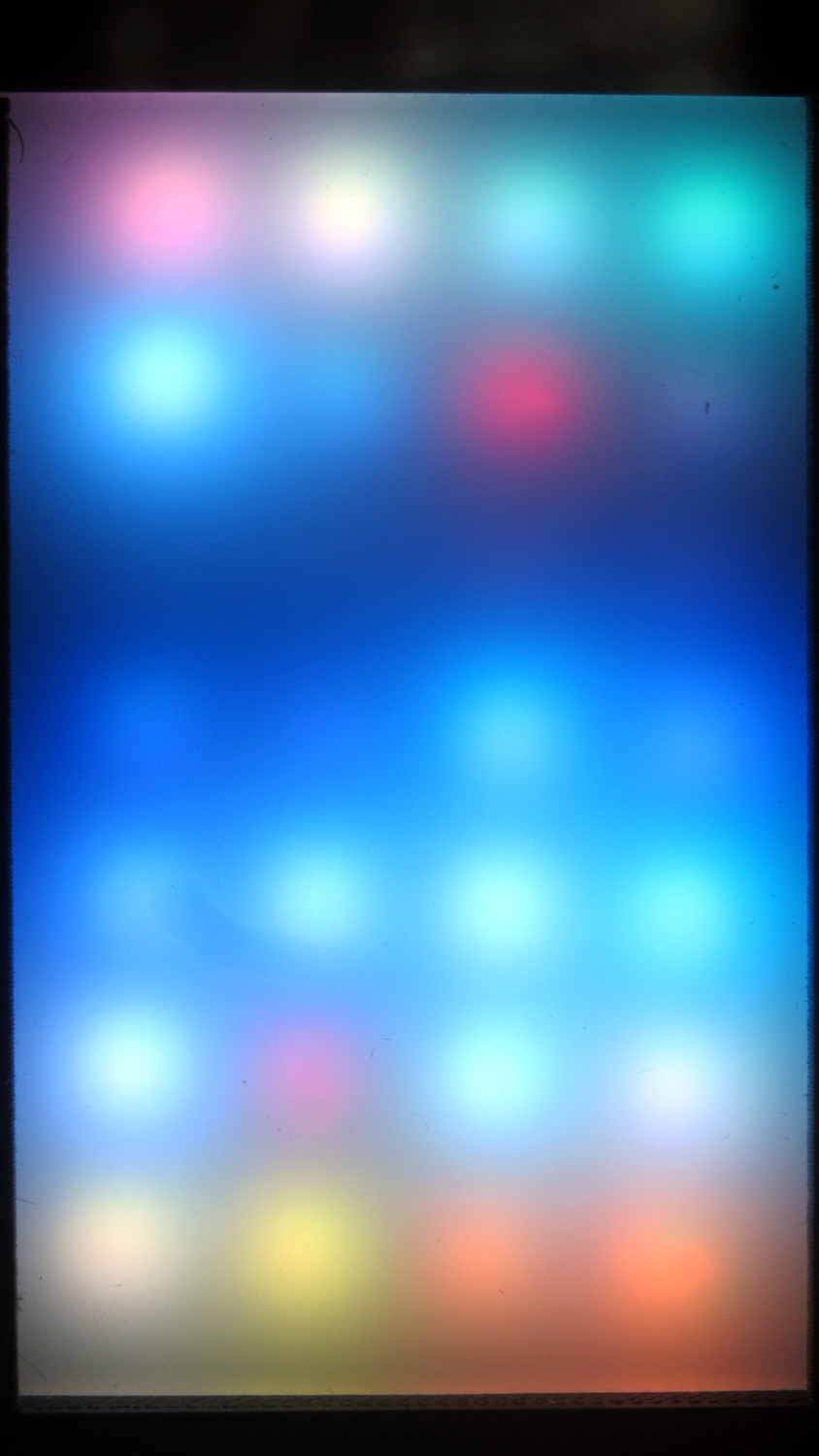
    A second WS2812 RGB LED in the test fixture failed:

    WS2812 LED - test fixture failure 2
    WS2812 LED – test fixture failure 2

    The red pixel in the second row from the top sends pinball panic to the six downstream LEDs (left and upward). Of course, it’s not consistently bad and sometimes behaves perfectly. The dark row below it contains perfectly good LEDs: they’re in a dark-blue part of the cycle.

    The first WS2812 failed after about a week. This one lasted 7 weeks = 50-ish days.

    The encapsulation seal went bad on this one and, for whatever it’s worth, the remainder still pass the Sharpie test. Perhaps the LEDs fail only after heat (or time-at-temperature) breaks the seal. Assuming, equally of course, the seal left the factory in good order, which seems a completely unwarranted assumption.

  • Planet Bike SuperFlash Case: PUSH Fatigue

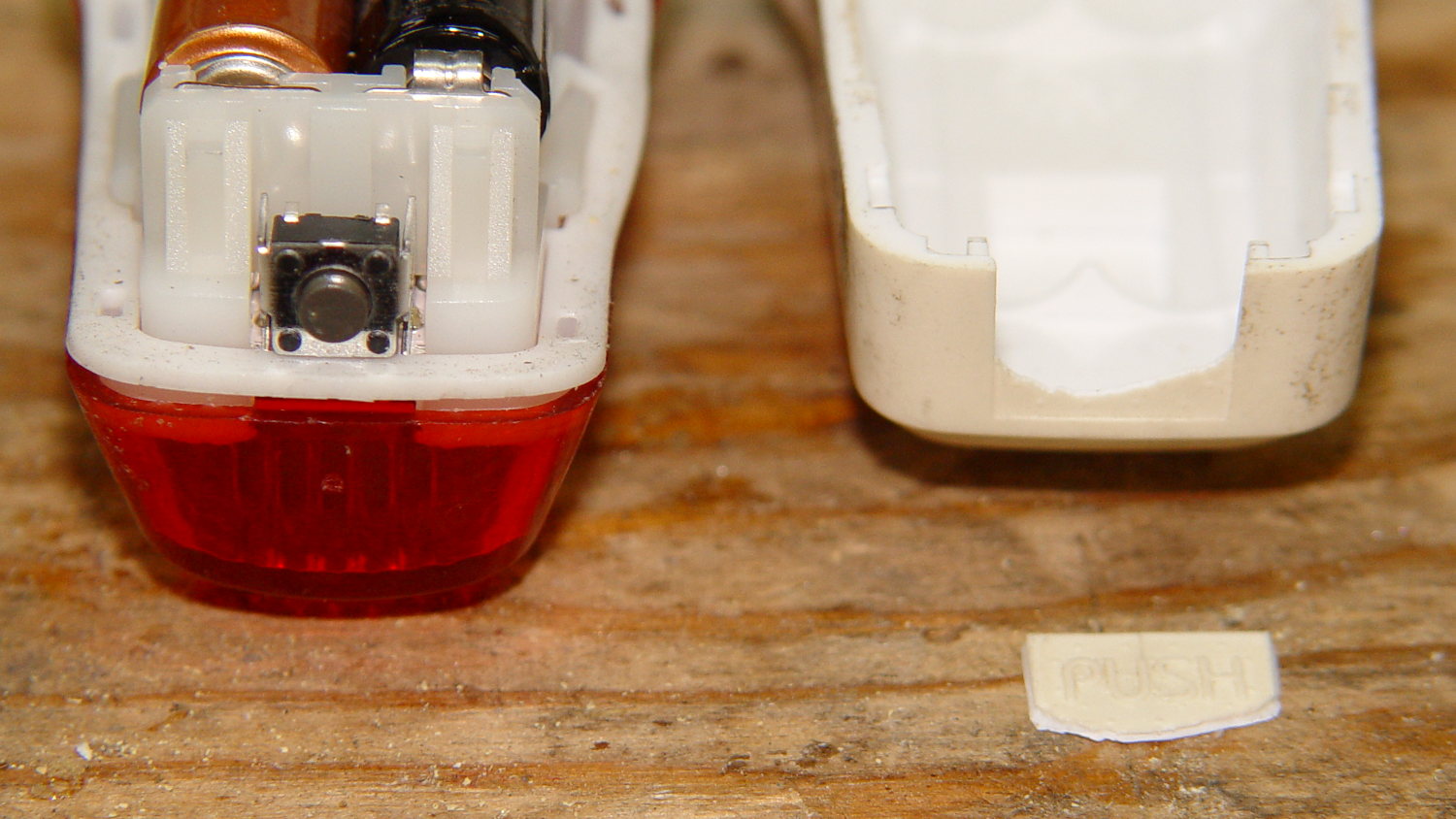
    The blinky light on Mary’s bike became intermittent and, after a week or two, I figured out why:

    Planet Bike Superflash - fatigued PUSH
    Planet Bike Superflash – fatigued PUSH

    The white plastic case has a thin section labeled PUSH over the switch. After five years of exposure to the sun (it faces upward on her bike) and upwards of 2000 pushes (5 years x 200 rides/year x 2 pushes/ride), the edges of that little plate cracked, it slipped inward, and jammed the switch button.

    I swapped it for the one on my bike, which mounts with the switch downward and has seen much less use since I began running the Fly 6 rear camera + blinky light, and it was all good.

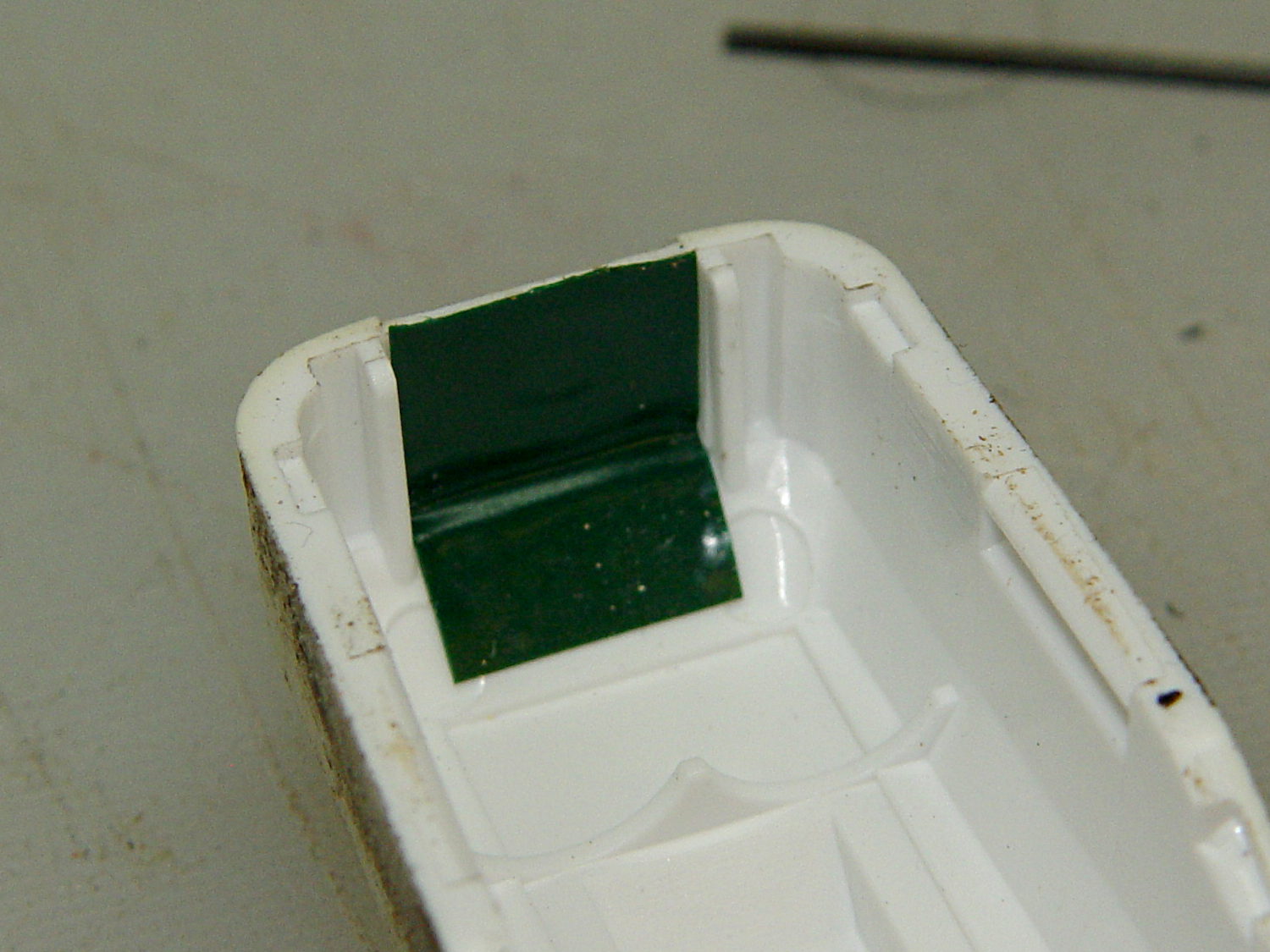
    The fractured plate slid snugly back in place, a few drops of IPS 3 solvent-bonded the broken edges, and a snippet of good 3M electrical tape inside the case should provide a bit of reinforcement:

    Planet Bike Superflash - reinforced cover
    Planet Bike Superflash – reinforced cover

    It’s now on my bike, just in case it’s needed.

    That was easy …